1. Search Result
Search Result
Results for "

elimination

" in MedChemExpress (MCE) Product Catalog:

304

Inhibitors & Agonists

7

Screening Libraries

5

Fluorescent Dye

16

Biochemical Assay Reagents

12

Peptides

2

MCE Kits

22

Inhibitory Antibodies

25

Natural
Products

9

Isotope-Labeled Compounds

2

Click Chemistry

63

Oligonucleotides

Cat. No. Product Name Target Research Areas Chemical Structure
  • HY-114153
    PLX5622
    85+ Cited Publications

    c-Fms Neurological Disease
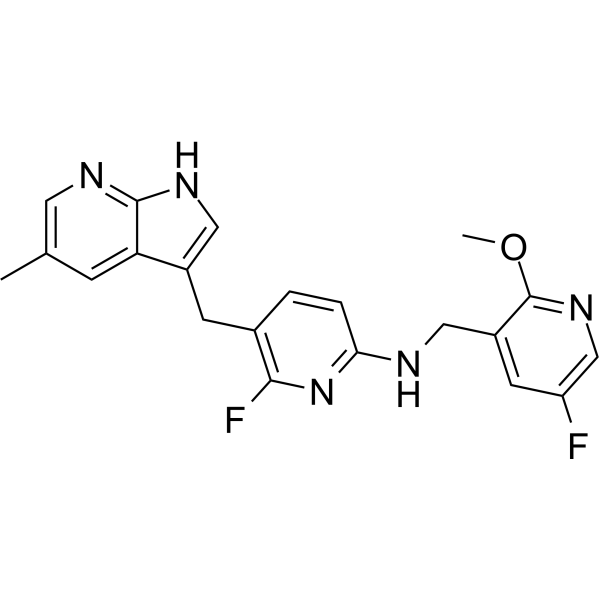
    PLX5622 is a highly selective brain penetrant and orally active CSF1R inhibitor (IC50=0.016 μM; Ki=5.9 nM). PLX5622 allows for extended and specific microglial cells elimination, preceding and during pathology development. PLX5622 demonstrates desirable PK properties in varies animals. PLX5622 is predominantly administered via ad libitum diets with a dose of 1200 ppm .
    PLX5622
  • HY-129905
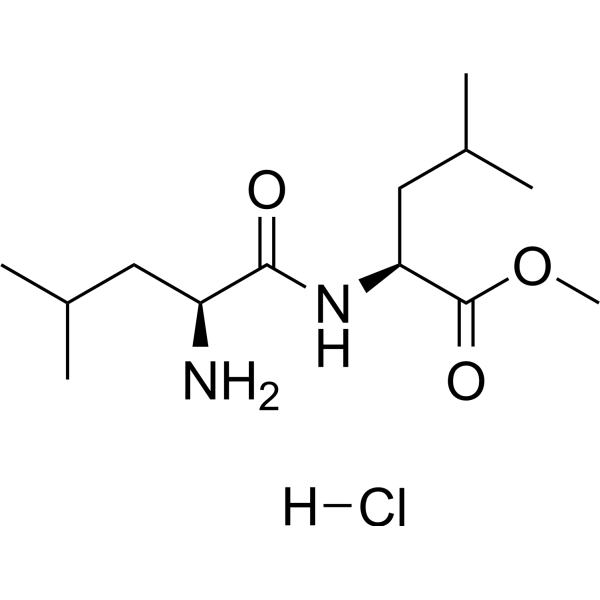
    L-Leucyl-L-Leucine methyl ester hydrochloride
    Maximum Cited Publications
    18 Publications Verification

    LLOMe hydrochloride; Leu-Leu methyl ester hydrochloride; H-Leu-Leu-OMe hydrochloride

    Endogenous Metabolite Inflammation/Immunology
    L-Leucyl-L-Leucine methyl ester (LLOMe) hydrochloride, a dipeptide condensation product of L-leucine methyl ester generated by human monocytes or polymorphonuclear leukocytes, selectively eliminates lymphocytes with cytotoxic potential. L-Leucyl-L-Leucine methyl ester hydrochloride also can induce endolysosomal pathway stress .
    L-Leucyl-L-Leucine methyl ester hydrochloride
  • HY-129905A
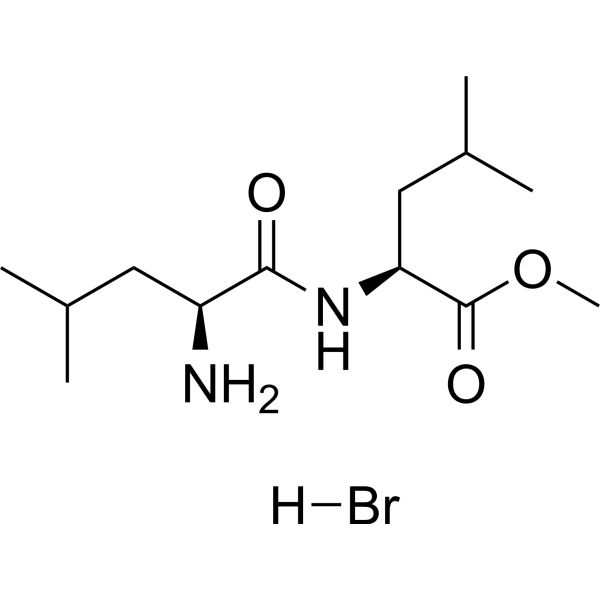
    L-Leucyl-L-Leucine methyl ester hydrobromide
    Maximum Cited Publications
    18 Publications Verification

    LLOMe hydrobromide; Leu-Leu methyl ester hydrobromide; H-Leu-Leu-OMe hydrobromide

    Endogenous Metabolite Inflammation/Immunology
    L-Leucyl-L-Leucine methyl ester (LLOMe) hydrobromide, a dipeptide condensation product of L-leucine methyl ester generated by human monocytes or polymorphonuclear leukocytes, selectively eliminates lymphocytes with cytotoxic potential. L-Leucyl-L-Leucine methyl ester hydrobromide also can induce endolysosomal pathway stress .
    L-Leucyl-L-Leucine methyl ester hydrobromide
  • HY-N2333
    Resiniferatoxin
    5+ Cited Publications

    (+)-Resiniferatoxin

    TRP Channel Cardiovascular Disease Cancer
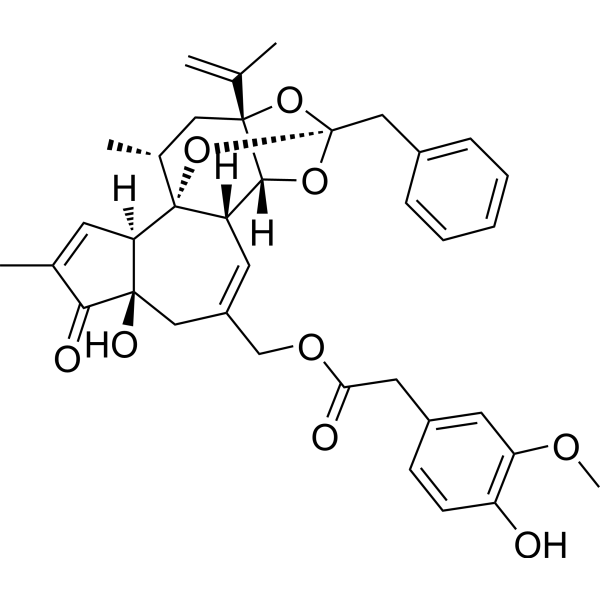
    Resiniferatoxin ((+)-Resiniferatoxin), is a selective agonist of transient receptor potential vanilloid 1 (TRPV1) receptor agonist. Resiniferatoxin can be isolated from the Euphorbia resinifera plant. Resiniferatoxin eliminates TRPV1+ primary sensory afferents and blunt cardiac sympathetic afferent reflex for a relatively long period .
    Resiniferatoxin
  • HY-Y1316
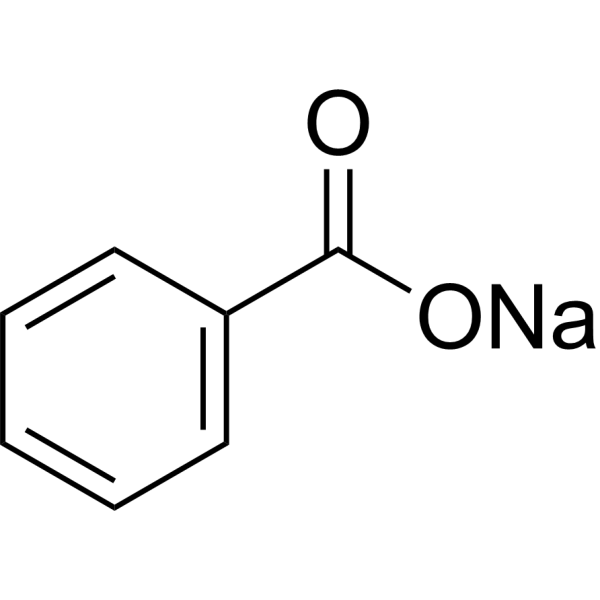
    Sodium benzoate
    2 Publications Verification

    Environmental Pollutants Biochemical Assay Reagents Apoptosis NF-κB Inflammation/Immunology Cancer
    Sodium benzoate is an orally active pharmaceutical excipient, such as an antibacterial agent, preservative, lubricant, etc. Pharmaceutical excipients, or pharmaceutical auxiliaries, refer to other chemical substances used in the pharmaceutical process other than pharmaceutical ingredients. Pharmaceutical excipients generally refer to inactive ingredients in pharmaceutical preparations, which can improve the stability, solubility and processability of pharmaceutical preparations. Pharmaceutical excipients also affect the absorption, distribution, metabolism, and elimination (ADME) processes of co-administered drugs.Sodium benzoate activates NF-κB and induces Apoptosis. Sodium benzoate induces immune suppression and produces reproductively toxic. Sodium benzoate can be used for colon cancer and immune disease research .
    Sodium benzoate
  • HY-N0269
    Echinatin
    5+ Cited Publications

    Apoptosis Autophagy NOD-like Receptor (NLR) Cardiovascular Disease Inflammation/Immunology Cancer
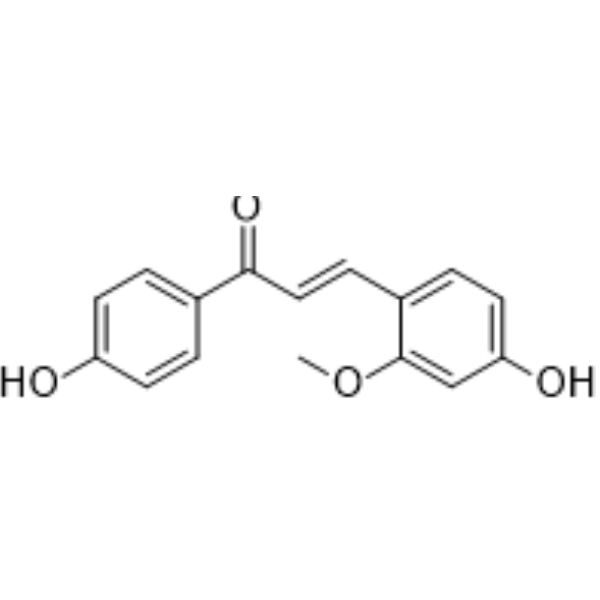
    Echinatin is a chalcone isolated from the Chinese herbal medicine Gancao with hepatoprotective and anti-inflammatory effects . Echinatin can be quickly absorbed and eliminated and extensively distributed with an absolute bioavailability of approximately 6.81% in Rat .
    Echinatin
  • HY-W007465

    Drug Intermediate Inflammation/Immunology
    4-Aminobenzyl alcohol is a self-eliminating linker. 4-Aminobenzyl alcohol can be used to synthesize the fluorescent probe MB-Van1 targeting Vanin-1 .
    4-Aminobenzyl alcohol
  • HY-18314
    GW 441756
    5+ Cited Publications

    Trk Receptor Apoptosis Neurological Disease Cancer
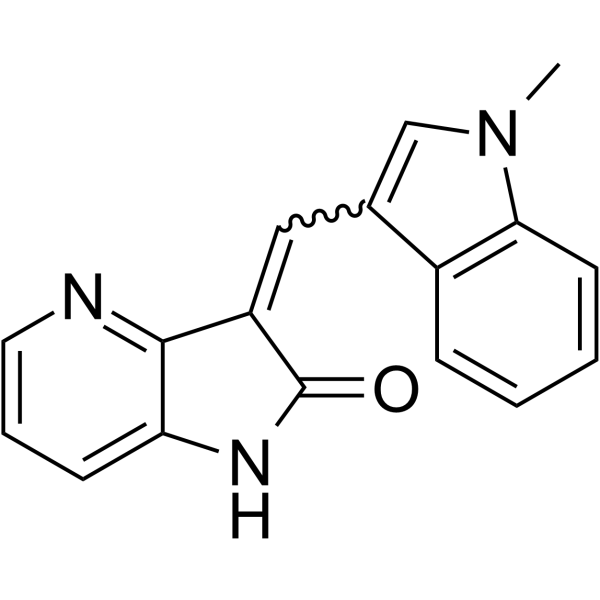
    GW 441756 is a potent and specific nerve growth factor (NGF) receptor tyrosine kinases A (TrkA) inhibitor (IC50=2 nM), which eliminates the BmK NSPK-induced neurite outgrowth .
    GW 441756
  • HY-Y0873F

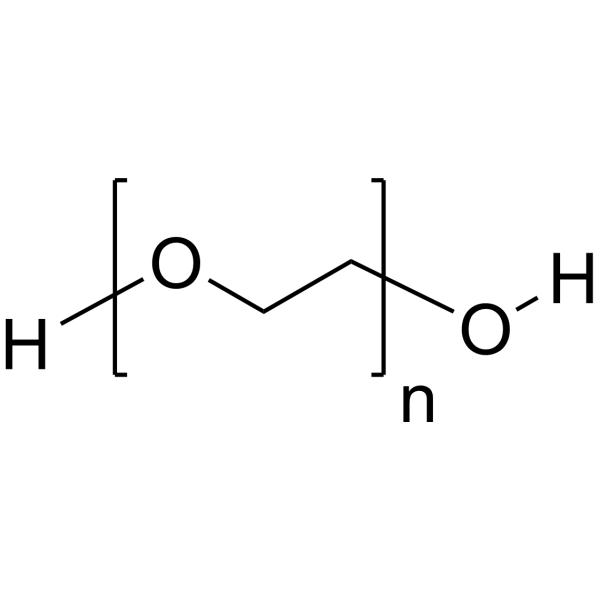
    Polyethylene glycol 600

    Environmental Pollutants Biochemical Assay Reagents Others
    PEG600 can be used as an excipient, such as ointment base, lubricant. Pharmaceutical excipients, or pharmaceutical auxiliaries, refer to other chemical substances used in the pharmaceutical process other than pharmaceutical ingredients. Pharmaceutical excipients generally refer to inactive ingredients in pharmaceutical preparations, which can improve the stability, solubility and processability of pharmaceutical preparations. Pharmaceutical excipients also affect the absorption, distribution, metabolism, and elimination (ADME) processes of co-administered drugs .
    PEG600
  • HY-W250795

    Maltodextrin; Dextrin maize starch

    Environmental Pollutants Biochemical Assay Reagents Others
    Maltodextrin, dextrose equivalent 16.5-19.5 can be used as an excipient. Pharmaceutical excipients, or pharmaceutical auxiliaries, refer to other chemical substances used in the pharmaceutical process other than pharmaceutical ingredients. Pharmaceutical excipients generally refer to inactive ingredients in pharmaceutical preparations, which can improve the stability, solubility and processability of pharmaceutical preparations. Pharmaceutical excipients also affect the absorption, distribution, metabolism, and elimination (ADME) processes of co-administered drugs .
    Maltodextrin, dextrose equivalent 16.5-19.5
  • HY-W051271

    Titanium dioxide

    Environmental Pollutants Reactive Oxygen Species (ROS) Photosensitizer Others
    Titanium(IV) oxide is a photosensitizer and photocatalyst. Titanium(IV) oxide can be used as a pharmaceutical excipient such as a flow aid, coating agent, sunscreen, colorant, etc. Pharmaceutical excipients or pharmaceutical excipients refer to other chemical substances used in the pharmaceutical process other than the drug ingredients. Pharmaceutical excipients generally refer to inactive ingredients in pharmaceutical preparations that can improve the stability, solubility and processability of pharmaceutical preparations. Pharmaceutical excipients also affect the absorption, distribution, metabolism and elimination (ADME) process of co-administered drugs. Titanium(IV) oxide can use light energy to generate electron-hole pairs to degrade pollutants. Photons excite electrons in TiO2 to generate active oxygen species (such as ·OH and ·O2 -), thereby oxidizing and mineralizing pollutants such as organic compounds and heavy metals. TiO2 can be used in the research of environmental remediation fields such as water treatment, air purification and self-cleaning materials .
    Titanium(IV) oxide
  • HY-134094
    Fluridone
    2 Publications Verification

    Environmental Pollutants Herbicide Inflammation/Immunology
    Fluridone is a herbicide, particularly to eliminate aquatic plant growth in water reservoirs and irrigation channels. Fluridone is a potent Abscisic acid (ABA) biosynthesis inhibitor, and has anti-inflammatory effects .
    Fluridone
  • HY-Y0873E

    Polyethylene glycol 1500

    Environmental Pollutants Biochemical Assay Reagents Others
    PEG1500 can be used as an excipient, such as ointment base, lubricant. Pharmaceutical excipients, or pharmaceutical auxiliaries, refer to other chemical substances used in the pharmaceutical process other than pharmaceutical ingredients. Pharmaceutical excipients generally refer to inactive ingredients in pharmaceutical preparations, which can improve the stability, solubility and processability of pharmaceutical preparations. Pharmaceutical excipients also affect the absorption, distribution, metabolism, and elimination (ADME) processes of co-administered drugs .
    PEG1500
  • HY-Y1054

    Stearic Acid Magnesium(II) Salt

    Environmental Pollutants Biochemical Assay Reagents Others
    Magnesium stearate is a commonly used pharmaceutical lubricant. But Magnesium stearate leads to an adverse effect on bonding between particles. Magnesium stearate can be used as an excipient, such as lubricant. Pharmaceutical excipients, or pharmaceutical auxiliaries, refer to other chemical substances used in the pharmaceutical process other than pharmaceutical ingredients. Pharmaceutical excipients generally refer to inactive ingredients in pharmaceutical preparations, which can improve the stability, solubility and processability of pharmaceutical preparations. Pharmaceutical excipients also affect the absorption, distribution, metabolism, and elimination (ADME) processes of co-administered drugs .
    Magnesium stearate
  • HY-114153A
    PLX5622 hemifumarate
    85+ Cited Publications

    c-Fms Neurological Disease
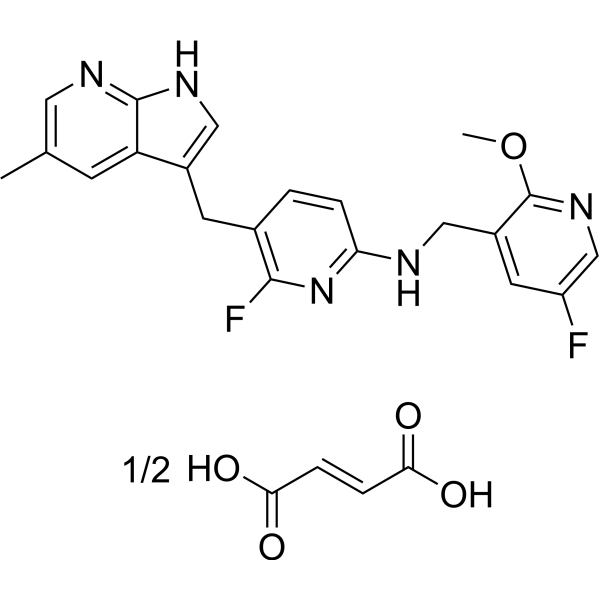
    PLX5622 hemifumarate is a highly selective brain penetrant and orally active CSF1R inhibitor (IC50=0.016 μM; Ki=5.9 nM). PLX5622 hemifumarate allows for extended and specific microglial elimination, preceding and during pathology development. PLX5622 hemifumarate demonstrates desirable PK properties in varies animals .
    PLX5622 hemifumarate
  • HY-N11684

    Biochemical Assay Reagents Others
    Cocoa butter can be used as an excipient, such as lubricants, suppository bases. Pharmaceutical excipients, or pharmaceutical auxiliaries, refer to other chemical substances used in the pharmaceutical process other than pharmaceutical ingredients. Pharmaceutical excipients generally refer to inactive ingredients in pharmaceutical preparations, which can improve the stability, solubility and processability of pharmaceutical preparations. Pharmaceutical excipients also affect the absorption, distribution, metabolism, and elimination (ADME) processes of co-administered drugs .
    Cocoa butter
  • HY-W011426

    Propan-2-yl hexadecanoate

    Environmental Pollutants Biochemical Assay Reagents Liposome Others
    Isopropyl palmitate is an fatty acid ester. Isopropyl palmitate can be used for design and characterization of bioactive bilayer films. The bilayer membrane not only has the ability to scavenge free radicals and inhibit lipid peroxidation, but also can inhibit the growth of known foodborne pathogens. Isopropyl palmitate can be used as an excipient, such as lubricant, oily carrier, solvent, controlled-release transdermal film. Pharmaceutical excipients, or pharmaceutical auxiliaries, refer to other chemical substances used in the pharmaceutical process other than pharmaceutical ingredients. Pharmaceutical excipients generally refer to inactive ingredients in pharmaceutical preparations, which can improve the stability, solubility and processability of pharmaceutical preparations. Pharmaceutical excipients also affect the absorption, distribution, metabolism, and elimination (ADME) processes of co-administered drugs .
    Isopropyl palmitate
  • HY-W005241
    5-Hydroxymethyl-2-furancarboxylic acid
    2 Publications Verification

    Endogenous Metabolite Others
    5-Hydroxymethyl-2-furancarboxylic acid is the main metabolite of 5-hydroxymethyl-2-furfural (HMF) in the body and eliminated renally.
    5-Hydroxymethyl-2-furancarboxylic acid
  • HY-122243
    IU1-47
    3 Publications Verification

    Deubiquitinase Neurological Disease
    IU1-47 is a potent and specific USP14 inhibitor with an IC50 of 0.6 μM. IU1-47 inhibits IsoT/USP5 with an IC50 of 20 μM. IU1-47 induces tau elimination in cultured neurons .
    IU1-47
  • HY-W422419

    Cetostearyl alcohol

    Biochemical Assay Reagents Others
    Cetearyl alcohol can be used as an excipient. Pharmaceutical excipients, or pharmaceutical auxiliaries, refer to other chemical substances used in the pharmaceutical process other than pharmaceutical ingredients. Pharmaceutical excipients generally refer to inactive ingredients in pharmaceutical preparations, which can improve the stability, solubility and processability of pharmaceutical preparations. Pharmaceutical excipients also affect the absorption, distribution, metabolism, and elimination (ADME) processes of co-administered drugs .
    Cetearyl alcohol
  • HY-P9969

    EMD 72000

    EGFR Cancer
    Matuzumab (EMD 72000) is a humanized anti-EGFR monoclonal antibody that blocks EGFR activation and downstream signaling, inhibits tumor growth. Deglycosylation and the possible elimination of ADCC activity can reduce the in vivo anti-tumor activity of Mattuzumab .
    Matuzumab
  • HY-154696

    Biochemical Assay Reagents Others
    Ferric oxide, yellow can be used as an excipient, such as colorant. Pharmaceutical excipients, or pharmaceutical auxiliaries, refer to other chemical substances used in the pharmaceutical process other than pharmaceutical ingredients. Pharmaceutical excipients generally refer to inactive ingredients in pharmaceutical preparations, which can improve the stability, solubility and processability of pharmaceutical preparations. Pharmaceutical excipients also affect the absorption, distribution, metabolism, and elimination (ADME) processes of co-administered drugs .
    Ferric oxide, yellow
  • HY-Y0708

    Calcium phosphate dihydrate

    Biochemical Assay Reagents Others
    Calcium hydrogen phosphate dihydrate (Calcium phosphate dihydrate) can be found quite frequently in urinary calculi stones. Calcium hydrogen phosphate dihydrate can be used as an excipient, such as diluent, adsorbent. Pharmaceutical excipients, or pharmaceutical auxiliaries, refer to other chemical substances used in the pharmaceutical process other than pharmaceutical ingredients. Pharmaceutical excipients generally refer to inactive ingredients in pharmaceutical preparations, which can improve the stability, solubility and processability of pharmaceutical preparations. Pharmaceutical excipients also affect the absorption, distribution, metabolism, and elimination (ADME) processes of co-administered drugs .
    Calcium hydrogen phosphate dihydrate
  • HY-111630
    PluriSIn #2
    3 Publications Verification

    Topoisomerase Cancer
    PluriSIn #2 is a selective transcriptional inhibitor of topoisomerase II α (TOP2A). PluriSIn #2 is a compound that selectively eliminates undifferentiated human pluripotent stem cells (hPSCs) .
    PluriSIn #2
  • HY-160237

    TGF-β Receptor Cancer
    HYL001 (compund 338) is a potent inhibitor of TGFβ receptor 1 (ALK5) that is approximately 9 times more potent than the structurally related compound Galunisertib (HY-13226) and is able to eliminate liver metastases established in mice .
    HYL001
  • HY-15537
    Tilbroquinol
    1 Publications Verification

    Parasite Bacterial Infection
    Tilbroquinol is an orally active halogenated hydroxyquinoline antiprotozoal agent, mainly used for anti-amoebic infections . Tilbroquinol targets intestinal protozoa and Entamoeba histolytica to eliminate parasites in the intestinal lumen. Tilbroquinol can be used in research related to intestinal infections, intestinal amoebiasis and hepatic amoebiasis .
    Tilbroquinol
  • HY-154696A

    Biochemical Assay Reagents Others
    Ferric oxide, red can be used as an excipient, such as colorant. Pharmaceutical excipients, or pharmaceutical auxiliaries, refer to other chemical substances used in the pharmaceutical process other than pharmaceutical ingredients. Pharmaceutical excipients generally refer to inactive ingredients in pharmaceutical preparations, which can improve the stability, solubility and processability of pharmaceutical preparations. Pharmaceutical excipients also affect the absorption, distribution, metabolism, and elimination (ADME) processes of co-administered drugs .
    Ferric oxide, red
  • HY-154630

    Biochemical Assay Reagents Others
    Polyoxypropylene stearyl ether can be used as an excipient, such as surfactant, softener, lubricating, wetting, plasticizing, solubilizing and dispersing properties. Pharmaceutical excipients, or pharmaceutical auxiliaries, refer to other chemical substances used in the pharmaceutical process other than pharmaceutical ingredients. Pharmaceutical excipients generally refer to inactive ingredients in pharmaceutical preparations, which can improve the stability, solubility and processability of pharmaceutical preparations. Pharmaceutical excipients also affect the absorption, distribution, metabolism, and elimination (ADME) processes of co-administered drugs .
    Polyoxypropylene stearyl ether
  • HY-134098

    Adipic acid diisopropyl ester

    Environmental Pollutants TRP Channel Others
    Diisopropyl adipate is an alternative plasticizer and a TRPA1 activator. Diisopropyl adipate activates TRPA1 and enhances FITC-induced contact hypersensitivity (CHS).Diisopropyl adipate also serves as an ingredient in cosmetics and drug formulations topically applied to the skin. Diisopropyl adipate can be used as an excipient, such as emollients, plasticizers. Pharmaceutical excipients, or pharmaceutical auxiliaries, refer to other chemical substances used in the pharmaceutical process other than pharmaceutical ingredients. Pharmaceutical excipients generally refer to inactive ingredients in pharmaceutical preparations, which can improve the stability, solubility and processability of pharmaceutical preparations. Pharmaceutical excipients also affect the absorption, distribution, metabolism, and elimination (ADME) processes of co-administered drugs .
    Diisopropyl adipate
  • HY-171499

    EL625

    MDM-2/p53 Cancer
    Cenersen (EL625) is an oligonucleotide targeting TP53. Cenersen can eliminate the activity of TP53 gain-of-function mutants and increase the sensitivity of lymphoma cells to cytotoxic chemotherapy in vitro. Cenersen can be used for the study of chronic lymphocytic leukemia (CLL) .
    Cenersen
  • HY-E70119

    Fungal Infection
    Pectate Lyase is an enzyme that exists in microorganisms, plants and animals. Pectate Lyase degrades pectic acid via the β-elimination mechanism. Pectate Lyase induces plant immune responses and participates in virulence. Pectate Lyase is applied in fields such as plant fiber degumming and fruit and vegetable processing .
    Pectate Lyase
  • HY-B1072

    Environmental Pollutants Parasite Insecticide Infection
    Phenothrin is a Type I pyrethroid insecticide. Phenothrin induces dose-dependent DNA damage in human peripheral blood lymphocytes and hepatocytes, and exhibits definite genotoxic potential. Phenothrin acts as an insecticide for pest control in agriculture, households and public health, as well as for the elimination of human head lice infestations .
    Phenothrin
  • HY-W013482

    Benzyl Paraben

    Biochemical Assay Reagents Others
    Benzyl 4-hydroxybenzoate is a prominent material. Benzyl 4-hydroxybenzoate can be used as an excipient, such as bacteriostatic agent, preservative. Pharmaceutical excipients, or pharmaceutical auxiliaries, refer to other chemical substances used in the pharmaceutical process other than pharmaceutical ingredients. Pharmaceutical excipients generally refer to inactive ingredients in pharmaceutical preparations, which can improve the stability, solubility and processability of pharmaceutical preparations. Pharmaceutical excipients also affect the absorption, distribution, metabolism, and elimination (ADME) processes of co-administered drugs .
    Benzyl 4-hydroxybenzoate
  • HY-154739A

    Biochemical Assay Reagents Others
    Amorphous silica can be used as an excipient, such as viscosifier, suspending agent, tablet disintegrating agent, adsorbent dispersing agent as liquid in powders. Pharmaceutical excipients, or pharmaceutical auxiliaries, refer to other chemical substances used in the pharmaceutical process other than pharmaceutical ingredients. Pharmaceutical excipients generally refer to inactive ingredients in pharmaceutical preparations, which can improve the stability, solubility and processability of pharmaceutical preparations. Pharmaceutical excipients also affect the absorption, distribution, metabolism, and elimination (ADME) processes of co-administered drugs .
    Amorphous silica
  • HY-101725

    Ro 11-3128; Ro 11-3128/002

    Parasite Infection Neurological Disease
    Meclonazepam (Ro 11-3128) is a benzodiazepine compound with anxiolytic effect . Meclonazepam is active against immature S. mansoni. Meclonazepam (30 μM) eliminates 100% of immature parasites. Meclonazepam has a anti-schistosomal effect .
    Meclonazepam
  • HY-W020027

    2-Methylacrylamide

    Environmental Pollutants Biochemical Assay Reagents Others
    Methacrylamide can be used as an excipient. Pharmaceutical excipients, or pharmaceutical auxiliaries, refer to other chemical substances used in the pharmaceutical process other than pharmaceutical ingredients. Pharmaceutical excipients generally refer to inactive ingredients in pharmaceutical preparations, which can improve the stability, solubility and processability of pharmaceutical preparations. Pharmaceutical excipients also affect the absorption, distribution, metabolism, and elimination (ADME) processes of co-administered drugs .
    Methacrylamide
  • HY-154636A

    Biochemical Assay Reagents Others
    Light Liquid Paraffin can be used as an excipient, such as excipient, lubricant. Pharmaceutical excipients, or pharmaceutical auxiliaries, refer to other chemical substances used in the pharmaceutical process other than pharmaceutical ingredients. Pharmaceutical excipients generally refer to inactive ingredients in pharmaceutical preparations, which can improve the stability, solubility and processability of pharmaceutical preparations. Pharmaceutical excipients also affect the absorption, distribution, metabolism, and elimination (ADME) processes of co-administered drugs .
    Light Liquid Paraffin
  • HY-P99937

    HIV Infection
    Elipovimab is a potent broadly neutralizing HIV-1 antibody for the targeted elimination of HIV-infected cells
    Elipovimab
  • HY-134094R

    Herbicide Reference Standards Inflammation/Immunology
    Fluridone (Standard) is the analytical standard of Fluridone. This product is intended for research and analytical applications. Fluridone is a herbicide, particularly to eliminate aquatic plant growth in water reservoirs and irrigation channels. Fluridone is a potent Abscisic acid (ABA) biosynthesis inhibitor, and has anti-inflammatory effects .
    Fluridone (Standard)
  • HY-P2957

    Biochemical Assay Reagents Metabolic Disease
    Hyaluronate lyase can cleat hyaluronate (HA) and produce unsaturated disaccharides through a β-elimination reaction. The resulting disaccharides further trigger the downstream pathway and catalyze the next reaction. Hyaluronate lyase helps Streptococcus dysgalactiae subsp.equisimilis (SDSE) acquire nutrients from the host, causing bacterial pathogenicity .
    Hyaluronate lyase
  • HY-101530A

    PEG 8 stearate

    Biochemical Assay Reagents Others
    Polyoxyl 8 stearate can be used as an excipient. Pharmaceutical excipients, or pharmaceutical auxiliaries, refer to other chemical substances used in the pharmaceutical process other than pharmaceutical ingredients. Pharmaceutical excipients generally refer to inactive ingredients in pharmaceutical preparations, which can improve the stability, solubility and processability of pharmaceutical preparations. Pharmaceutical excipients also affect the absorption, distribution, metabolism, and elimination (ADME) processes of co-administered drugs .
    Polyoxyl 8 stearate
  • HY-W127624A

    Biochemical Assay Reagents Others
    PEG 18 cetostearyl ether can be used as an excipient. Pharmaceutical excipients, or pharmaceutical auxiliaries, refer to other chemical substances used in the pharmaceutical process other than pharmaceutical ingredients. Pharmaceutical excipients generally refer to inactive ingredients in pharmaceutical preparations, which can improve the stability, solubility and processability of pharmaceutical preparations. Pharmaceutical excipients also affect the absorption, distribution, metabolism, and elimination (ADME) processes of co-administered drugs .
    PEG 18 cetostearyl ether
  • HY-154634

    Biochemical Assay Reagents Others
    Cyclomethicone can be used as an excipient, such as emollients, humectants, thickeners. Pharmaceutical excipients, or pharmaceutical auxiliaries, refer to other chemical substances used in the pharmaceutical process other than pharmaceutical ingredients. Pharmaceutical excipients generally refer to inactive ingredients in pharmaceutical preparations, which can improve the stability, solubility and processability of pharmaceutical preparations. Pharmaceutical excipients also affect the absorption, distribution, metabolism, and elimination (ADME) processes of co-administered drugs .
    Cyclomethicone
  • HY-154635

    Biochemical Assay Reagents Others
    Oxidized paraffin (calcium) can be used as an excipient, such as ointment base, hardening agent. Pharmaceutical excipients, or pharmaceutical auxiliaries, refer to other chemical substances used in the pharmaceutical process other than pharmaceutical ingredients. Pharmaceutical excipients generally refer to inactive ingredients in pharmaceutical preparations, which can improve the stability, solubility and processability of pharmaceutical preparations. Pharmaceutical excipients also affect the absorption, distribution, metabolism, and elimination (ADME) processes of co-administered drugs .
    Oxidized paraffin calcium
  • HY-154739

    Biochemical Assay Reagents Others
    Cristobalite can be used as an excipient, such as disintegrants, anti-adhesives, glidants, suspending agents, thickeners, defoamers. Pharmaceutical excipients, or pharmaceutical auxiliaries, refer to other chemical substances used in the pharmaceutical process other than pharmaceutical ingredients. Pharmaceutical excipients generally refer to inactive ingredients in pharmaceutical preparations, which can improve the stability, solubility and processability of pharmaceutical preparations. Pharmaceutical excipients also affect the absorption, distribution, metabolism, and elimination (ADME) processes of co-administered drugs .
    Cristobalite
  • HY-Y1316R

    Biochemical Assay Reagents Reference Standards Others
    Sodium benzoate (Standard) is the analytical standard of Sodium benzoate. This product is intended for research and analytical applications. Sodium benzoate can be used as an excipient, such as antimicrobial agent, preservative, lubricant. Pharmaceutical excipients, or pharmaceutical auxiliaries, refer to other chemical substances used in the pharmaceutical process other than pharmaceutical ingredients. Pharmaceutical excipients generally refer to inactive ingredients in pharmaceutical preparations, which can improve the stability, solubility and processability of pharmaceutical preparations. Pharmaceutical excipients also affect the absorption, distribution, metabolism, and elimination (ADME) processes of co-administered drugs .
    Sodium benzoate (Standard)
  • HY-W115818

    Environmental Pollutants Biochemical Assay Reagents Others
    Polyoxyethylene Sorbitan Monostearate is an ester of the saturated fatty acid stearic acid (C18:0). Polyoxyethylene Sorbitan Monostearate can be used as an excipient, such as surfactant, emulsifier, solubilizer, wetting agent. Pharmaceutical excipients, or pharmaceutical auxiliaries, refer to other chemical substances used in the pharmaceutical process other than pharmaceutical ingredients. Pharmaceutical excipients generally refer to inactive ingredients in pharmaceutical preparations, which can improve the stability, solubility and processability of pharmaceutical preparations. Pharmaceutical excipients also affect the absorption, distribution, metabolism, and elimination (ADME) processes of co-administered drugs .
    Polyoxyethylene Sorbitan Monostearate
  • HY-Y1054R

    Stearic Acid Magnesium(II) Salt (Standard)

    Biochemical Assay Reagents Reference Standards Others
    Magnesium stearate (Standard) is the analytical standard of Magnesium stearate. This product is intended for research and analytical applications. Magnesium stearate is a commonly used pharmaceutical lubricant. But Magnesium stearate leads to an adverse effect on bonding between particles. Magnesium stearate can be used as an excipient, such as lubricant. Pharmaceutical excipients, or pharmaceutical auxiliaries, refer to other chemical substances used in the pharmaceutical process other than pharmaceutical ingredients. Pharmaceutical excipients generally refer to inactive ingredients in pharmaceutical preparations, which can improve the stability, solubility and processability of pharmaceutical preparations. Pharmaceutical excipients also affect the absorption, distribution, metabolism, and elimination (ADME) processes of co-administered drugs .
    Magnesium stearate (Standard)
  • HY-P2286

    Phosphatase Cancer
    D-3, a phosphorpeptide, is an efficient, simple, and specific iPSC-eliminating agent .
    D-3
  • HY-107539

    GPR35 Others
    GPR35 agonist 4 (compound 10) is a potent GPR35 agonist with an pEC50 of 5.86. GPR35 agonist 4 shows high potency human and rat GPR35. Mutation of arginine 3.36 eliminates agonist function of GPR35 agonist 4 .
    GPR35 agonist 4

Inquiry Online

Your information is safe with us. * Required Fields.

Salutation


Country or Region *

Applicant Name *


Organization Name *

Department *


Email Address *


Product Name *

Cat. No.


Requested quantity *

Phone Number *


Remarks

Inquiry Online

Inquiry Information

Product Name:
Cat. No.:
Quantity:
MCE Japan Authorized Agent:

