

1. Search Result
Search Result
Results for "

excitatory

" in MedChemExpress (MCE) Product Catalog:

159

Inhibitors & Agonists

1

Screening Libraries

1

Biochemical Assay Reagents

22

Peptides

21

Natural
Products

1

Recombinant Proteins

32

Isotope-Labeled Compounds

4

Antibodies

1

Oligonucleotides

Targets Recommended:
Cat. No. Product Name Target Research Areas Chemical Structure
  • HY-B0649
    Propofol
    Maximum Cited Publications
    22 Publications Verification

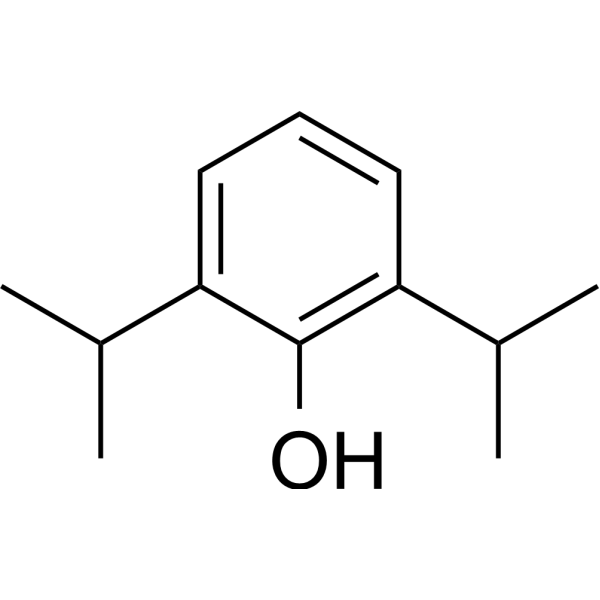
    2,6-Diisopropylphenol

    Environmental Pollutants Endogenous Metabolite GABA Receptor Neurological Disease Cancer
    Propofol potently and directly activates GABAA receptor and inhibits glutamate receptor mediated excitatory synaptic transmission. Propofol has antinociceptive properties and is used for sedation and hypnotic .
    Propofol
  • HY-14608S5
    L-Glutamic acid-13C5
    1 Publications Verification

    Endogenous Metabolite iGluR Ferroptosis Apoptosis Neurological Disease
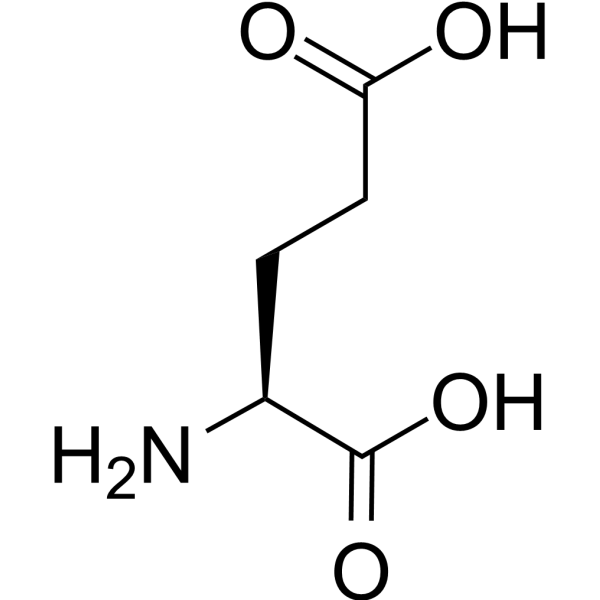
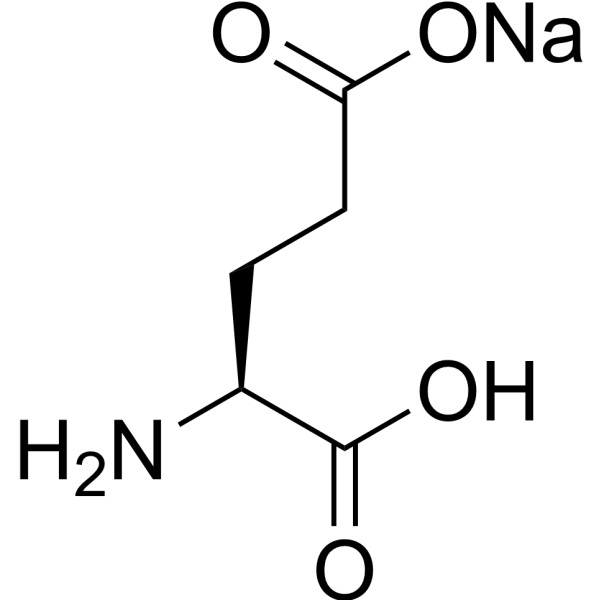
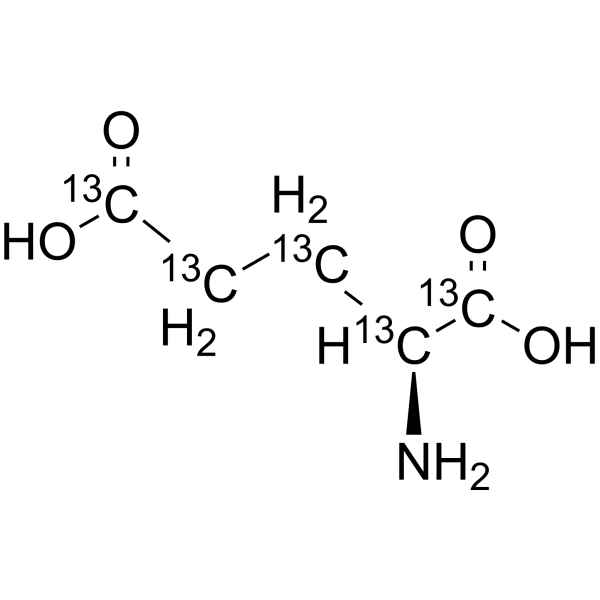
    L-Glutamic acid- 13C5 is the 13C-labeled L-Glutamic acid. L-Glutamic acid acts as an excitatory transmitter and an agonist at all subtypes of glutamate receptors (metabotropic, kainate, NMDA, and AMPA). L-Glutamic acid shows a direct activating effect on the release of DA from dopaminergic terminals.
    L-Glutamic acid-13C5
  • HY-100815B

    (±)-AMPA

    iGluR Neurological Disease
    (RS)-AMPA ((±)-AMPA) is a glutamate analogue and a potent and selective excitatory neurotransmitter L-glutamic acid agonist. (RS)-AMPA does not interfere with binding sites for kainic acid or NMDA receptors .
    (RS)-AMPA
  • HY-Y0966S8

    Endogenous Metabolite iGluR Neurological Disease
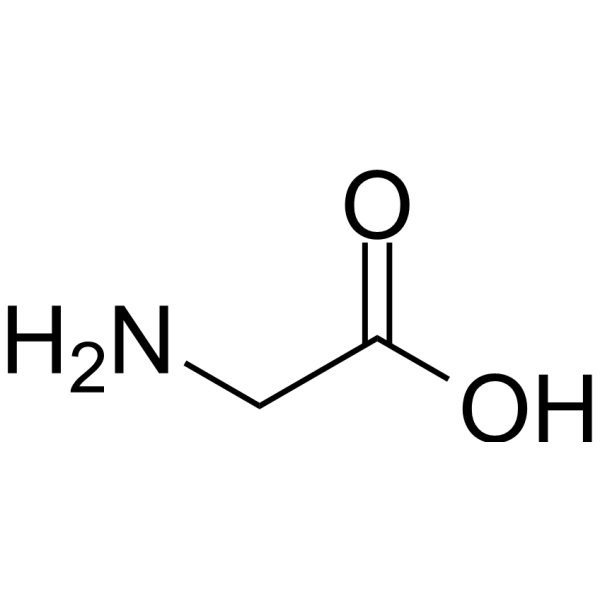
    Glycine-d5 is the deuterium labeled Glycine. Glycine is an inhibitory neurotransmitter in the CNS and also acts as a co-agonist along with glutamate, facilitating an excitatory potential at the glutaminergic N-methyl-D-aspartic acid (NMDA) receptors.
    Glycine-d5
  • HY-107522
    DL-TBOA
    1 Publications Verification

    EAAT Neurological Disease
    DL-TBOA is a potent non-transportable inhibitor of excitatory amino acid transporters with IC50s of 70 μM, 6 μM and 6 μM for excitatory amino acid transporter-1 (EAAT1), EAAT2 and EAAT3, respectively. DL-TBOA inhibits the uptake of [ 14C]glutamate in COS-1 cells expressing the human EAAT1 and EAAT2 with Ki valuesof 42 μM and 5.7 μM, respectively. DL-TBOA blocks EAAT4 and EAAT5 in a competitive manner with Ki values of 4.4 μM and 3.2 μM, respectively .
    DL-TBOA
  • HY-14608S7

    Endogenous Metabolite iGluR Ferroptosis Apoptosis Neurological Disease
    L-Glutamic acid-d5 is the deuterium labeled L-Glutamic acid. L-Glutamic acid acts as an excitatory transmitter and an agonist at all subtypes of glutamate receptors (metabotropic, kainate, NMDA, and AMPA). L-Glutamic acid shows a direct activating effect on the release of DA from dopaminergic terminals.
    L-Glutamic acid-d5
  • HY-12741
    LDN-212320
    5+ Cited Publications

    LDN-0212320; OSU-0212320

    EAAT Neurological Disease
    LDN-212320 (LDN-0212320) is a glutamate transporter (GLT-1)/excitatory amino acid transporter 2 (EAAT2) activator (at translational level). LDN-212320 (LDN-0212320) prevents nociceptive pain by upregulating astroglial GLT-1 expression in the hippocampus and ACC [1]
    LDN-212320
  • HY-10914
    UCPH-101
    1 Publications Verification

    EAAT Neurological Disease
    UCPH-101 is an excitatory amino acid transporter subtype 1 (EAAT1) inhibitor with an IC50 of 0.66 μM.
    UCPH-101
  • HY-14608S8

    Endogenous Metabolite iGluR Ferroptosis Apoptosis Neurological Disease
    L-Glutamic acid-d3 is the deuterium labeled L-Glutamic acid. L-Glutamic acid acts as an excitatory transmitter and an agonist at all subtypes of glutamate receptors (metabotropic, kainate, NMDA, and AMPA). L-Glutamic acid shows a direct activating effect on the release of DA from dopaminergic terminals.
    L-Glutamic acid-d3
  • HY-107601

    ACET

    iGluR Neurological Disease
    UBP316 (ACET) is a highly potent and selective kainate receptor GluK1 (GluR5) antagonist, with a Kb value of 1.4 nM. UBP316 is effective at blocking the depression of both field excitatory postsynaptic potentials (fEPSPs) and monosynaptically-evoked GABAergic transmission induced by ATPA, a GluK1 selective agonist .
    UBP316
  • HY-14608S3

    Isotope-Labeled Compounds Endogenous Metabolite iGluR Ferroptosis Apoptosis Neurological Disease
    L-Glutamic acid- 13C5, 15N is the 13C- and 15N-labeled L-Glutamic acid. L-Glutamic acid acts as an excitatory transmitter and an agonist at all subtypes of glutamate receptors (metabotropic, kainate, NMDA, and AMPA). L-Glutamic acid shows a direct activating effect on the release of DA from dopaminergic terminals.
    L-Glutamic acid-13C5,15N
  • HY-12597

    L-Quisqualic acid

    iGluR mGluR Neurological Disease
    Quisqualic acid (L-Quisqualic acid), a natural analog of glutamate, is a potent and pan two subsets (iGluR and mGluR) of excitatory amino acid (EAA) agonist with an EC50 of 45 nM and a Ki of 10 nM for mGluR1R. Quisqualic acid is isolated from the fruits of Quisqualis indica .
    Quisqualic acid
  • HY-101528

    iGluR Neurological Disease
    IDRA 21 is a positive and orally active modulator of the AMPA receptor. IDRA 21 facilitates excitatory neurotransmission via GluR1/2 receptors. IDRA 21 has the potential for the research of cognitive/memory disorders, including those associated with aging .
    IDRA 21
  • HY-110175
    CX614
    1 Publications Verification

    iGluR Neurological Disease
    CX614 is a positive variant modulator of AMPA receptors that enhances excitatory postsynaptic potentials (amplitude and duration) by blocking and slowing the inactivation of responses to glutamate and automatically evokes excitatory postsynaptic currents in neuronal cultures. CX614 can be used in the study of psychiatric disorders such as depression .
    CX614
  • HY-114381

    EAAT Neurological Disease
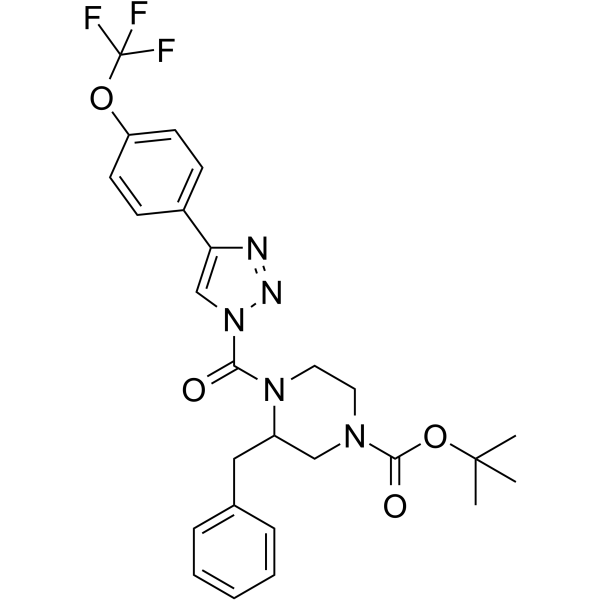
    GT 949 is a selective excitatory amino acid transporter-2 (EAAT2) positive allosteric modulator with an EC50 of 0.26 nM .
    GT 949
  • HY-Y0966S3

    Isotope-Labeled Compounds Endogenous Metabolite iGluR Neurological Disease
    Glycine- 13C2 is the 13C-labeled Glycine. Glycine is an inhibitory neurotransmitter in the CNS and also acts as a co-agonist along with glutamate, facilitating an excitatory potential at the glutaminergic N-methyl-D-aspartic acid (NMDA) receptors.
    Glycine-13C2
  • HY-Y0966S1

    Isotope-Labeled Compounds Endogenous Metabolite iGluR Neurological Disease
    Glycine-d2 is the deuterium labeled Glycine. Glycine is an inhibitory neurotransmitter in the CNS and also acts as a co-agonist along with glutamate, facilitating an excitatory potential at the glutaminergic N-methyl-D-aspartic acid (NMDA) receptors.
    Glycine-d2
  • HY-Y0966S

    Endogenous Metabolite iGluR Neurological Disease
    Glycine- 15N is the 15N-labeled Glycine. Glycine is an inhibitory neurotransmitter in the CNS and also acts as a co-agonist along with glutamate, facilitating an excitatory potential at the glutaminergic N-methyl-D-aspartic acid (NMDA) receptors .
    Glycine-15N
  • HY-171844

    iGluR Neurological Disease Inflammation/Immunology
    CX1739 is an orally active, blood-brain barrier permeable, low-efficacy AMPA-glutamate receptor (AMPAR) potentiator. CX1739 enhances excitatory neurotransmission by potentiating glutamate-induced excitatory currents and promoting in vivo long-term potentiation. CX1739 eliminates amphetamine-induced locomotor activity, reverses opioid-, pentobarbital- and ethanol-induced respiratory depression, and exerts pro-cognitive effects in animals. CX1739 impairs motor function recovery and increases the risk of post-injury complications. CX1739 can be used in research related to attention-deficit/hyperactivity disorder, dementia, respiratory depression and spinal cord injury .
    CX1739
  • HY-162455

    EAAT Neurological Disease
    NA-014 is an excitatory amino acid transporter 2 (EAAT2)-selective positive allosteric modulator. NA-014 increases EAAT2-mediated glutamate uptake. NA-014 can be used for the research of epilepsy, neuropathic pain, stroke, drugs of abuse disorders .
    NA-014
  • HY-138903
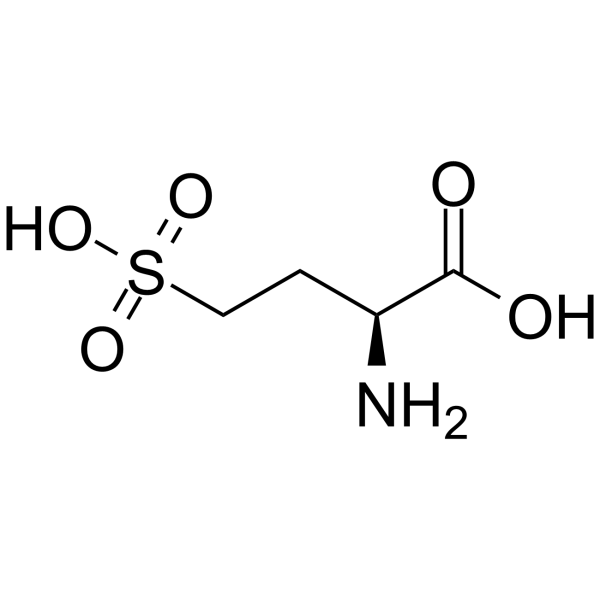
    L-Homocysteic acid
    1 Publications Verification

    L-HCA

    iGluR Neurological Disease
    L-Homocysteic acid (L-HCA) is an endogenous excitatory amino acid that acts as a NMDA receptor agonist (EC50: 14 μM). L-Homocysteic acid is neurotoxic, and can be used in the research of neurological disorders .
    L-Homocysteic acid
  • HY-Y0966S6

    Endogenous Metabolite iGluR Neurological Disease
    Glycine- 13C2, 15N is the 13C- and 15N-labeled Glycine. Glycine is an inhibitory neurotransmitter in the CNS and also acts as a co-agonist along with glutamate, facilitating an excitatory potential at the glutaminergic N-methyl-D-aspartic acid (NMDA) receptors.
    Glycine-13C2,15N
  • HY-14608S

    Endogenous Metabolite iGluR Ferroptosis Apoptosis Neurological Disease
    L-Glutamic acid- 13C is the 13C-labeled L-Glutamic acid. L-Glutamic acid acts as an excitatory transmitter and an agonist at all subtypes of glutamate receptors (metabotropic, kainate, NMDA, and AMPA). L-Glutamic acid shows a direct activating effect on the release of DA from dopaminergic terminals.
    L-Glutamic acid-13C
  • HY-P1247

    Phosphatase Neurological Disease
    Calcineurin autoinhibitory peptide is a selective inhibitor of Ca 2+/calmodulin-dependent protein phosphatase (calcineurin), with an IC50 of ~10 μM. Calcineurin autoinhibitory peptide could protect neurons from excitatory neuronal death .
    Calcineurin autoinhibitory peptide
  • HY-139692

    EAAT Neurological Disease
    EAAT2 activator 1 is the potent activator of excitatory amino acid transporter 2 (EAAT2). EAAT2 is the major glutamate transporter and functions to remove glutamate from synapses. EAAT2 activator 1 increases EAAT2 protein levels dose-dependently .
    EAAT2 activator 1
  • HY-Y0966S10

    Isotope-Labeled Compounds Endogenous Metabolite iGluR Cancer
    Glycine-d3 is the deuterium labeled Glycine. Glycine is an inhibitory neurotransmitter in the CNS and also acts as a co-agonist along with glutamate, facilitating an excitatory potential at the glutaminergic N-methyl-D-aspartic acid (NMDA) receptors.
    Glycine-d3
  • HY-Y0966S2

    Endogenous Metabolite iGluR Neurological Disease
    Glycine-2- 13C is the 13C-labeled Glycine. Glycine is an inhibitory neurotransmitter in the CNS and also acts as a co-agonist along with glutamate, facilitating an excitatory potential at the glutaminergic N-methyl-D-aspartic acid (NMDA) receptors.
    Glycine-2-13C
  • HY-Y0966S4

    Endogenous Metabolite iGluR Neurological Disease
    Glycine-1- 13C is the 13C-labeled Glycine. Glycine is an inhibitory neurotransmitter in the CNS and also acts as a co-agonist along with glutamate, facilitating an excitatory potential at the glutaminergic N-methyl-D-aspartic acid (NMDA) receptors.
    Glycine-1-13C
  • HY-P3280

    Endogenous Metabolite Metabolic Disease
    γ-Glu-Gly, a γ-glutamyl dipeptide, is a human lipid metabolite.γ-Glu-Gly has a similar structure to GABA (γ-aminobutyric acid) and can act as an antagonist of excitatory amino acids .
    γ-Glu-Gly
  • HY-14608S2

    Endogenous Metabolite iGluR Ferroptosis Apoptosis Neurological Disease
    L-Glutamic acid- 15N is the 15N-labeled L-Glutamic acid. L-Glutamic acid acts as an excitatory transmitter and an agonist at all subtypes of glutamate receptors (metabotropic, kainate, NMDA, and AMPA). L-Glutamic acid shows a direct activating effect on the release of DA from dopaminergic terminals .
    L-Glutamic acid-15N
  • HY-14608S1

    Endogenous Metabolite iGluR Ferroptosis Apoptosis Neurological Disease
    L-Glutamic acid-1- 13C is the 13C-labeled L-Glutamic acid. L-Glutamic acid acts as an excitatory transmitter and an agonist at all subtypes of glutamate receptors (metabotropic, kainate, NMDA, and AMPA). L-Glutamic acid shows a direct activating effect on the release of DA from dopaminergic terminals.
    L-Glutamic acid-1-13C
  • HY-19259

    Adenosine Kinase Neurological Disease
    GP3269 is a selective and orally active human adenosine kinase (AK) inhibitor with an IC50 of 11 nM against human adenosine kinase. GP3269 increases adenosine levels at epileptic foci, activates A1 receptors on excitatory neurons, and exhibits anticonvulsant activity in rats. GP3269 does not induce hemodynamic effects including changes in blood pressure or heart rate in rats. GP3269 can be used for epilepsy-related research .
    GP3269
  • HY-P0275
    Proctolin
    1 Publications Verification

    Endogenous Metabolite Neurological Disease
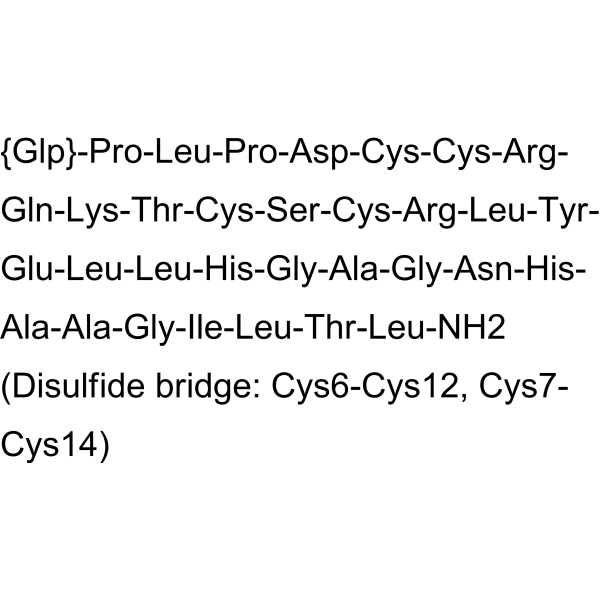
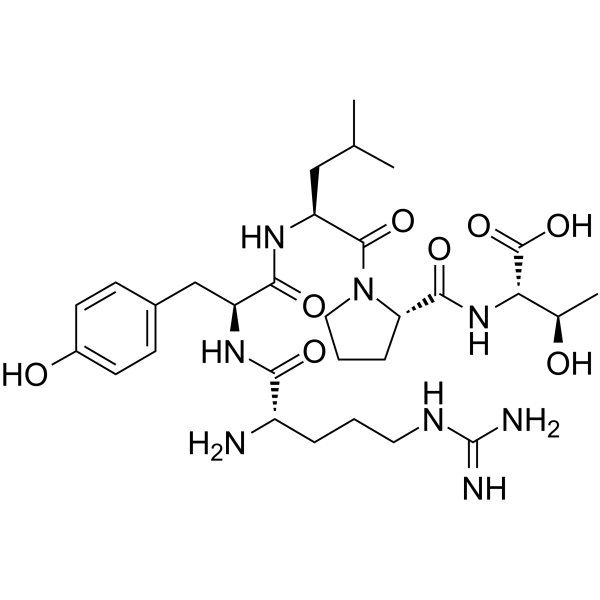
    Proctolin is an endogenous pentapeptide that acts as an excitatory neuromodulator.
    Proctolin
  • HY-101352

    Cholecystokinin Receptor Neurological Disease
    LY 225910 is a selective antagonist for cholecystokinin receptor (CCK2 receptor), which affects the excitatory response to morphine, and leads to morphine sensitization .
    LY 225910
  • HY-107498

    iGluR Neurological Disease
    GNE-8324 is a selective GluN2A positive allosteric modulator. GNE-8324 selectively enhances NMDA receptor (NMDAR)-mediated synaptic responses in inhibitory but not excitatory neurons .
    GNE-8324
  • HY-B0649S

    GABA Receptor Endogenous Metabolite Neurological Disease
    Propofol-d17 is the deuterium labeled Propofol. Propofol potently and directly activates GABAA receptor and inhibits glutamate receptor mediated excitatory synaptic transmission. Propofol has antinociceptive properties .
    Propofol-d17
  • HY-B1789A

    mAChR Neurological Disease
    Telenzepine dihydrochloride is a selective and orally active muscarinic M1 receptor antagonist with a Ki of 0.94 nM. Telenzepine dihydrochloride inhibits gastric acid secretion and has antiulcer effects .
    Telenzepine dihydrochloride
  • HY-121964

    iGluR Neurological Disease
    Cis-piperidine-2,3-dicarboxylic acid is a non-specific antagonist of NMDA, AMPA and kainate ionotropic receptors and a partial agonist for NMDA receptors. Cis-piperidine-2,3-dicarboxylic acid can be used in blocking general excitatory synaptic transmissions .
    cis-Piperidine-2,3-dicarboxylic acid
  • HY-Y0966S7

    Isotope-Labeled Compounds Endogenous Metabolite iGluR Neurological Disease
    Glycine-2- 13C, 15N is the 13C- and 15N-labeled Glycine. Glycine is an inhibitory neurotransmitter in the CNS and also acts as a co-agonist along with glutamate, facilitating an excitatory potential at the glutaminergic N-methyl-D-aspartic acid (NMDA) receptors.
    Glycine-2-13C,15N
  • HY-14608S6

    Isotope-Labeled Compounds Endogenous Metabolite iGluR Ferroptosis Apoptosis Neurological Disease
    L-Glutamic acid-5- 13C is the 13C-labeled L-Glutamic acid. L-Glutamic acid acts as an excitatory transmitter and an agonist at all subtypes of glutamate receptors (metabotropic, kainate, NMDA, and AMPA). L-Glutamic acid shows a direct activating effect on the release of DA from dopaminergic terminals.
    L-Glutamic acid-5-13C
  • HY-172261

    iGluR Neurological Disease
    YY-23 is a selective inhibitor of NMDAR (containing GluN2C or GluN2D). YY-23 inhibits GABAergic neurotransmission and enhances excitatory transmission by inhibiting NMDARs containing GluN2D on GABAergic interneurons in the prefrontal cortex. YY-23 has antidepressant activity and can be used for the research of neurological diseases .
    YY-23
  • HY-14563

    mAChR Neurological Disease
    VU10010 is a potent, highly selective and allosteric M4 mAChR potentiator with an EC50 of 400 nM. VU10010 binds to an allosteric site on M4 mAChR and increases affinity for acetylcholine and coupling to G proteins. VU10010 increases carbachol-induced depression of transmission at excitatory but not inhibitory synapses in the hippocampus .
    VU10010
  • HY-136980

    Asp-Glu

    Endogenous Metabolite Neurological Disease
    Aspartylglutamate (Asp-Glu) is a dipeptide that exhibits excitatory activity, as it has been shown to depolarize CA1 pyramidal neurons and increase conductance in response to stimulation. Aspartylglutamate selectively binds to certain glutamate receptors and demonstrates potent effects in specific regions of the hippocampus, particularly in the stratum radiatum where it enhances excitatory neurotransmission.
    Aspartylglutamate
  • HY-B0649S1

    GABA Receptor Endogenous Metabolite Neurological Disease
    Propofol-d18 is the deuterium labeled Propofol. Propofol potently and directly activates GABAA receptor and inhibits glutamate receptor mediated excitatory synaptic transmission .
    Propofol-d18
  • HY-B0680

    RU-0211 (hemiketal); SPI-0211 (hemiketal)

    Chloride Channel Others Cancer
    Lubiprostone (hemiketal) (RU-0211 (hemiketal)) is a selective chloride channel 2 (CLCN2) activator. Lubiprostone (hemiketal) is used to treat chronic idiopathic constipation and opioid-induced constipation by activating CLCN2 channels to increase chloride ion secretion in the intestine, thereby increasing intestinal fluid secretion and enhancing intestinal peristalsis. Lubiprostone (hemiketal) can be used in the study of chronic constipation and cancer .
    Lubiprostone (hemiketal)
  • HY-14608S4

    Isotope-Labeled Compounds Endogenous Metabolite iGluR Ferroptosis Apoptosis Neurological Disease
    L-Glutamic acid- 13C5, 15N,d5 is the deuterium, 13C-, and 15-labeled L-Glutamic acid. L-Glutamic acid acts as an excitatory transmitter and an agonist at all subtypes of glutamate receptors (metabotropic, kainate, NMDA, and AMPA). L-Glutamic acid shows a direct activating effect on the release of DA from dopaminergic terminals.
    L-Glutamic acid-13C5,15N,d5
  • HY-N12715

    Others Neurological Disease
    Valerena-4,7(11)-diene is a tranquilizer. Valerena-4,7(11)-diene suppresses stress-induced excitatory behaviors. Valerena-4,7(11)-diene is expressed via olfactory stimulation and pulmonary absorption .
    Valerena-4,7(11)-diene
  • HY-103176

    Adenosine Receptor Others
    PSB11 hydrochloride is an antagonist with reverse excitatory activity for human A3 Adenosine Receptor with high affinity (Ki=2.3 nM) .
    PSB11 hydrochloride
  • HY-131039

    MDNI-glu

    Amino Acid Derivatives Others
    MDNI-caged-L-glutamate (MDNI-glu) is a biologically inert, photosensitive derivative of the major excitatory amino acid, L-glutamate. MDNI-caged-L-glutamate makes more efficient use of incident light .
    MDNI-caged-L-glutamate
  • HY-119078

    mGluR Neurological Disease
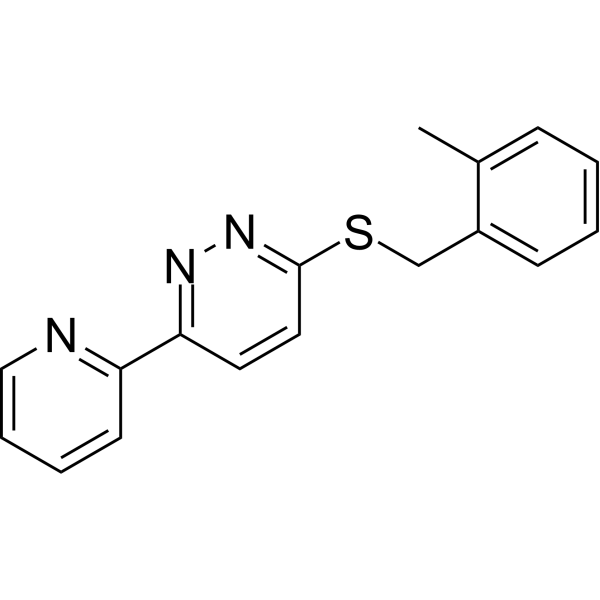
    VU0080241 is a positive allosteric modulator (PAM) of the metabotropic glutamate receptor subtype 4 (mGluR4), with an EC50 of 4.6 μM .
    VU0080241

Inquiry Online

Your information is safe with us. * Required Fields.

Salutation


Country or Region *

Applicant Name *


Organization Name *

Department *


Email Address *


Product Name *

Cat. No.


Requested quantity *

Phone Number *


Remarks

Inquiry Online

Inquiry Information

Product Name:
Cat. No.:
Quantity:
MCE Japan Authorized Agent:

