

1. Search Result
Search Result
Results for "

galactosamine

" in MedChemExpress (MCE) Product Catalog:

33

Inhibitors & Agonists

7

Biochemical Assay Reagents

1

Peptides

15

Natural
Products

1

Recombinant Proteins

2

Isotope-Labeled Compounds

5

Oligonucleotides

Cat. No. Product Name Target Research Areas Chemical Structure
  • HY-42682
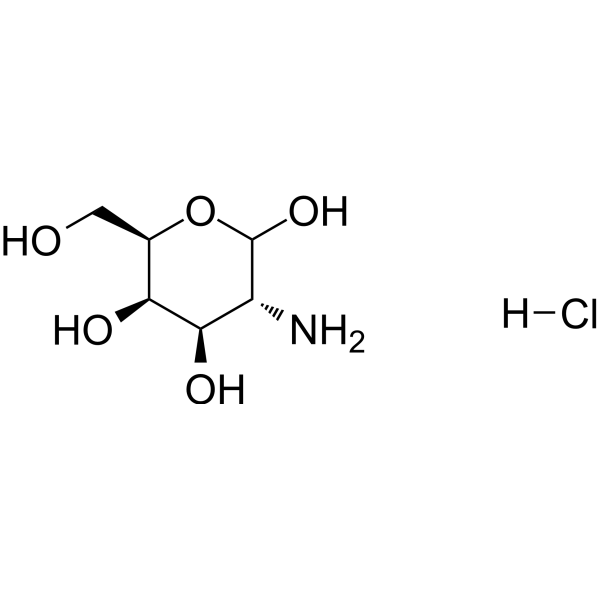
    D(+)-Galactosamine hydrochloride
    3 Publications Verification

    D-galactosamine HCl

    Drug Derivative Inflammation/Immunology
    D(+)-Galactosamine (D-Galactosamine) hydrochloride, which is an established experimental toxin, primarily causes liver injury by the generation of free radicals and depletion of UTP nucleotides. D(+)-Galactosamine hydrochloride intoxication also induces renal dysfunction thus, renal failure is often associated with the end-stage of the liver damage. Lipopolysaccharide/D(+)-Galactosamine-induced acute liver injury is a known animal model of fulminant hepatic failure .
    D(+)-Galactosamine hydrochloride
  • HY-114365
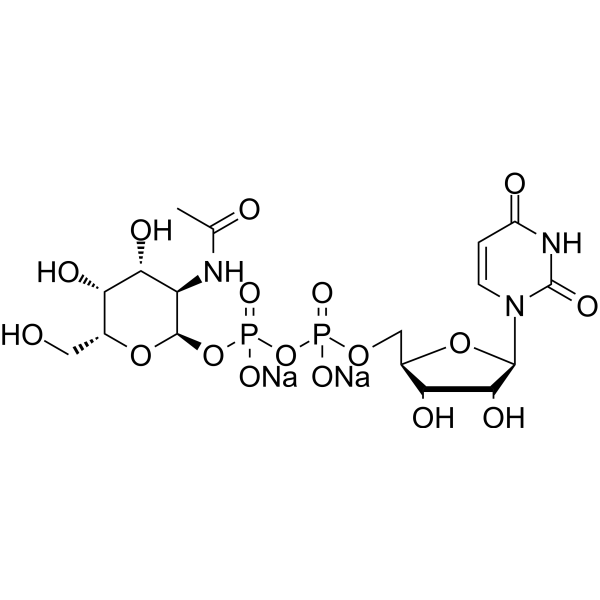
    UDP-GalNAc disodium
    1 Publications Verification

    UDP-N-acetyl-D-galactosamine disodium

    Endogenous Metabolite Metabolic Disease Cancer
    UDP-GalNAc (UDP-N-acetyl-D-galactosamine) disodium is a sugar nucleotide and a substrate for EpsC115. EpsC115 is a mutant with N-terminal residues 1-115 deleted from the exopolymeric substance (EPS). UDP-GalNAc disodium is a donor substrate for many N-acetylgalactosaminyltransferases, which transfer GalNAc from nucleotide sugars to sugar or peptide acceptors. UDP-GalNAc disodium provides a sugar group donor for glycosylation reactions. UDP-GalNAc disodium can be used in cancer research, such as colorectal and breast cancer .
    UDP-GalNAc disodium
  • HY-N1441
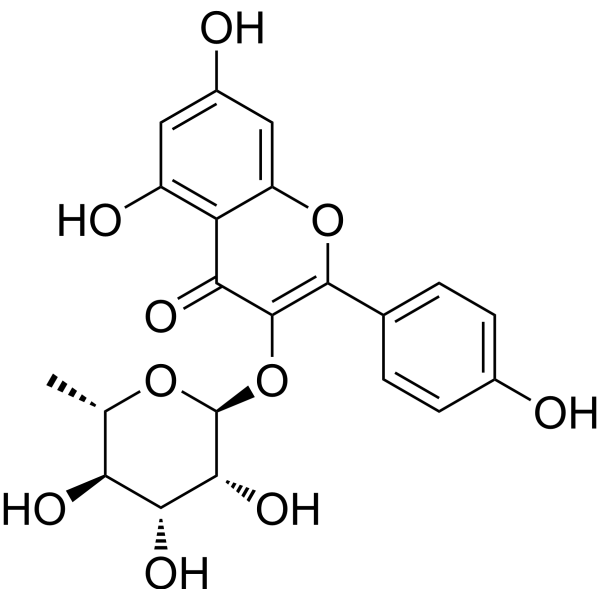
    Afzelin
    Maximum Cited Publications
    8 Publications Verification

    Kaempferol-3-O-rhamnoside

    Mitochondrial Metabolism PTEN Autophagy Bacterial Infection Cardiovascular Disease Neurological Disease Inflammation/Immunology
    Afzelin (Kaempferol-3-O-rhamnoside)It is a flavonol glycoside that has anti-inflammatory, anti-oxidative stress response, anti-apoptotic, and anti-cardiac cytotoxic effects. AfzelinIt can reduce mitochondrial damage, enhance mitochondrial biosynthesis, and reduce mitochondria-related proteins. Parkinand PTENinduced putative kinase 1 (putative kinase 1)s level. AfzelinCan be improved D-galactosamine(GalN)/LPSSurvival rate of mice treated with doxorubicin prophylaxis (HY-15142A)Induced cardiotoxicity and scopolamine (HY-N0296)-induced neurological injury. AfzelinAlso inhibits asthma and allergies caused by ovalbumin .
    Afzelin
  • HY-148089
    Eplontersen
    1 Publications Verification

    Transthyretin (TTR) Neurological Disease
    Eplontersen is a triantennary N-acetyl galactosamine (GalNAc3-7a)-conjugated antisense oligonucleotide targeting transthyretin (TTR) mRNA to inhibit production of both variant and wild-type TTR protein. Misfolded TTR induces amyloid fibrils formation in the heart and peripheral nerves, leads to amyloid TTR (ATTR) amyloidosis diseases .
    Eplontersen
  • HY-128852

    Galectin Endogenous Metabolite Others
    N-Acetyl-D-galactosamine (GalNAc) is a terminal essential amino sugar derived from galactose and forms the antigens of blood group A in humans. N-Acetyl-D-galactosamine (GalNAc) interact with Soya bean agglutinin (SBA), hence decreasing the effects of SBA on cellular membrane permeability and tight junction protein expression in piglets . N-Acetyl-D-galactosamine (GalNAc) inhibits the hemagglutinating activity by the lectin .
    N-Acetyl-D-galactosamine, 98%
  • HY-148089A
    Eplontersen sodium
    1 Publications Verification

    Transthyretin (TTR) Neurological Disease
    Eplontersen sodium the sodium salt form of Eplontersen (HY-148089). Eplontersen sodium is a triantennary N-acetyl galactosamine (GalNAc3-7a)-conjugated antisense oligonucleotide targeting transthyretin (TTR) mRNA to inhibit production of both variant and wild-type TTR protein. Misfolded TTR induces amyloid fibrils formation in the heart and peripheral nerves, leads to amyloid TTR (ATTR) amyloidosis diseases .
    Eplontersen sodium
  • HY-153492A

    AMG 890 sodium; ARC-LPA sodium

    Small Interfering RNA (siRNA) Inflammation/Immunology
    Olpasiran (AMG 890, ARC-LPA) sodium is an N-acetyl galactosamine (GalNAc)-conjugated, hepatocyte-targeted siRNA. Olpasiran sodium directly inhibits LPA messenger RNA translation in hepatocytes and potently reduce Lp(a) concentration. Olpasiran sodium can be used for the research of cardiovascular disease, such as atherosclerosis .
    Olpasiran sodium
  • HY-147062

    Biochemical Assay Reagents Metabolic Disease
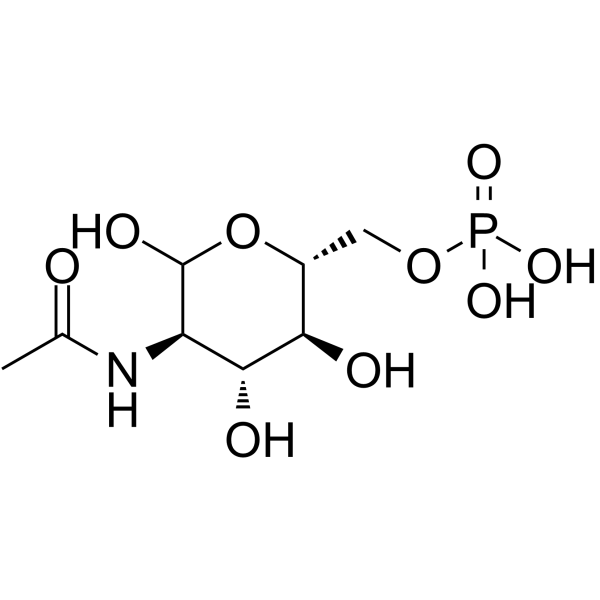
    N-acetyl-D-galactosamine 6-phosphate is a galactosamine phosphate that involved in galactose metabolism and phosphotransferase system (PTS). N-Acetyl-D-galactosamine-6-phosphate can be hydrolyze by NagA .
    N-Acetyl-D-galactosamine-6-phosphate
  • HY-153497A

    IONIS ANGPT-L3Rx sodium; ISIS 703802 sodium

    ANGPTL Metabolic Disease
    Vupanorsen (sodium) is an N-acetyl galactosamine-conjugated antisense oligonucleotide that inhibits Angiopoietin-like 3 (ANGPTL3) protein synthesis. Vupanorsen (sodium) lowers triglycerides and atherogenic lipoproteins.
    Vupanorsen sodium
  • HY-113407CR

    Reference Standards Drug Intermediate Metabolic Disease
    D-Fructose-6-phosphate disodium monohydrate (Standard) is the analytical standard of D-Fructose-6-phosphate disodium monohydrate. D-Fructose-6-phosphate is an intermediate of Glycolysis. D-Fructose-6-phosphate is the precursor for the synthesis of amino sugars, such as galactosamine and glucosamine .
    D-Fructose-6-phosphate disodium monohydrate (Standard)
  • HY-NP083A

    WFA (Biotin)

    Biochemical Assay Reagents Inflammation/Immunology
    Wisteria Floribunda Lectin (Biotin) (WFA (Biotin)) is a biotinylated lectin with affinity for N-acetyl-D-galactosamine .
    Wisteria Floribunda Lectin (Biotin)
  • HY-42682R

    D-galactosamine HCl (Standard)

    Reference Standards Inflammation/Immunology
    D(+)-Galactosamine (hydrochloride) (Standard) is the analytical standard of D(+)-Galactosamine (hydrochloride). This product is intended for research and analytical applications. D(+)-Galactosamine (D-Galactosamine) hydrochloride, which is an established experimental toxin, primarily causes liver injury by the generation of free radicals and depletion of UTP nucleotides. D(+)-Galactosamine hydrochloride intoxication also induces renal dysfunction thus, renal failure is often associated with the end-stage of the liver damage. Lipopolysaccharide/D(+)-Galactosamine-induced acute liver injury is a known animal model of fulminant hepatic failure .
    D(+)-Galactosamine hydrochloride (Standard)
  • HY-N1441R

    Kaempferol-3-O-rhamnoside (Standard)

    Mitochondrial Metabolism PTEN Autophagy Bacterial Reference Standards Infection Cardiovascular Disease Neurological Disease Inflammation/Immunology
    Afzelin (Standard) is the analytical standard of Afzelin. This product is intended for research and analytical applications. Afzelin (Kaempferol-3-O-rhamnoside)It is a flavonol glycoside that has anti-inflammatory, anti-oxidative stress response, anti-apoptotic, and anti-cardiac cytotoxic effects. AfzelinIt can reduce mitochondrial damage, enhance mitochondrial biosynthesis, and reduce mitochondria-related proteins. Parkinand PTENinduced putative kinase 1 (putative kinase 1)s level. AfzelinCan be improved D-galactosamine(GalN)/LPSSurvival rate of mice treated with doxorubicin prophylaxis (HY-15142A)Induced cardiotoxicity and scopolamine (HY-N0296)-induced neurological injury. AfzelinAlso inhibits asthma and allergies caused by ovalbumin .
    Afzelin (Standard)
  • HY-W145694

    Biochemical Assay Reagents Others
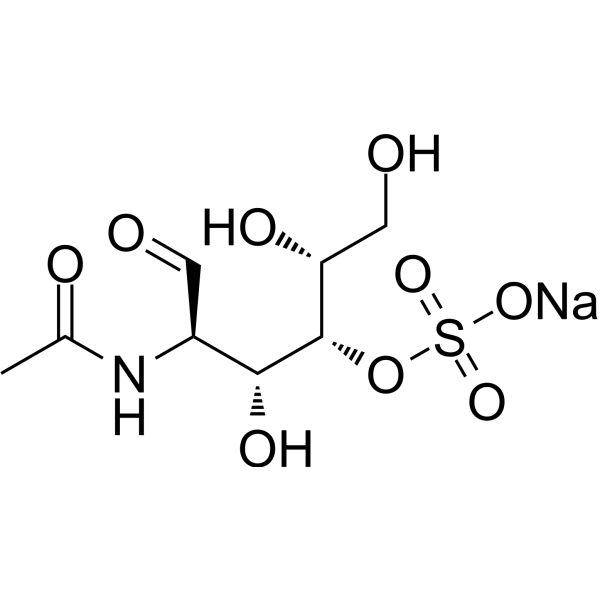
    N-Acetyl-D-galactosamine-4-O-sulfate sodium salt is a biochemical reagent that can be used as a biological material or organic compound for life science related research.
    N-Acetyl-D-galactosamine-4-O-sulfate sodium salt
  • HY-153497

    IONIS ANGPT-L3Rx; ISIS 703802

    ANGPTL Metabolic Disease
    Vupanorsen is an N-acetyl galactosamine-conjugated antisense oligonucleotide that inhibits Angiopoietin-like 3 (ANGPTL3) protein synthesis. Vupanorsen lowers triglycerides and atherogenic lipoproteins.
    Vupanorsen
  • HY-42682S1

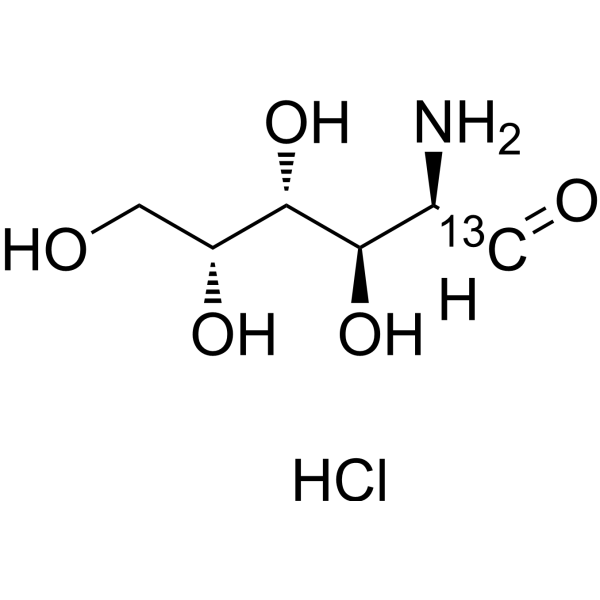
    D-galactosamine-13C hydrochloride

    Isotope-Labeled Compounds Inflammation/Immunology
    D(+)-Galactosamine- 13C (hydrochloride) is the 13C labeled D(+)-Galactosamine hydrochloride. D(+)-Galactosamine (D-Galactosamine) hydrochloride, which is an established experimental toxin, primarily causes liver injury by the generation of free radicals and
    D(+)-Galactosamine-13C hydrochloride
  • HY-W005729

    Biochemical Assay Reagents Others
    β-D-Galactosamine pentaacetate is an intermediate in the synthesis of triantennary N-Acetylgalactosamine ligands. β-D-Galactosamine pentaacetate can be studied in liver-targeted delivery of siRNA research .
    β-D-Galactosamine pentaacetate
  • HY-W551412

    Biochemical Assay Reagents Others
    β-D-Galactosyl-(1→3)-N-acetyl-D-galactosamine is a class of biochemical reagents used in glycobiology research. Glycobiology studies the structure, synthesis, biology, and evolution of sugars. It involves carbohydrate chemistry, enzymology of glycan formation and degradation, protein-glycan recognition, and the role of glycans in biological systems. This field is closely related to basic research, biomedicine, and biotechnology .
    β-D-Galactosyl-(1→3)-N-acetyl-D-galactosamine
  • HY-N10380

    Others Metabolic Disease
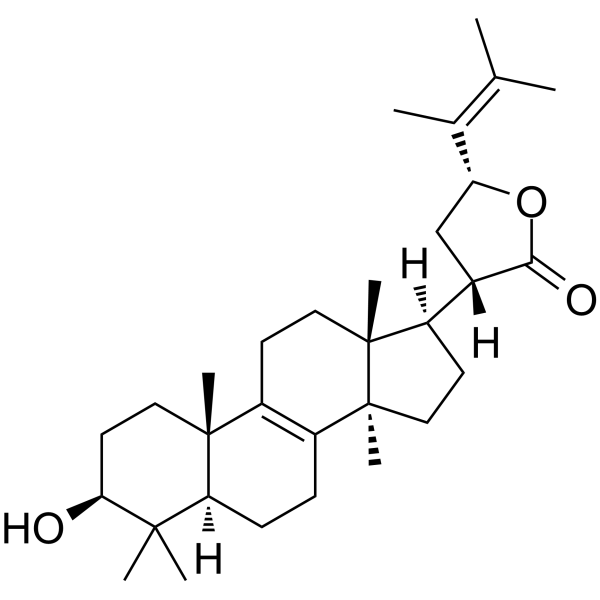
    Inonotusol F is a triterpene isolated from Inonotus obliquus. Inonotusol F shows hepatoprotective effects against D-galactosamine-induced WB-F344 cell damage .
    Inonotusol F
  • HY-N4243

    Others Metabolic Disease
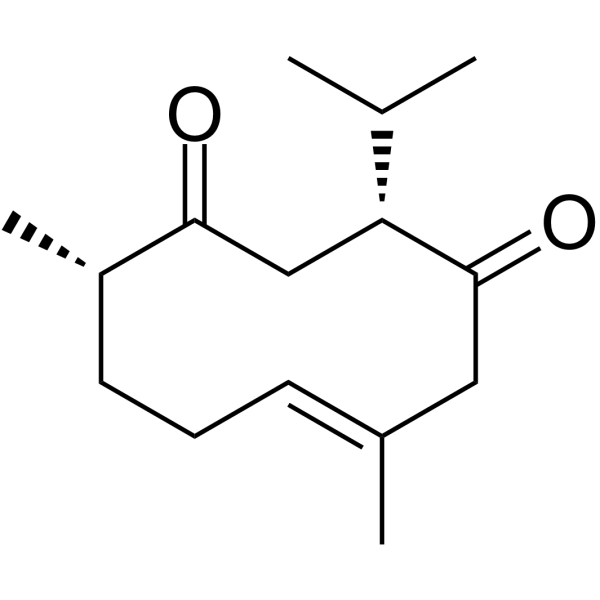
    Neocurdione is a hepatoprotective sesquiterpene isolated from Curcuma zedoaria rhizome. Neocurdione exerts potent effect on D-galactosamine- (D-Gain) and lipopolysaccharide- (LPS) induced acute liver injury in mice .
    Neocurdione
  • HY-117271

    Biochemical Assay Reagents Others
    D-Galactosamine pentaacetate is a biochemical reagent that can be used as a biological material or organic compound for life science related research.
    D-Galactosamine pentaacetate
  • HY-W436265

    O-Methyl-N-acetyl-2-deoxy-a-D-galactosamine

    Biochemical Assay Reagents
    O-Methyl-N-acetyl-2-deoxy-α-D-galactosamine (O-Methyl-N-acetyl-2-deoxy-a-D-galactosamine) is a class of biochemical reagents used in the study of glycobiology. Glycobiology studies the structure, synthesis, biology, and evolution of sugars. It deals with carbohydrate chemistry, glycan formation and degradation enzymology, protein-glycan recognition, and the role of glycans in biological systems. The field is closely related to basic research, biomedicine and biotechnology .
    O-Methyl-N-acetyl-2-deoxy-α-D-galactosamine
  • HY-W601362

    Endogenous Metabolite Metabolic Disease
    N-Acetyl-D-galactosamine-6-phosphate disodium is a galactosamine phosphate that involved in galactose metabolism and phosphotransferase system (PTS). N-Acetyl-D-galactosamine-6-phosphate disodium can be hydrolyze by NagA .
    N-Acetyl-D-galactosamine-6-phosphate disodium
  • HY-N12432

    Others Metabolic Disease
    Glomeratide A is a benzophenone C-glucoside with hepatoprotective effects. Glomeratide A has a protective effect against d-galactosamine-induced hepatotoxicity in rat liver epithelial stem-like cells.
    Glomeratide A
  • HY-N12016

    Others Metabolic Disease
    Fulvotomentoside B is a saponin isolated from Lactobacillus flavus. Fulvotomentoside compounds can significantly reduce serum glutamate pyruvate transaminase (SGPT) and triacylglycerol (GT) levels in mice poisoned by CCl4, d-galactosamine (d-gal) and acetaminophen, and significantly alleviate liver pathology. damage .
    Fulvotomentoside B
  • HY-N12087

    NF-κB NO Synthase Reactive Oxygen Species (ROS) Inflammation/Immunology
    8-Deoxylactucin is an orally active sesquiterpene lactone. 8-Deoxylactucin inhibits LPS (HY-D1056)-induced NO production in RAW264.7 macrophages with an IC50 value of 4.35 μM. 8-Deoxylactucin exerts anti-inflammatory effects by blocking the NF-κB pathway. 8-Deoxylactucin demonstrates hepatoprotective efficacy in LPS/D-galactosamine-induced acute hepatitis model of mice. 8-Deoxylactucin can be used for the study of inflammatory diseases and inflammatory liver injuries .
    8-Deoxylactucin
  • HY-180703

    MeSebGalNac

    Nucleoside Antimetabolite/Analog Metabolic Disease
    1β-Methylseleno-N-acetyl-D-galactosamine (MeSebGalNac) is a nucleoside metabolite.
    1β-Methylseleno-N-acetyl-D-galactosamine
  • HY-113407C

    Drug Intermediate Metabolic Disease
    D-Fructose-6-phosphate disodium monohydrate is an intermediate of Glycolysis. D-Fructose-6-phosphate disodium monohydrate is the precursor for the synthesis of amino sugars, such as galactosamine and glucosamine .
    D-Fructose-6-phosphate disodium monohydrate
  • HY-E71153

    Biochemical Assay Reagents Others
    1,3-β-Galactosyl-N-acetylhexosamine phosphorylase (EC 2.4.1.211) uses β-D-galactosyl-(1→3)-N-acetyl-D-galactosamine as a substrate to generate N-acetyl-D-galactosamine.
    1,3-β-Galactosyl-N-acetylhexosamine phosphorylase
  • HY-N17882A

    Drug Derivative Metabolic Disease
    Hydroxysaikosaponin D is a hepatocytoprotective saponin found in the roots of Bupleurum scorzonerifolium WILLD. Hydroxysaikosaponin D inhibits D-galactosamine-induced cytotoxicity in primary cultured rat hepatocytes. Hydroxysaikosaponin D mitigates D-galactosamine/LPS-induced liver injury in mice. Hydroxysaikosaponin D can be used for the research of liver injury .
    Hydroxysaikosaponin D
  • HY-113407CS

    Isotope-Labeled Compounds Drug Intermediate Metabolic Disease
    D-Fructose-6-phosphate disodium monohydrate- 13C6 is the 13C-labeled D-Fructose-6-phosphate disodium monohydrate (HY-113407C). D-Fructose-6-phosphate disodium monohydrate is an intermediate of Glycolysis. D-Fructose-6-phosphate disodium monohydrate is the precursor for the synthesis of amino sugars, such as galactosamine and glucosamine .
    D-Fructose-6-phosphate disodium monohydrate-13C6
  • HY-N17767

    Others Inflammation/Immunology
    Leonoside F is a phenylethanoid glycoside compound isolated from the aerial parts of Leonurus japonicus Houtt., which protects liver cells from chemically induced damage. At a concentration of 1×10 -5 M, Leonoside F shows significant hepatoprotective activity against D-galactosamine-induced damage in HL-7702 liver cells, with an inhibition rate of 30.9% .
    Leonoside F
  • HY-E71244

    Biochemical Assay Reagents Others
    α-N-Acetylneuraminyl-2,3-β-Galactosyl-1,3-N-acetylgalactosaminide 6-α-sialyltransferase (EC 2.4.99.7) attaches N-acetylneuraminic acid in alpha-2,6-linkage to N-acetyl-galactosamine only when present in the structure, where R may be protein or p-nitrophenol.
    α-N-Acetylneuraminyl-2,3-β-galactosyl-1,3-N-acetylgalactosaminide 6-α-sialyltransferase

Inquiry Online

Your information is safe with us. * Required Fields.

Salutation


Country or Region *

Applicant Name *


Organization Name *

Department *


Email Address *


Product Name *

Cat. No.


Requested quantity *

Phone Number *


Remarks

Inquiry Online

Inquiry Information

Product Name:
Cat. No.:
Quantity:
MCE Japan Authorized Agent:

