
1. Search Result
Search Result
Results for "

high concentration

" in MedChemExpress (MCE) Product Catalog:

283

Inhibitors & Agonists

2

Screening Libraries

49

Fluorescent Dyes

39

Biochemical Assay Reagents

15

Peptides

5

MCE Kits

36

Natural
Products

14

Isotope-Labeled Compounds

6

Oligonucleotides

1

GMP Molecules

Targets Recommended:
Cat. No. Product Name Target Research Areas Chemical Structure
  • HY-112083
    BAY-3827
    10+ Cited Publications

    AMPK Cancer
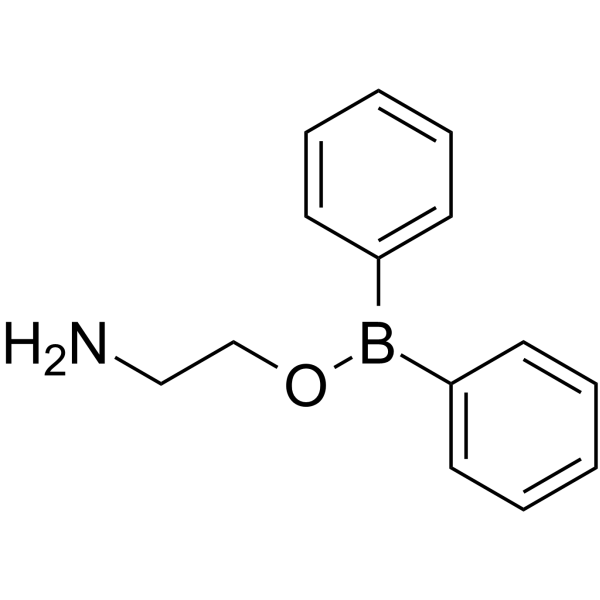
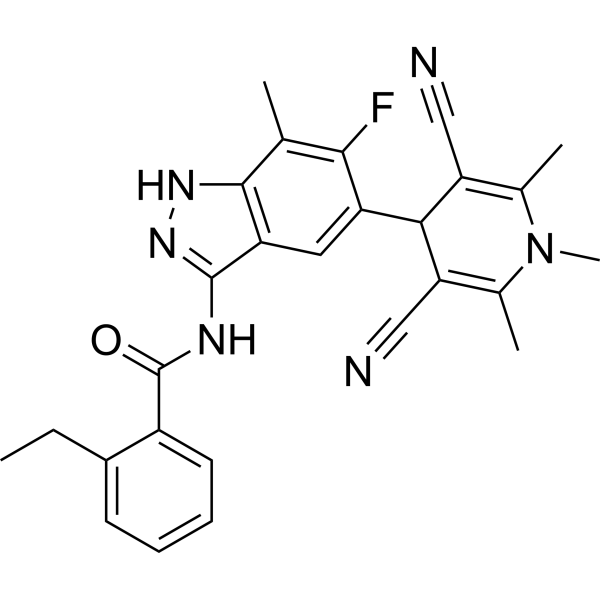
    BAY-3827, a chemical probe, is a potent and selective AMPK inhibitor with IC50 values of 1.4 nM at low (10 μM ATP concentration) and 15 nM at high (2 mM ATP concentration). BAY-3827 shows over 500-fold selectivity for most of the 331 kinases. BAY-3827 prevents phosphorylation of acetyl-CoA carboxylase 1 and shows strongest anti-proliferative activity in androgen-dependent prostate cancer cell lines .
    BAY-3827
  • HY-D0090
    MQAE
    Maximum Cited Publications
    18 Publications Verification

    Fluorescent Dye Others
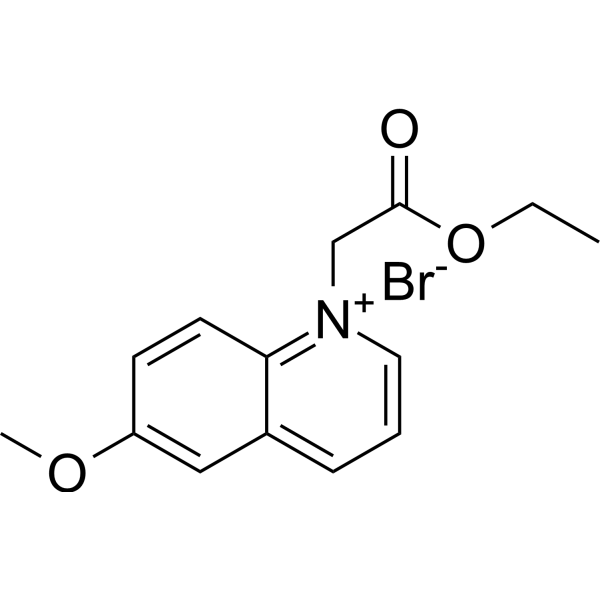
    MQAE is a chloride ion (Cl -) fluorescent probe that can be used to measure chloride concentrations. The fluorescence intensity of MQAE decreases proportionally as Cl - ions increase. MQAE has high cell permeability and is suitable for fluorescence detection such as confocal microscopy and flow cytometry (Ex/Em=350/460 nm) .
    MQAE
  • HY-136408

    Malonyl coenzyme A lithium

    Carnitine Palmitoyltransferase (CPT) Mitochondrial Metabolism Metabolic Disease
    Malonyl CoA (Malonyl Coenzyme A) lithium is an inhibitor of carnitine palmitoyl transferase 1 (CPT1). High Malonyl CoA lithium concentrations suppress fatty acid oxidation, while low Malonyl CoA lithium concentrations are permissive for fat oxidation .
    Malonyl CoA lithium
  • HY-17461
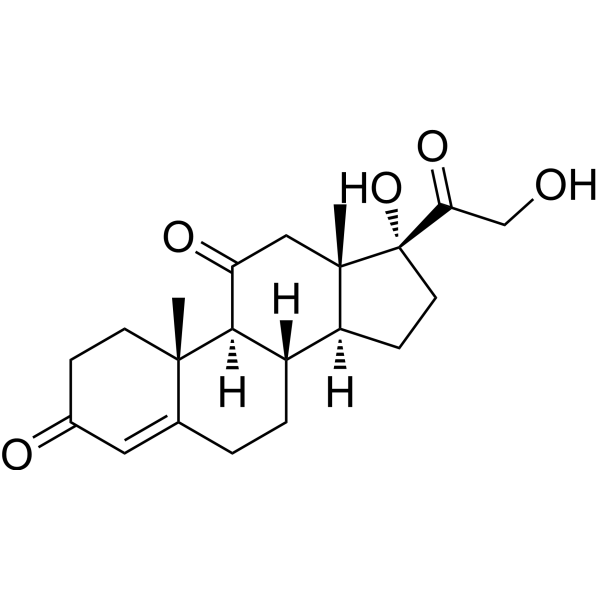
    Cortisone
    3 Publications Verification

    17-Hydroxy-11-dehydrocorticosterone; Kendall's compound E

    Glucocorticoid Receptor Endogenous Metabolite Cardiovascular Disease Inflammation/Immunology Endocrinology
    Cortisone (17-Hydroxy-11-dehydrocorticosterone), an oxidized metabolite of Cortisol (a Glucocorticoid). Cortisone acts as an immunosuppressant and anti-inflammatory agent. Cortisone can partially intervene in binding of Glucocorticoid to Glucocorticoid-receptor at high concentrations .
    Cortisone
  • HY-Y0313

    Endogenous Metabolite GABA Receptor Neurological Disease
    p-Hydroxybenzaldehyde is a one of the major components in vanilla aroma, with antagonistic effect on GABAA receptor of the α1β2γ2S subtype at high concentrations.
    p-Hydroxybenzaldehyde
  • HY-17461A
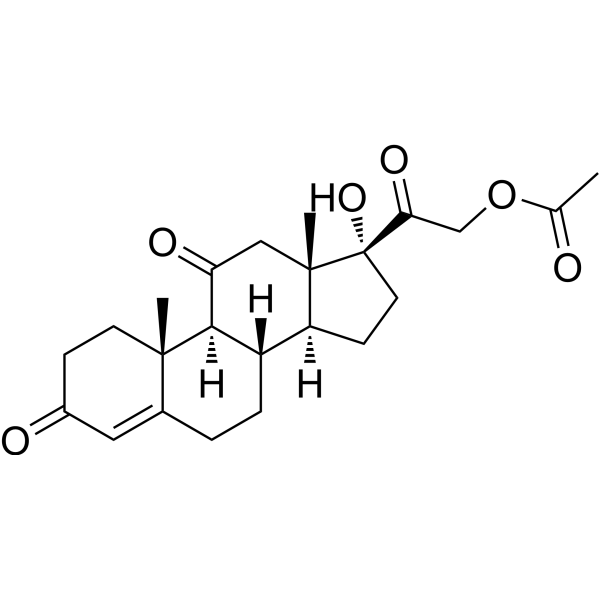
    Cortisone acetate
    3 Publications Verification

    Cortisone 21-acetate

    Glucocorticoid Receptor Endogenous Metabolite Cardiovascular Disease Inflammation/Immunology Endocrinology
    Cortisone acetate (Cortisone 21-acetate), an oxidized metabolite of Cortisol (a Glucocorticoid). Cortisone acetate acts as an immunosuppressant and anti-inflammatory agent. Cortisone acetate can partially intervene in binding of Glucocorticoid to Glucocorticoid-receptor at high concentrations .
    Cortisone acetate
  • HY-W011053

    Taste Receptor Apoptosis Drug Derivative Metabolic Disease
    Neotame is a derivative of Aspartame (HY-B0361) and is a flavor enhancer and low-caloric, non-nutritive, high-intensity artificial sweetener that is 7000-13,000 times sweeter than sugar. Neotame causes intestinal epithelial cell death at high concentrations. Neotame induces Apoptosis of Caco-2 cells .
    Neotame
  • HY-125920

    Sarkosyl NL sodium

    Environmental Pollutants Biochemical Assay Reagents Others
    Lauroylsarcosine sodium is a surfactant commonly used in personal care and cosmetics such as shampoos, facial cleansers and toothpaste. It works by lowering the surface tension of water, allowing it to better penetrate and clean surfaces. Lauroylsarcosine sodium is considered safe for cosmetic use and is approved for use in several countries. However, it can cause skin irritation in high concentrations or with prolonged exposure.
    Lauroylsarcosine sodium
  • HY-N0720
    Neobavaisoflavone
    10+ Cited Publications

    Apoptosis DNA/RNA Synthesis Inflammation/Immunology Cancer
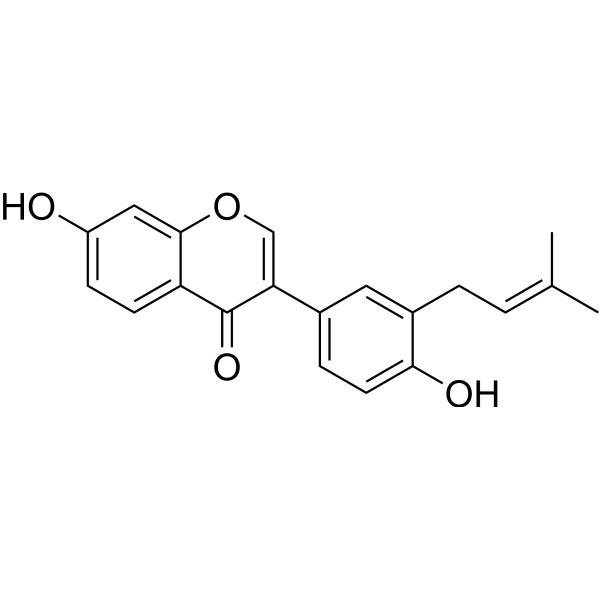
    Neobavaisoflavone, a flavonoid, is isolated from the seeds of Psoralea corylifolia. Neobavaisoflavone exhibits anti-inflammatory, anti-cancer and anti-oxidation activities. Neobavaisoflavone inhibits DNA polymerase at moderate to high concentrations. Neobavaisoflavone also inhibits platelet aggregation .
    Neobavaisoflavone
  • HY-126437A
    Poly-L-lysine hydrochloride
    1 Publications Verification

    Bacterial Infection Inflammation/Immunology
    Poly-L-lysine hydrochloride is a nonspecific attachment factor for cells useful in promoting cell adhesion to solid substrates by enhancing electrostatic interaction between negatively charged ions of the cell membrane and the culture surface. Poly-L-lysine hydrochloride is a strong-attraction regulator that promotes liquid-liquid phase separation (LLPS) at low concentrations but suppresses LLPS at high concentrations. Antibacterial cationic peptide. .
    Poly-L-lysine hydrochloride
  • HY-130412
    FlAsH-EDT2
    2 Publications Verification

    Fluorescent Dye Others
    FlAsH-EDT2 is a protein labeling reagent. FlAsH-EDT2 binds to Cys4 with high affinity and emits fluorescence. FlAsH-EDT2 can cross the cell membrane and enter the interior of the cell. FlAsH-EDT2 can only be used for labeling proteins with high concentration .
    FlAsH-EDT2
  • HY-124634
    PZ-2891
    4 Publications Verification

    PANK Neurological Disease
    PZ-2891 is an orally bioavailable, brain penetrant pantothenate kinase (PANK) modulator. PZ-2891 act as an orthosteric inhibitor at high concentrations and an allosteric activator at lower sub-saturating concentrations. PZ-2891 inhibits human pantothenate kinases PANK1β, PANK2, and PANK3 with IC50s of 40.2 nM, 0.7 nM and 1.3 nM, respectively .
    PZ-2891
  • HY-145442

    Adenosine Deaminase Others
    8-Azanebularine, a compound with hydrogen in place of the C6 amino group, inhibits the ADAR2 reaction at high concentrations (IC50=15 mM). 8-Azanebularine is incorporated into an RNA structure recognized by human ADAR2 results in high-affinity binding (KD=2 nM). 8-Azanebularine can be used for the research of ADAR-catalyzed RNA-editing reaction .
    8-Azanebularine
  • HY-P5366

    Liposome Others
    PEP1 is an amphipathic α-helical peptide containing 31 residues. The interaction of PEP1 with POPC-supported lipid bilayers (SLBs) is concentration-dependent: at low concentrations, it inserts into SLBs to generate compressive stress; at medium concentrations, it saturates the membrane surface to maintain constant stress; and at high concentrations, it solubilizes SLBs. PEP1 can be used for research on the mechanism of membrane-peptide interactions .
    PEP1
  • HY-N0367
    Trans-Anethole
    2 Publications Verification

    (E)​-Anethole

    Environmental Pollutants Endogenous Metabolite Cardiovascular Disease Metabolic Disease Endocrinology Cancer
    Trans-Anethole ((E)-Anethole) is an orally active phenylpropene derivative found in Foeniculum vulgare that is estrogenic at low concentrations and cytotoxic at high concentrations in tumor cell lines. Trans-Anethole also has anti-aflatoxin, anti-thrombotic and anti-diabetic activities. Trans-Anethole is an important odor component in plants such as fennel, myrtle, liquorice, and camphor .
    Trans-Anethole
  • HY-W088066

    Bacterial Infection
    Trisodium phosphate dodecahydrate is an Antibacterial agent. Trisodium phosphate dodecahydrate reduces the counts of Escherichia coli O157:H7 and Salmonella typhimurium attached to the surfaces of beef fat and fascia. Trisodium phosphate dodecahydrate modulates the growth parameters of Listeria monocytogenes in vitro: low concentrations shorten the lag phase and increase the maximum growth rate, while high concentrations prolong the lag phase and decrease the maximum growth rate. Trisodium phosphate dodecahydrate is used in poultry processing .
    Trisodium phosphate (dodecahydrate)
  • HY-129811

    Microtubule/Tubulin Neurological Disease
    Bis-ANS dipotassium is a fluorescent probe of hydrophobic protein. Bis-ANS binds to tubulin with a Kd of 2 μM . Bis-ANS dipotassium is a potent biphasic modulator of protein liquid-liquid phase separation (LLPS). Bis-ANS dipotassium promotes LLPS at low concentrations but suppresses LLPS at high concentrations .
    Bis-ANS dipotassium
  • HY-W111692

    Biochemical Assay Reagents Others
    Sodium polyphosphate, crystal,+200 mesh, 96% is an inorganic polyphosphate that also serves as a stabilizer, dispersant, chelating agent, and coacervate-forming agent. Sodium polyphosphate provides electrostatic stabilization for mineral and material suspensions, but its dispersing efficacy decreases under acidic pH, high temperature, high calcium concentration, or a combination of these conditions. Sodium polyphosphate can chelate alkaline earth metals, reduce solution pH, and alter the rate of pH decline at a divalent cation/phosphorus molar ratio of 0.18. Sodium polyphosphate forms coacervates with smaller divalent cations and precipitates with larger divalent cations, where the functional requirements of cations depend on polyphosphate concentration, average degree of polymerization, and cation type .
    Sodium polyphosphate, crystal,+200 mesh, 96%
  • HY-17461S1

    Isotope-Labeled Compounds Glucocorticoid Receptor Endogenous Metabolite Inflammation/Immunology Endocrinology
    Cortisone-d8 is the deuterium labeled Cortisone. Cortisone (17-Hydroxy-11-dehydrocorticosterone), an oxidized metabolite of Cortisol (a Glucocorticoid). Cortisone acts as an immunosuppressant and anti-inflammatory agent. Cortisone can partially intervene in binding of Glucocorticoid to Glucocorticoid-receptor at high concentrations .
    Cortisone-d8
  • HY-D1634

    Cathepsin Others
    Bz-FVR-AMC is a fluorogenic substrate for procathepsin with a kcat/Km value of 1070 mM -1s -1. The high concentration of BZ-FVR-AMC inhibits the substrate .
    Bz-FVR-AMC
  • HY-110082
    Quinine (hydrochloride)
    5+ Cited Publications

    Flavivirus Dengue Virus Parasite Potassium Channel Cardiovascular Disease Infection Cancer
    Quinine hydrochloride is an alkaloid extracted from cinchona bark and exhibits oral activity, acting as a potassium channel inhibitor. Quinine hydrochloride modulates the tolerance of red blood cells and presents dose-dependent toxicity and embryonic effects. Quinine hydrochloride is a typical hemolysin that directly lyses red blood cells, with cellular components of red blood cell membranes as its action targets. Quinine hydrochloride disrupts red blood cell membranes and induces hemolysis at high concentrations, while merely weakening the anti-hemolytic capacity of red blood cells at low concentrations. Quinine hydrochloride continuously reduces red blood cell tolerance after in vivo administration, and high doses can also alter blood cell counts. Quinine hydrochloride can be applied to researches related to red blood cell hemolysis, cancer and malaria .
    Quinine (hydrochloride)
  • HY-W116007

    Environmental Pollutants DNA/RNA Synthesis Endocrinology
    Octamethylcyclotetrasiloxane promotes the anchorage-independent growth of MCF-10A and MCF-10F cells. Octamethylcyclotetrasiloxane induces DNA damage, inhibits the expression of DNA-repairing protein BRCA1 under long-term and high-concentration exposure. Octamethylcyclotetrasiloxane exhibits intrinsic estrogenic activity .
    Octamethylcyclotetrasiloxane
  • HY-118438

    Aryl Hydrocarbon Receptor Inflammation/Immunology
    10-Cl-BBQ is a high affinity AhR ligand with immunosuppressive activity. 10-Cl-BBQ promotes cytosol to nuclear translocation of AhR and activates the AhR-regulated reporter gene at nanomolar concentrations .
    10-Cl-BBQ
  • HY-120976

    Biochemical Assay Reagents Cancer
    cDEPMPO is a potent anticancer proagent. High concentrations of DEPMPO spin-trap the ·OH radical together with aryl radicals arising from one-electron reduced BTO (benzotriazine 1,4-di-N-oxide) compounds .
    DEPMPO
  • HY-W011297

    Arachidonic acid methyl ester

    PKC Metabolic Disease
    Methyl arachidonate is a protein kinase C activator and also an orally active substrate that undergoes esterase-mediated hydrolysis. Methyl arachidonate indirectly activates protein kinase C via eicosanoid metabolites generated through the arachidonic acid metabolic pathway, exerting effects via cyclooxygenase products at low concentrations and via lipoxygenase products at high concentrations. Methyl arachidonate can be used in studies related to lipodystrophy .
    Methyl arachidonate
  • HY-W011180

    Drug Derivative Others
    Vitamin A Propionate is an ester compound of vitamin A. In nutritional studies of foals, different doses have different effects on growth, serum biochemistry and hematological indicators. Too high or too low doses will produce adverse effects and are related to the vitamin A concentration in plasma, liver and kidneys.
    Vitamin A Propionate
  • HY-D2299

    Fluorescent Dye Metabolic Disease Cancer
    AIE-ER is a specific endoplasmic reticulum (ER) fluorescent probe (green channel: λex=405 nm, λem=450~650 nm) that exhibits remarkable photostability, high brightness, and low working concentration. AIE-ER may provide an avenue for studying diseases related to the endoplasmic reticulum .
    AIE-ER
  • HY-N7659A

    Phytohormone Microtubule/Tubulin Apoptosis Others
    Glucobrassicin potassium is an indole-based anticancer agent and plant growth-regulating hormone. Glucobrassicin potassium exerts its biological activity by disrupting the integrity of microtubule networks in both plant and mammalian cells. At high concentrations, Glucobrassicin potassium inhibits seed germination and root growth; it can also specifically induce apoptosis in mammalian cancer cells and interfere with the intercellular transmission of viruses that rely on microtubules. In plants, Glucobrassicin potassium can be catalyzed by myrosinase to release growth-regulating substances, exhibiting a concentration-dependent growth-regulating effect .
    Glucobrassicin potassium
  • HY-N7659

    Phytohormone Apoptosis Microtubule/Tubulin Cancer
    Glucobrassicin is an indole-based anticancer agent and plant growth-regulating hormone. Glucobrassicin exerts its biological activity by disrupting the integrity of microtubule networks in both plant and mammalian cells. At high concentrations, Glucobrassicin inhibits seed germination and root growth; it can also specifically induce apoptosis in mammalian cancer cells and interfere with the intercellular transmission of viruses that rely on microtubules. In plants, Glucobrassicin can be catalyzed by myrosinase to release growth-regulating substances, exhibiting a concentration-dependent growth-regulating effect .
    Glucobrassicin
  • HY-B2200

    Tricalcium dicitrate tetrahydrate, 99%

    Environmental Pollutants Biochemical Assay Reagents Calcium Channel Metabolic Disease
    Calcium citrate tetrahydrate, 99% exhibits the ability to release more calcium ions in a short time therefore allowing a high activity, and a high concentration of calcium ions that can stimulate bone formation .
    Calcium citrate tetrahydrate, 99%
  • HY-135239

    Fluorescent Dye Others
    Fura-FF pentapotassium is a low-affinity fluorescent dye for calcium (Ex/Em: 365/514 nm in the absence of calcium; 339/507 nm in the presence of a high calcium concentration) .
    Fura-FF pentapotassium
  • HY-Y0313R

    Reference Standards Endogenous Metabolite GABA Receptor Neurological Disease
    p-Hydroxybenzaldehyde (Standard) is the analytical standard of p-Hydroxybenzaldehyde. This product is intended for research and analytical applications. p-Hydroxybenzaldehyde is a one of the major components in vanilla aroma, with antagonistic effect on GABAA receptor of the α1β2γ2S subtype at high concentrations.
    p-Hydroxybenzaldehyde (Standard)
  • HY-131314

    Drug Metabolite Others
    Ibuprofen carboxylic acid is the metabolite of Ibuprofen (HY-78131), that has high concentrations in wastewater and water environments, and disappears fast during biodegradation, compared to the other ibuprofen metabolite .
    Ibuprofen carboxylic acid
  • HY-158584

    9Z-Octadecenoic acid, 12-carboxy-1-pentyldodecyl ester

    Endogenous Metabolite Metabolic Disease
    13-OAHSA is one of fatty acid esters of hydroxy fatty acids (FAHFAs). 13-OAHSA increases glucose-stimulated insulin secretion (GSIS) at a high glucose concentration .
    13-OAHSA
  • HY-158583

    Endogenous Metabolite Metabolic Disease
    13-POHSA is one of fatty acid esters of hydroxy fatty acids (FAHFAs). 13-POHSA increases glucose-stimulated insulin secretion (GSIS) at a high glucose concentration .
    13-POHSA
  • HY-179170S

    Malonyl coenzyme A-13C3 lithium

    Isotope-Labeled Compounds Mitochondrial Metabolism Carnitine Palmitoyltransferase (CPT) Metabolic Disease
    Malonyl CoA- 13C3 (Malonyl coenzyme A- 13C3) lithium is the 13C-labeled Malonyl CoA lithium (HY-136408). Malonyl CoA (Malonyl Coenzyme A) lithium is an inhibitor of carnitine palmitoyl transferase 1 (CPT1). High Malonyl CoA lithium concentrations suppress fatty acid oxidation, while low Malonyl CoA lithium concentrations are permissive for fat oxidation .
    Malonyl CoA-13C3 lithium
  • HY-138648

    ERK Neurological Disease
    PB1 is a potent intracellular disulfide reducing agent with several advantages including good cell permeability, the ability to form a high intracellular concentration gradient, and stability. PB1 is a borane-protected TCEP (tris(2-carboxyethyl)phosphine) analogue. PB1 increases retinal ganglion cells survival after axotomy in vitro at nanomolar and picomolar concentrations. PB1 can be used for the research of neuroprotective .
    PB1
  • HY-Y0313S

    Isotope-Labeled Compounds Endogenous Metabolite GABA Receptor Neurological Disease
    p-Hydroxybenzaldehyde-d4 is the deuterium labeled p-Hydroxybenzaldehyde. p-Hydroxybenzaldehyde is a one of the major components in Dendrocalamus asper bamboo shoots, with antagonistic effect on GABAA receptor of the α1β2γ2S subtype at high concentrations.
    p-Hydroxybenzaldehyde-d4
  • HY-W088066A

    Bacterial Infection
    Trisodium phosphate dodecahydrate, 98% is an Antibacterial agent. Trisodium phosphate dodecahydrate, 98% reduces the counts of Escherichia coli O157:H7 and Salmonella typhimurium attached to the surfaces of beef fat and fascia. Trisodium phosphate dodecahydrate, 98% modulates the growth parameters of Listeria monocytogenes in vitro: low concentrations shorten the lag phase and increase the maximum growth rate, while high concentrations prolong the lag phase and decrease the maximum growth rate. Trisodium phosphate dodecahydrate, 98% is used in poultry processing .
    Trisodium phosphate (dodecahydrate), 98%
  • HY-N10881

    Others Cardiovascular Disease
    Dihydrocurcumenone is a carabrane-type sesquiterpene. Dihydrocurcumenone can be isolated from Curcuma zedoaria, and the common form is 4-dihydrocurcumenone. Curcuma zedoaria sesquiterpene has vascular relaxation activity. 4-dihydrocurcumenone can inhibit the high concentration of K + induced constriction of isolated rat aortic strips .
    Dihydrocurcumenone
  • HY-N10349

    Others Infection
    Gluconasturtiin is a feeding activator for the larvae of P. maculipennis. High concentrations of gluconasturtiin is toxic to the larvae .
    Gluconasturtiin
  • HY-W025817

    Fluorescent Dye Others
    Citrazinic acid is a weakly fluorescent compound whose optical properties are dependent on aggregation states and chemical environment. Citrazinic acid strongly tends to form dimers at high concentrations .
    Citrazinic acid
  • HY-D2999

    Fluorescent Dye Metabolic Disease
    NIR-RED ATP Probe is a NIR-II fluorescent probe. NIR-RED ATP Probe exhibits high affinity and selectivity for ATP and can non-invasively and with high contrast detect changes in ATP concentration at the cellular level, with minimal interference to the abundant biomolecules within the cells. NIR-RED ATP Probe can be used as a biomarker detection tool for drug-induced liver injury (DILI) .
    NIR-RED ATP Probe
  • HY-146457

    Adenosine Receptor Inflammation/Immunology
    A3AR antagonist 1 (compound 17) is a potent and selective human A3 adenosine receptor (AR) antagonist, with an Ki of 4.63 nM. A3AR antagonist 1 shows no affinity for the rat A3 AR even at high concentrations .
    A3AR antagonist 1
  • HY-B0132B

    MK-0366 (nicotinate)

    Bacterial Antibiotic Infection
    Norfloxacin nicotinate (MK-0366 nicotinate) is a fluoroquinolones antibiotic, an adduct of Norfloxacin (NOR) and nicotinic acid. Norfloxacin nicotinate has been widely used for replacing NOR in animal husbandry and fishery industry. Norfloxacin nicotinate can induce innate immune response at a high concentration .
    Norfloxacin (nicotinate)
  • HY-Y0313S1

    Isotope-Labeled Compounds Endogenous Metabolite GABA Receptor Neurological Disease
    p-Hydroxybenzaldehyde- 13C is the 13C-labeled p-Hydroxybenzaldehyde. p-Hydroxybenzaldehyde is a one of the major components in Dendrocalamus asper bamboo shoots, with antagonistic effect on GABAA receptor of the α1β2γ2S subtype at high concentrations.
    p-Hydroxybenzaldehyde-13C
  • HY-W112090

    PdTFPP; 5,10,15,20-Tetrakis(pentafluorophenyl)-21H,23H-porphine palladium(II)

    Fluorescent Dye Others
    Palladium meso-tetra(pentafluorophenyl)porphyrin (PdTFPP) derives from palladium(II), acting as a fluorescence-quenched optical probe and high-performance oxygen concentration sensor with outstanding photostability and antioxidant capacity. Palladium meso-tetra(pentafluorophenyl)porphyrin exhibits reduced luminescence intensity as dissolved oxygen concentration rises. Palladium meso-tetra(pentafluorophenyl)porphyrin can be applied for real-time monitoring of live-cell respiration, hypoxic tissue imaging, and nanofibrous organic semiconductors in photodetectors for ambient oxygen detection .
    Palladium meso-tetra(pentafluorophenyl)porphyrin
  • HY-17461AR
    Cortisone acetate (Standard)
    3 Publications Verification

    Cortisone 21-acetate (Standard)

    Reference Standards Glucocorticoid Receptor Endogenous Metabolite Inflammation/Immunology Endocrinology
    Cortisone acetate (Standard) is the analytical standard of Cortisone acetate. This product is intended for research and analytical applications. Cortisone acetate (Cortisone 21-acetate), an oxidized metabolite of Cortisol (a Glucocorticoid). Cortisone acetate acts as an immunosuppressant and anti-inflammatory agent. Cortisone acetate can partially intervene in binding of Glucocorticoid to Glucocorticoid-receptor at high concentrations .
    Cortisone acetate (Standard)
  • HY-W747264

    Isotope-Labeled Compounds GABA Receptor Endogenous Metabolite Neurological Disease
    P-Hydroxybenzaldehyde- 13C6 is the 13C-labeled p-Hydroxybenzaldehyde (HY-Y0313). p-Hydroxybenzaldehyde is a one of the major components in vanilla aroma, with antagonistic effect on GABAA receptor of the α1β2γ2S subtype at high concentrations.
    P-Hydroxybenzaldehyde-13C6
  • HY-W011053GL

    Taste Receptor Apoptosis Drug Derivative Metabolic Disease
    Neotame (GMP Like) is the GMP Like class Neotame (HY-W011053) that can be used as pharmaceutical excipients. Neotame is a derivative of Aspartame (HY-B0361) and is a flavor enhancer and low-caloric, non-nutritive, high-intensity artificial sweetener that is 7000-13,000 times sweeter than sugar. Neotame causes intestinal epithelial cell death at high concentrations. Neotame induces Apoptosis of Caco-2 cells .
    Neotame (GMP Like)

Inquiry Online

Your information is safe with us. * Required Fields.

Salutation


Country or Region *

Applicant Name *


Organization Name *

Department *


Email Address *


Product Name *

Cat. No.


Requested quantity *

Phone Number *


Remarks

Inquiry Online

Inquiry Information

Product Name:
Cat. No.:
Quantity:
MCE Japan Authorized Agent:

