1. Search Result
Search Result
Results for "

human TLR2

" in MedChemExpress (MCE) Product Catalog:

14

Inhibitors & Agonists

1

Biochemical Assay Reagents

2

Natural
Products

1

Recombinant Proteins

2

Antibodies

2

Oligonucleotides

Targets Recommended:
Cat. No. Product Name Target Research Areas Chemical Structure
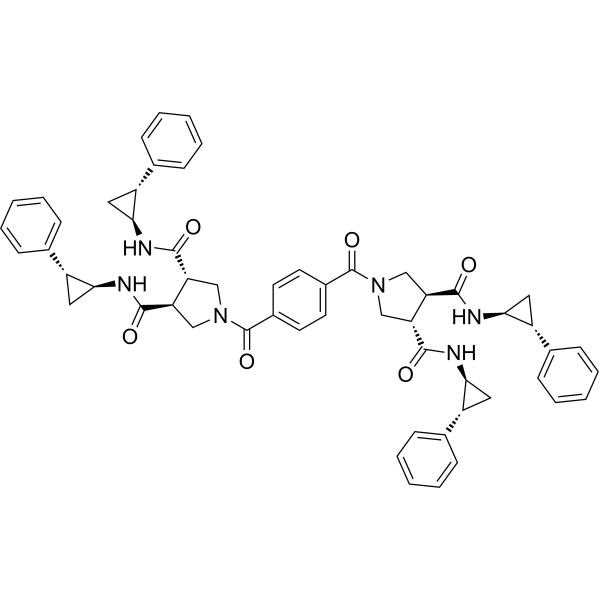
  • HY-123942
    Diprovocim
    Maximum Cited Publications
    14 Publications Verification

    Toll-like Receptor (TLR) TNF Receptor p38 MAPK NF-κB Inflammation/Immunology Cancer
    Diprovocim is a potent TLR1/TLR2 agonist. Diprovocim elicits full agonist activity in human THP-1 cells (EC50=110 pM). Diprovocim stimulates the release of TNF-α from mouse macrophages (EC50=1.3 nM). Diprovocim activates downstream MAPK and NF-κB signaling pathway. Diprovocim displays strong adjuvant activity in mice, particularly abetting cellular immune responses .
    Diprovocim
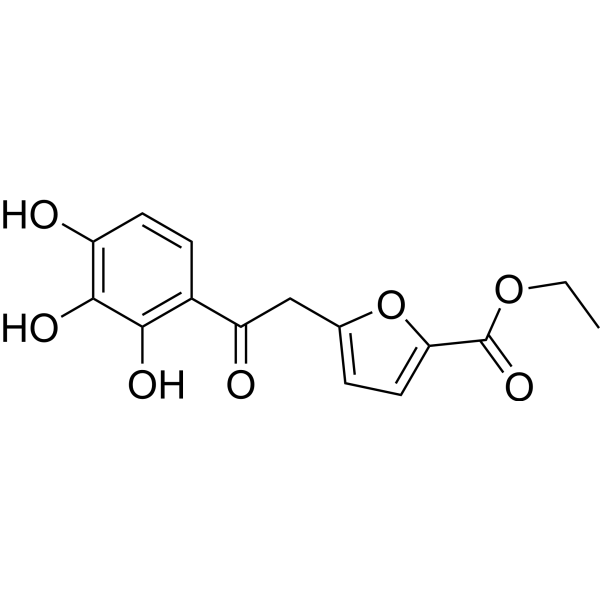
  • HY-112146
    MMG-11
    5 Publications Verification

    Toll-like Receptor (TLR) Inflammation/Immunology
    MMG-11 is a potent and selective human TLR2 antagonist with low cytotoxicity. MMG-11 inhibits both TLR2/1 and TLR2/6 signaling with IC50s of 1.7 µM for Pam3CSK4-induced hTLR2/1 and 5.7 µM for Pam2CSK4-induced hTLR2/6 responses .
    MMG-11
  • HY-159069

    Toll-like Receptor (TLR) TNF Receptor Connexin Infection Cancer
    Zymosan (ZM), 95% is a yeast cell wall-derived carbohydrate-rich preparation and immunomodulator. Zymosan (ZM), 95% binds to and activates TLR-2, TLR-4, and Dectin-1 receptor to trigger downstream signaling pathways. Zymosan (ZM), 95% upregulates TLR-2, TLR-4, and TNF-α mRNA expression, increases serum TNF-α levels, and stimulates splenocyte number and viability in mice. Zymosan (ZM), 95% attenuates melanoma growth progression, modulates macrophage marker gene expression, and mediates phagocytosis, ROS generation, and cytokine production. Zymosan (ZM), 95% reduces Connexin 43 protein and mRNA levels, inhibits gap junctional intercellular communication, and induces proinflammatory factor production in human corneal cells. Zymosan (ZM), 95% induces peritoneal inflammation in mice, functions as a drug carrier, and supports fibroblast cell attachment in hydrogel formulations. Zymosan (ZM), 95% can be used for the research of melanoma, tumors, fungal keratitis, ocular surface inflammatory disorders, and peritoneal inflammation .
    Zymosan (ZM), 95%
  • HY-N15135

    Interleukin Related Toll-like Receptor (TLR) Fungal Metabolic Disease
    Arabinoxylan Medium viscosity is an orally active Dectin-1 splice variant modulator, glucose absorption inhibitor, and chyme viscosity enhancer. Arabinoxylan Medium viscosity inhibits particulate β-glucan-induced Dectin-1A activation and mildly suppresses Dectin-1B activation. In human dendritic cells stimulated with particulate β-glucan, Arabinoxylan Medium viscosity reduces the production of IL-10 and TNF-α, and increases the production of IL-4 and IL-23. Arabinoxylan Medium viscosity also supports antifungal immune responses without activating TLR2, TLR4 or TLR5, and does not induce cytokine production when used to stimulate human dendritic cells alone. Arabinoxylan Medium viscosity increases small intestinal chyme viscosity, gets degraded in the large intestine to produce short-chain fatty acids, reduces glucose absorption and insulin response, and improves glucose homeostasis. Arabinoxylan Medium viscosity supports microbial fermentation and the growth of beneficial microbiota in the gastrointestinal tract, prevents bile acid reabsorption, and delays starch digestion. Arabinoxylan Medium viscosity can be used in research related to type 2 diabetes, impaired glucose tolerance, and metabolic syndrome .
    Arabinoxylan (Medium viscosity)
  • HY-RS14580

    Small Interfering RNA (siRNA) Toll-like Receptor (TLR) Others

    TLR2 Human Pre-designed siRNA Set A contains three designed siRNAs for TLR2 gene (Human), as well as a negative control, a positive control, and a FAM-labeled negative control.

    TLR2 Human Pre-designed siRNA Set A
    TLR2 Human Pre-designed siRNA Set A
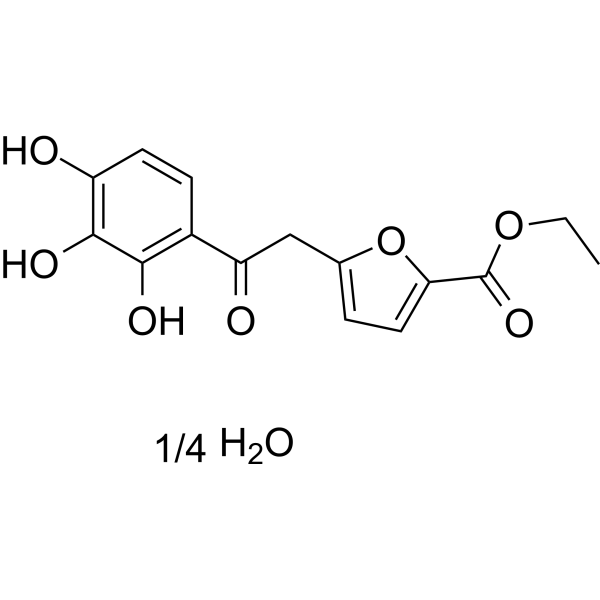
  • HY-112146A
    MMG-11 quarterhydrate
    5 Publications Verification

    Toll-like Receptor (TLR) Inflammation/Immunology
    MMG-11 quarterhydrate is a potent and selective human TLR2 antagonist with low cytotoxicity. MMG-11 quarterhydrate inhibits both TLR2/1 and TLR2/6 signaling with IC50s of 1.7 μM for Pam3CSK4-induced hTLR2/1 and 5.7 μM for Pam2CSK4-induced hTLR2/6 responses .
    MMG-11 quarterhydrate
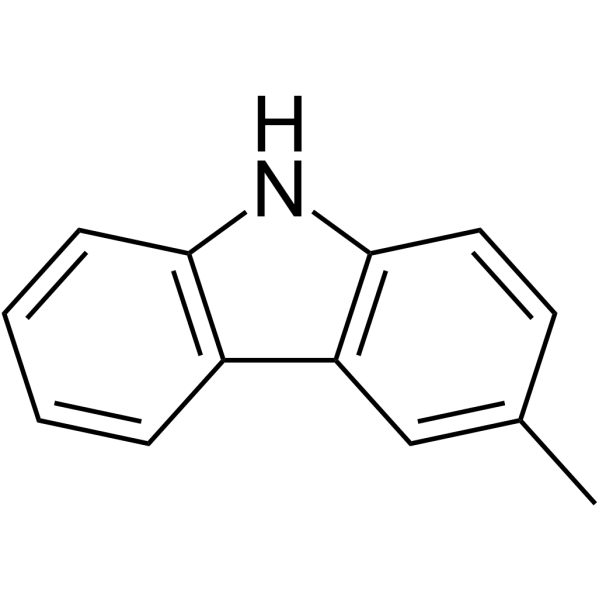
  • HY-W047478

    NSC 10154

    Fungal Interleukin Related Infection Inflammation/Immunology Cancer
    3-Methylcarbazole (NSC 10154) is a carbazole alkaloid with an IC50 of 25 μg/mL against human fibrosarcoma cells. 3-Methylcarbazole inhibits mycelial growth and conidial germination of a variety of phytopathogenic fungi. 3-Methylcarbazole exhibits anti-inflammatory and antitumor activities. 3-Methylcarbazole can be used in studies related to fibrosarcoma, phytopathogenic fungal infections and inflammatory diseases .
    3-Methylcarbazole
  • HY-174526

    mRNA Inflammation/Immunology
    Human TLR2 mRNA encodes the human toll like receptor 2 (TLR2) protein, a member of the Toll-like receptor (TLR) family which plays a fundamental role in pathogen recognition and activation of innate immunity. TLR2 is thought to promote apoptosis in response to bacterial lipoproteins.
    Human TLR2 mRNA
  • HY-163829

    Toll-like Receptor (TLR) NF-κB Cancer
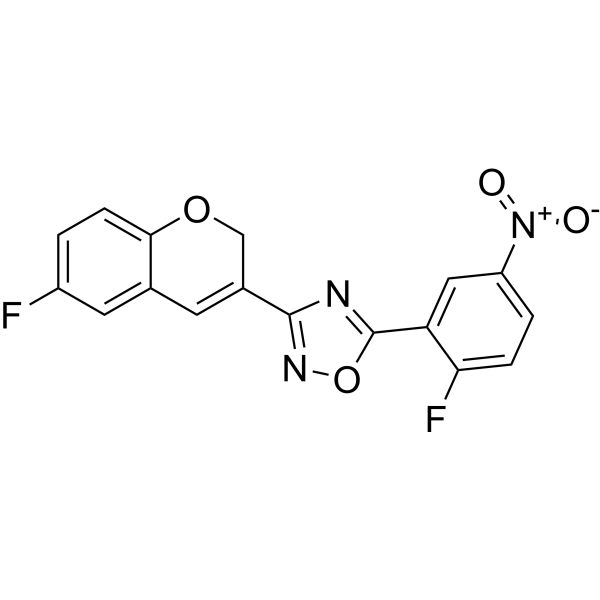
    TLR2 agonist 1 (Compound R-7d) is an agonist for human toll-like receptor 2 (TLR 2) with an EC50 of 116 pM. TLR2 agonist 1 enhances NF-κB promoter activation through TLR2/TLR1 heterodimers .
    TLR2 agonist 1
  • HY-158058

    Toll-like Receptor (TLR) Pyroptosis Inflammation/Immunology Cancer
    WYJ-2 is a selective agonist for toll-like receptor 2/1 (TLR2/1) with EC50 of 18.57 nM in human TLR2 and TLR1 transient-cotransfected HEK 293T cells. WYJ-2 induces pyroptosis and exhibits anticancer activity against non-small cell lung cancer (NSCLC) .
    WYJ-2
  • HY-14750

    ROB-803

    Toll-like Receptor (TLR) Neurological Disease Inflammation/Immunology
    Rabeximod (ROB-803), an anti-rheumatic compound, impairs the differentiation and function of human pro-inflammatory dendritic cells and macrophages via downregulating TLR2 and TLR4 stimulation. Rabeximod (ROB-803) is used for rheumatoid arthritis (RA) research .
    Rabeximod
  • HY-122566

    ZINC666243

    Toll-like Receptor (TLR) TNF Receptor Cancer
    SMU127 is an agonist of the toll-like receptor 1/2 (TLR1/2) heterodimer. It induces NF-κB signaling in cells expressing human TLR2 (EC50=0.55 μM) but not cells expressing human TLR3, -4, -5, -7, or -8 when used at concentrations ranging from 0.1 to 100 μM. SMU127 induces the production of TNF-α in isolated human peripheral blood mononuclear cells (PBMCs) when used at concentrations ranging from 0.01 to 1 μM. In vivo, SMU127 (0.1 mg/animal) reduces tumor volume in a 4T1 murine mammary carcinoma model.
    SMU127
  • HY-175073

    Toll-like Receptor (TLR) Interleukin Related Neurological Disease Inflammation/Immunology
    Ganglioside GT1b bovine trisodium is a trisialic acid ganglioside. Ganglioside GT1b bovine trisodium binds to botulinum toxin type A (BTxA), BTxA heavy chain, and tetanus toxin with IC50 values of 11, 0.74, and 7.2 μM, respectively. Ganglioside GT1b bovine trisodium acts as a TLR2 agonist, leading to microglial activation, increased expression of pro-inflammatory factors, and increased pain sensitivity in spinal microglia. Ganglioside GT1b bovine trisodium also reduces the production of IL-6, IL-10, IgG, IgM, and IgA in human peripheral blood mononuclear cells (PBMCs). Ganglioside GT1b bovine trisodium increases extracellular glutamate levels in neural cell models. Ganglioside GT1b bovine trisodium has potential applications in research on immune system diseases and nervous system diseases .
    Ganglioside GT1b (bovine) trisodium
  • HY-181916

    Toll-like Receptor (TLR) PD-1/PD-L1 Inflammation/Immunology Cancer
    BXY-14 is a TLR2 agonist and vaccine adjuvant. BXY-14 significantly downregulates the expression of intratumoral PD-L1 in mouse models. BXY-14 acts as a vaccine adjuvant to induce antibody responses. BXY-14 exhibits synergistic efficacy when combined with the anti-PD-L1 monoclonal antibody Atezolizumab (HY-P9904) in mouse models of melanoma, and prolongs overall survival. BXY-14 is applicable to research related to melanoma .
    BXY-14

Inquiry Online

Your information is safe with us. * Required Fields.

Salutation


Country or Region *

Applicant Name *


Organization Name *

Department *


Email Address *


Product Name *

Cat. No.


Requested quantity *

Phone Number *


Remarks

Inquiry Online

Inquiry Information

Product Name:
Cat. No.:
Quantity:
MCE Japan Authorized Agent:

