1. Search Result
Search Result
Results for "

hypoxic brain injury

" in MedChemExpress (MCE) Product Catalog:

11

Inhibitors & Agonists

2

Biochemical Assay Reagents

2

Natural
Products

1

Isotope-Labeled Compounds

1

Oligonucleotides

Cat. No. Product Name Target Research Areas Chemical Structure
  • HY-124379
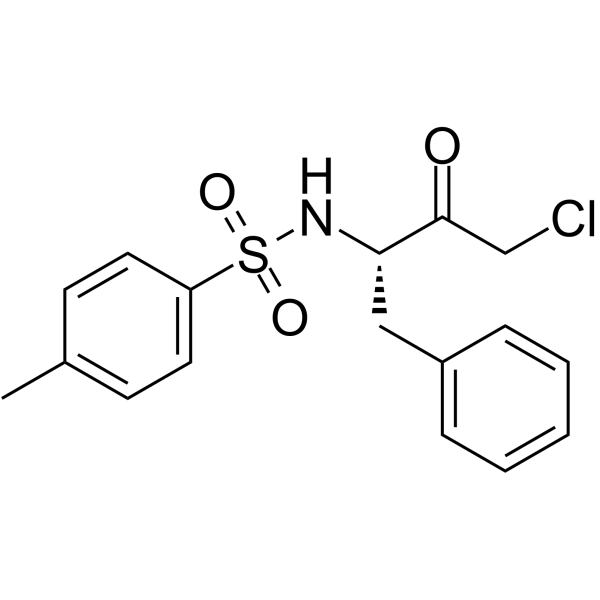
    TPCK
    1 Publications Verification

    L-1-Tosylamido-2-phenylethyl chloromethyl ketone; L-TPCK

    Ser/Thr Protease HPV Apoptosis PDK-1 Infection Neurological Disease Inflammation/Immunology Cancer
    TPCK (L-1-Tosylamido-2-phenylethyl chloromethyl ketone; L-TPCK) is an effective serine protease inhibitor and also a blocker of the PDK1/Akt pathway. TPCK can modify the E7 protein in actively keratinocyte cells. TPCK can induce cellular apoptosis, suppress tumor growth, reduce hypoxic-ischemic brain injury in rat pups, and affect vascular permeability in inflamed rats .
    TPCK
  • HY-W016409
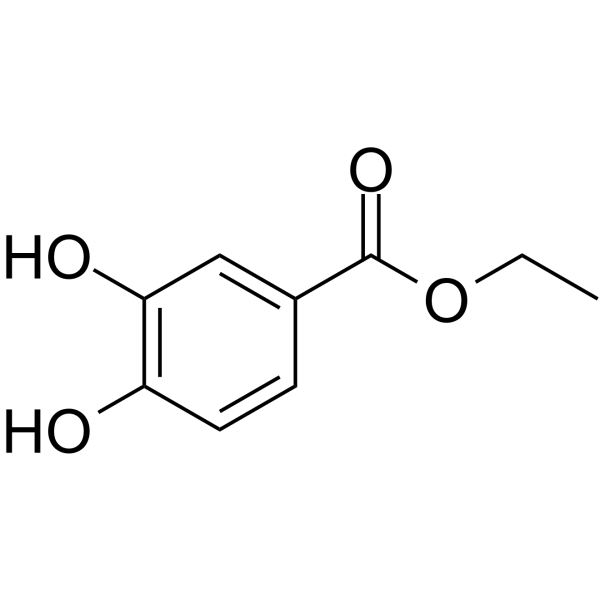
    Ethyl 3,4-dihydroxybenzoate
    1 Publications Verification

    Protocatechuic acid ethyl ester

    HIF/HIF Prolyl-Hydroxylase Reactive Oxygen Species (ROS) NO Synthase Autophagy Apoptosis Metabolic Disease Cancer
    Ethyl 3,4-dihydroxybenzoate (Protocatechuic acid ethyl ester) is an orally effective, blood-brain barrier-permeable, competitive prolyl hydroxylase (PHD) inhibitor that inhibits the hydroxylation modification of hypoxia-inducible factor (HIF) by PHD. Ethyl 3,4-dihydroxybenzoate stabilizes HIF-1α by inhibiting PHD, activates downstream pathways to induce autophagy and apoptosis of tumor cells, and regulates inflammatory responses, inhibits the NF-κB pathway, improves vascular permeability, and promotes osteoblast differentiation. Ethyl 3,4-dihydroxybenzoate has anti-tumor, anti-hypoxic injury, and bone metabolism regulation effects. It can also be used in the research of cardiovascular protection (such as reducing myocardial ischemic damage), bone tissue engineering (promoting osteogenesis/inhibiting osteoclast differentiation), and prevention and treatment of high-altitude cerebral edema .
    Ethyl 3,4-dihydroxybenzoate
  • HY-11095

    mGluR CaSR PI3K Akt mTOR Autophagy Apoptosis Bcl-2 Family Caspase Cardiovascular Disease Neurological Disease
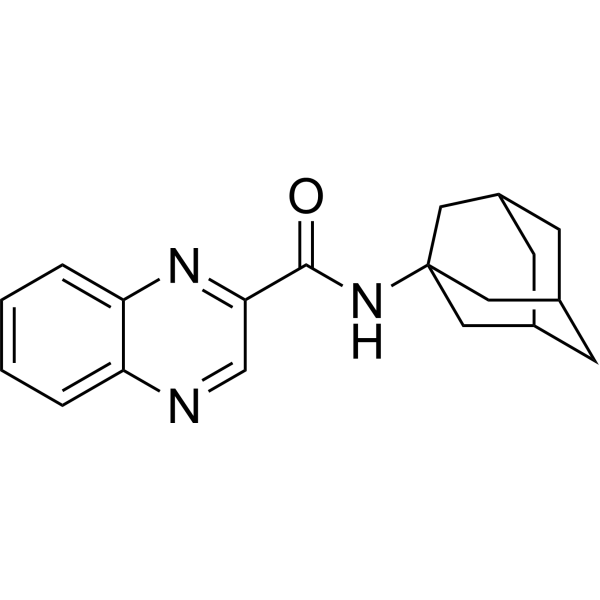
    NPS 2390 is an allosteric antagonist of calcium-sensing receptor (CaSR) and mGluR1/5. NPS 2390 inhibits the PI3K/Akt/mTOR signaling pathway, reduces hypoxia-induced intracellular calcium elevation, decreases the expression of autophagy (autophagy) proteins, regulates the expression of phenotypic marker proteins, and inhibits the proliferation of pulmonary artery smooth muscle cells. NPS 2390 attenuates the endogenous apoptosis (apoptosis) pathway, increases the expression level of Bcl-2, downregulates the expression levels of Bax, cytochrome c and caspase-3, alleviates cerebral edema and improves neurological function in rat models. NPS 2390 can be used in studies related to hypoxic pulmonary hypertension, traumatic brain injury, stroke and pain .
    NPS 2390
  • HY-13918

    Ethimizole; Ethymisol; Ethymisole

    Potassium Channel Neurological Disease
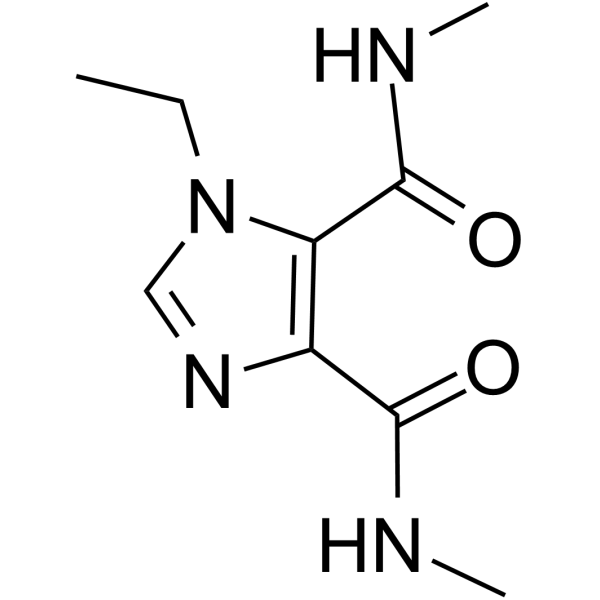
    Etimizol(Ethymisole; Antiffine; Ethylnorantifein) was shown to relieve amnesia effectively in the origin of which there is the hypoxic component (hypobaric hypoxia, actinomycin D, mechanical injury of the brain). Etimizol can decrease the K- + permeability of neurons' membrane during action potential.
    Etimizol
  • HY-172705

    Liposome nAChR Neurological Disease
    DSPE-PEG2000-RVG29 is a PEG conjugate composed of DSPE and rabies virus glycoprotein 29 (RVG29). RVG29 specifically binds to nicotinic acetylcholine receptors (nAChR) at the blood-brain barrier (BBB), crosses the BBB, and mediates receptor-dependent transcytosis. DSPE-PEG2000-RVG29 can be used for brain-targeted drug delivery, surface modification of nanocarriers, as well as gene and nucleic acid delivery. DSPE-PEG2000-RVG29 is applicable to research related to hypoxic-ischemic brain injury, Parkinson's disease, and other conditions .
    DSPE-PEG2000-RVG29
  • HY-138646

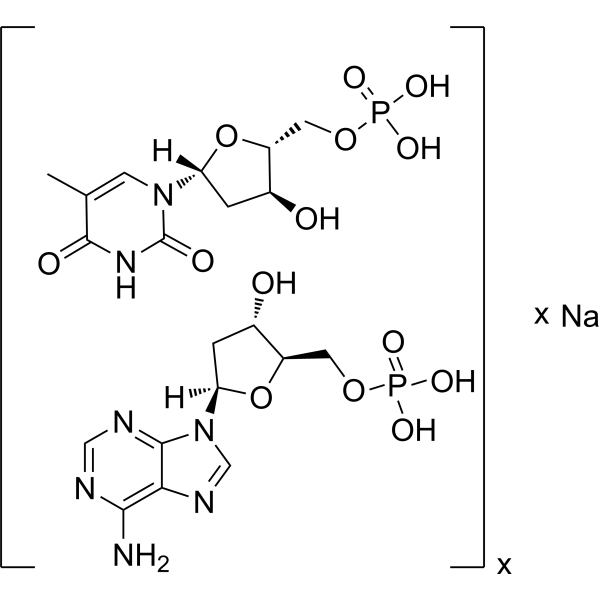
    Poly(dA:dT) sodium

    Cyclic GMP-AMP Synthase STING Inflammation/Immunology
    Poly(deoxyadenylic-thymidylic) acid (Poly(dA:dT)) sodium is a double-stranded DNA stimulant. Poly(deoxyadenylic-thymidylic) acid sodium is recognized by the intracellular DNA sensor DDX41 and activates the innate immune pathway via the adaptor protein STING, inducing the production of cytokines such as type I interferons. Poly(deoxyadenylic-thymidylic) acid sodium also serves as an in vitro transcription template for free RNA polymerase .
    Poly(deoxyadenylic-thymidylic) acid sodium
  • HY-172705A

    Liposome nAChR Infection
    DSPE-PEG3400-RVG29 is a PEG conjugate composed of DSPE and rabies virus glycoprotein 29 (RVG29). RVG29 specifically binds to nicotinic acetylcholine receptors (nAChR) at the blood-brain barrier (BBB), crosses the BBB, and mediates receptor-dependent transcytosis. DSPE-PEG3400-RVG29 can be used for brain-targeted drug delivery, surface modification of nanocarriers, as well as gene and nucleic acid delivery. DSPE-PEG3400-RVG29 is applicable to research related to hypoxic-ischemic brain injury, Parkinson's disease, and other conditions
    DSPE-PEG3400-RVG29
  • HY-168096

    NO Synthase Apoptosis Cardiovascular Disease Neurological Disease
    iNOs-IN-5 (Compound BN-4) is an inhibitor for iNOS with an IC50 of 0.1707 μM, and reduces NO levels in LPS (HT-D1056)-induced RAW264.7 cells. iNOs-IN-5 reduces the hypoxic injury stimulated ROS and lactate dehydrogenase expression, and exhibits anti-necrosis and anti-apoptosis efficacy. iNOs-IN-5 exhibits anti-cerebral ischemia and neuroprotective activities in SD rat models. iNOs-IN-5 is blood-brain barrier penetrable .
    iNOs-IN-5
  • HY-W778057

    Protocatechuic acid ethyl ester-13C3

    Reactive Oxygen Species (ROS) Cancer
    Ethyl 3,4-Dihydroxybenzoate- 13C3 (Protocatechuic acid ethyl ester- 13C3) is the 13C-labeled Ethyl 3,4-dihydroxybenzoate (HY-W016409). Ethyl 3,4-dihydroxybenzoate (Protocatechuic acid ethyl ester) is an orally effective, blood-brain barrier-permeable, competitive prolyl hydroxylase (PHD) inhibitor that inhibits the hydroxylation modification of hypoxia-inducible factor (HIF) by PHD. Ethyl 3,4-dihydroxybenzoate stabilizes HIF-1α by inhibiting PHD, activates downstream pathways to induce autophagy and apoptosis of tumor cells, and regulates inflammatory responses, inhibits the NF-κB pathway, improves vascular permeability, and promotes osteoblast differentiation. Ethyl 3,4-dihydroxybenzoate has anti-tumor, anti-hypoxic injury, and bone metabolism regulation effects. It can also be used in the research of cardiovascular protection (such as reducing myocardial ischemic damage), bone tissue engineering (promoting osteogenesis/inhibiting osteoclast differentiation), and prevention and treatment of high-altitude cerebral edema .
    Ethyl 3,4-Dihydroxybenzoate-13C3
  • HY-W016409R

    Protocatechuic acid ethyl ester (Standard)

    Reference Standards HIF/HIF Prolyl-Hydroxylase Reactive Oxygen Species (ROS) NO Synthase Autophagy Apoptosis Metabolic Disease Cancer
    Ethyl 3,4-dihydroxybenzoate (Standard) (Protocatechuic acid ethyl ester (Standard)) is the analytical standard of Ethyl 3,4-dihydroxybenzoate (HY-W016409). This product is intended for research and analytical applications. Ethyl 3,4-dihydroxybenzoate (Protocatechuic acid ethyl ester) is an orally effective, blood-brain barrier-permeable, competitive prolyl hydroxylase (PHD) inhibitor that inhibits the hydroxylation modification of hypoxia-inducible factor (HIF) by PHD. Ethyl 3,4-dihydroxybenzoate stabilizes HIF-1α by inhibiting PHD, activates downstream pathways to induce autophagy and apoptosis of tumor cells, and regulates inflammatory responses, inhibits the NF-κB pathway, improves vascular permeability, and promotes osteoblast differentiation. Ethyl 3,4-dihydroxybenzoate has anti-tumor, anti-hypoxic injury, and bone metabolism regulation effects. It can also be used in the research of cardiovascular protection (such as reducing myocardial ischemic damage), bone tissue engineering (promoting osteogenesis/inhibiting osteoclast differentiation), and prevention and treatment of high-altitude cerebral edema .
    Ethyl 3,4-dihydroxybenzoate (Standard)
  • HY-13918R

    Ethimizole (Standard); Ethymisol (Standard); Ethymisole (Standard)

    Potassium Channel Reference Standards Neurological Disease
    Etimizol (Standard) is the analytical standard of Etimizol. This product is intended for research and analytical applications. Etimizol(Ethymisole; Antiffine; Ethylnorantifein) was shown to relieve amnesia effectively in the origin of which there is the hypoxic component (hypobaric hypoxia, actinomycin D, mechanical injury of the brain). Etimizol can decrease the K-+ permeability of neurons' membrane during action potential.
    Etimizol (Standard)

Inquiry Online

Your information is safe with us. * Required Fields.

Salutation


Country or Region *

Applicant Name *


Organization Name *

Department *


Email Address *


Product Name *

Cat. No.


Requested quantity *

Phone Number *


Remarks

Inquiry Online

Inquiry Information

Product Name:
Cat. No.:
Quantity:
MCE Japan Authorized Agent:

