14 Results for "

intestinal organoids

" in MedChemExpress (MCE) Product Catalog:
Products (14)

14 Results for "intestinal organoids" in MCE Product Catalog:

21
21 Publications Verification
Cat. No.: HY-U00434
CAS No.: 890405-51-3
Target:  

mTOR Autophagy Apoptosis

Research Areas:  

Infection Inflammation/Immunology

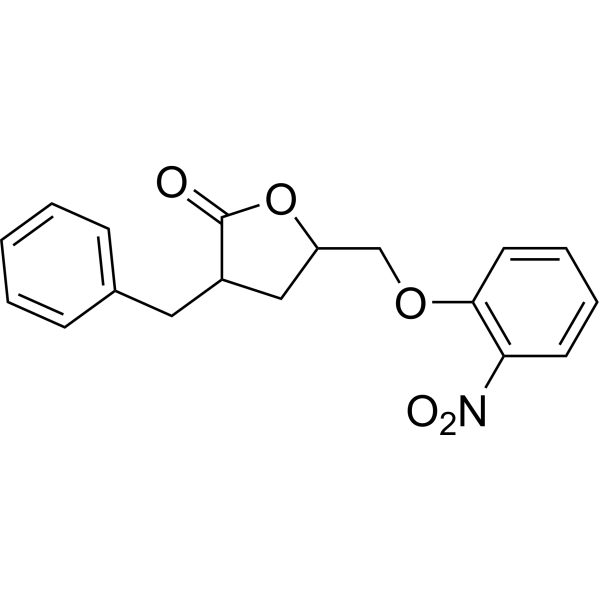
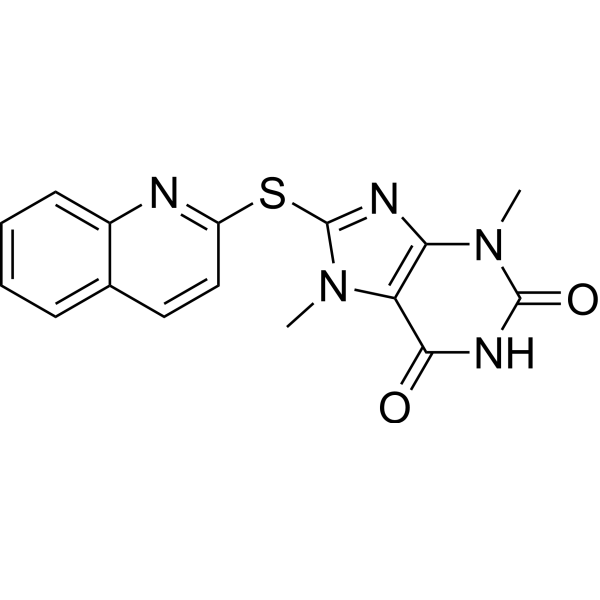
3BDO is a IFITM3 modulator and mTOR activator with antiviral and autophagy-inhibiting effects. 3BDO exhibits inhibitory activity against porcine coronaviruses. 3BDO increases the protein abundance of IFITM3, inhibits virus-cell membrane fusion, and blocks viral entry. 3BDO inhibits the entry of transmissible gastroenteritis virus, porcine epidemic diarrhea virus, and porcine respiratory coronavirus into host cells. 3BDO can be used for research on porcine coronavirus infection .
loading...
    loading...
7
7 Cited Publications
Cat. No.: HY-147082
CAS No.: 2351906-74-4
Purity:  98.95%
Research Areas:  

Cancer

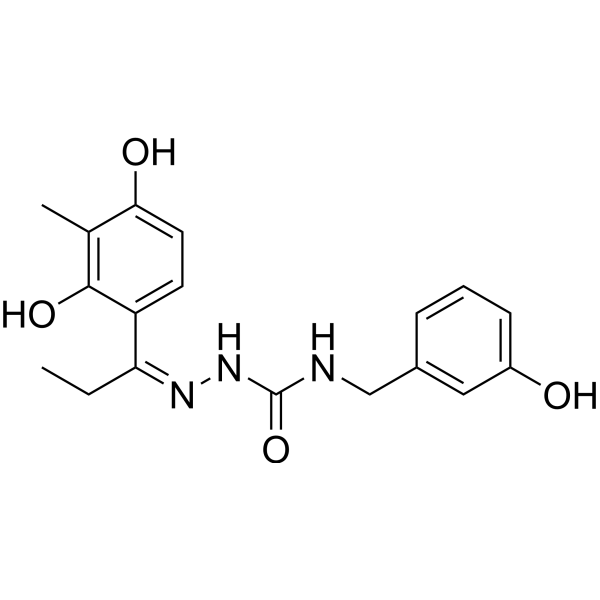
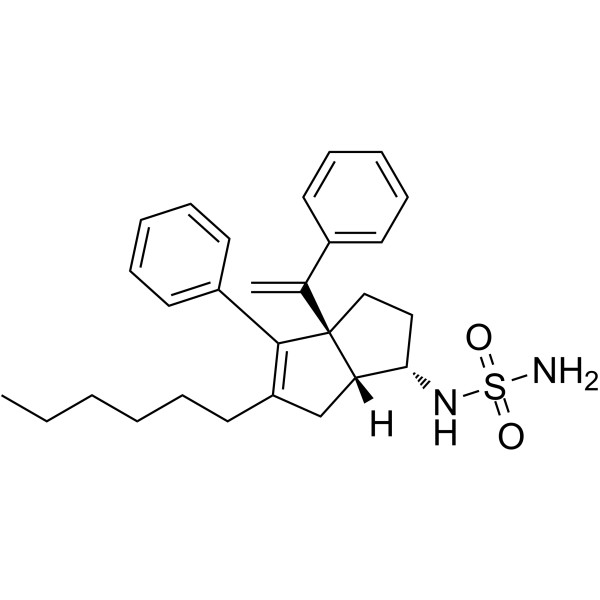
GA-017 is a potent and selective LATS1 and LATS2 (large tumor suppressor kinase 1/2) inhibitor, with IC50 values of 4.10 and 3.92 nM, respectively. GA-017 is an activator of cell proliferation. GA-017 promotes YAP/TAZ activation and nuclear translocation. GA-017 promotes cell growth under 3D culture conditions. GA-017 enhances the ex vivo formation of mouse intestinal organoids .
loading...
    loading...
3
3 Cited Publications
Cat. No.: HY-P1454
CAS No.: 2247635-23-8
Synonyms: Ac-LPSDDLEFWCHVMY-NH2
Target:  

Wnt

Research Areas:  

Cancer

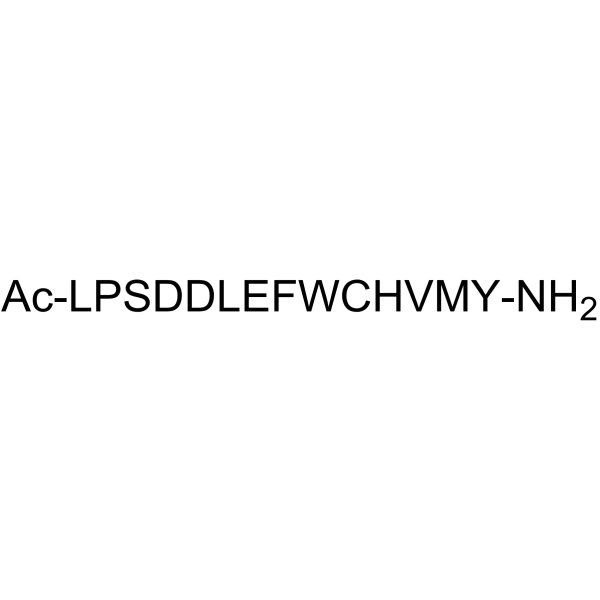
Fz7-21 (Ac-LPSDDLEFWCHVMY-NH2) is a potent peptide antagonist of FZD7 receptors , selectively binds to FZD7 CRD subclass and alters the conformation of the CRD and the architecture of its lipid-binding groove. The EC50 values are 58 and 34 nM for human and mouse FZD7 CRD, respectively. Fz7-21 impairs the function of FZD7 in Wnt–β-catenin signalling and stem cell function in intestinal organoids .
loading...
    loading...
3
3 Cited Publications
Cat. No.: HY-P1454A
Synonyms: Ac-LPSDDLEFWCHVMY-NH2 TFA
Target:  

Wnt

Research Areas:  

Cancer

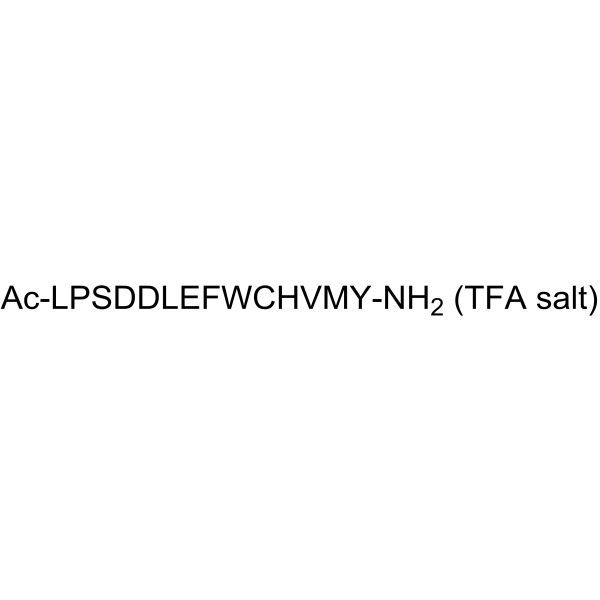
Fz7-21 (Ac-LPSDDLEFWCHVMY-NH2) TFA is a potent peptide antagonist of FZD7 receptors , selectively binds to FZD7 CRD subclass and alters the conformation of the CRD and the architecture of its lipid-binding groove. The EC50 values are 58 and 34 nM for human and mouse FZD7 CRD, respectively. Fz7-21 TFA impairs the function of FZD7 in Wnt-β-catenin signalling and stem cell function in intestinal organoids .
loading...
    loading...
2
2 Cited Publications
Cat. No.: HY-112484
CAS No.: 878451-87-7
Purity:  99.52%
Target:  

Organoid

Research Areas:  

Cancer

RS-246204 is a R-spondin-1 substitute compound that is able initiate small intestinal organoids without the use of the R-spondin-1 protein.
loading...
    loading...
Cat. No.: HY-147105
CAS No.: 2244781-29-9
Purity:  98.04%
LRH-1 agonist-2 (Compound 6N) is a selective, full LRH-1 agonist with an EC50 of 15.7 nM. LRH-1 agonist-2 directly interacts with the Thr352 and His390 residues in the LRH-1 binding pocket, promotes allosteric signaling to the activation function surface (AFS), stabilizes the AFS and enhances coactivator recruitment. LRH-1 agonist-2 induces the anti-inflammatory cytokine IL-10, and reduces the pro-inflammatory cytokines IL-1β and TNFα. LRH-1 modulator-1 exerts anti-inflammatory effects in intestinal organoids. LRH-1 modulator-1 can be used in studies related to inflammatory bowel disease .
loading...
    loading...
Cat. No.: HY-113286
CAS No.: 463-00-3
Purity:  ≥98.0%
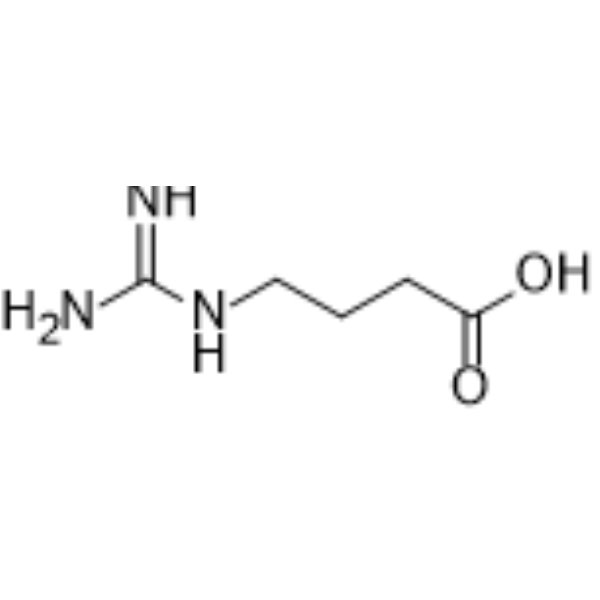
4-Guanidinobutanoic acid is a metabolite of arginine and an orally active SLC36A1/Hedgehog signaling pathway activator. 4-Guanidinobutanoic acid drives epithelial reprogramming, enhances intestinal stem cell function and goblet cell differentiation. 4-Guanidinobutanoic acid promotes the enrichment of Akkermansia muciniphila via mucus-dependent niche expansion, regulates intestinal homeostasis, and establishes a microbiota-host feedback loop. 4-Guanidinobutanoic acid exhibits anti-aging and healthspan-regulating properties. 4-Guanidinobutanoic acid can be used in research related to ulcerative colitis, amyotrophic lateral sclerosis, and Duchenne muscular dystrophy .
loading...
    loading...
Cat. No.: HY-147105A
(+)-LRH-1 modulator-1 is a stereoisomer of LRH-1 modulator-1. LRH-1 modulator-1 (compound 6N) is a potent LRH-1 (liver receptor homolog-1) modulator/agonist. LRH-1 modulator-1 has anti-inflammatory effects in intestinal organoids. LRH-1 modulator-1 induces the anti-inflammatory cytokine IL-10 and reduces the inflammatory cytokines IL-1b and TNFa .
loading...
    loading...
Cat. No.: HY-174300
CAS No.: 95051-21-1
Research Areas:  

Metabolic Disease

Cholic acid-Glu is a derivative of Cholic acid (HY-N0324). The abundance of Cholic acid-Glu is increased in Crohn’s disease. Cholic acid-Glu increases PXR activation and significantly increases the expression of the downstream PXR target gene Cyp3a11 in small intestinal organoid tissue .
loading...
    loading...
Cat. No.: HY-113286R
CAS No.: 463-00-3
4-Guanidinobutanoic acid (Standard) is the analytical standard of 4-Guanidinobutanoic acid (HY-113286). This product is intended for research and analytical applications. 4-Guanidinobutanoic acid is a metabolite of arginine and an orally active SLC36A1/Hedgehog signaling pathway activator. 4-Guanidinobutanoic acid drives epithelial reprogramming, enhances intestinal stem cell function and goblet cell differentiation. 4-Guanidinobutanoic acid promotes the enrichment of Akkermansia muciniphila via mucus-dependent niche expansion, regulates intestinal homeostasis, and establishes a microbiota-host feedback loop. 4-Guanidinobutanoic acid exhibits anti-aging and healthspan-regulating properties. 4-Guanidinobutanoic acid can be used in research related to ulcerative colitis, amyotrophic lateral sclerosis, and Duchenne muscular dystrophy .
loading...
    loading...
Cat. No.: HY-K6113

MCE Human Intestinal Organoid Kit contains Intestinal Organoid Basal Medium A, Intestinal Organoid Supplement B (50×), Intestinal Organoid Supplement C (250×), and Intestinal Organoid Supplement D (250×). This product can be used to efficiently construct human intestinal organoid.

loading...
    loading...
Cat. No.: HY-K6119

MCE Mouse Intestinal Organoid Kit contains Mouse Intestinal Organoid Basal Medium A, Mouse Intestinal Organoid Supplement B (50×), Mouse Intestinal Organoid Supplement C (250×) and EDTA. This product can be used to efficiently construct mouse intestinal organoid.

loading...
    loading...
Cat. No.: HY-K6119P

MCE Mouse Intestinal Organoid Plus Kit is an upgraded serum-free culture system developed based on the Mouse Small Intestinal Organoid Culture Kit (HY-K6119), designed for the establishment, expansion, and long-term maintenance of mouse small intestinal organoids. The kit contains basal culture medium and multiple essential supplements, and an optional Wnt ligand supplement is provided to enable modulation of Wnt signaling activity in the culture system.

loading...
    loading...
Cat. No.: HY-167182
CAS No.: 470695-03-5
PUMAi is a PUMA inhibitor that disrupts the interaction between PUMA and BCL-xL. PUMAi inhibits apoptosis, caspase-3 activation, WNT/NOTCH pathway activation, and DNA damage. PUMAi protects intestinal tissues in mice, promotes the growth of colonoids, and reduces chemotherapy-induced weight loss, gastrointestinal damage, and lethality. PUMAi alleviates acetaminophen-induced liver injury and cytoplasmic translocation of HMGB1 in mice. PUMAi can be used in studies related to gastrointestinal injury, intestinal injury, and liver injury .
loading...
    loading...
  • 1

