



25 Results for "

luminescent

" in MedChemExpress (MCE) Product Catalog:
Products (25)

25 Results for "luminescent" in MCE Product Catalog:

6
6 Publications Verification
Cat. No.: HY-18743
CAS No.: 55779-48-1
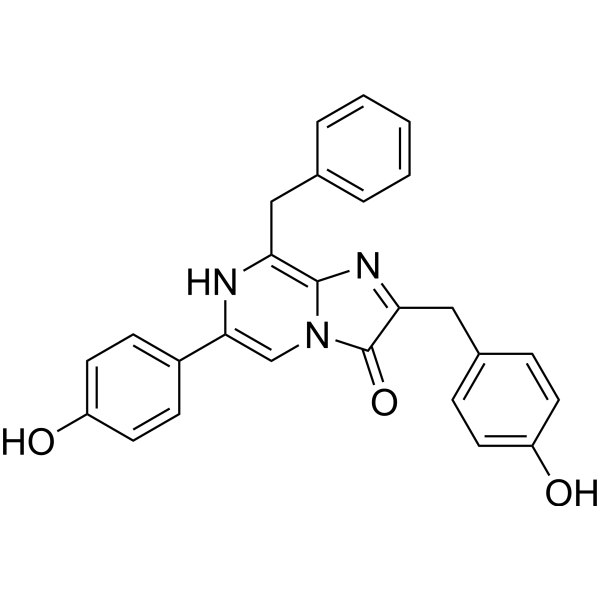
Coelenterazine is a luminescent enzyme substrate for apoaequorin and Renilla luciferase. Renilla luciferase and substrate coelenterazine has been used as the bioluminescence donor in bioluminescence resonance energy transfer (BRET) to detect protein-protein interactions. Coelenterazine is a superoxide anion-sensitive chemiluminescent probe and it can also be used in chemiluminescent detection of peroxynitrite (Ex/Em = 429/466 nm) .
loading...
    loading...
6
6 Publications Verification
Cat. No.: HY-18743A
Research Areas:  

Cancer

Coelenterazine TFA is a luminescent enzyme substrate for apoaequorin and Renilla luciferase. Renilla luciferase and substrate Coelenterazine TFA has been used as the bioluminescence donor in bioluminescence resonance energy transfer (BRET) to detect protein-protein interactions. Coelenterazine TFA is a superoxide anion-sensitive chemiluminescent probe and it can also be used in chemiluminescent detection of peroxynitrite (Ex/Em = 429/466 nm) .
loading...
    loading...
3
3 Cited Publications
Cat. No.: HY-D1024
CAS No.: 50909-86-9
Synonyms: 2-Deoxycoelenterazine; CLZN-h
Target:  

Calcium Channel

Research Areas:  

Neurological Disease

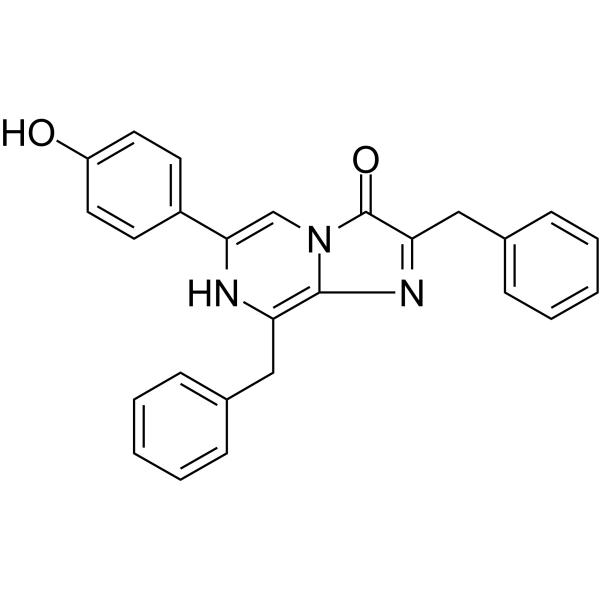
Coelenterazine h (2-Deoxycoelenterazine), a coelenterazine derivative, is a luminescent substrate for RLuc8. Coelenterazine h is more sensitive to Ca 2+, thus providing a valuable tool for measuring small changes in Ca 2+ concentrations (Ex/Em = 437/466 nm) .
loading...
    loading...
3
3 Cited Publications
Cat. No.: HY-D1024A
Synonyms: 2-Deoxycoelenterazine hydrochloride; CLZN-h hydrochloride
Target:  

Calcium Channel

Research Areas:  

Neurological Disease

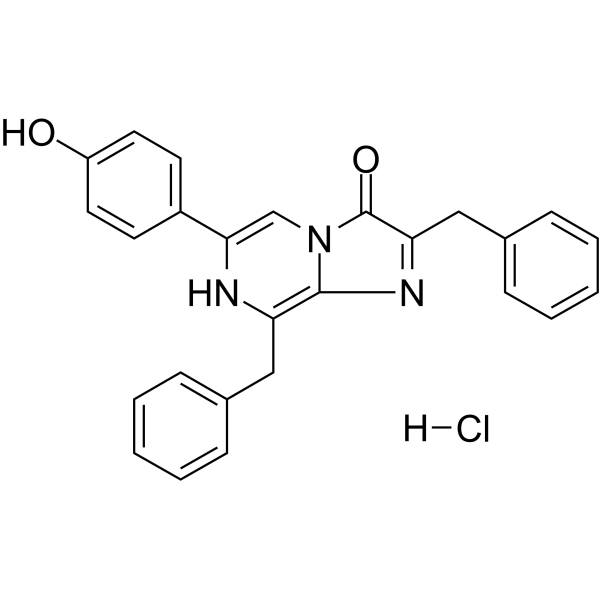
Coelenterazine h (2-Deoxycoelenterazine) hydrochloride, a coelenterazine derivative, is a luminescent substrate for RLuc8. Coelenterazine h hydrochloride is more sensitive to Ca 2+, thus providing a valuable tool for measuring small changes in Ca 2+ concentrations (Ex/Em = 437/466 nm) .
loading...
    loading...
1
1 Cited Publications
Cat. No.: HY-15906
CAS No.: 122341-56-4
Purity:  99.93%
Synonyms: Lumi-Phos Plus; Lumigen PPD; PPD
AMPPD (Lumi-Phos Plus; Lumigen PPD) is a chemiluminescent substrate for alkaline phosphatase (APase). AMPPD is hydrolyzed by APase to generate an unstable dioxetane intermediate, and the intermediate releases a chemiluminescent signal when it decomposes. The luminescent signal of AMPPD can be detected by highly sensitive equipment, thereby achieving quantitative analysis of the target molecule. AMPPD can be used in ultrasensitive enzyme-linked immunosorbent assays (such as quantitative detection of human tissue kininogen), chemiluminescent detection of proteins and nucleic acids, and other fields .
loading...
    loading...
Cat. No.: HY-P1004
CAS No.: 9014-00-0
Luciferase (bacterial) acts as a luminescence inducer and catalyst. Luciferase (bacterial) catalyzes the reduction of methylene blue, quinones, ferricyanide, and FMN using reduced DPN (HY-12452) (or an alternative electron donor for FMN). Luciferase (bacterial) binds to reduced FMN to form a luminescent reaction complex. Luciferase (bacterial) scavenges reactive oxygen species (ROS) and protects bacterial cells from oxidative stress damage. Luciferase (bacterial) is applicable to studies related to oxidative stress .
loading...
    loading...
Cat. No.: HY-D0892
CAS No.: 194357-64-7
Research Areas:  

Cancer

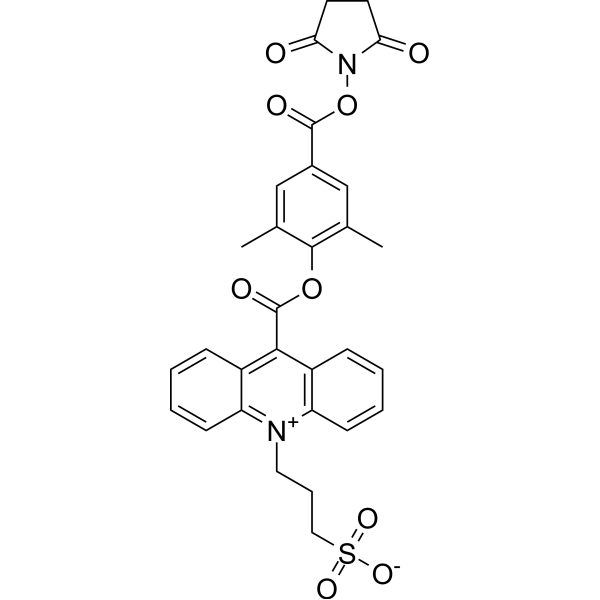
NSP-DMAE-NHS is an acridinium ester-based signal amplifier that can act as a luminescent probe to effectively improve the detection performance of biosensors. NSP-DMAE-NHS preserves the biochemical activity of biomolecules during the conjugation process. NSP-DMAE-NHS has been successfully applied to label mouse anti-human PI3 monoclonal antibodies for chemiluminescent immunoassays, as well as for pre-competitive chemiluminescent immunochromatographic detection of TP53 fusion proteins. NSP-DMAE-NHS can be used in detection studies of cancer and related biomarkers .
loading...
    loading...
Cat. No.: HY-W008292
CAS No.: 19840-99-4
Carbostyril 124 is a sensitising chromophore. Carbostyril 124 is a reasonably effective organic sensitizer for a proximate bound terbium ion .
loading...
    loading...
Cat. No.: HY-W133963
CAS No.: 9063-38-1
Carboxyl methylstarch sodium is an anionic polymer prepared by carboxymethylation of starch, with properties of stability, thickening ability and film-forming capacity . Carboxyl methylstarch sodium exhibits metal adsorption activity and can remove copper ions and cadmium ions from aqueous solutions. Carboxyl methylstarch sodium can serve as a hydrophilic shell component for AIE-active luminescent polymer nanoprobes to achieve high water dispersibility. Carboxyl methylstarch sodium can bind to vancomycin without altering the in vitro antibacterial activity of vancomycin. Carboxyl methylstarch sodium possesses biodegradable, non-toxic and environmentally friendly characteristics. Carboxyl methylstarch sodium can be applied to relevant researches in various fields such as food, medicine and industry .
loading...
    loading...
Cat. No.: HY-D1557
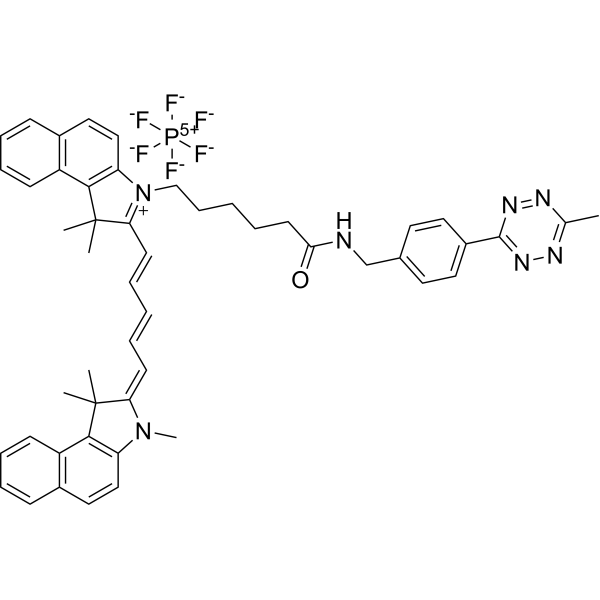
Cyanine5.5 tetrazine is a far-infrared luminescent dye. Cyanine5.5 tetrazine is a Cyanine5.5 (HY-D0925A) derivative contains a tetrazine moiety. Cyanine5.5 tetrazine can be used for in vivo imaging and low background applications. Cyanine5.5 tetrazine is a click chemistry reagent, it contains a Tetrazine group that can undergo an inverse electron demand Diels-Alder reaction (iEDDA) with molecules containing TCO groups.
loading...
    loading...
Cat. No.: HY-D1708
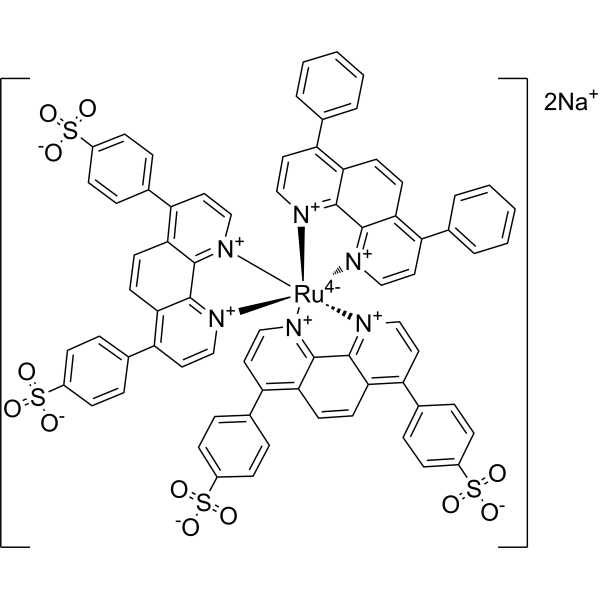
RuBP-4S is a luminescent ruthenium complex.
loading...
    loading...
Cat. No.: HY-W140535
CAS No.: 301206-84-8
Target:  

Fluorescent Dye MOFs

Research Areas:  

Others

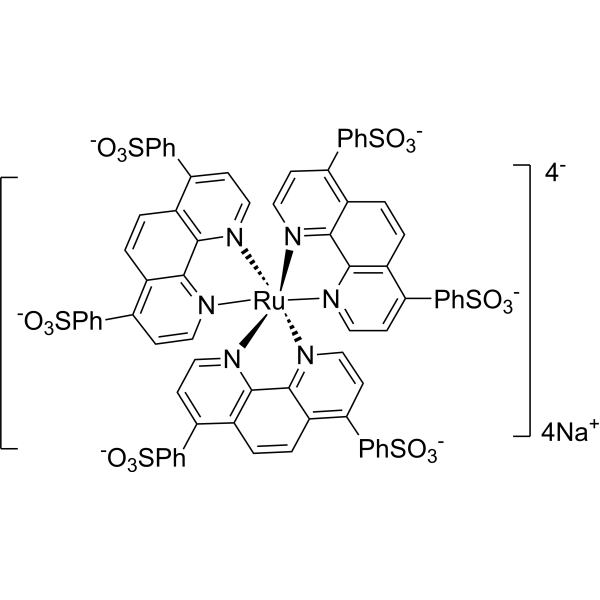
Tetrasodium, 4-(1,10-phenanthrolin-4-yl)benzenesulfonate,ruthenium((II)) is a luminescent ruthenium complex. Tetrasodium, 4-(1,10-phenanthrolin-4-yl)benzenesulfonate,ruthenium((II)) is used in biological and chemical fields as a fluorescent indicator dye and an electrochemiluminescent probe .
loading...
    loading...
Cat. No.: HY-177906
CAS No.: 1352477-26-9
Research Areas:  

Neurological Disease

h-FTAA is a luminescent conjugated oligothiophene (LCO) probe. h-FTAA can selectively bind to amyloid protein aggregates (such as plaques) and distinguish different conformations of the protein aggregates through changes in fluorescence signals. h-FTAA significantly reduces the neurotoxicity of Aβ1-42 and the Arctic mutant Aβ (AβArc), thereby protecting SH-SY5Y neuroblastoma cells. h-FTAA can be used to dynamically track the formation and maturation process of Aβ plaques .
loading...
    loading...
Cat. No.: HY-D1343
CAS No.: 223920-67-0
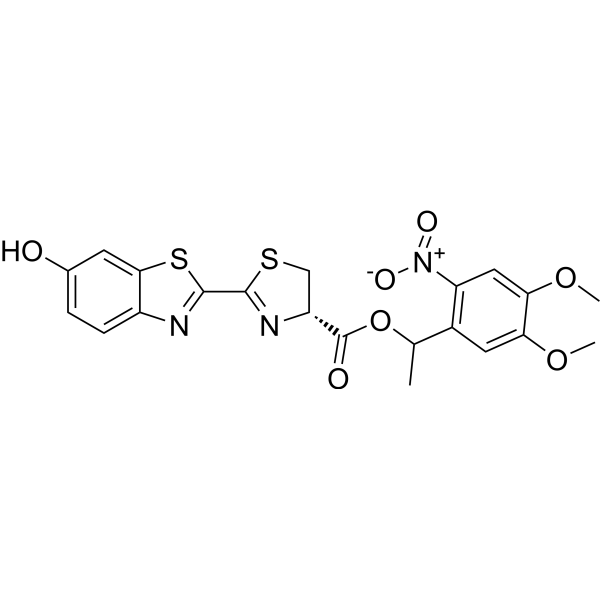
DMNPE-caged D-luciferin is a heterocyclic luminescent compound that is a natural ligand for luciferase, an enzyme used to detect cell activity. Its reaction requires ATP and emits yellow-green light with a peak wavelength of about 530 nm. The luciferin in the DMNPE cage easily crosses the cell membrane.
loading...
    loading...
Cat. No.: HY-W004617
CAS No.: 61414-16-2
Synonyms: 4,4',4''-(1,3,5-Triazine-2,4,6-triyl)tribenzoic acid
Target:  

MOFs

Research Areas:  

Others

2,4,6-Tris(4-carboxyphenyl)-1,3,5-triazine (4,4',4''-(1,3,5-Triazine-2,4,6-triyl) tribenzoic acid) is a metal-organic framework. 2,4,6-Tris(4-carboxyphenyl)-1,3,5-triazine is a C3-symmetric organic ligand with temperature-sensitive ratioluminescent properties. Complexes derived from 2,4,6-Tris(4-carboxyphenyl)-1,3,5-triazine exhibit strong emissivity and can be used for highly sensitive ratiometric fluorescent temperature sensing .
loading...
    loading...
Cat. No.: HY-136213
CAS No.: 1404104-40-0
Purity:  99.63%
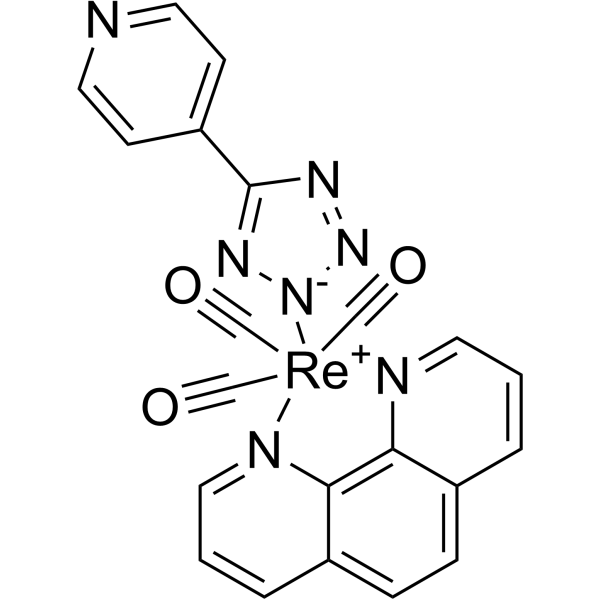
Endoplasmic reticulum dye 1 is a rhenium (I)-based luminescent, membrane-permeable cell imaging reagent with low cytotoxicity, photobleaching resistance, and suitability for multicolor imaging. Endoplasmic reticulum dye 1 localizes to the nuclear membrane, endoplasmic reticulum, and nucleoplasmic reticulum in live cells. Endoplasmic reticulum dye 1 enables detection of exocytosis events, dynamic changes in nuclear membrane-derived phagosomes, and vesicle trafficking processes .
loading...
    loading...
Cat. No.: HY-W034043
CAS No.: 1335047-34-1
[Ir(dF(Me)ppy)2(dtbbpy)]PF6 is a blue-green luminescent material. [Ir(dF(Me)ppy)2(dtbbpy)]PF6 exhibits irregular emission, with its emission peak maxima located at 498, 512, and 519 nM, respectively. [Ir(dF(Me)ppy)2(dtbbpy)]PF6 can serve as an electrochemiluminescence-based biological probe .
loading...
    loading...
Cat. No.: HY-117445
CAS No.: 143413-86-9
Target:  

Fluorescent Dye

Research Areas:  

Others

Oxazole yellow is a cyanine dye composed of benzoxazole and quinoline rings connected by a linker. It is almost non-luminescent in water, but its green fluorescence is significantly enhanced after intercalation in double-stranded DNA. Oxazole yellow can be used to detect cell apoptosis .
loading...
    loading...
Cat. No.: HY-163077
Research Areas:  

Cancer

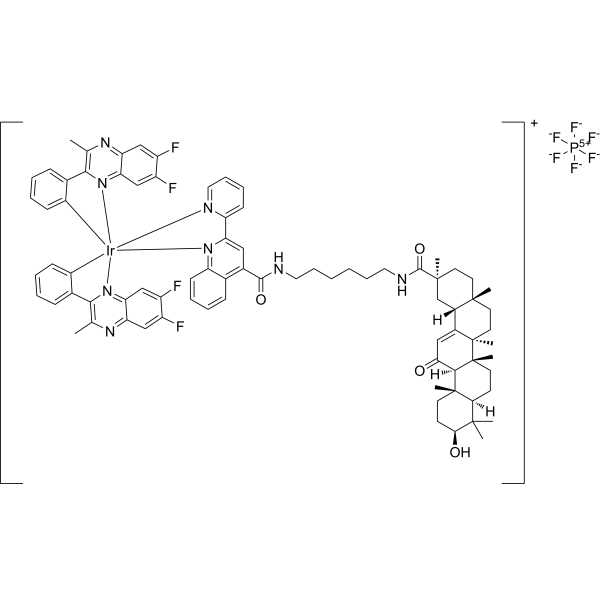
Anticancer agent 175 (complex 1) ia a near-infrared (NIR) luminescent theranostic complex. Anticancer agent 175 induces ROS accumulation, mitochondrial damage, disruption of Bax/Bcl-2 equilibrium, and tumor cell apoptosis in HepG2 cell line .
loading...
    loading...
Cat. No.: HY-P10674
Research Areas:  

Neurological Disease

QMT-CBT is a near-infrared aggregation-induced luminescent photon. After activation of caspase1 (Cas1), QMT-CBT undergoes a CBT-Cys click reaction to form a cyclic dimer QMT-Dimer (the first aggregate) and assembles into nanoparticles (the second aggregate), turning the AIE signal "on" to enhance imaging of Alzheimer's disease (AD) .
loading...
    loading...