1. Search Result
Search Result
Pathways Recommended: Stem Cell/Wnt Cell Cycle/DNA Damage
Results for "

lung cells

" in MedChemExpress (MCE) Product Catalog:

1844

Inhibitors & Agonists

4

Screening Libraries

19

Fluorescent Dye

38

Biochemical Assay Reagents

68

Peptides

2

MCE Kits

140

Inhibitory Antibodies

300

Natural
Products

2

Recombinant Proteins

60

Isotope-Labeled Compounds

20

Click Chemistry

20

Oligonucleotides

3

GMP Molecules

Cat. No. Product Name Target Research Areas Chemical Structure
  • HY-153356

    Molecular Glues Apoptosis Inflammation/Immunology Cancer
    MRT-2359 is an orally active and selective GSPT1 molecular glue degrader, with a DC50 of 5 nM. MRT-2359 induces CRBN/GSPT1 ternary complex formation to drive CRBN- and degron-dependent proteasomal GSPT1 degradation, with selectivity for wild-type GSPT1 over the GSPT1G575N mutant. MRT-2359 disrupts protein translation, induces ribosome stalling, downregulates MYC family proteins and their transcriptional output, reduces proliferation, and induces apoptosis in cancer cells. MRT-2359 can be used for the research of non-small cell lung cancer (NSCLC), small cell lung cancer (SCLC), neuroendocrine lung cancer, high grade neuroendocrine cancers, diffuse large B-cell lymphoma, prostate cancer, and MYC-driven solid tumors .
    MRT-2359
  • HY-126477
    NNK
    2 Publications Verification

    Endogenous Metabolite Cancer
    NNK is a nicotine-nitrosated derivative. NNK simultaneously stimulates Bcl2 phosphorylation exclusively at Ser 70 and c-Myc at Thr 58 and Ser 62 through activation of both ERK1/2 and PKCα . NNK induces survival and proliferation of human lung cancer cells. NNK can be used for lung cancer mice model structure .
    NNK
  • HY-173158

    PROTACs Histone Acetyltransferase Cancer
    AUR1545 is a selective KAT2A/KAT2B ((GCN5/PCAF)) PROTAC degrader that induces monocyte differentiation and inhibits the growth of acute myeloid leukemia cells. AUR1545 inhibits cell growth, induces epithelial differentiation and suppresses tumor growth in small cell lung cancer models. AUR1545 inhibits cell growth and induces differentiation in neuroendocrine prostate cancer cells and primary patient-derived organoids. AUR1545 is applicable to research related to acute myeloid leukemia, small cell lung cancer and neuroendocrine prostate cancer .
    AUR1545
  • HY-P5423

    Exosomes Liposome Cancer
    GALA is a pH-responsive amphipathic peptide consisting of 30 amino acids, which acts as a lung endothelium-targeting ligand. GALA undergoes a conformational transition from random coil to α-helix in an acidic environment at pH 5.0, thereby inducing endosomal membrane destabilization and fusion. GALA-modified liposomes traverse lung endothelial cells via clathrin-dependent endocytosis and transcytosis, and specifically accumulate in the lungs after intravenous injection. GALA significantly promotes the cytosolic release of cargos carried by exosomes, plasmids and liposomes, effectively enhances gene transfection efficiency, and drives gene knockdown of functional macromolecules (such as siRNA) in alveolar epithelial cells (with no significant cytotoxicity at effective concentrations). GALA serves as a critical tool for studies on lung cancer metastasis (e.g., melanoma lung metastasis) and lung-targeted drug delivery systems .
    GALA
  • HY-160699
    DCC-3116
    1 Publications Verification

    ULK Ras Autophagy Cancer
    DCC-3116 is an orally active ULK1/2 inhibitor. DCC-3116 can inhibit autophagy in lung cancer cells by inhibiting KRAS G12C signaling, thereby inhibiting the proliferation of lung cancer cells and exerting anti-cancer effects .
    DCC-3116
  • HY-P990717

    IMC-F106C

    CD3 Cancer
    Brenetafusp is a TCR/anti-CD3 bispecific fusion protein, consisting of a TCR targeting the PRAME peptide and an anti-CD3 scFv effector domain. Brenetafusp redirects CD3 + T cells to kill PRAME + tumor cells. Brenetafusp can be used in research related to cutaneous melanoma, non-small cell lung cancer, ovarian cancer, endometrial cancer, triple-negative breast cancer, and small cell lung cancer .
    Brenetafusp
  • HY-N10503

    Tyrosinase Ras Raf MAPKAPK2 (MK2) Apoptosis Cancer
    Norartocarpetin is a tyrosinase inhibitor. Norartocarpetin has strong tyrosinase inhibitory activity with an IC50 value of 0.47 μM. Norartocarpetin as an antibrowning agent can be used for the research of food systems. Norartocarpetin also has a significant anticancer activity in lung carcinoma cells (NCI-H460) with an IC50 value of 22 μM. Norartocarpetin has antiproliferative effects are mediated via targeting Ras/Raf/MAPK signalling pathway, mitochondrial mediated apoptosis, S-phase cell cycle arrest and suppression of cell migration and invasion in human lung carcinoma cells .
    Norartocarpetin
  • HY-P991731

    ZG006

    CD3 Notch Neurological Disease Cancer
    Alveltamig (ZG006) is a trispecific T cell engager targeting Delta-like ligand 3 (DLL3)/CD3, mediating T cell-specific killing of DLL3-expressing tumor cells. Alveltamig can be used for the researches of small cell lung cancer and neuroendocrine carcinoma .
    Alveltamig
  • HY-P99202

    Transmembrane Glycoprotein Cancer
    Vibostolimab is an anti-TIGIT (T cell immunoglobulin and ITIM domain) monoclonal antibody. Vibostolimab shows antitumor activity, and can be used in non-small cell lung cancer (NSCLC) and melanoma research .
    Vibostolimab
  • HY-P990981

    ALPS-12; RG-6524; RO 7616789

    CD3 Inflammation/Immunology Cancer
    Clesitamig (ALPS-12) is a trispecific T cell engager with two CD3/CD137 dual-specific Fabs and one DLL3 Fab. Clesitamig engages CD3 and CD137 on T cells to activate and co-stimulate T cells, promoting their proliferation, survival, and antitumor activity. Clesitamig binds to DLL3 on tumor cells for tumor-specific recognition. Clesitamig can be used for the research of small cell lung cancer (SCLC) .
    Clesitamig
  • HY-P990042

    ONC-392; BNT 316

    CTLA-4 Inflammation/Immunology Cancer
    Gotistobart (ONC-392; BNT 316) is a humanized anti-CTLA-4 antibody with selective regulatory T cell depletion activity in the tumor microenvironment. Gotistobart can be used for the research of cancer, such as non-small cell lung cancer .
    Gotistobart
  • HY-151623
    ACBI2
    1 Publications Verification

    PROTACs Epigenetic Reader Domain Cancer
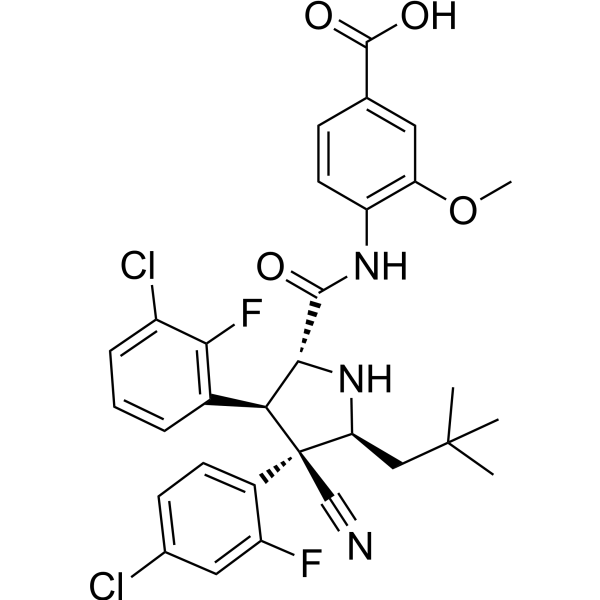
    ACBI2 is a highly potent and orally active VHL PROTAC SMARCA2 degrader (EC50: 7 nM), which selectively degrades SMARCA2 with a DC50 value of 1 nM in RKO cells. ACBI2 can be used in the research of lung cancer .
    ACBI2
  • HY-160715

    Toll-like Receptor (TLR) Cancer
    BNT411 is a selective TLR7 agonist that can induce the release of IFNa both in vivo and in vitro. BNT411 has anticancer activity and can be used in cancer research, including non-small cell lung cancer, pancreatic cancer, and untreated extensive-stage small cell lung cancer (ES-SCLC) .
    BNT411
  • HY-110245
    DMH2
    1 Publications Verification

    VU364849

    Apoptosis Cancer
    DMH2 is a potent BMP receptor antagonist. DMH2 downregulates the expression of Id1 and Id3 proteins, and inhibits the proliferation and induces cell death of lung cancer cell lines .
    DMH2
  • HY-P990073

    REGN-5093

    c-Met/HGFR Cancer
    Davutamig (REGN-5093) is a human IgG4-kappa, anti-MET bispecific antibody. Davutamig binds 2 distinct epitopes of MET, blocking ligand binding and inducing MET internalization and degradation. Davutamig is applicable to the research of advanced non-small cell lung cancer with MET gene abnormalities .
    Davutamig
  • HY-14218
    Ditolylguanidine
    2 Publications Verification

    1,3-Di-o-tolylguanidine; DTG

    Sigma Receptor Neurological Disease
    Ditolylguanidine (1,3-Di-o-tolylguanidine) is an agonist of sigma receptor (σ1/σ2 receptor) with Ki values of 69 and 21 nM for σ1 and σ2 receptors, respectively. Ditolylguanidine effectively inhibits the growth of small cell lung cancer cells. Ditolylguanidine can be used for the research of lung cancer .
    Ditolylguanidine
  • HY-168566

    HSP Cancer
    EV206 is a Hsp70 binder and apoptosis inducer that binds to the N-terminal domain of Hsp70, promotes Hsp70 degradation via the ubiquitin-proteasome system, and reduces Hsp70 protein stability. EV206 induces apoptotic cell death, inhibits colony formation, and downregulates the expression of cancer stem cell-related markers in non-small cell lung cancer cells. EV206 inhibits the growth of H460 xenograft tumors in nude mice and can be used for the research of non-small cell lung cancer .
    EV206
  • HY-162753

    P-glycoprotein Cancer
    ZW-1226 is a dual Tyrosyl DNA phosphodiesterase 2 (TDP2) and Multidrug resistance-associated protein 1 (MRP1) inhibitor with IC50 values of 0.2 and 0.5 μM, respectively. ZW-1226 exhibits selectivity over other ABC transporters. ZW-1226 elevates intracellular GSH levels, and reverses MRP1-mediated drug resistance. ZW-1226 can be used for the research of leukemia, non-small-cell lung cancer, and multidrug resistant small-cell lung cancer .
    ZW-1226
  • HY-131344

    mTOR Autophagy Cancer
    mTOR inhibitor-8 is an mTOR inhibitor and autophagy inducer. mTOR inhibitor-8 inhibits the activity of mTOR via FKBP12 and induces autophagy of A549 human lung cancer cells .
    mTOR inhibitor-8
  • HY-164307

    BLU 451; LNG-451

    EGFR Cancer
    Pebezertinib (BLU 451) is an orally active inhibitor for EGFR. Pebezertinib exhibits the ability to penetrate the central nervous system (CNS). Pebezertinib can be used for research about non-small cell lung cancer carrying EGFR exon 20 insertion .
    Pebezertinib
  • HY-B1624A

    Debrisoquine hemisulfate; Isocaramidine hemisulfate; Ro 5-3307/1 hemisulfate

    Endogenous Metabolite Infection Cardiovascular Disease
    Debrisoquin (Isocaramidine) hemisulfate is a TMPRSS2 inhibitors that inhibits SARS-CoV-2 entry into human lung cell line by a TMPRSS2-depedent manner, with an IC50 of 22μM. Debrisoquin hemisulfate can be used for antiviral research .
    Debrisoquin hemisulfate
  • HY-147027

    PARP Caspase Apoptosis Neurological Disease Inflammation/Immunology Cancer
    PARP-1-IN-2 (compound 11g) is a potent PARP1 inhibitor, with an IC50 of 149 nM, and ADME prediction indicates it has high blood-brain barrier permeability. PARP1-IN-2 shows significantly potent anti-proliferative activity against Human lung adenocarcinoma epithelial cell line A549. PARP1-IN-2 can induce A549 cells apoptosis .
    PARP-1-IN-2
  • HY-110335

    ROCK Cancer
    OXA-06 hydrochloride is an ATP-competitive ROCK inhibitor that blocks anchorage-dependent growth and invasion of non-small cell lung cancer cell lines. OXA-06 hydrochloride inhibits cofilin phosphorylation but does not stimulate apoptosis .
    OXA-06 hydrochloride
  • HY-161313

    Histone Methyltransferase HIF/HIF Prolyl-Hydroxylase Cancer
    DYB-03 is an oral active HIF-1α/EZH2 inhibitor. DYB-03 inhibits migration, invasion, and angiogenesis of lung cancer cells and HUVECs in vitro and in vivo. DYB-03 induces apoptosis in 2-ME2 - and GSK126 -resistant of A549 and H460 cells .
    DYB-03
  • HY-175809

    CD44 Src EGFR MAPKAPK2 (MK2) Cancer
    SRT6 is a CD44 inhibitor. SRT6 exerts antiproliferative activity in CD44 + breast cancer and lung cancer cells. SRT6 inhibits CD44-associated SRC kinase, as well as EGFR, ERBB2, ERBB4, MAP3K10 and MAPKAPK2. SRT6 can be used for the research of breast cancer and lung cancer .
    SRT6
  • HY-13554

    Antibiotic Cancer
    Annamycin is an anthracycline antibiotic with antitumor activity. Annamycin interacts with topoisomerase II, induces double-strand DNA breaks, triggers cell death, and exerts cytotoxic effects. In mice, Annamycin inhibits the growth of advanced subcutaneous melanoma and subcutaneous squamous cell carcinoma, and prolongs the survival of mice with subcutaneous reticulosarcoma and in lung cancer lung metastasis models. Annamycin can be used in research related to melanoma, reticulum cell sarcoma, lung cancer, non-small cell lung cancer, small cell lung cancer .
    Annamycin
  • HY-148053

    Drug Metabolite Cancer
    Rezivertinib analogue 1 is a process impurity of osimertinib mesylate. Rezivertinib analogue 1 can be used in the study of non-small cell lung cancer .
    Rezivertinib analogue 1
  • HY-172237

    Ras Cancer
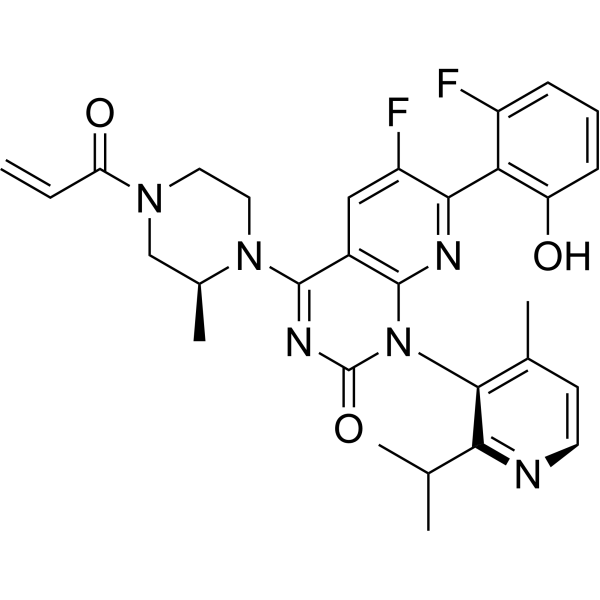
    Sosimerasib is an orally active KRAS G12C inhibitor. Sosimerasib can be used in research related to non-small cell lung cancer .
    Sosimerasib
  • HY-169061

    Histone Methyltransferase Aminotransferases (Transaminases) Lactate Dehydrogenase Cancer
    WQQ-345 is an orally active BCAT1 inhibitor with an IC50 values of 10.8 mM. WQQ-345 reduces cellular α-KG levels, upregulating H3K27me3 expression, decreasing glycolytic enzyme expression, and impairing glycolysis activity. WQQ-345 reduces colony formation, suppresses growth of BCAT1-high TKI-resistant lung cancer cells. WQQ-345 exerts in vitro and in vivo antitumor activity. WQQ-345 can be used for the research of TKI-resistant non-small cell lung cancer and TKI-resistant lung cancer .
    WQQ-345
  • HY-B1624

    Debrisoquine; Isocaramidine; Ro 5-3307/1

    SARS-CoV Ser/Thr Protease Infection Cardiovascular Disease
    Debrisoquin (Isocaramidine) is a TMPRSS2 inhibitors that inhibits SARS-CoV-2 entry into human lung cell line by a TMPRSS2-depedent manner, with an IC50 of 22μM. Debrisoquin can be used for antiviral research .
    Debrisoquin
  • HY-W142207

    Drug Intermediate Cancer
    (E)-3-Chloroacrylic acid is an intermediate. (E)-3-Chloroacrylic acid can be used in the synthesis of Compound 81. (E)-3-Chloroacrylic acid can be used in research on human non-small cell lung cancer with KRAS G12C mutation . (E)-3-Chloroacrylic acid is a substrate of trans-3-chloroacrylic acid dehalogenase (Km = 34 µM) .
    (E)-3-Chloroacrylic acid
  • HY-151377

    RET EGFR Aurora Kinase c-Fms MAP4K Cancer
    RET-IN-19 (compound 59) is a potent RET inhibitor, with IC50 values of 6.8 and 13.51 nM against RET-wt and RET V804M, respectively. RET-IN-19 shows anticancer activity. RET-IN-19 can be used for non-small cell lung cancer (NSCLC) research .
    RET-IN-19
  • HY-178922

    Carbonic Anhydrase Cancer
    CAI/II-IN-13 (Compound 5f) is a CAI/II inhibitor, with IC50 values of 309.16 nM for hCA I and 267.27 nM for hCA II. CAI/II-IN-13 exhibits potent and selective antiproliferative activity against A549 lung cancer cells (IC50 = 0.58 μM). CAI/II-IN-13 can be used for the study of lung cancer .
    CAI/II-IN-13
  • HY-110341

    IKK Cancer
    MRT 68601 hydrochloride is a TBK1 inhibitor with an IC50 value of 6 nM. MRT 68601 hydrochloride inhibits autophagosome formation in lung cancer cells .
    MRT 68601 hydrochloride
  • HY-172796

    TAM Receptor Cancer
    UNC9435 (compound 44) is a dual inhibitor of TYRO3/MERTK with IC50 values of 3.7 nM and 1.1 nM, respectively. UNC9435 reduces colony formation in non-small cell lung cancer cultures
    UNC9435
  • HY-168209

    Wnt CDK Apoptosis Cancer
    LBM22 is a CDC2-like kinase 2 (CLK2) inhibitor with the IC50 of 3.9 nM. LBM22 has antiproliferative activity and inhibits serine/arginine-rich (SR) protein phosphorylation. LBM22 down-regulates the expression of Wnt-related proteins and anti-apoptotic proteins and can be used for study of non-small cell lung cancer .
    LBM22
  • HY-P991016

    PT-217

    CD47 Inflammation/Immunology
    Peluntamig (PT-217) is a bispecific antibody targeting DLL3 and CD47. The antibody arms of Peluntamig specifically bind to DLL3 on small cell lung cancer tumor cells while blocking the CD47-SIRPa interaction, thereby effectively stimulating macrophage phagocytosis and inducing NK cell-mediated cytotoxicity. Peluntamig exhibits significant anti-tumor activity against small cell lung cancer and also has favorable safety profiles. Peluntamig can be used in a variety of tumor-related studies including those on small cell lung cancer and L1210 leukemia .
    Peluntamig
  • HY-147802

    EGFR Apoptosis Cancer
    EGFR-IN-59 (Compound 8c) is a EGFR inhibitor (IC50=190 nM) and apoptosis inducer. EGFR-IN-59 exhibits cytotoxicity against non-small lung cancer cell lines (A549) and normal lung fibroblasts (WI38) with IC50s of 8.62 and 52.6 µM, respectively. EGFR-IN-59 can be used for the research of various cancers such as non-small cell lung cancer (NSCLC), head and neck cancer, breast cancer and colorectal cancer .
    EGFR-IN-59
  • HY-178008

    Bcl-2 Family Caspase Apoptosis Cancer
    Mcl-1-IN-16 is an effective macrocyclic myeloid cell leukemia 1 (Mcl-1) inhibitor with a Ki of below 0.08 nM. Mcl-1-IN-16 maintains high selectivity (>50,000-fold) for Mcl-1 over other antiapoptotic Bcl-2 family members Bcl-2 and Bcl-xL. Mcl-1-IN-16 leads to the activation of caspase-3/7, thereby initiating cell apoptosis. Mcl-1-IN-16 achieves tumor regression in a lung cancer-derived tumor xenograft mice model. Mcl-1-IN-16 can be used in the research of solid tumor such as nonsmall cell lung cancer (NSCLC) .
    Mcl-1-IN-16
  • HY-105522

    Tetraplatin; NSC 363812

    Drug Derivative Cancer
    Ormaplatin (Tetraplatin) is a Platinum (HY-W096169D) analog with anticancer activity. Ormaplatin demonstrates cytotoxic activity in Cisplatin (HY-17394)-sensitive cell lines in vitro and in vivo. Ormaplatin can be used for non-small cell lung, colon, and breast cancer research .
    Ormaplatin
  • HY-179536

    Ras Cancer
    KRAS-IN-49 (compound 7b) is a selective and covalent KRAS G13C inhibitor. KRAS-IN-49 covalently binds to Cys13 of KRAS G13C. KRAS-IN-49 can be used for non-small cell lung cancer (NSCLC) research .
    KRAS-IN-49
  • HY-162939

    Histone Methyltransferase Cancer
    TB22 is a non-nucleoside inhibitor of DOT1LR231Q, possessing anticancer activity. TB22 inhibits the malignant phenotype of lung cancer cells carrying the R231Q mutation through the MAPK/ERK signaling pathway, and can be used for lung cancer research .
    TB22
  • HY-164536

    Apoptosis Cancer
    SLCB050 is a compound that blocks the interaction between DX2 and p14/ARF and has anticancer activity. SLCB050 reduces the viability of human lung cancer cells, especially small cell lung cancer cells, in a p14/ARF-dependent manner and induces apoptosis and senescence .
    SLCB050
  • HY-124321A

    CDK Cancer
    Metralindole is an inhibitor of human cyclin-dependent kinase CDK2 and human protein kinase CK2 holoenzyme. Metralindole shows good potential as a non-small cell lung cancer inhibitor .
    Metralindole
  • HY-120241

    K 251-1

    Phosphodiesterase (PDE) Cancer
    Reticulol (K 251-1) is an inhibitor of cyclic adenosine 3', 5'-monophosphate phosphodiesterase. Reticulol shows antitumor activity independent with cell cycle arrest or apoptosis. Reticulol inhibits cell growth of murine melanoma cells and human lung tumor cells. Reticulol protects its lung metastasis via the bloodstream by inhibiting the growth of B16F10 melanoma .
    Reticulol
  • HY-17667

    HDAC Cancer
    HDAC-IN-95 (Compound 9) is a HDAC inhibitor. HDAC-IN-95 can be used for the study of non-small cell lung cancer (NSCLC) .
    HDAC-IN-95
  • HY-153943

    DNA-PK Cancer
    DNA-PK-IN-10 is a DNA-PK inhibitor. DNA-PK-IN-10 can be used for the research of breast cancer and non-small cell lung cancer .
    DNA-PK-IN-10
  • HY-164513

    Ras Phosphodiesterase (PDE) Cancer
    NHTD is a KRAS-PDEδ inhibitor. NHTD targets the prenyl-binding pocket of PDEδ, altering the cellular localization of KRAS, thereby inhibiting the proliferation of KRAS-mutant cancer cells and inducing apoptosis. NHTD can be used for research on KRAS-driven non-small cell lung cancer (NSCLC) .
    NHTD
  • HY-116639

    Bacterial Infection Cancer
    Javanicin is an antibacterial agent with certain antibacterial activity against pathogenic bacteria such as Bacillus megaterium, Staphylococcus aureus, Salmonella typhi, and Escherichia coli. Javanicin has weak cytotoxicity against the human lung cancer cell line .
    Javanicin
  • HY-149950

    Apoptosis Cancer
    Anticancer agent 106 (compound 10ic) is an anticancer agent that induces apoptosis in B16-F10 melanoma cells. Anticancer agent 106 also potently inhibits metastatic nodules in a mouse model of lung metastatic melanoma. Anticancer agent 106 can be used in the study of cancer, especially lung metastatic melanoma .
    Anticancer agent 106

Inquiry Online

Your information is safe with us. * Required Fields.

Salutation


Country or Region *

Applicant Name *


Organization Name *

Department *


Email Address *


Product Name *

Cat. No.


Requested quantity *

Phone Number *


Remarks

Inquiry Online

Inquiry Information

Product Name:
Cat. No.:
Quantity:
MCE Japan Authorized Agent:

