1. Search Result
Search Result
Results for "

microtubule-targeted

" in MedChemExpress (MCE) Product Catalog:

18

阻害剤およびアゴニスト

1

ペプチド

3

天然物

1

同位体標識化合物

製品番号 製品名 Target 研究分野 構造式
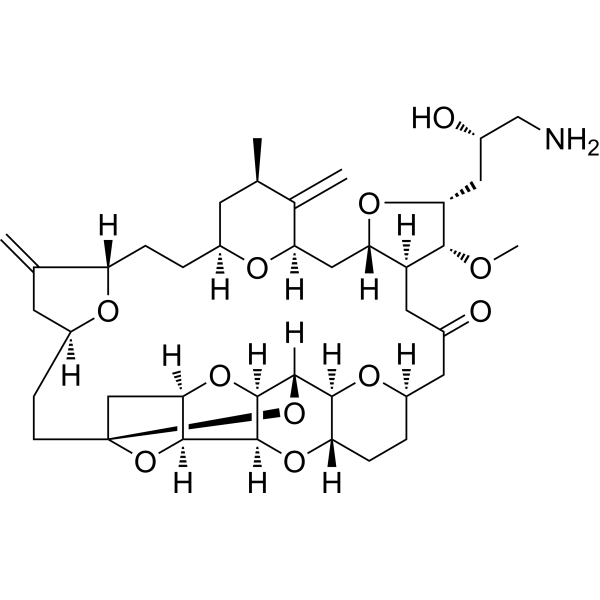
  • HY-13442
    Eribulin
    Maximum Cited Publications
    8 Publications Verification

    B1939; E7389; ER-086526

    Microtubule/Tubulin Apoptosis ADC Payload Cancer
    Eribulin (E7389) is a microtubule targeting agent that is used for the research of metastatic breast cancer. Eribulin inhibits the proliferation of cancer cells by binding microtubule proteins and microtubules.
    Eribulin
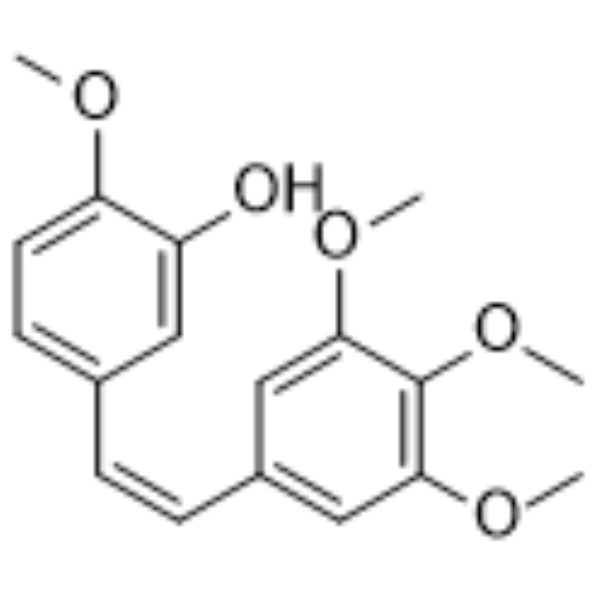
  • HY-N2146
    Combretastatin A4
    4 Publications Verification

    CRC 87-09

    Microtubule/Tubulin Cancer
    Combretastatin A4 is a microtubule-targeting agent that binds β-tubulin with Kd of 0.4 μM.
    Combretastatin A4
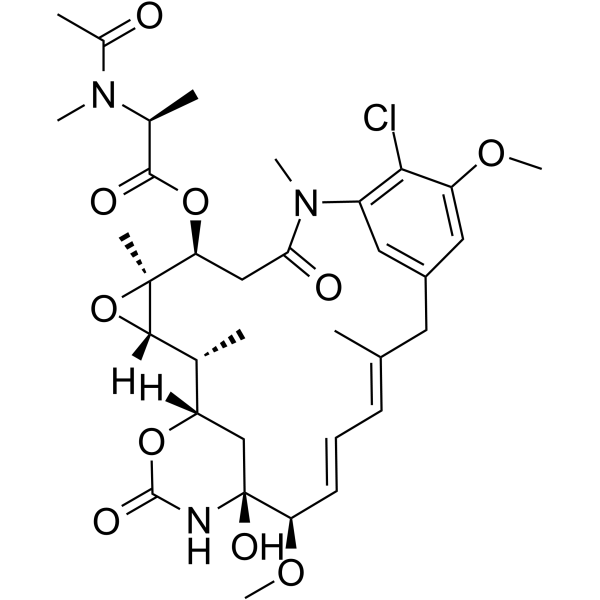
  • HY-13674

    NSC 153858

    Microtubule/Tubulin Cancer
    Maytansine is a highly potent microtubule-targeted compound that induces mitotic arrest and kills tumor cells at subnanomolar concentrations .
    Maytansine
  • HY-173522

    Kinesin Microtubule/Tubulin Cancer
    KIF2C-IN-1 is a cell-penetrating, selective KIF2C inhibitor with fluorescent properties (Ex/Em = 410/510 nm). KIF2C-IN-1 exhibits notable cytotoxicity and weak inhibitory effects on KIF2A/B. KIF2C-IN-1 prohibits the dissociation of KIF2C from microtubules. KIF2C-IN-1 inhibiting KIF2C reverses cross-resistance to microtubule-targeting agents. KIF2C-IN-1 reduces tumorigenesis in chemoresistant triple-negative breast cancer (TNBC) model in mice with the combination of Paclitaxel (HY-B0015) .
    KIF2C-IN-1
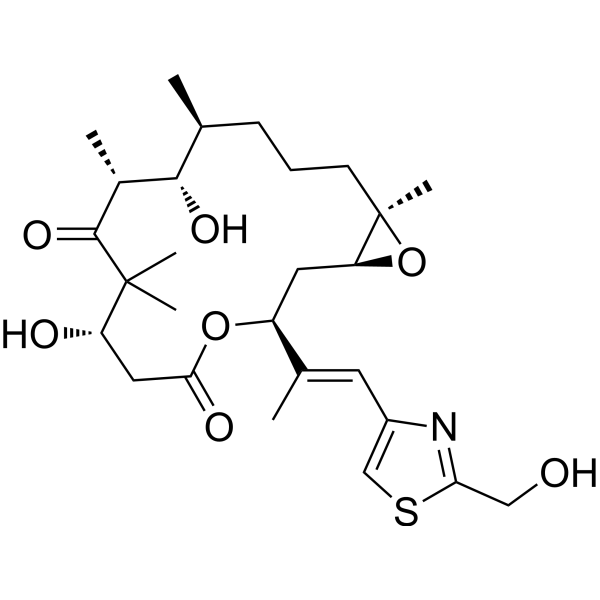
  • HY-127079

    Microtubule/Tubulin Cancer
    Epothilone F is a 16-membered macrolide microtubule-targeting agent. Epothilone F exhibits significant anticancer activity, and it particularly exerts effective inhibitory effects on paclitaxel-resistant cancer cells. Epothilone F inhibits the proliferation of breast cancer cells, non-small cell lung cancer cells and drug-resistant ovarian cancer cells, and it has been widely used in cancer-related research .
    Epothilone F
  • HY-13442AS

    Microtubule/Tubulin Apoptosis Cancer
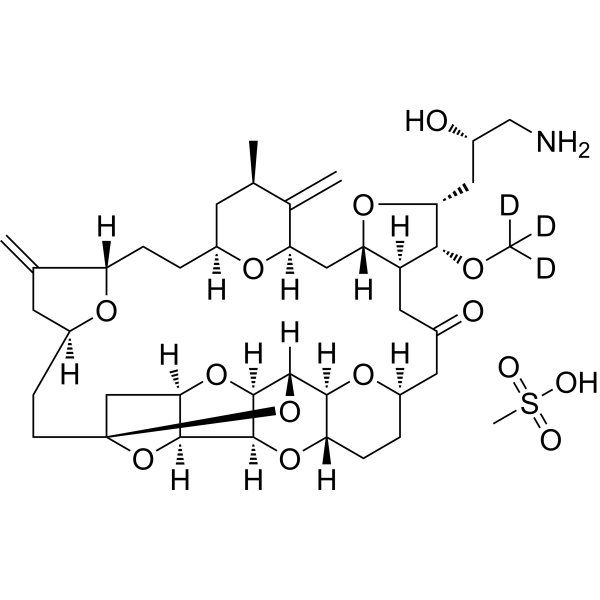
    Eribulin-d3 (mesylate) is a deuterium labeled Eribulin mesylate. Eribulin mesylate is a microtubule targeting agent that is used for the research of cancer .
    Eribulin-d3 mesylate
  • HY-19916

    BAL-101553

    Microtubule/Tubulin Checkpoint Kinase (Chk) Cancer
    Lisavanbulin (BAL-101553) is the prodrug of the microtubule targeting agent Avanbulin (BAL 27862) (HY-106008). Lisavanbulin is a BBB-penetrant and orally active antitumor agent, especially in tumors that express high levels of end-binding protein 1. Lisavanbulin has ability to target tumor cell proliferation and affects the tumor microenvironment by reducing tumor microvasculature. Lisavanbulin is also a spindle assembly checkpoint activator. Lisavanbulin induces cell cycle arrest and subsequent death or aberrant chromosome segregation. Lisavanbulin can be studied in research for diffuse large B cell lymphoma (DLBCL) and glioblastoma .
    Lisavanbulin
  • HY-19916A

    BAL-101553 dihydrochloride

    Microtubule/Tubulin Checkpoint Kinase (Chk) Cancer
    Lisavanbulin (BAL-101553) dihydrochloride is the prodrug of the microtubule targeting agent Avanbulin (BAL 27862) (HY-106008). Lisavanbulin dihydrochloride exhibits antitumor activity, especially in tumors that express high levels of end-binding protein 1. Lisavanbulin dihydrochloride has ability to target tumor cell proliferation and affects the tumor microenvironment by reducing tumor microvasculature. Lisavanbulin dihydrochloride is also a spindle assembly checkpoint activator. Lisavanbulin dihydrochloride induces cell cycle arrest and subsequent death or aberrant chromosome segregation. Lisavanbulin dihydrochloride can be studied in research for diffuse large B cell lymphoma (DLBCL) and glioblastoma .
    Lisavanbulin dihydrochloride
  • HY-N2146R

    CRC 87-09 (Standard)

    Reference Standards Microtubule/Tubulin Cancer
    Combretastatin A4 is a microtubule-targeting agent that binds β-tubulin with Kd of 0.4 μM.
    Combretastatin A4 (Standard)
  • HY-163737

    Microtubule/Tubulin Cancer
    ST-401, a microtubule-targeting agent (MTA), is a brain-penetrant microtubule (MT) assembly inhibitor. ST-401 disrupts microtubule (MT) function through gentle and reverisible reduction in MT assembly that triggers mitotic delay and cell death in interphase. ST-401 shows a potent antitumor activity .
    ST-401
  • HY-P2548

    EGFR Others
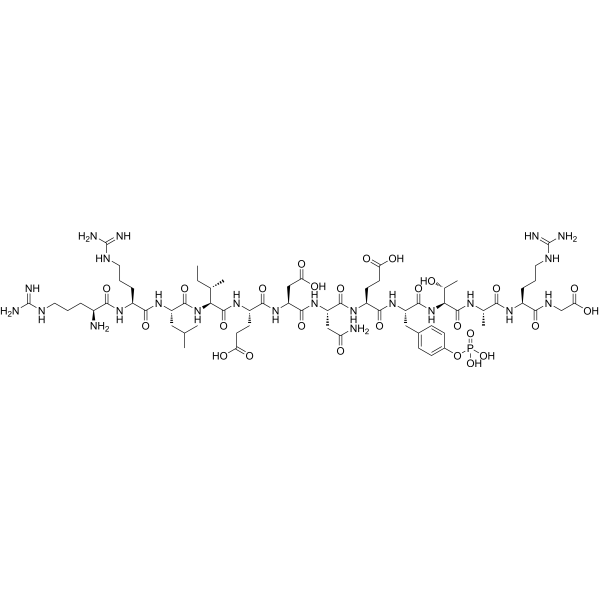
    pp60 (v-SRC) Autophosphorylation Site, Phosphorylated is the phosphorylated peptide of an EGFR substrate. pp60 (v-SRC) Autophosphorylation Site, Phosphorylated can be used for the screening of EGFR Kinase inhibitors via phosphorylated-substrate quantification .
    pp60 (v-SRC) Autophosphorylation Site, Phosphorylated
  • HY-177549

    Drug Derivative ADC Payload Microtubule/Tubulin Apoptosis Cancer
    Fmoc-PEG6-VCP-Eribulin is the derivative of Eribulin (HY-13442). Eribulin (E7389) is a microtubule targeting agent that is used for the research of metastatic breast cancer. Eribulin inhibits the proliferation of cancer cells by binding microtubule proteins and microtubules .
    Fmoc-PEG6-VCP-Eribulin
  • HY-178417

    Microtubule/Tubulin Apoptosis Cancer
    Angustilongine M is a microtubule-targeting antitumor alkaloid (IC50=0.2 μM against HT-29 cells). Angustilongine M induces G0/G1 cell cycle arrest and mitochondrial apoptosis via tubulin polymerization promotion. Angustilongine M is promising for research of colorectal cancer and other solid tumors .
    Angustilongine M
  • HY-12814A

    DNA/RNA Synthesis Microtubule/Tubulin Cancer
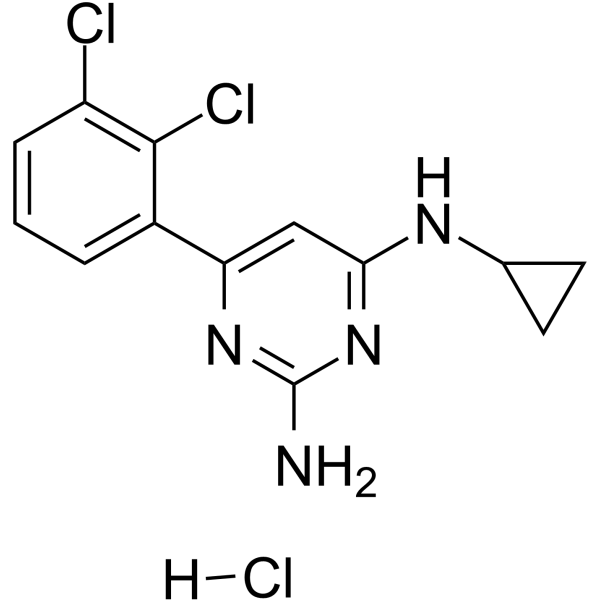
    TH588 hydrochloride is a highly selective human MTH1 inhibitor (IC50=5 nM) with additional microtubule-targeting properties. TH588 hydrochloride interferes with mitotic progression, induces genomic 8-oxodG formation, DNA damage and cell cycle arrest, and exhibits significant cytotoxicity. Combined with phenethyl isothiocyanate, TH588 hydrochloride enhances ROS-mediated effects and effectively inhibits the growth of visceral metastases of malignant melanoma in mice. TH588 hydrochloride is widely applicable to research related to cancers, pancreatic cancer, leukemia, lymphoma, malignant melanoma and lung cancer .
    TH588 hydrochloride
  • HY-13224A

    Endogenous Metabolite Cancer
    AZD4877 hydrochloride is a synthetic dynein inhibitor with potential anti-tumor activity. AZD4877 selectively inhibits the microtubule dynein KSP (also known as kinesin-5 or Eg5), which may lead to inhibition of mitotic spindle assembly. The action of AZD4877 may activate the spindle assembly checkpoint, leading to cell cycle arrest at the mitotic stage. AZD4877 may induce cell death in actively dividing tumor cells. AZD4877 may be less likely to cause peripheral neuropathy associated with microtubule-targeted compounds as it is not involved in post-mitotic processes. AZD4877 is essential for the formation of bipolar spindles and the proper segregation of sister chromosomes .
    AZD4877 hydrochloride
  • HY-124624

    Microtubule/Tubulin Apoptosis Cancer
    PBOX-15 is a microtubule targeting agent. PBOX-15 induces apoptosis by promoting tubulin depolymerization in tumor cells .
    PBOX-15
  • HY-120120

    Microtubule/Tubulin Cancer
    DZ-2384 is a potent microtubule-targeting agent. DZ-2384 increases the rescue frequency and preserves the microtubule network in nonmitotic cells and primary neurons. DZ-2384 acts synergistically with anti-CTLA-4 immunotherapy in Taxane-sensitive and Taxane-resistant xenograft murine models of triple-negative breast cancer (TNBC). DZ-2384 exhibits potent antitumor activity in adult acute lymphocytic leukemia (ALL) models. DZ-2384 can be used for cancer research, such as TNBC and ALL [1][2].
    DZ-2384
  • HY-183831

    MDM-2/p53 PARP Caspase Apoptosis Cancer
    GPS167 is a CLK kinase inhibitor that potently and selectively inhibits recombinant human CLK1, CLK2 and CLK4. By inhibiting CLK-mediated phosphorylation of SRSF10, GPS167 upregulates the protein-binding ability of CLK1 and CLK4 with SRSF10, downregulates oncogenic BCLAF1-L and upregulates tumor-suppressive BCLAF1-S, regulates alternative splicing of genes such as MDM2 and MDM4, stabilizes p53 protein and induces DNA damage, ultimately triggering tumor cell apoptosis. GPS167 can block the epithelial-mesenchymal transition process of tumors, activate intracellular double-stranded RNA-mediated antiviral immune responses, and produce synergistic cytotoxicity when combined with microtubule-targeting drugs. GPS167 can be used in research related to various cancers including colorectal cancer .
    GPS167

オンラインお問い合わせ

入力情報は安全に管理されます. 必須入力項目.

タイトル


国或いは地域 *

お名前 *


組纖名 *

デパートメント *


メールアドレス *


製品名 *

製品番号


カスタマ需要量 *

電話番号 *


必ず会社名を記載ください。個人への返信は行いません。

備考

バルクお問い合わせ

Inquiry Information

製品名:
製品番号:
数量:
MCE 日本正規代理店:

