

38 Results for "

myocardial enzyme

" in MedChemExpress (MCE) Product Catalog:
Products (38)

38 Results for "myocardial enzyme" in MCE Product Catalog:

13
13 Publications Verification
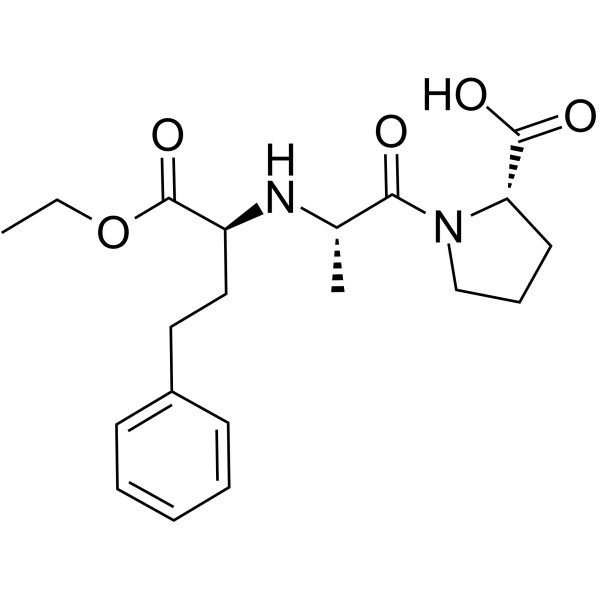
Cat. No.: HY-B0331
CAS No.: 75847-73-3
Synonyms: MK-421
Enalapril (MK-421) is an orally active angiotensin-converting enzyme inhibitor. Enalapril blocks the conversion of angiotensin I to angiotensin II, regulates the renin-angiotensin system, reduces preload and afterload, and decreases plasma angiotensin II levels. Enalapril inhibits apoptosis, reduces nitric oxide metabolite levels, stabilizes endothelial cells, enhances endothelial antioxidant defense, scavenges reactive oxygen species (ROS), and alleviates neuronal damage. Enalapril attenuates glutathione depletion, protein/lipid oxidation, tissue damage, and type III collagen immunolabeling in organs of diabetic rats. Enalapril reduces systolic blood pressure and urinary albumin excretion, and delays the progression of diabetic cardiac/renal injury. Enalapril is used in research related to asymptomatic left ventricular dysfunction, congestive heart failure, Alzheimer's disease, diabetes mellitus, acute myocardial infarction, atrial fibrillation, hypertension, cerebral ischemia, chronic heart failure, and single-ventricle physiology .
loading...
    loading...
13
13 Publications Verification
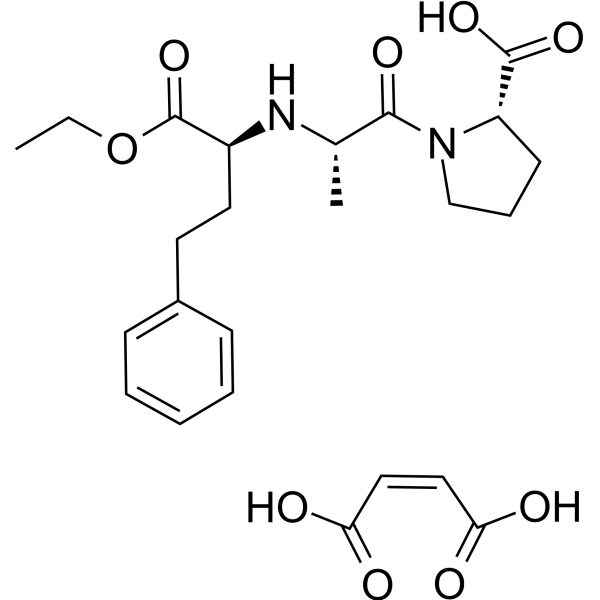
Cat. No.: HY-B0331A
CAS No.: 76095-16-4
Synonyms: MK-421 maleate
Enalapril maleate (MK-421 maleate) is an orally active angiotensin-converting enzyme inhibitor. Enalapril maleate blocks the conversion of angiotensin I to angiotensin II, regulates the renin-angiotensin system, reduces preload and afterload, and decreases plasma angiotensin II levels. Enalapril maleate inhibits apoptosis, reduces nitric oxide metabolite levels, stabilizes endothelial cells, enhances endothelial antioxidant defense, scavenges reactive oxygen species (ROS), and alleviates neuronal damage. Enalapril maleate attenuates glutathione depletion, protein/lipid oxidation, tissue damage, and type III collagen immunolabeling in organs of diabetic rats. Enalapril maleate reduces systolic blood pressure and urinary albumin excretion, and delays the progression of diabetic cardiac/renal injury. Enalapril maleate is used in research related to asymptomatic left ventricular dysfunction, congestive heart failure, Alzheimer's disease, diabetes mellitus, acute myocardial infarction, atrial fibrillation, hypertension, cerebral ischemia, chronic heart failure, and single-ventricle physiology .
loading...
    loading...
6
6 Cited Publications
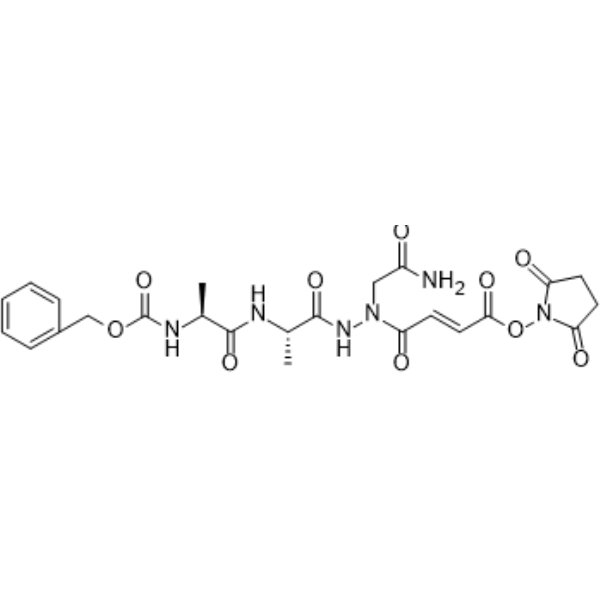
Cat. No.: HY-112205
CAS No.: 1361390-56-8
Purity:  81.51%
Target:  

Legumain

Research Areas:  

Cancer

RR-11a is a synthetic enzyme inhibitor of Legumain (IC50=31-55 nM). RR-11a can be used for the research of cancer and acute myocardial infarction (AMI) .
loading...
    loading...
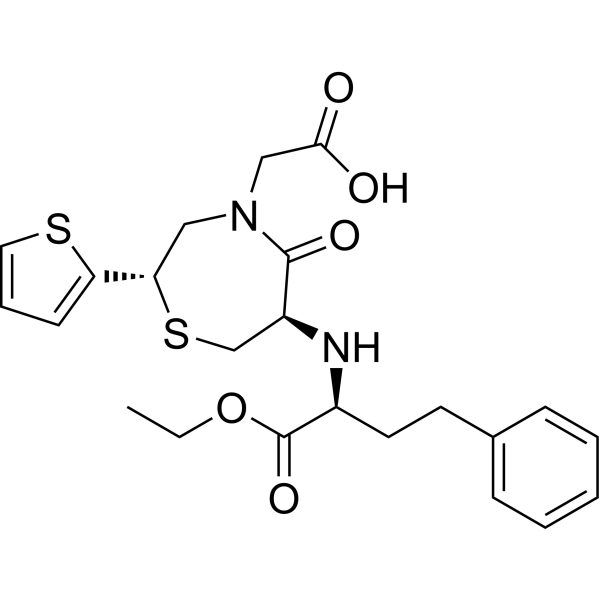
2
2 Cited Publications
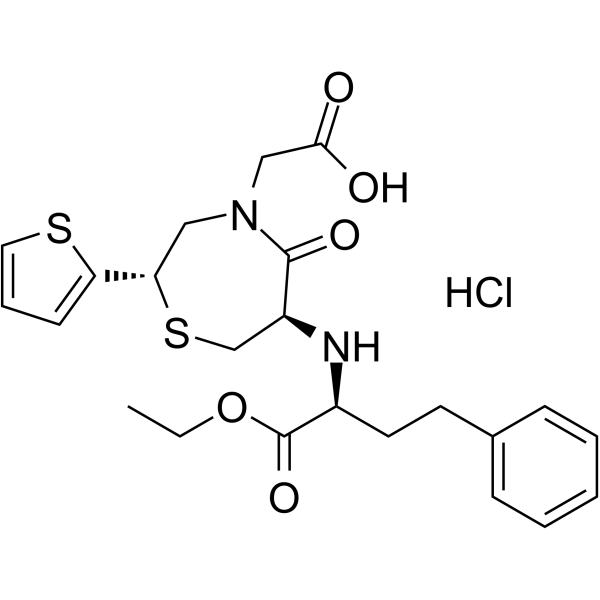
Cat. No.: HY-B0384
CAS No.: 110221-44-8
Temocapril hydrochloride is an orally active angiotensin-converting enzyme (ACE) inhibitor. Temocapril hydrochloride can be used for the research of hypertension, congestive heart failure, acute myocardial infarction, insulin resistance, and renal diseases .
loading...
    loading...
2
2 Cited Publications
Cat. No.: HY-100713
CAS No.: 111902-57-9
Purity:  98.14%
Temocapril is an orally active angiotensin-converting enzyme (ACE) inhibitor. Temocapril can be used for the research of hypertension, congestive heart failure, acute myocardial infarction, insulin resistance, and renal diseases .
loading...
    loading...
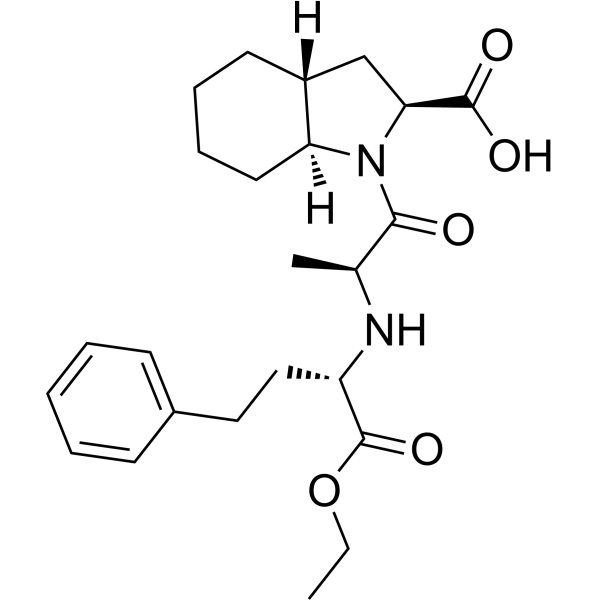
Cat. No.: HY-B0592
CAS No.: 87679-37-6
Synonyms: RU44570
Trandolapril (RU44570) is a nonsulfhydryl proagent that is hydrolysed to the active diacid Trandolaprilat. Trandolapril is an orally administered angiotensin converting enzyme (ACE) inhibitor that has been used in the treatment of hypertension and congestive heart failure (CHF), and after myocardial infarction (MI) .
loading...
    loading...
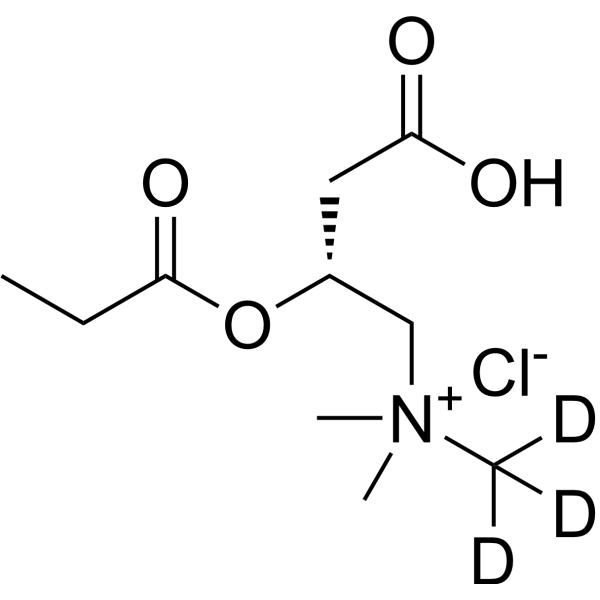
Cat. No.: HY-B0932S2
Synonyms: L-Propionylcarnitine-d9 chloride
Levocarnitine propionate-d9 hydrochloride (L-Propionylcarnitine-d9 chloride) is deuterium labeled Levocarnitine propionate hydrochloride. Levocarnitine propionate hydrochloride (L-Propionylcarnitine chloride; ST-261) is a ligand of carnitine acetyltransferase (CAT) with high enzyme affinity. Levocarnitine propionate hydrochloride possesses antioxidant activity. Levocarnitine propionate hydrochloride increases intracellular L-carnitine reserves. Levocarnitine propionate hydrochloride exerts a protective effect against myocardial ischemia-reperfusion injury. Levocarnitine propionate hydrochloride can be used in research related to myocardial ischemia-reperfusion injury and chronic ischemic heart disease .
loading...
    loading...
Cat. No.: HY-B0932S
CAS No.: 1334532-19-2
Synonyms: L-Propionylcarnitine-d3 chloride; ST-261-d3
Levocarnitine propionate-d3 (hydrochloride) is the deuterium labeled Levocarnitine propionate hydrochloride. Levocarnitine propionate hydrochloride (L-Propionylcarnitine chloride; ST-261) is a ligand of carnitine acetyltransferase (CAT) with high enzyme affinity. Levocarnitine propionate hydrochloride possesses antioxidant activity. Levocarnitine propionate hydrochloride increases intracellular L-carnitine reserves. Levocarnitine propionate hydrochloride exerts a protective effect against myocardial ischemia-reperfusion injury. Levocarnitine propionate hydrochloride can be used in research related to myocardial ischemia-reperfusion injury and chronic ischemic heart disease .
loading...
    loading...
Cat. No.: HY-174400
SGLT2-IN-2 (Compound E9) is an inhibitor of SGLT2. SGLT2-IN-2 significantly enhances the inhibition of SGLT2, NHE1, and SOD enzyme activity. SGLT2-IN-2 has protective effect on the glucose-free DMEM-induced injured cardiomyocytes. SGLT2-IN-2 significantly improves cardiac function in TAC-induced HF mice and inhibits cardiomyocyte hypertrophy as well as collagen deposition. SGLT2-IN-2 can ameliorate myocardial tissue damage and enhance mitochondrial autophagy in injured cardiomyocytes, thereby increasing survival rates in HF mice .
loading...
    loading...
Cat. No.: HY-B0331AR
CAS No.: 76095-16-4
Synonyms: MK-421 maleate (Standard)
Enalapril maleate (Standard) (MK-421 maleate (Standard)) is the analytical standard of Enalapril maleate (HY-B0331A). This product is intended for research and analytical applications. Enalapril maleate is an orally active angiotensin-converting enzyme inhibitor. Enalapril maleate blocks the conversion of angiotensin I to angiotensin II, regulates the renin-angiotensin system, reduces preload and afterload, and decreases plasma angiotensin II levels. Enalapril maleate inhibits apoptosis, reduces nitric oxide metabolite levels, stabilizes endothelial cells, enhances endothelial antioxidant defense, scavenges reactive oxygen species (ROS), and alleviates neuronal damage. Enalapril maleate attenuates glutathione depletion, protein/lipid oxidation, tissue damage, and type III collagen immunolabeling in organs of diabetic rats. Enalapril maleate reduces systolic blood pressure and urinary albumin excretion, and delays the progression of diabetic cardiac/renal injury. Enalapril maleate is used in research related to asymptomatic left ventricular dysfunction, congestive heart failure, Alzheimer's disease, diabetes mellitus, acute myocardial infarction, atrial fibrillation, hypertension, cerebral ischemia, chronic heart failure, and single-ventricle physiology .
loading...
    loading...
Cat. No.: HY-P2812A
CAS No.: 9001-87-0
Target:  

Phospholipase

Research Areas:  

Cardiovascular Disease Cancer

Phospholipase D, peanut is a phospholipase D (EC 3.1.4.4) of the PLD superfamily found in peanuts, acting as a phosphodiesterase and signaling enzyme with activity toward phosphatidylcholine. Phospholipase D hydrolyzes phosphatidylcholine to phosphatidic acid and choline, and catalyzes transphosphatidylation reactions. Phospholipase D can be used for the research of myocardial disease, ischemic heart disease, congestive heart failure, diabetic cardiomyopathy, cardiac hypertrophy, vascular abnormalities, breast cancer, gastric cancer, renal cancer, colorectal cancer .
loading...
    loading...
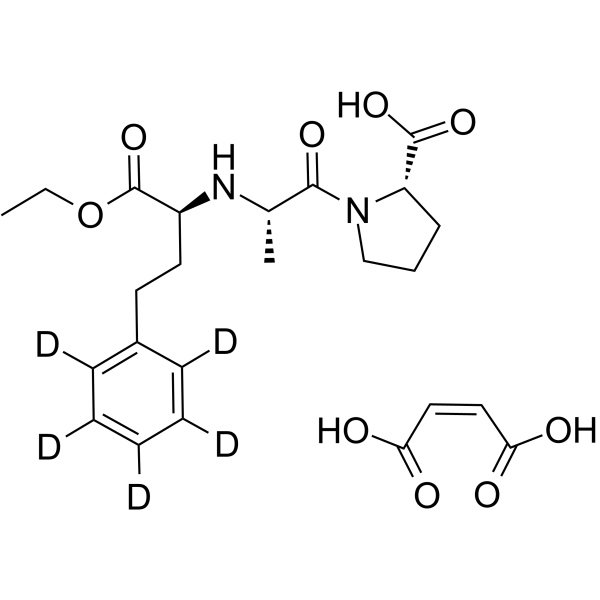
Cat. No.: HY-B0331AS
CAS No.: 349554-02-5
Synonyms: MK-421-d5maleate
Enalapril-d5 maleate (MK-421 D5 maleate) is the deuterated-labeled Enalapril maleate (HY-B0331A). Enalapril maleate is an orally active angiotensin-converting enzyme inhibitor. Enalapril maleate blocks the conversion of angiotensin I to angiotensin II, regulates the renin-angiotensin system, reduces preload and afterload, and decreases plasma angiotensin II levels. Enalapril maleate inhibits apoptosis, reduces nitric oxide metabolite levels, stabilizes endothelial cells, enhances endothelial antioxidant defense, scavenges reactive oxygen species (ROS), and alleviates neuronal damage. Enalapril maleate attenuates glutathione depletion, protein/lipid oxidation, tissue damage, and type III collagen immunolabeling in organs of diabetic rats. Enalapril maleate reduces systolic blood pressure and urinary albumin excretion, and delays the progression of diabetic cardiac/renal injury. Enalapril maleate is used in research related to asymptomatic left ventricular dysfunction, congestive heart failure, Alzheimer's disease, diabetes mellitus, acute myocardial infarction, atrial fibrillation, hypertension, cerebral ischemia, chronic heart failure, and single-ventricle physiology .
loading...
    loading...
Cat. No.: HY-NP192
Sericin is an orally active globular protein produced by silkworm cocoons. Sericin inhibits the expression of COX2, iNOS, TLR4, MAPK and NF-κB; reduces the levels of IL-18, IL-1 and CCL2; antagonizes the activity of AChE; and downregulates the expression of Bcl-2. Sericin enhances the PI3K/AKT-mediated insulin signaling pathway. Sericin inhibits the activity of tyrosinase (Tyrosinase), scavenges ROS, chelates metal ions, and increases the levels of antioxidant enzymes. Sericin induces apoptosis and arrests the cell cycle. Sericin exhibits antibacterial, moisturizing, cardioprotective and anticoagulant properties. Sericin can be used in research related to type 2 diabetes, hyperlipidemia, obesity, Alzheimer's disease, colon cancer, peripheral nerve injury and ischemic myocardial infarction .
loading...
    loading...
Cat. No.: HY-P2812B
CAS No.: 9001-87-0
Target:  

Phospholipase

Research Areas:  

Cardiovascular Disease Cancer

Phospholipase D, cabbage is a phospholipase D of the PLD superfamily found in cabbage, acting as a phosphodiesterase and signaling enzyme with activity toward phosphatidylcholine. Phospholipase D hydrolyzes phosphatidylcholine to phosphatidic acid and choline, and catalyzes transphosphatidylation reactions. Phospholipase D can be used for the research of myocardial disease, ischemic heart disease, congestive heart failure, diabetic cardiomyopathy, cardiac hypertrophy, vascular abnormalities, breast cancer, gastric cancer, renal cancer, colorectal cancer .
loading...
    loading...
Cat. No.: HY-P2819
CAS No.: 9001-80-3
Synonyms: PFK1
Phosphofructokinase 1 (PFK1) is a glycolytic enzyme and also an allosteric activation target of fructose-2,6-bisphosphate. PFK1 supports cardiac glycolysis to maintain normal cardiac function and mediates adaptive responses to pressure overload. Upregulated expression and activity of PFK1 are associated with the alleviation of pathological changes induced by pressure overload, including diastolic dysfunction, interstitial fibrosis and myocardial hypertrophy. Inhibition of PFK1 redirects glucose carbon flux to the pentose phosphate pathway. PFK1 promotes proliferation, migration and glycolysis of colorectal cancer cells, reduces apoptosis and decreases their radiosensitivity, and shows higher expression levels in radioresistant tumors. PFK1 can be used in research related to diastolic dysfunction heart failure and colorectal cancer .
loading...
    loading...
Cat. No.: HY-19230
CAS No.: 179185-73-0
DY-9760e is a calmodulin (CaM) inhibitor. DY-9760e selectively inhibits the activity of various calmodulin-dependent enzymes by antagonizing the Ca²⁺/CaM complex, exhibiting the strongest inhibitory activity against nNOS, CaM kinase II, and calcineurin (Ki: 0.9, 1.4, and 2.0 μM, respectively). DY-9760e inhibits excessive nitric oxide production and protein tyrosine nitration, as well as the activation of calpain and caspase-3. DY-9760e reduces infarct size, improves cardiac function, and inhibits oxidative stress and cell death. DY-9760e can be used in research on the treatment of myocardial infarction, cerebral ischemia, and other diseases .
loading...
    loading...
Cat. No.: HY-A0113
CAS No.: 90139-06-3
Synonyms: Ro 31-3113
Cilazaprilat is an inhibitor of angiotensin-converting enzyme (ACE; IC50=0.7 nM for the rat enzyme) and an active metabolite of Cilazapril (HY-A0043). It decreases creatine kinase release in primary neonatal rat cardiac myocytes in an in vitro model of ischemia-reperfusion injury induced by hypoxia and reoxygenation when used at a concentration of 10 μM.3 Intra-arterial administration of cilazaprilat (3 μg/kg per minute) increases coronary blood flow and fractional shortening in a dog model of coronary hypoperfusion-induced myocardial ischemia.
loading...
    loading...
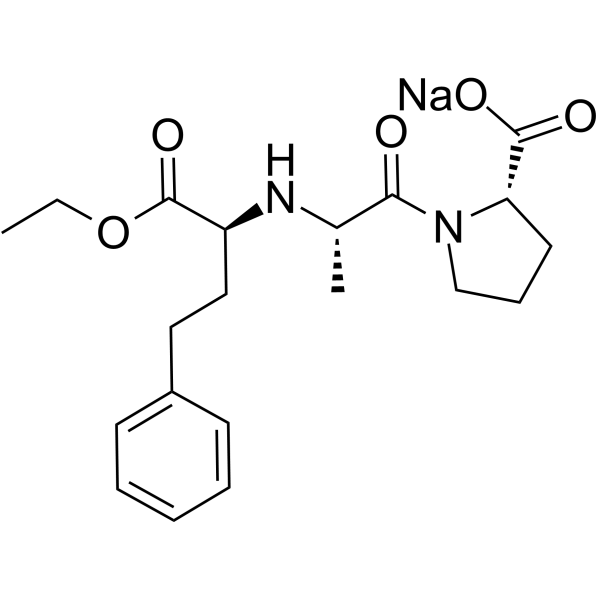
Cat. No.: HY-B0331B
CAS No.: 149404-21-7
Synonyms: MK-421 sodium
Enalapril sodium (MK-421 sodium) is an orally active angiotensin-converting enzyme inhibitor. Enalapril sodium blocks the conversion of angiotensin I to angiotensin II, regulates the renin-angiotensin system, reduces preload and afterload, and decreases plasma angiotensin II levels. Enalapril sodium inhibits apoptosis, reduces nitric oxide metabolite levels, stabilizes endothelial cells, enhances endothelial antioxidant defense, scavenges reactive oxygen species (ROS), and alleviates neuronal damage. Enalapril sodium attenuates glutathione depletion, protein/lipid oxidation, tissue damage, and type III collagen immunolabeling in organs of diabetic rats. Enalapril sodium reduces systolic blood pressure and urinary albumin excretion, and delays the progression of diabetic cardiac/renal injury. Enalapril sodium is used in research related to asymptomatic left ventricular dysfunction, congestive heart failure, Alzheimer's disease, diabetes mellitus, acute myocardial infarction, atrial fibrillation, hypertension, cerebral ischemia, chronic heart failure, and single-ventricle physiology .
loading...
    loading...
Cat. No.: HY-19862
CAS No.: 1614265-31-4
Research Areas:  

Cardiovascular Disease

TY-51924 ethanol sodium is a highly selective NHE-1 inhibitor (IC50 = 0.095 μM). TY-51924 ethanol sodium can significantly reduce the infarct size and myocardial enzyme release. TY-51924 ethanol sodium is commonly used in the study of ischemia-reperfusion injury .
loading...
    loading...
Cat. No.: HY-P2916
CAS No.: 9030-23-3
Thymidine phosphorylase is a nucleoside metabolism enzyme that plays an important role in the pyrimidine salvage pathway. Thymidine phosphorylase catalyzes the conversion of thymidine to thymine and 2-deoxy-α-D-ribose-1-phosphate (dRib-1-P). Thymidine phosphorylase plays an important role in platelet activation in vitro and thrombosis in vivo by participating in multiple signaling pathways. Thymidine phosphorylase can be used for the study of myocardial infarction, stroke, pulmonary embolism and cancer .
loading...
    loading...

