

1. Search Result
Search Result
Results for "

opioid addiction

" in MedChemExpress (MCE) Product Catalog:

24

Inhibitors & Agonists

6

Peptides

2

Isotope-Labeled Compounds

Targets Recommended:
Cat. No. Product Name Target Research Areas Chemical Structure
  • HY-P1335
    CTAP
    2 Publications Verification

    Opioid Receptor Neurological Disease
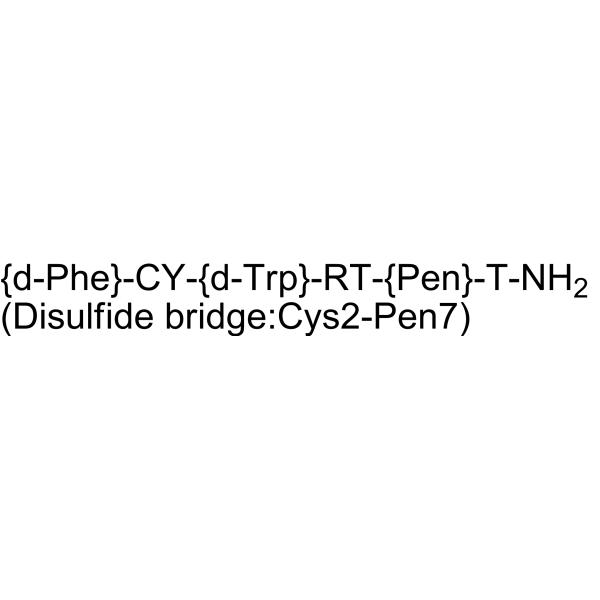
    CTAP is a potent, highly selective, and BBB penetrant μ opioid receptor antagonist, with an IC50 of 3.5 nM. CTAP displays over 1200-fold selectivity over δ opioid (IC50=4500 nM) and somatostatin receptors. CTAP can be used for the study of L-DOPA-induced dyskinesia (LID) and opiate overdose or addiction .
    CTAP
  • HY-B1052

    Baq-168; MDL-14042

    Adrenergic Receptor Imidazoline Receptor Neurological Disease Metabolic Disease
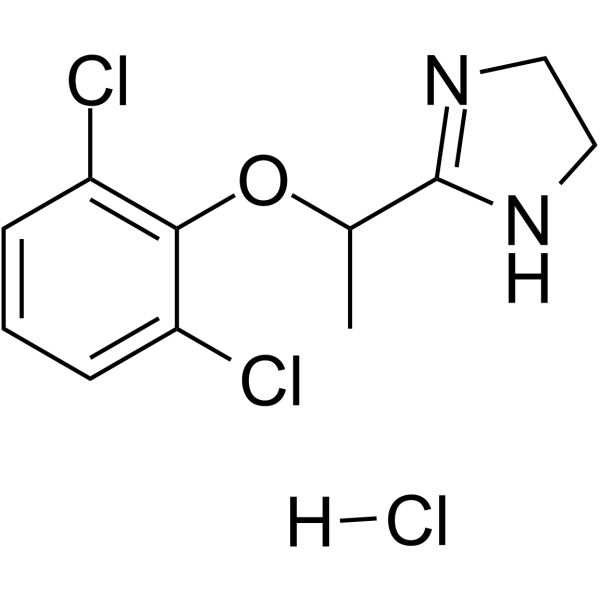
    Lofexidine hydrochloride (Baq-168) is an orally active agonist of the imidazoline I1 receptor (imidazoline I1 receptor) (Ki: 1.9 nM) and α2-adrenergic receptor (α2-adrenergic receptor). Lofexidine hydrochloride binds to the α2A-adrenergic receptor, reduces sympathetic outflow, lowers blood pressure, and exhibits vasoconstrictive effects. Lofexidine hydrochloride regulates the expression of c-fos and alleviates opioid withdrawal symptoms. Lofexidine hydrochloride is applicable to research on opioid addiction and withdrawal .
    Lofexidine hydrochloride
  • HY-136832

    Serotonin Transporter Potassium Channel Arrestin Opioid Receptor Cardiovascular Disease Neurological Disease
    Noribogaine hydrochloride is an orally active, blood-brain barrier permeable SERT inhibitor (IC50=50-300 nM) and hERG channel blocker. Noribogaine hydrochloride enhances serotonergic transmission, activates the κ-opioid receptor (OPRK) G protein signaling pathway and inhibits β-arrestin recruitment. Meanwhile, Noribogaine hydrochloride blocks the μ-opioid receptor (OPRM) signaling pathway as well as ion channels associated with cardiac repolarization. Noribogaine hydrochloride induces neuritogenesis, upregulates GDNF mRNA expression, and modulates opioid tolerance. Noribogaine hydrochloride reduces alcohol-seeking behavior in experimental animals, and is widely used in studies related to depression, addiction, alcoholism, and cardiotoxicity .
    Noribogaine hydrochloride
  • HY-12844
    Ro 64-6198
    1 Publications Verification

    Opioid Receptor Neurological Disease
    Ro 64-6198 is a potent, selective, nonpeptide, high-affinity, high cellular permeability and brain penetration N/OFQ receptor (NOP) agonist with an EC50 value of 25.6 nM. Ro 64-6198 is at least 100 times more selective for the NOP receptor over the classic opioid receptors. Ro 64-6198 can be used for stress and anxiety, addiction, neuropathic pain, cough, and anorexia .
    Ro 64-6198
  • HY-116649

    AM4113

    Cannabinoid Receptor Neurological Disease Metabolic Disease
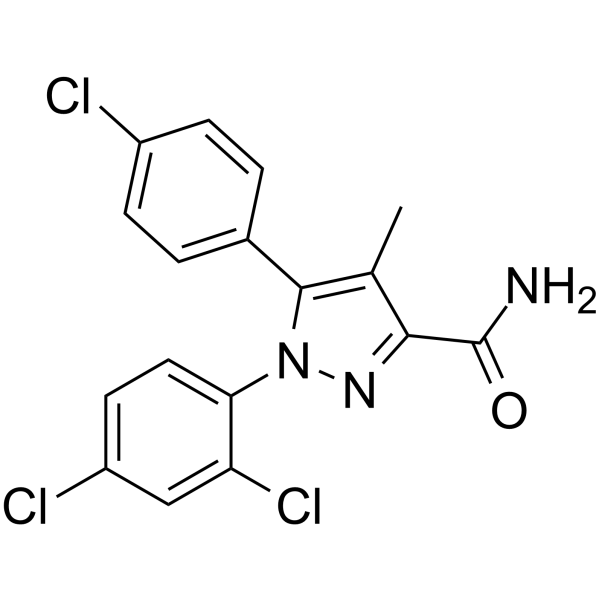
    CB1 antagonist 2 (AM4113) is an orally active cannabinoid receptor type 1 (CB1R) antagonist. CB1 antagonist 2 suppresses appetite, reduces body weight, and blocks addictive behaviors such as heroin addiction, without causing adverse effects like nausea and depression that are associated with traditional CB1 inverse agonists. CB1 antagonist 2 can be used in studies related to obesity and opioid addiction .
    CB1 antagonist 2
  • HY-P2259
    TAT-GluA2 3Y
    2 Publications Verification

    iGluR HIV Integrase Adenosine Receptor Cardiovascular Disease Neurological Disease
    TAT-GluA2 3Y is a blood-brain barrier-permeable AMPA receptor inhibitory peptide that crosses cell membranes via the HIV-1 TAT protein domain. TAT-GluA2 3Y blocks the endocytosis of AMPA receptors, including the internalization of GluA1/GluA2 subunits, by disrupting interactions with the AP2, Brag2 and Syt3-GluA2 complexes, while also inhibiting long-term depression. TAT-GluA2 3Y blocks hypoxia-mediated AMPAR internalization, alleviates A1R-induced persistent synaptic inhibition, and reduces cerebral ischemic volume, neurological deficits and spatial memory deficits. TAT-GluA2 3Y blocks the effect of NLRP3 deficiency on fear generalization, inhibits amphetamine-induced behavioral/neurochemical sensitization, weakens the unconditioned stimulus-conditioned stimulus association of morphine, and promotes the extinction of morphine CPP. TAT-GluA2 3Y can be used in studies related to fear generalization, ischemic stroke, hypoxia, drug addiction and opioid addiction .
    TAT-GluA2 3Y
  • HY-B1052A

    Baq-168 free base; MDL-14042 free base

    Imidazoline Receptor Adrenergic Receptor Neurological Disease Metabolic Disease
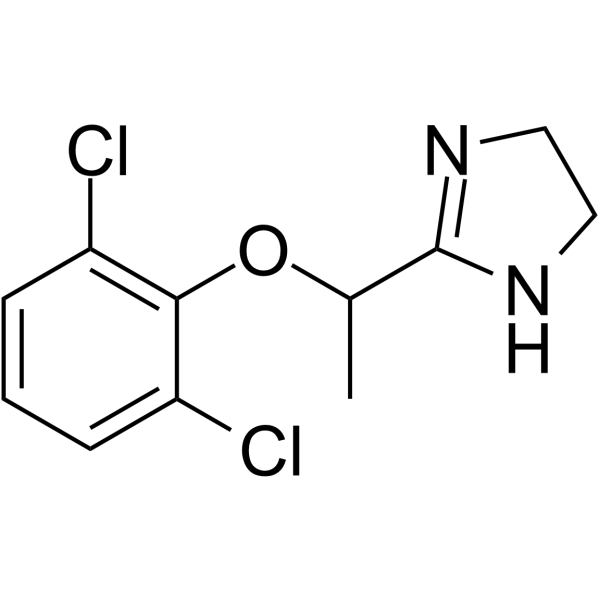
    Lofexidine (Baq-168 free base) is an orally active agonist of the imidazoline I1 receptor (imidazoline I1 receptor) (Ki: 1.9 nM) and α2-adrenergic receptor (α2-adrenergic receptor). Lofexidine binds to the α2A-adrenergic receptor, reduces sympathetic outflow, lowers blood pressure, and exhibits vasoconstrictive effects. Lofexidine regulates the expression of c-fos and alleviates opioid withdrawal symptoms. Lofexidine is applicable to research on opioid addiction and withdrawal .
    Lofexidine
  • HY-P1335A
    CTAP TFA
    2 Publications Verification

    Opioid Receptor Neurological Disease
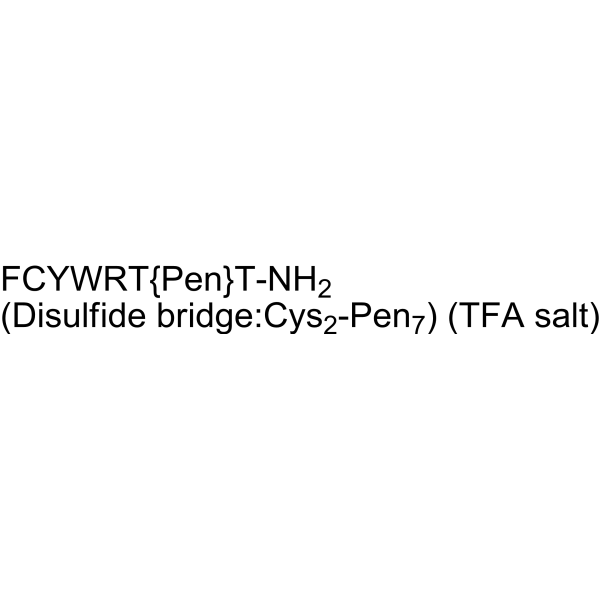
    CTAP TFA is a potent, highly selective, and BBB penetrant μ opioid receptor antagonist, with an IC50 of 3.5 nM. CTAP TFA displays over 1200-fold selectivity over δ opioid (IC50=4500 nM) and somatostatin receptors. CTAP TFA can be used for the study of L-DOPA-induced dyskinesia (LID) and opiate overdose or addiction .
    CTAP TFA
  • HY-116181

    Dopamine Receptor Neurological Disease
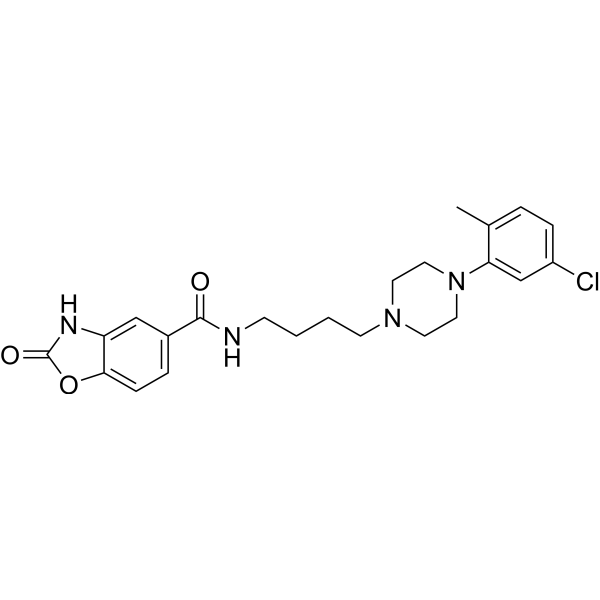
    YQA14 is a high affinity dopamine D3 receptor antagonist. YQA14 is anti-opioid addiction agent. YQA14 inhibits Morphine/Cocaine-induced conditioned place preference (CPP) in animals .
    YQA14
  • HY-B1052S

    Baq-168-d4; MDL-14042-d4

    Isotope-Labeled Compounds Imidazoline Receptor Adrenergic Receptor Neurological Disease Metabolic Disease
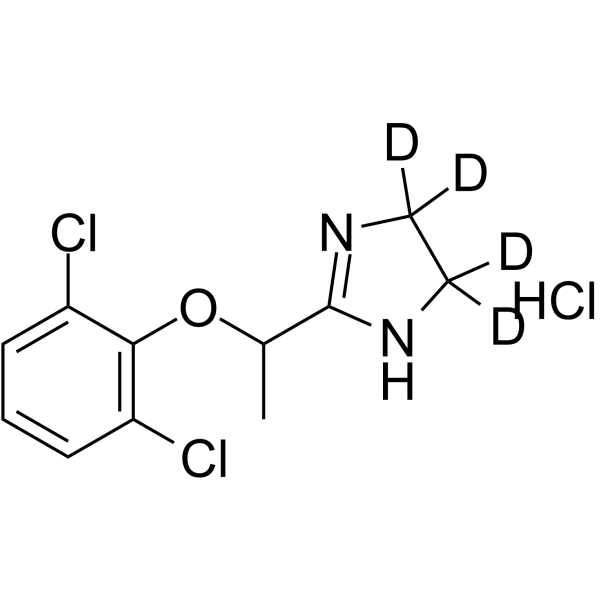
    Lofexidine-d4 hydrochloride (Baq-168-d4) is the deuterium labeled Lofexidine hydrochloride (HY-B1052). Lofexidine hydrochloride (Baq-168) is an orally active agonist of the imidazoline I1 receptor (imidazoline I1 receptor) (Ki: 1.9 nM) and α2-adrenergic receptor (α2-adrenergic receptor). Lofexidine hydrochloride binds to the α2A-adrenergic receptor, reduces sympathetic outflow, lowers blood pressure, and exhibits vasoconstrictive effects. Lofexidine hydrochloride regulates the expression of c-fos and alleviates opioid withdrawal symptoms. Lofexidine hydrochloride is applicable to research on opioid addiction and withdrawal .
    Lofexidine-d4 hydrochloride
  • HY-135698

    M-CAM

    Opioid Receptor Neurological Disease
    Methocinnamox (M-CAM) a selective and long-acting μ-opioid receptor (MOR) antagonist with a Ki of 0.6 nM. Methocinnamox binds to the orthosteric site of the MOR in a pseudo-irreversible, non-covalent manner, resulting in prolonged receptor blockade that persists until new receptors are synthesized. Methocinnamox acts as a reversible antagonist at both the kappa-opioid receptor (KOR) (Ki = 4.9 nM) and delta-opioid receptor (DOR) (Ki = 2.2 nM), and it exhibits no intrinsic agonist activity at these receptors. Methocinnamox can be used to reverse and prevent opioid overdose and addiction .
    Methocinnamox
  • HY-P2046

    Opioid Receptor Neurological Disease
    β-Endorphin (rat) is an endogenous opioid neuropeptide and peptide hormone. β-Endorphin (rat) has analgesic activity and also contributes to food intake in satiated rats. β-Endorphin (rat) can be used in the research of neurological diseases such as analgesia and drug addiction .
    β-Endorphin (rat)
  • HY-175661

    Opioid Receptor Beta-secretase Neurological Disease
    SRI-22136 is a Delta Opioid Receptor (DOR) antagonist that can cross blood-brain barrier with a IC50 of 0.42 nM. SRI-22136 does not have agonistic activity but antagonistic activity against DOR, MOR (IC50 = 370 nM), KOR (IC50 = 54 nM) and can avoid addiction/aversion effects. SRI-22136 can effectively inhibit the BACE1 activity induced by DADLE (a DOR agonist) (HY-105343) (IC50 = 120 nM). SRI-22136 prevents completely Alzheimer’s-like pathology in mouse model. SRI-22136 can used for the study of Alzheimer’s disease .
    SRI-22136
  • HY-P3625

    Endogenous Metabolite Opioid Receptor Neurological Disease
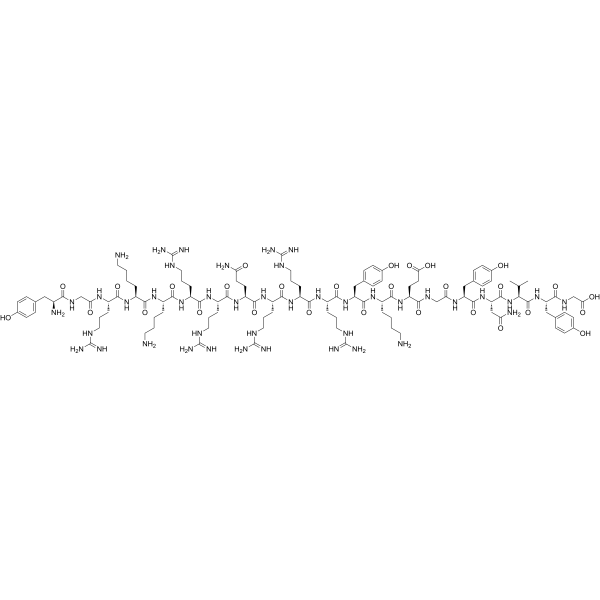
    Dynorphin (2-17), amide (porcine) is a dynorphin derivative with some analgesic effects. Dynorphin is a class of opioid peptides produced by the precursor protein dynorphinogen and is involved in pain, addiction and mood regulation .
    Dynorphin (2-17), amide (porcine)
  • HY-P1625

    Dynorphin A ethylamide (1-9)

    Opioid Receptor Neurological Disease
    Daeatal (Dynorphin A ethylamide (1-9)) is an ethylamine-modified dynorphin fragment that can be used in the study of analgesia, addiction, depression, etc. Dynorphin A is an endogenous opioid peptide involved in inhibitory neurotransmission in the central nervous system (CNS). Dynorphin A is a highy potent kappa opioid receptor (KOR) agonist, and is also an agonist for other opioid receptors, such as mu (MOR) and delta (DOR). Dynorphin A can induce neuronal death, and can be used in the research of neurological disease .
    Daeatal
  • HY-177790

    Orexin Receptor (OX Receptor) Neurological Disease
    Orexin receptor antagonist 7 (Compound 34) is an antagonist of the orexin receptor (OX1R), with a Ki value of 4.05 nM. Orexin receptor antagonist 7 shows no detectable activity towards OX2R and has very low affinities for the three opioid receptors (μ, δ, κ) (Ki > 1,000 nM). Orexin receptor antagonist 7 can be used for research on opioid addiction .
    Orexin receptor antagonist 7
  • HY-174307

    Dopamine Receptor Neurological Disease
    Dopamine D3 receptor ligand-6 (Compound 196476) is a selective dopamine D3 receptor (D3) antagonist. Dopamine D3 receptor ligand-6 is promising for research of substance use disorders (such as opioid and psychostimulant addiction) .
    Dopamine D3 receptor ligand-6
  • HY-122251

    RGS Protein Others Neurological Disease
    CCG-4986 is an RGS protein inhibitor. CCG-4986 inhibits protein activity by covalently modifying the Cys-132 site of RGS4. CCG-4986 can be used to study diseases related to dysregulated G protein-coupled receptor (GPCR) signaling, such as Parkinson's disease and opioid addiction .
    CCG-4986
  • HY-11056

    Dopamine Receptor Neurological Disease
    PF-04363467 is a highly preferring D3R antagonist. PF-04363467 produces dose-dependent changes in the EEG profile of freely moving rats. PF-4363467 attenuates opioid drug-seeking behavior without concomitant D2 side effects. PF-04363467 can be used for the study of addiction, cognitive and mental illness .
    PF-04363467
  • HY-B1052R

    Baq-168 (Standard); MDL-14042 (Standard)

    Adrenergic Receptor Reference Standards Neurological Disease Metabolic Disease
    Lofexidine (Baq-168) hydrochloride Standard is the analytical standard of Lofexidine hydrochloride (HY-B1052). This product is intended for research and analytical applications. Lofexidine hydrochloride (Baq-168) is an orally active agonist of the imidazoline I1 receptor (imidazoline I1 receptor) (Ki: 1.9 nM) and α2-adrenergic receptor (α2-adrenergic receptor). Lofexidine hydrochloride binds to the α2A-adrenergic receptor, reduces sympathetic outflow, lowers blood pressure, and exhibits vasoconstrictive effects. Lofexidine hydrochloride regulates the expression of c-fos and alleviates opioid withdrawal symptoms. Lofexidine hydrochloride is applicable to research on opioid addiction and withdrawal .
    Lofexidine hydrochloride (Standard)
  • HY-B1052S1

    Baq-168 free base-d4; MDL-14042 free base-d4

    Isotope-Labeled Compounds Imidazoline Receptor Adrenergic Receptor Neurological Disease Metabolic Disease
    Lofexidine-d4 (Baq-168 free base-d4) is deuterium labeled Lofexidine (HY-B1052A). Lofexidine (Baq-168 free base) is an orally active agonist of the imidazoline I1 receptor (imidazoline I1 receptor) (Ki: 1.9 nM) and α2-adrenergic receptor (α2-adrenergic receptor). Lofexidine binds to the α2A-adrenergic receptor, reduces sympathetic outflow, lowers blood pressure, and exhibits vasoconstrictive effects. Lofexidine regulates the expression of c-fos and alleviates opioid withdrawal symptoms. Lofexidine is applicable to research on opioid addiction and withdrawal .
    Lofexidine-d4
  • HY-124907

    OMS-403

    PPAR Neurological Disease
    AI 3-25755 (OMS-403) is a peroxisome proliferator-activated receptor gamma (PPARγ) agonist. AI 3-25755 can be used for research on opioid abuse and smoking cessation .
    AI 3-25755
  • HY-125790

    Opioid Receptor Neurological Disease
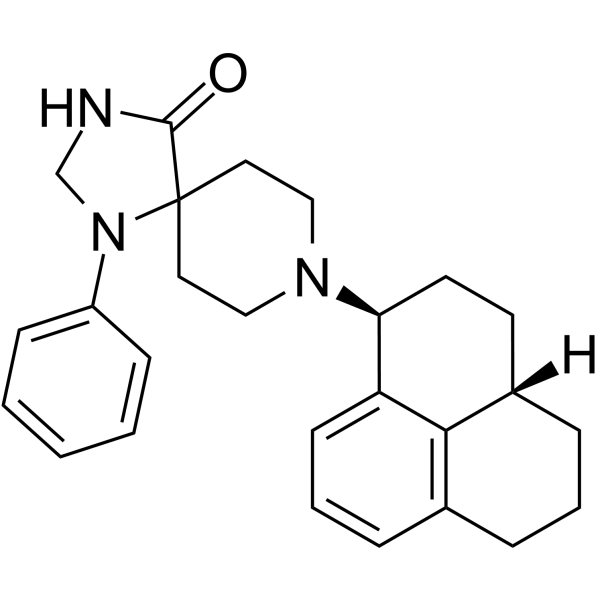
    Cyclazocine is a μ, δ, and κ opioid receptor modulator with Ki values of 0.32, 1.1, and 0.18 nM, respectively. Cyclazocine exhibits "mixed" pharmacological activities, acting as a μ-partial antagonist, κ-agonist, and low-affinity δ ligand. Cyclazocine shows antinociceptive activity in mice. Cyclazocine can be used in studies on psychoactive substance addiction .
    Cyclazocine
  • HY-182453

    Opioid Receptor Neurological Disease
    RM1490 (Compound 251) acts as an inhibitor of μ-opioid receptor (MOR) (IC50 ≤ 300 nM), an activator of δ-opioid receptor (DOR) (EC50 > 3000 nM), and an inhibitor of κ-opioid receptor (KOR) (IC50 ≤ 300 nM). RM1490 is applicable to the research of neuropsychiatric disorders .
    RM1490

Inquiry Online

Your information is safe with us. * Required Fields.

Salutation


Country or Region *

Applicant Name *


Organization Name *

Department *


Email Address *


Product Name *

Cat. No.


Requested quantity *

Phone Number *


Remarks

Inquiry Online

Inquiry Information

Product Name:
Cat. No.:
Quantity:
MCE Japan Authorized Agent:

