
14 Results for "

organ fibrosis

" in MedChemExpress (MCE) Product Catalog:
Products (14)

14 Results for "organ fibrosis" in MCE Product Catalog:

32
32 Publications Verification
Cat. No.: HY-13687
CAS No.: 873225-46-8
Purity:  99.88%
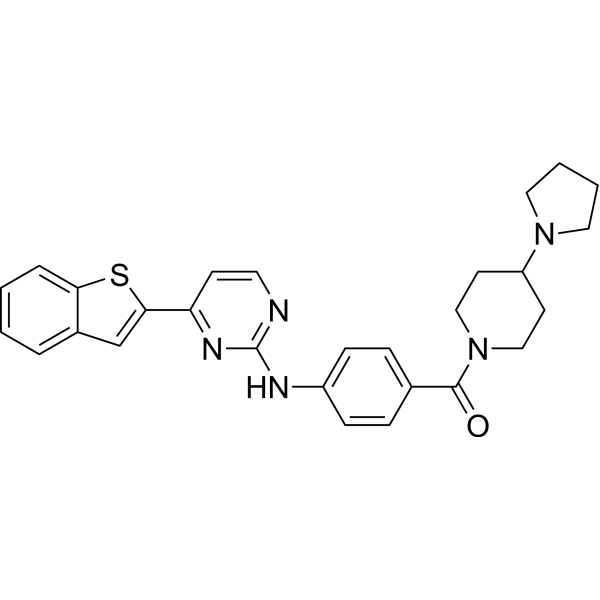
IKK 16 is an orally active IKK inhibitor. IKK 16 shows IC50s of 40 nM, 70 nM, 200 nM, and 50 nM for IKK2, IKK complex, IKK1, and LRRK 2, respectively. IKK 16 is also a pan-PKD inhibitor, inhibiting PKD1, PKD2, and PKD3 with IC50s of 153.9, 115, and 99.7 nM, respectively. IKK 16 is also an ABCB1 inhibitor, interfering with the binding of ABCB1 to its substrates. IKK 16 protects against LPS (HY-D1056)-induced multiple organ dysfunction by reducing the acute inflammatory response induced by endotoxin exposure. IKK 16 can restore renal function and alleviate fibrosis in acute kidney injury. IKK 16 attenuates cardiac dysfunction associated with polymicrobial sepsis in mice with type 2 diabetes mellitus (T2DM) by inhibiting the NF-κB pathway .
loading...
    loading...
32
32 Publications Verification
Cat. No.: HY-13687A
CAS No.: 1186195-62-9
Purity:  99.95%
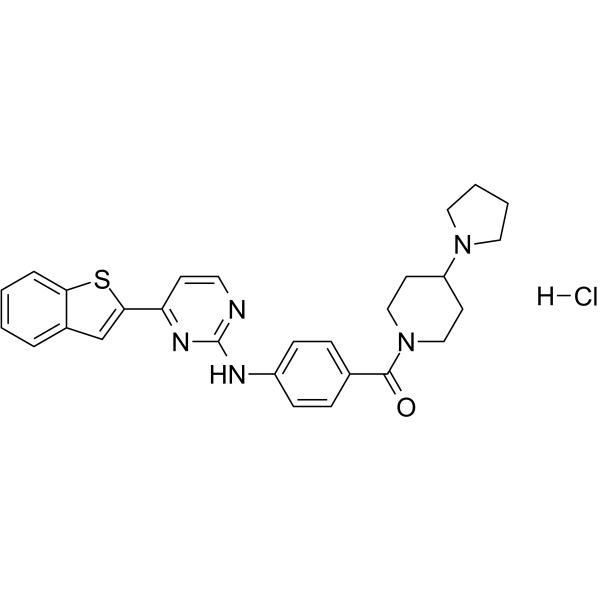
IKK 16 hydrochloride is an orally active IKK inhibitor. IKK 16 hydrochloride shows IC50s of 40 nM, 70 nM, 200 nM, and 50 nM for IKK2, IKK complex, IKK1, and LRRK 2, respectively. IKK 16 hydrochloride is also a pan-PKD inhibitor, inhibiting PKD1, PKD2, and PKD3 with IC50s of 153.9, 115, and 99.7 nM, respectively. IKK 16 hydrochloride is also an ABCB1 inhibitor, interfering with the binding of ABCB1 to its substrates. IKK 16 hydrochloride protects against LPS (HY-D1056)-induced multiple organ dysfunction by reducing the acute inflammatory response induced by endotoxin exposure. IKK 16 hydrochloride can restore renal function and alleviate fibrosis in acute kidney injury. IKK 16 hydrochloride attenuates cardiac dysfunction associated with polymicrobial sepsis in mice with type 2 diabetes mellitus (T2DM) by inhibiting the NF-κB pathway .
loading...
    loading...
2
2 Cited Publications
Cat. No.: HY-P99020
CAS No.: 948564-73-6
Synonyms: GC1008

Target:  

TGF-beta/Smad

Research Areas:  

Inflammation/Immunology Cancer

Fresolimumab (GC1008) is a human monoclonal antibody against TGF-β that neutralizes all mammalian active subtypes of TGF-β. The binding affinity of Fresolimumab to TGF-β2 is 1.8 nM. Fresolimumab improves Bleomycin (HY-108345)-induced acute lung injury. Fresolimumab radiolabeled with 89Zr can be used for PET analysis of TGF-β expression, antibody uptake and organ distribution. Fresolimumab can be used in the study of cancer, osteogenesis imperfecta, fibrosis and kidney disease .
loading...
    loading...
Cat. No.: HY-P11178
CAS No.: 2651277-02-8
Corisin is a pro-apoptotic small peptide produced by Staphylococcus species. Corisin binds to serum albumin to target organs such as the lungs and kidneys, induces cellular senescence, apoptosis and epithelial-mesenchymal transition, and accelerates the progression of organ fibrosis including pulmonary fibrosis and diabetic renal fibrosis. Corisin levels are closely associated with coronavirus disease 2019 (COVID-19), diabetic chronic kidney disease (CKD), non-diabetic CKD, and idiopathic pulmonary fibrosis (IPF) .
loading...
    loading...
Cat. No.: HY-110217
CAS No.: 566161-24-8
Purity:  99.68%
Target:  

IMPDH

Research Areas:  

Inflammation/Immunology

BMS-566419 is an orally active IMPDH inhibitor with an IC50 of 91 nM against human IMPDH I and 68 nM against human IMPDH II. BMS-566419 exerts anti-heart transplant rejection and anti-renal fibrosis effects, and inhibits the expression of MCP-1, TGF-β1 as well as antibody production. BMS-566419 can be used in research on renal fibrosis and organ transplantation .
loading...
    loading...
Cat. No.: HY-W075770
CAS No.: 1313-99-1
Synonyms: Nickel monoxide
Nickel(II) oxide (nickel monoxide) is a chemical warfare agent that can enter the body through the respiratory tract and other routes, distributing to organs such as the lungs and testes. The nanoparticle form of nickel(II) oxide (NiO NPs) exhibits antibacterial, anti-leishmanial, anti-diabetic, and anti-cancer activities. NiO NPs can be activated by ultraviolet and visible light, generating reactive oxygen species (ROS). Nickel(II) oxide induces oxidative stress by generating reactive oxygen species, activating the TGF-β1-mediated MAPK and PI3K/AKT pathways, disrupting the MMPs/TIMPs balance, and upregulating the expression of inflammatory factors (IL-1β, IL-6) and apoptosis-related molecules (Bax, caspase-3, p53), while inhibiting the activity of the anti-apoptotic molecule Bcl-2. Nickel(II) oxide induces cytotoxicity, promotes fibrosis, triggers inflammatory responses, and causes apoptosis. Nickel(II) oxide can be applied in research on the safety assessment of nanomaterials, such as in the context of pulmonary fibrosis and reproductive system toxicity .
loading...
    loading...
Cat. No.: HY-P5904
CAS No.: 2757108-69-1
Synonyms: Caveolin-1 scaffolding domain peptide
Target:  

c-Met/HGFR

Research Areas:  

Others

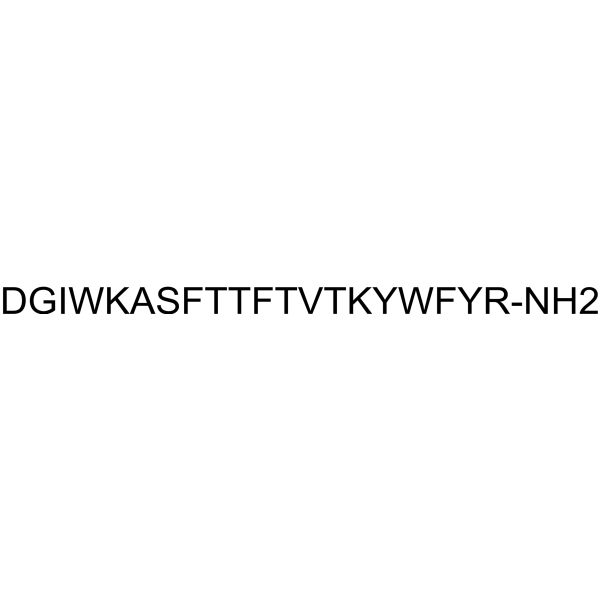
Caveolin-1 (82-101) amide (human, mouse, rat) (Caveolin-1 scaffolding domain peptide) is a peptide that reverses aging-associated deleterious changes in multiple organs. Caveolin-1 (82-101) amide (human, mouse, rat) inhibits tyrosine kinases .
loading...
    loading...
Cat. No.: HY-162866
Target:  

Autophagy

Research Areas:  

Metabolic Disease

CXM102 is an autophagy activator. CXM102 can induce autophagy in aged BMSCs, leading to the rejuvenation of BMSCs and preferential differentiation into osteoblasts. CXM102 promotes the nuclear translocation of transcription factor EB (TFEB) and the formation of osteoblasts. CXM102 can stimulate bone synthesis metabolism in middle-aged male mice, reduce bone marrow adipocytes, delay bone loss, lower serum inflammation levels, decrease organ fibrosis, and extend the lifespan of the mice .
loading...
    loading...
Cat. No.: HY-177739
CAS No.: 1590409-23-6
Research Areas:  

Inflammation/Immunology

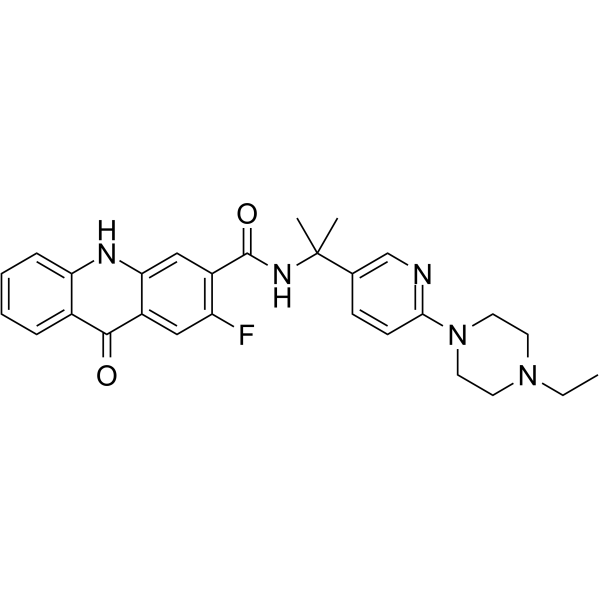
Antifibrotic agent 2 (Compound 636) is a polycyclic pyridinone derivative with antifibrotic activity. Antifibrotic agent 2 reduces the pathological accumulation of fibrosis-related proteins such as fibronectin and collagen, prevents excessive fibrous connective tissue from depositing in organs or tissues, and reverses or delays the remodeling of tissue fibrosisby regulating the abnormal proliferation and activation of fibroblasts. Antifibrotic agent 2 can be used for research on pulmonary fibrosis .
loading...
    loading...
Cat. No.: HY-13687R
CAS No.: 873225-46-8
IKK 16 (Standard) is the analytical standard of IKK 16. This product is intended for research and analytical applications. IKK 16 hydrochloride is an orally active IKK inhibitor. IKK 16 hydrochloride shows IC50s of 40 nM, 70 nM, 200 nM, and 50 nM for IKK2, IKK complex, IKK1, and LRRK 2, respectively. IKK 16 hydrochloride is also a pan-PKD inhibitor, inhibiting PKD1, PKD2, and PKD3 with IC50s of 153.9, 115, and 99.7 nM, respectively. IKK 16 hydrochloride is also an ABCB1 inhibitor, interfering with the binding of ABCB1 to its substrates. IKK 16 hydrochloride protects against LPS (HY-D1056)-induced multiple organ dysfunction by reducing the acute inflammatory response induced by endotoxin exposure. IKK 16 hydrochloride can restore renal function and alleviate fibrosis in acute kidney injury. IKK 16 hydrochloride attenuates cardiac dysfunction associated with polymicrobial sepsis in mice with type 2 diabetes mellitus (T2DM) by inhibiting the NF-κB pathway.
loading...
    loading...
Cat. No.: HY-189269
Target:  

JNK

Research Areas:  

Cancer

PROTAC JNK1 Degrader-2 is a VHL-recruiting JNK1 PROTAC degrader with a DC50 of 4.90 nM. It selectively induces JNK1 degradation via the VHL-dependent ubiquitin-proteasome pathway and inhibits TGF-β1-induced epithelial-mesenchymal transition. PROTAC JNK1 Degrader-2 can be used for research on organ fibrosis and tumor metastasis .
loading...
    loading...
Cat. No.: HY-L185
2,568 compounds

Fibrosis is a kind of repair response to long-term tissue damage, which is mainly manifested by excessive deposition of extracellular matrix (ECM) and scar formation. Myofibroblasts are the main generating cells of extracellular matrix, and their activation process is related to various pathological mechanisms including Oxidative stress, chronic inflammation and cytokine secretion. Fibrosis can occur in many organs, such as kidneys, liver, heart, lungs, etc. Continuous fibrosis can lead to the destruction of the normal structure of tissues and organs, and if not controlled in time, may cause organ failure or even life-threatening.

MCE contains 2,568 compounds targeting ant-fibrosis targets such as TGF-β, PI3K, Wnt, MMP, etc. These compounds have clear or potential anti-fibrosis activity and can be used for mechanism research and drug screening of fibrosis diseases.

Cat. No.: HY-K0611

MCE Modified Van Gieson Staining Kit employs Celestine Blue and Mayer’s hematoxylin for nuclear staining, providing clearer and more stable nuclear visualization while facilitating longer preservation of stained sections. Ponceau S is used for collagen fiber staining, offering stable coloration and strong resistance to fading. This method enables effective differentiation between collagen fibers and muscle fibers, and can assist in distinguishing collagen fiber–derived tumors from myogenic tumors to a certain extent. It is also suitable for observing tissue or organ injury, repair processes, and the degree of fibrosis.

loading...
    loading...
Cat. No.: HY-185926
CAS No.: 2364414-05-9
Synonyms: NOX-D21; AON-D21
Ldalaptican pegol (AON-D21; NOX-D21) is a PEGylated mixed RNA/DNA L-aptamer that specifically binds to complement C5a. Ldalaptican pegol binds to C5a and the C5a moiety on uncleaved C5, thereby blocking C5a signaling. This inhibition suppresses downstream inflammatory responses, immune cell infiltration and chemotaxis, the release of pro-fibrotic factors, and abnormalities in lipid metabolism signaling pathways. Ldalaptican pegol can also alleviate allograft rejection. Ldalaptican pegol can be used in research on inflammatory muscle diseases, Duchenne muscular dystrophy (DMD), diabetes, renal fibrosis, and allograft organ transplant rejection .
loading...
    loading...
  • 1

