1. Search Result
Search Result
Results for "

organic linker

" in MedChemExpress (MCE) Product Catalog:

16

Inhibitors & Agonists

4

Biochemical Assay Reagents

1

Natural
Products

4

Click Chemistry

Cat. No. Product Name Target Research Areas Chemical Structure
  • HY-W013151

    Biochemical Assay Reagents SARS-CoV Others
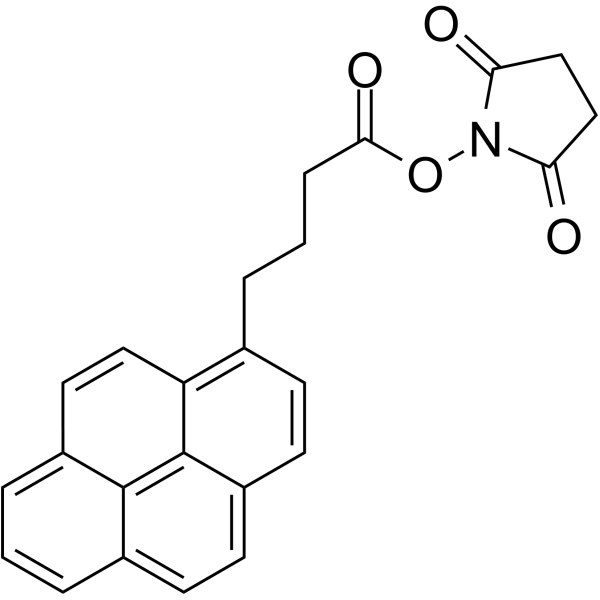
    1-Pyrenebutyric acid N-hydroxysuccinimide ester (PANHS) is a linker and interface coupling agent that can be used to prepare electrochemical biosensors. 1-Pyrenebutyric acid N-hydroxysuccinimide ester immobilizes SARS-CoV-2 spike antibodies on graphene sheets. 1-Pyrenebutyric acid N-hydroxysuccinimide ester is often used as an activation reagent for carboxylic acids in organic chemistry or biochemistry .
    1-Pyrenebutyric acid N-hydroxysuccinimide ester
  • HY-104086
    Cucurbit[7]uril
    2 Publications Verification

    CB7; Carrier CB7

    Biochemical Assay Reagents Others
    Cucurbit[7]uril is a cyclic organic molecule consisting of seven glycoluril units linked by methylene bridges. It has a rigid barrel-like structure with two identical inlets at both ends to selectively encapsulate guest molecules of appropriate size, shape, and polarity. Cucurbit[7]uril is known for its high binding affinity for a variety of organic and inorganic guests, including drugs, amino acids, peptides, and metal ions. This property makes them promising candidates for various applications in areas such as drug delivery, catalysis, and sensing.
    Cucurbit[7]uril
  • HY-W090309

    Biochemical Assay Reagents Others
    Monosodium 2-sulfoterephthalate is an oxygen-containing organic linker and coordination ligand. Under hydrothermal conditions, Monosodium 2-sulfoterephthalate binds to Cr 3+ ions via deprotonated carboxyl groups to form the MIL-101 (Cr)-SO3H metal-organic framework. Monosodium 2-sulfoterephthalate also adopts monodentate and hexadentate linkage modes with Er III ions, respectively, thereby forming monomeric and polymeric Er III compounds .
    Monosodium 2-sulfoterephthalate
  • HY-126524

    ADC Linker Cancer
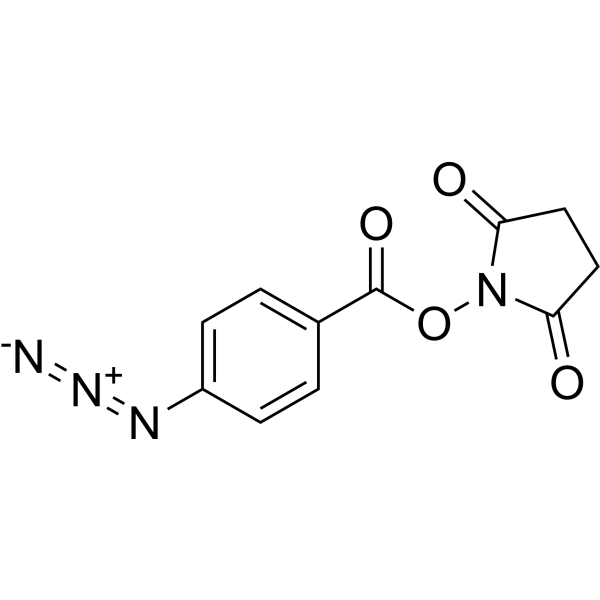
    N3-Ph-NHS ester (compound 133) is an organic synthesis intermediate and ADC linker used for the synthesis of antibody-drug conjugate (ADC) molecules .
    N3-Ph-NHS ester
  • HY-W425682

    Drug Intermediate Others
    Fmoc-L-Penicillamine is formed by the connection of the Fmoc protecting group and L-Penicillamine through a specific chemical bond. Fmoc-L-Penicillamine plays an important role in organic synthesis, especially in the field of peptide synthesis .
    Fmoc-L-Penicillamine
  • HY-W087905

    Biochemical Assay Reagents Others
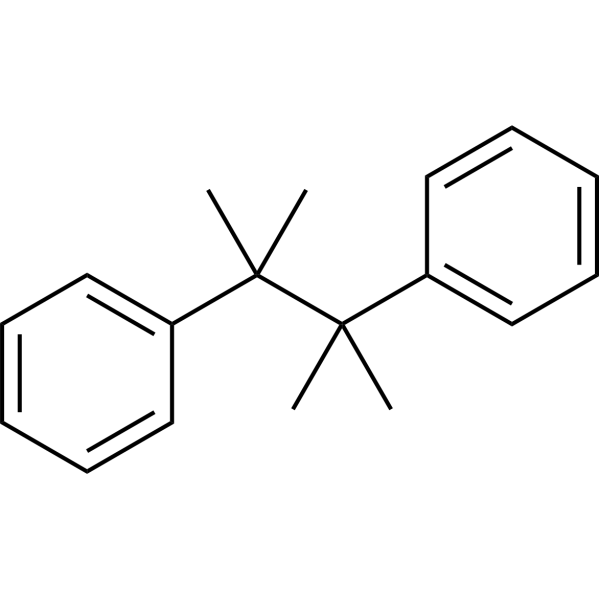
    2,3-Dimethyl-2,3-diphenylbutane is a minor product formed during the thermal decomposition of dicumyl peroxide (DCP) in cumene, generated through radical coupling reactions. As an initiator capable of producing free radicals, 2,3-dimethyl-2,3-diphenylbutane promotes cross-linking or decomposition processes via initiating free radical reactions in fields such as polymer polymerization (e.g., modification of polyphenylene oxide processing), organic synthesis (e.g., DCP decomposition reactions), and coal processing (e.g., oxidation stabilization of coal tar pitch), thereby enhancing material properties or reaction efficiency .
    2,3-Dimethyl-2,3-diphenylbutane
  • HY-W035133

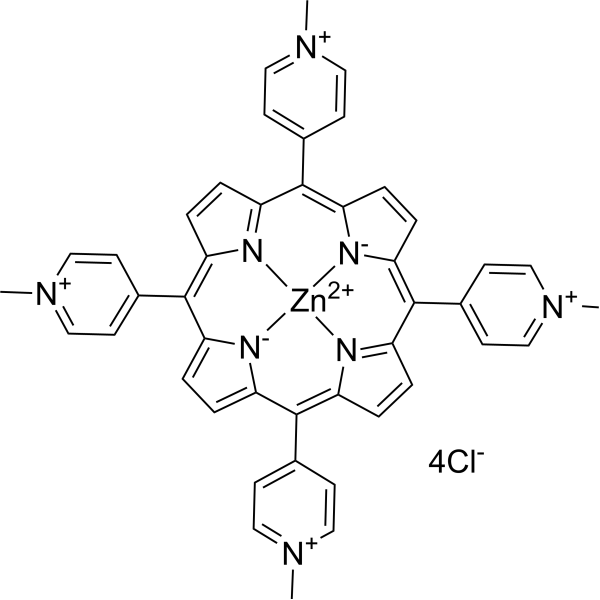
    5,10,15,20-Tetra-p-tolyl-21H,23H-porphine

    MOFs Others
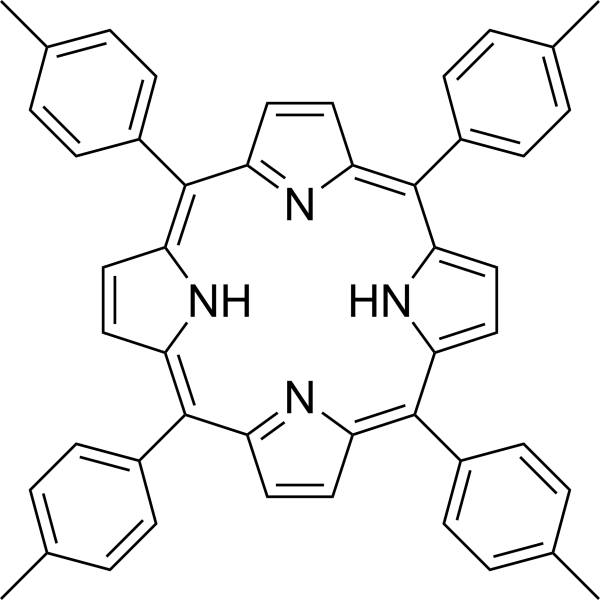
    5,10,15,20-Tetrakis(p-tolyl)porphyrin (TTP) is an organic compound belonging to the class of porphyrins, a cyclic molecule composed of four pyrrole rings linked together. TTP is a synthetic porphyrin commonly used as a sensitizer for dye-sensitized solar cells and a catalyst for organic reactions. Due to its unique structure, TTP has a series of interesting properties, including at specific wavelengths and its potential as a catalyst for various chemical reactions. In dye-sensitized solar cells, TTPs help convert sunlight into electricity by absorbing photons and transferring electrons to the semiconductor layer of the device. In organic chemistry, TTP is often used as a catalyst for various organic compounds in reactions such as oxidation and reduction. Its ability to selectively bind certain substrates makes it a useful tool for synthesizing complex molecules and studying their properties.
    5,10,15,20-Tetrakis(p-tolyl)porphyrin
  • HY-151747

    ADC Linker Others
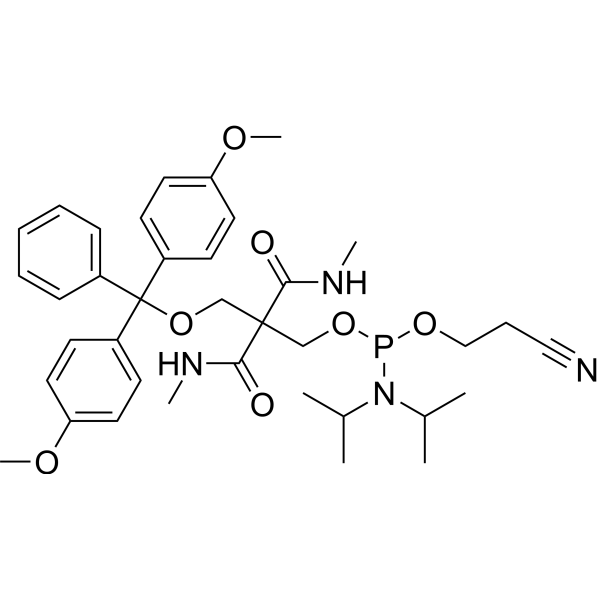
    Chemical phosphorylation amidite is a click chemical class ADC linker. Click chemistry has good biological orthogonality characteristics: biocompatible, fast and highly specific in the biological environment, and has great application potential in the binding between nucleic acids, lipids, proteins and other molecules .
    Chemical phosphorylation amidite
  • HY-149039

    Biochemical Assay Reagents Others
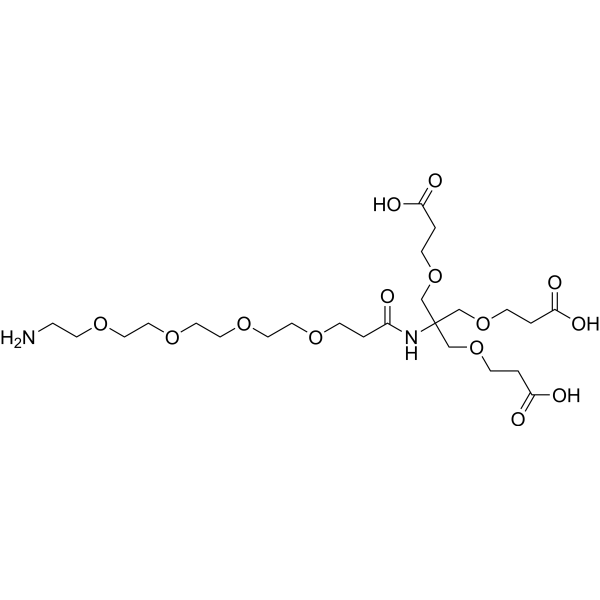
    Amine-PEG4-amido-tri-(carboxyethoxymethyl)-methane is a organic compounds, acts as a linker used to synthesize multifunctional molecules.
    Amine-PEG4-amido-tri-(carboxyethoxymethyl)-methane
  • HY-151749

    ADC Linker Others
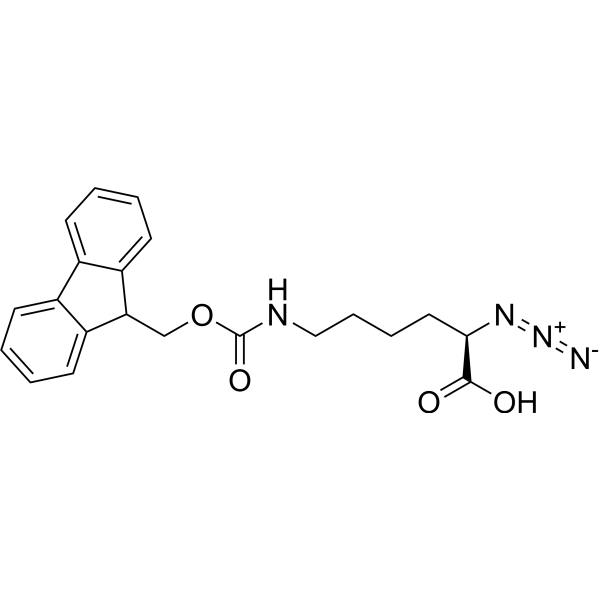
    N3-D-Lys(Fmoc)-OH is a click chemistry reagent containing an azide group. Click chemistry is a powerful chemical reaction with excellent bioorthogonality features: biocompatible, rapid and highly specific in biological environments . N3-D-Lys(Fmoc)-OH is a click chemistry reagent, it contains an Azide group and can undergo copper-catalyzed azide-alkyne cycloaddition reaction (CuAAc) with molecules containing Alkyne groups. It can also undergo strain-promoted alkyne-azide cycloaddition (SPAAC) reactions with molecules containing DBCO or BCN groups.
    N3-D-Lys(Fmoc)-OH
  • HY-151736

    ADC Linker Others
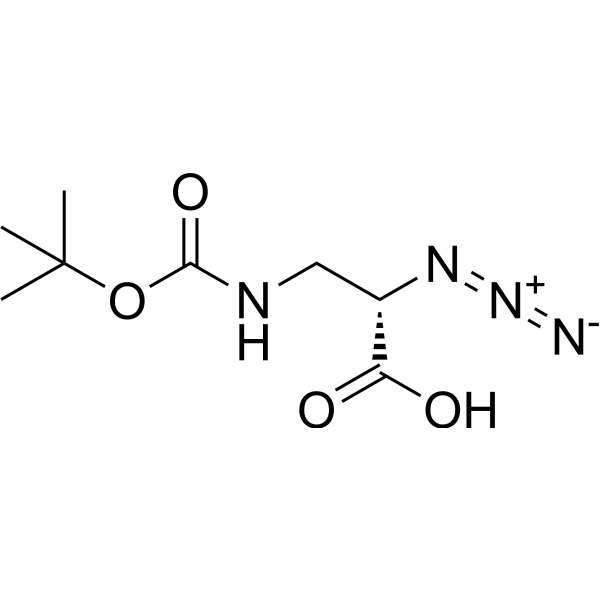
    N3-L-Dap(Boc)-OH is a click chemistry reagent containing an azide group. Click chemistry is a powerful chemical reaction with excellent bioorthogonality features: biocompatible, rapid and highly specific in biological environments . N3-L-Dap(Boc)-OH is a click chemistry reagent, it contains an Azide group and can undergo copper-catalyzed azide-alkyne cycloaddition reaction (CuAAc) with molecules containing Alkyne groups. It can also undergo strain-promoted alkyne-azide cycloaddition (SPAAC) reactions with molecules containing DBCO or BCN groups.
    N3-L-Dap(Boc)-OH
  • HY-23497

    Others Others
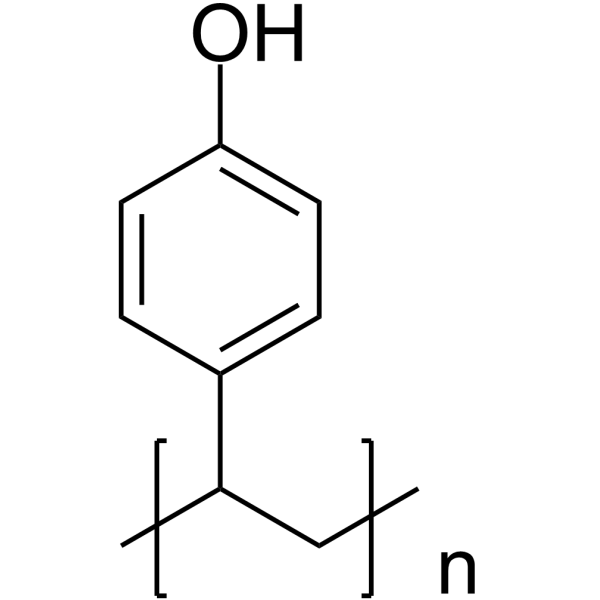
    Poly(4-vinylphenol) is a polymer cross-linking agent that can be used to prepare non-toxic films. Poly(4-vinylphenol) is a sensitizer of titania for visible light photocatalysis. Poly(4-vinylphenol) also can be used as a water resistive wood adhesive, as a gate dielectric insulator in organic field effect transistors, and as a responsive surface coating .
    Poly(4-vinylphenol)
  • HY-151744

    ADC Linker Others
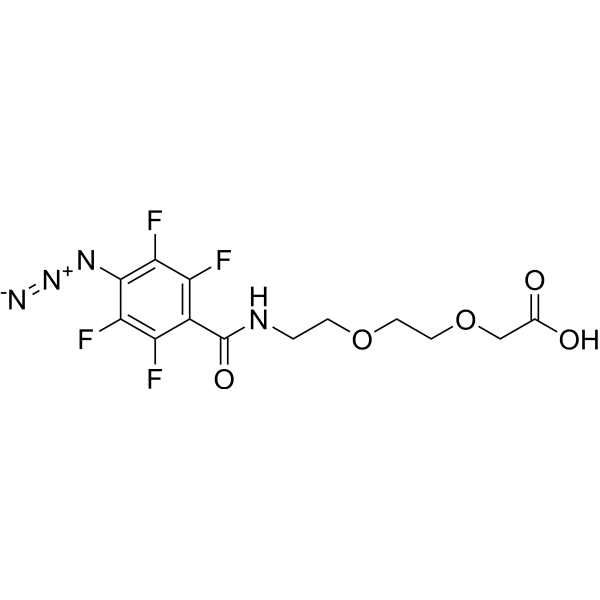
    N3-TFBA-O2Oc is a click chemistry reagent containing an azide group and an aryl group. Aryl azides are well-known precursors of nitrenes and have been introduced by Fleet et al. as versatile photoaffinity labeling agents to probe biological receptors. This type of compounds has been used as photo-cross linkermax=258 nm) in estrogen receptor studies and for direct surface coating of carbon and organic based polymers . N3-TFBA-O2Oc is a click chemistry reagent, it contains an Azide group and can undergo copper-catalyzed azide-alkyne cycloaddition reaction (CuAAc) with molecules containing Alkyne groups. It can also undergo strain-promoted alkyne-azide cycloaddition (SPAAC) reactions with molecules containing DBCO or BCN groups.
    N3-TFBA-O2Oc
  • HY-W127344

    Biochemical Assay Reagents Others
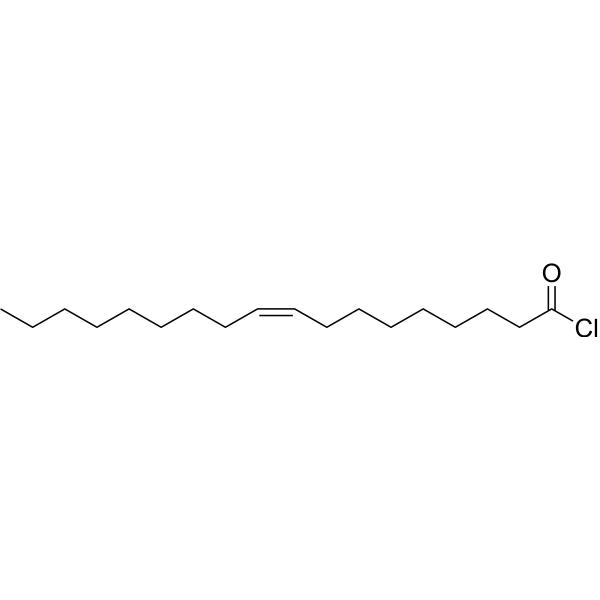
    Oleoyl chloride A pungent-smelling liquid commonly used as a reagent in organic synthesis, especially for the production of a variety of organic compounds, including pharmaceuticals and agrochemicals. In addition, it can also be used as a cross-linking agent or surfactant in polymer chemistry. Its unique chemical properties make it an important ingredient in a variety of industrial processes, including petrochemical refining and materials science.
    Oleoyl Chloride
  • HY-160071

    Others Cancer
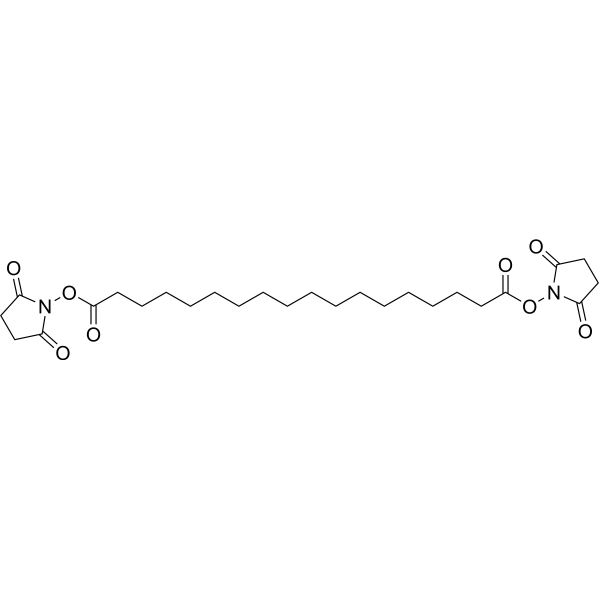
    Bis(2,5-dioxopyrrolidin-1-yl) octadecanedioate is a linking reagent used in organic synthesis [1] .
    Bis(2,5-dioxopyrrolidin-1-yl) octadecanedioate
  • HY-W106487

    Biochemical Assay Reagents Others
    (+)-N,N'-Diallyl-L-tartardiamide is a cross-linking agent used in the preparation of hydrogels. (+)-N,N'-Diallyl-L-tartardiamide is a kind of biological materials or organic compounds that are widely used in life science research .
    (+)-N,N'-Diallyl-L-tartardiamide

Inquiry Online

Your information is safe with us. * Required Fields.

Salutation


Country or Region *

Applicant Name *


Organization Name *

Department *


Email Address *


Product Name *

Cat. No.


Requested quantity *

Phone Number *


Remarks

Inquiry Online

Inquiry Information

Product Name:
Cat. No.:
Quantity:
MCE Japan Authorized Agent: