15 Results for "

oxidant stress

" in MedChemExpress (MCE) Product Catalog:
Products (15)

15 Results for "oxidant stress" in MCE Product Catalog:

2
2 Cited Publications
Cat. No.: HY-N0244
CAS No.: 28543-07-9
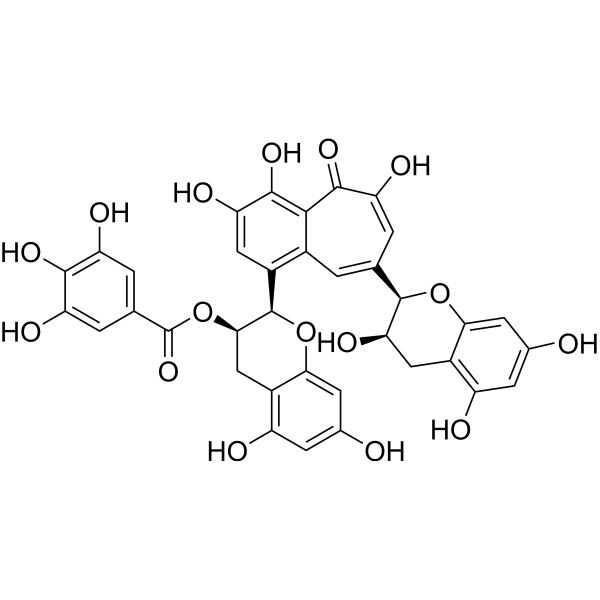
Theaflavin-3'-gallate is a monomer of theaflavins found in black tea, which has anti-UVB damage activity and inhibits cell apoptosis and necroptosis. Theaflavin-3'-gallate acts as a pro-oxidant and induces oxidative stress in cancer cells, inhibiting xanthine oxidase (OX), with an IC50 of 7.6 μM .
loading...
    loading...
Cat. No.: HY-W782399
CAS No.: 17363-08-5
Synonyms: Sodium boranocarbonate
CORM-A1 (Sodium boranocarbonate) is a water-soluble carbon monoxide (CO) releasing molecule that facilitates the investigation of CO's impact on cellular systems. As CO is generated from heme degradation by the enzyme heme oxygenase, it serves as a crucial gaseous signaling mediator in mammalian cells. CORM-A1 not only exhibits anti-oxidant and anti-inflammatory properties but also regulates CO release in a manner dependent on pH and temperature, promoting mild vasorelaxation and hypotension. Furthermore, CORM-A1 has been shown to provide cytoprotection in primary cultures of astrocytes under oxidative stress while also enhancing autophagy due to its boron-containing composition.
loading...
    loading...
Cat. No.: HY-142026
CAS No.: 142449-89-6
Synonyms: (+)-Vitisin A
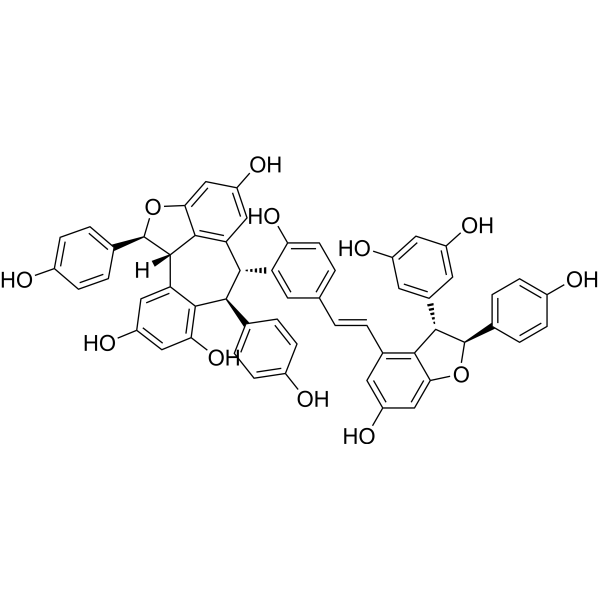
Vitisin A ((+)-Vitisin A) is an orally active natural product with multiple pharmacological activities including anti-inflammatory, anti-tumor, anti-oxidant, anti-pathogenic microorganism, hypoglycemic and lipid-regulating, anti-osteoporotic, neuroprotective and cardiovascular protective effects. Vitisin A exhibits inhibitory effects on human AChE and MAO-B with IC50 values of 1.29 µM and 4.94 µM, respectively. Vitisin A inhibits the ERK, MAPK, NF-κB, STAT1, HMGCR and TRAF6 pathways, downregulates the related phosphorylation and protein expression, while activates the Nrf2/HO-1 pathway and upregulates p21 expression. Vitisin A induces tumor cell apoptosis and cell cycle arrest, inhibits adipogenesis and lipid accumulation, while alleviates oxidative stress, suppresses inflammatory responses, blocks hepatic fibrosis, Cuproptosis and cholesterol synthesis, and increases the expression levels of central BDNF and TrkB. Vitisin A can be used in the research of tumors, infectious diseases, metabolic diseases, bone and joint diseases, liver diseases, skin injuries, as well as neurodegenerative and cognitive dysfunction-related diseases .
loading...
    loading...
Cat. No.: HY-136913
CAS No.: 69617-84-1
Purity:  99.76%
Synonyms: (Rac)-Betuligenol
Target:  

Endogenous Metabolite

Research Areas:  

Inflammation/Immunology

(Rac)-Rhododendrol ((Rac)-Betuligenol) is an aromatic compound with pro-oxidant activity. (Rac)-Rhododendrol may be useful in the suppression of liver diseases. (Rac)-Rhododendrol can be toxic to melanocytes, leading to cell death. The metabolite of (Rac)-Rhododendrol, RD-quinone, is cytotoxic and causes enzyme inactivation and endoplasmic reticulum stress by binding to thiol proteins. (Rac)-Rhododendrol-derived melanin exhibits potent pro-oxidant activity and may cause oxidative stress .
loading...
    loading...
Cat. No.: HY-125972
CAS No.: 1263893-98-6
Purity:  98.01%
zr17-2 is a cold inducible RNA-binding protein (CIRBP) agonist. zr17-2 has anti-inflammatory and anti-oxidant and can be used for the study of myocardial infarction. zr17-2 is a hypothermia mimetic molecule that reduces oxidative stress-induced retinal cell death .
loading...
    loading...
Cat. No.: HY-N7270
CAS No.: 74696-01-8
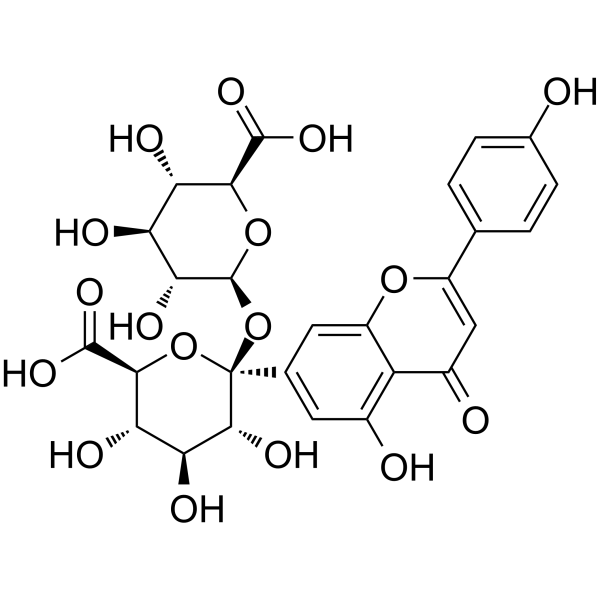
Apigenin-7-diglucuronide is a flavonoid glycoside and is present in an assortment of medicinal plants with anti-inflammatory or ant-oxidant activities. Apigenin-7-diglucuronide protects retinas against bright light-induced photoreceptor degeneration through the inhibition of retinal oxidative stress and inflammation .
loading...
    loading...
Cat. No.: HY-150175
CAS No.: 1786411-17-3
Target:  

Fluorescent Dye

Research Areas:  

Inflammation/Immunology

HKSOX-1 and its derivatives (HKSOX-1r and HKSOX-1m) are novel fluorescent probes designed for highly sensitive and selective detection of the superoxide anion radical (O2 •−) in cellular environments. These probes utilize an aryl trifluoromethanesulfonate group that undergoes O2 •−-mediated cleavage, releasing a free phenol and emitting fluorescence. They demonstrate excellent specificity and sensitivity across various pH ranges, withstand interference from strong oxidants and reductants typical in cellular contexts. HKSOX-1r, optimized for cellular retention, has been effectively employed in diverse assays including confocal imaging, flow cytometry, and zebrafish embryo studies, highlighting its utility in investigating O2 •− roles in inflammation, mitochondrial stress, and other physiological processes .
loading...
    loading...
Cat. No.: HY-W144308
CAS No.: 87-87-6
Synonyms: TCHQ; Tetrachloroquinol
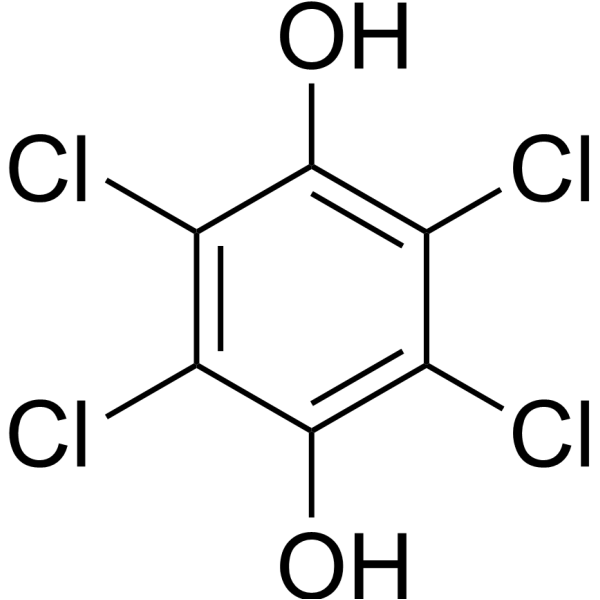
Tetrachlorohydroquinone (TCHQ) is a metabolite of Pentachlorophenol. Tetrachlorohydroquinone induces reactive oxidant stress (ROS), inhibits apoptosis and induces necrosis in primary mouse splenocytes. Tetrachlorohydroquinone increases DNA lesions and induces oxidative stress in rodents .
loading...
    loading...
Cat. No.: HY-P5389
CAS No.: 403858-30-0
Target:  

Gap Junction Protein

Research Areas:  

Others

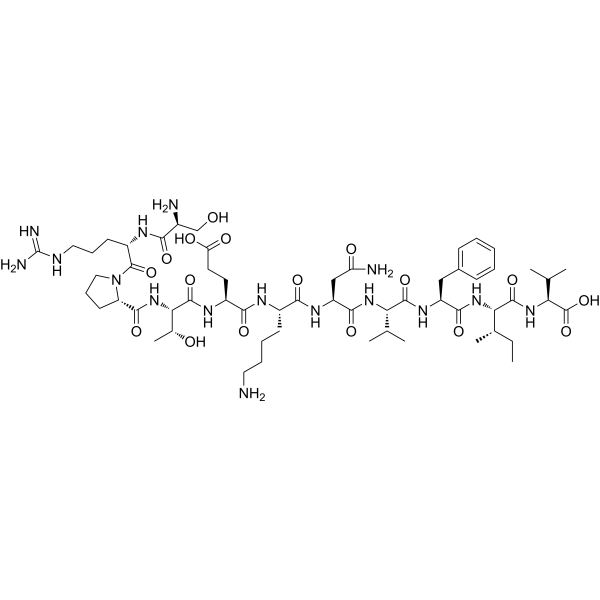
Connexin mimetic peptide 40GAP27 is a biological active peptide. (This peptide corresponds to the GAP27 domain of the second extracellular loop of dominant vascular connexin (Cx40), designated as 40Gap 27. It was used to investigate mechanisms through which oxidant stress impairs communication via gap junctions. When administered, 40Gap27attenuates endothelium-dependent subintimal smooth muscle hyperpolarization.)
loading...
    loading...
Cat. No.: HY-N12871
CAS No.: 1487423-55-1
Floramanoside D is a flavonol glycoside. Floramanoside D inhibits aldose reductase (IC50 is 2.2 μM), scavenges the 2,2-diphenyl-1-picrylhydrazyl (DPPH) (SC50 is 12.5 μM) .
loading...
    loading...
Cat. No.: HY-136913R
CAS No.: 69617-84-1
Synonyms: (Rac)-Betuligenol (Standard)
(Rac)-Rhododendrol (Standard) ((Rac)-Betuligenol (Standard)) is the analytical standard of (Rac)-Rhododendrol (HY-136913). This product is intended for research and analytical applications. (Rac)-Rhododendrol ((Rac)-Betuligenol) is an aromatic compound with pro-oxidant activity. (Rac)-Rhododendrol may be useful in the suppression of liver diseases. (Rac)-Rhododendrol can be toxic to melanocytes, leading to cell death. The metabolite of (Rac)-Rhododendrol, RD-quinone, is cytotoxic and causes enzyme inactivation and endoplasmic reticulum stress by binding to thiol proteins. (Rac)-Rhododendrol-derived melanin exhibits potent pro-oxidant activity and may cause oxidative stress .
loading...
    loading...
Cat. No.: HY-W144308R
CAS No.: 87-87-6
Synonyms: TCHQ (Standard); Tetrachloroquinol (Standard)
Tetrachlorohydroquinone (Standard) is the analytical standard of Tetrachlorohydroquinone (HY-W144308). This product is intended for research and analytical applications. Tetrachlorohydroquinone (TCHQ) is a metabolite of Pentachlorophenol. Tetrachlorohydroquinone induces reactive oxidant stress (ROS), inhibits apoptosis and induces necrosis in primary mouse splenocytes. Tetrachlorohydroquinone increases DNA lesions and induces oxidative stress in rodents .
loading...
    loading...
Cat. No.: HY-122080
CAS No.: 616885-87-1
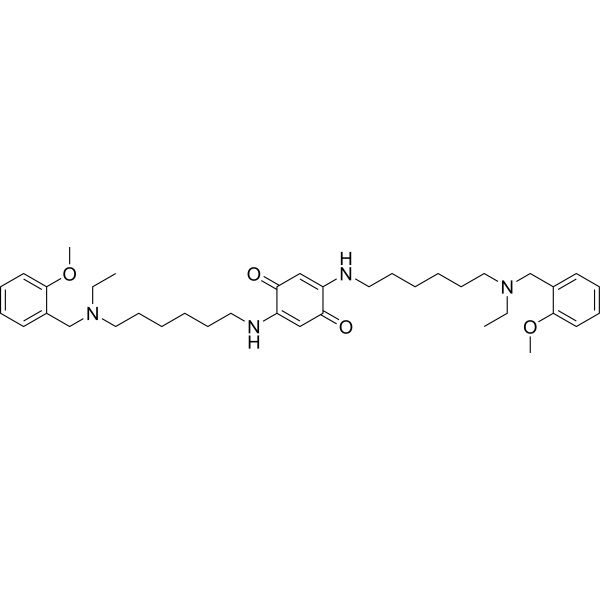
Memoquin is an anti-amyloid and anti-oxidant multi-target-directed ligand. Memoquin is an orally active inhibitor of BACE-1 and AChE with IC50 values of 108 and 1.55 nM, respectively. Memoquin is a cognitive enhancer that prevents the Aβ-induced neurotoxicity mediated by oxidative stress. Memoquin can be used for the research of Alzheimer’s disease (AD) .
loading...
    loading...
Cat. No.: HY-155997
CAS No.: 2413127-32-7
Target:  

COX

Research Areas:  

Inflammation/Immunology

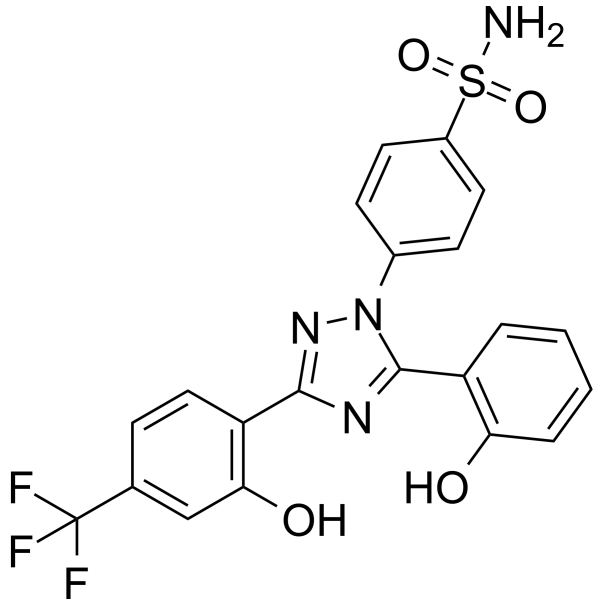
Anti-inflammatory agent 56 (Compound 9) is a selective COX-2 inhibitor (IC50: 0.54 μM). Anti-inflammatory agent 56 has anti-oxidant and anti-inflammatory effects. Anti-inflammatory agent 56 inhibits oxidative stress induced cell death. Anti-inflammatory agent 56 inhibits oxidative stress and neuroinflammation by inhibiting Keap1, COX-2 and iNOS. Anti-inflammatory agent 56 has low acute toxicity in mice (LD50: 1000 mg/kg) .
loading...
    loading...
Cat. No.: HY-P701831
Purity:  ≥ 90%, as determined by reducing SDS-PAGE.
Synonyms: STK25; Ste20/oxidant stress Response Kinase 1; Serine/Threonine Kinase 25; Serine/Threonine Kinase 25 (Ste20, Yeast Homolog); SOK1; Non-Specific Serine/Threonine Protein Kinase; YSK1; Serine/Threonine Kinase 25 Isoform 3; Sterile 20/oxidant stress-Respons
Species:  
Human
Source:  
Sf9 insect cells
loading...
    loading...
  • 1

