
Search Result
Results for "
peroxidase
" in MedChemExpress (MCE) Product Catalog:
14
Biochemical Assay Reagents
12
Isotope-Labeled Compounds
| Cat. No. |
Product Name |
Target |
Research Areas |
Chemical Structure |
-
- HY-125859
-
-
-
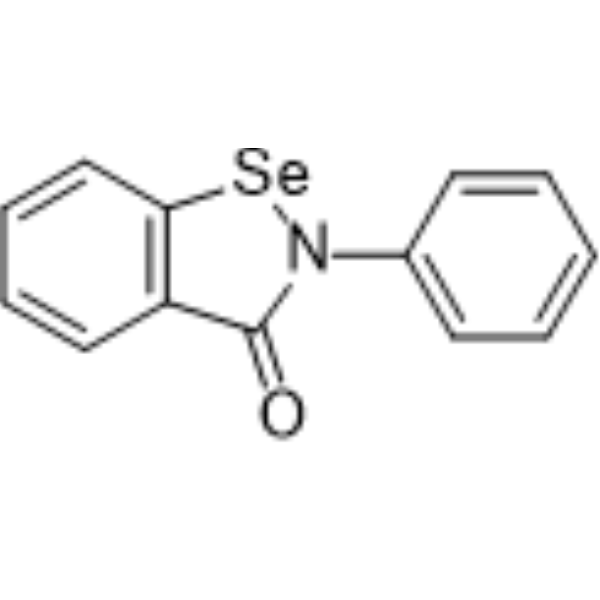
- HY-13750
-
|
SPI-1005; PZ-51; CCG-39161
|
Calcium Channel
Virus Protease
HIV
Phosphatase
|
Infection
Neurological Disease
Inflammation/Immunology
Cancer
|
|
Ebselen (SPI-1005), a glutathione peroxidase mimetic, is a potent voltage-dependent calcium channel (VDCC) blocker . Ebselen potently inhibits M pro (IC50=0.67 μM) and COVID-19 virus (EC50=4.67 μM) .Ebselen is an inhibitor of HIV-1 capsid CTD dimerization. Ebselen, an organoselenium compound, can permeate the blood-brain barrier and has anti-inflammatory, antioxidant and anticancer activity .
|
-
-
- HY-15902
-
|
AzBTS-(NH4)2
|
Fluorescent Dye
|
Others
|
|
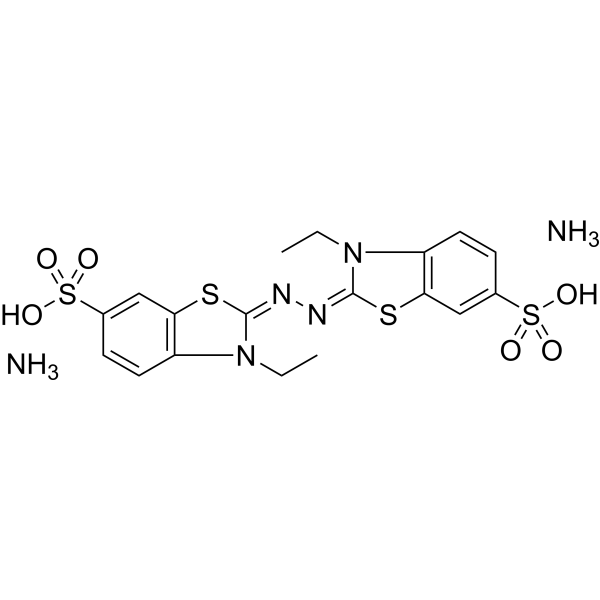
ABTS diammonium salt (AzBTS-(NH4)2) is a substrate for horseradish peroxidase (HRP) conjugate. ABTS diammonium salt can be used to evaluate antioxidant capacity .
|
-
-
- HY-B0329
-
|
INH; Isonicotinic acid hydrazide; Isonicotinic hydrazide
|
Bacterial
Autophagy
Mitophagy
Antibiotic
|
Infection
|
|
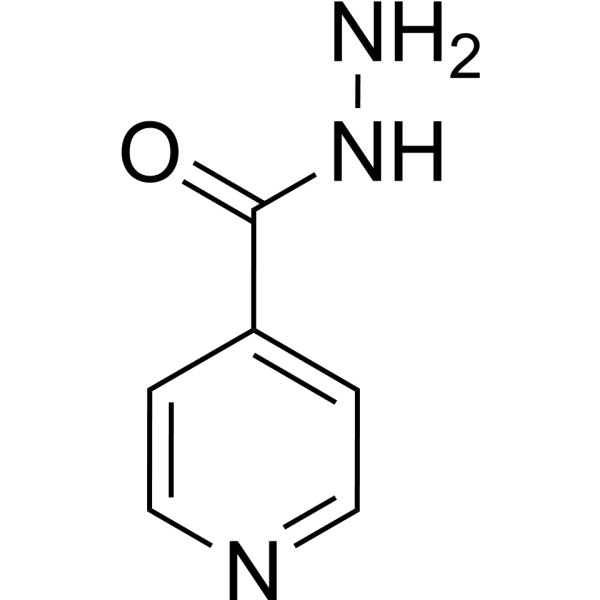
Isoniazid (INH) is a proagent and must be activated by a bacterial catalase-peroxidase enzyme KatG. Isoniazid is bactericidal to rapidly dividing mycobacteria and has anti-tuberculostatic activity .
|
-
-
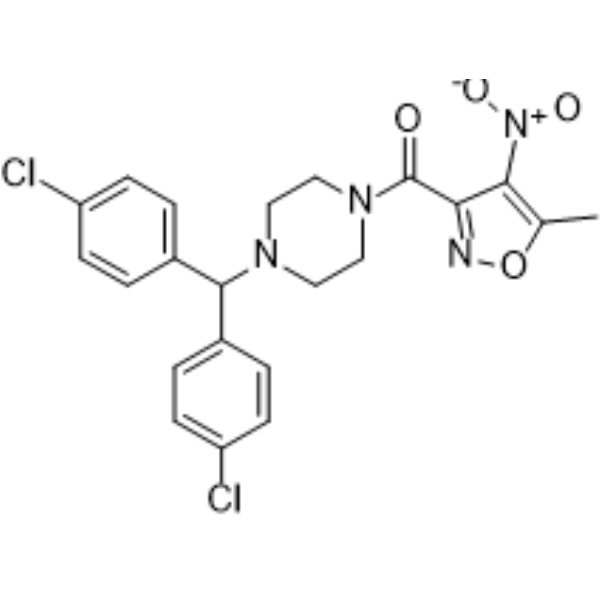
- HY-100003
-
|
|
Glutathione Peroxidase
Ferroptosis
|
Cancer
|
|
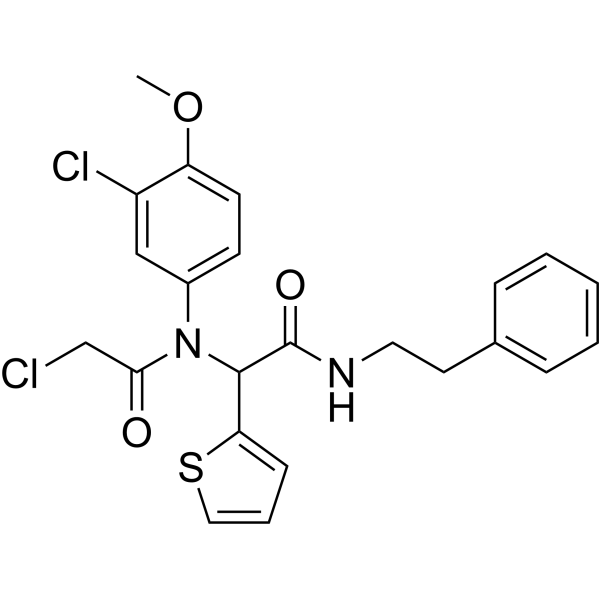
ML-210 is a selective and covalent glutathione peroxidase 4 (GPX4) inhibitor with an EC50 of 30 nM. ML-210 binds the GPX4 selenocysteine residue. ML-210 has anti-cancer activity .
|
-
-
- HY-101880
-
ADHP
2 Publications Verification
10-Acetyl-3,7-dihydroxyphenoxazine
|
Fluorescent Dye
|
Others
|
|
ADHP is a fluorogenic peroxidase substrate (λex=530 nm, λem=590 nm).
|
-
-
- HY-100002
-
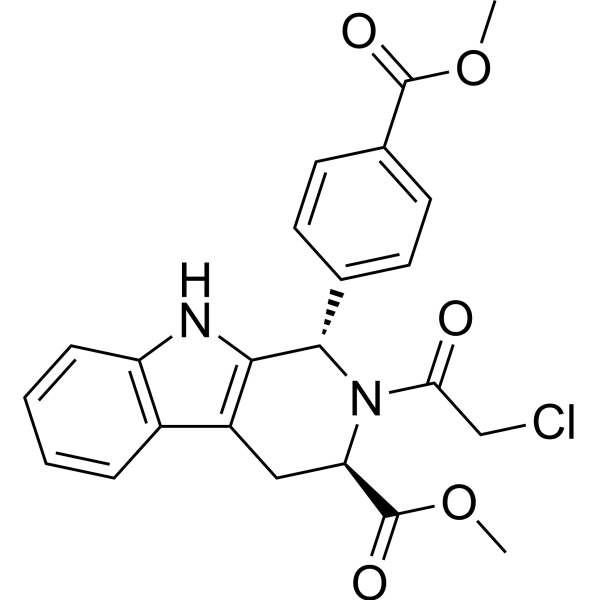
-
-
- HY-135849A
-
|
|
Reactive Oxygen Species (ROS)
|
Others
Cancer
|
|
Catalase, Bovine Liver is an enzyme widely found in various organisms, including animals, plants and microorganisms. Catalase, Bovine Liver mainly exists in the peroxisome of cells and is an important antioxidant enzyme. Catalase, Bovine Liver plays an important role in removing ROS and maintaining the balance of redox state. Catalase, Bovine Liver is closely related to the occurrence and development of tumors. Catalase, Bovine Liver has the potential to be used in tumor prevention research .
|
-
-
- HY-138153
-
|
|
Glutathione Peroxidase
Ferroptosis
|
Cancer
|
|
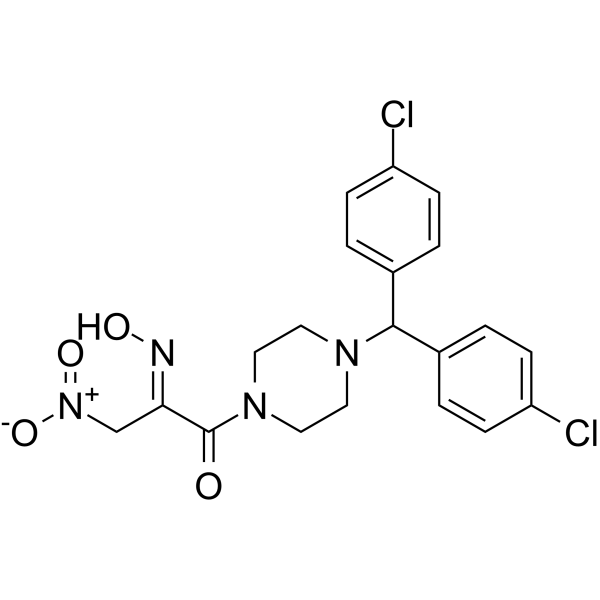
JKE-1674 is an orally active glutathione peroxidase 4 (GPX4) inhibitor and an active metabolite of GPX4 inhibitor ML-210. JKE-1674, an analog of ML-210 in which the nitroisoxazole ring is replaced with an α-nitroketoxime. JKE-1674 can convert into a nitrile oxide JKE-1777. JKE-1674 kills LOX-IMVI cells in a manner that is equipotent to ML-210 and is completely rescued by ferroptosis inhibitors .
|
-
-
- HY-B1000A
-
|
|
Endogenous Metabolite
Apoptosis
|
Cancer
|
|
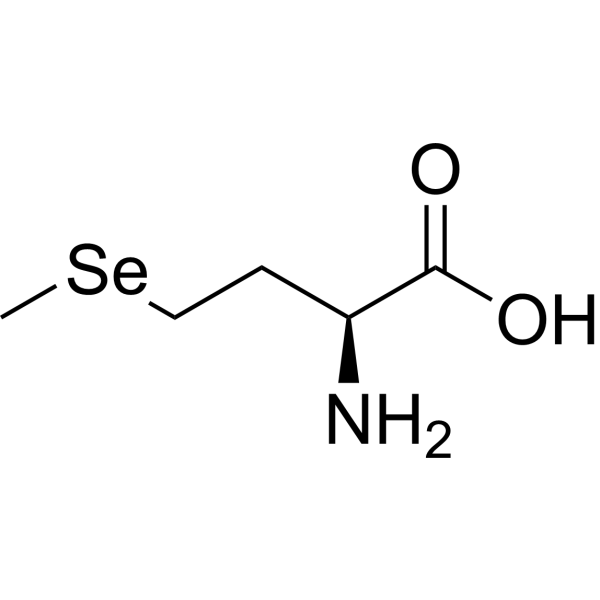
L-SelenoMethionine, an L-isomer of Selenomethionine, is a major natural food-form of selenium. L-SelenoMethionin is a cancer chemopreventive agent that can reduce cancer incidence by dietary supplementation and induce apoptosis of cancer cells. L-SelenoMethionine also can increase expression of glutathione peroxidase .
|
-
-
- HY-D1840
-
|
|
Biochemical Assay Reagents
|
Others
|
|
Tyramide Amplification Buffer is a ready-to-use buffer primarily intended for immunostaining of cells and tissues by the technique of tyramide signal amplification (TSA). Tyramide Amplification Buffer enables the reaction between tyramide-labeled antibodies and fluorescently labeled tyramide substitutes (tyramide) using peroxidase, resulting in a highly amplified fluorescent signal. Tyramide Amplification Buffer can be used for signal enhancement in detection methods such as immunofluorescence (IF), immunohistochemistry (IHC), or in situ hybridization (FISH) .
|
-
-
- HY-W012145
-
|
|
Others
|
Metabolic Disease
|
|
TMPD dihydrochloride, a readily oxidizable compound, is an enzymatically convert redox active substrate molecule. TMPD dihydrochloride is also an electron donor and serves as a reducing cosubstrate for heme peroxidases . TMPD dihydrochloride is also a complex IV substrate .
|
-
-
- HY-P2833
-
|
GSH-Px; EC 1.11.1.9
|
Glutathione Peroxidase
|
Metabolic Disease
|
|
Glutathione Peroxidase (GSH-Px; EC 1.11.1.9) belongs to the peroxidase family and is commonly used in biochemical research. Glutathione Peroxidase can catalyze reduced glutathione (GSH) to form a disulfide bridge with another glutathione molecule, convert it into oxidized glutathione (GSSG), and react with hydrogen peroxide or lipid peroxide reaction, reducing it to H2O. Glutathione Peroxidase is an effective antioxidant against oxidative stress .
|
-
-
- HY-15914
-
|
DCHBS
|
Fluorescent Dye
|
Others
|
|
DHBS (3, 5-dichloro-2-hydroxybenzenesulfonate) is used in conjunction with 4-aminoantipyrine (4-AAP) (HY-W100990) and hydrogen peroxide (H2O2) for chromogenic quantitation of peroxidase in coupled enzymatic reactions. Component of Trinder reagent for use with peroxidase to measure generation of hydrogen peroxide in automated systems .
|
-
-
- HY-141809
-
|
|
Glutathione Peroxidase
Ferroptosis
|
Cancer
|
|
GPX4-IN-3 (26a) is a potent glutathione peroxidase 4 (GPX4) inhibitor as a selective ferroptosis inducer. GPX4-IN-3 (26a) exhibits 71.7% inhibition for GPX4 with 1 μM .
|
-
-
- HY-E70336
-
|
|
Endogenous Metabolite
|
Others
|
|
Peroxidase, Lignin is a biocatalyst and a key enzyme in new biocatalyst technology. Enzyme engineering focuses on enhancing enzyme reaction kinetics, substrate selectivity, and activity under harsh conditions such as low or high pH. By introducing stimulus responsiveness to these enzyme modifications, dynamic control of activity is also possible .
|
-
-
- HY-E70387
-
|
|
Endogenous Metabolite
|
Others
|
|
Ligninase is a general term for extracellular heme-containing peroxidases produced by Phanerochaete chrysosporium. Ligninase can catalyze lignin degradation. Ligninase can be used in waste treatment and detoxification of environmental pollutants .
|
-
-
- HY-W143216
-
|
Monomethylthionine
|
Amyloid-β
Tau Protein
|
Neurological Disease
|
|
Azure C acts as a tau oligomer modulator and Aβ42 oligomerization inhibitor. It regulates hsp70 ATPase activity, thereby mediating the clearance of tau protein. Azure C reduces the levels of toxic tau oligomers by promoting the formation of non-toxic tau aggregates, rescues neuroblastoma cells from tau oligomer-induced toxicity, and binds to and inhibits Aβ42 oligomerization without suppressing its fibrillization. Azure C is generated via sequential oxidation of methylene blue or Azure B through a horseradish peroxidase-mediated reaction, and accumulates in HRP reaction media. Azure C can be used in studies related to tauopathies, including Alzheimer's disease .
|
-
-
- HY-N0859
-
|
Schizanhenol; Gomisin-K3
|
UGT
Cholinesterase (ChE)
Tau Protein
SOD
Sirtuin
|
Neurological Disease
Inflammation/Immunology
Cancer
|
|
Schisanhenol (Schizanhenol), a lignan, is an orally active antioxidant. Schisanhenol reduces AChE activity, increases SIRT1 and PGC-1α expression, and decreases phosphorylated Tau (Ser 396) levels. Schisanhenol increases SOD and glutathione peroxidase activity, decreases malondialdehyde (MDA) content, and inhibits UGT2B7 activitY. Schisanhenol attenuates ox-LDL-induced apoptosis, intracellular reactive oxygen species generation, and cytotoxicity in endothelial cells. Schisanhenol inhibits LDL oxidation, brain mitochondrial and membrane peroxidative damage, and brain mitochondrial swelling and disintegration. Schisanhenol can be used for the research of Alzheimer’s disease, atherosclerosis, brain ischemia, and age-related brain deterioration .
|
-
-
- HY-107858
-
|
3,4-Dimethoxybenzyl alcohol
|
Endogenous Metabolite
Bacterial
|
Infection
|
|
Veratryl alcohol (3,4-Dimethoxybenzyl alcohol) is a secondary metabolite of lignin-degrading fungi, commonly used as a substrate for lignin peroxidase (LiP) to measure lignin degradation activity. Veratryl alcohol protects LiP from inactivation by H2O2 and prevents the accumulation of LiP III compounds. Veratryl alcohol also acts as a stabilizer for manganese-dependent peroxidases (MnP). Veratryl alcohol is a quorum-sensing inhibitor (QSI) and exhibits antibacterial efficacy .
|
-
-
- HY-A0278
-
-
-
- HY-125859B
-
|
|
Bacterial
|
Infection
|
|
Lactoperoxidase, bovine milk is an antimicrobial protein that belongs to the mammalian heme peroxidase family. Lactoperoxidase, bovine milk uses H2O2 to catalyze the oxidation of its preferred halide substrates including I −, Br −, F −, or the pseudohalide SCN − .
|
-
-
- HY-B2235C
-
|
|
Biochemical Assay Reagents
Glutathione Peroxidase
|
Metabolic Disease
|
|
L-α-Lecithin (soybean) is an orally active phospholipid. L-α-Lecithin (soybean) increases the bioavailability of Lutein in plasma and eyes of Rattus norvegicus, enhances plasma Glutathione peroxidase activity, and regulates fatty acids in plasma and tissues .
|
-
-
- HY-N3031
-
|
|
Bacterial
Apoptosis
Bcl-2 Family
MDM-2/p53
Glutathione Peroxidase
SOD
TNF Receptor
Interleukin Related
|
Infection
Inflammation/Immunology
|
|
Grosvenorine is an orally active flavonoid glycoside found in S. grosvenorii. Grosvenorine exhibits antibacterial, antioxidant and antiinflammation activities. Grosvenorine can induce apoptosis and increases anti-apoptotic Bcl-2 protein expression and reduces pro-apoptotic P53 protein expression in gastric tissues. Grosvenorine enhances mucin/glycoprotein secretion, regulates gastric pH, and reduces gastric lesion incidence.Grosvenorine increases glutathione peroxidase, catalase, and SOD levels, reduces lipid peroxidation (MDA), and lowers TNF-α and IL-6 levels. Grosvenorine can be used for the researches of bacterial infection and Gastric ulcer .
|
-
-
- HY-N10455
-
|
24-epi-Castasterone
|
Drug Derivative
|
Others
|
|
24-Epicastasterone (24-epi-Castasterone) is a bioactive brassinosteroid and a ligand of ABCB1 and ABCB19 in Arabidopsis thaliana. 24-Epicastasterone stimulates the ATPase activity of ABCB19 and the ATP hydrolysis activity of ABCB1, which drive the efflux of substances from plant cells. 24-Epicastasterone increases the activities of catalase and guaiacol peroxidase in the roots of wheat seedlings. 24-Epicastasterone alleviates heat-induced lipid peroxidation through a ROS-dependent mechanism and enhances the heat tolerance of common wheat seedlings .
|
-
-
- HY-B0230
-
|
|
COX
|
Inflammation/Immunology
|
|
Phenylbutazone is an efficient reducing cofactor for the peroxidase activity of prostaglandin H synthase (PHS). Phenylbutazone, a hepatotoxin, is a nonsteroidal anti-inflammatory agent (NSAID). Phenylbutazone induces muscle blind-like protein 1 (MBNL1) expression and has the potential for ankylosing spondylitis research .
|
-
-
- HY-132188
-
|
|
Endogenous Metabolite
|
Others
|
|
Manganese peroxidase is a heme protein that oxidizes Mn2+ to Mn3+. Manganese peroxidase catalyzes plant lignin de-polymerization. Manganese peroxidase can be used for the biodegradation of hazardous environmental contaminants, and especially for dye wastewater decolorization .
|
-
-
- HY-D1837
-
|
VF 488 Tyramide
|
Fluorescent Dye
|
Others
|
|
Vari Fluor 488 TSA(200×) (VF 488 Tyramide) is a fluorescent probe belonging to the Vari Fluor TSA series. Vari Fluor TSA series fluorescent probes can be used for high-density in situ labeling of target antigens using horseradish peroxidase (HRP) assays, which are widely used in ELISA, IF, IHC and other techniques with high detection sensitivity .
|
-
-
- HY-D0233
-
|
|
Fluorescent Dye
|
Others
|
|
Leucocrystal violet is a cationic triarylmethane dye. Leucocrystal violet generates a colored purple product in the presence of hydrogen peroxide and horseradish peroxidase, or when oxidized by periodate under the catalysis of horseradish peroxidase. Leucocrystal violet serves as a chromogenic reagent for the determination of submicrogram-level hydrogen peroxide, with no interference from tryptophan, persulfate or chromate. Leucocrystal violet reacts with blood to produce a purple/violet color in the presence of hydrogen peroxide; it forms a very weak fluorophore when acting with whole blood in an unbuffered solution, with a maximum absorption wavelength of 630 nm and a maximum fluorescence emission wavelength of 665 nm upon excitation at 630 nm. Leucocrystal violet is widely used for staining blood residues on porous and non-porous materials .
|
-
-
- HY-126061
-
|
|
Biochemical Assay Reagents
Drug Metabolite
|
Others
|
|
1,7-Dimethyluric acid is an N-methylated uric acid and purine derivative, as well as a caffeine metabolite. When 1,7-Dimethyluric acid is acted upon by peroxidase in the presence of H2O2, it follows the same oxidation pathway to generate a UV-absorbing intermediate, which decays via first-order kinetics. 1,7-Dimethyluric acid can adsorb onto pyrolytic graphite electrodes, but not onto glassy carbon electrodes or platinum electrodes. The N-methylation modification of its pyrimidine ring prevents ring contraction of the diol intermediate, and no NMR evidence of O-alkylation is observed during propylation under the test conditions .
|
-
-
- HY-W000357
-
|
|
Biochemical Assay Reagents
|
Others
|
|
4-(Imidazol-1-yl)phenol is a highly potent signal enhancer in a horseradish peroxidase (HRP)-luminol chemiluminescence (CL) immunoassay .
|
-
-
- HY-136247
-
|
Tyramide-Cy5
|
DNA Stain
|
Others
|
|
Cyanine 5 Tyramide (Tyramide-Cy5), a red fluorescent dye, is utilized as reporter fluorescent substrate for horseradish peroxidase (HRP)-catalyzed deposition that is signal amplification technique in immunoassay and in situ hybridization of nucleic acids .
|
-
-
- HY-136248
-
|
Tyramide-Cy3
|
DNA Stain
Fluorescent Dye
|
Others
|
|
Cyanine 3 Tyramide (Tyramide-Cy3) is an orange fluorescent dye used as a reporter fluorescent substrate for horseradish peroxidase (HRP)-catalyzed deposition, which serves as a signal amplification technique in immunoassays and in situ nucleic acid hybridization .
|
-
-
- HY-B0329S
-
|
INH-d4; Isonicotinic acid hydrazide-d4; Isonicotinic hydrazide-d4
|
Bacterial
Autophagy
Mitophagy
Antibiotic
|
Infection
|
|
Isoniazid-d4 is the deuterium labeled Isoniazid. Isoniazid (INH) is a proagent and must be activated by a bacterial catalase-peroxidase enzyme KatG. Isoniazid is bactericidal to rapidly dividing mycobacteria and has anti-tuberculostatic activity .
|
-
-
- HY-139915
-
|
|
Glutathione Peroxidase
|
Inflammation/Immunology
|
|
MPO-IN-1 is a potent, orally active, and irreversible indole-containing inhibitor of myeloperoxidase (MPO). MPO-IN-1 has IC50s of 2.6 μM and 5.3 μM for MPO and thyroid peroxidase (TPO), respectively. MPO-IN-1 inhibits MPO activity in an acute mouse model of inflammation .
|
-
-
- HY-W013754
-
|
|
Glutathione S-transferase
|
Others
|
|
S-Hexylglutathione is an S-substituted glutathione in which the hydrogen of the thiol has been replaced by a hexyl group. S-Hexylglutathione is also an competitive inhibitor against glutathione-S-transferase. S-Hexylglutathione can be used as an affinity chromatographic ligand for glutathione-S-transferase and glutathione peroxidase .
|
-
-
- HY-W043748
-
|
N-Succinimidyl acrylate
|
Biochemical Assay Reagents
|
Others
|
|
2,5-Dioxopyrrolidin-1-yl acrylate (N-Succinimidyl acrylate) is a protein crosslinker. 2,5-Dioxopyrrolidin-1-yl acrylate can react with a monoclonal anti-horseradish peroxidase IgG antibody (anti-HRP) to modify lysine residues .
|
-
-
- HY-W105101
-
-
-
- HY-145197
-
|
|
Glutathione Peroxidase
|
Cardiovascular Disease
|
|
MPO-IN-3 is a potent myeloperoxidase (MPO) inhibitor (WO2013068875A1, example 191). Myeloperoxidase (MPO) is a heme-containing enzyme belonging to the peroxidase superfamily .
|
-
-
- HY-139381
-
|
Mitoperoxidase 2
|
Apoptosis
|
Metabolic Disease
|
|
MitoEbselen-2 chloride (MitoPeroxidase 2), a mitochondria-targeted mimic of glutathione peroxidase, is a radiation mitigator. MitoEbselen-2 chloride is effective in reducing lipid hydroperoxides, preventing apoptotic cell death .
|
-
-
- HY-D1835
-
|
VF 594 Tyramide
|
Fluorescent Dye
|
Others
|
|
Vari Fluor 594 TSA (200×) (VF 594 Tyramide) is a fluorescent probe belonging to the Vari Fluor TSA series. Vari Fluor TSA series fluorescent probes can be used for high-density in situ labeling of target antigens using horseradish peroxidase (HRP) assays, which are widely used in ELISA, IF, IHC and other techniques with high detection sensitivity .
|
-
-
- HY-W614753
-
|
|
Biochemical Assay Reagents
|
Others
|
|
Biotin-naphthylamine is a biotinylated biochemical assay reagent, which is a substrate for ascorbate peroxidase 2 (APEX2). Biotin-naphthylamine is utilized as a novel probe for labeling DNA and RNA .
|
-
-
- HY-112841
-
|
3-(10′-Phenothiazinyl)propane-1-sulfonate sodium; SPTZ sodium
|
Fluorescent Dye
|
Cancer
|
|
PTZ-343 is a potent enhancer of Luminol (HY-15922). PTZ-343 greatly increases the light output of the peroxidase-catalyzed luminol chemiluminescent oxidation reaction (>80%) .
|
-
-
- HY-155639
-
|
|
Biochemical Assay Reagents
|
Others
|
|
Tyramide alkyne is an alternative labeling substrate that can be coupled to detection or enrichment moieties via a Copper-catalyzed Azide/Alkyne Cycloaddition (CuAAC) “click” reaction. Tyramide alkyne can be used for ascorbate peroxidase 2 (APEX2) labeling .
|
-
-
- HY-B0329R
-
|
INH (Standard); Isonicotinic acid hydrazide (Standard); Isonicotinic hydrazide (Standard)
|
Reference Standards
Bacterial
Autophagy
Mitophagy
Antibiotic
|
Infection
|
|
Isoniazid (Standard) is the analytical standard of Isoniazid. This product is intended for research and analytical applications. Isoniazid (INH) is a proagent and must be activated by a bacterial catalase-peroxidase enzyme KatG. Isoniazid is bactericidal to rapidly dividing mycobacteria and has anti-tuberculostatic activity .
|
-
-
- HY-D125859F
-
|
HRP-Biotin
|
Biochemical Assay Reagents
|
Others
|
|
Peroxidase, Horseradish, Biotin labeled (HRP-Biotin) can be used to encapsulate DNA nanoflowers for creating stabilized streamlined ELISA platforms resistant to harsh environment .
|
-
-
- HY-W007967
-
|
|
Biochemical Assay Reagents
|
Others
|
|
4-Chloronaphthalen-1-ol is a substrate of horseradish peroxidase. 4-Chloronaphthalen-1-ol can be used to visualize protein bands in western blotting and immunohistochemical staining .
|
-
-
- HY-D1831
-
|
VF 620 Tyramide
|
Fluorescent Dye
|
Others
|
|
Vari Fluor 620 TSA (200×) (VF 620 Tyramide) is a fluorescent probe belonging to the Vari Fluor TSA series. Vari Fluor TSA series fluorescent probes can be used for high-density in situ labeling of target antigens using horseradish peroxidase (HRP) assays, which are widely used in ELISA, IF, IHC and other techniques with high detection sensitivity .
|
-
-
- HY-D1832
-
|
VF 532 Tyramide
|
Fluorescent Dye
|
Others
|
|
Vari Fluor 532 TSA (200×) (VF 532 Tyramide) is a fluorescent probe belonging to the Vari Fluor TSA series. Vari Fluor TSA series fluorescent probes can be used for high-density in situ labeling of target antigens using horseradish peroxidase (HRP) assays, which are widely used in ELISA, IF, IHC and other techniques with high detection sensitivity .
|
-
-
- HY-D1833
-
|
VF 680 Tyramide
|
Fluorescent Dye
|
Others
|
|
Vari Fluor 680 TSA (200×) (VF 680 Tyramide) is a fluorescent probe belonging to the Vari Fluor TSA series. Vari Fluor TSA series fluorescent probes can be used for high-density in situ labeling of target antigens using horseradish peroxidase (HRP) assays, which are widely used in ELISA, IF, IHC and other techniques with high detection sensitivity .
|
-
- HY-D1834
-
|
VF 640 Tyramide
|
Fluorescent Dye
|
Others
|
|
Vari Fluor 640 TSA(200×) (VF 640 Tyramide) is a fluorescent probe belonging to the Vari Fluor TSA series. Vari Fluor TSA series fluorescent probes can be used for high-density in situ labeling of target antigens using horseradish peroxidase (HRP) assays, which are widely used in ELISA, IF, IHC and other techniques with high detection sensitivity .
|
-
- HY-B1000AR
-
|
|
Reference Standards
Endogenous Metabolite
Apoptosis
|
Cancer
|
|
L-SelenoMethionine (Standard) is the analytical standard of L-SelenoMethionine. This product is intended for research and analytical applications. L-SelenoMethionine, an L-isomer of Selenomethionine, is a major natural food-form of selenium. L-SelenoMethionin is a cancer chemopreventive agent that can reduce cancer incidence by dietary supplementation and induce apoptosis of cancer cells. L-SelenoMethionine also can increase expression of glutathione peroxidase .
|
-
- HY-D2205
-
|
Cy7 TSA
|
Fluorescent Dye
|
Others
|
|
Cy7 tyramide, a red fluorescent dye, is utilized as reporter fluorescent substrate for horseradish peroxidase (HRP)-catalyzed deposition that is signal amplification technique in immunoassay and in situ hybridization of nucleic acids.
|
-
- HY-139008
-
|
|
Glutathione Peroxidase
|
Others
|
|
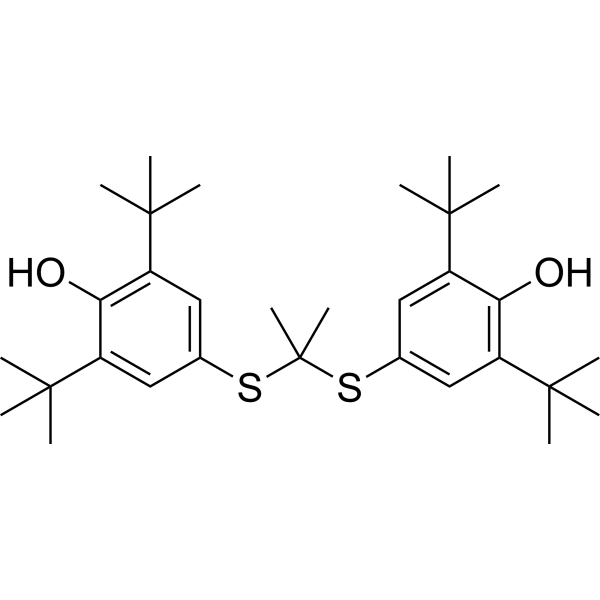
RC363 is a novel probucol analog with the activity to protect mouse hippocampal cells and primary cortical neurons from glutamate-induced oxidative cell death (ferroptosis) and increase glutathione peroxidase (GPx) 1 levels and activity.
|
-
- HY-D2873
-
|
Sulfo Cy7(Et) tyramide
|
Fluorescent Dye
|
Others
|
|
Sulfo Cy7 tyramide, a red fluorescent dye (Ex=740 nm, Em=770 nm), is utilized as reporter fluorescent substrate of horseradish peroxidase (HRP)-catalyzed deposition for tyramide signal amplification (TSA). Sulfo Cy7 tyramide can be used for multiplex Immunohistochemistry (mIHC) .
|
-
- HY-132183
-
|
|
Endogenous Metabolite
|
Metabolic Disease
|
|
Chloride peroxidase is a monomeric, heme-containing enzyme. Chloride peroxidase is capable of electrophilic chlorinations through the umpolung of chloride by oxidation with hydrogen peroxide .
|
-
- HY-NP0152
-
|
WGA (peroxidase)
|
Fluorescent Dye
|
Others
|
|
Wheat Germ Agglutinin (WGA) Peroxidase is a plant lectin that can be used as a probe to specifically bind biomolecules (such as polysaccharides, peptides, etc.).Wheat Germ Agglutinin (WGA) Peroxidase is a biological material or organic compound that can be used in life science research .
|
-
- HY-W012568
-
|
|
Reactive Oxygen Species (ROS)
|
Others
|
|
1-Methoxynaphthalene is used as the substrate to investigate the activity of cytochrome c peroxidase (CcP). 1-Methoxynaphthalene also can be used to synthesize prenyl naphthalen-ols .
|
-
- HY-N0224A
-
|
(S)-Goitrin; L-5-Vinyl-2-thiooxazolidone
|
Influenza Virus
|
Metabolic Disease
|
|
Goitrin ((S)-Goitrin), a product of glucosinolate-myrosinase reactions, is a potent inhibitor of thyroid peroxidase. Goitrin can inhibit iodine utilization by the thyroid. Goitrin also exhibits anti-influenza virus (H1N1) activity .
|
-
- HY-125859E
-
|
|
Glutathione Peroxidase
Bacterial
|
Infection
Inflammation/Immunology
|
|
Myeloperoxidase, Human Neutrophil is a peroxidase. Myeloperoxidase, Human Neutrophil is a potent antibacterial agent by catalyzing the H2O2-dependent oxidation of chloride anion to generate hypochlorous acid. Myeloperoxidase, Human Neutrophil catalyzes the degradation of N-retinyl-idene-N-retinylethanolamine, a toxic form of retinal lipofuscin. Myeloperoxidase, Human Neutrophil also triggers lysosomal stress and cell death. Myeloperoxidase, Human Neutrophil can be used for the researches of inflammation and infection .
|
-
- HY-120253
-
|
BY-108330
|
Environmental Pollutants
Insecticide
SOD
Glutathione Peroxidase
Carboxylesterase (CES)
|
Infection
Metabolic Disease
|
|
Spirotetramat (BY-108330) is an orally active Insecticide and lipid biosynthesis inhibitor. Spirotetramat regulates the activities of superoxide dismutase (SOD) and glutathione peroxidase (GSH-Px), with short-term exposure increasing their activities and long-term exposure altering their activities. Spirotetramat induces the activity and mRNA expression of carboxylesterase (CarE). Spirotetramat induces oxidative stress and lipid peroxidation in tadpoles. Spirotetramat is toxic to amphibian tadpoles and exhibits sublethal/non-lethal toxicity to amphibians. Spirotetramat causes death in immature psyllids, aphids, scale insects, mealybugs, whiteflies and thrips, and shows a high lethal rate against Cacopsylla pyri nymphs. Spirotetramat reduces the fecundity of Aphis gossypii. Spirotetramat induces tolerance in the offspring of exposed Aphis gossypii, and acts on Myzus persicae, Bemisia tabaci and Tetranychus urticae .
|
-
- HY-172675
-
-
- HY-136247A
-
|
|
DNA Stain
|
Others
|
|
Cyanine 5 Tyramide (Tyramide-Cy5) methyl indole is a red fluorescent dye. Cyanine 5 Tyramide is utilized as reporter fluorescent substrate for horseradish peroxidase (HRP)-catalyzed deposition that is signal amplification technique in immunoassay and in situ hybridization of nucleic acids . Storage: protect from light.
|
-
- HY-139012
-
|
|
Ferroptosis
Glutathione Peroxidase
|
Others
|
|
RC574 is a novel probucol analog with the activity to protect mouse hippocampal cells and primary cortical neurons from glutamate-induced oxidative cell death (ferroptosis) and increase glutathione peroxidase (GPx) 1 levels and activity.
|
-
- HY-N9928
-
|
|
Cholinesterase (ChE)
|
Neurological Disease
|
|
Echinenone is an acetylcholinesterase (AChE) inhibitor (IC50=16.29 μg/mL) with anti-Aβ(25-35) activity. Echinenone can inhibit MDA content and increase superoxide dismutase (SOD), catalase (CAT) and glutathione peroxidase (GSH-Px) activities to cope with oxidative stress damage .
|
-
- HY-NP090A
-
|
UEA I (peroxidase)
|
Biochemical Assay Reagents
|
Others
|
|
Ulex Europaeus Agglutinin I (peroxidase) (UEA I (peroxidase)) has anti-H blood group specificity. Ulex Europaeus Agglutinin I (peroxidase) has an affinity for L-fucose .
|
-
- HY-125859D
-
-
- HY-W411361
-
|
PCNPH
|
Fluorescent Dye
|
Cancer
|
|
Pyridine-2-carboxaldehyde 4-nitrophenylhydrazone (PCNPH) is a chromogenic substrate to peroxidase enzymes. Pyridine-2-carboxaldehyde 4-nitrophenylhydrazone can form a purple indamine dye with peroxidase enzymes and peroxides .
|
-
- HY-W455884
-
|
|
Biochemical Assay Reagents
|
Others
|
|
3,5-Dichloro-2-hydroxybenzenesulfonic acid is used in conjunction with Ampyrone (HY-B1398) (4-AAP) and hydrogen peroxide (H2O2) for chromogenic quantification of peroxidase in coupled enzymatic reactions. 3,5-Dichloro-2-hydroxybenzenesulfonic acid is used to measure hydrogen peroxide production in conjunction with peroxidase .
|
-
- HY-W007967R
-
-
- HY-152259
-
|
|
DNA/RNA Synthesis
TMV
|
Infection
|
|
TMV-IN-4 (compound 3) is a tobacco mosaic virus (TMV) inhibitor that effectively induces resistance and enhances plant tolerance to TMV infection by interacting with TMV helicase. TMV-IN-4 enhances peroxidase and superoxide dismutase activity, thereby increasing resistance to TMV in tobacco .
|
-
- HY-D1838
-
|
VF 350 Tyramide
|
Fluorescent Dye
|
Others
|
|
Vari Fluor 350 TSA(200×) (VF 350 Tyramide) is a fluorescent probe belonging to the Vari Fluor TSA series. Vari Fluor TSA series fluorescent probes can be used for high-density in situ labeling of target antigens using horseradish peroxidase (HRP) assays, which are widely used in ELISA, IF, IHC and other techniques with high detection sensitivity .
|
-
- HY-176775
-
|
|
Oxidative Phosphorylation
Mitochondrial Metabolism
Apoptosis
|
Neurological Disease
|
|
TPP-IOA is a cytochrome c peroxidase inhibitor. TPP-IOA inhibits apoptosis by preventing cardiolipin oxidation and cytochrome c release to the cytosol. TPP-IOA disrupts oxidative phosphorylation in isolated mitochondria. TPP-IOA inhibits cell death in SH-SY5Y cells grown in glucose, but not galactose. TPP-IOA causes mitochondrial depolarization and network fragmentation. TPP-lOA mitigates radiation induced death in mice .
|
-
- HY-130314
-
|
|
COX
|
Metabolic Disease
|
|
PPHP is a substrate for the measurement of peroxidase enzymes. PPHP has been used to quantitate the peroxidase activity of COX-1 and COX-2.
|
-
- HY-D1740
-
|
DHTM Ros
|
Fluorescent Dye
|
Others
|
|
Dihydrotetramethylrosamine (DHTM Ros) is a fluorogenic substrate for peroxidase that oxidizes to fluorescent tetramethylrosamine chloride.
|
-
- HY-W013758
-
|
TMBZ-PS sodium
|
Biochemical Assay Reagents
|
Cancer
|
|
TMB-PS (TMBZ-PS) sodium is a chromogenic substrate for the detection and quantification of peroxidase activity .
|
-
- HY-120512
-
|
|
Fluorescent Dye
|
Others
|
|
5-Phenyl-4E-pentenol is a product of the peroxidase-catalyzed reduction of PPHP. 5-Phenyl-4E-pentenol can be rapidly isolated by solid phase extraction and quantified by isocratic reversed-phase high performance liquid chromatography (HPLC) with UV detection. 5-Phenyl-4E-pentenol is a fluorescent dye that can be used to determine the kinetic properties of heme-containing and non-heme peroxidases and to evaluate the ability of oxidative compounds to serve as substrates for peroxidase reduction. .
|
-
- HY-101552C
-
|
Bityrosine dihydrochloride
|
Biochemical Assay Reagents
|
Others
|
|
Dityrosine (Bityrosine) dihydrochloride is a tyrosine with two phenoxyl radicals that can be obtained by oxidation of tyrosine by hydrogen peroxide and peroxidase .
|
-
- HY-139199
-
|
|
Drug Metabolite
|
Others
|
|
4-Hydroxyphenylbutazone is a metabolite of Phenylbutazone. Phenylbutazone, a nonsteroidal anti-inflammatory agent (NSAID), is an efficient reducing cofactor for the peroxidase activity of prostaglandin H synthase (PHS) .
|
-
- HY-W738271
-
|
3,4-Dimethoxybenzyl alcohol-13C
|
Isotope-Labeled Compounds
Bacterial
Endogenous Metabolite
|
Infection
|
|
Veratryl alcohol- 13C (3,4-Dimethoxybenzyl alcohol- 13C) is the 13C-labeled Veratryl alcohol (HY-107858). Veratryl alcohol (3,4-Dimethoxybenzyl alcohol) is a secondary metabolite of lignin-degrading fungi, commonly used as a substrate for lignin peroxidase (LiP) to measure lignin degradation activity. Veratryl alcohol protects LiP from inactivation by H2O2 and prevents the accumulation of LiP III compounds. Veratryl alcohol also acts as a stabilizer for manganese-dependent peroxidases (MnP). Veratryl alcohol is a quorum-sensing inhibitor (QSI) and exhibits antibacterial efficacy .
|
-
- HY-139199R
-
|
|
Reference Standards
Drug Metabolite
|
Others
|
|
4-Hydroxyphenylbutazone (Standard) is the analytical standard of 4-Hydroxyphenylbutazone. This product is intended for research and analytical applications. 4-Hydroxyphenylbutazone is a metabolite of Phenylbutazone. Phenylbutazone, a nonsteroidal anti-inflammatory agent (NSAID), is an efficient reducing cofactor for the peroxidase activity of prostaglandin H synthase (PHS) .
|
-
- HY-W740777
-
|
|
Isotope-Labeled Compounds
Drug Metabolite
|
Others
|
|
4-Hydroxyphenylbutazone-d9 is the deuterium labeled 4-Hydroxyphenylbutazone (HY-139199). 4-Hydroxyphenylbutazone is a metabolite of Phenylbutazone. Phenylbutazone, a nonsteroidal anti-inflammatory agent (NSAID), is an efficient reducing cofactor for the peroxidase activity of prostaglandin H synthase (PHS) .
|
-
- HY-D0233S
-
|
|
Isotope-Labeled Compounds
Fluorescent Dye
|
Others
|
|
Leucocrystal violet-d6 is the deuterium labeled Leucocrystal violet (HY-D0233). Leucocrystal violet is a cationic triarylmethane dye. Leucocrystal violet generates a colored purple product in the presence of hydrogen peroxide and horseradish peroxidase, or when oxidized by periodate under the catalysis of horseradish peroxidase. Leucocrystal violet serves as a chromogenic reagent for the determination of submicrogram-level hydrogen peroxide, with no interference from tryptophan, persulfate or chromate. Leucocrystal violet reacts with blood to produce a purple/violet color in the presence of hydrogen peroxide; it forms a very weak fluorophore when acting with whole blood in an unbuffered solution, with a maximum absorption wavelength of 630 nm and a maximum fluorescence emission wavelength of 665 nm upon excitation at 630 nm. Leucocrystal violet is widely used for staining blood residues on porous and non-porous materials.
|
-
- HY-136248A
-
|
|
Fluorescent Dye
DNA Stain
|
Others
|
|
Cyanine 3 Tyramide methyl indole is a derivative of Cyanine 3 Tyramide (HY-136248). Cyanine 3 Tyramide is an orange fluorescent dye, and is utilized as reporter fluorescent substrate for horseradish peroxidase (HRP)-catalyzed deposition that is signal amplification technique in immunoassay and in situ hybridization of nucleic acids .
|
-
- HY-130053
-
|
SU-13-437
|
Endogenous Metabolite
|
Cancer
|
|
Nafenopin (SU-13-437) is a peroxidase proliferator with liver tumor promoting activity. Nafenopin is also used as an anti-hyperlipoproteinemia compound. Nafenopin is able to induce oxidative stress in vivo, showing its effects on the liver. The mechanism of action of nafenopin has differentiated features compared to other non-genotoxic carcinogens .
|
-
- HY-E70992
-
|
|
Endogenous Metabolite
|
Metabolic Disease
|
|
Eosinophil Peroxidase, Human (EC 1.11.1.7) is an enzyme found in eosinophils (innate immune cells of humans and mammals). Eosinophil Peroxidase, Human (EC 1.11.1.7) is a heme peroxidase whose activities include oxidizing halide ions to reactive oxygen species with bactericidal effects, disrupting bacterial cell walls with cations, and performing post-translational modifications on protein amino acid residues.
|
-
- HY-125859H
-
-
- HY-132188A
-
|
|
Biochemical Assay Reagents
|
Metabolic Disease
|
|
Manganese Peroxidase, Nematoloma frowardii (EC 1.11.1.13) is a hemecontaining glycoprotein that is produced by ligninolytic basidiomycetes. It requires hydrogen peroxide as an oxidant. Manganese Peroxidase, Nematoloma frowardii (EC 1.11.1.13) oxidizes Mn2+ to Mn3+. Mn3+ oxidizes phenolic rings to phenoxy radicals which results in the decomposition of various compounds.
|
-
- HY-E71010
-
-
- HY-186047
-
|
|
Biochemical Assay Reagents
|
Others
|
|
ETE-S trimer is a conjugated trimer that undergoes polymerization under the action of plant cell wall peroxidases, forming an ion-electron hybrid conductive polymer suitable for bio-hybrid supercapacitors .
|
-
- HY-E71015
-
|
|
Biochemical Assay Reagents
|
Metabolic Disease
|
|
Polyperoxidase, Horseradish, is a heme-containing glycoprotein extracted from the roots of the horseradish plant and can be used in enzyme-linked immunosorbent assays (ELISAs).
|
-
- HY-183567
-
|
|
Ferroptosis
Glutathione Peroxidase
Reactive Oxygen Species (ROS)
|
Cardiovascular Disease
|
|
Ferroptosis-IN-27 is a glutathione peroxidase (GPx) mimetic. Ferroptosis-IN-27 inhibits oxidative stress, reduces intracellular ROS levels, decreases lipid peroxidation and alleviates ferrous ion overload, thereby inhibiting ferroptosis and protecting cardiomyocytes from Doxorubicin (HY-15142A)-induced injury. Ferroptosis-IN-27 can be used in studies related to Doxorubicin-induced cardiotoxicity .
|
-
- HY-183294
-
|
|
Glutathione Peroxidase
Ferroptosis
Reactive Oxygen Species (ROS)
|
Cancer
|
|
GPX4-IN-24 is an orally active glutathione peroxidase 4 (GPX4) inhibitor with a human IC50 of 10.90 μM, human Kd of 10.04 μM. GPX4-IN-24 suppresses GPX4 enzymatic activity, disrupts redox homeostasis, drives lipid peroxidation, promotes lipid peroxidation, and induces ferroptosis. GPX4-IN-24 can be used for the research of triple-negative breast cancer .
|
-
- HY-N13756
-
|
|
Bacterial
Reactive Oxygen Species (ROS)
SOD
|
Infection
Neurological Disease
|
|
Deoxymikanolide is an orally active antibacterial agent that inhibits catalase (CAT), peroxidase (POD), and superoxide dismutase (SOD) activities. Deoxymikanolide increases glycan metabolism, phosphorus metabolism, electric conductivity, intrabacterial reactive oxygen species (ROS) levels, and malondialdehyde (MDA) levels, causes cell shrinkage, cytoplasmic damage, and cell disruption in Ralstonia solanacearum. Deoxymikanolide inhibits Acetic acid-induced writhing in mice. Deoxymikanolide can be used for the research of bacterial wilt .
|
-
- HY-E71006
-
|
|
Endogenous Metabolite
|
Metabolic Disease
|
|
Myeloperoxidase Isoform A, Human (EC 1.11.1.7) is a peroxidase. Myeloperoxidase is most abundantly expressed in neutrophils (a subtype of leukocytes) and produces hypohalous acid to exert its antibacterial activity.
|
-
- HY-E71007
-
|
|
Endogenous Metabolite
|
Metabolic Disease
|
|
Myeloperoxidase Isoform B, Human (EC 1.11.1.7) is a peroxidase. Myeloperoxidase is most abundantly expressed in neutrophils (a subtype of leukocytes) and produces hypohalous acid to exert its antibacterial activity.
|
-
- HY-E71008
-
|
|
Endogenous Metabolite
|
Metabolic Disease
|
|
Myeloperoxidase Isoform C, Human (EC 1.11.1.7) is a peroxidase. Myeloperoxidase is most abundantly expressed in neutrophils (a subtype of leukocytes) and produces hypohalous acid to exert its antibacterial activity.
|
-
- HY-101880R
-
|
10-Acetyl-3,7-dihydroxyphenoxazine (Standard)
|
Fluorescent Dye
Reference Standards
|
Others
|
|
ADHP (Standard) is the analytical standard of ADHP (HY-101880). This product is intended for research and analytical applications. ADHP is a fluorogenic peroxidase substrate (λex=530 nm, λem=590 nm).
|
-
- HY-181953
-
|
|
Transferrin Receptor
Ferroptosis
Reactive Oxygen Species (ROS)
Glutathione Peroxidase
|
Neurological Disease
|
STIM1-TFR1-IN-1 is an orally active stromal interaction molecule 1 (STIM1)-transferrin receptor 1 (TFR1) protein complex inhibitor with a Kd of 2.18 μM for STIM1-CD protein. STIM1-TFR1-IN-1 blocks STIM1-TFR1 interaction and reduce TFR1-mediated iron uptake activity. STIM1-TFR1-IN-1 inhibits ferroptosis, lipid peroxidation and ROS production, enhances glutathione peroxidase 4 (GPX4) activity and glutathione/oxidized glutathione ratio, and rescues ferroptosis-associated mitochondrial morphological changes. STIM1-TFR1-IN-1 exhibits neuroprotective effects and reduces brain injury. STIM1-TFR1-IN-1 can be used for the research of intracerebral hemorrhage .
|
-
- HY-100002R
-
|
|
Glutathione Peroxidase
Reference Standards
Ferroptosis
|
Cancer
|
|
ML162 (Standard) is the analytical standard of ML162 (HY-100002). This product is intended for research and analytical applications. ML162 is a covalent glutathione peroxidase 4 (GPX4) inhibitor. ML162 has a selective lethal effect on mutant RAS oncogene-expressing cell lines
|
-
- HY-B0230S2
-
|
|
COX
|
Inflammation/Immunology
|
|
Phenylbutazone- 13C12 is the 13C12 labeled Phenylbutazone. Phenylbutazone is an efficient reducing cofactor for the peroxidase activity of prostaglandin H synthase (PHS). Phenylbutazone, a hepatotoxin, is a nonsteroidal anti-inflammatory agent (NSAID). Phenylbutazone induces muscle blind-like protein 1 (MBNL1) expression and has the potential for ankylosing spondylitis research.
|
-
- HY-B0230S1
-
|
|
Isotope-Labeled Compounds
COX
|
Inflammation/Immunology
|
|
Phenylbutazone-d9 is the deuterium labeled Phenylbutazone. Phenylbutazone is an efficient reducing cofactor for the peroxidase activity of prostaglandin H synthase (PHS). Phenylbutazone, a hepatotoxin, is a nonsteroidal anti-inflammatory agent (NSAID). Phenylbutazone induces muscle blind-like protein 1 (MBNL1) expression and has the potential for ankylosing spondylitis research .
|
-
- HY-168002
-
|
|
Glutathione Peroxidase
|
Inflammation/Immunology
|
MPO-IN-8 is an orally active myeloperoxidase (MPO) inhibitor. MPO-IN-8 can inhibit the generation of hypochlorous acid in neutrophils and the release of extracellular traps (NETosis). In mice with gouty arthritis, MPO-IN-8 can reduce swelling, lower peroxidase activity, and decrease IL-1β levels .
|
-
- HY-157762
-
|
|
Glutathione Peroxidase
Ferroptosis
|
Cancer
|
|
GPX4-IN-9 (Compound A16) is a glutathione peroxidase 4 (GPX4) inhibitor that specifically targets GPX4 under both in vitro and in vivo conditions, inducing ferroptosis. GPX4-IN-9 exhibits cytotoxicity against pancreatic cancer cells and can be used in cancer research .
|
-
- HY-D0233R
-
|
|
Reference Standards
Fluorescent Dye
|
Others
|
|
Leucocrystal violet (Standard) is the analytical standard of Leucocrystal violet (HY-D0233). This product is intended for research and analytical applications. Leucocrystal violet is a cationic triarylmethane dye. Leucocrystal violet generates a colored purple product in the presence of hydrogen peroxide and horseradish peroxidase, or when oxidized by periodate under the catalysis of horseradish peroxidase. Leucocrystal violet serves as a chromogenic reagent for the determination of submicrogram-level hydrogen peroxide, with no interference from tryptophan, persulfate or chromate. Leucocrystal violet reacts with blood to produce a purple/violet color in the presence of hydrogen peroxide; it forms a very weak fluorophore when acting with whole blood in an unbuffered solution, with a maximum absorption wavelength of 630 nm and a maximum fluorescence emission wavelength of 665 nm upon excitation at 630 nm. Leucocrystal violet is widely used for staining blood residues on porous and non-porous materials.
|
-
- HY-N11849
-
-
- HY-D1839
-
|
Biotin Tyramide
|
Fluorescent Dye
|
Others
|
|
Biotin TSA (200×) (Biotin Tyramide) is a biotin derivative used for tyramide signal amplification (TSA), as a reagent to amplify both immunohistochemical signals and in situ hybridization protocols. Biotinyl tyramide can be used for the research of tyramide signal amplification .
|
-
- HY-172896
-
|
|
Ferroptosis
|
Cancer
|
|
FSP1-IN-1 (compound 39) is a potent FSP1 inhibitor with an IC50 of 35 nM. FSP1-IN-1 enhances RSL3 (HY-100218A)-induced lipid peroxide accumulation and sensitizes cancer cells to ferroptosis .
|
-
- HY-B0230S
-
|
|
COX
|
Inflammation/Immunology
|
|
Phenylbutazone(diphenyl-d10) is the deuterium labeled Phenylbutazone. Phenylbutazone is an efficient reducing cofactor for the peroxidase activity of prostaglandin H synthase (PHS). Phenylbutazone, a hepatotoxin, is a nonsteroidal anti-inflammatory agent (NSAID). Phenylbutazone induces muscle blind-like protein 1 (MBNL1) expression and has the potential for ankylosing spondylitis research .
|
-
- HY-125859A
-
|
MPO
|
Bacterial
|
Inflammation/Immunology
|
|
Myeloperoxidase, human white blood cells (MPO) is a peroxidase. In Myeloperoxidase, human white blood cells mediate oxidative stress by promoting the production of reactive oxygen species (ROS) and active nitrogen (RNS), regulating the polarization and inflammation-related signaling pathways of microglia and neutrophils. Myeloperoxidase, human white blood cells has antibacterial activity .
|
-
- HY-N16658
-
|
NSC 85238
|
Glutathione Peroxidase
|
Inflammation/Immunology
|
|
Asperilin (NSC 85238) is an orally active sesquiterpene lactone. Asperilin is an effective hydroxyl radical scavenger. Asperilin significantly enhance the lipid peroxidation levels of liver microsomes in various systems. Asperilin leads to a significant decrease in liver glutathione (GSH) levels and an increase in glutathione peroxidase (GPx) activity. Asperilin can be used for research on inflammatory conditions .
|
-
- HY-B0558
-
|
|
p38 MAPK
|
Neurological Disease
Endocrinology
|
|
Carbimazole is an orally active antithyroid agent which rapidly converts to Methimazole after absorption and prevents thyroid peroxidase enzyme from iodinating and coupling the tyrosine residues on thyroglobulin, hence reducing the production of thyroxine. Carbimazole also displays anti-inflammatory and neuronal-protective activities, suggesting its application for hyperthyroidism and neurological research .
|
-
- HY-D2874
-
|
|
Fluorescent Dye
|
Others
|
|
6-AF488 tyramide is a bright, green fluorescent dye (Ex=496 nm, Em=524 nm). 6-AF488 tyramide is utilized as reporter fluorescent substrate of horseradish peroxidase (HRP)-catalyzed deposition for tyramide signal amplification (TSA). 5-FITC tyramide can be used for multiplex immunohistochemistry (mIHC) .
|
-
- HY-115627
-
|
GPX4-Activator-1d4
|
Glutathione Peroxidase
|
Inflammation/Immunology
|
|
PKUMDL-LC-101-D04 (GPX4-Activator-1d4) is a glutathione peroxidase 4 (GPX4) allosteric activator (pEC50=4.7). PKUMDL-LC-101-D04 can inhibit ferroptosis and inflammation .
|
-
- HY-B0230R
-
|
|
Reference Standards
COX
|
Inflammation/Immunology
|
|
Phenylbutazone (Standard) is the analytical standard of Phenylbutazone. This product is intended for research and analytical applications. Phenylbutazone is an efficient reducing cofactor for the peroxidase activity of prostaglandin H synthase (PHS). Phenylbutazone, a hepatotoxin, is a nonsteroidal anti-inflammatory agent (NSAID). Phenylbutazone induces muscle blind-like protein 1 (MBNL1) expression and has the potential for ankylosing spondylitis research .
|
-
- HY-D0945
-
|
|
Fluorescent Dye
|
Others
|
|
Xylene Cyanol FF is an acid triphenylmethane dye. Xylene Cyanol FF can be used for histochemical staining of hemoglobin peroxidase or as a tracking dye for DNA sequencing in electrophoresis. Xylene Cyanol FF will be catalyzed by Fe and Al to accelerate oxidation under the addition of double oxidant hydrogen peroxide and potassium periodate. Xylene Cyanol FF thus enables the spectrophotometric determination of Fe and Al in the solution to be tested .
|
-
- HY-D2875
-
|
|
Fluorescent Dye
|
Others
|
|
5-FITC tyramide is a green fluorescent dye composed of FITC (HY-66019) and tyramide (Ex=488 nm, Em=525 nm). 5-FITC tyramide is utilized as reporter fluorescent substrate of horseradish peroxidase (HRP)-catalyzed deposition for tyramide signal amplification (TSA). 5-FITC tyramide can be used for multiplex immunohistochemistry (mIHC) .
|
-
- HY-D2872
-
|
|
Fluorescent Dye
|
Others
|
|
5-AF594 tyramide is a red fluorescent dye (Ex=590 nm, Em=618 nm). 5-AF594 tyramide is utilized as reporter fluorescent substrate of horseradish peroxidase (HRP)-catalyzed deposition for tyramide signal amplification (TSA). 5-AF594 tyramide can be used for multiplex immunohistochemistry (mIHC) .
|
-
- HY-E70987
-
|
|
Biochemical Assay Reagents
|
Metabolic Disease
|
|
Chloroperoxidase, Caldariomyces fumago (EC 1.11.1.10) is an extracellular heme glycoenzyme containing ferriprotoporphyrin IX as the prosthetic group. Chloroperoxidase, Caldariomyces fumago (EC 1.11.1.10) is a peroxide-dependent chlorinating enzyme. It also catalyzes peroxidase-, catalase-and cytochrome P450-type reactions of dehydrogenation, H2O2 decomposition and oxygen insertion, respectively.
|
-
- HY-178364
-
|
|
Glutathione Peroxidase
Ferroptosis
Lipoxygenase
Reactive Oxygen Species (ROS)
DNA/RNA Synthesis
|
Cancer
|
|
GPX4-IN-19 is an effective GPX4 inhibitor (IC50 = 0.311 μM), covalently binds to the Sec 46 site of GPX4. GPX4-IN-19 shows strong anti-proliferative activity with high ferroptosis selectivity. GPX4-IN-19 causes intracellular Fe 2+ accumulation, leading to increased levels of lipid peroxides (LPOs) and reactive oxygen species (ROS), which induces ferroptosis and subsequently results in DNA damage. GPX4-IN-19 can be used for the study of Triple-Negative Breast Cancer (TNBC) .
|
-
- HY-125862B
-
|
|
Glutathione Reductase (GR)
|
Metabolic Disease
|
|
Glutathione Reductase,Wheat germ (EC 1.6.4.2) is a crucial flavoenzyme in the antioxidant defense system. Reduced glutathione (GSH) is used by glutathione peroxidase to detoxify hydrogen peroxide and in the precess is converted to oxidized glutathione (GSSG). The GSSG is then recycled back to GSH by glutathione reductase (GR) using NADPH that is then converted to NADP+. The regenerated GSH is then available to detoxify more hydrogen peroxide. Glutathione Reductase uses FAD as a cofactor.
|
-
- HY-N6937
-
|
(R,R)-SDG; (R,R)-LGM2605
|
Others
|
Inflammation/Immunology
|
|
(R,R)-Secoisolariciresinol diglucoside ((R,R)-SDG) is the minor isomer of Secoisolariciresinol diglucoside in flaxseed. (R,R)-Secoisolariciresinol diglucoside ((R,R)-SDG) possesses antioxidant and free radical scavenging activities and DNA-radioprotective properties. (R,R)-Secoisolariciresinol diglucoside ((R,R)-SDG) inhibits myeloperoxidase (MPO) activity by suppressing both the peroxidase and chlorination cyclesin inflammatory cells .
|
-
- HY-125862A
-
|
|
Glutathione Reductase (GR)
|
Metabolic Disease
|
|
Glutathione Reductase,Wheat germ (EC 1.6.4.2) is a crucial flavoenzyme in the antioxidant defense system. Reduced glutathione (GSH) is used by glutathione peroxidase to detoxify hydrogen peroxide and in the precess is converted to oxidized glutathione (GSSG). The GSSG is then recycled back to GSH by glutathione reductase (GR) using NADPH that is then converted to NADP+. The regenerated GSH is then available to detoxify more hydrogen peroxide. Glutathione Reductase uses FAD as a cofactor.
|
-
- HY-W744953
-
|
|
Isotope-Labeled Compounds
p38 MAPK
|
Neurological Disease
Endocrinology
|
|
Carbimazole-d3 is deuterium labeled Carbimazole. Carbimazole is an orally active antithyroid agent which rapidly converts to Methimazole after absorption and prevents thyroid peroxidase enzyme from iodinating and coupling the tyrosine residues on thyroglobulin, hence reducing the production of thyroxine. Carbimazole also displays anti-inflammatory and neuronal-protective activities, suggesting its application for hyperthyroidism and neurological research .
|
-
- HY-100218A
-
RSL3
Maximum Cited Publications
514 Publications Verification
(1S,3R)-RSL3
|
p62
Glutathione Peroxidase
Ferroptosis
Reactive Oxygen Species (ROS)
|
Cancer
|
|
RSL3 ((1S,3R)-RSL3) is an inhibitor of glutathione peroxidase 4 (GPX4) (ferroptosis activator), reduces the expression of GPX4 protein, and induces ferroptotic death of head and neck cancer cell. RSL3 increases the expression of p62 and Nrf2 and inactivates Keap1 in HN3-rslR cells .
|
-
- HY-B0558S
-
|
|
Isotope-Labeled Compounds
|
Neurological Disease
Endocrinology
|
|
Carbimazole-d5 is deuterium labeled Carbimazole. Carbimazole is an orally active antithyroid agent which rapidly converts to Methimazole after absorption and prevents thyroid peroxidase enzyme from iodinating and coupling the tyrosine residues on thyroglobulin, hence reducing the production of thyroxine. Carbimazole also displays anti-inflammatory and neuronal-protective activities, suggesting its application for hyperthyroidism and neurological research .
|
-
- HY-D1836
-
|
VF 555 Tyramide
|
Fluorescent Dye
|
Others
|
|
Vari Fluor 555 TSA (200x) , also know as VF 555 Tyramide. Vari Fluor 555 TSA (200x) is one of Vari Fluor TSA series fluorescent probes, which can be used for high-density in situ labeling assays. Vari Fluor TSA series target antigens via horseradish peroxidase (HRP), which are widely used in ELISA, IF, IHC and other techniques with high detection sensitivity .
|
-
- HY-162106
-
|
|
Ferroptosis
PROTACs
Glutathione Peroxidase
|
Cancer
|
|
PROTAC GPX4 degrader-2 (compound 18a) is a proteolysis targeting chimeras (PROTACs) that can degrade glutathione peroxidase 4 (GPX4), with the DC50, 48h value of 1.68 μM. PROTAC GPX4 degrader-2 induces the accumulation of lipid peroxides and mitochondrial depolarization, subsequently triggering ferroptosis. PROTAC GPX4 degrader-2 has anti-proliferative effect .
|
-
- HY-B0558R
-
|
|
Reference Standards
p38 MAPK
|
Neurological Disease
Endocrinology
|
|
Carbimazole (Standard) is the analytical standard of Carbimazole. This product is intended for research and analytical applications. Carbimazole is an orally active antithyroid agent which rapidly converts to Methimazole after absorption and prevents thyroid peroxidase enzyme from iodinating and coupling the tyrosine residues on thyroglobulin, hence reducing the production of thyroxine. Carbimazole also displays anti-inflammatory and neuronal-protective activities, suggesting its application for hyperthyroidism and neurological research .
|
-
- HY-155664
-
|
|
Glutathione Peroxidase
Ferroptosis
|
Cancer
|
|
GPX4-IN-6 (Compound C25) is a GPX4 covalent inhibitor with an IC50 value of 0.13 μM. GPX4-IN-6 (Compound C25) can induce ferroptosis for the research of triple-negative breast cancer (TNBC) .
|
-
- HY-151095
-
|
|
Reactive Oxygen Species (ROS)
|
Others
|
|
Phytoene desaturase-IN-1 is a potent phytoene desaturase (PDS) inhibitor (Kd: 65.9 μM) through π−π stacking effect with Phe301 residue. Phytoene desaturase-IN-1 shows broad spectrum of postemergence herbicidal activity. Phytoene desaturase-IN-1 induces PDS mRNA reduction, phytoene and reactive oxygen species (ROS) accumulation in albino leaves. Phytoene desaturase-IN-1 can be used in the area of agricultural production .
|
-
- HY-163506
-
|
|
Apoptosis
Ferroptosis
|
Others
|
|
Ebselen derivative 1 (Compound 19) is a glutathione peroxidase (GPx) mimic with oral activity. Ebselen derivative 1 demonstrates significant protective effects against cisplatin (HY-17394)-induced hair cell (HC) damage both in vitro and in vivo, effectively reducing oxidative stress, apoptosis, and ferroptosis in hair cells. Ebselen derivative 1 can be utilized in the research of cisplatin (HY-17394)-induced hearing loss .
|
-
- HY-15930
-
|
BM blue; Sure Blue TMB
|
Fluorescent Dye
MOFs
Reactive Oxygen Species (ROS)
|
Others
|
|
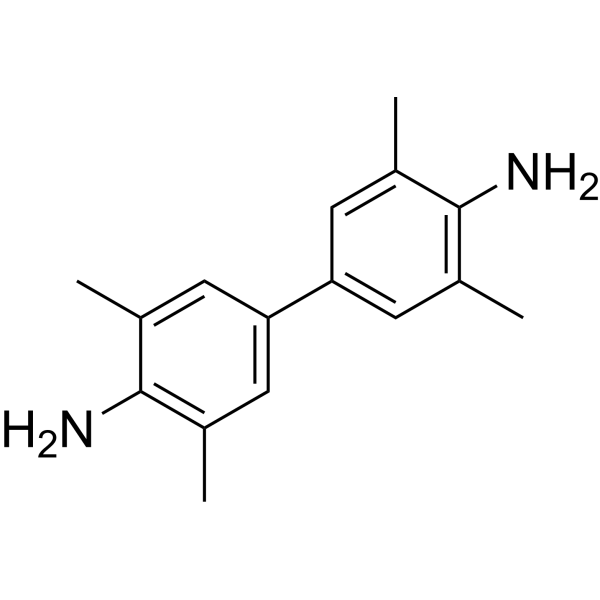
TMB is a non-toxic, non-mutagenic, colorless dye that is also used as a chromogenic agent in enzyme detection systems based on horseradish peroxidase (HRP). TMB can function as a photoacoustic probe for reactive oxygen and nitrogen species (ROS/RNS), reacting with hypochlorite, hydrogen peroxide, singlet oxygen, and nitrogen dioxide to produce blue oxidation products. TMB can detect the singlet oxygen produced by the outer membrane of Escherichia coli ATCC 25922 .
|
-
- HY-170509
-
|
|
Ferroptosis
Glutathione Peroxidase
|
Cardiovascular Disease
Neurological Disease
Cancer
|
|
Ferroptosis-IN-17 (Compound 18) is a ferroptosis (Ferroptosis) inhibitor with an EC50 value of 0.57 μM. Ferroptosis-IN-17 reduces intracellular ferrous ion accumulation, lipid peroxidation, and effectively restores the levels of glutathione (GSH) and glutathione peroxidase 4 (GPX4). Ferroptosis-IN-17 shows good solubility and significant metabolic stability in rat plasma. Ferroptosis-IN-17 is promising for research in tumor suppression, neurodegenerative diseases, and cardiovascular diseases .
|
-
- HY-178055
-
|
|
Tyrosinase
|
Others
|
|
Tyrosinase-IN-44 (Compound 3) is a Tyrosinase inhibitor with IC50s of 0.47 and 0.53 μM for monophenolase and diphenolase, respectively. Tyrosinase-IN-44 has superior glutathione peroxidase-like catalytic and DPPH radical scavenging activity. Tyrosinase-IN-44 has potent antibrowning activity in banana and apple juices by directly inhibiting polyphenol oxidase (PPO) and offering antioxidant activity. Tyrosinase-IN-44 can be used for redox regulation and food preservation .
|
-
- HY-W747602
-
|
|
Herbicide
Reactive Oxygen Species (ROS)
|
Others
|
|
Cinidon-ethyl is a herbicide . Cinidon-ethyl blocks the conversion of protoporphyrinogen IX to protoporphyrin IX, disrupts the tetrapyrrole biosynthetic process, and leads to the accumulation of protoporphyrin IX and the generation of ROS. Cinidon-ethyl induces the expression of peroxidase and defense-related genes in wheat. Cinidon-ethyl triggers light-dependent ethylene and ethane release, tissue dehydration and necrosis in sensitive broadleaf weeds. Cinidon-ethyl is applicable to research related to the control of broadleaf weeds in wheat fields .
|
-
- HY-181665
-
|
|
Ferroptosis
Glutathione Peroxidase
Reactive Oxygen Species (ROS)
Apoptosis
|
Neurological Disease
|
|
Ferroptosis-IN-23 is an inhibitor of ferroptosis. Ferroptosis-IN-23 exerts a synergistic effect by simultaneously activating Steap4 and glutathione peroxidase 4 (GPX4), thereby maintaining iron metabolism homeostasis. Ferroptosis-IN-23 reverses neuronal ferroptosis and inhibits lipid ROS accumulation in cells. Ferroptosis-IN-23 inhibits ferroptosis in zebrafish, alleviates neuronal apoptosis, ROS accumulation, and dopaminergic neuron damage in a zebrafish model of Parkinson's disease. Ferroptosis-IN-23 can be used for research on Parkinson's disease .
|
-
- HY-162944
-
|
|
Ferroptosis
Mitochondrial Metabolism
STING
Autophagy
|
Cancer
|
|
NA-Ir is a Ferroptosis inducer. NA-Ir targets mitochondrial DNA (mtDNA) and activates the cGAS-STING pathway to induce ferritinophagy (Autophagy), while also generating reactive oxygen species (ROS) through photodynamic therapy (PDT), depleting glutathione (GSH), and downregulating glutathione peroxidase 4 (GPX4), thereby triggering lipid peroxidation and Ferroptosis. NA-Ir exhibits higher anticancer activity under light exposure and selectively inhibits cancer cells with high H2S levels .
|
-
- HY-B0388
-
-
- HY-15930A
-
|
BM blue dihydrochloride; Sure Blue TMB dihydrochloride
|
Fluorescent Dye
Reactive Oxygen Species (ROS)
|
Others
|
|
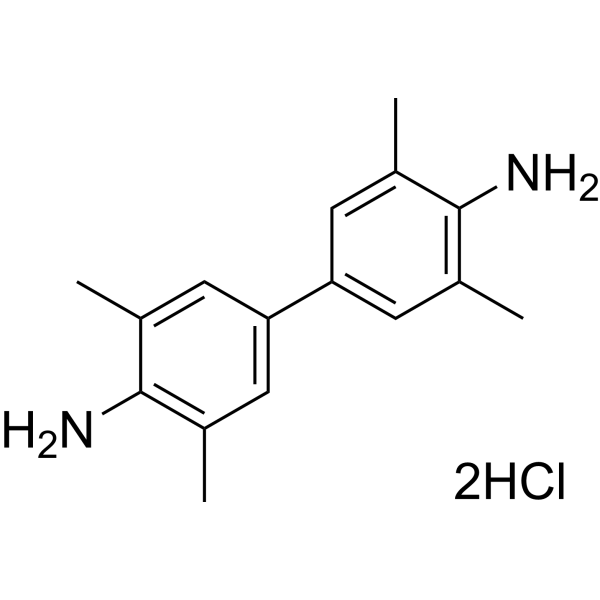
TMB dihydrochloride is the dihydrochloride form of TMB (HY-15930). TMB dihydrochloride is a non-toxic, non-mutagenic, colorless dye that is also used as a chromogenic agent in enzyme detection systems based on horseradish peroxidase (HRP). TMB dihydrochloride can function as a photoacoustic probe for reactive oxygen and nitrogen species (ROS/RNS), reacting with hypochlorite, hydrogen peroxide, singlet oxygen, and nitrogen dioxide to produce blue oxidation products. TMB dihydrochloride can detect the singlet oxygen produced by the outer membrane of Escherichia coli ATCC 25922 .
|
-
- HY-112540
-
|
|
Endogenous Metabolite
|
Metabolic Disease
|
|
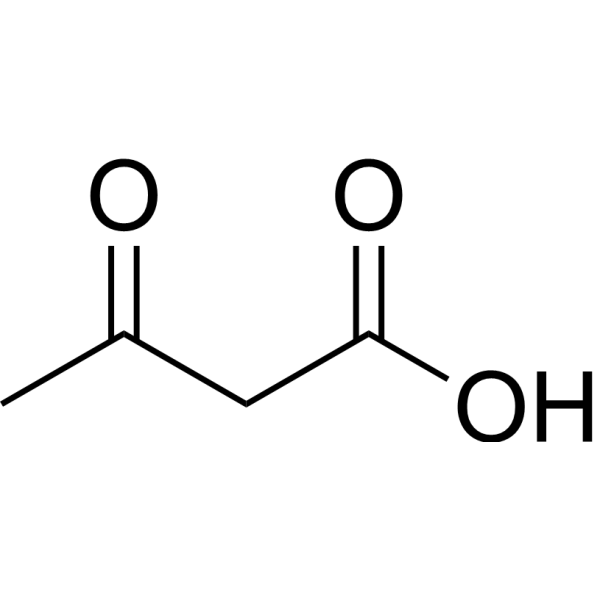
Acetoacetic acid is an oxidative stress inducer that affects the antioxidant enzyme system and lipoprotein metabolism. Acetoacetic acid induces oxidative stress by decreasing the mRNA expression and activity of superoxide dismutase (SOD), catalase (CAT), and glutathione peroxidase (GSH-Px), increasing MDA content, and inhibiting very low density lipoprotein (VLDL) assembly by downregulating apolipoprotein ApoB100, ApoE, and low density lipoprotein receptor (LDLR), leading to triglyceride (TG) accumulation in hepatocytes. Acetoacetic acid can be used to study metabolic diseases .
|
-
- HY-173596
-
|
|
VAP-1
Glutathione Peroxidase
|
Inflammation/Immunology
|
|
SNT-8370 is an orally active inhibitor of VAP-1 (IC50: 10 nM) and myeloperoxidase (MPO) (IC50: 17 nM), with >100-1000 fold more potency for VAP-1 and MPO versus other mammalian (per)oxidases. SNT-8370 inhibits MPO-mediated LDL lipid peroxidation. SNT-8370 inhibits leukocyte infiltration in lung injury models of acute inflammation. SNT-8370 is an anti-inflammatory agent, and can be used for research of inflammatory disorders .
|
-
- HY-D2468
-
|
|
Fluorescent Dye
|
Others
|
|
Sulfonylurea Receptor HRP-Streptavidin is a biotin-binding signal amplifier designed to bind tightly with biotinylated anti-TSH monoclonal antibodies, thereby constituting a key component of the signal amplification system in immunoassays. HRP-Streptavidin is formed by the covalent coupling of Horseradish Peroxidase (HRP) with Streptavidin; it combines the highly efficient catalytic activity of the enzyme with the high affinity of Streptavidin for biotin, making it a potent and sensitive tool for signal amplification. HRP-Streptavidin is suitable for use in Western Blotting, ELISA, and other detection techniques .
|
-
- HY-112540B
-
|
|
Endogenous Metabolite
|
Metabolic Disease
|
|
Acetoacetic acid sodium is an oxidative stress inducer that affects the antioxidant enzyme system and lipoprotein metabolism. Acetoacetic acid sodium induces oxidative stress by decreasing the mRNA expression and activity of superoxide dismutase (SOD), catalase (CAT), and glutathione peroxidase (GSH-Px), increasing MDA content, and inhibiting very low density lipoprotein (VLDL) assembly by downregulating apolipoprotein ApoB100, ApoE, and low density lipoprotein receptor (LDLR), leading to triglyceride (TG) accumulation in hepatocytes. Acetoacetic acid sodium can be used to study metabolic diseases .
|
-
- HY-100218AR
-
|
(1S,3R)-RSL3 (Standard)
|
p62
Glutathione Peroxidase
Reference Standards
Ferroptosis
Reactive Oxygen Species (ROS)
|
Cancer
|
|
RSL3 (Standard) is the analytical standard of RSL3 (HY-100218A). This product is intended for research and analytical applications. RSL3 ((1S,3R)-RSL3) is an inhibitor of glutathione peroxidase 4 (GPX4) (ferroptosis activator), reduces the expression of GPX4 protein, and induces ferroptotic death of head and neck cancer cell. RSL3 increases the expression of p62 and Nrf2 and inactivates Keap1 in HN3-rslR cells .
|
-
- HY-N9097
-
|
|
Reactive Oxygen Species (ROS)
SOD
Glutathione Peroxidase
PKC
NADPH Oxidase
|
Metabolic Disease
Inflammation/Immunology
|
|
Niazirin is an orally active antioxidant. Niazirin can be isolated from Moringa oleifera Lam. Niazirin reduces the production levels of ROS and MDA, while increasing the levels of superoxide dismutase SOD and glutathione peroxidase GPx. Niazirin also abolishes high glucose-induced PKCζ activation and inhibits Nox4 protein expression. Niazirin exhibits excellent free radical scavenging activity. Niazirin significantly inhibits high glucose-induced proliferation of vascular smooth muscle cells. Niazirin can be used in the research of diabetic atherosclerosis .
|
-
- HY-112540A
-
|
|
Endogenous Metabolite
|
Metabolic Disease
|
|
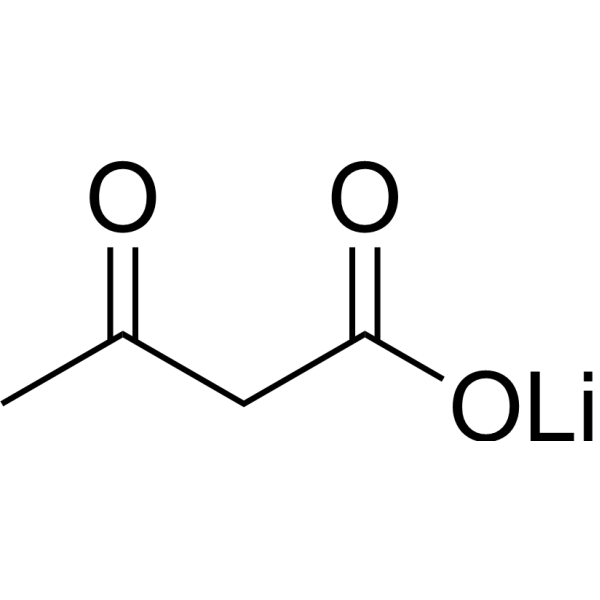
Acetoacetic acid lithium is an oxidative stress inducer that affects the antioxidant enzyme system and lipoprotein metabolism. Acetoacetic acid lithium induces oxidative stress by decreasing the mRNA expression and activity of superoxide dismutase (SOD), catalase (CAT), and glutathione peroxidase (GSH-Px), increasing MDA content, and inhibiting very low density lipoprotein (VLDL) assembly by downregulating apolipoprotein ApoB100, ApoE, and low density lipoprotein receptor (LDLR), leading to triglyceride (TG) accumulation in hepatocytes. Acetoacetic acid lithium can be used to study metabolic diseases .
|
-
- HY-180199
-
|
|
Glutathione Peroxidase
Ferroptosis
Reactive Oxygen Species (ROS)
|
Cancer
|
|
GPX4-IN-21 (Compound 4d) is a selective glutathione peroxidase 4 (GPX4) inhibitor. GPX4-IN-21 can induce ferroptosis and downregulate the ferroptosis-related proteins SLC7A11, SLC11A2 and GPX4 levels. GPX4-IN-21 can induce ROS and MDA accumulation GPX4-IN-21 exhibits potent anti-proliferative activity. GPX4-IN-21 can be used for the research of cancer, such as melanoma .
|
-
- HY-N6937R
-
|
(R,R)-SDG (Standard); (R,R)-LGM2605 (Standard)
|
Reference Standards
Others
|
Inflammation/Immunology
|
|
(R,R)-Secoisolariciresinol diglucoside (Standard) is the analytical standard of (R,R)-Secoisolariciresinol diglucoside. This product is intended for research and analytical applications. (R,R)-Secoisolariciresinol diglucoside ((R,R)-SDG) is the minor isomer of Secoisolariciresinol diglucoside in flaxseed. (R,R)-Secoisolariciresinol diglucoside ((R,R)-SDG) possesses antioxidant and free radical scavenging activities and DNA-radioprotective properties. (R,R)-Secoisolariciresinol diglucoside ((R,R)-SDG) inhibits myeloperoxidase (MPO) activity by suppressing both the peroxidase and chlorination cyclesin inflammatory cells .
|
-
- HY-15930C
-
|
BM blue monosulfate; Sure Blue TMB monosulfate
|
Fluorescent Dye
Reactive Oxygen Species (ROS)
|
Others
|
|
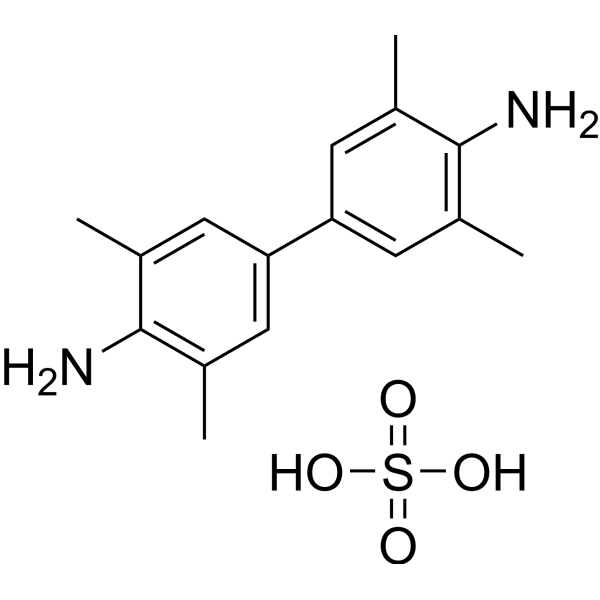
TMB monosulfate is the monosulfate form of TMB (HY-15930). TMB monosulfate is a non-toxic, non-mutagenic, colorless dye that is also used as a chromogenic agent in enzyme detection systems based on horseradish peroxidase (HRP). TMB monosulfate can function as a photoacoustic probe for reactive oxygen and nitrogen species (ROS/RNS), reacting with hypochlorite, hydrogen peroxide, singlet oxygen, and nitrogen dioxide to produce blue oxidation products. TMB monosulfate can detect the singlet oxygen produced by the outer membrane of Escherichia coli ATCC 25922 .
|
-
- HY-15930R
-
|
BM blue (Standard); Sure Blue TMB (Standard)
|
Fluorescent Dye
Reactive Oxygen Species (ROS)
Reference Standards
|
Others
|
|
TMB (Standard) is the analytical standard of TMB. This product is intended for research and analytical applications. TMB is a non-toxic, non-mutagenic, colorless dye that is also used as a chromogenic agent in enzyme detection systems based on horseradish peroxidase (HRP). TMB can function as a photoacoustic probe for reactive oxygen and nitrogen species (ROS/RNS), reacting with hypochlorite, hydrogen peroxide, singlet oxygen, and nitrogen dioxide to produce blue oxidation products. TMB can detect the singlet oxygen produced by the outer membrane of Escherichia coli ATCC 25922 .
|
-
- HY-15930B
-
|
Sure Blue TMB dihydrochloride x.hydrate
|
Fluorescent Dye
Reactive Oxygen Species (ROS)
|
Others
|
|
TMB (dihydrochloride x.hydrate) is the dihydrochloride x hydrate form of TMB (HY-15930). TMB (dihydrochloride x.hydrate) is a non-toxic, non-mutagenic, colorless dye that is also used as a chromogenic agent in enzyme detection systems based on horseradish peroxidase (HRP). TMB (dihydrochloride x.hydrate) can function as a photoacoustic probe for reactive oxygen and nitrogen species (ROS/RNS), reacting with hypochlorite, hydrogen peroxide, singlet oxygen, and nitrogen dioxide to produce blue oxidation products. TMB (dihydrochloride x.hydrate) can detect the singlet oxygen produced by the outer membrane of Escherichia coli ATCC 25922 .
|
-
- HY-149132
-
|
DDA
|
LXR
|
Cancer
|
|
Dendrogenin A (DDA) is a ligand for liver X receptor (LXR), that induces the expression of sodium/iodine symporter, and increases iodine uptake. Dendrogenin A induces cell differentiation of MCF-7, and reactivates the function of lactating cells. Dendrogenin A induces the expressions of the TSH receptor, thyroid peroxidase, and thyroglobulin, and affects thyroid hormone generation. Dendrogenin A exhibits cytotoxicity in cancer cell B-CPAP and 8505c with IC50 of 4.1 and 6.2 µM. Dendrogenin A arrests the cell cycle at G0/G1 phase .
|
-
- HY-100218C
-
|
|
Drug Isomer
Ferroptosis
|
Cancer
|
|
(1R,3R)-RSL3 is an isomer of RSL3 (HY-100218A). RSL3 ((1S,3R)-RSL3) is an inhibitor of glutathione peroxidase 4 (GPX4) (ferroptosis activator), reduces the expression of GPX4 protein, and induces ferroptotic death of head and neck cancer cell. RSL3 increases the expression of p62 and Nrf2 and inactivates Keap1 in HN3-rslR cells .
|
-
- HY-145581
-
|
AZD4831
|
Glutathione Peroxidase
Cytochrome P450
|
Cardiovascular Disease
Inflammation/Immunology
|
|
Mitiperstat (AZD4831) is an effective oral inhibitor of myeloperoxidase (MPO). Mitiperstat inhibits MPO and thyroid peroxidase (TPO) with IC50s of 1.5 nM and 0.69 μM. Mitiperstat exhibits a weak inhibitory activity against CYP3A4 with an IC50 of 6 μM. Mitiperstat can reduce inflammation and improve microvascular function, and it can be used in studies related to heart failure, preserved or mildly reduced ejection fraction, non-alcoholic fatty liver disease, and chronic obstructive pulmonary disease .
|
-
- HY-N6937S1
-
|
(R,R)-SDG-d6; (R,R)-LGM2605-d6
|
Isotope-Labeled Compounds
|
Inflammation/Immunology
|
|
(R,R)-Secoisolariciresinol diglucoside-d6 is deuterated labeled (R,R)-Secoisolariciresinol diglucoside (HY-N6937). (R,R)-Secoisolariciresinol diglucoside ((R,R)-SDG) is the minor isomer of Secoisolariciresinol diglucoside in flaxseed. (R,R)-Secoisolariciresinol diglucoside ((R,R)-SDG) possesses antioxidant and free radical scavenging activities and DNA-radioprotective properties. (R,R)-Secoisolariciresinol diglucoside ((R,R)-SDG) inhibits myeloperoxidase (MPO) activity by suppressing both the peroxidase and chlorination cyclesin inflammatory cells .
|
-
- HY-W879508
-
|
BXT-51072
|
Cytochrome P450
Glutathione Peroxidase
|
Inflammation/Immunology
|
|
ALT-2074 (BXT-51071) is an orally active catalytic analogue of glutathione peroxidase. ALT-2074 is an inhibitor of human CYP3A, with its IC50 value ranging from 2.0 to 2.6 μM. ALT-2074 shows only a weak inhibitory effect on CYP3A in vivo, suggesting that it may not significantly affect the metabolism of CYP3A substrate drugs. ALT-2074 can be used to study inflammatory diseases characterized by reactive oxygen species, such as acute coronary syndrome .
|
-
- HY-131442
-
|
Alkyne tyramide; Alk-Ph
|
Biochemical Assay Reagents
|
Others
|
|
Alkyne-phenol (Alk-Ph) is a clickable ascorbate peroxidase 2 (APEX2) probe. Alkyne-phenol substantially improves APEX-labeling efficiency in intact yeast cells, as it is more cell wall-permeant than APEX2 substrate biotin-phenol (BP). Alkyne-phenol also facilitates the identification of APEX-labeling sites, allowing the unambiguous assignment of membrane topology of mitochondrial proteins . Alkyne-phenol is a click chemistry reagent, it contains an Alkyne group and can undergo copper-catalyzed azide-alkyne cycloaddition (CuAAc) with molecules containing Azide groups.
|
-
- HY-112540AR
-
|
|
Endogenous Metabolite
Reference Standards
|
Metabolic Disease
|
|
Acetoacetic acid (lithium) (Standard) is the analytical standard of Acetoacetic acid (lithium). This product is intended for research and analytical applications. Acetoacetic acid lithium is an oxidative stress inducer that affects the antioxidant enzyme system and lipoprotein metabolism. Acetoacetic acid lithium induces oxidative stress by decreasing the mRNA expression and activity of superoxide dismutase (SOD), catalase (CAT), and glutathione peroxidase (GSH-Px), increasing MDA content, and inhibiting very low density lipoprotein (VLDL) assembly by downregulating apolipoprotein ApoB100, ApoE, and low density lipoprotein receptor (LDLR), leading to triglyceride (TG) accumulation in hepatocytes. Acetoacetic acid lithium can be used to study metabolic diseases .
|
-
- HY-183544
-
|
|
TrxR
Glutathione Peroxidase
Ferroptosis
Reactive Oxygen Species (ROS)
|
Cancer
|
|
Platinum (IV) Prodrug-1 (Compound 6b) is a Pt (IV) prodrug and selective TrxR1 inhibitor. Platinum (IV) Prodrug-1 induces ferroptosis (Ferroptosis) by depleting glutathione, accumulating intracellular lipid peroxides, and inactivating Glutathione peroxidase 4. Platinum (IV) Prodrug-1 triggers endoplasmic reticulum stress and immunogenic cell death via excessive accumulation of intracellular ROS. Platinum (IV) Prodrug-1 exhibits anticancer activity against both Cisplatin (HY-17394)-sensitive and Cisplatin-resistant triple-negative breast cancer cells. Platinum (IV) Prodrug-1 can be used for the research of triple-negative breast cancer .
|
-
- HY-N3031R
-
|
|
Reference Standards
Bacterial
Apoptosis
Bcl-2 Family
MDM-2/p53
Glutathione Peroxidase
SOD
TNF Receptor
Interleukin Related
|
Infection
Inflammation/Immunology
|
|
Grosvenorine (Standard) is the analytical standard of Grosvenorine. This product is intended for research and analytical applications. Grosvenorine is an orally active flavonoid glycoside found in S. grosvenorii. Grosvenorine exhibits antibacterial, antioxidant and antiinflammation activities. Grosvenorine can induce apoptosis and increases anti-apoptotic Bcl-2 protein expression and reduces pro-apoptotic P53 protein expression in gastric tissues. Grosvenorine enhances mucin/glycoprotein secretion, regulates gastric pH, and reduces gastric lesion incidence.Grosvenorine increases glutathione peroxidase, catalase, and SOD levels, reduces lipid peroxidation (MDA), and lowers TNF-α and IL-6 levels. Grosvenorine can be used for the researches of bacterial infection and Gastric ulcer .
|
-
- HY-126017
-
|
|
Glutathione Peroxidase
|
Inflammation/Immunology
|
|
Aminopyridine 2 is an irreversible, selective, and orally active myeloperoxidase (MPO) inhibitor, with an IC50 of 0.16 μM and a Ki of 24 μM against human MPO. Aminopyridine 2 is applicable to research on chronic inflammatory diseases .
|
-
- HY-147691
-
|
|
Glutathione Peroxidase
Potassium Channel
|
Inflammation/Immunology
|
|
MPO-IN-5 (compound 1) is a potent, irreversible MPO (myeloperoxidase) inhibitor. MPO-IN-5 inhibits MPO peroxidation and hERG binding, with IC50 values of 0.22 and 2.8 μM, respectively. MPO-IN-5 shows rapid kinetics of inhibition, with enzyme inactivation rate (kinact/Ki) of 23000 M −1s −1 .
|
-
- HY-Y0590
-
|
|
Environmental Pollutants
Reactive Oxygen Species (ROS)
Glutathione Reductase (GR)
|
Inflammation/Immunology
|
|
Copper (I) oxide is an oxidative stress inducer and cytotoxic agent. Copper (I) oxide causes dose-dependent decrease in the viability of airway epithelial cells by impairing the activities of catalase and glutathione reductase, generating reactive oxygen species, and increasing the levels of 8-isoprostane and the ratio of oxidized glutathione. However, when combined with Resveratrol (HY-16561), the cytotoxic effect induced by Copper (I) oxide is significantly attenuated, and oxidative damage is effectively alleviated .
|
-
- HY-W015600
-
|
Orthocetamol
|
Ferroptosis
Glutathione Peroxidase
Reactive Oxygen Species (ROS)
LDLR
|
Cardiovascular Disease
Inflammation/Immunology
|
|
2-Acetamidophenol (Orthocetamol) is a regulator that targets ferroptosis and glutathione metabolic pathways, is the ortho-regioisomer of Paracetamol (HY-66005). 2-Acetamidophenol has anti-atherosclerotic activity, and inhibiting total cholesterol (TC) and triglyceride (TG) in a zebrafish hyperlipidemia model with IC50s for 30 μM and 40 μM, respectively. 2-Acetamidophenol upregulates the expression of glutathione synthesis-related genes (such as GCLC, GCLM, GSS) and iron ion transport genes (such as FPN1, FTH), reduces the accumulation of intracellular reactive oxygen species (ROS) and ferrous ions (Fe 2+), and enhances the activity of glutathione peroxidase GPX4, thereby inhibiting macrophage phagocytosis of oxidized low-density lipoprotein (ox-LDL) and foam cell formation .
|
-
- HY-175041
-
|
|
Glutathione Peroxidase
Reactive Oxygen Species (ROS)
Cannabinoid Receptor
Ferroptosis
|
Cancer
|
|
GPX4-IN-18 (Compound 17) is a ferrocene-containing inhibitor of glutathione peroxidase 4 (GPX4). GPX4-IN-18 is also an inducer of ferroptosis. GPX4-IN-18 can increase the production of ROS and malondialdehyde (MDA) levels in OS-RC-2 clear cell renal cell carcinoma cells. GPX4-IN-18 induces ferroptosis in HT-1080 cells with IC50s of 0.007 μM (absence of ferrostatin-1) and 1.486 μM (presence of ferrostatin-1). GPX4-IN-18 reduces in vivo tumor volume and intratumoral GPX4 levels in OS-RC-2 xenograft murine model .
|
-
- HY-B1306
-
|
p-Aminohippuric acid
|
Others
|
Neurological Disease
Metabolic Disease
|
|
4-Aminohippuric acid (p-Aminohippuric acid) is a coordination ligand for metal ions (such as Cu 2+, Fe 3+, Hg 2+) and a functionalization reagent for nanomaterials. 4-Aminohippuric acid can coordinate with metal ions or modify the surface of materials such as carbon nanotubes and gold nanoparticles through amino and carboxyl groups. 4-Aminohippuric acid can form stable complexes with metal ions or participate in the synthesis of nanomaterials as a reducing agent/stabilizer, enriching metal ions or giving nanoparticles peroxidase-mimicking activity. 4-Aminohippuric acid can be used to construct highly sensitive electrochemical sensors or colorimetric sensors to detect and quantitatively analyze heavy metal ions such as copper, iron, and mercury in environmental water samples and biological samples. 4-Aminohippuric acid may also be a biomarker for attention-deficit/hyperactivity disorder (ADHD) .
|
-
- HY-N0859R
-
|
Schizanhenol (Standard); Gomisin-K3 (Standard)
|
UGT
Reference Standards
Cholinesterase (ChE)
Tau Protein
SOD
Sirtuin
|
Neurological Disease
Inflammation/Immunology
Cancer
|
|
Schisanhenol (Standard) (Schizanhenol (Standard)) is the analytical standard of Schisanhenol (HY-N0859). This product is intended for research and analytical applications. Schisanhenol, a lignan, is an orally active antioxidant. Schisanhenol reduces AChE activity, increases SIRT1 and PGC-1α expression, and decreases phosphorylated Tau (Ser 396) levels. Schisanhenol increases SOD and glutathione peroxidase activity, decreases malondialdehyde (MDA) content, and inhibits UGT2B7 activitY. Schisanhenol attenuates ox-LDL-induced apoptosis, intracellular reactive oxygen species generation, and cytotoxicity in endothelial cells. Schisanhenol inhibits LDL oxidation, brain mitochondrial and membrane peroxidative damage, and brain mitochondrial swelling and disintegration. Schisanhenol can be used for the research of Alzheimer’s disease, atherosclerosis, brain ischemia, and age-related brain deterioration.
|
-
- HY-182067
-
|
|
Reactive Oxygen Species (ROS)
Apoptosis
Ferroptosis
|
Cancer
|
|
anti-TNBC agent-15 is a platinum (IV) complex with anti-triple-negative breast cancer activity. anti-TNBC agent-15 inhibits cancer cell viability. anti-TNBC agent-15 reverses the resistance of triple-negative breast cancer cells to Cisplatin (HY-17394), increases intracellular uptake, and effectively triggers apoptosis by inducing DNA damage, enhancing intracellular ROS accumulation and activating the mitochondrial pathway. anti-TNBC agent-15 enhances lipid peroxidation, interferes with the signal transduction of the cystine/glutamate transporter-glutathione peroxidase axis, and induces ferroptosis. anti-TNBC agent-15 significantly inhibits tumor growth in triple-negative breast cancer/Cisplatin xenograft models. anti-TNBC agent-15 can be used for the research of triple-negative breast cancer .
|
-
- HY-100218CR
-
|
|
Drug Isomer
Ferroptosis
Reference Standards
|
Cancer
|
|
(1R,3R)-RSL3 (Standard) is the analytical standard of (1R,3R)-RSL3 (HY-100218C). This product is intended for research and analytical applications. (1R,3R)-RSL3 is an isomer of RSL3 (HY-100218A). RSL3 ((1S,3R)-RSL3) is an inhibitor of glutathione peroxidase 4 (GPX4) (ferroptosis activator), reduces the expression of GPX4 protein, and induces ferroptotic death of head and neck cancer cell. RSL3 increases the expression of p62 and Nrf2 and inactivates Keap1 in HN3-rslR cells .
|
-
- HY-W753416
-
|
|
Phytohormone
|
Inflammation/Immunology
|
|
14-Hydroxylated brassinosteroid is a plant growth regulator. 14-Hydroxylated brassinosteroid enhances winter wheat resistance to heat stress, delays heat-induced leaf senescence, maintains leaf water content, promotes grain filling, and mitigates yield loss. 14-Hydroxylated brassinosteroid shows antioxidant activity. 14-Hydroxylated brassinosteroid can be used for the research of plant growth .
|
-
- HY-W015600S
-
|
Orthocetamol-d3
|
Isotope-Labeled Compounds
Ferroptosis
Glutathione Peroxidase
Reactive Oxygen Species (ROS)
LDLR
|
Cardiovascular Disease
Inflammation/Immunology
|
|
2-Acetamidophenol-d3 (Orthocetamol-d3) is the deuterium labeled 2-Acetamidophenol (HY-W015600). 2-Acetamidophenol (Orthocetamol) is a regulator that targets ferroptosis and glutathione metabolic pathways, is the ortho-regioisomer of Paracetamol (HY-66005). 2-Acetamidophenol has anti-atherosclerotic activity, and inhibiting total cholesterol (TC) and triglyceride (TG) in a zebrafish hyperlipidemia model with IC50s for 30 μM and 40 μM, respectively. 2-Acetamidophenol upregulates the expression of glutathione synthesis-related genes (such as GCLC, GCLM, GSS) and iron ion transport genes (such as FPN1, FTH), reduces the accumulation of intracellular reactive oxygen species (ROS) and ferrous ions (Fe2+), and enhances the activity of glutathione peroxidase GPX4, thereby inhibiting macrophage phagocytosis of oxidized low-density lipoprotein (ox-LDL) and foam cell formation .
|
-
- HY-W015600R
-
|
Orthocetamol (Standard)
|
Reference Standards
Ferroptosis
Glutathione Peroxidase
Reactive Oxygen Species (ROS)
LDLR
|
Cardiovascular Disease
Inflammation/Immunology
|
|
2-Acetamidophenol (Standard) is the analytical standard of 2-Acetamidophenol. This product is intended for research and analytical applications. 2-Acetamidophenol (Orthocetamol) is a regulator that targets ferroptosis and glutathione metabolic pathways, is the ortho-regioisomer of Paracetamol (HY-66005). 2-Acetamidophenol has anti-atherosclerotic activity, and inhibiting total cholesterol (TC) and triglyceride (TG) in a zebrafish hyperlipidemia model with IC50s for 30 μM and 40 μM, respectively. 2-Acetamidophenol upregulates the expression of glutathione synthesis-related genes (such as GCLC, GCLM, GSS) and iron ion transport genes (such as FPN1, FTH), reduces the accumulation of intracellular reactive oxygen species (ROS) and ferrous ions (Fe 2+), and enhances the activity of glutathione peroxidase GPX4, thereby inhibiting macrophage phagocytosis of oxidized low-density lipoprotein (ox-LDL) and foam cell formation .
|
-
- HY-N3027
-
|
|
PPAR
Reactive Oxygen Species (ROS)
|
Metabolic Disease
|
|
Soyasaponin Aa is a soyasaponin that can be found in soy. Soyasaponin Aa suppresses PPARγ transcriptional activity, reduces PPARγ and C/EBPα expression, inhibits adipocyte differentiation and lipid accumulation, and reduces adipogenic marker gene expression. Soyasaponin Aa reduces hydrogen peroxide-induced reactive oxygen species (ROS) production and malondialdehyde levels. Soyasaponin Aa exhibits cellular antioxidant activity. Soyasaponin Aa can be used for the research of obesity .
|
-
- HY-W032878
-
|
|
Fungal
SOD
|
Infection
|
|
N,N-Bis(3-aminopropyl)dodecylamine is a potent fungicidal agent with remarkable activity against Aspergillus niger. N,N-Bis(3-aminopropyl)dodecylamine induces oxidative stress and regulates the activities of multiple antioxidant and mitochondrial enzymes in a concentration‑ and duration‑dependent manner. N,N-Bis(3-aminopropyl)dodecylamine disrupts fungal organelles, remodels mitochondrial morphology and impairs mitochondria‑related cellular functions. N,N-Bis(3-aminopropyl)dodecylamine can be used for the research of fungicidal mechanisms and oxidative stress in Aspergillus niger .
|
-
- HY-161929
-
|
|
Glutathione Peroxidase
Ferroptosis
|
Cardiovascular Disease
|
|
GPX4 activator 2 is a GPX4 activator with a Ka value of 0.426 μM for human GPX4. GPX4 activator 2 reduces lipid hydroperoxide levels, prevents lipid peroxide accumulation, and inhibits ferroptosis. GPX4 activator 2 rescues cell death induced by Erastin (HY-15763). GPX4 activator 2 exerts cardioprotective effects in a mouse model of doxorubicin (HY-15142A)-induced myocardial injury .
|
-
- HY-N0729D
-
|
|
Glutathione Peroxidase
SOD
|
Cardiovascular Disease
|
|
Linoleic acid is a critical component of polyunsaturated fatty acids. Linoleic acid reduces GSH-PX and T-SOD activities. Linoleic acid functions as a structural component to maintain a certain level of membrane fluidity of the transdermal water barrier of the epidermis. Linoleic acid can cause acute oxidative damage to red blood cells, ultimately leading to partial acute anemia. Linoleic acid can be used in the research of skin diseases associated with linoleic acid deficiency .
|
-
- HY-W681749
-
|
Morphactin
|
Biochemical Assay Reagents
|
Others
|
|
Morphactin Chlorflurenol methyl (Morphactin) is a plant growth regulator. Morphactin Chlorflurenol methyl preserves chlorophyll and suppresses senescence. Morphactin Chlorflurenol methyl regulates chlorophyll metabolic enzymes and alleviates heat-induced leaf senescence by enhancing chlorophyll content and reducing electrolyte leakage. Morphactin Chlorflurenol methyl promotes shoot redifferentiation and tracheary element development in tobacco calluses. Morphactin Chlorflurenol methyl can be applied to the investigation of heat-induced leaf senescence .
|
-
- HY-B1306R
-
|
p-Aminohippuric acid (Standard)
|
Reference Standards
Biochemical Assay Reagents
|
Neurological Disease
Metabolic Disease
|
|
4-Aminohippuric acid (p-Aminohippuric acid) (Standard) is the analytical standard of 4-Aminohippuric acid (HY-B1306). This product is intended for research and analytical applications. 4-Aminohippuric acid (p-Aminohippuric acid) is a coordination ligand for metal ions (such as Cu 2+, Fe 3+, Hg 2+) and a functionalization reagent for nanomaterials. 4-Aminohippuric acid can coordinate with metal ions or modify the surface of materials such as carbon nanotubes and gold nanoparticles through amino and carboxyl groups. 4-Aminohippuric acid can form stable complexes with metal ions or participate in the synthesis of nanomaterials as a reducing agent/stabilizer, enriching metal ions or giving nanoparticles peroxidase-mimicking activity. 4-Aminohippuric acid can be used to construct highly sensitive electrochemical sensors or colorimetric sensors to detect and quantitatively analyze heavy metal ions such as copper, iron, and mercury in environmental water samples and biological samples. 4-Aminohippuric acid may also be a biomarker for attention-deficit/hyperactivity disorder (ADHD) .
|
-
- HY-W017113
-
|
|
Environmental Pollutants
Endogenous Metabolite
|
Metabolic Disease
|
|
2-Mercaptobenzothiazole is an activator of the aryl hydrocarbon receptor (AhR) , inhibiting thyroid hormone synthesis and dopamine beta-hydroxylase activity . 2-Mercaptobenzothiazole promotes bladder cancer cell invasion by altering the conformation of the AhR ligand binding domain (LBD), activating AhR transcription, and upregulating the mRNA and protein expression of target genes CYP1A1 and CYP1B1 . 2-Mercaptobenzothiazole inhibits thyroid peroxidase (TPO) with an IC50 value of 11.5 μM, induces histological changes such as follicular cell hypertrophy in Xenopus laevis tadpoles, delaying metamorphosis . 2-Mercaptobenzothiazole increases chromosomal aberrations and sister chromatid exchanges (SCEs) in Chinese hamster ovary (CHO) cells, and enhances carcinogenicity in F344/N rats . 2-Mercaptobenzothiazole inhibits norepinephrine synthesis in mice and completely blocks the conversion of exogenous dopamine to norepinephrine in rat cardiomyocytes .
|
-
- HY-17457
-
|
Levosalbutamol hemitartrate
|
Adrenergic Receptor
PI3K
|
Inflammation/Immunology
|
|
Levalbuterol (Levosalbutamol) hemitartrate is a β2-adrenergic receptor agonist and PI3K inhibitor. Levalbuterol hemitartrate inhibits PI3K activity, reduces NF-κB and Rb protein expression, activates the cAMP/PKA pathway, and stimulates cAMP release. Levalbuterol hemitartrate relaxes airway smooth muscle, reduces intracellular calcium levels, and inhibits spasmogen-induced contractions. Levalbuterol hemitartrate can be used for the research of moderate-to-severe asthma .
|
-
- HY-B1306S
-
|
p-Aminohippuric acid-d4
|
Biochemical Assay Reagents
|
Neurological Disease
Metabolic Disease
|
|
4-Aminohippuric acid-d4 (p-Aminohippuric acid-d4) is the deuterium labeled 4-Aminohippuric acid (HY-B1306). 4-Aminohippuric acid (p-Aminohippuric acid) is a coordination ligand for metal ions (such as Cu 2+, Fe 3+, Hg 2+) and a functionalization reagent for nanomaterials. 4-Aminohippuric acid can coordinate with metal ions or modify the surface of materials such as carbon nanotubes and gold nanoparticles through amino and carboxyl groups. 4-Aminohippuric acid can form stable complexes with metal ions or participate in the synthesis of nanomaterials as a reducing agent/stabilizer, enriching metal ions or giving nanoparticles peroxidase-mimicking activity. 4-Aminohippuric acid can be used to construct highly sensitive electrochemical sensors or colorimetric sensors to detect and quantitatively analyze heavy metal ions such as copper, iron, and mercury in environmental water samples and biological samples. 4-Aminohippuric acid may also be a biomarker for attention-deficit/hyperactivity disorder (ADHD) .
|
-
- HY-N0864
-
|
Macranthoiside I
|
Apoptosis
COX
Reactive Oxygen Species (ROS)
Caspase
SOD
|
Cancer
|
|
Macranthoidin B (Macranthoiside I) is an orally active triterpene saponin. Macranthoidin B inhibits epithelial-mesenchymal transition in endometriosis via the COX‑2/PGE2 pathway, and also induces tumor cell apoptosis and inhibits their proliferation by regulating metabolism and increasing ROS levels . Macranthoidin B can be used in studies related to endometriosis, colorectal cancer and hepatocellular carcinoma .
|
-
- HY-W008927
-
|
|
Fungal
Reactive Oxygen Species (ROS)
DNA/RNA Synthesis
Apoptosis
|
Infection
|
|
Fluoxastrobin is a fungicide. By binding to NAD-dependent epimerase/dehydratase, Fluoxastrobin interferes with electron transport, reduces ATP production and inhibits mycelial growth, thereby effectively controlling foliar diseases of tea plants. Fluoxastrobin induces oxidative stress by increasing ROS levels and lipid peroxidation, causes DNA damage and promotes apoptosis; meanwhile, it shows high acute toxicity to Danio rerio embryos and larvae. Fluoxastrobin can be used in research related to tea foliar diseases (including tea red leaf spot and tea gray leaf spot) .
|
-
- HY-W115789
-
|
|
Environmental Pollutants
Reactive Oxygen Species (ROS)
|
Others
|
|
Sodium silicate is a water-soluble silicate. Sodium silicate is widely used as a binder, particularly in the production of detergents, soaps, and cleaners. Sodium silicate promotes the deposition of suberin polyphenols and lignin at wound sites of potato tubers, accelerates callus structure formation, enhances ROS production, and induces the synthesis of total phenols and flavonoids. Sodium silicate reduces the weight loss rate and disease index of wounded potato tubers during storage .
|
-
- HY-W017424
-
|
|
Drug Intermediate
Caspase
Apoptosis
|
Neurological Disease
Cancer
|
|
2-Aminobenzothiazole acts as a caspase 3/7 activator, an anticancer cytotoxic agent, and also exhibits neurotoxicity. 2-Aminobenzothiazole drives the apoptotic pathway by activating caspase 3/7, induces mitochondrial inner membrane depolarization, and triggers both early and late apoptosis via a caspase-dependent pathway. In zebrafish models, 2-Aminobenzothiazole induces oxidative damage in brain tissues and inhibits genes related to GABA and 5-HT synthesis pathways. Long-term exposure to 2-Aminobenzothiazole impairs motor ability, social behavior, anxiety-like state and cognitive function. 2-Aminobenzothiazole can be used in studies of human laryngeal carcinoma and related neurotoxicity .
|
-
- HY-182802
-
|
|
Ferroptosis
Glutathione Peroxidase
Reactive Oxygen Species (ROS)
Mitochondrial Metabolism
|
Cancer
|
|
Ferroptosis inducer-15 is a ferroptosis inducer. Ferroptosis inducer-15 downregulates GPX4 expression, triggers lipid peroxidation via ROS accumulation, and disrupts mitochondrial membrane potential to drive ferroptosis. Ferroptosis inducer-15 increases splenic CD4 + T cell proportion, promotes CD8 + cytotoxic T cell tumor infiltration, and activates antitumor immune responses. Ferroptosis inducer-15 exerts antiproliferative activity against colorectal cancer cells and inhibits tumor growth in xenograft mice models without significant body weight loss. Ferroptosis inducer-15 can be used for the research of cancer, such as colorectal cancer .
|
-
- HY-B0035B
-
|
Sulfadimidine 100 µg/mL in acetonitrile; Sulfadimerazine 100 µg/mL in acetonitrile
|
Antibiotic
Bacterial
|
Infection
|
|
Sulfamethazine (Sulfadimidine) 100 µg/mL in acetonitrile is a brain-penetrant sulfonamide antibiotic. Sulfamethazine 100 µg/mL in acetonitrile inhibits bacterial growth by blocking the synthesis of folic acid. Sulfamethazine 100 µg/mL in acetonitrile can be used for research on bacterial infections .
|
-
- HY-Y0669
-
-
- HY-155852
-
|
|
Ferroptosis
Apoptosis
ACSL Family
Glutathione Peroxidase
Reactive Oxygen Species (ROS)
|
Inflammation/Immunology
Cancer
|
|
Lepadin H is a ferroptosis inducer and apoptosis inducer with in vitro cytotoxicity and in vivo antitumor efficacy against cancer cells. Lepadin H reduces GPX4 and SLC7A11 levels, increases p53 and ACSL4 expression, drives lipid hydroperoxide production, elevates reactive oxygen species (ROS) levels, reduces cellular glutathione (GSH) levels, induces lipid peroxidation and G2/M phase cell cycle arrest, and suppresses clonogenic growth and migration of cancer cells.Lepadin H can be used for the research of melanoma .
|
-
-
-
HY-L051
-
|
|
1,177 compounds
|
|
Ferroptosis is a novel type of cell death program that is distinct from apoptosis, necroptosis and autophagy. It is dependent on iron and reactive oxygen species (ROS) and is characterized by lipid peroxidation. As a novel type of cell death, ferroptosis has distinct properties and recognizing functions involved in physical conditions or various diseases including cancers, neurodegenerative diseases, acute renal failure, etc.
MCE carefully collected a unique collection of 1,177 ferroptosis signaling pathway related compounds with ferroptosis-inducing or -inhibitory activity. MCE Ferroptosis Compound Library is a useful tool to study ferroptosis mechanism as well as related diseases.
|
| Cat. No. |
Product Name |
Type |
-
- HY-15902
-
|
AzBTS-(NH4)2
|
Fluorescent Dye
|
|
ABTS diammonium salt (AzBTS-(NH4)2) is a substrate for horseradish peroxidase (HRP) conjugate. ABTS diammonium salt can be used to evaluate antioxidant capacity .
|
-
- HY-101880
-
ADHP
2 Publications Verification
10-Acetyl-3,7-dihydroxyphenoxazine
|
Fluorescent Dye
|
|
ADHP is a fluorogenic peroxidase substrate (λex=530 nm, λem=590 nm).
|
-
- HY-D1840
-
|
|
Fluorescent Dye
|
|
Tyramide Amplification Buffer is a ready-to-use buffer primarily intended for immunostaining of cells and tissues by the technique of tyramide signal amplification (TSA). Tyramide Amplification Buffer enables the reaction between tyramide-labeled antibodies and fluorescently labeled tyramide substitutes (tyramide) using peroxidase, resulting in a highly amplified fluorescent signal. Tyramide Amplification Buffer can be used for signal enhancement in detection methods such as immunofluorescence (IF), immunohistochemistry (IHC), or in situ hybridization (FISH) .
|
-
- HY-15930
-
|
BM blue; Sure Blue TMB
|
Fluorescent Dye
|
|
TMB is a non-toxic, non-mutagenic, colorless dye that is also used as a chromogenic agent in enzyme detection systems based on horseradish peroxidase (HRP). TMB can function as a photoacoustic probe for reactive oxygen and nitrogen species (ROS/RNS), reacting with hypochlorite, hydrogen peroxide, singlet oxygen, and nitrogen dioxide to produce blue oxidation products. TMB can detect the singlet oxygen produced by the outer membrane of Escherichia coli ATCC 25922 .
|
-
- HY-15914
-
|
DCHBS
|
Fluorescent Dye
|
|
DHBS (3, 5-dichloro-2-hydroxybenzenesulfonate) is used in conjunction with 4-aminoantipyrine (4-AAP) (HY-W100990) and hydrogen peroxide (H2O2) for chromogenic quantitation of peroxidase in coupled enzymatic reactions. Component of Trinder reagent for use with peroxidase to measure generation of hydrogen peroxide in automated systems .
|
-
- HY-D2468
-
|
|
Fluorescent Dye
|
|
Sulfonylurea Receptor HRP-Streptavidin is a biotin-binding signal amplifier designed to bind tightly with biotinylated anti-TSH monoclonal antibodies, thereby constituting a key component of the signal amplification system in immunoassays. HRP-Streptavidin is formed by the covalent coupling of Horseradish Peroxidase (HRP) with Streptavidin; it combines the highly efficient catalytic activity of the enzyme with the high affinity of Streptavidin for biotin, making it a potent and sensitive tool for signal amplification. HRP-Streptavidin is suitable for use in Western Blotting, ELISA, and other detection techniques .
|
-
- HY-15930A
-
|
BM blue dihydrochloride; Sure Blue TMB dihydrochloride
|
Fluorescent Dye
|
|
TMB dihydrochloride is the dihydrochloride form of TMB (HY-15930). TMB dihydrochloride is a non-toxic, non-mutagenic, colorless dye that is also used as a chromogenic agent in enzyme detection systems based on horseradish peroxidase (HRP). TMB dihydrochloride can function as a photoacoustic probe for reactive oxygen and nitrogen species (ROS/RNS), reacting with hypochlorite, hydrogen peroxide, singlet oxygen, and nitrogen dioxide to produce blue oxidation products. TMB dihydrochloride can detect the singlet oxygen produced by the outer membrane of Escherichia coli ATCC 25922 .
|
-
- HY-D0945
-
|
|
Fluorescent Dye
|
|
Xylene Cyanol FF is an acid triphenylmethane dye. Xylene Cyanol FF can be used for histochemical staining of hemoglobin peroxidase or as a tracking dye for DNA sequencing in electrophoresis. Xylene Cyanol FF will be catalyzed by Fe and Al to accelerate oxidation under the addition of double oxidant hydrogen peroxide and potassium periodate. Xylene Cyanol FF thus enables the spectrophotometric determination of Fe and Al in the solution to be tested .
|
-
- HY-D1837
-
|
VF 488 Tyramide
|
Fluorescent Dye
|
|
Vari Fluor 488 TSA(200×) (VF 488 Tyramide) is a fluorescent probe belonging to the Vari Fluor TSA series. Vari Fluor TSA series fluorescent probes can be used for high-density in situ labeling of target antigens using horseradish peroxidase (HRP) assays, which are widely used in ELISA, IF, IHC and other techniques with high detection sensitivity .
|
-
- HY-D0233
-
|
|
Fluorescent Dye
|
|
Leucocrystal violet is a cationic triarylmethane dye. Leucocrystal violet generates a colored purple product in the presence of hydrogen peroxide and horseradish peroxidase, or when oxidized by periodate under the catalysis of horseradish peroxidase. Leucocrystal violet serves as a chromogenic reagent for the determination of submicrogram-level hydrogen peroxide, with no interference from tryptophan, persulfate or chromate. Leucocrystal violet reacts with blood to produce a purple/violet color in the presence of hydrogen peroxide; it forms a very weak fluorophore when acting with whole blood in an unbuffered solution, with a maximum absorption wavelength of 630 nm and a maximum fluorescence emission wavelength of 665 nm upon excitation at 630 nm. Leucocrystal violet is widely used for staining blood residues on porous and non-porous materials .
|
-
- HY-136247
-
|
Tyramide-Cy5
|
Fluorescent Dye
|
|
Cyanine 5 Tyramide (Tyramide-Cy5), a red fluorescent dye, is utilized as reporter fluorescent substrate for horseradish peroxidase (HRP)-catalyzed deposition that is signal amplification technique in immunoassay and in situ hybridization of nucleic acids .
|
-
- HY-136248
-
|
Tyramide-Cy3
|
Fluorescent Dye
|
|
Cyanine 3 Tyramide (Tyramide-Cy3) is an orange fluorescent dye used as a reporter fluorescent substrate for horseradish peroxidase (HRP)-catalyzed deposition, which serves as a signal amplification technique in immunoassays and in situ nucleic acid hybridization .
|
-
- HY-D2875
-
|
|
Fluorescent Dye
|
|
5-FITC tyramide is a green fluorescent dye composed of FITC (HY-66019) and tyramide (Ex=488 nm, Em=525 nm). 5-FITC tyramide is utilized as reporter fluorescent substrate of horseradish peroxidase (HRP)-catalyzed deposition for tyramide signal amplification (TSA). 5-FITC tyramide can be used for multiplex immunohistochemistry (mIHC) .
|
-
- HY-D1835
-
|
VF 594 Tyramide
|
Fluorescent Dye
|
|
Vari Fluor 594 TSA (200×) (VF 594 Tyramide) is a fluorescent probe belonging to the Vari Fluor TSA series. Vari Fluor TSA series fluorescent probes can be used for high-density in situ labeling of target antigens using horseradish peroxidase (HRP) assays, which are widely used in ELISA, IF, IHC and other techniques with high detection sensitivity .
|
-
- HY-D2874
-
|
|
Fluorescent Dye
|
|
6-AF488 tyramide is a bright, green fluorescent dye (Ex=496 nm, Em=524 nm). 6-AF488 tyramide is utilized as reporter fluorescent substrate of horseradish peroxidase (HRP)-catalyzed deposition for tyramide signal amplification (TSA). 5-FITC tyramide can be used for multiplex immunohistochemistry (mIHC) .
|
-
- HY-D2872
-
|
|
Fluorescent Dye
|
|
5-AF594 tyramide is a red fluorescent dye (Ex=590 nm, Em=618 nm). 5-AF594 tyramide is utilized as reporter fluorescent substrate of horseradish peroxidase (HRP)-catalyzed deposition for tyramide signal amplification (TSA). 5-AF594 tyramide can be used for multiplex immunohistochemistry (mIHC) .
|
-
- HY-D1836
-
|
VF 555 Tyramide
|
Fluorescent Dye
|
|
Vari Fluor 555 TSA (200x) , also know as VF 555 Tyramide. Vari Fluor 555 TSA (200x) is one of Vari Fluor TSA series fluorescent probes, which can be used for high-density in situ labeling assays. Vari Fluor TSA series target antigens via horseradish peroxidase (HRP), which are widely used in ELISA, IF, IHC and other techniques with high detection sensitivity .
|
-
- HY-D125859F
-
|
HRP-Biotin
|
Fluorescent Dye
|
|
Peroxidase, Horseradish, Biotin labeled (HRP-Biotin) can be used to encapsulate DNA nanoflowers for creating stabilized streamlined ELISA platforms resistant to harsh environment .
|
-
- HY-D1831
-
|
VF 620 Tyramide
|
Fluorescent Dye
|
|
Vari Fluor 620 TSA (200×) (VF 620 Tyramide) is a fluorescent probe belonging to the Vari Fluor TSA series. Vari Fluor TSA series fluorescent probes can be used for high-density in situ labeling of target antigens using horseradish peroxidase (HRP) assays, which are widely used in ELISA, IF, IHC and other techniques with high detection sensitivity .
|
-
- HY-D1832
-
|
VF 532 Tyramide
|
Fluorescent Dye
|
|
Vari Fluor 532 TSA (200×) (VF 532 Tyramide) is a fluorescent probe belonging to the Vari Fluor TSA series. Vari Fluor TSA series fluorescent probes can be used for high-density in situ labeling of target antigens using horseradish peroxidase (HRP) assays, which are widely used in ELISA, IF, IHC and other techniques with high detection sensitivity .
|
-
- HY-D1833
-
|
VF 680 Tyramide
|
Fluorescent Dye
|
|
Vari Fluor 680 TSA (200×) (VF 680 Tyramide) is a fluorescent probe belonging to the Vari Fluor TSA series. Vari Fluor TSA series fluorescent probes can be used for high-density in situ labeling of target antigens using horseradish peroxidase (HRP) assays, which are widely used in ELISA, IF, IHC and other techniques with high detection sensitivity .
|
-
- HY-D1834
-
|
VF 640 Tyramide
|
Fluorescent Dye
|
|
Vari Fluor 640 TSA(200×) (VF 640 Tyramide) is a fluorescent probe belonging to the Vari Fluor TSA series. Vari Fluor TSA series fluorescent probes can be used for high-density in situ labeling of target antigens using horseradish peroxidase (HRP) assays, which are widely used in ELISA, IF, IHC and other techniques with high detection sensitivity .
|
-
- HY-D2205
-
|
Cy7 TSA
|
Fluorescent Dye
|
|
Cy7 tyramide, a red fluorescent dye, is utilized as reporter fluorescent substrate for horseradish peroxidase (HRP)-catalyzed deposition that is signal amplification technique in immunoassay and in situ hybridization of nucleic acids.
|
-
- HY-D2873
-
|
Sulfo Cy7(Et) tyramide
|
Fluorescent Dye
|
|
Sulfo Cy7 tyramide, a red fluorescent dye (Ex=740 nm, Em=770 nm), is utilized as reporter fluorescent substrate of horseradish peroxidase (HRP)-catalyzed deposition for tyramide signal amplification (TSA). Sulfo Cy7 tyramide can be used for multiplex Immunohistochemistry (mIHC) .
|
-
- HY-15930C
-
|
BM blue monosulfate; Sure Blue TMB monosulfate
|
Fluorescent Dye
|
|
TMB monosulfate is the monosulfate form of TMB (HY-15930). TMB monosulfate is a non-toxic, non-mutagenic, colorless dye that is also used as a chromogenic agent in enzyme detection systems based on horseradish peroxidase (HRP). TMB monosulfate can function as a photoacoustic probe for reactive oxygen and nitrogen species (ROS/RNS), reacting with hypochlorite, hydrogen peroxide, singlet oxygen, and nitrogen dioxide to produce blue oxidation products. TMB monosulfate can detect the singlet oxygen produced by the outer membrane of Escherichia coli ATCC 25922 .
|
-
- HY-15930R
-
|
BM blue (Standard); Sure Blue TMB (Standard)
|
Fluorescent Dye
|
|
TMB (Standard) is the analytical standard of TMB. This product is intended for research and analytical applications. TMB is a non-toxic, non-mutagenic, colorless dye that is also used as a chromogenic agent in enzyme detection systems based on horseradish peroxidase (HRP). TMB can function as a photoacoustic probe for reactive oxygen and nitrogen species (ROS/RNS), reacting with hypochlorite, hydrogen peroxide, singlet oxygen, and nitrogen dioxide to produce blue oxidation products. TMB can detect the singlet oxygen produced by the outer membrane of Escherichia coli ATCC 25922 .
|
-
- HY-W411361
-
|
PCNPH
|
Fluorescent Dye
|
|
Pyridine-2-carboxaldehyde 4-nitrophenylhydrazone (PCNPH) is a chromogenic substrate to peroxidase enzymes. Pyridine-2-carboxaldehyde 4-nitrophenylhydrazone can form a purple indamine dye with peroxidase enzymes and peroxides .
|
-
- HY-D1838
-
|
VF 350 Tyramide
|
Fluorescent Dye
|
|
Vari Fluor 350 TSA(200×) (VF 350 Tyramide) is a fluorescent probe belonging to the Vari Fluor TSA series. Vari Fluor TSA series fluorescent probes can be used for high-density in situ labeling of target antigens using horseradish peroxidase (HRP) assays, which are widely used in ELISA, IF, IHC and other techniques with high detection sensitivity .
|
-
- HY-D1740
-
|
DHTM Ros
|
Fluorescent Dye
|
|
Dihydrotetramethylrosamine (DHTM Ros) is a fluorogenic substrate for peroxidase that oxidizes to fluorescent tetramethylrosamine chloride.
|
-
- HY-120512
-
|
|
Fluorescent Dye
|
|
5-Phenyl-4E-pentenol is a product of the peroxidase-catalyzed reduction of PPHP. 5-Phenyl-4E-pentenol can be rapidly isolated by solid phase extraction and quantified by isocratic reversed-phase high performance liquid chromatography (HPLC) with UV detection. 5-Phenyl-4E-pentenol is a fluorescent dye that can be used to determine the kinetic properties of heme-containing and non-heme peroxidases and to evaluate the ability of oxidative compounds to serve as substrates for peroxidase reduction. .
|
-
- HY-136248A
-
|
|
Fluorescent Dye
|
|
Cyanine 3 Tyramide methyl indole is a derivative of Cyanine 3 Tyramide (HY-136248). Cyanine 3 Tyramide is an orange fluorescent dye, and is utilized as reporter fluorescent substrate for horseradish peroxidase (HRP)-catalyzed deposition that is signal amplification technique in immunoassay and in situ hybridization of nucleic acids .
|
-
- HY-D0233R
-
|
|
Fluorescent Dye
|
|
Leucocrystal violet (Standard) is the analytical standard of Leucocrystal violet (HY-D0233). This product is intended for research and analytical applications. Leucocrystal violet is a cationic triarylmethane dye. Leucocrystal violet generates a colored purple product in the presence of hydrogen peroxide and horseradish peroxidase, or when oxidized by periodate under the catalysis of horseradish peroxidase. Leucocrystal violet serves as a chromogenic reagent for the determination of submicrogram-level hydrogen peroxide, with no interference from tryptophan, persulfate or chromate. Leucocrystal violet reacts with blood to produce a purple/violet color in the presence of hydrogen peroxide; it forms a very weak fluorophore when acting with whole blood in an unbuffered solution, with a maximum absorption wavelength of 630 nm and a maximum fluorescence emission wavelength of 665 nm upon excitation at 630 nm. Leucocrystal violet is widely used for staining blood residues on porous and non-porous materials.
|
-
- HY-D1839
-
|
Biotin Tyramide
|
Fluorescent Dye
|
|
Biotin TSA (200×) (Biotin Tyramide) is a biotin derivative used for tyramide signal amplification (TSA), as a reagent to amplify both immunohistochemical signals and in situ hybridization protocols. Biotinyl tyramide can be used for the research of tyramide signal amplification .
|
-
- HY-101880R
-
|
10-Acetyl-3,7-dihydroxyphenoxazine (Standard)
|
Fluorescent Dye
|
|
ADHP (Standard) is the analytical standard of ADHP (HY-101880). This product is intended for research and analytical applications. ADHP is a fluorogenic peroxidase substrate (λex=530 nm, λem=590 nm).
|
| Cat. No. |
Product Name |
Type |
-
- HY-125859
-
|
|
Biochemical Assay Reagents
|
|
Peroxidase, Horseradish actively involves in oxidizing reactive oxygen species, innate immunity, hormone biosynthesis and pathogenesis of several diseases .
|
-
- HY-Y0669
-
|
|
Biochemical Assay Reagents
|
|
Pipecolic acid is an orally bioavailable, blood-brain barrier-permeable metabolite of lysine with antioxidant, inhibitor, and inducer activity. Pipecolic acid modulates the YAP-GPX4 signaling pathway, reduces retinal vascular tube formation, and mitigates ferroptosis. Pipecolic acid potentiates voltage-sensitive Ca 2+ channel currents and induces neuronal apoptosis. Pipecolic acid can be used for the research of diabetic retinopathy .
|
-
- HY-N0729D
-
|
|
Biochemical Assay Reagents
|
|
Linoleic acid is a critical component of polyunsaturated fatty acids. Linoleic acid reduces GSH-PX and T-SOD activities. Linoleic acid functions as a structural component to maintain a certain level of membrane fluidity of the transdermal water barrier of the epidermis. Linoleic acid can cause acute oxidative damage to red blood cells, ultimately leading to partial acute anemia. Linoleic acid can be used in the research of skin diseases associated with linoleic acid deficiency .
|
-
- HY-B2235C
-
|
|
Biochemical Assay Reagents
|
|
L-α-Lecithin (soybean) is an orally active phospholipid. L-α-Lecithin (soybean) increases the bioavailability of Lutein in plasma and eyes of Rattus norvegicus, enhances plasma Glutathione peroxidase activity, and regulates fatty acids in plasma and tissues .
|
-
- HY-D0945
-
|
|
Biochemical Assay Reagents
|
|
Xylene Cyanol FF is an acid triphenylmethane dye. Xylene Cyanol FF can be used for histochemical staining of hemoglobin peroxidase or as a tracking dye for DNA sequencing in electrophoresis. Xylene Cyanol FF will be catalyzed by Fe and Al to accelerate oxidation under the addition of double oxidant hydrogen peroxide and potassium periodate. Xylene Cyanol FF thus enables the spectrophotometric determination of Fe and Al in the solution to be tested .
|
-
- HY-W000357
-
|
|
Biochemical Assay Reagents
|
|
4-(Imidazol-1-yl)phenol is a highly potent signal enhancer in a horseradish peroxidase (HRP)-luminol chemiluminescence (CL) immunoassay .
|
-
- HY-15930B
-
|
Sure Blue TMB dihydrochloride x.hydrate
|
Biochemical Assay Reagents
|
|
TMB (dihydrochloride x.hydrate) is the dihydrochloride x hydrate form of TMB (HY-15930). TMB (dihydrochloride x.hydrate) is a non-toxic, non-mutagenic, colorless dye that is also used as a chromogenic agent in enzyme detection systems based on horseradish peroxidase (HRP). TMB (dihydrochloride x.hydrate) can function as a photoacoustic probe for reactive oxygen and nitrogen species (ROS/RNS), reacting with hypochlorite, hydrogen peroxide, singlet oxygen, and nitrogen dioxide to produce blue oxidation products. TMB (dihydrochloride x.hydrate) can detect the singlet oxygen produced by the outer membrane of Escherichia coli ATCC 25922 .
|
-
- HY-W115789
-
|
|
Biochemical Assay Reagents
|
|
Sodium silicate is a water-soluble silicate. Sodium silicate is widely used as a binder, particularly in the production of detergents, soaps, and cleaners. Sodium silicate promotes the deposition of suberin polyphenols and lignin at wound sites of potato tubers, accelerates callus structure formation, enhances ROS production, and induces the synthesis of total phenols and flavonoids. Sodium silicate reduces the weight loss rate and disease index of wounded potato tubers during storage .
|
-
- HY-NP037
-
|
|
Biochemical Assay Reagents
|
|
Avidin-HRP is Horseradish Peroxidase (HRP) Avidin. Avidin has excellent affinity with biotin and is often used in combination with biotin for immunoassays to detect the location of antigens in tissues .
|
-
- HY-W614753
-
|
|
Biochemical Assay Reagents
|
|
Biotin-naphthylamine is a biotinylated biochemical assay reagent, which is a substrate for ascorbate peroxidase 2 (APEX2). Biotin-naphthylamine is utilized as a novel probe for labeling DNA and RNA .
|
-
- HY-NP0152
-
|
WGA (peroxidase)
|
Biochemical Assay Reagents
|
|
Wheat Germ Agglutinin (WGA) Peroxidase is a plant lectin that can be used as a probe to specifically bind biomolecules (such as polysaccharides, peptides, etc.).Wheat Germ Agglutinin (WGA) Peroxidase is a biological material or organic compound that can be used in life science research .
|
-
- HY-NP090A
-
|
UEA I (peroxidase)
|
Biochemical Assay Reagents
|
|
Ulex Europaeus Agglutinin I (peroxidase) (UEA I (peroxidase)) has anti-H blood group specificity. Ulex Europaeus Agglutinin I (peroxidase) has an affinity for L-fucose .
|
-
- HY-NP033
-
|
BSA-HRP
|
Biochemical Assay Reagents
|
|
Bovine Serum Albumin-HRP (BSA-HRP) is Horseradish Peroxidase (HRP)-labeled Bovine Serum Albumin (BSA, HY-D0842) .
|
-
- HY-W013758
-
|
TMBZ-PS sodium
|
Biochemical Assay Reagents
|
|
TMB-PS (TMBZ-PS) sodium is a chromogenic substrate for the detection and quantification of peroxidase activity .
|
-
- HY-K1107
-
|
|
|
MCE DAB Peroxidase Substrate Kit (Purple-Blue Color) can be used for staining and color development detection in experiments such as immunohistochemistry of cells or tissues, in situ hybridization, Western blotting, and for visualizing endogenous HRP in cells or tissues.
|
-
- HY-K1005
-
|
|
|
MCE Ultra High Sensitivity ECL Kit is an ultra-sensitive, luminol-based enhanced chemiluminescent substrate for detecting horseradish peroxidase (HRP) labeled antibodies on western blots. The 100 mL is defined as the base specification. All larger sizes correspond to incremental volumes of this base.
|
-
- HY-KD1004A
-
|
|
|
Multiplex immunohistochemistry is also known as Tyramide Signal Amplification (TSA, Tyramide dignal amplification). It has been used for more than 20 years as an enzymatic assay for high-density in situ labelling of target proteins or nucleic acids by horseradish peroxidase (HRP). The method is based on multiple cis-immunostaining with tyramide signal amplification, which allows the detection of multiple target sites in cell or tissue samples in situ, and elucidation of their interaction mechanism through the study of the combination and positional relationship of these target sites.
|
| Cat. No. |
Product Name |
Category |
Target |
Chemical Structure |
-
- HY-112540B
-
-
-
- HY-B1000A
-
-
-
- HY-112540
-
|
|
Human Gut Microbiota Metabolites
Microorganisms
Endogenous metabolite
Source Classification
|
Endogenous Metabolite
|
|
Acetoacetic acid is an oxidative stress inducer that affects the antioxidant enzyme system and lipoprotein metabolism. Acetoacetic acid induces oxidative stress by decreasing the mRNA expression and activity of superoxide dismutase (SOD), catalase (CAT), and glutathione peroxidase (GSH-Px), increasing MDA content, and inhibiting very low density lipoprotein (VLDL) assembly by downregulating apolipoprotein ApoB100, ApoE, and low density lipoprotein receptor (LDLR), leading to triglyceride (TG) accumulation in hepatocytes. Acetoacetic acid can be used to study metabolic diseases .
|
-
-
- HY-B1306
-
|
p-Aminohippuric acid
|
Classification of Application Fields
Ketones, Aldehydes, Acids
Other Diseases
Endogenous metabolite
Disease Research Fields
Source Classification
|
Others
|
|
4-Aminohippuric acid (p-Aminohippuric acid) is a coordination ligand for metal ions (such as Cu 2+, Fe 3+, Hg 2+) and a functionalization reagent for nanomaterials. 4-Aminohippuric acid can coordinate with metal ions or modify the surface of materials such as carbon nanotubes and gold nanoparticles through amino and carboxyl groups. 4-Aminohippuric acid can form stable complexes with metal ions or participate in the synthesis of nanomaterials as a reducing agent/stabilizer, enriching metal ions or giving nanoparticles peroxidase-mimicking activity. 4-Aminohippuric acid can be used to construct highly sensitive electrochemical sensors or colorimetric sensors to detect and quantitatively analyze heavy metal ions such as copper, iron, and mercury in environmental water samples and biological samples. 4-Aminohippuric acid may also be a biomarker for attention-deficit/hyperactivity disorder (ADHD) .
|
-
-
- HY-W017113
-
|
|
Structural Classification
Natural Products
Classification of Application Fields
Metabolic Disease
Endogenous metabolite
Disease Research Fields
Source Classification
|
Environmental Pollutants
Endogenous Metabolite
|
|
2-Mercaptobenzothiazole is an activator of the aryl hydrocarbon receptor (AhR) , inhibiting thyroid hormone synthesis and dopamine beta-hydroxylase activity . 2-Mercaptobenzothiazole promotes bladder cancer cell invasion by altering the conformation of the AhR ligand binding domain (LBD), activating AhR transcription, and upregulating the mRNA and protein expression of target genes CYP1A1 and CYP1B1 . 2-Mercaptobenzothiazole inhibits thyroid peroxidase (TPO) with an IC50 value of 11.5 μM, induces histological changes such as follicular cell hypertrophy in Xenopus laevis tadpoles, delaying metamorphosis . 2-Mercaptobenzothiazole increases chromosomal aberrations and sister chromatid exchanges (SCEs) in Chinese hamster ovary (CHO) cells, and enhances carcinogenicity in F344/N rats . 2-Mercaptobenzothiazole inhibits norepinephrine synthesis in mice and completely blocks the conversion of exogenous dopamine to norepinephrine in rat cardiomyocytes .
|
-
-
- HY-N0859
-
|
Schizanhenol; Gomisin-K3
|
Structural Classification
Monophenols
Classification of Application Fields
Lignans
Phenols
Phenylpropanoids
Plants
Schisandraceae
Schisandra chinensis (Turcz.) Baill.
Disease Research Fields
Source Classification
Cancer
|
UGT
Cholinesterase (ChE)
Tau Protein
SOD
Sirtuin
|
|
Schisanhenol (Schizanhenol), a lignan, is an orally active antioxidant. Schisanhenol reduces AChE activity, increases SIRT1 and PGC-1α expression, and decreases phosphorylated Tau (Ser 396) levels. Schisanhenol increases SOD and glutathione peroxidase activity, decreases malondialdehyde (MDA) content, and inhibits UGT2B7 activitY. Schisanhenol attenuates ox-LDL-induced apoptosis, intracellular reactive oxygen species generation, and cytotoxicity in endothelial cells. Schisanhenol inhibits LDL oxidation, brain mitochondrial and membrane peroxidative damage, and brain mitochondrial swelling and disintegration. Schisanhenol can be used for the research of Alzheimer’s disease, atherosclerosis, brain ischemia, and age-related brain deterioration .
|
-
-
- HY-112540A
-
-
-
- HY-N0864
-
-
-
- HY-107858
-
-
-
- HY-N3031
-
-
-
- HY-N10455
-
-
-
- HY-N11849
-
-
-
- HY-132188
-
-
-
- HY-126061
-
-
-
- HY-N6937
-
-
-
- HY-149132
-
|
DDA
|
Triterpenes
Terpenoids
Endogenous metabolite
Source Classification
|
LXR
|
|
Dendrogenin A (DDA) is a ligand for liver X receptor (LXR), that induces the expression of sodium/iodine symporter, and increases iodine uptake. Dendrogenin A induces cell differentiation of MCF-7, and reactivates the function of lactating cells. Dendrogenin A induces the expressions of the TSH receptor, thyroid peroxidase, and thyroglobulin, and affects thyroid hormone generation. Dendrogenin A exhibits cytotoxicity in cancer cell B-CPAP and 8505c with IC50 of 4.1 and 6.2 µM. Dendrogenin A arrests the cell cycle at G0/G1 phase .
|
-
-
- HY-B1000AR
-
-
-
- HY-N3027
-
-
-
- HY-B1306R
-
|
p-Aminohippuric acid (Standard)
|
Structural Classification
Ketones, Aldehydes, Acids
Endogenous metabolite
Source Classification
|
Reference Standards
Biochemical Assay Reagents
|
|
4-Aminohippuric acid (p-Aminohippuric acid) (Standard) is the analytical standard of 4-Aminohippuric acid (HY-B1306). This product is intended for research and analytical applications. 4-Aminohippuric acid (p-Aminohippuric acid) is a coordination ligand for metal ions (such as Cu 2+, Fe 3+, Hg 2+) and a functionalization reagent for nanomaterials. 4-Aminohippuric acid can coordinate with metal ions or modify the surface of materials such as carbon nanotubes and gold nanoparticles through amino and carboxyl groups. 4-Aminohippuric acid can form stable complexes with metal ions or participate in the synthesis of nanomaterials as a reducing agent/stabilizer, enriching metal ions or giving nanoparticles peroxidase-mimicking activity. 4-Aminohippuric acid can be used to construct highly sensitive electrochemical sensors or colorimetric sensors to detect and quantitatively analyze heavy metal ions such as copper, iron, and mercury in environmental water samples and biological samples. 4-Aminohippuric acid may also be a biomarker for attention-deficit/hyperactivity disorder (ADHD) .
|
-
-
- HY-132183
-
-
-
- HY-N0224A
-
-
-
- HY-N16658
-
-
-
- HY-N9097
-
-
-
- HY-N9928
-
-
-
- HY-155852
-
-
-
- HY-N6937R
-
|
(R,R)-SDG (Standard); (R,R)-LGM2605 (Standard)
|
Structural Classification
Linum usitatissimum Linn.
Linaceae
Lignans
Phenylpropanoids
Plants
Source Classification
|
Reference Standards
Others
|
|
(R,R)-Secoisolariciresinol diglucoside (Standard) is the analytical standard of (R,R)-Secoisolariciresinol diglucoside. This product is intended for research and analytical applications. (R,R)-Secoisolariciresinol diglucoside ((R,R)-SDG) is the minor isomer of Secoisolariciresinol diglucoside in flaxseed. (R,R)-Secoisolariciresinol diglucoside ((R,R)-SDG) possesses antioxidant and free radical scavenging activities and DNA-radioprotective properties. (R,R)-Secoisolariciresinol diglucoside ((R,R)-SDG) inhibits myeloperoxidase (MPO) activity by suppressing both the peroxidase and chlorination cyclesin inflammatory cells .
|
-
-
- HY-112540AR
-
|
|
Structural Classification
Ketones, Aldehydes, Acids
Endogenous metabolite
Source Classification
|
Endogenous Metabolite
Reference Standards
|
|
Acetoacetic acid (lithium) (Standard) is the analytical standard of Acetoacetic acid (lithium). This product is intended for research and analytical applications. Acetoacetic acid lithium is an oxidative stress inducer that affects the antioxidant enzyme system and lipoprotein metabolism. Acetoacetic acid lithium induces oxidative stress by decreasing the mRNA expression and activity of superoxide dismutase (SOD), catalase (CAT), and glutathione peroxidase (GSH-Px), increasing MDA content, and inhibiting very low density lipoprotein (VLDL) assembly by downregulating apolipoprotein ApoB100, ApoE, and low density lipoprotein receptor (LDLR), leading to triglyceride (TG) accumulation in hepatocytes. Acetoacetic acid lithium can be used to study metabolic diseases .
|
-
-
- HY-N3031R
-
-
-
- HY-N0859R
-
|
Schizanhenol (Standard); Gomisin-K3 (Standard)
|
Structural Classification
Monophenols
Lignans
Phenols
Phenylpropanoids
Plants
Schisandraceae
Schisandra chinensis (Turcz.) Baill.
Source Classification
|
UGT
Reference Standards
Cholinesterase (ChE)
Tau Protein
SOD
Sirtuin
|
|
Schisanhenol (Standard) (Schizanhenol (Standard)) is the analytical standard of Schisanhenol (HY-N0859). This product is intended for research and analytical applications. Schisanhenol, a lignan, is an orally active antioxidant. Schisanhenol reduces AChE activity, increases SIRT1 and PGC-1α expression, and decreases phosphorylated Tau (Ser 396) levels. Schisanhenol increases SOD and glutathione peroxidase activity, decreases malondialdehyde (MDA) content, and inhibits UGT2B7 activitY. Schisanhenol attenuates ox-LDL-induced apoptosis, intracellular reactive oxygen species generation, and cytotoxicity in endothelial cells. Schisanhenol inhibits LDL oxidation, brain mitochondrial and membrane peroxidative damage, and brain mitochondrial swelling and disintegration. Schisanhenol can be used for the research of Alzheimer’s disease, atherosclerosis, brain ischemia, and age-related brain deterioration.
|
-
-
- HY-N13756
-
-
| Cat. No. |
Product Name |
Chemical Structure |
-
- HY-B0329S
-
|
|
|
Isoniazid-d4 is the deuterium labeled Isoniazid. Isoniazid (INH) is a proagent and must be activated by a bacterial catalase-peroxidase enzyme KatG. Isoniazid is bactericidal to rapidly dividing mycobacteria and has anti-tuberculostatic activity .
|
-
-
- HY-B0230S
-
|
|
|
Phenylbutazone(diphenyl-d10) is the deuterium labeled Phenylbutazone. Phenylbutazone is an efficient reducing cofactor for the peroxidase activity of prostaglandin H synthase (PHS). Phenylbutazone, a hepatotoxin, is a nonsteroidal anti-inflammatory agent (NSAID). Phenylbutazone induces muscle blind-like protein 1 (MBNL1) expression and has the potential for ankylosing spondylitis research .
|
-
-
- HY-W015600S
-
|
|
|
2-Acetamidophenol-d3 (Orthocetamol-d3) is the deuterium labeled 2-Acetamidophenol (HY-W015600). 2-Acetamidophenol (Orthocetamol) is a regulator that targets ferroptosis and glutathione metabolic pathways, is the ortho-regioisomer of Paracetamol (HY-66005). 2-Acetamidophenol has anti-atherosclerotic activity, and inhibiting total cholesterol (TC) and triglyceride (TG) in a zebrafish hyperlipidemia model with IC50s for 30 μM and 40 μM, respectively. 2-Acetamidophenol upregulates the expression of glutathione synthesis-related genes (such as GCLC, GCLM, GSS) and iron ion transport genes (such as FPN1, FTH), reduces the accumulation of intracellular reactive oxygen species (ROS) and ferrous ions (Fe2+), and enhances the activity of glutathione peroxidase GPX4, thereby inhibiting macrophage phagocytosis of oxidized low-density lipoprotein (ox-LDL) and foam cell formation .
|
-
-
- HY-B0230S2
-
|
|
|
Phenylbutazone- 13C12 is the 13C12 labeled Phenylbutazone. Phenylbutazone is an efficient reducing cofactor for the peroxidase activity of prostaglandin H synthase (PHS). Phenylbutazone, a hepatotoxin, is a nonsteroidal anti-inflammatory agent (NSAID). Phenylbutazone induces muscle blind-like protein 1 (MBNL1) expression and has the potential for ankylosing spondylitis research.
|
-
-
- HY-B1306S
-
|
|
|
4-Aminohippuric acid-d4 (p-Aminohippuric acid-d4) is the deuterium labeled 4-Aminohippuric acid (HY-B1306). 4-Aminohippuric acid (p-Aminohippuric acid) is a coordination ligand for metal ions (such as Cu 2+, Fe 3+, Hg 2+) and a functionalization reagent for nanomaterials. 4-Aminohippuric acid can coordinate with metal ions or modify the surface of materials such as carbon nanotubes and gold nanoparticles through amino and carboxyl groups. 4-Aminohippuric acid can form stable complexes with metal ions or participate in the synthesis of nanomaterials as a reducing agent/stabilizer, enriching metal ions or giving nanoparticles peroxidase-mimicking activity. 4-Aminohippuric acid can be used to construct highly sensitive electrochemical sensors or colorimetric sensors to detect and quantitatively analyze heavy metal ions such as copper, iron, and mercury in environmental water samples and biological samples. 4-Aminohippuric acid may also be a biomarker for attention-deficit/hyperactivity disorder (ADHD) .
|
-
-
- HY-W738271
-
|
|
|
Veratryl alcohol- 13C (3,4-Dimethoxybenzyl alcohol- 13C) is the 13C-labeled Veratryl alcohol (HY-107858). Veratryl alcohol (3,4-Dimethoxybenzyl alcohol) is a secondary metabolite of lignin-degrading fungi, commonly used as a substrate for lignin peroxidase (LiP) to measure lignin degradation activity. Veratryl alcohol protects LiP from inactivation by H2O2 and prevents the accumulation of LiP III compounds. Veratryl alcohol also acts as a stabilizer for manganese-dependent peroxidases (MnP). Veratryl alcohol is a quorum-sensing inhibitor (QSI) and exhibits antibacterial efficacy .
|
-
-
- HY-W740777
-
|
|
|
4-Hydroxyphenylbutazone-d9 is the deuterium labeled 4-Hydroxyphenylbutazone (HY-139199). 4-Hydroxyphenylbutazone is a metabolite of Phenylbutazone. Phenylbutazone, a nonsteroidal anti-inflammatory agent (NSAID), is an efficient reducing cofactor for the peroxidase activity of prostaglandin H synthase (PHS) .
|
-
-
- HY-D0233S
-
|
|
|
Leucocrystal violet-d6 is the deuterium labeled Leucocrystal violet (HY-D0233). Leucocrystal violet is a cationic triarylmethane dye. Leucocrystal violet generates a colored purple product in the presence of hydrogen peroxide and horseradish peroxidase, or when oxidized by periodate under the catalysis of horseradish peroxidase. Leucocrystal violet serves as a chromogenic reagent for the determination of submicrogram-level hydrogen peroxide, with no interference from tryptophan, persulfate or chromate. Leucocrystal violet reacts with blood to produce a purple/violet color in the presence of hydrogen peroxide; it forms a very weak fluorophore when acting with whole blood in an unbuffered solution, with a maximum absorption wavelength of 630 nm and a maximum fluorescence emission wavelength of 665 nm upon excitation at 630 nm. Leucocrystal violet is widely used for staining blood residues on porous and non-porous materials.
|
-
-
- HY-B0230S1
-
|
|
|
Phenylbutazone-d9 is the deuterium labeled Phenylbutazone. Phenylbutazone is an efficient reducing cofactor for the peroxidase activity of prostaglandin H synthase (PHS). Phenylbutazone, a hepatotoxin, is a nonsteroidal anti-inflammatory agent (NSAID). Phenylbutazone induces muscle blind-like protein 1 (MBNL1) expression and has the potential for ankylosing spondylitis research .
|
-
-
- HY-W744953
-
|
|
|
Carbimazole-d3 is deuterium labeled Carbimazole. Carbimazole is an orally active antithyroid agent which rapidly converts to Methimazole after absorption and prevents thyroid peroxidase enzyme from iodinating and coupling the tyrosine residues on thyroglobulin, hence reducing the production of thyroxine. Carbimazole also displays anti-inflammatory and neuronal-protective activities, suggesting its application for hyperthyroidism and neurological research .
|
-
-
- HY-B0558S
-
|
|
|
Carbimazole-d5 is deuterium labeled Carbimazole. Carbimazole is an orally active antithyroid agent which rapidly converts to Methimazole after absorption and prevents thyroid peroxidase enzyme from iodinating and coupling the tyrosine residues on thyroglobulin, hence reducing the production of thyroxine. Carbimazole also displays anti-inflammatory and neuronal-protective activities, suggesting its application for hyperthyroidism and neurological research .
|
-
-
- HY-N6937S1
-
|
|
|
(R,R)-Secoisolariciresinol diglucoside-d6 is deuterated labeled (R,R)-Secoisolariciresinol diglucoside (HY-N6937). (R,R)-Secoisolariciresinol diglucoside ((R,R)-SDG) is the minor isomer of Secoisolariciresinol diglucoside in flaxseed. (R,R)-Secoisolariciresinol diglucoside ((R,R)-SDG) possesses antioxidant and free radical scavenging activities and DNA-radioprotective properties. (R,R)-Secoisolariciresinol diglucoside ((R,R)-SDG) inhibits myeloperoxidase (MPO) activity by suppressing both the peroxidase and chlorination cyclesin inflammatory cells .
|
-
| Cat. No. |
Product Name |
|
Classification |
-
- HY-131442
-
|
Alkyne tyramide; Alk-Ph
|
|
Alkynes
Labeling and Fluorescence Imaging
|
|
Alkyne-phenol (Alk-Ph) is a clickable ascorbate peroxidase 2 (APEX2) probe. Alkyne-phenol substantially improves APEX-labeling efficiency in intact yeast cells, as it is more cell wall-permeant than APEX2 substrate biotin-phenol (BP). Alkyne-phenol also facilitates the identification of APEX-labeling sites, allowing the unambiguous assignment of membrane topology of mitochondrial proteins . Alkyne-phenol is a click chemistry reagent, it contains an Alkyne group and can undergo copper-catalyzed azide-alkyne cycloaddition (CuAAc) with molecules containing Azide groups.
|
Your information is safe with us. * Required Fields.
Inquiry Information
- Product Name:
- Cat. No.:
- Quantity:
- MCE Japan Authorized Agent:

