11 Results for "

photophosphorylation

" in MedChemExpress (MCE) Product Catalog:
Products (11)

11 Results for "photophosphorylation" in MCE Product Catalog:

4
4 Cited Publications
Cat. No.: HY-N7091
CAS No.: 1912-24-9
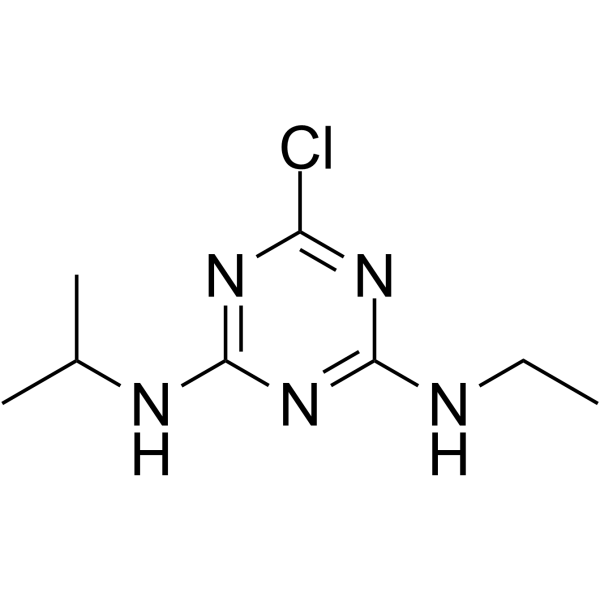
Atrazine, a triazine herbicide, is principally used for control of certain annual broadleaf and grass weeds. Atrazine inhibits photophosphorylation but typically does not result in lethality or permanent cell damage in the short term .
loading...
    loading...
Cat. No.: HY-N7091S2
CAS No.: 163165-75-1
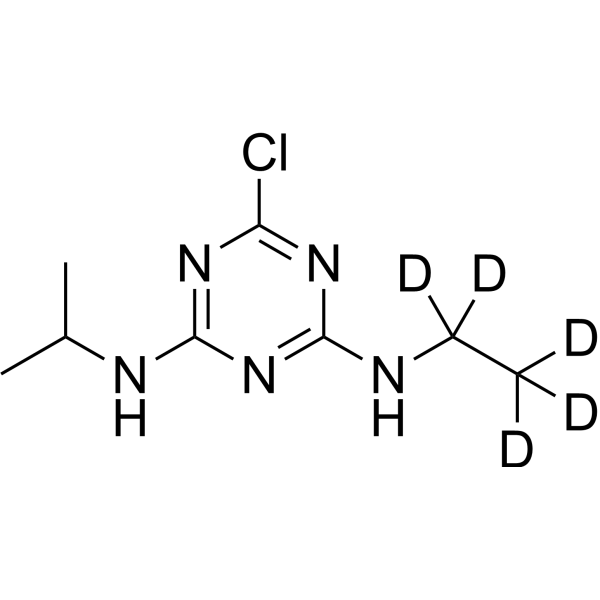
Atrazine-d5 is deuterium labeled Atrazine. Atrazine is principally used for control of certain annual broadleaf and grass weeds. Atrazine inhibits photophosphorylation but typically does not result in lethality or permanent cell damage in the short term .
loading...
    loading...
Cat. No.: HY-N6717
CAS No.: 28540-82-1
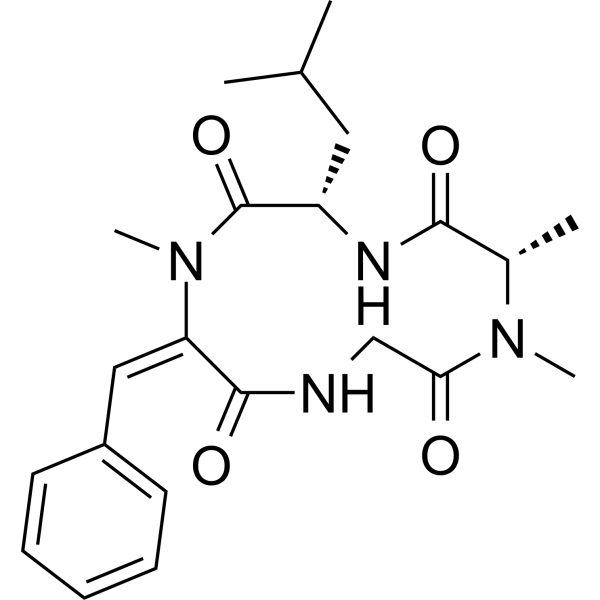
Tentoxin is a cyclic tetrapeptide isolated from Alternaria tenuis, acts as a herbicide, causes seedling chlorosis, inhibits cyclic photophosphorylation and functions as an energy transfer inhibitor .
loading...
    loading...
Cat. No.: HY-N7091R
CAS No.: 1912-24-9
Research Areas:  

Metabolic Disease

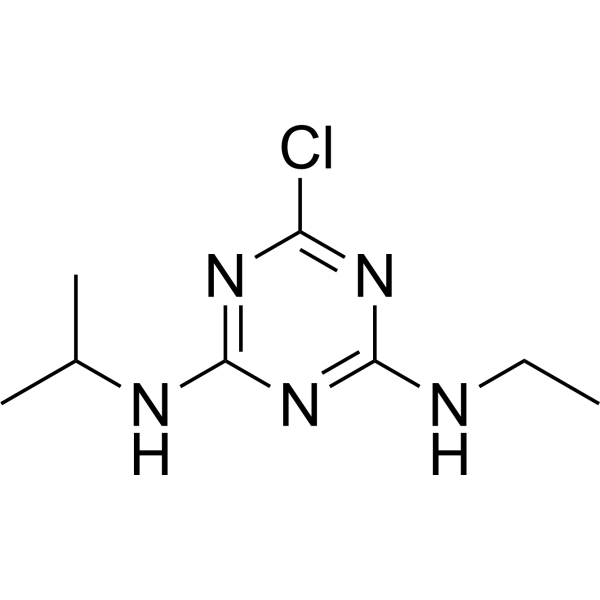
Atrazine (Standard) is the analytical standard of Atrazine. This product is intended for research and analytical applications. Atrazine is principally used for control of certain annual broadleaf and grass weeds. Atrazine inhibits photophosphorylation but typically does not result in lethality or permanent cell damage in the short term .
loading...
    loading...
Cat. No.: HY-W653894
CAS No.: 1426437-58-2
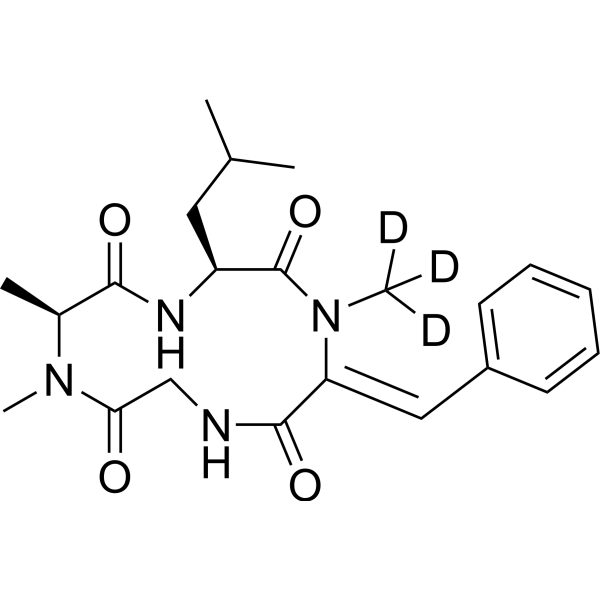
Tentoxin-d3 is the deuterium-labeled Tentoxin (HY-N6717). Tentoxin-d3 is a cyclic tetrapeptide isolated from Alternaria tenuis, acts as a herbicide, causes seedling chlorosis, inhibits cyclic photophosphorylation and functions as an energy transfer inhibitor .
loading...
    loading...
Cat. No.: HY-N7091S
CAS No.: 287476-17-9
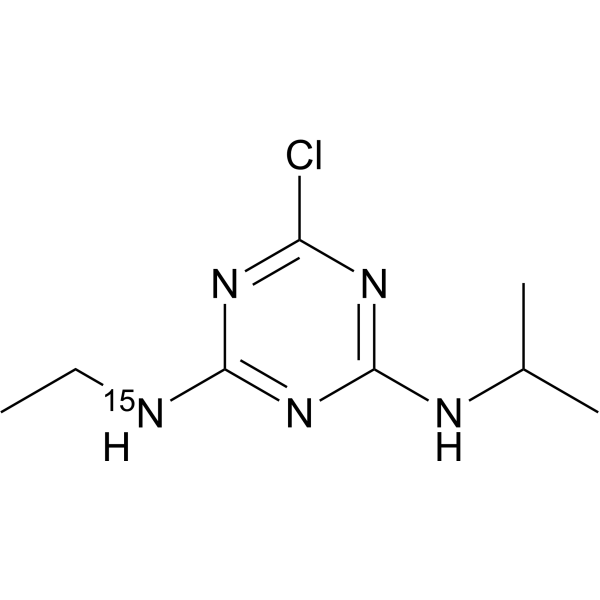
Atrazine- 15N is the 15N-labeled Atrazine. Atrazine is principally used for control of certain annual broadleaf and grass weeds. Atrazine inhibits photophosphorylation but typically does not result in lethality or permanent cell damage in the short term .
loading...
    loading...
Cat. No.: HY-N7091S1
CAS No.: 2117346-98-0
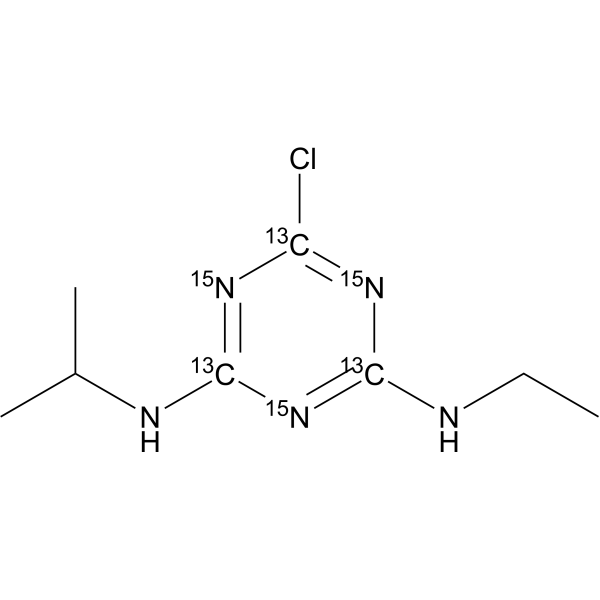
Atrazine- 13C3, 15N3 is the 13C-labeled and 15N-labeled Atrazine. Atrazine is principally used for control of certain annual broadleaf and grass weeds. Atrazine inhibits photophosphorylation but typically does not result in lethality or permanent cell damage in the short term .
loading...
    loading...
Cat. No.: HY-183972
CAS No.: 114-43-2
Desaspidin is an oxidative phosphorylation inhibitor and photophosphorylation inhibitor. Desaspidin uncouples mitochondrial oxidative phosphorylation, multiple chloroplast photophosphorylation pathways, and ATP synthesis linked to non-cyclic NADP reduction. Desaspidin can be used for the research of anthelmintic agent .
loading...
    loading...
Cat. No.: HY-W714182
CAS No.: 22936-75-0
Target:  

Herbicide

Research Areas:  

Others

Dimethametryn is a methylthio-triazine herbicide mainly used for controlling broadleaf weeds in paddy fields. Dimethametryn blocks plant photosynthesis by inhibiting electron transport and non-cyclic photophosphorylation of photosystem II, ultimately causing chlorosis, necrosis and death of sensitive plants .
loading...
    loading...
Cat. No.: HY-N6717S1
Tentoxin- 13C22 is the 13C-labeled Tentoxin (HY-N6717). Tentoxin is a cyclic tetrapeptide isolated from Alternaria tenuis, acts as a herbicide, causes seedling chlorosis, inhibits cyclic photophosphorylation and functions as an energy transfer inhibitor .
loading...
    loading...
Cat. No.: HY-119470
CAS No.: 23576-23-0
Synonyms: SAN 6706
Research Areas:  

Infection

Metflurazon (SAN 6706) is a pro-herbicide that acts as a substrate for cytochrome P450 monooxygenase. Metflurazon undergoes sequential N-demethylation to form Norflurazon (HY-114849), which in turn exerts anti-cyanobacterial activity. Metflurazon inhibits cyclic photophosphorylation, growth, heterocyst formation, and exogenous ATP transport in cyanobacteria, reduces their survival rate, and induces a methylamine-like effect. Metflurazon can be used in studies related to herbicides and cyanobacteria .
loading...
    loading...
  • 1

