11 Results for "

photothermal therapy

" in MedChemExpress (MCE) Product Catalog:
Products (11)

11 Results for "photothermal therapy" in MCE Product Catalog:

1
1 Cited Publications
Cat. No.: HY-164117
CAS No.: 106476-75-9
Research Areas:  

Cancer

BNN6 is a thermoresponsive nitric oxide (NO) donor that often works by binding to a carrier. BNN6 decomposes under the heat stimulation generated by photothermal action, releasing high concentrations of NO, which exerts anti-tumor activity by inducing tumor cell apoptosis and inhibiting their repair. BNN6 can be used to synthesize the multifunctional biosensor BNN6-BiTiS3-iRGD, which exerts a synergistic anti-cancer effect with photothermal therapy (PTT) .
loading...
    loading...
1
1 Cited Publications
Cat. No.: HY-P99144A

Target:  

PD-1/PD-L1

Research Areas:  

Inflammation/Immunology Cancer

Anti-Mouse PD-1 Antibody (S-5001) is a selective inhibitor targeting PD-1, blocking the PD-1/PD-L1 immune checkpoint axis through competitive binding to PD-1. Anti-Mouse PD-1 Antibody (S-5001) works by reversing the tumor immunosuppressive microenvironment and reactivating the anti-tumor activity of cytotoxic T lymphocytes. It can be used in research on tumors such as melanoma and HPV-positive oropharyngeal squamous cell carcinoma. Anti-Mouse PD-1 Antibody (S-5001) is often combined with photothermal therapy, chemotherapy, etc., to enhance efficacy .
loading...
    loading...
Cat. No.: HY-W248587
CAS No.: 4727-50-8
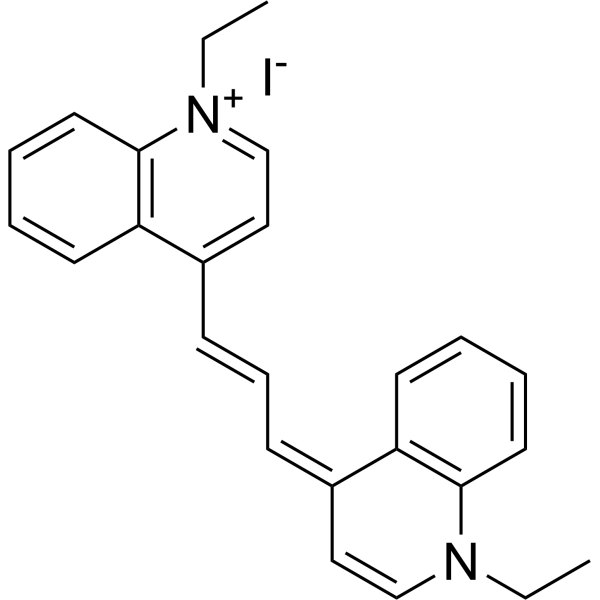
Cryptocyanine is a fluorescent dye .
loading...
    loading...
Cat. No.: HY-W441016
Target:  

Liposome

Research Areas:  

Others

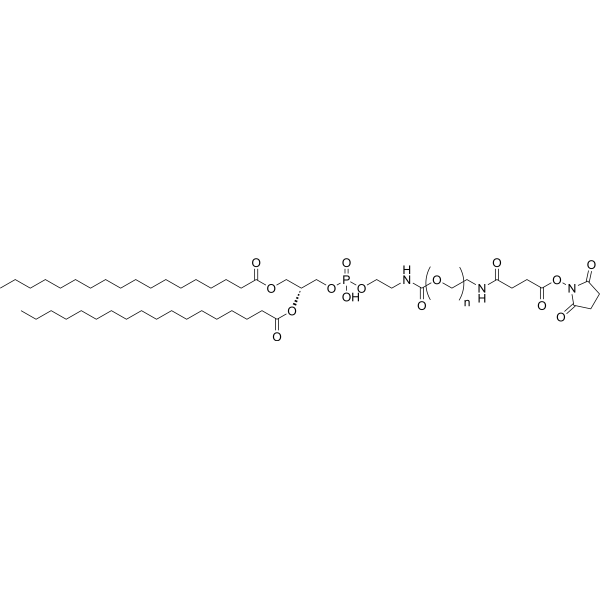
DSPE-PEG5000-NHS is a PEG-modified phospholipid derivative that can be used to prepare liposomes. DSPE-PEG5000-NHS is commonly employed as a linker molecule for the surface modification of liposomes to confer targeting capabilities. DSPE-PEG5000-NHS can be used in the study of drug delivery .
loading...
    loading...
Cat. No.: HY-D1450
CAS No.: 155613-98-2
Synonyms: S01448
Target:  

Fluorescent Dye

Research Areas:  

Cancer

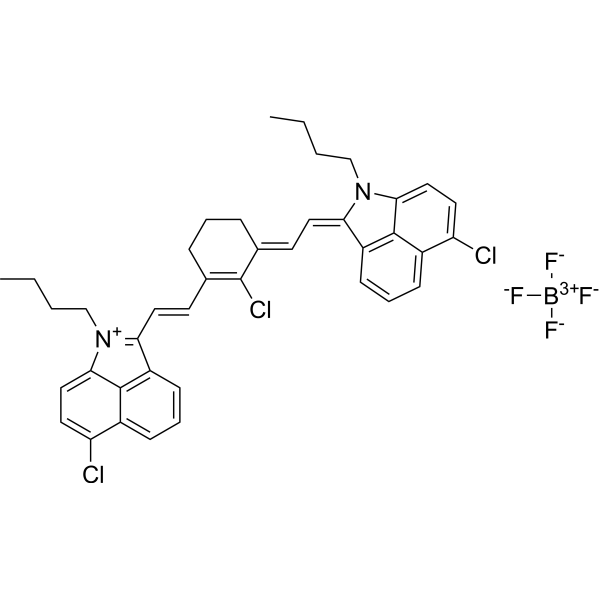
IR-1048 is a nitroreductase (NTR)-responsive near-infrared fluorescence (NIR)/photoacoustic (PA) imaging probe and photothermal agent. IR-1048 is coupled with a nitroimidazole group to form IR-1048-MZ. IR-1048-MZ is catalytically reduced by NTR in a hypoxic environment, restoring strong near-infrared absorption and fluorescence emission (NIR II window), while activating the photothermal effect. IR-1048 relies on NTR-mediated electron transfer to relieve intramolecular fluorescence quenching, achieving specific imaging and photothermal ablation of tumor hypoxic areas. IR-1048 is mainly used for high-contrast NIR II/photoacoustic imaging and photothermal therapy research and tumor diagnosis of the tumor hypoxic microenvironment .
loading...
    loading...
Cat. No.: HY-157529
CAS No.: 2250419-19-1
Research Areas:  

Cancer

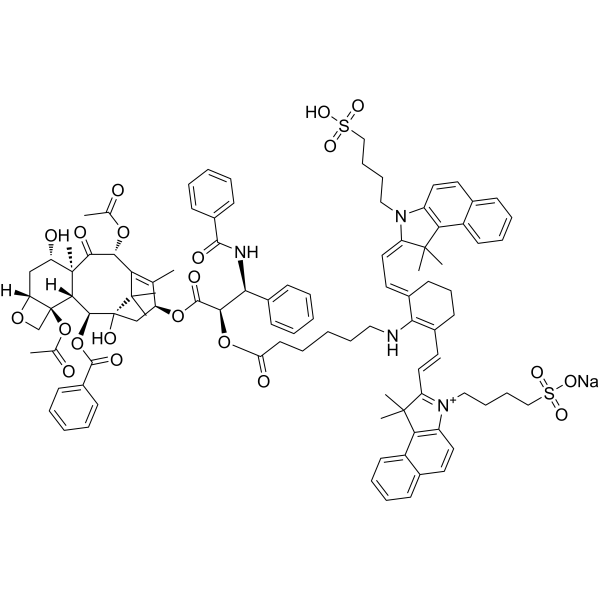
IR820-PTX, an IR-820 (HY-136886)-Paclitaxel (HY-B0015) conjugate, is an amphipathic small molecule prodrug. IR820-PTX effectively inhibits tumor growth via combined photothermal therapy (PTT) and chemotherapy .
loading...
    loading...
Cat. No.: HY-170490
Research Areas:  

Cancer

TTQ-SA is a near-infrared (NIR) spiro-AIEgen (aggregation-induced emission luminogen), that converts near-infrared light (NIR) into thermal energy, causing thermal damage and death of tumor cells. TTQ-SA exhibits cellular uptake and targeting ability in cancer cell MF-7. TTQ-SA silences the expression of survivin gene with combination of DNAzyme, enhances the sensitivity of tumor cells to photothermal therapy .
loading...
    loading...
Cat. No.: HY-W248590
CAS No.: 199444-11-6
IR-775 chloride is a cyanine dye with near-infrared absorption (Ex/Em = 775/795 nm). IR-775 chloride acts as a photosensitizer or photothermal agent, and induces apoptosis via generating ROS or exerting photothermal effects upon irradiation; its combination with 2-methoxyestradiol (HY-12033) inhibits SOD2 to enhance photodynamic therapy (PDT) efficacy, and its liposomal encapsulation enables phytotherapy-photothermal therapy (PTT) synergy. IR-775 chloride is applicable for investigating PDT/PTT and near-infrared fluorescence imaging in ovarian cancer and breast cancer .
loading...
    loading...
Cat. No.: HY-P11054
Target:  

Inhibitory Antibodies

Research Areas:  

Cancer

CREKA-YpFFK(Nph) is a gold nanoparticle surface ligand composed of CREKA and YPFFK (Nph), responsible for tumor targeting and alkaline phosphatase-responsive bond cleavage, respectively. CREKA-YpFFK(Nph) can be used for tumor targeting research .
loading...
    loading...
Cat. No.: HY-184451
CAS No.: 2825003-94-7
BSS-Et is a near-infrared phototheranostic agent that serves as one of the two release units of hypoxia-responsive prodrug BNNC, responsible for generating photodynamic therapy (PDT) and photothermal therapy (PTT) effects at tumor sites. BSS-Et produces reactive oxygen species and singlet oxygen upon irradiation, inducing oxidative stress and DNA damage. When combined with (R)-CR8 (HY-18340), BSS-Et enhances DNA damage and apoptosis in breast cancer cells. BSS-Et can be used in breast cancer-related research .
loading...
    loading...
Cat. No.: HY-184608
CuS nanoparticles are nanomaterials with unique properties. Their structural characteristics endow them with excellent near-infrared light response, facilitating functional applications through surface modification. This material shows potential in the biomedical field, enabling synergistic photothermal and photodynamic therapies in tumor treatment, as well as precise drug delivery. In the energy sector, it is suitable for the development of novel energy storage devices; in the environmental field, it can participate in photocatalytic degradation processes.
loading...
    loading...
  • 1

