4 Results for "

pig liver microsomes

" in MedChemExpress (MCE) Product Catalog:
Products (4)

4 Results for "pig liver microsomes" in MCE Product Catalog:

Cat. No.: HY-145154
CAS No.: 5352-63-6
Purity:  ≥98.0%
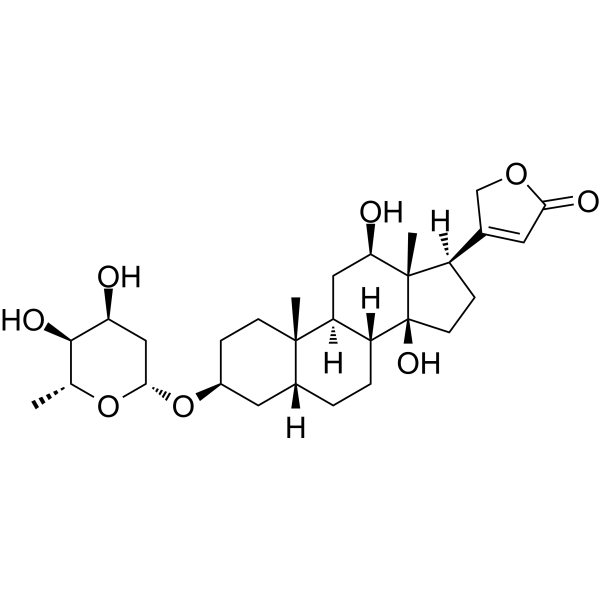
Digoxigenin monodigitoxoside, a metabolite of Digoxin (HY-B1049), belongs to the class of cardenolides. Digoxigenin monodigitoxoside exerts its function by inhibiting Na,K-ATPase. Digoxigenin monodigitoxoside is used for the research of cardiovascular diseases such as congestive heart failure and cardiac arrhythmias .
loading...
    loading...
Cat. No.: HY-N4031
CAS No.: 82375-29-9
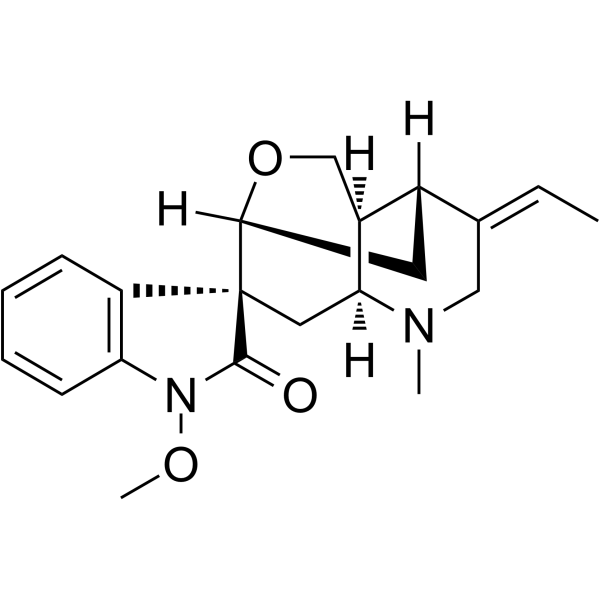
Humantenine is a highly toxic indole alkaloid from Gelsemium elegans (Gardn. & Champ.) Benth. that binds to RNA m6A modification regulatory proteins (ALKBH5, METTL). Humantenine stably binds via hydrogen bonding and hydrophobic interactions and disrupts the m6A methylation level of target genes, thereby impairing the expression of intestinal epithelial cell tight junction and cytoskeleton-related genes, causing intestinal barrier dysfunction and significant intestinal cytotoxicity. The intraperitoneal injection LD50 values of Humantenine are <1 mg/kg in mice, 1.2 mg/kg in male rats and 1.5 mg/kg in female rats, respectively. Species differences exist in the metabolism of Humantenine in human, porcine, goat and rat liver microsomes, and demethylation, dehydrogenation and oxidation occur in liver microsomes .
loading...
    loading...
Cat. No.: HY-W834690
CAS No.: 237402-29-8
Target:  

Phosphatase

Research Areas:  

Metabolic Disease

G6Pase catalytic enzyme-IN-1 is a competitive inhibitor of glucose-6-phosphatase catalytic enzyme. G6Pase catalytic enzyme-IN-1 has an IC50 of 10 μM in pig liver microsomes. G6Pase catalytic enzyme-IN-1 can be used in studies related to type 2 diabetes .
loading...
    loading...
Cat. No.: HY-182440
CAS No.: 1162658-64-1
Target:  

5-HT Receptor

Research Areas:  

Neurological Disease

AZD3783 is an orally active, blood-brain barrier-penetrant 5-HT1B receptor antagonist. AZD3783 reverses agonist-induced hypothermia, inhibits separation-induced vocalizations in guinea pig pups, and acts as a moderately permeable glycoprotein substrate with moderate clearance. AZD3783 inhibits hERG channel activity. AZD3783 is applicable for research on depression, anxiety disorders, and other psychiatric diseases associated with serotonergic neurotransmission .
loading...
    loading...

