Search Result
Results for "
positive modulator
" in MedChemExpress (MCE) Product Catalog:
1
Biochemical Assay Reagents
14
Isotope-Labeled Compounds
| Cat. No. |
Product Name |
Target |
Research Areas |
Chemical Structure |
-
- HY-A0106
-
|
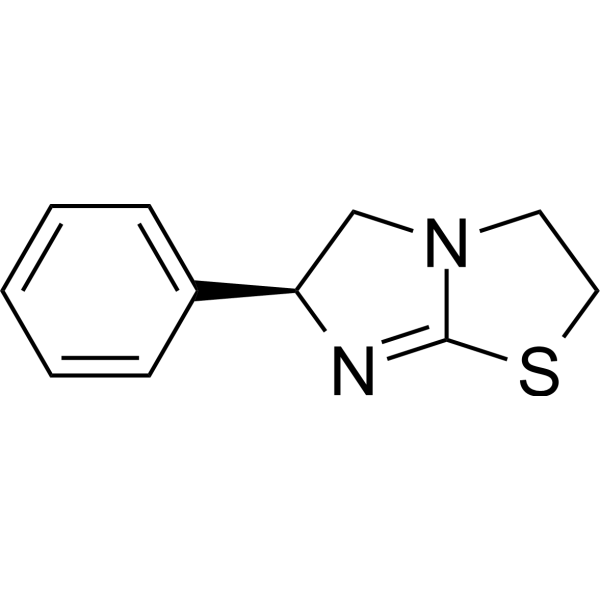
(-)-Tetramisole
|
nAChR
Parasite
|
Infection
Inflammation/Immunology
Cancer
|
|
Levamisole ((-)-Levamisole), an anthelmintic agent with immunomodulatory properties. Levamisole acts as a positive allosteric modulator (PAM) for the α3β2 (EC50=300 μM) and α3β4 (EC50=100 μM) subtype of nAChRs. Orally active .
|
-
-
- HY-10933
-
CX516
2 Publications Verification
BDP 12
|
iGluR
|
Neurological Disease
|
|
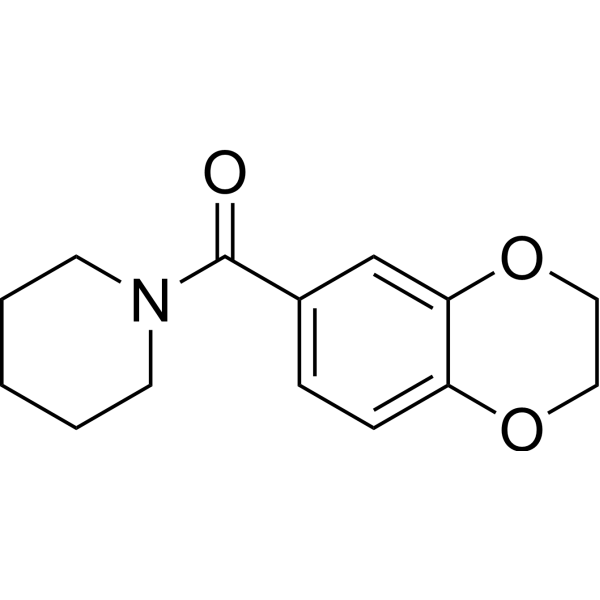
CX516 (BDP 12) is an ampakine and acts as an AMPA receptor positive allosteric modulator for the research of Alzheimer's disease, schizophrenia and mild cognitive impairment (MCI) .
|
-
-
- HY-120645
-
|
|
Opioid Receptor
|
Neurological Disease
|
|
BMS-986122 is a selective, potent positive allosteric modulator of the mu-opioid receptor (µ-OR). BMS-986122 shows potentiation of orthosteric agonist-mediated β-arrestin recruitment, adenylyl cyclase inhibition, and G protein activation. BMS-986122 potentiates DAMGO-mediated [ 35S]GTPγS binding in mouse brain membranes .
|
-
-
- HY-101165
-
|
|
iGluR
GABA Receptor
|
Neurological Disease
|
|
Cyclothiazide is a positive allosteric modulator of ionotropic AMPA-type glutamate receptors. Cyclothiazide inhibits GABAA receptors. Cyclothiazide is frequently used to produce a fast inhibition of AMPA receptor desensitization and a much slower potentiation of the AMPA current. Cyclothiazide can potentiate responses to kainate in hippocampal neurons. Cyclothiazide has effects on glutamatergic neurotransmission. Cyclothiazide also induces epileptiform EEG activity accompanying behavioral seizures .
|
-
-
- HY-108584
-
|
BMS-204352
|
Potassium Channel
|
Neurological Disease
|
|
Flindokalner (BMS-204352) is a potassium channel modulator. Flindokalner is a positive modulator of all neuronal Kv7 channel subtypes expressed in HEK293 cells. Flindokalner is also a large conductance calcium-activated K channel (BKca) positive modulator. Flindokalner shows a negative modulatory activity at Kv7.1 channels (Ki=3.7 μM), and acts as a negative modulator of GABAA receptors. Flindokalner shows anxiolytic efficacy in vivo .
|
-
-
- HY-139580
-
|
CAD-9303
|
iGluR
|
Neurological Disease
|
|
Plazinemdor (CAD-9303) is a positive allosteric modulator of N-methyl-D-aspartate (NMDA) receptors, which is used in the research of neurological diseases .
|
-
-
- HY-159829
-
|
NBI-1117568; HTL-0016878
|
mAChR
|
Neurological Disease
|
|
Direclidine (NBI-1117568, HTL-0016878) is a selective orthosteric agonist targeting the muscarinic acetylcholine M4 receptor, exhibiting very low affinity for M1, M2, M3, and M5 receptors. It binds to the orthosteric site of the M4 receptor in a non-covalent, competitive manner. Direclidine specifically activates the M4 receptor, inhibiting the release of acetylcholine from striatal cholinergic interneurons, thereby regulating the balance of the dopaminergic system and reducing psychiatric symptoms associated with excessive dopamine release. Direclidine can improve symptoms associated with neuropsychiatric disorders and is used in research on schizophrenia and other neuropsychiatric disorders .
|
-
-
- HY-19559
-
|
VU 0409551
|
mGluR
|
Neurological Disease
|
|
JNJ-46778212 (VU 0409551) is an mGlu5 positive allosteric modulator with an EC50 of 260 nM.
|
-
-
- HY-139091
-
|
|
Taste Receptor
|
Others
|
|
FEMA 4774 is a positive allosteric modulator of taste receptors T1R2 and T1R3, two subunits of the human sweet taste receptor. FEMA 4774 is also used as a sucrose sweetness enhancer .
|
-
-
- HY-116819
-
|
|
GCGR
|
Neurological Disease
Metabolic Disease
|
|
VU0453379 is a blood-brain barrier permeable GLP-1R positive allosteric modulator (PAM) with an EC50 value of 1.3 μM. VU0453379 potentiates the actions of endogenous GLP-1 and synthetic peptide agonists, and promotes GLP-1 receptor internalization. VU0453379 stimulates insulin secretion from primary mouse islets. VU0453379 enhances the function of endogenous GLP-1R and reverses catalepsy in animal models. VU0453379 is useful for research on Parkinson's disease and type 2 diabetes .
|
-
-
- HY-139897
-
|
|
iGluR
|
Neurological Disease
|
|
CX 717 is a positive allosteric modulator of AMPA receptor. Antidepressant-like effect. CX 717 can be used for the research of adult attention deficit hyperactivity disorder (ADHD) .
|
-
-
- HY-107457
-
|
|
mGluR
|
Neurological Disease
|
|
AZD-8529 is a potent, highly selective and orally bioavailable positive allosteric modulator of mGluR2, with an EC50 of 285 nM, and shows no positive allosteric modulator responses at 20-25 M on the mGluR1, 3, 4, 5, 6, 7, and 8 subtypes.
|
-
-
- HY-120023
-
|
|
mAChR
|
Neurological Disease
|
|
VU0453595 is a highly selective, systemically active M1 positive allosteric modulator (PAM, EC50=2140 nM) for the research of schizophrenia .
|
-
-
- HY-107682
-
-
-
- HY-103475
-
|
|
GABA Receptor
|
Neurological Disease
|
|
GS39783 is a positive allosteric modulator (PAM) of GABABR. Positive modulation of the GABABR can be used for the research of Nicotine addiction .
|
-
-
- HY-12439
-
ML380
1 Publications Verification
|
mAChR
|
Neurological Disease
|
|
ML380 is a potent, subtype-selective, and brain-penetrant positive allosteric modulator (PAM) of M5 mAChR, with EC50s of 190 and 610 nM for human and rat M5, respectively. ML380 exhibits moderate selectivity versus the M1 and M3 mAChR subtypes. ML380 could increase the affinity of ACh for the M5 mAChR .
|
-
-
- HY-177873
-
|
|
iGluR
|
Neurological Disease
|
|
AMPA receptor modulator-10 (Compound 9a) is an orally active AMPA receptor (AMPAR) positive allosteric modulator. AMPA receptor modulator-10 exhibits potent activity (pEC50 = 5.0) on the GluA2 subtype of AMPAR, significantly enhancing glutamate-induced calcium influx and current responses. AMPA receptor modulator-10 can reverse the memory impairment induced by Scopolamine (HY-N0296) and enhance cognitive function. AMPA receptor modulator-10 can be used for the research of neurological disease, such as schizophrenia .
|
-
-
- HY-103668A
-
-
-
- HY-105272
-
|
R 72063
|
GABA Receptor
|
Neurological Disease
|
|
Loreclezole, an antiepileptic compound, is a selective GABAA receptor modulator and acts as a positive allosteric modulator of β2 or β3-subunit containing receptors .
|
-
-
- HY-122819
-
|
|
CaSR
|
Cardiovascular Disease
|
|
Calindol hydrochloride is a positive allosteric modulator (PAM) of calcimimetic calcium-sensing receptor (CaSR) with an EC50 of 132 nM .
|
-
-
- HY-103520
-
|
|
GABA Receptor
|
Neurological Disease
|
|
DS2 is a selective positive allosteric modulator of δ-GABAA receptor. DS2 selectively potentiates GABA responses mediated by α4β3δ receptor. DS2 does not enhance activity at α4β3γ2 and α1β3γ2 receptors. DS2 relieves pain and has the potential for sleep disorders research .
|
-
-
- HY-128575
-
|
|
nAChR
|
Neurological Disease
|
|
BNC375 is a potent, selective, and orally available type I positive allosteric modulator of α7 nAChRs with an EC50 of 1.9 μM. BNC375 exhibits good CNS-agent like properties and clinical candidate potential. .
|
-
-
- HY-110122
-
|
|
mGluR
|
Neurological Disease
|
|
AZ 12216052 is a mGluR8 positive allosteric modulator, and helps mGluR8 modulate signaling inputing to retinal ganglion cells. AZ 12216052 exhibits antianxiety effect .
|
-
-
- HY-10937
-
-
-
- HY-121848
-
|
ML397
|
mGluR
|
Neurological Disease
|
|
VU0155094 is a positive allosteric modulator with differential activity at the various group III mGluRs .
|
-
-
- HY-107423
-
|
|
iGluR
|
Neurological Disease
|
|
GNE 6901 (compound 40) is a potent GluN2A-selective NMDAR positive allosteric modulator (PAM) with an EC50 of 382 nM .
|
-
-
- HY-177498
-
|
|
mAChR
|
Neurological Disease
|
|
M1 mAChR modulator-1 (Example 66) is a muscarinic M1 receptor (mAChR1) positive allosteric modulator. M1 mAChR modulator-1 effectively promotes gastrointestinal motility and defecation in mouse models with low central permeability. M1 mAChR modulator-1 can be used for constipation research .
|
-
-
- HY-120837
-
|
|
GABA Receptor
|
Neurological Disease
|
|
PZ-II-029 is a GABAA positive allosteric modulator that selectively binds with high affinity to α6β3γ2. PZ-II-029 shows anti-migraine effects .
|
-
-
- HY-130630
-
|
|
mGluR
|
Neurological Disease
|
|
mGluR2 modulator 1 (compound 95) is a potent and BBB-penetrated mGluR2 (metabotropic glutamate receptor-2) positive allosteric modulator, with an EC50 of 0.03 μM. mGluR2 modulator 1 can be used for psychosis research .
|
-
-
- HY-101216
-
-
-
- HY-107457A
-
|
|
mGluR
|
Neurological Disease
|
|
AZD-8529 mesylate is a potent, highly selective and orally bioavailable positive allosteric modulator of mGluR2, with an EC50 of 285 nM, and shows no positive allosteric modulator responses at 20-25 M on the mGluR1, 3, 4, 5, 6, 7, and 8 subtypes .
|
-
-
- HY-121806
-
|
|
mAChR
|
Neurological Disease
|
|
VU0486846 is an orally active and selective muscarinic acetylcholine receptor M1 positive allosteric modulator (PAM) .
|
-
-
- HY-144291
-
|
|
Dopamine Receptor
|
Neurological Disease
|
|
LY3154885 is an orally active dopamine D1 receptor positive allosteric modulator (PAM). LY3154885 has an improved agent-agent interactions (DDI) risk profile .
|
-
-
- HY-117851
-
|
|
CaSR
|
Metabolic Disease
Endocrinology
|
|
AC-265347 is a calcium-sensing receptor (CaSR) agonist and positive allosteric modulator (ago-PAM) with the functional affinity (pKB) of 5.1. AC-265347 can be used for the research of hyperparathyroidism and related diseases .
|
-
-
- HY-112567
-
|
|
Adenosine Receptor
|
Neurological Disease
|
|
TRR469 is a positive allosteric modulator of the A1 adenosine receptor (A1AR). TRR469 significantly increases the affinity of 2-chloro N(6)-cyclopentyladenosine (CCPA) for A₁AR, increasing the number of receptors recognized by the agonist radioligand [³H]-CCPA. TRR469 shows significant effects in both anxiety and pain models. TRR469 can be used to study anxiety disorders and pain management .
|
-
-
- HY-107506
-
|
|
mGluR
|
Neurological Disease
|
|
Ro 67-4853 is a positive allosteric modulator (PAM) of mGluR1 (pEC50=7.16 for rmGlu1a receptor). Ro67-4853 exhibits activity at all group I mGlu receptors including hmGlu1, rmGlu1, and rmGlu5. Ro 67-4853 enhances the potency of L-Glu by interacting with the transmembrane domain (TMD) of the receptor. Ro 67-4853 potentiates sensory synaptic responses to repetitive vibrissa stimulation .
|
-
-
- HY-107507
-
-
-
- HY-15476
-
-
-
- HY-118416
-
|
|
Opioid Receptor
|
Neurological Disease
|
|
BMS-986124 is a μ-opioid receptor silent allosteric modulator (μ-SAMs). BMS-986124 antagonizes positive allosteric modulator effect of BMS-986122 (µ-OR PAM) .
|
-
-
- HY-159826
-
-
-
- HY-162454
-
|
|
EAAT
|
Neurological Disease
|
|
DA-023 (Compound 4) is a selective positive allosteric modulator (PAM) of EAAT2 with an EC50 value of 1 nM .
|
-
-
- HY-116855
-
|
|
mGluR
|
Neurological Disease
|
|
TASP0433864 is a selective positive allosteric modulator (PAM) of metabotropic glutamate 2 (mGlu2) receptor with EC50 values of 199 nM and 206 nM against human and rat mGlu2 receptors, respectively. TASP0433864 has antipsychotic activity .
|
-
-
- HY-114863
-
|
THCCC
|
mGluR
|
Neurological Disease
|
|
PHCCC(4Me) (THCCC), a PHCCC analog, is a dual mGluR2 (IC50 of 1.5 μM) negative allosteric modulator and mGluR3 (EC50 of 8.9 μM) positive allosteric modulator .
|
-
-
- HY-113689
-
|
|
Cannabinoid Receptor
|
Neurological Disease
|
|
GAT211 is a cannabinoid 1 receptor (CB1R) positive allosteric modulator (PAM). GAT211 activates cAMP and β-arrestin2 with EC50 values of 260 nM and 650 nM, respectively. GAT211 inhibits GAT211 can be used for neuropathic and/or inflammatory pain research .
|
-
-
- HY-114978
-
|
|
mGluR
PERK
|
Neurological Disease
|
|
VU0424465 is a potent and partial PAM (positive allosteric modulator)-agonist for mGlu5 mediated iCa 2+ mobilization. VU0424465 exhibits high affinity at MPEP allosteric binding site, with a Ki value of 11.8 nM. VU0424465 is also a agonist for pERK1/2 in cortical neurons .
|
-
-
- HY-155628
-
|
|
iGluR
|
Others
|
|
AMPA receptor modulator-6 is an AMPA receptor positive allosteric modulator (PAM). AMPA receptor modulator-6 can be used in the study of neurological diseases .
|
-
-
- HY-179108
-
|
|
iGluR
|
Neurological Disease
|
|
NMDAR modulator 1 (Compound 12) is a positive, allosteric GluN1/GluN2B receptor modulator. NMDAR modulator 1 enhances NMDAR current. NMDAR modulator 1 can be used in the research of psychiatric disorders .
|
-
-
- HY-121393
-
|
|
GABA Receptor
|
Neurological Disease
|
|
Imidazenil is a partial positive allosteric modulator of GABAA receptors with anxiolytic, antipanic and anticonvulsant activities.
|
-
-
- HY-123874
-
-
-
- HY-147530
-
|
|
mGluR
|
Neurological Disease
|
|
mGluR2 modulator 4 (compound 47) is a potent mGluR2 positive allosteric modulator with an EC50 value of 0.8 μM. mGluR2 modulator 4 can be used for researching antipsychotic .
|
-
- HY-147528
-
|
|
mGluR
|
Neurological Disease
|
|
mGluR2 modulator 2 (compound 2) is a potent, selective and orally bioavailable mGluR2 positive allosteric modulator with an EC50 value of 0.13 μM. mGluR2 modulator 2 can be used for researching antipsychotic .
|
-
- HY-116067
-
-
- HY-168025
-
|
|
nAChR
|
Neurological Disease
|
|
VU6007496 is a highly selective and CNS penetrant M1 positive allosteric modulator (PAM). VU6007496 shows excellent pharmacokinetics (PK) .
|
-
- HY-159177
-
|
|
mAChR
|
Neurological Disease
|
|
M4 mAChR Modulator-1 (compound 23i) is a M4 mAChR positive allosteric modulator (PAM). M4 mAChR Modulator-1 exhibits significantly greater cooperativity with ACh in β-arrestin recruitment over G protein activation. M4 mAChR Modulator-1 displays weak PAM effect in G protein-mediated responses, but strong PAM effect in β-arrestin recruitment .
|
-
- HY-175508
-
|
|
iGluR
|
Neurological Disease
|
|
NMDA receptor modulator 9 is an orally active NMDA receptor positive allosteric modulator (PAM). NMDA receptor modulator 9 enhances GluN2A receptor activity. NMDA receptor modulator 9 demonstrates significant antidepressant-like effects in chronic restraint stress (CRS)-induced depression mice. NMDA receptor modulator 9 can be used for the study of depression .
|
-
- HY-107504
-
|
|
mGluR
|
Neurological Disease
|
|
VU0360172 hydrochloride is a potent and selective mGlu5 receptor positive allosteric modulator (PAM) with an EC50 value of 16 nM and a Ki of 195 nM, respectively. VU0360172 hydrochloride stimulates polyphosphoinositide (PI) hydrolysis in vivo, which is abrogated in mGlu5 receptors gene deleted mice .
|
-
- HY-174259
-
|
|
mAChR
|
Neurological Disease
|
|
Muscarinic M4 modulator-1 is a Muscarinic M4 receptor positive allosteric modulator. Muscarinic M4 modulator-1 activates the muscarinic M4 receptor with allosteric potency EC50 s of 14 and 3 Nm in CHO-K1 cells and HEK293 cells. Muscarinic M4 modulator-1 has an antipsychotic-like activity, promising for psychiatric and/or neurological disorders research .
|
-
- HY-142723
-
|
|
Potassium Channel
|
Neurological Disease
|
|
KCa2 channel modulator 1 (compound 2o) is a potent subtype-selective positive modulator of KCa2 channel. KCa2 channel modulator 1 potentiates human KCa2.3 channels with an EC50 value of 0.19 μM and 0.99 μM on the rat KCa2.2 channel subtype .
|
-
- HY-142735
-
|
|
Potassium Channel
|
Neurological Disease
|
|
KCa2 channel modulator 2 (compound 2q) is a potent subtype-selective positive modulator of KCa2 channel. KCa2 channel modulator 2 exhibits similar potency on the rat KCa2.2a and human KCa2.3 channel subtypes, with EC50s of 0.64 μM and 0.60 μM, respectively
|
-
- HY-119806
-
|
|
5-HT Receptor
|
Neurological Disease
|
|
TMPPAA is an allosteric agonist and positive allosteric modulator of the 5-HT3 receptor. TMPPAA enhances 5-HT-mediated 5-HT3AR signaling .
|
-
- HY-120576
-
|
VU0405652
|
mAChR
|
Neurological Disease
|
|
ML169 (VU0405652) is a potent, selective and brain penetrant positive allosteric modulator (PAM) of M1 mAChR, with an EC50 of 1.38 µM. ML169 is a MLPCN probe and can be used for Alzheimer’s disease .
|
-
- HY-A0106R
-
|
(-)-Tetramisole (Standard)
|
Reference Standards
nAChR
Parasite
|
Infection
Inflammation/Immunology
Cancer
|
|
Levamisole (Standard) is the analytical standard of Levamisole. This product is intended for research and analytical applications. Levamisole ((-)-Levamisole), an anthelmintic agent with immunomodulatory properties. Levamisole acts as a positive allosteric modulator (PAM) for the α3β2 (EC50=300 μM) and α3β4 (EC50=100 μM) subtype of nAChRs. Orally active .
|
-
- HY-144698
-
|
|
mGluR
|
Neurological Disease
|
|
mGlu4 receptor agonist 1 (compound 62) is a potent mGlu4 receptor positive allosteric modulator, with an EC50 of 308 nM. mGlu4 receptor agonist 1 shows significant anxiolytic- and antipsychotic-like effect .
|
-
- HY-159624
-
|
|
GABA Receptor
|
Neurological Disease
|
|
KK-92A, a blood-brain barrier penetrated GABAB positive allosteric modulator (PAM), suppresses alcohol self-administration and cue-induced reinstatement of alcohol seeking in rats .
|
-
- HY-171981
-
|
|
mAChR
|
Neurological Disease
|
|
VU6002703 (Compound 17) is a BBB-penetrable M4 mAChR positive allosteric modulator (PAM) with an EC50 of 0.6 μM for hM4. VU6002703 can be used for neuropsychiatric and rare genetic CNS disorders research .
|
-
- HY-101165R
-
|
|
Reference Standards
iGluR
GABA Receptor
|
Neurological Disease
|
|
Cyclothiazide (Standard) is the analytical standard of Cyclothiazide. This product is intended for research and analytical applications. Cyclothiazide is a positive allosteric modulator of ionotropic AMPA-type glutamate receptors. Cyclothiazide inhibits GABAA receptors. Cyclothiazide is frequently used to produce a fast inhibition of AMPA receptor desensitization and a much slower potentiation of the AMPA current. Cyclothiazide can potentiate responses to kainate in hippocampal neurons. Cyclothiazide has effects on glutamatergic neurotransmission. Cyclothiazide also induces epileptiform EEG activity accompanying behavioral seizures .
|
-
- HY-129431
-
|
PNU-89843
|
GABA Receptor
|
Neurological Disease
|
|
U-89843A (PNU-89843) is a GABAA receptors positive allosteric modulator (PAM). U-89843A enhances GABA-induced Cl - currents in the α1β2γ2, α3β2γ2 and α6β2γ2 subtypes. U-89843A shows antioxidant and sedative effects .
|
-
- HY-103497
-
|
PNU-89843 hydrochloride
|
GABA Receptor
|
Neurological Disease
|
|
U-89843A (PNU-89843) hydrochloride is a GABAA receptors positive allosteric modulator (PAM). U-89843A hydrochloride enhances GABA-induced Cl - currents in the α1β2γ2, α3β2γ2 and α6β2γ2 subtypes. U-89843A hydrochloride shows antioxidant and sedative effects .
|
-
- HY-141832
-
|
|
mGluR
|
Neurological Disease
|
|
mGluR5 modulator 1 is a mGluR5 positive allosteric modulator. mGluR5 modulator 1 can be used for the research of the schizophrenia and cognitive impairments .
|
-
- HY-173616
-
|
|
GABA Receptor
|
Neurological Disease
|
|
GABAA receptor modulator-8 (10c) is a blood-brain barrier penetrated, selective and positive modulator of GABAA receptor, with excellent antiepileptic activity .
|
-
- HY-160529
-
|
|
nAChR
|
Neurological Disease
|
|
α7 nAChR Modulator-2 (Compound 7b) is a α7 nAChR positive allosteric modulator (PAM) with an EC50 of 2.1 μM. α7 nAChR Modulator-2 can be used for the research of cognitive disorders .
|
-
- HY-120411
-
|
|
Calcium Channel
|
Others
|
|
Sadopine is an allosteric modulator for dihydropyridine receptor ((-)Sadopine as positive allosteric modulator and (+)Sadopine as negative allosteric modulator). Sadopine interacts with dihydropyridine (DHP)-sensitive L-type calcium channels .
|
-
- HY-170903
-
|
|
GABA Receptor
|
Neurological Disease
|
|
GABAA receptor modulator-3 (compound 3b) is a positive allosteric modulator (PAM). GABAA receptor modulator-3 inhibits α1β3γ2 GABAAR at peak and steady state currents with IC50s of 671 and 64 μM, respectively .
|
-
- HY-157958
-
|
|
nAChR
|
Neurological Disease
|
|
α7 nAChR modulator-3 (Compound 6p) is a α7 nAChR positive allosteric Modulator with a IC50 value of 1.3 μM. α7 nAChR Modulator-3 can be used to inhibit auditory gating defects in a mouse schizophrenic model .
|
-
- HY-149975
-
|
|
iGluR
|
Neurological Disease
|
|
AMPA receptor modulator-4, a 3,4-dihydro-2H-1,2,4-benzothiadiazine 1,1-dioxide (BTD), is an orally active positive allosteric modulator of the AMPA receptors (AMPAR PAMs). AMPA receptor modulator-4 can cross the blood-brain barrier. AMPA receptor modulator-4 increases the cognition performance and improves working memory performance in mice .
|
-
- HY-147421
-
-
- HY-124906
-
|
|
iGluR
|
Neurological Disease
|
|
JAMI1001A is a positive allosteric modulator of AMPA receptor. JAMI1001A efficaciously modulates AMPA receptor deactivation and desensitization of both flip and flop receptor isoforms .
|
-
- HY-175670
-
|
|
GABA Receptor
|
Neurological Disease
|
|
GABAA receptor modulator-10 is an orally active, potent positive allosteric modulator (PAM) of the α1β2γ2 GABAA receptor with favorable blood-brain barrier (BBB) penetration. GABAA receptor modulator-10 enhances α1β2γ2 GABAA receptor function and potentiates GABA-evoked currents. GABAA receptor modulator-10 demonstrates potent antiepileptic efficacy in both the Pentetrazol (PTZ)- and Kainic Acid (KA) (HY-N2309)-induced mice epilepsy models. GABAA receptor modulator-10 can be used for the study of epilepsy .
|
-
- HY-147529
-
|
|
mGluR
|
Neurological Disease
|
|
mGluR2 modulator 3 (compound 1) is a potent mGluR2 positive allosteric modulator with an EC50 value of 0.87 μM. mGluR2 modulator 3 has activity in psychosis disease models such as methamphetamine-induced hyperactivity and mescaline-induced scratching in mice .
|
-
- HY-150056
-
|
|
Cannabinoid Receptor
Arrestin
|
Neurological Disease
|
|
CB1R Allosteric modulator 3 is a CB1R positive allosteric modulator. CB1R Allosteric modulator 3 has potent inhibition of cAMP and β-Arrestin with EC50 values of 0.018 μM and 1.241 μM, respectively .
|
-
- HY-108584R
-
|
BMS-204352 (Standard)
|
Potassium Channel
Reference Standards
|
Neurological Disease
|
|
Flindokalner (Standard) is the analytical standard of Flindokalner. This product is intended for research and analytical applications. Flindokalner (BMS-204352) is a potassium channel modulator. Flindokalner is a positive modulator of all neuronal Kv7 channel subtypes expressed in HEK293 cells. Flindokalner is also a large conductance calcium-activated K channel (BKca) positive modulator. Flindokalner shows a negative modulatory activity at Kv7.1 channels (Ki=3.7 μM), and acts as a negative modulator of GABAA receptors. Flindokalner shows anxiolytic efficacy in vivo .
|
-
- HY-105272A
-
|
R 72063 hydrochloride
|
GABA Receptor
|
Neurological Disease
|
|
Loreclezole hydrochloride, an antiepileptic compound, is a selective GABAA receptor modulator and acts as a positive allosteric modulator of β2 or β3-subunit containing receptors .
|
-
- HY-150057
-
|
|
Cannabinoid Receptor
|
Others
|
|
CB1R Allosteric modulator 4 is a positive allosteric modulator of cannabinoid type-1 (CB1R) with good biological activity. CB1R Allosteric modulator 4 inhibits cAMP production and shows robust activity in β-arrestin-2 recruitment .
|
-
- HY-175251
-
|
|
GABA Receptor
|
Neurological Disease
|
|
GABAA receptor modulator-9 is and positive allosteric modulator of a1β2y2 subtype GABAA that can cross the blood-brain barrier. GABAA receptor modulator-9 exhibits comparable activity on α1β2γ2 (EC50: 0.9 μM in oocytes, 0.2 μM in CHO cells) and on α1β2, α3β2γ2 and α1β3γ2 (EC50s of 1.3, 3.4 and 1.1 μM). GABAA receptor modulator-9 significantly suppresses seizure progression and reduces delayed mortality. GABAA receptor modulator-9 can be used for the study of status epilepticus (SE) .
|
-
- HY-151899
-
|
|
Adenosine Receptor
|
Inflammation/Immunology
|
|
A3AR modulator 1 (MRS8054) is an orally active A3 adenosine receptor (A3AR) (Adenosine Receptor) positive allosteric modulator (PAM). A3AR modulator 1 greatly enhances Cl-IB-MECA-stimulated [ 35S]GTPγS binding Emax .
|
-
- HY-183487
-
|
|
mAChR
|
Endocrinology
|
|
M1R modulator-1 is an orally effective positive allosteric modulator of muscarinic M1R, with an IP value of 0.88 nM. M1R modulator-1 can be used in constipation-related research .
|
-
- HY-119363
-
|
|
mAChR
|
Neurological Disease
|
|
VU6009453 (compound 15q) is a brain-penetrant M4 mAChR positive allosteric modulator (PAM) with an EC50 of 383 nM. VU6009453 can be used for research on neurological diseases .
|
-
- HY-182694
-
|
|
nAChR
|
Neurological Disease
|
|
α7 nAChR Modulator-4 is a positive allosteric modulator of α7 nAChR, with an EC50 of 910 nM. α7 nAChR Modulator-4 interacts with α7 nAChR to trigger downstream effects associated with inflammatory regulation. α7 nAChR Modulator-4 can be used in the research of Alzheimer's disease, Parkinson's disease and schizophrenia .
|
-
- HY-180421
-
|
|
mAChR
|
Neurological Disease
|
|
VU6009048 is a CNS-penetrant human M4 muscarinic acetylcholine receptor (mAChR4) positive allosteric modulator. VU6009048 can be used for the research of parkinson’s disease, huntington’s disease, schizophrenia .
|
-
- HY-179621
-
|
|
Cholinesterase (ChE)
Amyloid-β
|
Neurological Disease
|
|
EQ-04 is a highly selective positive allosteric modulator (PAM) of α7 nAChR. EQ-04 has no direct inhibitory activity on AChE and BChE. EQ-04 inhibits Aβ aggregation. EQ-04 has safe cytotoxicity and potent neuroprotective activity. EQ-04 can be used for the study of Alzheimer's disease.
|
-
- HY-180876
-
-
- HY-17670
-
|
|
iGluR
|
Neurological Disease
|
|
AMPA receptor modulator-11 (example 210) is a positive allosteric AMPA receptor modulator. AMPA receptor modulator-11 can be used for research on depression, schizophrenia, Alzheimer's disease or attention deficit hyperactivity disorder (ADHD) .
|
-
- HY-171333
-
|
|
Chloride Channel
|
Neurological Disease
Inflammation/Immunology
|
|
TMEM16A modulator-1 (compound 36) is a positive modulator of the calcium-activated chloride channel (CaCC) TMEM16A. TMEM16A modulator-1 can be used for TMEM16A-related diseases research, particularly respiratory diseases and conditions .
|
-
- HY-183101
-
|
|
iGluR
NADPH Oxidase
|
Neurological Disease
|
|
AMPAR modulator-12 is a blood-brain barrier-permeable AMPAR positive allosteric modulator. AMPAR modulator-12 reduces NOX-1 expression, enhances AMPAR-mediated currents, promotes excitatory postsynaptic transmission and restores AMPAR function. AMPAR modulator-12 enhances excitatory and inhibitory synaptic transmission, reduces burst firing in the lateral habenula after withdrawal, and produces rapid and sustained antidepressant-like effects. AMPAR modulator-12 is applicable for the research of depression .
|
-
- HY-181559S
-
|
AG06827
|
mAChR
|
Neurological Disease
|
|
VU6025733 (AG06827) is a highly selective, orally active and blood-brain barrier-penetrant positive allosteric modulator of the muscarinic acetylcholine receptor subtype M4 (M4 mAChR). VU6025733 exerts a potentiating effect on acetylcholine-induced receptor activation with an EC50 of 23 nM for hM4 and 55 nM for rM4. VU6025733 shows high selectivity over other muscarinic acetylcholine receptor subtypes, dose-dependently reduces amphetamine-induced hyperlocomotion in rats. VU6025733 is applicable to the research of schizophrenia, Parkinson's disease, and Alzheimer's disease .
|
-
- HY-183324
-
|
|
iGluR
Dopamine Transporter
|
Neurological Disease
|
|
AMPA receptor modulator-12 is an orally acrive AMPA receptor positive allosteric modulator. AMPA receptor modulator-12 also exhibits moderate binding affinity for the human dopamine transporter with a Kd of 1.57 μM. AMPA receptor modulator-12 enhances AMPA receptor-mediated ion currents, delays channel deactivation. AMPA receptor modulator-12 prolongs sleep latency, reduces sleep duration, extends forced swimming time, improves rotarod endurance, and alleviates acute sleep deprivation-related behavioral deficits. AMPA receptor modulator-12 does not increase spontaneous locomotion. AMPA receptor modulator-12 can be used for the research of narcolepsy and fatigue-related conditions .
|
-
- HY-183274
-
|
|
Nuclear Hormone Receptor 4A/NR4A
Apoptosis
PARP
|
Cancer
|
|
Nur77 modulator 5 is a Nur77 modulator. Nur77 modulator 5 induces lysosomal dysfunction, impaired autophagic flux, and apoptosis with increased PARP cleavage, TUNEL positivity, and Annexin V/PI staining. Nur77 modulator 5 can be used for the research of gastric cancer .
|
-
- HY-186126
-
|
|
CDK
|
Cancer
|
|
CDK2 modulator 1 is a CDK2 modulator with an EC50 < 100 nM and an Emax > 100% of positive control in a TR-FRET proximity assay. CDK2 modulator 1 induces ternary complex formation with CDK2/CCNE1 and CRBN. CDK2 modulator 1 can be used for the research of cancer .
|
-
- HY-121623
-
|
|
Others
|
Others
|
|
VU0359516 is a compound that modulates mGluR4 activity, obtained through structure-activity relationship analysis of mGluR4 positive allosteric modulators, with improved potency and efficacy, as well as selectivity for mGluR4.
|
-
- HY-180617
-
|
|
5-HT Receptor
|
Neurological Disease
Inflammation/Immunology
|
|
5-HT2CR modulator 1 (Compound 3B) is a selective, positive ago-allosteric modulator of 5HT2CR with an EC50 of 8 nM. 5-HT2CR modulator 1 is also a selective 5HT2CR agonist with an EC50 of 25 nM. 5-HT2CR modulator 1 reduces food intake .
|
-
- HY-123433
-
|
|
mGluR
|
Neurological Disease
|
|
JNJ-40068782 is a potent positive allosteric modulator of the mGlu2 receptor, with the IC50 of 38 nM .
|
-
- HY-103503
-
-
- HY-13058B
-
|
|
mGluR
|
Neurological Disease
|
|
(R)-ADX-47273 is a potent mGluR5 positive allosteric modulator, with an EC50 of 168 nM for potentiation .
|
-
- HY-139044
-
|
|
mAChR
|
Neurological Disease
|
|
VU6000918 is a muscarinic acetylcholine (M4) positive allosteric modulator, with an EC50 of 19 nM for hM4 .
|
-
- HY-18162
-
|
|
mGluR
|
Neurological Disease
|
|
JNJ-42153605 is a positive allosteric modulator of the metabotropic glutamate 2 (mGlu2) receptor with an EC50 of 17 nM.
|
-
- HY-175532
-
|
|
mAChR
|
Neurological Disease
|
|
M4 mAChR Modulator-2 is an orally active, selective, brain-penetrant positive allosteric modulator (PAM) of the M4 muscarinic acetylcholine receptor (M4 mAChR) (EC50 = 513 nM). M4 mAChR Modulator-2 exhibits high target selectivity, showing negligible affinity and low inhibition rates for non-target receptors (D1R/D2R/D3R, 5-HT subtypes, κ/δ/μ opioid receptors, H1, M1/M2) while specifically binding to M4 mAChR with a Ki of 377 nM and an inhibition rate of 62.8%. M4 mAChR Modulator-2 reverses Dizocilpine (MK-801) (HY-15084B)-induced hyperlocomotion in mice. M4 mAChR Modulator-2 can be used for the study of schizophrenia
|
-
- HY-103535
-
-
- HY-W742312
-
|
Ucedorm
|
GABA Receptor
|
Metabolic Disease
|
|
Brallobarbitone is a positive allosteric modulator of GABAA receptor. Brallobarbitone can be used in the research of β-cell dysfunction .
|
-
- HY-100728
-
|
|
mGluR
|
Neurological Disease
|
|
BMT-145027 is an mGluR5 positive allosteric modulator without inherent agonist activity, exhibits an EC50 of 47 nM.
|
-
- HY-124419
-
|
|
mGluR
|
Neurological Disease
|
|
RO0711401 is a selective and orally active positive allosteric modulator of mGlu1 receptor with an EC50 of 56 nM .
|
-
- HY-134912
-
|
|
GABA Receptor
|
Neurological Disease
|
|
CMPPE is a GABAB receptor positive allosteric modulator (PAM) that inhibits alcohol self-administration and reinstatement behavior in rats .
|
-
- HY-14419
-
|
|
mGluR
|
Neurological Disease
|
|
TCN238 is an orally bioavailable mGlu4 receptor positive allosteric modulator (PAM) with an EC50 of 1 μM .
|
-
- HY-117611
-
-
- HY-117979
-
|
Alfadolone
|
GABA Receptor
|
Neurological Disease
|
|
Alphadolone is a GABAA receptor positive allosteric modulator. Alphadolone has antinociceptive effects. Alphadolone causes general anaesthesia .
|
-
- HY-103498
-
|
|
GABA Receptor
|
Neurological Disease
|
|
Org20599 is a positive allosteric modulator and at higher concentrations direct agonist of GABAA receptor with an EC50 of 1.1 μM .
|
-
- HY-113346
-
|
Tetrahydro-11-deoxycorticosterone
|
GABA Receptor
Endogenous Metabolite
|
Neurological Disease
|
|
Tetrahydrodeoxycorticosterone, an neurosteroid, is a potent positive allosteric modulator (PAM) of GABAA receptor. Tetrahydrodeoxycorticosterone has potent neuroinhibitory properties .
|
-
- HY-155467
-
-
- HY-120024
-
-
- HY-105272R
-
|
R 72063 (Standard)
|
Reference Standards
GABA Receptor
|
Neurological Disease
|
|
Loreclezole (Standard) is the analytical standard of Loreclezole. This product is intended for research and analytical applications. Loreclezole, an antiepileptic compound, is a selective GABAA receptor modulator and acts as a positive allosteric modulator of β2 or β3-subunit containing receptors .
|
-
- HY-163831
-
|
|
mGluR
|
Neurological Disease
|
|
AZ12559322 is a positive allosteric modulator of mGluR2, with the Ki value of 1.31 nM. AZ12559322 can be used in neurological research .
|
-
- HY-114381
-
|
|
EAAT
|
Neurological Disease
|
|
GT 949 is a selective excitatory amino acid transporter-2 (EAAT2) positive allosteric modulator with an EC50 of 0.26 nM .
|
-
- HY-181127
-
|
|
iGluR
|
Neurological Disease
|
|
GluN2B-NMDAR Allosteric modulator 1 is a selective GluN2B-NMDAR positive allosteric modulator. GluN2B-NMDAR Allosteric modulator 1 can increase glutamate- and aspartate-evoked GluN2B-NMDAR-gated currents with EC50 values of 43.7 and 18 nM. GluN2B-NMDAR Allosteric modulator 1 can reverse anxiety-like behavior and social cognition deficits in mice. GluN2B-NMDAR Allosteric modulator 1 can be used for the research of neurological disease, such as anxiety .
|
-
- HY-107457AR
-
|
|
Reference Standards
mGluR
|
Neurological Disease
|
|
AZD-8529 mesylate (Standard) is the analytical standard of AZD-8529 (mesylate) (HY-107457A). This product is intended for research and analytical applications. AZD-8529 mesylate is a potent, highly selective and orally bioavailable positive allosteric modulator of mGluR2, with an EC50 of 285 nM, and shows no positive allosteric modulator responses at 20-25 M on the mGluR1, 3, 4, 5, 6, 7, and 8 subtypes .
|
-
- HY-137204
-
|
|
GABA Receptor
|
Neurological Disease
|
|
COR659 is a potent and effective GABAB positive allosteric modulator (PAM). COR659 suppresses alcohol and chocolate self-administration in rats .
|
-
- HY-119078
-
|
|
mGluR
|
Neurological Disease
|
|
VU0080241 is a positive allosteric modulator (PAM) of the metabotropic glutamate receptor subtype 4 (mGluR4), with an EC50 of 4.6 μM .
|
-
- HY-172982
-
|
|
5-HT Receptor
|
Neurological Disease
|
|
CTW0419 is a potent 5-HT Receptor positive allosteric modulators (PAMs). CTW0419 is promising for research of neuropsychiatric disorders .
|
-
- HY-16951
-
|
|
mGluR
|
Neurological Disease
|
|
VU-1545 is a metabotropic glutamate receptor 5 positive allosteric modulator (mGluR5 PAM) with a Ki of 156 nM and an EC50 of 9.6 nM .
|
-
- HY-112814
-
|
|
mGluR
|
Neurological Disease
|
|
VU6001376 is a potent and selective positive allosteric modulator of the metabotropic glutamate receptor 4 (mGlu4 PAM) with an EC50 of 50.1 nM .
|
-
- HY-101841
-
|
|
mAChR
|
Neurological Disease
|
|
LY 2033298 is a selective positive allosteric modulator of the muscarinic M4 receptor. LY 2033298 can be used in the study of psychiatric disorders .
|
-
- HY-100366
-
|
|
mGluR
|
Neurological Disease
|
|
Lu AF21934 is a selective and brain-penetrant mGlu4 receptor positive allosteric modulator with an EC50 of 500 nM for mGlu4 receptor .
|
-
- HY-129086
-
|
|
iGluR
|
Neurological Disease
|
|
BPAM344 is a kainate receptor (KAR) subunits GluK1b, GluK2a, and GluK3a positive allosteric modulator (PAM) .
|
-
- HY-172981
-
|
|
5-HT Receptor
|
Neurological Disease
|
|
CTW0404 is a potent 5-HT Receptor positive allosteric modulators (PAMs). CTW0404 is promising for research of neuropsychiatric disorders .
|
-
- HY-112426
-
-
- HY-18654
-
|
|
mGluR
|
Neurological Disease
|
|
ADX88178 is a potent metabotropic glutamate receptor 4 positive allosteric modulator (mGluR4 PAM) with an EC50 of 4 nM for human mGluR4.
|
-
- HY-111298
-
|
|
GABA Receptor
|
Neurological Disease
|
|
TG 41 is positive modulator of GABAA receptor. TG 41 enhances the binding both of GABA and of Flunitrazepam to rat cerebral cortical membranes .
|
-
- HY-12157
-
|
|
mAChR
|
Others
|
|
VU 0238429 is positive allosteric modulator of muscarinic acetylcholine receptor subtype 5 (mAChR5 or M5), with an EC50 of 1.16 μM.
|
-
- HY-112781
-
|
PF-04958242
|
iGluR
|
Neurological Disease
|
|
Pesampator (PF-04958242) is a potent and highly selective positive allosteric modulator of AMPA receptor (an AMPA potentiator) with an EC50 of 310 nM and a Ki of 170 nM .
|
-
- HY-169178
-
|
|
mAChR
|
Neurological Disease
|
|
VU6016235 is a highly selective, orally available, positive allosteric modulator of the M4 mAChR with in vivo inhibitory potency in animal models of psychosis. .
|
-
- HY-103571
-
|
|
mGluR
|
Neurological Disease
|
|
VU0285683 is a selective mGluR5 positive allosteric modulator (PAM). VU0285683 has anxiolytic-like activity in rodent models for anxiety .
|
-
- HY-19623
-
|
|
mGluR
|
Neurological Disease
|
|
VU0092273 is a potent mGlu5 positive allosteric modulator (PAM) that also binds to the MPEP site, with an EC50 of 0.27 μM .
|
-
- HY-100409
-
|
|
mGluR
|
Cancer
|
|
PHCCC is a Group I mGluR antagonist with an IC50 of 3 μM. PHCCC is a selective positive modulator of mGlu4 receptor. Antiparkinsonian effect .
|
-
- HY-12151
-
|
NSC 213859
|
nAChR
|
Neurological Disease
|
|
NS 1738 (NSC 213859) is a novel positive allosteric modulator of the α7 nAChR, with respect to positive modulation of α7 nAChR (EC50=3.4 μM in oocyte experiments).
|
-
- HY-123667
-
|
|
mGluR
|
Neurological Disease
|
|
NCFP is a metabotropic glutamate receptor 5 (mGlu5) positive allosteric modulator (PAM). NCFP can be used in the study of central nervous system diseases .
|
-
- HY-12505
-
CX546
5 Publications Verification
|
iGluR
Autophagy
|
Neurological Disease
|
|
CX546 is a first-generation and selective benzamide-type positive AMPAR modulator. CX546 is a prototypical ampakine agent and has antipsychotic effects .
|
-
- HY-114753A
-
|
CR-2249 hydrochloride; XY-2401 hydrochloride
|
iGluR
|
Neurological Disease
|
|
Neboglamine (CR-2249, XY-2401) hydrochloride is an orally active NMDA receptor glycine site positive modulator that can be used in schizophrenia research .
|
-
- HY-161810
-
|
|
Adenosine Receptor
|
Others
|
|
MRS8247 is a positive allosteric modulator (PAM) of the A3 adenosine receptor (A3AR) that can also slow the dissociation rate of agonists .
|
-
- HY-106839
-
-
- HY-122164
-
|
|
iGluR
|
Neurological Disease
|
|
LY-503430 is an orally active AMPA receptor positive allosteric modulator (PAM). LY-503430 can be used for the study of Parkinson's disease .
|
-
- HY-116463
-
-
- HY-117697
-
|
|
mGluR
|
Others
|
|
Lu AF11205 is a mGlu5 receptor positive allosteric modulator with activity modulating mGlu5 receptor activity. Optimization of Lu AF11205 resulted in a series of potent fused thiazole analogs whose structures and activities were influenced by substituents and which could affect receptor function in cell lines expressing mGlu5 receptors.
|
-
- HY-N2370R
-
|
|
Reference Standards
iGluR
LXR
|
Neurological Disease
|
|
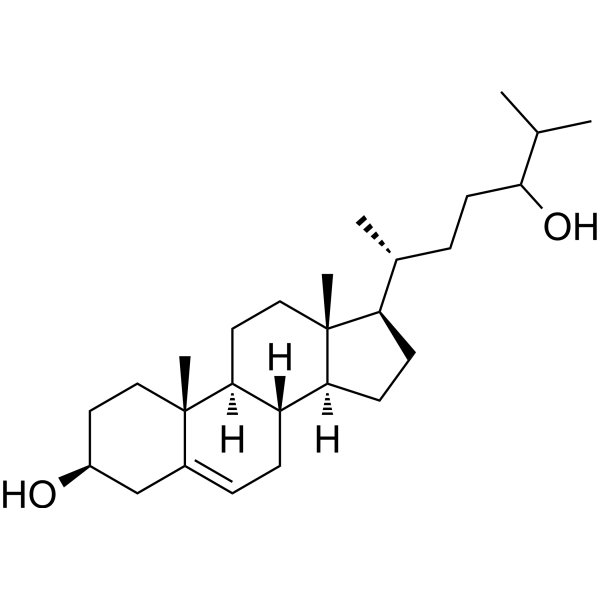
24-Hydroxycholesterol is a natural sterol, which serves as a positive allosteric modulator of N-Methyl-d-Aspartate (NMDA) receptorsR, and a potent activator of the transcription factors LXR.
|
-
- HY-N2370
-
|
|
iGluR
LXR
|
Neurological Disease
|
|
24-Hydroxycholesterol is a natural sterol, which serves as a positive allosteric modulator of N-Methyl-d-Aspartate (NMDA) receptorsR, and a potent activator of the transcription factors LXR.
|
-
- HY-117408
-
|
|
mAChR
|
Neurological Disease
|
|
VU6004256 is a potent and selective M1 muscarinic positive allosteric modulator (PAM) with an EC50 value of 155 nM. VU6004256 has the potential for the research of schizophrenia .
|
-
- HY-129408
-
|
|
GABA Receptor
|
Neurological Disease
|
|
SGE-516 is a neuroactive steroid that is a potent positive allosteric modulator of synaptic and extra-synaptic GABAA receptors. SGE-516 has anticonvulsant activity .
|
-
- HY-14758
-
|
NG2-73
|
GABA Receptor
|
Neurological Disease
|
|
Adipiplon (NG2-73) is a selective GABAA receptor positive allosteric modulator. Adipiplon is particularly useful in the research of a variety of central nervous system (CNS) disorders.
|
-
- HY-N15339
-
|
|
Sigma Receptor
|
Neurological Disease
|
|
Convolamine is an alkaloid found in Convolvulus pluricaulis and an effective positive modulator of the sigma-1 receptor (IC50 = 289 nM), exhibiting cognitive and neuroprotective properties .
|
-
- HY-132812
-
|
CVL-231
|
mAChR
|
Neurological Disease
|
|
Emraclidine (CVL-231) is a muscarinic M4 receptor positive allosteric modulator (WO2018002760, compound 11). Emraclidine can be used for the research of neurological diseases .
|
-
- HY-123837
-
|
|
Dopamine Receptor
|
Neurological Disease
|
|
MLS1082 is a pyrimidone-based D1-like dopamine receptor positive allosteric modulator, with an EC50 of 123 nM for DA-stimulated G protein signaling .
|
-
- HY-161113
-
|
|
CaSR
|
Metabolic Disease
|
|
Z8554052021 (compound 2021) is a potent CaSR and indeed GPCR positive allosteric modulator (PAM) with an EC50 of 3.3 nM. Z8554052021 has the potential for hyperparathyroidism research .
|
-
- HY-124372
-
|
|
mGluR
|
Neurological Disease
|
|
JNJ-46356479 is a selective and orally bioavailable mGlu2 receptor positive allosteric modulator (PAM), with the EC50 of 78 nM. JNJ-46356479 shows active in vivo .
|
-
- HY-108340
-
|
|
mAChR
|
Neurological Disease
|
|
PF-06767832 is a potent muscarinic M1 selective positive allosteric modulator (PAM), with the EC50 of 60 nM. PF-06767832 has good brain penetration .
|
-
- HY-110285
-
-
- HY-14774S
-
|
|
nAChR
|
Cancer
|
|
(Rac)-Monepantel-d5 is deuterium labeled Monepantel. Monepantel is organic anthelmintic, and acts as a positive allosteric modulator of a nematode-specific clade of nicotinic acetylcholine receptor (nAChR) subunits.
|
-
- HY-103668AR
-
|
|
Reference Standards
GABA Receptor
|
Neurological Disease
|
|
SSD114 hydrochloride (Standard) is the analytical standard of SSD114 hydrochloride (HY-103668A). This product is intended for research and analytical applications. SSD114 hydrochloride is a novel GABAB receptor positive allosteric modulator.
|
-
- HY-118179
-
|
|
mGluR
|
Neurological Disease
|
|
VU0486321 is a compound in a class of mGlu1 positive allosteric modulators (PAMs). VU0486321 maintains acceptable mGlu1 PAM potency, DMPK profile, CNS permeability, and mGluR selectivity.
|
-
- HY-14774S1
-
|
|
nAChR
|
Cancer
|
|
(Rac)-Monepantel sulfone-d5 is deuterium labeled Monepantel. Monepantel is organic anthelmintic, and acts as a positive allosteric modulator of a nematode-specific clade of nicotinic acetylcholine receptor (nAChR) subunits.
|
-
- HY-113346S
-
-
- HY-108703
-
|
PXT002331
|
mGluR
|
Neurological Disease
|
|
Foliglurax (PXT002331) is a highly selective and potent, brain-penetrant metabotropic glutamate receptor 4 positive allosteric modulator (mGluR4 PAM) with an EC50 of 79 nM . Antiparkinsonian effect .
|
-
- HY-120068
-
|
|
mGluR
|
Neurological Disease
|
|
VU0418506 is a selective positive allosteric modulator of mGlu4, with EC50 values of 68 nM and 46 nM for hmGlu4 and rmGlu4, respectively. VU0418506 exhibits antiparkinsonian activity .
|
-
- HY-107409
-
|
|
iGluR
|
Neurological Disease
|
|
GNE 5729 is a brain permeable positive allosteric modulator of NMDAR, with an EC50 of 37 nM for GluN2A, 4.7 and 9.5 μM for GluN2C and GluN2D, respectively.
|
-
- HY-107498
-
|
|
iGluR
|
Neurological Disease
|
|
GNE-8324 is a selective GluN2A positive allosteric modulator. GNE-8324 selectively enhances NMDA receptor (NMDAR)-mediated synaptic responses in inhibitory but not excitatory neurons .
|
-
- HY-15393
-
|
|
mGluR
|
Neurological Disease
|
|
VU 0357121 is a positive and highly selective mGlu5R allosteric modulator (PAM) with an EC50 of 33 nM. VU 0357121 is inactive or very weakly antagonizing at other mGlu receptor subtypes .
|
-
- HY-162662
-
|
|
Cytochrome P450
mAChR
|
Neurological Disease
|
|
VU6008677 is a positive allosteric modulator (PAM) for M4, with EC50 of 120 nM for hM4. VU6008677 inhibits cytochrome P450, exhibits good pharmacokinetic characteristics in rats .
|
-
- HY-12149
-
|
|
nAChR
|
Neurological Disease
|
|
A-867744 is a highly potent and selective type II positive allosteric modulator (PAM) of the alpha7 nicotinic acetylcholine receptors (nAChR) with an EC50 of 1.0 μM .
|
-
- HY-131941
-
|
|
GABA Receptor
|
Neurological Disease
|
|
SJM-3 is a positive allosteric modulator of different isoforms of the GABAA receptor. SJM-3 binds at the high-affinity benzodiazepine binding site at the α+/γ- subunit interface .
|
-
- HY-119772
-
|
ML137
|
Cholinesterase (ChE)
|
Neurological Disease
|
|
VU0366369 (ML137) is a selective positive allosteric modulator (PAM) for mAChR M1 with an EC50 of 830 nM. VU0366369 can be used in research about central nervous system diseases .
|
-
- HY-149593
-
-
- HY-128770
-
|
|
Dopamine Receptor
|
Neurological Disease
|
|
LY3154207 is a potent, subtype selective, and orally available human dopamine D1 receptor
positive allosteric modulator (PAM) with minimal allosteric agonist activity (EC50=3 nM) .
|
-
- HY-101216R
-
|
|
Reference Standards
iGluR
|
Neurological Disease
|
|
Org-26576 (Standard) is the analytical standard of Org-26576 (HY-101216). This product is intended for research and analytical applications. Org-26576 is a AMPA receptor positive allosteric modulator.
|
-
- HY-P1125
-
|
|
Free Fatty Acid Receptor
|
Others
|
|
4-CMTB is a selective free fatty acid receptor 2 (FFA2/GPR43) agonist and a positive allosteric modulator (pEC50=6.38) .
|
-
- HY-14774R
-
|
AAD1566 (Standard); NUZ-001 (Standard)
|
Reference Standards
nAChR
|
Cancer
|
|
Monepantel (Standard) is the analytical standard of Monepantel. This product is intended for research and analytical applications. Monepantel is organic anthelmintic, and acts as a positive allosteric modulator of a nematode-specific clade of nicotinic acetylcholine receptor (nAChR) subunits.
|
-
- HY-115575
-
|
|
Neuropeptide Y Receptor
|
Metabolic Disease
|
|
tBPC is a selective positive allosteric modulator for human Y4 receptor (Y4R), which enhances the activation of Y4R in G protein signaling and arrestin3 recruitment .
|
-
- HY-119687
-
-
- HY-108703A
-
|
PXT002331 monohydrochloride
|
mGluR
|
Neurological Disease
|
|
Foliglurax monohydrochloride (PXT002331 monohydrochloride) is a highly selective and potent, brain-penetrant metabotropic glutamate receptor 4 positive allosteric modulator (mGluR4 PAM) , with an EC50 of 79 nM . Antiparkinsonian effect .
|
-
- HY-108337
-
|
|
iGluR
|
Neurological Disease
|
|
GNE-0723 is a brain permeable positive allosteric modulator of NMDAR, with an EC50 of 21 nM for GluN2A, 7.4 and 6.2 μM for GluN2C and GluN2D, respectively .
|
-
- HY-116236
-
|
LY2607540
|
mGluR
|
Others
|
|
THIIC (LY2607540) is a compound with anxiolytic and antidepressant potential. It is a positive allosteric modulator of mGlu receptors, exhibits anxiolytic and antidepressant-like activities in multiple animal models, and can also affect sleep and neurochemical changes.
|
-
- HY-107507R
-
|
|
Reference Standards
mGluR
|
Neurological Disease
|
|
Ro 01-6128 (Standard) is the analytical standard of Ro 01-6128 (HY-107507). This product is intended for research and analytical applications. Ro 01-6128 is a positive allosteric modulator of mGluR1 .
|
-
- HY-113320
-
|
5β-Androsterone
|
GABA Receptor
Endogenous Metabolite
|
Neurological Disease
|
|
Etiocholanolone (5β-Androsterone) is the excreted metabolite of testosterone and has anticonvulsant activity . Etiocholanolone is a less potent neurosteroid positive allosteric modulator (PAM) of the GABAA receptor than its enantiomer form .
|
-
- HY-W011509
-
|
|
Potassium Channel
|
Neurological Disease
|
|
CyPPA is a positive modulator of hSK3 and hSK2, with EC50 values of 14 μM and 5.6 μM, repectively. CyPPA is inactive on both hSK1 and hIK channels [1]
|
-
- HY-111332
-
|
|
mGluR
|
Others
|
|
(E)-PHCCC is a positive allosteric modulator (PAM) for mGluR4, that enhances the activity of the receptor's endogenous ligand (glutamate), and exhibits activity in the calcium mobilization assay in CHO cells with an EC50 of 3.2 μM .
|
-
- HY-117450
-
|
|
Endogenous Metabolite
|
Others
|
|
VU0415374 is a positive allosteric modulator that modulates mGlu4 receptor activity. VU0415374 could help achieve precise light control of physiological responses. VU0415374 has high selectivity and can be used to further study the role of mGlu4 in co-expression of other mGlu receptor systems. The improved properties of VU0415374 make it an important candidate for studying mGlu4 with high precision in space and time .
|
-
- HY-120530
-
|
|
mGluR
|
Neurological Disease
|
|
JNJ-46281222 is an metabotropic glutamate (mGlu) 2-selective, highly potent PAM (positive allosteric modulator) with nanomolar affinity (Kd = 1.7 nM) and a high modulatory potency (pEC50 = 7.71) .
|
-
- HY-129527
-
|
|
iGluR
|
Neurological Disease
|
|
GNE-9278 is a highly selective positive allosteric modulator of NMDAR that acts at the GluN1 transmembrane domain (TMD). GNE-9278 acts on activated NMDARs to increase peak current and agonist affinity .
|
-
- HY-110145
-
|
|
TRP Channel
|
Cancer
|
|
MRS 1477, a dihydropyridine derivative, is a positive allosteric modulator of TRPV1 in the presence of capsaicin. MRS 1477 itself does not induce apoptosis, but the co-existence of MRS 1477 and capsaicin can induce apoptosis .
|
-
- HY-15787
-
|
|
iGluR
|
Neurological Disease
|
|
SGE-301 is a positive, allosteric NMDAR modulator. SGE-301 recovers NMDAR density and long-term potentiation to normal values. SGE-301 can be used in the research of neurological disorders .
|
-
- HY-116205
-
|
|
iGluR
|
Others
|
|
UBP684 is a novel positive allosteric modulator of NMDA receptors (NMDARs) that enhances receptor function by stabilizing the ligand-binding domains in a closed conformation, resulting in potentiated whole-cell currents and increased mean open time.
|
-
- HY-171302
-
|
|
GLP Receptor
|
Metabolic Disease
|
|
GLP-1R/GIPR agonist-2 is a GIPR agonist. GLP-1R/GIPR agonist-2 potentiates GIP(1-42)-induced intracellular cAMP production in cells expressing human GIPR. GLP-1R/GIPR agonist-2 can be used for the research of type II diabetes mellitus .
|
-
- HY-118022
-
|
|
mGluR
|
Neurological Disease
|
|
VU0361747 is a potent and selective positive allosteric modulator of metabotropic glutamate receptor 4 (mGluR4 PAM). VU0361737 has neuroprotective effect. VU0361737 significantly reverses Amphetamine-induced hyperlocomotion in vivo .
|
-
- HY-11058
-
|
|
GABA Receptor
|
Neurological Disease
|
|
BHF177 is a positive modulator of GABAB receptors that can block the interaction between nicotine and the brain's dopamine system, thereby reducing the addictive properties of nicotine. BHF177 is expected to be used in research related to smoking cessation .
|
-
- HY-122190
-
|
|
mAChR
|
Neurological Disease
|
|
TAK-071 is a novel, potent and highly selective muscarinic acetylcholine receptor 1 (M1R) positive allosteric modulator. EC50 of TAK-071 M1R agonist activities is 520 nM .
|
-
- HY-124867
-
|
|
TSH Receptor
|
Endocrinology
|
|
D3-βArr is a positive allosteric modulator for thyrotropin receptor (TSHR), which initiates translocation of β-Arr 1 by direct TSHR activation and potentiates TSH-mediated preosteoblast differentiation in vitro .
|
-
- HY-W777503
-
|
|
Isotope-Labeled Compounds
CaSR
|
Cardiovascular Disease
|
|
Calindol hydrochloride- 13C,d2 is the deuterium and 13C labeled Calindol hydrochloride (HY-122819). Calindol hydrochloride is a positive allosteric modulator (PAM) of calcimimetic calcium-sensing receptor (CaSR) with an EC50 of 132 nM .
|
-
- HY-180929
-
|
|
nAChR
|
Neurological Disease
|
|
RGH-857 is an orally active, selective, potent nicotinic α7 positive allosteric modulator. RGH-857 is effective against amnesia. RGH-857 can be used in the research of Alzheimer's disease .
|
-
- HY-14417
-
|
|
mGluR
|
Neurological Disease
|
|
VU0155041 is a potent, selective positive allosteric modulator (PAM) of mGluR4, with EC50s of 798 nM and 693 nM for human and rat mGluR4, respectively. VU0155041 has potential for the research of Parkinson's disease (PD) .
|
-
- HY-100605
-
|
|
mGluR
|
Others
|
|
VU0483605 is a potent and brain-penetrated mGlu1 receptor positive allosteric modulator (PAM). VU0483605 shows excellent mGlu1 PAM activity at both human and rat, with EC50 values of 390 and 356 nM, respectively .
|
-
- HY-142162
-
|
|
GCGR
|
Metabolic Disease
|
|
LSN3318839 is an orally active positive modulator of the glucagon-like peptide-1 receptor (GLP-1R). LSN3318839 can increase the secretion of insulin and has the effect of lowering blood sugar .
|
-
- HY-107198
-
|
|
GABA Receptor
|
Neurological Disease
|
|
(2S)-6-Prenylnaringenin is the most efficient compound in forebrain. (2S)-6-Prenylnaringenin acts as a GABAA positive allosteric modulator at α+β- binding interface .
|
-
- HY-P1397
-
|
|
Cannabinoid Receptor
|
Neurological Disease
|
|
RVD-Hpα, an α-hemoglobin-derived peptide containing three additional amino acids, is a CB1 cannabinoid receptor agonist. RVD-Hpα is a positive allosteric modulator of cannabinoid receptor 2 .
|
-
- HY-128783
-
|
|
mAChR
|
Neurological Disease
|
|
VU0090157 is a positive allosteric modulator (PAM) of the M1 muscarinic acetylcholine receptor (mAChR). VU0090157 increases the affinity of ACh by binding to the allosteric site. VU0090157 can be used in the study of schizophrenia and Alzheimer's disease .
|
-
- HY-14417B
-
|
|
mGluR
|
Neurological Disease
|
|
VU0155041 sodium is a potent, selective positive allosteric modulator (PAM) of mGluR4, with EC50s of 798 nM and 693 nM for human and rat mGluR4, respectively. VU0155041 has potential for the research of Parkinson's disease (PD) .
|
-
- HY-110168
-
|
|
nAChR
|
Neurological Disease
|
|
NS9283 is a positive positive allosteric modulator of (α4)3(β2)2 nicotinic ACh receptors. NS9283 can be used in a series of neurological conditions such as attention deficit hyperactivity disorder (ADHD), schizophrenia, Parkinson's disease and Alzheimer's disease .
|
-
- HY-13058
-
|
|
mGluR
|
Neurological Disease
|
|
ADX-47273 is a potent, selective and brain-penetrant mGluR5 positive allosteric modulator (PAM), with an EC50 of 0.17 μM for potentiation of glutamate (50 nM) response. ADX-47273 has antipsychotic and procognitive activities .
|
-
- HY-116819A
-
|
|
GCGR
|
Metabolic Disease
|
|
VU0453379 hydrochloride is a highly selective and central nervous system (CNS) penetrant positive allosteric modulator (PAM) of glucagon-like peptide-1R (GLP-1R) with an EC50 of 1.3 μM .
|
-
- HY-107505
-
|
|
mGluR
|
Neurological Disease
|
|
CBiPES hydrochloride is a mGlu2 receptor positive allosteric modulator (EC50: 92.8 nM). CBiPES hydrochloride attenuates stress-induced hyperthermia and PCP-induced hyperlocomotor activity. CBiPES hydrochloride can be used for research of neurological disease, such as Parkinson's disease (PD) .
|
-
- HY-141515
-
|
|
Opioid Receptor
|
Neurological Disease
|
|
BMS-986121 is a positive allosteric modulator (PAM) of the μ opioid receptor extracted from patent WO2014107344. BMS-986121 is built on a chemical scaffold representing a new chemotype for μ receptor PAMs .
|
-
- HY-112209
-
|
|
mAChR
|
Neurological Disease
|
|
VU0467154 is a positive allosteric modulator of the M4 muscarinic acetylcholine receptor (mAChR), potentiating the response to ACh with pEC50s of 7.75, 6.2 and 6 for rat, human and cynomolgus monkey M4 receptor, respectively.
|
-
- HY-12508
-
|
|
iGluR
|
Neurological Disease
|
|
CMPDA is a positive allosteric modulator of AMPA receptors with EC50s of 45.4 ± 4.2 nM/63.4 ± 5.6 nM for GluA2i/GluA2o receptor.
|
-
- HY-120004
-
|
|
mAChR
|
Infection
|
|
PF-06827443 is a potent, low-clearance, orally bioavailable, and CNS-penetrant M1-selective positive allosteric modulator (PAM) with minimal agonist activity. PF-06827443 induce cholinergic AEs and convulsion .
|
-
- HY-10933S
-
|
BDP 12-d10
|
Isotope-Labeled Compounds
iGluR
|
Neurological Disease
|
|
CX516-d10 is the deuterium labeled CX516. CX516 (BDP 12) is an ampakine and acts as an AMPA receptor positive allosteric modulator for the research of Alzheimer's disease, schizophrenia and mild cognitive impairment (MCI) .
|
-
- HY-131004
-
|
|
Cannabinoid Receptor
|
Neurological Disease
|
|
CB2R PAM is an orally active cannabinoid type-2 receptors (CB2Rs) positive allosteric modulator. CB2R PAM displays antinociceptive activity in vivo in an experimental mouse model of neuropathic pain .
|
-
- HY-160888
-
|
|
mAChR
|
Endocrinology
|
|
ASP8302 is a positive and allosteric muscarinic M3 receptor modulator. ASP8302 improves voiding efficiency and reduced residual urine volume in two voiding dysfunction models. ASP8302 can be used for research of underactive bladder .
|
-
- HY-107505A
-
|
|
mGluR
|
Neurological Disease
|
|
CBiPES is a potent mGlu2 positive allosteric modulator with an EC50 value of 92.8 nM. CBiPES attenuates stress-induced hyperthermia and Phencyclidine-induced hyperlocomotor activity. CBiPES can be used for research of neurological diseases, such as Parkinson's disease (PD) .
|
-
- HY-109160
-
|
CAD-1883
|
Potassium Channel
|
Neurological Disease
|
|
Rimtuzalcap (CAD-1883) is a first-in-class selective positive allosteric modulator of small-conductance calcium-activated potassium channels (SK channels). Rimtuzalcap can be used for the research of movement disorders including essential tremor (ET) and spinocerebellar ataxia (SCA) .
|
-
- HY-12150
-
CCMI
1 Publications Verification
AVL-3288; UCI-4083
|
nAChR
|
Neurological Disease
|
|
CCMI (AVL-3288) is a potent and selective α7 nAChR-positive allosteric modulator, does not bind to or activate α7 nAChRs via the orthosteric site, and causes significant positive modulation of agonist-induced currents at α7 nAChRs. CCMI has potential in CNS diseases with cognitive dysfunction .
|
-
- HY-146099
-
|
|
GABA Receptor
|
Neurological Disease
|
|
GABAA receptor agent 7 (compoud 5c) is a potent GABAA receptor positive modulator. GABAA receptor agent 7 shows anticonvulsant activity in vitro and in vivo with low neurotoxicity. GABAA receptor agent 7 has the potential for the research of epilepsy .
|
-
- HY-100728R
-
|
|
mGluR
Reference Standards
|
Neurological Disease
|
|
BMT-145027 (Standard) is the analytical standard of BMT-145027 (HY-100728). This product is intended for research and analytical applications. BMT-145027 is an mGluR5 positive allosteric modulator without inherent agonist activity, exhibits an EC50 of 47 nM.
|
-
- HY-146100
-
|
|
GABA Receptor
|
Neurological Disease
|
|
GABAA receptor agent 8 (compoud 5e) is a potent GABAA receptor positive modulator. GABAA receptor agent 8 shows anticonvulsant activity in vitro and in vivo with low neurotoxicity. GABAA receptor agent 8 has the potential for the research of epilepsy .
|
-
- HY-101528
-
|
|
iGluR
|
Neurological Disease
|
|
IDRA 21 is a positive and orally active modulator of the AMPA receptor. IDRA 21 facilitates excitatory neurotransmission via GluR1/2 receptors. IDRA 21 has the potential for the research of cognitive/memory disorders, including those associated with aging .
|
-
- HY-123852
-
|
|
mAChR
|
Neurological Disease
|
|
PF-06764427 is a selective M1 muscarinic acetylcholine receptor positive allosteric modulator. PF-06764427 exhibits robust M1 agonist activity. PF-06764427 can be used in the research of Alzheimer's disease and schizophrenia .
|
-
- HY-100409R
-
|
|
mGluR
Reference Standards
|
Cancer
|
|
PHCCC (Standard) is the analytical standard of PHCCC (HY-100409). This product is intended for research and analytical applications. PHCCC is a Group I mGluR antagonist with an IC50 of 3 μM. PHCCC is a selective positive modulator of mGlu4 receptor. Antiparkinsonian effect .
|
-
- HY-W823500
-
|
|
GLP Receptor
|
Metabolic Disease
|
|
GLP-1R agonist 39 (Compound 7) is a potent GLP-1 receptor positive allosteric modulator. GLP-1R agonist 39 can be used for the research of obesity and type 2 diabetes .
|
-
- HY-113320S
-
|
5β-Androsterone-d5
|
Isotope-Labeled Compounds
GABA Receptor
Endogenous Metabolite
|
Neurological Disease
|
|
Etiocholanolone-d5 is the deuterium labeled Etiocholanolone. Etiocholanolone (5β-Androsterone) is the excreted metabolite of testosterone and has anticonvulsant activity . Etiocholanolone is a less potent?neurosteroid positive allosteric modulator?(PAM) of the GABAA?receptor than its?enantiomer form .
|
-
- HY-159527
-
|
Glovadalen
|
Dopamine Receptor
|
Neurological Disease
|
|
Glovadalenum (Glovadalen) is an orally active, selective, blood-brain barrier permeable positive allosteric modulator of dopamine D1 receptor. Glovadalenum selectively enhances the efficacy of dopamine in activating dopamine D1 receptor. Glovadalenum can be used for the research of Parkinson's disease .
|
-
- HY-101841R
-
|
|
mAChR
Reference Standards
|
Neurological Disease
|
|
LY 2033298 (Standard) is the analytical standard of LY 2033298 (HY-101841). This product is intended for research and analytical applications. LY 2033298 is a selective positive allosteric modulator of the muscarinic M4 receptor. LY 2033298 can be used in the study of psychiatric disorders .
|
-
- HY-14612
-
|
|
mGluR
|
Neurological Disease
|
|
CPPHA is potent and selective positive allosteric modulator (PAM) of the mGluR5 and mGluR1 (metabotropic glutamate receptor). CPPHA can potentiate responses of mGluR5 and mGluR1 to activation of these receptors. CPPHA is developed for the research of central nervous system disorders .
|
-
- HY-156331
-
|
|
mGluR
|
Neurological Disease
|
|
VU6004909 is a blood-brain barrier penetrated mGlu1 positive allosteric modulator (PAM), with the EC50s of 25.7 nM and 31 nM for human mGlu1 and rat mGlu1, respectively. VU6004909 reduces dorsolateral striatal dopamine (DA) release in vivo and displays antipsychotic efficacy .
|
-
- HY-16940
-
|
24S-OHC; 24S-HC; Cerebrosterol
|
LXR
iGluR
Endogenous Metabolite
|
Metabolic Disease
|
|
24(S)-Hydroxycholesterol (24S-OHC), the major brain cholesterol metabolite, plays an important role to maintain homeostasis of cholesterol in the brain. 24(S)-Hydroxycholesterol (24S-OHC) is one of the most efficient endogenous LXR agonist known and is present in the brain and in the circulation at relatively high levels. 24(S)-Hydroxycholesterol (24S-OHC) is a very potent, direct, and selective positive allosteric modulator of NMDARs with a mechanism that does not overlapthat of other allosteric modulators .
|
-
- HY-156634
-
|
NYX-783
|
iGluR
|
Neurological Disease
|
|
Risevistinel (NYX-783) is a positive allosteric modulator of N-methyl-D-aspartate (NMDA) receptor. Nevadistinel can be used to inhibit cognitive impairment associated with neurodegenerative diseases, such as mild cognitive impairment, mild Alzheimer's disease, Parkinson's disease, Lewy body disease .
|
-
- HY-114576
-
|
Nooglutyl; ONK-10
|
iGluR
Dopamine Receptor
|
Neurological Disease
|
|
Nooglutil (Nooglutyl; ONK-10) is a positive modulator of AMPA-type glutamate receptors (AMPARs). Nooglutil also regulates dopamine D2 receptor function to exert anxiolytic effects. Nooglutil is promising for research of neurodegenerative disorders (e.g., Alzheimer’s disease) .
|
-
- HY-113608
-
|
|
Adenosine Receptor
|
Neurological Disease
|
|
VCP171 is a potent adenosine A1 receptor (A1R) positive allosteric modulator (PAM). VCP171 is effective at decreasing excitatory synaptic currents in Lamina II of neuropathic pain model. VCP171 can be used for researching neuropathic pain .
|
-
- HY-114933
-
|
|
mAChR
|
Neurological Disease
Metabolic Disease
|
|
VU0119498 is a pan Gq mAChR M1, M3, M5 positive allosteric modulator (PAM), with EC50s of 6.04, 6.38, and 4.08 µM, respectively. VU0119498 has antidiabetic activity .
|
-
- HY-113320S1
-
|
5β-Androsterone-d2
|
Isotope-Labeled Compounds
GABA Receptor
Endogenous Metabolite
|
Neurological Disease
|
|
Etiocholanolone-d2 is the deuterium labeled Etiocholanolone. Etiocholanolone (5β-Androsterone) is the excreted metabolite of testosterone and has anticonvulsant activity . Etiocholanolone is a less potent?neurosteroid positive allosteric modulator?(PAM) of the GABAA?receptor than its?enantiomer form .
|
-
- HY-103454B
-
|
|
Estrogen Receptor/ERR
Apoptosis
|
Endocrinology
Cancer
|
|
MPP hydrochloride is a potent and selective ER (estrogen receptor) modulator. MPP hydrochloride induces significant apoptosis in the endometrial cancer and oLE cell lines. MPP hydrochloride reverses the the positive effects of beta-estradiol. MPP hydrochloride has mixed agonist/antagonist action on murine uterine ERalpha in vivo .
|
-
- HY-144782
-
|
|
HDAC
Autophagy
|
Cancer
|
|
HDAC10-IN-2 (compound 10c) is a potent and highly selective HDAC10 inhibitor, with an IC50 of 20 nM. HDAC10-IN-2 modulates autophagy in aggressive FLT3-ITD positive acute myeloid leukemia cells .
|
-
- HY-169329
-
|
|
PINK1/Parkin
E1/E2/E3 Enzyme
|
Neurological Disease
|
|
BIO-2007817 is a Parkin positive allosteric modulators (PAMs). BIO-2007817 enhances the activity of wildtype Parkin. BIO-2007817 stimulates Parkin (an E3 ligase)autoubiquitination and induces the appearance of monoubiquitinated forms of Miro1 (EC50: 0.17 μM) .
|
-
- HY-144782A
-
|
|
HDAC
Autophagy
|
Cancer
|
|
HDAC10-IN-2 hydrochloride (compound 10c) is a potent and highly selective HDAC10 inhibitor, with an IC50 of 20 nM. HDAC10-IN-2 hydrochloride modulates autophagy in aggressive FLT3-ITD positive acute myeloid leukemia cells .
|
-
- HY-16579
-
|
HOE 36-801 hydrochloride
|
GABA Receptor
|
Neurological Disease
|
|
Etifoxine hydrochloride, a non-benzodiazepine GABAergic compound, is a positive allosteric modulator of α1β2γ2 and α1β3γ2 subunit-containing GABAA receptors. Etifoxine hydrochloride reveals anxiolytic and anticonvulsant properties in rodents .
|
-
- HY-143878
-
-
- HY-100366R
-
|
|
mGluR
Reference Standards
|
Neurological Disease
|
|
Lu AF21934 (Standard) is the analytical standard of Lu AF21934 (HY-100366). This product is intended for research and analytical applications. Lu AF21934 is a selective and brain-penetrant mGlu4 receptor positive allosteric modulator with an EC50 of 500 nM for mGlu4 receptor .
|
-
- HY-16579A
-
|
HOE 36-801
|
GABA Receptor
|
Neurological Disease
|
|
Etifoxine, a non-benzodiazepine GABAergic compound, is a positive allosteric modulator of α1β2γ2 and α1β3γ2 subunit-containing GABAA receptors. Etifoxine reveals anxiolytic and anticonvulsant properties in rodents .
|
-
- HY-144779
-
|
|
HDAC
Autophagy
|
Cancer
|
|
HDAC10-IN-1 (compound 13b) is a potent and highly selective HDAC10 inhibitor, with an IC50 of 58 nM. HDAC10-IN-1 modulates autophagy in aggressive FLT3-ITD positive acute myeloid leukemia cells .
|
-
- HY-162663
-
|
ML253
|
mAChR
|
Neurological Disease
|
|
VU0448088 (ML253) is a potent and cross the blood-brain barrier tricyclic muscarinic acetylcholine receptor subtype 4 (M4) positive allosteric modulator with EC50 values of 56, 176 nM for human and rat, respectively. VU0448088 has the potential for the research of psychotic .
|
-
- HY-110175
-
CX614
1 Publications Verification
|
iGluR
|
Neurological Disease
|
|
CX614 is a positive variant modulator of AMPA receptors that enhances excitatory postsynaptic potentials (amplitude and duration) by blocking and slowing the inactivation of responses to glutamate and automatically evokes excitatory postsynaptic currents in neuronal cultures. CX614 can be used in the study of psychiatric disorders such as depression .
|
-
- HY-119687R
-
-
- HY-182511
-
|
|
GABA Receptor
|
Neurological Disease
|
|
IUN-00433 (Compound 36) is a selective positive allosteric modulator of α4β1δ-type GABAA receptors, with an EC50 of 0.060 μM. IUN-00433 is applicable to research related to neurological disorders .
|
-
- HY-103454
-
|
|
Estrogen Receptor/ERR
Apoptosis
|
Endocrinology
Cancer
|
|
MPP dihydrochloride is a potent and selective ER (estrogen receptor) modulator. MPP dihydrochloride induces significant apoptosis in the endometrial cancer and oLE cell lines. MPP dihydrochloride reverses the positive effects of beta-estradiol. MPP dihydrochloride has mixed agonist/antagonist action on murine uterine ERalpha in vivo .
|
-
- HY-128584
-
|
AZN-00016130
|
mAChR
|
Neurological Disease
|
|
VU6005806 (AZN-00016130) is a potent muscarnic acethylcholine receptor subtype 4 (M4) positive allosteric modulator (PAM), with EC50s of 94 nM, 28 nM, 87 nM and 68 nM for human, rat, dog and cyno M4, respectively. Used in the research of neuropsychiatric disorders .
|
-
- HY-116463D
-
|
|
Sigma Receptor
|
Neurological Disease
|
|
(Rac)-E1R (Compound 2) is the racemate of E1R. (Rac)-E1R is a sigma-1 receptor positive allosteric modulator (Sig1R PAM) used for the research of cognition/memory disorders .
|
-
- HY-W725476
-
|
|
Reactive Oxygen Species (ROS)
|
Infection
|
|
Bifenazate-d5 is the deuterium labeled Bifenazate (HY-119687). Bifenazate is a carbazate acaricide that control 100% of mites at a concentration of 25 ppm . Bifenazate is a positive allosteric modulator of GABA receptor . Bifenazate is the inhibitor for the mitochondrial electron transport chain complex III .
|
-
- HY-10936
-
|
|
iGluR
|
Neurological Disease
|
|
S 18986 is a selective, orally active, brain penetrant positive allosteric modulator of AMPA-type receptors. S 18986 shows cognitive enhancing properties in rodents. S 18986 activates the release of noradrenaline and acetylcholine in rat hippocampus and enhances rat memory in object-recognition tests .
|
-
- HY-115796
-
|
|
mGluR
|
Others
|
|
VU0477886 is a metabotropic glutamate receptor subtype 4 (mGlu4) positive allosteric modulator with potent activating activity on mGlu4 (EC50 = 95nM, 89% Glu Max), good pharmacokinetic characteristics (brain: plasma Kp = 1.3), and significant therapeutic efficacy in Parkinson's disease models.
|
-
- HY-143879
-
-
- HY-123671
-
|
|
Neuropeptide Y Receptor
|
Neurological Disease
|
|
CYM2503 is a putative GalR2-positive allosteric modulator. CYM2503 increases the latency to first electrographic seizure and decreases the total time in seizure. CYM2503 also attenuates electroshock-induced seizures in mice. Galanin receptors type 1 (GalR1) and/or type 2 (GalR2) represent unique pharmacological targets for the research of seizures and epilepsy .
|
-
- HY-179240
-
|
|
Dopamine Receptor
|
Neurological Disease
|
|
UNC9815 is a D1 dopamine receptor (D1R) orthosteric allosteric modulator (PAM). UNC9815 can dose-dependently enhance the functional efficacy of dopamine in β-inhibitory protein recruitment experiments and cAMP accumulation experiments. When used in combination with other PAMs, UNC9815 exhibits a significant synergistic enhancement effect. UNC9815 can be used to study neurological and psychiatric diseases such as Parkinson's disease and schizophrenia .
|
-
- HY-156626
-
|
NYX-458; NYX-3054
|
iGluR
|
Neurological Disease
|
|
Nevadistinel (NYX-458; NYX-3054) is a positive allosteric modulator of N-methyl-D-aspartate (NMDA) receptor. Nevadistinel can be used to inhibit cognitive impairment associated with neurodegenerative diseases, such as mild cognitive impairment, mild Alzheimer's disease, Parkinson's disease, Lewy body disease .
|
-
- HY-120613
-
|
|
Opioid Receptor
|
Neurological Disease
|
|
BMS-986187 is an δ-opioid receptor-selective positive allosteric modulator (PAM) with an EC50 of 0.03 μM and a pKB of 6.02 (~1 μM). BMS-986187 has no observable PAM activity at the μ-receptor (EC50=3 μM) .
|
-
- HY-175366
-
|
|
Opioid Receptor
Arrestin
|
Neurological Disease
|
|
DOR agonist 3 (Compound 10) is a δ-opioid receptor (DOR)-selective positive allosteric modulator. DOR agonist 3 enhances G protein signaling while reducing β-arrestin2 recruitment. DOR agonist 3 is promising for research of chronic pain and depression .
|
-
- HY-103502
-
CGP7930
1 Publications Verification
|
GABA Receptor
|
Neurological Disease
|
|
CGP7930 (3-(3’,5’-Di-tert-butyl-4’-hydroxy) phenyl-2, 2-dimethylpropanol) is a positive metabotropic GABAB receptor allosteric modulator. CGP7930 enhances the inhibitory effect of l-baclofen on the oscillatory activity of cultured cortical neurons .
|
-
- HY-14611
-
|
DFB
|
mGluR
|
Neurological Disease
|
|
3,3'-Difluorobenzaldazine (DFB) is a selective positive allosteric modulator of mGluR5. 3,3'-Difluorobenzaldazine potentiates 3- to 6-fold action for mGlu5 agonists (Glutamate, Quisqualate, and 3,5-Dihydroxyphenylglycine), with EC50s in the 2 to 5 μM range .
|
-
- HY-173623
-
|
|
iGluR
|
Neurological Disease
|
|
EU 1622-240 is a biased positive allosteric modulator of GluN2B, GluN2C, and GluN2D, with EC50s of 0.57, 0.82, 1.1 μM respectively. EU 1622-240 has good physicochemical properties, in vitro stability, and permeability .
|
-
- HY-107651
-
|
|
mAChR
|
Metabolic Disease
|
|
VU 0365114 is a selective mAChR M5 positive allosteric modulator, with an EC50 of 2.7 μM, and >30 μM for M1, M2, M3 and M4 receptors. VU 0365114 increases insulin secretion stimulated by ACh in human β-cells .
|
-
- HY-169432
-
|
|
GABA Receptor
|
Neurological Disease
|
|
TET-13 is a positive allosteric modulator of GABAA receptor with an EC50 of 5.65 μM, lower than that of Etomidate (EC50: 9.29 μM). TET-13 shows potent anesthetic effects in both mice and rats (ED50: 0.48 mg/kg and 0.69 mg/kg, respectively) .
|
-
- HY-110168R
-
|
|
nAChR
|
Neurological Disease
|
|
NS 9283 (Standard) is the analytical standard of NS 9283. This product is intended for research and analytical applications. NS9283 is a positive positive allosteric modulator of (α4)3(β2)2 nicotinic ACh receptors. NS9283 can be used in a series of neurological conditions such as attention deficit hyperactivity disorder (ADHD), schizophrenia, Parkinson's disease and Alzheimer's disease .
|
-
- HY-120093
-
|
|
Cannabinoid Receptor
PERK
|
Neurological Disease
|
|
GAT100 is a negative allosteric modulator and covalent allosteric probe for cannabinoid receptor type 1 (CB1R). GAT100 acts as a positive allosteric modulator for orthosteric agonist CP55,940 binding to regulate the CB1R signaling pathway. GAT100 reduces the potency and efficacy of orthosteric CB1R agonists in terms of β-arrestin 1 recruitment, phosphorylation of PLCβ3 and ERK1/2, cAMP accumulation, and CB1R internalization. GAT100 is applicable to the research of psychobehavioral and somatic diseases .
|
-
- HY-131196
-
|
|
mAChR
|
Neurological Disease
|
|
M3 mAChR agonist 1 is an M3-preferring M3/M5 mAChR dual positive allosteric modulators (PAM). M3 mAChR agonist 1 shows excellent subtype selectivity over other subtypes of mAChRs including M1, M2, and M4 mAChRs. M3 mAChR agonist 1 increases the contraction of isolated rat bladder strips by modulating the M3 muscarinic acetylcholine receptor, leading to enhanced signaling pathways. M3 mAChR agonist 1 can be used for the research of endocrinology .
|
-
- HY-118342
-
PQCA
1 Publications Verification
|
mAChR
|
Neurological Disease
|
|
PQCA is a highly selective and potent muscarinic M1 receptor positive allosteric modulator. PQCA has an EC50 value of 49 nM and 135 nM on rhesus and human M1 receptor, respectively. PQCA is inactive for other muscarinic receptors. PQCA has potential to reduce the cognitive deficits associated with Alzheimer's disease .
|
-
- HY-N6084
-
|
α-Lupulic acid
|
COX
GABA Receptor
Apoptosis
|
Cardiovascular Disease
|
|
Humulone (α-Lupulic acid), a prenylated phloroglucinol derivative, is a potent cyclooxygenase-2 (COX-2) inhibitor. Humulone acts as a positive modulator of GABAA receptor at low micromolar concentrations. Humulone is an inhibitor of bone resorption. Humulone possesses antioxidant, anti-angiogenic and apoptosis-inducing properties .
|
-
- HY-N15339A
-
|
|
Sigma Receptor
|
Neurological Disease
|
|
Convolamine hydrochloride is a tropane alkaloid and a potent Sigma-1 receptor positive allosteric modulator with an IC50 value of 289 nM. Convolamine hydrochloride can be extracted from Convolvulus plauricalis. Convolamine hydrochloride exhibits cognitive-improving and neuroprotective properties. Convolamine hydrochloride can be used in research related to Wolfram syndrome and Alzheimer's disease .
|
-
- HY-123904
-
|
|
iGluR
|
Neurological Disease
|
|
UoS12258 is a selective positive allosteric modulator of AMPA receptor. UoS12258 enhances AMPA receptor‐mediated synaptic transmission. UoS12258 improves performance in cognition rat models, including Scopolamine (HY-N0296)‐impaired rats and water maze learning and retention in aged rats .
|
-
- HY-119226
-
|
|
mAChR
|
Neurological Disease
|
|
VU0152099 is a potent, selective and brain-penetrant mAChR M4 positive allosteric modulator with an EC50 of 0.4 µM for rat M4 receptor. VU0152099 is inactive for other mAChR subtypes or other GPCRs. VU0152099 has no agonist activity but potentiated responses of M4 to acetylcholine .
|
-
- HY-110168S
-
|
|
Isotope-Labeled Compounds
nAChR
|
Neurological Disease
|
|
NS 9283-d4 is the deuterium labeled NS 9283 (HY-110168). NS 9283 is a positive positive allosteric modulator of (α4)3(β2)2 nicotinic ACh receptors. NS 9283 can be used in a series of neurological conditions such as attention deficit hyperactivity disorder (ADHD), schizophrenia, Parkinson's disease and Alzheimer's disease .
|
-
- HY-122647
-
|
VU0652957; VU2957
|
mGluR
|
Neurological Disease
|
|
Valiglurax (VU0652957) is a potent, orally active and selective mGlu4 positive allosteric modulator with EC50 values of 64.6 nM and 197 nM for hmGlu4/Gqi5 and rmGlu4 GIRK, respectively. Valiglurax is a central nervous system (CNS) penetrant. Valiglurax can be used in research of Parkinson's disease .
|
-
- HY-118256
-
|
|
mGluR
|
Neurological Disease
|
|
LSN2814617 is an orally active, potent, brain-penetrant, and selective mGlu5 (metabotropic glutamate 5) positive allosteric modulator (PAM), with EC50 values of 52 nM (Human mGlu5) and 42 nM (rat mGlu5). LSN2814617 shows wake-promoting effect. LSN2814617 can be used for schizophrenia research .
|
-
- HY-12158
-
|
|
mAChR
|
Neurological Disease
|
|
VU0238441 is a pan muscarinic acetylcholine receptor (mAChR) positive allosteric modulator (PAM) with EC50s of 3.2 μM, 2.8 μM, 2.2 μM, 2.1 μM, >10 μM for M1, M2, M3, M5 and M4, respectively .
|
-
- HY-149776
-
|
|
nAChR
|
Neurological Disease
|
|
RGH-560 (compound 53) shows highly advanced α7 nAChR positive modulator properties and favorable physicochemical features. RGH-560 has robust procognitive in vivo potential. RGH-560 can be used to study Scopolamine (HY-N0296) -induced amnesia in mice .
|
-
- HY-108703AR
-
|
PXT002331 monohydrochloride (Standard)
|
Reference Standards
mGluR
|
Neurological Disease
|
|
Foliglurax monohydrochloride (Standard) is the analytical standard of Foliglurax (monohydrochloride) (HY-108703A). This product is intended for research and analytical applications. Foliglurax monohydrochloride (PXT002331 monohydrochloride) is a highly selective and potent, brain-penetrant metabotropic glutamate receptor 4 positive allosteric modulator (mGluR4 PAM) , with an EC50 of 79 nM . AntiparKinsonian effect .
|
-
- HY-15748
-
|
ADX-71149
|
mGluR
|
Neurological Disease
|
|
JNJ-40411813 (ADX-71149) is a novel positive allosteric modulator of the metabotropic Glutamate 2 receptor (mGlu2R) with EC50 of 147 nM. JNJ-40411813 has orally bioactivity and penetrate the blood-brain barriers. JNJ-40411813 has the potential property of anti-depression .
|
-
- HY-162455
-
|
|
EAAT
|
Neurological Disease
|
|
NA-014 is an excitatory amino acid transporter 2 (EAAT2)-selective positive allosteric modulator. NA-014 increases EAAT2-mediated glutamate uptake. NA-014 can be used for the research of epilepsy, neuropathic pain, stroke, drugs of abuse disorders .
|
-
- HY-155672
-
|
|
5-HT Receptor
|
Neurological Disease
|
|
JPC0323 is a dual 5-HT2C/5-HT2A receptor positive allosteric modulator. JPC0323 has on-target properties, acceptable plasma exposure and brain penetration. JPC0323 can be used for the research of neurological disease .
|
-
- HY-134494
-
MS48107
2 Publications Verification
|
GPR68
|
Neurological Disease
|
|
MS48107 is a potent and selective positive allosteric modulator of G protein-coupled receptor 68 (GPR68). MS48107 is selective for GPR68 over the closely related proton GPCRs, neurotransmitter transporters, and hERG ion channels. MS48107 can readily cross the blood-brain barrier (BBB) in mice .
|
-
- HY-124821
-
|
|
5-HT Receptor
|
Neurological Disease
Metabolic Disease
|
|
VA012 (compound 11) is a positive allosteric modulator (PAM) of the serotonin 5-HT2C receptor. VA012 reduces food intake and body weight gain without causing CNS-related malaise during subchronic administration. VA012 can be utilized in obesity research .
|
-
- HY-142162A
-
|
|
GCGR
|
Metabolic Disease
|
|
(S,R)-LSN3318839 is the stereoisomer of LSN3318839 (HY-142162). LSN3318839 is an orally active positive modulator of the glucagon-like peptide-1 receptor (GLP-1R). LSN3318839 can increase the secretion of insulin and has the effect of lowering blood sugar .
|
-
- HY-127133
-
|
MPP
|
Estrogen Receptor/ERR
|
Endocrinology
|
|
Methylpiperidino pyrazole (MPP) is a potent and selective ER (estrogen receptor) modulator. Methylpiperidino pyrazole induces significant apoptosis in the endometrial cancer and oLE cell lines. Methylpiperidino pyrazole reverses the the positive effects of beta-estradiol. Methylpiperidino pyrazole has mixed agonist/antagonist action on murine uterine ERalpha in vivo .
|
-
- HY-107498R
-
|
|
Reference Standards
iGluR
|
Neurological Disease
|
|
GNE-8324 (Standard) is the analytical standard of GNE-8324 (HY-107498). This product is intended for research and analytical applications. GNE-8324 is a selective GluN2A positive allosteric modulator. GNE-8324 selectively enhances NMDA receptor (NMDAR)-mediated synaptic responses in inhibitory but not excitatory neurons .
|
-
- HY-173032
-
|
|
mGluR
|
Neurological Disease
|
|
VU6033685 is the orally active positive allosteric modulator (PAM) for mGlu1 that positively modulates human mGlu1 and human mGlu5 with EC50 of 39 nM and 3960 nM. VU6033685 also inhibits CYP1A2, CYP2C9 and CYP2D6 with IC50 of 26, 22.3 and 23.8 μM, respectively. VU6033685 reverses amphetamine-induced rats hyperlocomotion, protects rats from MK-801 (HY-15084B)-induced cognitive impairment. VU6033685 exhibits good pharmacokinetics characteristics in rats with an oral bioavailability of 42.8% .
|
-
- HY-176761
-
|
|
Apoptosis
Autophagy
Caspase
mTOR
|
Cancer
|
|
NSC647889 is an apoptosis and autophagy inducer. NSC647889 induces apoptosis, inhibits mTOR pathway and abrogates DNA synthesis. NSC647889 triggers LC3-positive vesicle formation, modulates AKT and 4EBP1 phosphorylation and shows heightened caspase-3 activation in multicellular spheroids. NSC647889 can be used for the research of solid cancer tumour, head-neck carcinoma, and colorectal cancer .
|
-
- HY-112171
-
|
γ-Glu-Ala
|
Endogenous Metabolite
CaSR
|
Others
|
|
γ-L-Glutamyl-L-alanine (γ-Glu-Ala), composed of gamma-glutamate and alanine, is a proteolytic breakdown product of larger proteins. γ-L-Glutamyl-L-alanine is a natural substrate of the γ-Glutamylcyclotransferase. γ-L-Glutamyl-L-alanine is a positive modulator of calcium-sensing receptor (CaR) function .
|
-
- HY-16579AS2
-
|
|
GABA Receptor
|
Neurological Disease
|
|
Etifoxine-d5 is the deuterium labeled Etifoxine. Etifoxine, a non-benzodiazepine GABAergic compound, is a positive allosteric modulator of α1β2γ2 and α1β3γ2 subunit-containing GABAA receptors. Etifoxine reveals anxiolytic and anticonvulsant properties in rodents .
|
-
- HY-103561
-
|
|
mGluR
|
Neurological Disease
|
|
DCB (3,3′-dichlorobenzaldazine) is an neutral allosteric modulator of themetabotropic glutamate receptor metabotropic glutamate receptor subtype 5 (mGluR5) . DCB blocks the positive allosteric regulation of mGluRs (mGluR5) with the help of 3,3′-difluorobenzaldazine (DFB). DCB shows the negative modulatory effect of 3,3′-dimethoxybenzaldazine (DMeOB) .
|
-
- HY-14418
-
|
ML-128
|
mGluR
|
Neurological Disease
|
|
VU0361737 (ML-128) is a potent, selective and CNS penetrant positive allosteric modulator of metabotropic glutamate receptor 4 (mGluR4 PAM), with EC50s of 240 nM and 110 nM for human and rat mGluR4 receptors, respectively. VU0361737 has neuroprotective effect. VU0361737 is potential for Parkinson's disease research .
|
-
- HY-126327
-
|
|
Histone Methyltransferase
|
Cancer
|
|
UNC4976 is a positive allosteric modulator (PAM) peptidomimetic of CBX7 chromodomain binding to nucleic acids. UNC4976 simultaneously antagonizes H3K27me3-specific recruitment of CBX7 to target genes while increasing non-specific binding to DNA and RNA .
|
-
- HY-103524
-
|
(-)-Valerenic Acid
|
GABA Receptor
5-HT Receptor
|
Neurological Disease
|
|
Valerenic acid ((-)-Valerenic Acid), a sesquiterpenoid, is an orally active positive allosteric modulator of GABAA receptors. Valerenic acid is also a partial agonist of the 5-HT5a receptor. Valerenic acid mediates anxiolytic activity via GABAA receptors containing the β3 subunit. Valerenic acid also exhibits potent antioxidant properties .
|
-
- HY-15618
-
|
M1 receptor modulator
|
mAChR
Calcium Channel
|
Neurological Disease
|
|
MK-7622 (M1 receptor modulator) is an orally active positive allosteric modulator of muscarinic M1 acetylcholine receptors (mAChRs). MK-7622 enhances ACh-induced calcium flux in CHO cells expressing human M1 receptors (EC50 = 21 nM) and shows robust agonist activity in rat M1-expressing CHO cells, increasing intracellular calcium. MK-7622 reverses Scopolamine (HY-N0296)-induced cognitive deficits in rhesus macaques in an object retrieval detour task. MK-7622 can be used for the study of Alzheimer's disease (AD) .
|
-
- HY-65036
-
|
4-Bromo-2-pyridone
|
Biochemical Assay Reagents
Drug Intermediate
|
Neurological Disease
|
|
4-Bromo-2-hydroxypyridine is an intermediate. 4-Bromo-2-hydroxypyridine can be used to synthesize M1 muscarinic acetylcholine receptor (M1 mAChR) positive allosteric modulators. 4-Bromo-2-hydroxypyridine can be used in the research of Alzheimer's disease and schizophrenia .
|
-
- HY-W882667
-
|
|
iGluR
|
Neurological Disease
|
|
Pregn-5-en-3β-ol, a steroid compound, when formulated as the biscarboxylic acid hemiesters along with androst-5-en-3β-ol, serves as a potent positive allosteric modulator of NMDA (N-methyl-D-aspartate) receptors, making it applicable for research into psychiatric disorders .
|
-
- HY-162735
-
|
|
GPR65
|
Inflammation/Immunology
|
|
BRD5080 is a potent GPR65 positive allosteric modulator. BRD5080 induces GPR65-dependent cAMP production. BRD5080 exhibits a robust induction of cAMP activity and recruits G protein for the WT and variant hGPR65 as well as for the mouse ortholog. BRD5080 has the potential for autoimmune and inflammatory diseases research .
|
-
- HY-107505AR
-
|
|
Reference Standards
mGluR
|
Neurological Disease
|
|
CBiPES (Standard) is the analytical standard of CBiPES (HY-107505A). This product is intended for research and analytical applications. CBiPES is a potent mGlu2 positive allosteric modulator with an EC50 value of 92.8 nM. CBiPES attenuates stress-induced hyperthermia and Phencyclidine-induced hyperlocomotor activity. CBiPES can be used for research of neurological diseases, such as ParKinson's disease (PD) .
|
-
- HY-115864
-
|
TAK-653; NBI-1065845
|
iGluR
Lipoxygenase
|
Neurological Disease
|
|
Osavampator (TAK-653) is a AMPA receptor positive allosteric modulator. Osavampator selectively binds to AMPA-R in a glutamate-dependent manner and induces Ca2+ influx in hGluA1i CHO cells (EC50 = 3.3 μM). Osavampator improves learning and memory in many models. Osavampator is can be used for the research of depressive disorders .
|
-
- HY-119256
-
|
|
GABA Receptor
|
Neurological Disease
|
|
COR627 is a GABA receptor positive allosteric modulator with the ability to enhance GABA activity. COR627 exhibits effects on GABA and baclofen stimulation in rat cortical membranes and can increase its affinity for GABA(B) receptors. In vivo experiments have shown that COR627 can enhance the sedative/hypnotic effects of baclofen at pretreatment ineffective doses .
|
-
- HY-126327A
-
|
|
Histone Methyltransferase
|
Cancer
|
|
UNC4976 TFA is a positive allosteric modulator (PAM) peptidomimetic of CBX7 chromodomain binding to nucleic acids. UNC4976 TFA simultaneously antagonizes H3K27me3-specific recruitment of CBX7 to target genes while increasing non-specific binding to DNA and RNA .
|
-
- HY-114753
-
|
CR-2249; XY-2401
|
iGluR
|
Neurological Disease
|
|
Neboglamine (CR-2249; XY-2401) is a modulator for N-methyl-D-aspartate (NMDA) receptor. Neboglamine increases the levels of fos-like immunoreactivity (FLI)-positive cells in the prefrontal cortex, nucleus accumbens, and lateral septal nucleus in rat models, .restores NMDA (HY-17551) -mediated neurotransmitter release, and inhibits phencyclidine-induced hyperlocomotion .
|
-
- HY-B1456A
-
|
LILLY-53858
|
COX
Melanocortin Receptor
ERK
|
Inflammation/Immunology
|
|
Fenoprofen (LILLY-53858) is a nonsteroidal anti-inflammatory agent (NSAID) and inhibits cyclooxygenase (COX). Fenoprofen is a melanocortin receptors (MCRs) positive allosteric modulator (PAM). Fenoprofen also increases ERK1/2 activation in HEK293T cells. Fenoprofen has anti-arthritic activities and can be used for the study of rheumatoid arthritis and osteoarthritis .
|
-
- HY-13340
-
|
VU152100
|
mAChR
|
Neurological Disease
|
|
VU0152100 (VU152100) is a highly selective mAChR positive allosteric modulator (permeable to the blood-brain barrier). VU0152100 reverses Amphetamine-induced hypermotility in rats and increased levels of extracellular dopamine in nucleus accumbens and caudate-putamen. VU0152100 has good research potential in psychosis and cognitive impairment associated with mental disorders such as schizophrenia .
|
-
- HY-16579AR
-
|
HOE 36-801 (Standard)
|
Reference Standards
GABA Receptor
|
Neurological Disease
|
|
Etifoxine (Standard) is the analytical standard of Etifoxine. This product is intended for research and analytical applications. Etifoxine, a non-benzodiazepine GABAergic compound, is a positive allosteric modulator of α1β2γ2 and α1β3γ2 subunit-containing GABAA receptors. Etifoxine reveals anxiolytic and anticonvulsant properties in rodents .
|
-
- HY-16579R
-
|
HOE 36-801 hydrochloride (Standard)
|
GABA Receptor
Reference Standards
|
Neurological Disease
|
|
Etifoxine (hydrochloride) (Standard) is the analytical standard of Etifoxine (hydrochloride). This product is intended for research and analytical applications. Etifoxine hydrochloride, a non-benzodiazepine GABAergic compound, is a positive allosteric modulator of α1β2γ2 and α1β3γ2 subunit-containing GABAA receptors. Etifoxine hydrochloride reveals anxiolytic and anticonvulsant properties in rodents .
|
-
- HY-143312D
-
|
|
GLP Receptor
|
Metabolic Disease
|
|
(R)-V-0219 hydrochloride is an enantiomer of V-0219 (HY-143312). V-0219 is an orally active and positive allosteric modulator (PAM) of the GLP Receptor-1 (GLP-1R). (R)-V-0219 hydrochloride activates calcium fluxes in HEK cells stably expressing hGLP-1R .
|
-
- HY-N4157
-
|
|
mAChR
5-HT Receptor
Bacterial
|
Neurological Disease
|
|
Isopteropodine is a positive modulator that selectively acts on muscarinic M1 and 5-HT2 receptors. Isopteropodine has an EC50 of 9.92 μM for acetylcholine and 14.5 μM for 5-HT. Isopteropodine also has antibacterial activity against Gram-positive bacteria, with MICs of 150 μg/mL and 250 μg/mL for Staphylococcus aureus and Bacillus subtilis, respectively. Isopteropodine enhances receptor function by increasing the affinity of agonists for receptors and can also inhibit the growth of specific Gram-positive bacteria, and can be used in cognitive impairment and antibacterial research .
|
-
- HY-P11258
-
|
|
Urotensin Receptor
|
Cardiovascular Disease
Metabolic Disease
Inflammation/Immunology
Cancer
|
UPG-108, a peptide compound, is a non-competitive allosteric modulator of Urotensin II receptors (UTR). UPG-108 significantly enhances the efficacy of UTR agonists but reduces the potency of UTR agonists. UPG-111 efficiently induces calcium release and does not cause contraction of rat aortic rings without endothelial denudation. UPG-111 can be used to study various diseases related to the angiotensinergic system .
|
-
- HY-18654A
-
|
|
mGluR
|
Neurological Disease
|
|
ADX88178 TFA is an orally active, blood-brain barrier-penetrant, selective positive allosteric modulator of mGluR4, with an EC50 of 3.5 nM against hmGluR4. ADX88178 TFA modulates mGlu4 activity, enhances glutamate-mediated receptor activation, and increases the apparent affinity of glutamate for the receptor. ADX88178 TFA reverses haloperidol-induced catalepsy, potentiates the effects of levodopa (L-DOPA) and quinpirole, but fails to alleviate established abnormal involuntary movements, does not exacerbate L-DOPA-induced dyskinesia, and does not affect forelimb akinesia when administered alone. ADX88178 TFA can be used in research related to L-DOPA-induced dyskinesia and Parkinson's disease .
|
-
- HY-143312B
-
|
|
GLP Receptor
|
Metabolic Disease
|
|
(R)-V-0219 is an enantiomer of V-0219 (HY-143312). V-0219 is an orally active and positive allosteric modulator (PAM) of the GLP Receptor-1 (GLP-1R). (R)-V-0219 activates calcium fluxes in HEK cells stably expressing hGLP-1R .
|
-
- HY-129274
-
|
|
mGluR
|
Neurological Disease
|
|
RO4988546 is a negative allosteric modulator (NAM) that targets metabotropic glutamate receptors 2 and 3 (mGlu2, mGlu3). RO4988546 can reduce the binding of [ 3h]-LY354740 at the positive binding site, while affecting the receptor's G protein coupling and intracellular signaling. RO4988546 can be used in the development of antidepressants and cognitive enhancers .
|
-
- HY-105115
-
|
ZK 112119
|
GABA Receptor
|
Neurological Disease
|
|
Abecarnil (ZK 112119) is a ligand or a partial agonist for benzodiazepine (BZ) receptor. Abecarnil possesses anxiolytic and anticonvulsant properties. Abecarnil can act as a positive allosteric modulator of GABAA receptor. Abecarnil inhibits the binding of the BZ [3H]lormetazepam to rat cerebral cortex membranes, with an IC50 of 0.82 nM. Abecarnil can be used for epilepsy research .
|
-
- HY-110190
-
|
ML396
|
mGluR
|
Neurological Disease
|
|
VU0422288 (ML396) is a positive allosteric modulator of group III mGluRs. VU0422288 inhibits mGluRs with EC50s of 125 nM, 146 nM, and 108 nM for mGluR4, mGluR7, and mGluR8, respectively in calcium mobilization assays. VU0422288 reverses deficits in contextual fear memory, social recognition, and apneas in Rett syndrome (RTT) model mice .
|
-
- HY-101528R
-
|
|
iGluR
Reference Standards
|
Neurological Disease
|
|
IDRA 21 (Standard) is the analytical standard of IDRA 21 (HY-101528). This product is intended for research and analytical applications. IDRA 21 is a positive and orally active modulator of the AMPA receptor. IDRA 21 facilitates excitatory neurotransmission via GluR1/2 receptors. IDRA 21 has the potential for the research of cognitive/memory disorders, including those associated with aging .
|
-
- HY-149453
-
|
|
Guanylate Cyclase
|
Cardiovascular Disease
|
|
MCUF-651 is an orally active guanylyl cyclase A receptor (GC-A) positive allosteric modulator (PAM) (KD: 397 nM ). MCUF-651 binds to GC-A and selectively enhances the binding of atrial natriuretic peptide (ANP) to GC-A. MCUF-651 enhances ANP-mediated cGMP generation in human cardiac, renal, and fat cells. MCUF-651 inhibits cardiomyocyte hypertrophy .
|
-
- HY-139644
-
|
|
Adenosine Receptor
|
Neurological Disease
|
|
MIPS521 is a positive allosteric modulator of adenosine A1 receptor (A1AR). MIPS521 also has a lower A1R allosteric affinity (pKB=4.95; KB=11 μM). MIPS521 exhibits pain-relieving effects in vivo through modulation of the increased levels of endogenous adenosine .
|
-
- HY-P1397A
-
|
|
Cannabinoid Receptor
|
Cardiovascular Disease
|
|
RVD-Hpα TFA is the N-terminally extended form of human hemopressin that acts as a selective CB1 receptor agonist. RVD-Hpα TFA increases intracellular Ca 2+ levels in cells expressing CB1 receptors in vitro. RVD-Hpα TFA also high affinity CB2 positive allosteric modulator (Ki=50 nM).
|
-
- HY-109009
-
|
UCB-0942
|
GABA Receptor
|
Neurological Disease
|
|
Padsevonil (UCB0942) is a potent antiepileptic agent that selectively acts on presynaptic and postsynaptic targets. Padsevonil binds to synaptic vesicular protein 2 (SV2) with high affinity. Padsevonil is also a positive allosteric modulator and partial agonist of GABAAR, with high potency against α1 and α5 receptors. Padsevonil has antiepileptic effects in a variety of rodent models .
|
-
- HY-103454R
-
|
|
Reference Standards
Estrogen Receptor/ERR
Apoptosis
|
Endocrinology
Cancer
|
|
MPP dihydrochloride (Standard) is the analytical standard of MPP dihydrochloride (HY-103454). This product is intended for research and analytical applications. MPP dihydrochloride is a potent and selective ER (estrogen receptor) modulator. MPP dihydrochloride induces significant apoptosis in the endometrial cancer and oLE cell lines. MPP dihydrochloride reverses the positive effects of beta-estradiol. MPP dihydrochloride has mixed agonist/antagonist action on murine uterine ERalpha in vivo .
|
-
- HY-163280
-
|
|
NAMPT
|
Neurological Disease
|
|
JGB-1-155 is a positive allosteric modulators (N-PAMs), which enhances the activity of nicotinamide phosphoribosyltransferase NAMPT with EC50 of 3.29 μM. JGB-1-155 counteracts the oxidative stress, through upregulating the NAD + in THP-1 human monocytes. JGB-1-155 attenuates TNFα-induced ROS in HT-22 cells .
|
-
- HY-B0288B
-
|
LILLY-53858 Calcium hydrate
|
COX
Melanocortin Receptor
ERK
|
Inflammation/Immunology
|
|
Fenoprofen (LILLY-53858) Calcium hydrate is a nonsteroidal anti-inflammatory agent (NSAID) and inhibits cyclooxygenase (COX). Fenoprofen Calcium hydrate is a melanocortin receptors (MCRs) positive allosteric modulator (PAM). Fenoprofen Calcium hydrate also increases ERK1/2 activation in HEK293T cells. Fenoprofen Calcium hydrate has anti-arthritic activities and can be used for the study of rheumatoid arthritis and osteoarthritis .
|
-
- HY-176731
-
|
|
P2X Receptor
|
Neurological Disease
|
|
MSK-9 is a positive allosteric modulator of the P2X4 receptor with dual activities of enhancing ion conductance and delaying receptor inactivation. MSK-9 stabilizes the open state of the P2X4 receptor through rigid 3-piperidinyl and hydrophobic menthyl substituents. MSK-9 can be used in the study of multiple sclerosis (MS) .
|
-
- HY-120783
-
|
|
Endogenous Metabolite
|
Neurological Disease
|
|
Lu AF58801 is a potent, orally available, brain-penetrant positive allosteric modulator of α7 nicotinic acetylcholine receptors with efficacy in a novel object recognition task in mice. Lu AF58801 was shown to selectively enhance the activity of α7 nicotinic acetylcholine receptors. Lu AF58801 was able to improve cognitive function in mice treated with subchronic fluchlorothiazol (PCP) .
|
-
- HY-116463B
-
|
|
Sigma Receptor
|
Neurological Disease
|
|
(2S,3S)-E1R (Compound 2d) is an enantiomer of E1R. (2S,3S)-E1R is a sigma-1 receptor positive allosteric modulator (Sig1R PAM) for the treatment of cognition/memory disorders .
|
-
- HY-103454BR
-
|
|
Reference Standards
Estrogen Receptor/ERR
Apoptosis
|
Endocrinology
Cancer
|
|
MPP hydrochloride (Standard) is the analytical standard of MPP hydrochloride (HY-103454B). This product is intended for research and analytical applications. MPP hydrochloride is a potent and selective ER (estrogen receptor) modulator. MPP hydrochloride induces significant apoptosis in the endometrial cancer and oLE cell lines. MPP hydrochloride reverses the the positive effects of beta-estradiol. MPP hydrochloride has mixed agonist/antagonist action on murine uterine ERalpha in vivo .
|
-
- HY-121600
-
|
|
Cannabinoid Receptor
|
|
|
GAT229 is a CB1 positive allosteric modulator (PAM) that effectively reduces intraocular pressure (IOP) in high IOP mouse models and enhances CB1 receptor-mediated IOP-lowering effects. A 0.2% GAT229 solution or 10 mg/kg of GAT229 alone significantly reduces IOP. GAT229 is promising for research related to glaucoma and elevated intraocular pressure .
|
-
- HY-125065
-
|
|
Androgen Receptor
5 alpha Reductase
|
Endocrinology
Cancer
|
|
MK-4541 is an orally active and selective androgen receptor (AR) modulator. MK-4541 acts as an antagonist to inhibit 5α-reductase. MK-4541 inhibits proliferation and induces apoptosis in AR positive prostate cancer cells. MK-4541 significantly inhibited the growth of R3327-G prostate tumors in xenograft mouse model .
|
-
- HY-B0288A
-
|
LILLY-53858 Calcium
|
COX
Melanocortin Receptor
ERK
|
Inflammation/Immunology
|
|
Fenoprofen (LILLY-53858) Calcium is a nonsteroidal anti-inflammatory agent (NSAID) and inhibits cyclooxygenase (COX). Fenoprofen Calcium is a melanocortin receptors (MCRs) positive allosteric modulator (PAM). Fenoprofen Calcium also increases ERK1/2 activation in HEK293T cells. Fenoprofen Calcium has anti-arthritic activities and can be used for the study of rheumatoid arthritis and osteoarthritis .
|
-
- HY-120727
-
|
|
mGluR
|
Neurological Disease
|
|
VU0364289 is a highly selective mGlu5 positive allosteric modulator (PAM) (binds to the MPEP (HY-14609A) site), with an EC50 of 1.6 μM. VU0364289 shows excellent central nervous system penetration. VU0364289 can reverse amphetamine-induced hyperlocomotion in a dose-dependent manner, which can be used for schizophrenia and other psychiatric research .
|
-
- HY-116463A
-
|
|
Sigma Receptor
|
Neurological Disease
|
|
(2R,3S)-E1R (Compound 2c) is an enantiomer of E1R. (2R,3S)-E1R is a sigma-1 receptor positive allosteric modulator (Sig1R PAM) for the treatment of cognition/memory disorders .
|
-
- HY-158627
-
|
|
5-HT Receptor
|
Others
|
|
JPC0323 Oleate is a derivative of JPC0323 (HY-155672). JPC0323 is a dual 5-HT2C/5-HT2A receptor positive allosteric modulator. JPC0323 has on-target properties, acceptable plasma exposure and brain penetration. JPC0323 can be used for the research of neurological disease .
|
-
- HY-155484
-
|
|
Sigma Receptor
|
Neurological Disease
|
|
SOMCL-668 is a selective and potent sigma-1 receptor allosteric modulator. ?SOMCL-668 shows positive modulation of improvement in social deficits and cognitive impairment induced by the selective sigma-1 agonist PRE084.?SOMCL-668 displays anti-seizure activities and can be used for psychotic illness research .
|
-
- HY-116463C
-
|
|
Sigma Receptor
|
Neurological Disease
|
|
(2R,3R)-E1R (Compound 2b) is an enantiomer of E1R. (2R,3R)-E1R is a sigma-1 receptor positive allosteric modulator (Sig1R PAM) for the treatment of cognition/memory disorders .
|
-
- HY-120641
-
|
|
mGluR
|
Neurological Disease
|
|
BMS-955829 is an orally active and selective mGluR5 positive allosteric modulator with an EC50 of 2.6 nM. BMS-955829 has no intrinsic agonist activity and a low glutamate fold shift (2.4). BMS-955829 can effectively improve cognitive and executive function deficits in rodents. BMS-955829 can be used in the research of cognitive impairment diseases such as schizophrenia .
|
-
- HY-102070
-
|
|
Potassium Channel
|
Neurological Disease
|
|
NS13001 is a potent, selective, orally active allosteric positive modulator of SK channels (small conductance calcium-activated potassium channels). The EC50s are 1.8 and 0.14 μM for SK2 and SK3, respectively. NS13001 holds promise as a potential therapeutic agent for treatment of spinocerebellar ataxia type 2 (SCA2) and possibly other cerebellar ataxias .
|
-
- HY-120589
-
|
|
mGluR
|
Neurological Disease
|
|
VU0360172 is a potent and selective mGlu5 receptor positive allosteric modulator with an EC50 value of 16 nM and a Ki of 195 nM, respectively. VU0360172 stimulates polyphosphoinositide (PI) hydrolysis in vivo, which is abrogated in mGlu5 receptors gene deleted mice . VU0360172 is a click chemistry reagent, it contains an Alkyne group and can undergo copper-catalyzed azide-alkyne cycloaddition (CuAAc) with molecules containing Azide groups.
|
-
- HY-165475
-
|
|
iGluR
|
Neurological Disease
|
|
TDPAM02 is a positive allosteric modulator of AMPA receptor GluA2. TDPAM02 can specifically bind to the ligand-binding domain (LBD) of GluA2 and shows an IC50 of 1.4 nM for the GluA2 flop subtype. TDPAM02 can stabilize the activated conformation of GluA2 receptors, delay the receptor deactivation or desensitization process, maintaining the rapid excitatory synaptic transmission in the central nervous system .
|
-
- HY-103552
-
|
|
mGluR
|
Neurological Disease
|
|
LY487379 hydrochloride is a selective human mGluR2 positive allosteric modulator (PAM). LY487379 hydrochloride potentiates glutamate-stimulated [ 35S]GTPγS binding with EC50 values of 1.7 μM and >10 μM for mGlu2 and mGlu3 receptors respectively. LY487379 hydrochloride promotes cognitive flexibility and facilitates behavioral inhibition in a rat model. LY487379 hydrochloride can be used for schizophrenia research .
|
-
- HY-W644305
-
|
3β-Androstenol
|
GABA Receptor
Endogenous Metabolite
|
Neurological Disease
|
Androst-16-en-3-ol is a pheromone derived from boars that triggers mating responses in estrous sows. It also exists in human urine, plasma, saliva and sweat. As an endogenous neurosteroid, Androst-16-en-3-ol acts as a positive allosteric modulator of GABAA receptors (GABAA receptor) and exerts anxiolytic, antidepressant and anticonvulsant activities in mice.
|
-
- HY-122255
-
|
|
mGluR
|
Neurological Disease
|
|
LY487379 is a selective human mGluR2 positive allosteric modulator (PAM). LY487379 potentiates glutamate-stimulated [ 35S]GTPγS binding with EC50 values of 1.7 μM and >10 μM for mGlu2 and mGlu3 receptors respectively. LY487379 promotes cognitive flexibility and facilitates behavioral inhibition in a rat model. LY487379 can be used for schizophrenia research .
|
-
- HY-107508
-
|
|
mGluR
|
Neurological Disease
|
|
VU-29 is a positive allosteric modulator of metabotropic glutamate 5 (mGlu5) receptor (EC50=9 nM and Ki=244 nM for rmGluR5). VU-29 is selective for mGluR5 relative to other mGluR subtypes (EC50: rmGluR1/rmGluR2=557 nM/1.5 μM; hmGluR4=154 nM) .
|
-
- HY-108204
-
|
THRX 918661
|
GABA Receptor
|
Others
|
|
AZD 3043 (THRX 918661) is a positive allosteric modulator of GABA(A) receptors with sedative and hypnotic activity. AZD 3043 can enhance GABA(A) receptor-mediated chloride currents in vitro and produce hypnotic and electroencephalographic inhibitory effects in vivo. Due to its esterase-dependent metabolic pathway, it has a short duration of action and can be quickly cleared even after long-term infusion, which may have clinical application potential.
|
-
- HY-165474
-
|
|
iGluR
|
Neurological Disease
|
|
TDPAM01 is a positive allosteric modulator of AMPA receptor GluA2. TDPAM01 can specifically bind to the ligand-binding domain (LBD) of GluA2 and shows an IC50 of 13.4 nM for the GluA2 flop subtype. TDPAM01 can stabilize the activated conformation of GluA2 receptors, delay the receptor deactivation or desensitization process, maintaining the rapid excitatory synaptic transmission in the central nervous system .
|
-
- HY-110279
-
Ogerin
2 Publications Verification
|
GPR68
|
Neurological Disease
|
|
Ogerin, a chemical probe, is a selective GPR68 positive aliasing modulator (PAM) (pEC50=6.83) with a moderate antagonistic effect on A2A (Ki=220 nM). Ogerin inhibits the fear conditioning reflex in mice and also inhibits TGF-β-induced myofibroblast differentiation of fibroblasts from multiple organ systems. Ogerin can be used in the studies of fibrotic diseases and neurological disorders .
|
-
- HY-B1606
-
|
Chlorthymol; 6-Chlorothymol
|
Environmental Pollutants
Bacterial
AP-1
GABA Receptor
|
Infection
Neurological Disease
|
|
Chlothymol is a potent positive modulator of the GABAA receptor subunit LGC-37, anticonvulsant, and antibacterial agent. Chlothymol inhibits Pentylenetetrazol-induced c-fos expression. Chlothymol inhibits the growth of Methicillin (HY-121544)-resistant Staphylococcus aureus (MRSA) strains, including LAC, with an MIC of 32 μg/mL. Chlorothymol has protective effects against epileptic seizures in various mouse models .
|
-
- HY-123934
-
|
|
P-glycoprotein
|
Neurological Disease
|
|
VU6007477 is a brain-penetrant, selective M1 positive allosteric modulator (PAM) with an EC50 value of 230 nM. VU6007477 is also a human P-glycoprotein (P-gp) substrate with moderate permeability. VU6007477 displays improved central nervous system (CNS) penetration over the hydroxylated congeners. VU6007477 a pyranyl amide derivative, which is promising for research of robust cholinergic seizure activity .
|
-
- HY-14774
-
|
AAD1566; NUZ-001
|
mTOR
Parasite
nAChR
Autophagy
|
Infection
Neurological Disease
Cancer
|
|
Monepantel (AAD1566, NUZ-001), an antiparasitic agent, is an orally active mTOR inhibitor. Monepantel triggers autophagy through the deactivation of mTOR/p70S6K signalling pathway. Monepantel is a positive allosteric modulator of a nematode-specific clade of nAChR subunits. Monepantel can be used for the study of amyotrophic lateral sclerosis (ALS) and ovarian cancer .
|
-
- HY-103524R
-
|
(-)-Valerenic Acid (Standard)
|
5-HT Receptor
GABA Receptor
Reference Standards
|
Neurological Disease
|
|
Valerenic acid (Standard) is the analytical standard of Valerenic acid. This product is intended for research and analytical applications. Valerenic acid ((-)-Valerenic Acid), a sesquiterpenoid, is an orally active positive allosteric modulator of GABAA receptors. Valerenic acid is also a partial agonist of the 5-HT5a receptor. Valerenic acid mediates anxiolytic activity via GABAA receptors containing the β3 subunit. Valerenic acid also exhibits potent antioxidant properties .
|
-
- HY-100939
-
|
|
Sodium Channel
|
Neurological Disease
|
|
4-Chlorophenylguanidine hydrochloride is an urokinase-type plasminogen activator inhibitor. 4-Chlorophenylguanidine hydrochloride is a potent ASIC3 positive allosteric modulator and reverses the effects of ASIC3 desensitization. 4-Chlorophenylguanidine hydrochloride influences ASIC3 activity through directly activating the channel and increasing proton sensitivity. 4-Chlorophenylguanidine hydrochloride offers a chemical backbone for the design of new ASIC3 ligands to study ASIC3 in vivo .
|
-
- HY-100403
-
Ro 67-7476
Maximum Cited Publications
23 Publications Verification
|
mGluR
|
Cancer
|
|
Ro 67-7476 is a potent positive allosteric modulator of mGluR1 and potentiates glutamate-induced calcium release in HEK293 cells expressing rat mGluR1a with an EC50 of 60.1 nM . Ro 67-7476 is a potent P-ERK1/2 agonist and activates ERK1/2 phosphorylation in the absence of exogenously added glutamate (EC50=163.3 nM) .
|
-
- HY-103457
-
|
|
Estrogen Receptor/ERR
|
Cancer
|
|
Y134 is a selective and orally active oestrogen receptor (ER) modulator (SERM), exhibits potent antagonist activity at ERα and ERβ. Y134 shows 121.1-fold selectivity for ERα (Ki=0.09 nM) over ERβ (Ki=11.31 nM). Y134 inhibits oestrogen-stimulated proliferation of ER-positive human breast cancer cells .
|
-
- HY-12152
-
|
NSC 216666
|
nAChR
|
Neurological Disease
Inflammation/Immunology
|
|
PNU-120596 (NSC 216666) is a potent and selective α7 nAChR positive allosteric modulator (PMA) that can cross the blood-brain barrier, with an EC50 of 216 nM. PNU-120596 is inactive against α4β2, α3β4, and α9α10 nAChRs. PNU-120596 has the potential for psychiatric and neurological disorders research .
|
-
- HY-12153
-
|
|
Cholinesterase (ChE)
|
Neurological Disease
|
|
JNJ-1930942 is a selective and blood-brain barrier (BBB) penetrant α(7) nAChR positive allosteric modulator.JNJ-1930942 enhances the Choline (HY-B0282)-evoked rise in intracellular Ca 2+ levels and neurotransmission at hippocampal dentate gyrus synapses. JNJ-1930942 reverses the naturally occurring sensory gating deficit in DBA/2 mice .
|
-
- HY-107651R
-
|
|
Reference Standards
mAChR
|
Metabolic Disease
|
|
VU 0365114 (Standard) is the analytical standard of VU 0365114 (HY-107651). This product is intended for research and analytical applications. VU 0365114 is a selective mAChR M5 positive allosteric modulator, with an EC50 of 2.7 μM, and >30 μM for M1, M2, M3 and M4 receptors. VU 0365114 increases insulin secretion stimulated by ACh in human β-cells .
|
-
- HY-180802
-
|
|
Mas-related G-protein-coupled Receptor (MRGPR)
|
Neurological Disease
|
|
BCFTP is a potent, orally active and selective human Mas-related G protein-coupled receptor X1 (MrgprX1)-positive allosteric modulator. BCFTP selectively potentiates MrgprX1 signaling in HEK293 cells. BCFTP alleviates specific neuropathic pain-related behaviors in a humanized MrgprX1 mouse model of chronic constrictive injury (CCI) in a MrgprX1-dependent manner. BCFTP synergistically enhances psychoactive substances analgesia in CCI MrgprX1 mice. BCFTP can be used for neuropathic pain research .
|
-
- HY-118140
-
|
|
Cannabinoid Receptor
|
Neurological Disease
Inflammation/Immunology
|
|
ZCZ011 is a potent and brain-penetrant cannabinoid 1 (CB1) receptor positive allosteric modulator. ZCZ011 potentiates binding of CP55,940 to the CB1 receptor, enhances anandamide (AEA)-stimulated GTPγS binding in mouse brain membranes. ZCZ011 increases β-arrestin recruitment and ERK phosphorylation in hCB1 cells. ZCZ011 can be used for researching neuropathic and inflammatory pain .
|
-
- HY-179241
-
|
|
Dopamine Receptor
|
Neurological Disease
|
|
UNC10062 is a dopamine D1 receptor (D1R) positive allosteric modulator. UNC10062 specifically binds to the extracellular allosteric pocket (upper pocket) at the interface of transmembrane helices (TM) 1 and 7 of D1R. UNC10062 can increase dopamine potency and D1R-mediated cAMP production. UNC10062 can be used for the research of neurological disease, such as Parkinson's disease .
|
-
- HY-110152
-
|
|
mGluR
|
Neurological Disease
|
|
LSN2463359 is positive allosteric modulator of metabotropic glutamate 5 (mGlu5). LSN2463359 attenuates aspects of the behavioral response to administration of the competitive NMDA receptor antagonist. LSN2463359 selectively attenuates reversal learning deficits observed in the neurodevelopmental MAM E17 model . LSN2463359 is a click chemistry reagent, it contains an Alkyne group and can undergo copper-catalyzed azide-alkyne cycloaddition (CuAAc) with molecules containing Azide groups.
|
-
- HY-123489
-
|
THDOC
|
GABA Receptor
|
Neurological Disease
|
|
3α,21-Dihydroxy-5α-pregnan-20-one (THDOC), an endogenous neurosteroid, is a positive modulator of GABAA receptors. 3α,21-Dihydroxy-5α-pregnan-20-one potentiates neuronal response to low concentrations of GABA at α4β1δ GABAA receptors in vitro.
|
-
- HY-112171R
-
|
γ-Glu-Ala (Standard)
|
Endogenous Metabolite
CaSR
Reference Standards
|
Others
|
|
γ-L-Glutamyl-L-alanine (Standard) is the analytical standard of γ-L-Glutamyl-L-alanine. This product is intended for research and analytical applications. γ-L-Glutamyl-L-alanine, composed of gamma-glutamate and alanine, is a proteolytic breakdown product of larger proteins. γ-L-Glutamyl-L-alanine is a natural substrate of the γ-Glutamylcyclotransferase. γ-L-Glutamyl-L-alanine is a positive modulator of calcium-sensing receptor (CaR) function .
|
-
- HY-13456
-
|
|
iGluR
|
Neurological Disease
|
|
LY-404187 is a potent, selective and centrally active positive allosteric modulator of AMPA receptors, with the EC50s of 5.65, 0.15, 1.44, 1.66 and 0.21 µM for GluR1i, GluR2i, GluR2o, GluR3i and GluR4i, respectively. LY-404187 has therapeutic potential in a number of psychiatric disorders and neurodegenerative diseases .
|
-
- HY-N4157R
-
|
|
Reference Standards
mAChR
5-HT Receptor
Bacterial
|
Neurological Disease
|
|
Isopteropodine (Standard) is the analytical standard of Isopteropodine (HY-N4157). This product is intended for research and analytical applications. Isopteropodine is a positive modulator that selectively acts on muscarinic M1 and 5-HT2 receptors. Isopteropodine has an EC50 of 9.92 μM for acetylcholine and 14.5 μM for 5-HT. Isopteropodine also has antibacterial activity against Gram-positive bacteria, with MICs of 150 μg/mL and 250 μg/mL for Staphylococcus aureus and Bacillus subtilis, respectively. Isopteropodine enhances receptor function by increasing the affinity of agonists for receptors and can also inhibit the growth of specific Gram-positive bacteria, and can be used in cognitive impairment and antibacterial research .
|
-
- HY-116149
-
|
|
nAChR
|
Others
|
|
A-424274 is a positive allosteric modulator of the α4β2 neuronal nicotinic acetylcholine receptor with activity to enhance the efficacy of analgesics. A-424274 selectively enhances the potency of a range of nicotinic acetylcholine receptor agonists at the α4β2 receptor and, in preclinical models, co-administration with an α4β2 PAM significantly enhances the analgesic efficacy of ABT-594 at clinically well-tolerated doses in humans.
|
-
- HY-Y1683
-
|
Racementhol
|
Environmental Pollutants
GABA Receptor
|
Infection
Neurological Disease
|
|
DL-Menthol (Racementhol) is an orally active, GABAaR positive allosteric modulator and UDP-glucuronosyltransferase (UGT) inhibitor that can cross the blood-brain barrier. DL-Menthol binds to GABAAR and exhibits an allosteric activation effect, enhancing GABA-mediated chloride influx and inhibiting neuronal excitability. DL-Menthol can induce surgical anesthesia in fish and inhibit the metabolic detoxification of tobacco carcinogens by human liver and intestinal UGT enzymes, resulting in reduced NNAL-N-Gluc production .
|
-
- HY-13340R
-
|
VU152100 (Standard)
|
mAChR
Reference Standards
|
Neurological Disease
|
|
VU0152100 (Standard) is the analytical standard of VU0152100. This product is intended for research and analytical applications. VU0152100 (VU152100) is a highly selective mAChR positive allosteric modulator (permeable to the blood-brain barrier). VU0152100 reverses Amphetamine-induced hypermotility in rats and increased levels of extracellular dopamine in nucleus accumbens and caudate-putamen. VU0152100 has good research potential in psychosis and cognitive impairment associated with mental disorders such as schizophrenia .
|
-
- HY-B1456AR
-
|
LILLY-53858 (Standard)
|
Reference Standards
COX
Melanocortin Receptor
ERK
|
Inflammation/Immunology
|
|
Fenoprofen (Standard) (LILLY-53858 (Standard)) is the analytical standard of Fenoprofen (HY-B1456A). This product is intended for research and analytical applications. Fenoprofenc is a nonsteroidal anti-inflammatory agent (NSAID) and inhibits cyclooxygenase (COX). Fenoprofen is a melanocortin receptors (MCRs) positive allosteric modulator (PAM). Fenoprofen also increases ERK1/2 activation in HEK293T cells. Fenoprofen has anti-arthritic activities and can be used for the study of rheumatoid arthritis and osteoarthritis.
|
-
- HY-170499
-
|
BI02982816
|
mGluR
|
Neurological Disease
|
|
VU6024578 (BI02982816) is a selective, orally active positive allosteric modulator (PAM) for metabotropic glutamate receptor (mGluR1), that activates human mGluR1 and rat mGluR1 with EC50 of 54 nM and 46 nM. VU6024578 exhibits antipsychotic activity in rats amphetamine-induced hyperactivity models and MK-801 (HY-15084B)-induced novel object recognition (NOR) models. VU6024578 is blood brain barrier penetrable .
|
-
- HY-178783
-
|
|
Adenosine Receptor
|
Metabolic Disease
Inflammation/Immunology
Cancer
|
|
MRS8454 is a positive allosteric modulator (PAM) of the A3 adenosine receptor (A3AR). MRS8454 can significantly enhance the maximum effect of the standard agonist Cl-IB-MECA by approximately 286%-300%, and significantly reduce its EC50 value. MRS8454 effectively enhances the ability of A3AR agonists to inhibit the cAMP accumulation induced by Forskolin (HY-15371). MRS8454 can be used for the development of molecular probes .
|
-
- HY-103561R
-
|
|
Reference Standards
mGluR
|
Neurological Disease
Cancer
|
|
DCB (Standard) is the analytical standard of DCB (HY-103561). This product is intended for research and analytical applications. DCB (3,3′-dichlorobenzaldazine) is an neutral allosteric modulator of the metabotropic glutamate receptor metabotropic glutamate receptor subtype 5 (mGluR5). DCB blocks the positive allosteric regulation of mGluRs (mGluR5) with the help of 3,3′-difluorobenzaldazine (DFB). DCB shows the negative modulatory effect of 3,3′-dimethoxybenzaldazine (DMeOB) .
|
-
- HY-109009A
-
|
(S)-UCB-0942
|
GABA Receptor
|
Neurological Disease
|
|
(S)-Padsevonil is the S-enantiomer of Padsevonil (HY-109009).Padsevonil (UCB0942) is a potent antiepileptic agent that selectively acts on presynaptic and postsynaptic targets. Padsevonil binds to synaptic vesicular protein 2 (SV2) with high affinity. Padsevonil is also a positive allosteric modulator and partial agonist of GABAAR, with high potency against α1 and α5 receptors. Padsevonil has antiepileptic effects in a variety of rodent models .
|
-
- HY-109009R
-
|
UCB-0942 (Standard)
|
GABA Receptor
Reference Standards
|
Neurological Disease
|
|
Padsevonil (Standard) is the analytical standard of Padsevonil (HY-109009). This product is intended for research and analytical applications. Padsevonil (UCB0942) is a potent antiepileptic agent that selectively acts on presynaptic and postsynaptic targets. Padsevonil binds to synaptic vesicular protein 2 (SV2) with high affinity. Padsevonil is also a positive allosteric modulator and partial agonist of GABAAR, with high potency against α1 and α5 receptors. Padsevonil has antiepileptic effects in a variety of rodent models .
|
-
- HY-143312C
-
|
|
GLP Receptor
|
Metabolic Disease
|
|
(S)-V-0219 is an enantiomer of V-0219 (HY-143312). V-0219 is an orally active and positive allosteric modulator (PAM) of the GLP Receptor-1 (GLP-1R). (S)-V-0219 activates calcium fluxes in HEK cells stably expressing hGLP-1R. (S)-V-0219 is orally active and ameliorates high glucose levels in mice and inhibits feeding behavior in fasted mice .
|
-
- HY-B0288BR
-
|
LILLY-53858 Calcium hydrate (Standard)
|
Reference Standards
COX
Melanocortin Receptor
ERK
|
Inflammation/Immunology
|
|
Fenoprofen (LILLY-53858 (Standard)) (Standard) Calcium hydrate is the analytical standard of Fenoprofen Calcium hydrate (HY-B0288B). This product is intended for research and analytical applications. Fenoprofen is a nonsteroidal anti-inflammatory agent (NSAID) and inhibits cyclooxygenase (COX). Fenoprofen is a melanocortin receptors (MCRs) positive allosteric modulator (PAM). Fenoprofen also increases ERK1/2 activation in HEK293T cells. Fenoprofen has anti-arthritic activities and can be used for the study of rheumatoid arthritis and osteoarthritis.
|
-
- HY-173396
-
|
VU319
|
mAChR
|
Neurological Disease
|
|
VU0467319 (Compound VU319) is a highly selective and blood-brain-permeable, orally active M1 positive allosteric modulator (PAM) (EC50: 492 nM). VU0467319 is selective (EC50 > 30 μM) versus M2-5 for both human and rat. VU0467319 improves cognitive impairment in Alzheimer's disease (AD) through central M1 muscarinic receptors. VU0467319 does not induce cholinergic adverse reactions and has potential in AD research .
|
-
- HY-173251S
-
|
|
GABA Receptor
|
Neurological Disease
|
|
ENX-101 is an orally active (GABAA) receptor partial positive allosteric modulator (PAM). ENX-101 is selective to α2β2γ2L (EC50 = 0.76 nM), α2β3γ2L (EC50 = 0.61 nM), α3 (EC50 = 1.97 nM), α5 (EC50 = 0.85 nM) subunits of GABA receptor. ENX-101 possesses antiseizure activity in several animal models .
|
-
- HY-143312E
-
|
|
GLP Receptor
|
Metabolic Disease
|
|
(S)-V-0219 hydrochloride is an enantiomer of V-0219 (HY-143312). V-0219 is an orally active and positive allosteric modulator (PAM) of the GLP Receptor-1 (GLP-1R). (S)-V-0219 hydrochloride activates calcium fluxes in HEK cells stably expressing hGLP-1R. (S)-V-0219 hydrochloride is orally active and ameliorates high glucose levels in mice and inhibits feeding behavior in fasted mice .
|
-
- HY-167922
-
|
|
Endogenous Metabolite
|
Neurological Disease
|
|
(R,R,S)-GAT107 is a fully agonistic positive modulator of α7 nicotinic receptors with significant biological activity. Its activity is entirely present in its (+)-isomer 1b, while (-)-isomer 1a does not affect its activity when used together. Studies have shown that (R,R,S)-GAT107 is the most potent ago-PAM for α7 nicotinic receptors currently known and has the potential for further in vivo evaluation .
|
-
- HY-131032
-
|
|
Adenosine Receptor
|
Others
|
|
KI-7 is an A2B adenosine receptor positive allosteric modulator. KI-7 potentiates the cAMP accumulation induced by the non-selective A2B adenosine receptor agonist NECA (EC50=445.8 nM). KI-7 also potentiates the cAMP accumulation induced by the selective A2B adenosine receptor agonist BAY 60-6583 as well as by adenosine with EC50s of 2390 nM and 2550 nM, respectively .
|
-
- HY-18740A
-
|
HL 725
|
Phosphodiesterase (PDE)
|
Neurological Disease
Metabolic Disease
Cancer
|
|
Trequinsin hydrochloride (HL 725) is a PDE inhibitor, CatSper channel activator, and sperm potassium channel modulator. Trequinsin hydrochloride targets PDE3 with an IC50 of <1 nM. Trequinsin hydrochloride enhances currents and elevates intracellular calcium and cGMP levels via direct activation of the CatSper channel, while inhibiting the outward current conductance of sperm potassium channels. Without inducing premature acrosome reaction, Trequinsin hydrochloride significantly enhances sperm hyperactivated motility, forward motility, and the ability to penetrate viscous media. Trequinsin hydrochloride exerts age-specific positive inotropic and positive lusitropic effects on rabbit ventricular papillary muscles. Trequinsin hydrochloride has been used in studies on the mechanisms underlying male infertility (e.g., asthenozoospermia) .
|
-
- HY-18740
-
|
HL 725 free base
|
Phosphodiesterase (PDE)
|
Endocrinology
|
|
Trequinsin (HL 725 free base) is a PDE inhibitor, CatSper channel activator, and sperm potassium channel modulator. Trequinsin targets PDE3 with an IC50 of <1 nM. Trequinsin enhances currents and elevates intracellular calcium and cGMP levels via direct activation of the CatSper channel, while inhibiting the outward current conductance of sperm potassium channels. Without inducing premature acrosome reaction, Trequinsin significantly enhances sperm hyperactivated motility, forward motility, and the ability to penetrate viscous media. Trequinsin exerts age-specific positive inotropic and positive lusitropic effects on rabbit ventricular papillary muscles. Trequinsin has been used in studies on the mechanisms underlying male infertility (e.g., asthenozoospermia) .
|
-
- HY-182091
-
|
|
5-HT Receptor
Dopamine Receptor
Dopamine Transporter
Adrenergic Receptor
Calcium Channel
|
Neurological Disease
|
|
CYD-1-79 is a selective positive allosteric modulator of 5-HT2C receptor. CYD-1-79 potentiates 5-HT-evoked intracellular calcium release via a topographically distinct allosteric site. CYD-1-79 shows significant inhibition of binding at dopamine D3 receptor, DAT, and α2A/α2B adrenergic receptors. CYD-1-79 modulates 5-HT2C receptor-mediated spontaneous ambulation in rodents and synergizes with a low dose of a 5-HT2C receptor agonist. CYD-1-79 attenuates relapse vulnerability of psychoactive substance in a rodent self-administration model. CYD-1-79 can be used for the research of neurological disease .
|
-
- HY-143312A
-
|
|
GLP Receptor
|
Metabolic Disease
Inflammation/Immunology
|
|
V-0219 hydrochloride is an orally active glucagon-like peptide-1 receptor (GLP-1R) positive allosteric modulator. V-0219 hydrochloride potentiates GLP-1R stimulation, and enhances GLP-1-induced cAMP production and insulin secretion. V-0219 hydrochloride potentiates glucose-dependent insulin secretion. V-0219 hydrochloride improves glucose handling in normal and diabetic rodents. V-0219 hydrochloride can be used for the research of obesity-associated diabetes .
|
-
- HY-100588
-
|
|
mGluR
|
Neurological Disease
|
|
VU0364770 is a selective and potent positive allosteric modulator (PAM) of mGlu4. VU0346770 exhibits EC50s of 290 nM and 1.1 μM at rat mGlu4 and human mGlu4 receptor, respectively. VU0364770 exhibits antagonist activity at mGlu5 with a potency of 17.9 μM and PAM activity at mGlu6 with a potency of 6.8 μM. VU0364770 also possesses activity at MAO with Ki values of 8.5 and 0.72 μM for human MAO-A and human MAO-B, respectively .
|
-
- HY-107044
-
|
|
Bacterial
Topoisomerase
|
Infection
|
|
DK 507k is an orally active 8-methoxyquinolone Antibacterial agent. DK 507k targets DNA gyrase subunit A (GyrA) and modulates the function of GyrA. DK 507k inhibits the growth of various Gram-positive and Gram-negative bacteria, including Pseudomonas aeruginosa and Methicillin (HY-121544)-resistant Staphylococcus aureus. DK 507k eliminates Penicillin-tolerant Streptococcus pneumoniae from the lungs of mice. DK 507k can be used in research related to sepsis and *Streptococcus pneumoniae* pneumonia .
|
-
- HY-143880
-
|
|
Mas-related G-protein-coupled Receptor (MRGPR)
|
Neurological Disease
|
|
MRGPRX1 agonist 4 (compound 1t) is a potent and orally active Mas-related G protein-coupled receptor X1 (MRGPRX1) positive allosteric modulator with an EC50 value of 0.1 μM. MRGPRX1 agonist 4 has good metabolic stability and oral bioavailability. MRGPRX1 agonist 4 can reduce behavioral heat hypersensitivity in a neuropathic pain model humanized MRGPRX1 mice. MRGPRX1 agonist 4 can be used for researching neuropathic pain .
|
-
- HY-121140
-
|
|
Free Fatty Acid Receptor
|
Metabolic Disease
|
|
AZ1729 is a potent free fatty acid 2 receptor (FFA2) activator, acting as a direct allosteric agonist and as a positive allosteric modulator. AZ1729 increases the activity of the endogenously produced short chain fatty acid propionate in Gi-mediated pathways, but not at those transduced by Gq/G11. AZ1729 induces inhibition of isoproterenol-induced lipolysis in mouse adipocytes. AZ1729 also can Induce migration of human neutrophils. AZ1729 can be used for researching the signaling pathways of the physiological roles of FFA2 .
|
-
- HY-143312
-
|
|
GLP Receptor
|
Metabolic Disease
Inflammation/Immunology
|
|
V-0219 is an orally active glucagon-like peptide-1 receptor (GLP-1R) positive allosteric modulator. V-0219 potentiates GLP-1R stimulation, and enhances GLP-1-induced cAMP production and insulin secretion. V-0219 potentiates glucose-dependent insulin secretion. V-0219 improves glucose handling in normal and diabetic rodents. V-0219 can be used for the research of obesity-associated diabetes .
|
-
- HY-123525
-
|
|
GABA Receptor
|
Neurological Disease
|
|
COR628 is a positive allosteric modulator of GABA(B) receptors with the activity of enhancing GABA-induced GTPγS stimulation. COR628 showed significant activity in in vitro studies but did not exhibit endogenous agonist activity. COR628 has shown efficacy in experiments in mice by enhancing the sedation/hypnosis induced by baclofen, shortening the onset time and extending the duration of loss of righting reflex when combined with non-sedating doses of baclofen . The cytotoxic effect of COR628 is comparable to or higher than that of GS39783 or BHF177 in concentration .
|
-
- HY-136258
-
|
|
nAChR
|
Neurological Disease
|
|
nAChR agonist CMPI hydrochloride is a potent and selective positive allosteric modulator (PAM) of nAChR containing a α4:α4 subunit interface. nAChR agonist CMPI hydrochloride enhances the response of (α4)3(β2)2 nAChR to ACh (10 µM) with an EC50 of 0.26 µM. nAChR agonist CMPI hydrochloride has potential for the research of nicotine dependence and many neuropsychiatric conditions associated with decreased brain cholinergic activity .
|
-
- HY-178153
-
|
|
iGluR
|
Neurological Disease
|
|
BPAM363 is an orally active, selective positive allosteric modulator (PAM) of AMPARs with blood-brain barrier penetration. BPAM363 selectively potentiates AMPAR activity in human and rat models, with an EC2x value of 0.96 μM in rat embryonic cortex primary neurons. BPAM363 upregulates BDNF protein expression in rat primary cortical neuronal cultures. BPAM363 enhances AMPA-mediated excitatory postsynaptic responses in rat and mice. BPAM363 can be used for the study of cognitive disorders .
|
-
- HY-100588A
-
|
|
mGluR
|
Neurological Disease
|
|
VU0364770 hydrochloride is a selective and potent positive allosteric modulator (PAM) of mGlu4. VU0346770 hydrochloride exhibits EC50s of 290 nM and 1.1 μM at rat mGlu4 and human mGlu4 receptor, respectively. VU0364770 hydrochloride exhibits antagonist activity at mGlu5 with a potency of 17.9 μM and PAM activity at mGlu6 with a potency of 6.8 μM. VU0364770 hydrochloride also possesses activity at MAO with Ki values of 8.5 and 0.72 μM for human MAO-A and human MAO-B, respectively .
|
-
- HY-B1456AS
-
|
LILLY-53858-13C6 sodium hydrate
|
Isotope-Labeled Compounds
COX
Melanocortin Receptor
ERK
|
Inflammation/Immunology
|
|
Fenoprofen- 13C6 (LILLY-53858- 13C6) sodium hydrate is the 13C labeled Fenoprofen (HY-B1456A).Fenoprofen (LILLY-53858) is a nonsteroidal anti-inflammatory agent (NSAID) and inhibits cyclooxygenase (COX). Fenoprofen is a melanocortin receptors (MCRs) positive allosteric modulator (PAM). Fenoprofen also increases ERK1/2 activation in HEK293T cells. Fenoprofen has anti-arthritic activities and can be used for the study of rheumatoid arthritis and osteoarthritis .
|
-
- HY-168773
-
|
|
EAAT
|
Neurological Disease
|
|
(R)-AS-1 is a selective positive allosteric modulator of the excitatory amino acid transporter 2 (EAAT2), with an EC50 of 11 nM. (R)-AS-1 (at doses of 60 and 90 mg/kg) increases spontaneous locomotor activity in mice. Additionally, it demonstrates anticonvulsant activity in mouse models of seizures induced by maximal electroshock (MES), pentylenetetrazole (PTZ), or electrical stimuli (32 or 44 mA), with ED50s of 66.3, 36.3, 15.6, and 41.6 mg/kg, respectively. (R)-AS-1 can be used in neurological disease research .
|
-
- HY-N8852
-
|
6-MeOF
|
GABA Receptor
Taste Receptor
|
Neurological Disease
Metabolic Disease
|
|
6-Methoxyflavanone (6-MeOF) is a flavonoid compound that can cross the blood-brain barrier. 6-Methoxyflavanone is a positive allosteric modulator of GABAA receptors. 6-Methoxyflavanone exhibits positive allosteric regulatory effects on human recombinant α1β2γ2L and α2β2γ2L GABAA receptors, and is relatively inactive on the α1β2 GABAA receptor. 6-Methoxyflavanone showes inhibitory behavior towards the activation of bitter receptor hTAS2R39 and hTAS2R14, demonstrating a reversible and non-overcome antagonistic effect. 6-Methoxyflavanone has the effects of anti-anxiety, analgesia and relief of neuropathic pain .
|
-
- HY-109009AR
-
|
(S)-UCB-0942 (Standard)
|
Reference Standards
GABA Receptor
|
Neurological Disease
|
|
(S)-Padsevonil (Standard) is the analytical standard of (S)-Padsevonil (HY-109009A). This product is intended for research and analytical applications. (S)-Padsevonil is the S-enantiomer of Padsevonil (HY-109009).Padsevonil (UCB0942) is a potent antiepileptic agent that selectively acts on presynaptic and postsynaptic targets. Padsevonil binds to synaptic vesicular protein 2 (SV2) with high affinity. Padsevonil is also a positive allosteric modulator and partial agonist of GABAAR, with high potency against α1 and α5 receptors. Padsevonil has antiepileptic effects in a variety of rodent models .
|
-
- HY-156505A
-
|
|
iGluR
|
Neurological Disease
|
|
R-(+)-EU-1180-453 is a positive allosteric modulator targeting NMDA receptors containing GluN2C and GluN2D subunits, with a pEC50 value of 5.5 for both rat receptor subtypes, and it can cross the blood-brain barrier. R-(+)-EU-1180-453 increases the potency of glutamate, enhances receptor responses to maximally effective concentrations of agonists, and acts only on receptors bound to both co-agonists. R-(+)-EU-1180-453 is applicable to research related to Alzheimer's disease, Parkinson's disease, epilepsy, and neuropathic pain .
|
-
- HY-W001692
-
|
DOV 273547
|
GABA Receptor
|
Neurological Disease
|
|
Ocinaplon (DOV 273547) is an orally active positive allosteric modulator of GABAA receptor, with an EC50 ranging from 3.07 μM (α1β2γ2 subtype) to 10.03 μM (α1β2γ3 subtype). Ocinaplon enhances GABA-stimulated chloride currents across multiple GABAA receptor subtypes, with varying potency between different subtypes. Ocinaplon exerts anxiolytic and anticonvulsant effects, and causes motor impairment at high doses. Ocinaplon can be used for research on generalized anxiety disorder .
|
-
- HY-180143
-
|
|
mAChR
Drug Derivative
|
Neurological Disease
|
|
VU6052254, a derivative of VU0467319 (HY-173396), is a selective, potent, orally active and brain-penetrant muscarinic M1 acetylcholine receptor (mAChR1) positive allosteric modulator with an EC50 of 59 nM. VU6052254 has no activity on the M2-5 receptor (EC50 > 30 μM). VU6052254 can improve memory recognition ability and reverse the cognitive impairment induced by Scopolamine (HY-N0296) with minimum effective dose both of 1 mg/kg. VU6052254 can be used for the research of neurological disease, such as Alzheimer's disease .
|
-
- HY-107508R
-
|
|
Reference Standards
mGluR
|
Neurological Disease
|
|
VU-29 (Standard) is the analytical standard of VU-29 (HY-107508). This product is intended for research and analytical applications. VU-29 is a positive allosteric modulator of metabotropic glutamate 5 (mGlu5) receptor (EC50=9 nM and Ki=244 nM for rmGluR5). VU-29 is selective for mGluR5 relative to other mGluR subtypes (EC50: rmGluR1/rmGluR2=557 nM/1.5 μM; hmGluR4=154 nM) .
|
-
- HY-116152
-
|
Ciprofol; HSK3486
|
GABA Receptor
Sirtuin
Keap1-Nrf2
Apoptosis
|
Cardiovascular Disease
Neurological Disease
Metabolic Disease
Inflammation/Immunology
Cancer
|
|
Cipepofol (Ciprofol), a novel 2,6-disubstituted phenol derivative, is a positive allosteric modulator and direct agonist of the GABAA receptor. Cipepofol can cause the central nerve inhibition and promote sleep based on the structural modification of Propofol (HY-B0649). Cipepofol can activate the sirtuin1 (Sirt1)/Nrf2 pathway. Cipepofol protects the heart against Isoproterenol (ISO; HY-B0468)-induced myocardial infarction by reducing cardiac oxidative stress, inflammatory response and cardiomyocyte apoptosis .
|
-
- HY-100403R
-
|
|
mGluR
Reference Standards
|
Cancer
|
|
Ro 67-7476 (Standard) is the analytical standard of Ro 67-7476 (HY-100403). This product is intended for research and analytical applications. Ro 67-7476 is a potent positive allosteric modulator of mGluR1 and potentiates glutamate-induced calcium release in HEK293 cells expressing rat mGluR1a with an EC50 of 60.1 nM . Ro 67-7476 is a potent P-ERK1/2 agonist and activates ERK1/2 phosphorylation in the absence of exogenously added glutamate (EC50=163.3 nM) .
|
-
- HY-185007
-
|
|
GABA Receptor
|
Neurological Disease
|
|
LI-633 is a selective and orally active GABAA receptor positive allosteric modulator (PAM) with a Ki of 21 nM. LI-633 produces robust potentiation of GABA-induced inward current, with EC50 values ranging from 8 nM (α5β2γ2) to 128 nM (α3β2γ2). LI-633 potentiates muscimol-induced GABAergic currents in rat dorsal root ganglion (DRG) neurons with an EC50 of 70.4 nM. LI-633 can be used for the study of visceral pain .
|
-
- HY-W677042
-
|
5α-Androst-16-en-3α-ol
|
GABA Receptor
|
Neurological Disease
|
|
α-Androstenol (5α-Androst-16-en-3α-ol) is a steroid pheromone that has been found in boar testes and male axillary sweat. α-Androstenol is also a positive allosteric modulator of GABAA receptors, which enhances GABA-activated currents in primary mouse cerebellar granule cells (EC50 of 0.4 μM). α-Androstenol produces anxiolytic-like, antidepressant-like, and anticonvulsant effects in mice. α-Androstenol can be used for the research of seizures .
|
-
- HY-133910
-
|
|
Sodium Channel
|
Neurological Disease
|
|
Lu AE98134, an activator of voltage-gated sodium channels, acts as a partly selective Nav1.1 channels positive modulator. Lu AE98134 also increases the activity of Nav1.2 and Nav1.5 channels but not of Nav1.4, Nav1.6 and Nav1.7 channels. Lu AE98134 can be used to analyze pathophysiological functions of the Nav1.1 channel in various central nervous system diseases, including cognitive restoring in schizophrenia, et al .
|
-
- HY-118301
-
|
|
GABA Receptor
5-HT Receptor
|
Neurological Disease
|
|
ADX71441 is an orally active, blood-brain barrier penetrant positive allosteric modulator of GABAB receptor. ADX71441 potentiates the activity of endogenous GABA at GABAB receptor, with an EC50 of 96 nM. ADX71441 functionally inhibits adenosine transporters and 5-HT2B receptor. ADX71441 produces anxiolytic-like, analgesic, muscle relaxant, hypothermic and overactive bladder inhibitory effects, reduces acute locomotor activity levels, decreases voluntary intake of alcohol and saccharin, attenuates stress-induced neuronal activation, and exhibits anti-hyperalgesic activity .
|
-
- HY-115860
-
|
|
iGluR
|
Neurological Disease
|
|
TAS-4 is a potent and selective mGluR4 positive allosteric modulator with significant anti-Parkinson's disease activity. TAS-4 is able to show efficacy when used alone or in combination with l-DOPA. TAS-4 is able to reverse haloperidol-induced spasticity when administered alone. TAS-4 enhances the contralateral rotation behavior induced by l-DOPA in a dose-dependent manner. TAS-4 combined with low-dose l-DOPA shows anti-Parkinson's effects similar to full-dose l-DOPA without exacerbating abnormal motor side effects .
|
-
- HY-111052
-
|
|
GABA Receptor
Cytochrome P450
|
Neurological Disease
Inflammation/Immunology
|
|
AZD7325 is a potent and orally active partial selective PAM of GABAAα2 and Aα3 receptor (Ki=0.3 and 1.3 nM, respectively), and has less antagonistic efficacy at the Aα1 and Aα5 receptor subtypes . AZD7325 is a moderate CYP1A2 and a potent CYP3A4 inducer in vitro . AZD7325 has the potential for the investigation of anxiety and dravet syndrome . PAM: positive allosteric modulator.
|
-
- HY-120184
-
|
AZ13713945
|
mAChR
|
Neurological Disease
|
|
VU0467485 (AZ13713945) is a potent, selective, and orally bioavailable muscarinic acetylcholine receptor 4 (M4) positive allosteric modulator (PAM). VU0467485 (AZ13713945) potentiates activity of ACh at M4 with EC50s of 26.6 nM and 78.8 nM at rat and human M4 receptors, respectively. VU0467485 (AZ13713945) shows selectivity for M4 over human and rat M1/2/3/5. VU0467485 (AZ13713945) displays moderate to high CNS penetration. VU0467485 (AZ13713945) has antipsychotic-like activity .
|
-
- HY-111052R
-
|
|
GABA Receptor
Cytochrome P450
|
Neurological Disease
Inflammation/Immunology
|
|
AZD7325 (Standard) is the analytical standard of AZD7325. This product is intended for research and analytical applications. AZD7325 is a potent and orally active partial selective PAM of GABAAα2 and Aα3 receptor (Ki=0.3 and 1.3 nM, respectively), and has less antagonistic efficacy at the Aα1 and Aα5 receptor subtypes . AZD7325 is a moderate CYP1A2 and a potent CYP3A4 inducer in vitro . AZD7325 has the potential for the investigation of anxiety and dravet syndrome . PAM: positive allosteric modulator.
|
-
- HY-117734
-
|
|
iGluR
|
Neurological Disease
|
|
PYD-106 is a stereoselective pyrrolidinone (PYD) positive allosteric modulator for GluN2C-containing NMDA receptors. PYD-106 increases opening frequency and open time of single channel currents activated by maximally effective concentrations of agonist but only has modest effects on glutamate and glycine EC50. PYD-106 selectively enhances the responses of diheteromeric GluN1/GluN2C receptors but not triheteromeric GluN1/GluN2A/GluN2C receptors .
|
-
- HY-103066
-
|
|
nAChR
|
Neurological Disease
|
|
Br-PBTC is a potent, 2/4 subtype-selective positive allosteric modulator of nAChRs (nicotinic acetylcholine receptors) with α2β2, α2β4, α4β2, α4β4, (α4β2)2α4 and (α4β2)2β2 EC50 ranges from 0.1-0.6 μM. Br-PBTC acts from the c-tail of an α subunit .
|
-
- HY-P992360
-
|
|
GABA Receptor
|
Neurological Disease
Cancer
|
|
GT-002 is a partial positive allosteric modulator targeting the α3 subtype of GABAA receptors, as well as a specific binder of tumor-associated TF-glycosylated LYPD3. GT-002 mildly enhances GABA-induced chloride currents by binding to the benzodiazepine site of GABAA receptors, thereby alleviating prefrontal hypofunction and improving cognitive, memory and social interaction abilities. GT-002 can be used in research related to schizophrenia spectrum disorders, various squamous cell carcinomas, colorectal cancer, non-small cell lung cancer, and aromatic L-amino acid decarboxylase deficiency .
|
-
- HY-167922S
-
|
|
Isotope-Labeled Compounds
Endogenous Metabolite
|
Neurological Disease
|
|
Heptadecanoyl L-carnitine-d3 HCl is the deuterium labeled (R,R,S)-GAT107 (HY-167922). (R,R,S)-GAT107 is a fully agonistic positive modulator of α7 nicotinic receptors with significant biological activity. Its activity is entirely present in its (+)-isomer 1b, while (-)-isomer 1a does not affect its activity when used together. Studies have shown that (R,R,S)-GAT107 is the most potent ago-PAM for α7 nicotinic receptors currently known and has the potential for further in vivo evaluation .
|
-
- HY-W014316
-
|
|
Bacterial
Fungal
|
Infection
|
|
5-Bromo-5-nitro-1,3-dioxane is a broad-spectrum antimicrobial agent active against Gram-positive bacteria, Gram-negative bacteria and fungi. 5-Bromo-5-nitro-1,3-dioxane oxidizes free thiol groups to their corresponding disulfides. 5-Bromo-5-nitro-1,3-dioxane induces intracellular substance leakage in Escherichia coli and Staphylococcus aureus. 5-Bromo-5-nitro-1,3-dioxane modulates the oxygen consumption of Escherichia coli and Staphylococcus aureus .
|
-
- HY-100588AR
-
|
|
mGluR
Reference Standards
|
Neurological Disease
|
|
VU0364770 (hydrochloride) (Standard) is the analytical standard of VU0364770 (hydrochloride) (HY-100588A). This product is intended for research and analytical applications. VU0364770 hydrochloride is a selective and potent positive allosteric modulator (PAM) of mGlu4. VU0346770 hydrochloride exhibits EC50s of 290 nM and 1.1 μM at rat mGlu4 and human mGlu4 receptor, respectively. VU0364770 hydrochloride exhibits antagonist activity at mGlu5 with a potency of 17.9 μM and PAM activity at mGlu6 with a potency of 6.8 μM. VU0364770 hydrochloride also possesses activity at MAO with Ki values of 8.5 and 0.72 μM for human MAO-A and human MAO-B, respectively .
|
-
- HY-100588R
-
|
|
mGluR
Reference Standards
|
Neurological Disease
|
|
VU0364770 (Standard) is the analytical standard of VU0364770 (HY-100588). This product is intended for research and analytical applications. VU0364770 is a selective and potent positive allosteric modulator (PAM) of mGlu4. VU0346770 exhibits EC50s of 290 nM and 1.1 μM at rat mGlu4 and human mGlu4 receptor, respectively. VU0364770 exhibits antagonist activity at mGlu5 with a potency of 17.9 μM and PAM activity at mGlu6 with a potency of 6.8 μM. VU0364770 also possesses activity at MAO with Ki values of 8.5 and 0.72 μM for human MAO-A and human MAO-B, respectively .
|
-
- HY-182850
-
|
|
CXCR
|
Metabolic Disease
|
|
UCUF-965 is a CXCR4 positive allosteric modulator. UCUF-965 potentiates CXCL12-induced β-arrestin recruitment and cAMP signaling, activates lymphoblast migration, induces calcium flux, and does not bind CXCR4’s orthosteric CXCL12 site. UCUF-965 reduces miR-15b and miR-29a levels, increases miR-146a levels in fibroblasts. UCUF-965 enhances angiogenesis and reduces wound healing time in diabetic mice. UCUF-965 can be used for the research of diabetic wound healing impairment .
|
-
- HY-179573
-
|
|
iGluR
|
Neurological Disease
|
|
UCM-A86 is a selective positive allosteric modulator of GluN1/GluN3 NMDA receptors with EC50 values of 21 µM and 19 µM at GluN1/GluN3A and GluN1/GluN3B receptors, respectively. UCM-A86 selectively potentiates responses from GluN1/GluN3A/B over GluN1/GluN2A-D receptors. UCM-A86 can be used in the research of central nervous system diseases .
|
-
- HY-172736
-
|
|
PROTACs
BCL6
CD20
|
Cancer
|
|
BMS-986458 is a highly selective, orally active cereblon-based BCL6 PROTAC degrader and antitumor agent. BMS-986458 selectively degrades BCL6 by binding cereblon to the BTB domain of BCL6, thereby regulating the cell cycle, antiproliferative and interferon signaling pathways, and upregulating the expression and distribution of CD20. BMS-986458 modulates the phenotype of follicular helper T cells and reduces circulating tumor DNA levels. The combination of BMS-986458 with CD20xCD3 bispecific antibody also enhances the efficiency of T cell tumor infiltration and expansion. BMS-986458 induces regression of BCL6-positive tumors and prolongs survival, and it is suitable for research related to B-cell non-Hodgkin lymphoma, diffuse large B-cell lymphoma, follicular lymphoma, and relapsed/refractory lymphoma .
|
-
- HY-180400
-
|
|
nAChR
Calcium Channel
|
Neurological Disease
|
|
PAM-2 is a potent, orally active, CNS-penetrant selective α7 nAChR positive allosteric modulator (human α7 nAChR EC50: 39 μM, rat α7 nAChR EC50: 12 μM) with anti-nociceptive and anti-inflammatory activity. PAM-2 exhibits selectivity over α9α10 nAChR (IC50 = 174 μM) and CaV2.2 channel (IC50 = 89 μM). PAM-2 decreases Streptozotocin (STZ) (HY-13753)- and Oxaliplatin (HY-17371)-inducned nuroparhic pain in mice by α7 nAChR potentiation. PAM-2 can be used for the research of neuropathic pain .
|
-
- HY-136190
-
|
|
TRP Channel
|
Neurological Disease
|
|
TRPC6-PAM-C20 is a selective positive allosteric modulator (PAM) of TRPC6 channels. TRPC6-PAM-C20 is a potent enhancer of channel activation, enabling low basal concentrations of DAG to induce activation of the ion channel. TRPC6-PAM-C20 induces increases in intracellular Ca 2+ concentrations ([Ca 2+]i) in TRPC6-expressing HEK293 cells with an EC50 of 2.37 μM. TRPC6-PAM-C20 can be used as a valuable tool to selectively exaggerate TRPC6-dependent signals .
|
-
- HY-175505
-
|
|
Dopamine Receptor
|
Neurological Disease
|
|
Dopamine D3 receptor antagonist-3 is a D3 dopamine receptor (D3R)-selective positive allosteric modulator (PAM)-antagonist that can cross the blood-brain barrier. Dopamine D3 receptor antagonist-3 exhibits antagonist activity in the D3R-mediated β-arrestin recruitment assay with an IC50 and a Kd of 2.5 μM and 0.49 μM. amine D3 receptor antagonist-3 is also an antagonist in the D3R-mediated Go-BRET assay with an IC50 of 0.34 μM. Dopamine D3 receptor antagonist-3 can be used for the study of neuropsychiatric disorders, including substance use disorder .
|
-
- HY-123489S
-
|
THDOC-d3
|
GABA Receptor
|
Neurological Disease
|
|
3α,21-Dihydroxy-5α-pregnan-20-one-d3 is the deuterium labeled 3α,21-Dihydroxy-5α-pregnan-20-one. 3α,21-Dihydroxy-5α-pregnan-20-one (THDOC), an endogenous neurosteroid, is a positive modulator of GABAA receptors. 3α,21-Dihydroxy-5α-pregnan-20-one potentiates neuronal response to low concentrations of GABA at α4β1δ GABAA receptors in vitro.
|
-
- HY-115857
-
|
|
GABA Receptor
|
Neurological Disease
|
|
SH-053-S-CH3-2'F is a selective positive allosteric modulator that produces mild to partial agonistic activity at α(1) GABA(A) receptors. SH-053-S-CH3-2'F showed anxiety-relieving effects at a dose of 30 mg/kg. SH-053-S-CH3-2'F completely avoids the memory impairment commonly caused by benzodiazepine site agonists. SH-053-S-CH3-2'F shows strong selectivity at GABA(A) receptors, which could potentially be used to develop more selective anti-anxiety drugs .
|
-
- HY-131997
-
|
|
GABA Receptor
|
Neurological Disease
Inflammation/Immunology
|
|
2'MeO6MF is a brain-penetrant positive allosteric modulator at α2β1γ2L and all α1-containing GABAA receptors. 2'MeO6MF also can directly activate α2β2/3 and α2β2/3γ2L GABAA receptors. 2'MeO6MF has anxiolytic and psychomotor stabilizing properties. 2'MeO6MF offers neuroprotection and improved functional recovery and dampens the stroke-induced inflammatory response .
|
-
- HY-175504
-
|
|
Dopamine Receptor
PERK
|
Neurological Disease
|
|
MLS6357 is a D3 dopamine receptor (D3R)-selective positive allosteric modulator (PAM)-antagonist. MLS6357 exhibits antagonist activity in the D3R-mediated and the BRET-based β-arrestin recruitment assay with IC50s of 13 and 14 μM, and no activity for other DAR subtypes (D1R/D2R/D4R/D5R) (IC50 > 100 μM). MLS6357 is also an antagonist in the D3R-mediated Go-BRET assay with an IC50 of 17 μM. MLS6357 can be used for the study of neuropsychiatric disorders, including substance use disorder .
|
-
- HY-117106
-
|
|
GABA Receptor
|
Others
|
|
PNU-107484A is a GABAA receptor ligand that exhibits target activity mechanisms dependent on α isoforms. In the α1β2γ2 subtype, PNU-107484A acts as a positive allosteric modulator, enhancing GABA-induced Cl - currents, while it inhibits the currents in the α3β2γ2 and α6β2γ2 subtypes. The half-maximal concentrations for the α1β2γ2, α3β2γ2, and α6β2γ2 subtypes are 3.1, 4.2, and 3.5 μM, respectively. PNU-107484A can be used as a probe to investigate the physiological roles of different α isoform subtypes .
|
-
- HY-120874
-
|
PF-06372865; CVL-865
|
GABA Receptor
|
Neurological Disease
|
|
Darigabat (PF-06372865) is an orally active, α2/α3/α5 subtype-selective GABAA positive allosteric modulator (PAM). Darigabat is a high affinity ligand at GABAA receptors containing α1/α2/α3/α5 subunits (Kis of 2.9 nM, 21 nM, 134 nM for α2, α1 PAM, α2 PAM, respectively), with low affinity for α4/α6 subunits. Darigabat can across the blood-brain barrier (BBB). Darigabat has anxiolytic activity and has the potential for epilepsy .
|
-
- HY-182707
-
|
|
nAChR
Interleukin Related
TNF Receptor
NF-κB
|
Neurological Disease
|
|
JWX-A0108 is a selective human α7 nAChR positive allosteric modulator with an EC50 of 4.35 μM. JWX-A0108 potentiates α7 nAChR currents only in the presence of acetylcholine, with no direct activating effect or alteration of desensitization. JWX-A0108 enhances hippocampal GABAergic synaptic transmission by increasing spontaneous inhibitory postsynaptic currents. JWX-A0108 reduces the brain expression levels of IL-1β, TNF-α, and IL-6 by blocking the NF-κB signaling pathway, and reduces microglial activation by downregulating Iba1. JWX-A0108 effectively improves cognitive deficits, neuroinflammation, and hippocampal neuronal damage in mouse models of schizophrenia and Alzheimer's disease. JWX-A0108 can be used for research related to schizophrenia and Alzheimer's disease .
|
-
- HY-132806
-
|
RG-7816; RO-7017773
|
GABA Receptor
|
Neurological Disease
|
|
Alogabat is a positive allosteric modulator (PAM) and agonist (Ki <100 nM) of the GABAA α5 receptor, targeting the α5β3γ2 subunit with a Ki of 8.7 nM. Alogabat increases the expression level of α5β3γ2 in oocytes (1.97-fold). GABAA has been implicated in cognitive impairment associated with central nervous system (CNS) disorders, brain cancer (including brain tumors such as medulloblastoma), and can be used in the study of mild cognitive impairment (MCI), amnestic MCI (aMCI), age-associated memory impairment (AAMI), age-related cognitive decline (ARCD), dementia, Alzheimer's disease (AD), prodromal AD, post-traumatic stress disorder (PTSD), schizophrenia, bipolar disorder, amyotrophic lateral sclerosis (ALS), cognitive impairment associated with cancer treatment, mental retardation, Parkinson's disease (PD), autism spectrum disorder, fragile X, Rett syndrome, obsessive-compulsive behavior, and substance addiction .
|
-
- HY-W014316R
-
|
|
Reference Standards
Bacterial
Fungal
|
Infection
|
|
5-Bromo-5-nitro-1,3-dioxane (Standard) is the analytical standard of 5-Bromo-5-nitro-1,3-dioxane (HY-W014316). This product is intended for research and analytical applications. 5-Bromo-5-nitro-1,3-dioxane is a broad-spectrum antimicrobial agent active against Gram-positive bacteria, Gram-negative bacteria and fungi. 5-Bromo-5-nitro-1,3-dioxane oxidizes free thiol groups to their corresponding disulfides. 5-Bromo-5-nitro-1,3-dioxane induces intracellular substance leakage in Escherichia coli and Staphylococcus aureus. 5-Bromo-5-nitro-1,3-dioxane modulates the oxygen consumption of Escherichia coli and Staphylococcus aureus .
|
-
- HY-N6871
-
|
|
Bacterial
IKK
Ferroptosis
|
Infection
Metabolic Disease
Inflammation/Immunology
Cancer
|
Abietic acid, an orally active diterpene isolated from Colophony, displays significant anti-proliferative, anti-inflammatory, anti-obesity effect, bacteriostatic, cell cycle arresting and pro-apoptotic activities. Abietic acid inhibits lipoxygenase activity for allergy. Abietic acid enhances cell migration and tube formation in HUVECs. Abietic acid induces significant angiogenic potential, which is associated with upregulation of extracellular signal-regulated kinase (ERK) and p38 expression. Abietic acid attenuates sepsis-induced lung injury by inhibiting nuclear factor kappa-light-chain-enhancer of activated B cells (NF-κB) pathway to inhibit M1 macrophage polarization. Abietic acid exhibits a positive effect against liver injury by attenuating inflammation and ferroptosis. Abietic acid shows accelerated wound closure in a mouse model of cutaneous wounds. Abietic acid significantly reduces the proliferation and growth of NSCLC cells by IKKβ inhibition.Additionally, Abietic acid ameliorates psoriasis-like inflammation and modulates gut microbiota in mice. Abietic acid is promising for research in non-small-cell lung cancer (NSCLC), liver injury-related deseases and psoriasis .
|
-
- HY-W097625R
-
|
|
Toll-like Receptor (TLR)
MyD88
p38 MAPK
NF-κB
Heme Oxygenase (HO)
Reference Standards
PERK
|
Neurological Disease
Metabolic Disease
Inflammation/Immunology
Cancer
|
|
6-Methoxyflavone (Standard) is the analytical standard of 6-Methoxyflavone (HY-W097625). This product is intended for research and analytical applications. 6-Methoxyflavone is an orally active methoxyflavone. 6-Methoxyflavone suppresses neuroinflammation in microglia through the inhibition of TLR4/MyD88/p38 MAPK/NF-κB dependent pathways and the activation of HO-1/NQO-1 signaling. 6-Methoxyflavone induces S-phase arrest through the CCNA2/CDK2/p21CIP1 signaling pathway and activates the PERK/EIF2a/ATF4/CHOP pathway in HeLa cells. 6-Methoxyflavone acts as a Flumazenil (HY-B0009)-insensitive positive allosteric modulator at human recombinant α1β2γ2L and α2β2γ2L GABAα receptors. 6-Methoxyflavone inhibits NFAT Translocation into the nucleus and suppresses T cell activation. 6-Methoxyflavone partially restores chronic ethanol-induced behavioral deficits in mice. 6-Methoxyflavone antagonizes chronic constriction injury and diabetes associated neuropathic nociception expression. 6-Methoxyflavone can be used for the study of cancer, inflammation and neurological diseases .
|
-
-
-
HY-L170
-
|
|
250 compounds
|
|
An emerging drug design method is based on the secondary binding site effect, where small molecule drugs are designed to bind to secondary binding sites on target biomolecules rather than primary orthomorphic sites. Successful potential drugs (known as allosteric modulators) will be able to bind to allosteric sites and remotely alter (or modify) the conformation of the main orthosteric binding sites of biological targets. Allosteric modulators (AMs) are ligands of proteins that act through binding sites different from natural (orthosteric) ligand sites. AMs are relatively small, more lipophilic, and more rigid compounds. The binding efficacy of AMs with their targets is often slightly lower. AMs are divided into positive AMs (PAMs) and negative AMs (NAMs). AMs are ideal drug targets because they can fine-tune receptor activity while preserving the spatial and temporal signal transduction characteristics of endogenous ligands, resulting in fewer targeted side effects, improved subtype selectivity, and better promotion of biased signal transduction than normal ligands.
MCE designs a unique collection of 250 small allosteric modulators. It is a good tool to be used for research on metabolize, cancer and other diseases.
|
| Cat. No. |
Product Name |
Type |
-
- HY-65036
-
|
4-Bromo-2-pyridone
|
Biochemical Assay Reagents
|
|
4-Bromo-2-hydroxypyridine is an intermediate. 4-Bromo-2-hydroxypyridine can be used to synthesize M1 muscarinic acetylcholine receptor (M1 mAChR) positive allosteric modulators. 4-Bromo-2-hydroxypyridine can be used in the research of Alzheimer's disease and schizophrenia .
|
| Cat. No. |
Product Name |
Target |
Research Area |
-
- HY-126327A
-
|
|
Histone Methyltransferase
|
Cancer
|
|
UNC4976 TFA is a positive allosteric modulator (PAM) peptidomimetic of CBX7 chromodomain binding to nucleic acids. UNC4976 TFA simultaneously antagonizes H3K27me3-specific recruitment of CBX7 to target genes while increasing non-specific binding to DNA and RNA .
|
-
- HY-126327
-
|
|
Histone Methyltransferase
|
Cancer
|
|
UNC4976 is a positive allosteric modulator (PAM) peptidomimetic of CBX7 chromodomain binding to nucleic acids. UNC4976 simultaneously antagonizes H3K27me3-specific recruitment of CBX7 to target genes while increasing non-specific binding to DNA and RNA .
|
-
- HY-P1397
-
|
|
Cannabinoid Receptor
|
Neurological Disease
|
|
RVD-Hpα, an α-hemoglobin-derived peptide containing three additional amino acids, is a CB1 cannabinoid receptor agonist. RVD-Hpα is a positive allosteric modulator of cannabinoid receptor 2 .
|
-
- HY-P1397A
-
|
|
Cannabinoid Receptor
|
Cardiovascular Disease
|
|
RVD-Hpα TFA is the N-terminally extended form of human hemopressin that acts as a selective CB1 receptor agonist. RVD-Hpα TFA increases intracellular Ca 2+ levels in cells expressing CB1 receptors in vitro. RVD-Hpα TFA also high affinity CB2 positive allosteric modulator (Ki=50 nM).
|
-
- HY-P11258
-
|
|
Urotensin Receptor
|
Cardiovascular Disease
Metabolic Disease
Inflammation/Immunology
Cancer
|
UPG-108, a peptide compound, is a non-competitive allosteric modulator of Urotensin II receptors (UTR). UPG-108 significantly enhances the efficacy of UTR agonists but reduces the potency of UTR agonists. UPG-111 efficiently induces calcium release and does not cause contraction of rat aortic rings without endothelial denudation. UPG-111 can be used to study various diseases related to the angiotensinergic system .
|
| Cat. No. |
Product Name |
Target |
Research Area |
Image |
-
- HY-P992360
-
|
|
GABA Receptor
|
Neurological Disease
Cancer
|
|
GT-002 is a partial positive allosteric modulator targeting the α3 subtype of GABAA receptors, as well as a specific binder of tumor-associated TF-glycosylated LYPD3. GT-002 mildly enhances GABA-induced chloride currents by binding to the benzodiazepine site of GABAA receptors, thereby alleviating prefrontal hypofunction and improving cognitive, memory and social interaction abilities. GT-002 can be used in research related to schizophrenia spectrum disorders, various squamous cell carcinomas, colorectal cancer, non-small cell lung cancer, and aromatic L-amino acid decarboxylase deficiency .
|
-
(5)
| Cat. No. |
Product Name |
Category |
Target |
Chemical Structure |
-
- HY-N6871
-
|
|
Infection
Colophony
Classification of Application Fields
Pinaceae
Ketones, Aldehydes, Acids
Metabolic Disease
Plants
Inflammation/Immunology
Disease Research Fields
|
Bacterial
IKK
Ferroptosis
|
Abietic acid, an orally active diterpene isolated from Colophony, displays significant anti-proliferative, anti-inflammatory, anti-obesity effect, bacteriostatic, cell cycle arresting and pro-apoptotic activities. Abietic acid inhibits lipoxygenase activity for allergy. Abietic acid enhances cell migration and tube formation in HUVECs. Abietic acid induces significant angiogenic potential, which is associated with upregulation of extracellular signal-regulated kinase (ERK) and p38 expression. Abietic acid attenuates sepsis-induced lung injury by inhibiting nuclear factor kappa-light-chain-enhancer of activated B cells (NF-κB) pathway to inhibit M1 macrophage polarization. Abietic acid exhibits a positive effect against liver injury by attenuating inflammation and ferroptosis. Abietic acid shows accelerated wound closure in a mouse model of cutaneous wounds. Abietic acid significantly reduces the proliferation and growth of NSCLC cells by IKKβ inhibition.Additionally, Abietic acid ameliorates psoriasis-like inflammation and modulates gut microbiota in mice. Abietic acid is promising for research in non-small-cell lung cancer (NSCLC), liver injury-related deseases and psoriasis .
|
-
-
- HY-16940
-
-
-
- HY-Y1683
-
-
-
- HY-112171
-
-
-
- HY-N2370
-
|
|
Animals
Steroids
Source Classification
|
iGluR
LXR
|
|
24-Hydroxycholesterol is a natural sterol, which serves as a positive allosteric modulator of N-Methyl-d-Aspartate (NMDA) receptorsR, and a potent activator of the transcription factors LXR.
|
-
-
- HY-113320
-
-
-
- HY-107198
-
-
-
- HY-N6084
-
-
-
- HY-113346
-
-
-
- HY-N2370R
-
-
-
- HY-N15339
-
-
-
- HY-N4157
-
|
|
Uncaria rhynchophylla (Miq.) Miq. ex Havil.
Structural Classification
Iridoids
Terpenoids
Rubiaceae
Plants
Source Classification
|
mAChR
5-HT Receptor
Bacterial
|
|
Isopteropodine is a positive modulator that selectively acts on muscarinic M1 and 5-HT2 receptors. Isopteropodine has an EC50 of 9.92 μM for acetylcholine and 14.5 μM for 5-HT. Isopteropodine also has antibacterial activity against Gram-positive bacteria, with MICs of 150 μg/mL and 250 μg/mL for Staphylococcus aureus and Bacillus subtilis, respectively. Isopteropodine enhances receptor function by increasing the affinity of agonists for receptors and can also inhibit the growth of specific Gram-positive bacteria, and can be used in cognitive impairment and antibacterial research .
|
-
-
- HY-112171R
-
-
-
- HY-N4157R
-
|
|
Uncaria rhynchophylla (Miq.) Miq. ex Havil.
Structural Classification
Iridoids
Terpenoids
Rubiaceae
Plants
Source Classification
|
Reference Standards
mAChR
5-HT Receptor
Bacterial
|
|
Isopteropodine (Standard) is the analytical standard of Isopteropodine (HY-N4157). This product is intended for research and analytical applications. Isopteropodine is a positive modulator that selectively acts on muscarinic M1 and 5-HT2 receptors. Isopteropodine has an EC50 of 9.92 μM for acetylcholine and 14.5 μM for 5-HT. Isopteropodine also has antibacterial activity against Gram-positive bacteria, with MICs of 150 μg/mL and 250 μg/mL for Staphylococcus aureus and Bacillus subtilis, respectively. Isopteropodine enhances receptor function by increasing the affinity of agonists for receptors and can also inhibit the growth of specific Gram-positive bacteria, and can be used in cognitive impairment and antibacterial research .
|
-
-
- HY-N15339A
-
|
|
Structural Classification
Alkaloids
Microorganisms
Tropane Alkaloids
Source Classification
|
Sigma Receptor
|
|
Convolamine hydrochloride is a tropane alkaloid and a potent Sigma-1 receptor positive allosteric modulator with an IC50 value of 289 nM. Convolamine hydrochloride can be extracted from Convolvulus plauricalis. Convolamine hydrochloride exhibits cognitive-improving and neuroprotective properties. Convolamine hydrochloride can be used in research related to Wolfram syndrome and Alzheimer's disease .
|
-
-
- HY-W097625R
-
|
|
Structural Classification
Flavonoids
Flavones
Thymelaeaceae
Plants
Pimelea simplex F.Muell.
Source Classification
|
Toll-like Receptor (TLR)
MyD88
p38 MAPK
NF-κB
Heme Oxygenase (HO)
Reference Standards
PERK
|
|
6-Methoxyflavone (Standard) is the analytical standard of 6-Methoxyflavone (HY-W097625). This product is intended for research and analytical applications. 6-Methoxyflavone is an orally active methoxyflavone. 6-Methoxyflavone suppresses neuroinflammation in microglia through the inhibition of TLR4/MyD88/p38 MAPK/NF-κB dependent pathways and the activation of HO-1/NQO-1 signaling. 6-Methoxyflavone induces S-phase arrest through the CCNA2/CDK2/p21CIP1 signaling pathway and activates the PERK/EIF2a/ATF4/CHOP pathway in HeLa cells. 6-Methoxyflavone acts as a Flumazenil (HY-B0009)-insensitive positive allosteric modulator at human recombinant α1β2γ2L and α2β2γ2L GABAα receptors. 6-Methoxyflavone inhibits NFAT Translocation into the nucleus and suppresses T cell activation. 6-Methoxyflavone partially restores chronic ethanol-induced behavioral deficits in mice. 6-Methoxyflavone antagonizes chronic constriction injury and diabetes associated neuropathic nociception expression. 6-Methoxyflavone can be used for the study of cancer, inflammation and neurological diseases .
|
-
| Cat. No. |
Product Name |
Chemical Structure |
-
- HY-113346S
-
1 Publications Verification
|
|
Tetrahydrodeoxycorticosterone-d3 is the deuterium labeled Tetrahydrodeoxycorticosterone. Tetrahydrodeoxycorticosterone, an neurosteroid, is a potent positive allosteric modulator (PAM) of GABAA receptor. Tetrahydrodeoxycorticosterone has potent neuroinhibitory properties .
|
-
-
- HY-14774S1
-
|
|
|
(Rac)-Monepantel sulfone-d5 is deuterium labeled Monepantel. Monepantel is organic anthelmintic, and acts as a positive allosteric modulator of a nematode-specific clade of nicotinic acetylcholine receptor (nAChR) subunits.
|
-
-
- HY-14774S
-
|
|
|
(Rac)-Monepantel-d5 is deuterium labeled Monepantel. Monepantel is organic anthelmintic, and acts as a positive allosteric modulator of a nematode-specific clade of nicotinic acetylcholine receptor (nAChR) subunits.
|
-
-
- HY-113320S
-
|
|
|
Etiocholanolone-d5 is the deuterium labeled Etiocholanolone. Etiocholanolone (5β-Androsterone) is the excreted metabolite of testosterone and has anticonvulsant activity . Etiocholanolone is a less potent?neurosteroid positive allosteric modulator?(PAM) of the GABAA?receptor than its?enantiomer form .
|
-
-
- HY-W777503
-
|
|
|
Calindol hydrochloride- 13C,d2 is the deuterium and 13C labeled Calindol hydrochloride (HY-122819). Calindol hydrochloride is a positive allosteric modulator (PAM) of calcimimetic calcium-sensing receptor (CaSR) with an EC50 of 132 nM .
|
-
-
- HY-10933S
-
|
|
|
CX516-d10 is the deuterium labeled CX516. CX516 (BDP 12) is an ampakine and acts as an AMPA receptor positive allosteric modulator for the research of Alzheimer's disease, schizophrenia and mild cognitive impairment (MCI) .
|
-
-
- HY-113320S1
-
|
|
|
Etiocholanolone-d2 is the deuterium labeled Etiocholanolone. Etiocholanolone (5β-Androsterone) is the excreted metabolite of testosterone and has anticonvulsant activity . Etiocholanolone is a less potent?neurosteroid positive allosteric modulator?(PAM) of the GABAA?receptor than its?enantiomer form .
|
-
-
- HY-W725476
-
|
|
|
Bifenazate-d5 is the deuterium labeled Bifenazate (HY-119687). Bifenazate is a carbazate acaricide that control 100% of mites at a concentration of 25 ppm . Bifenazate is a positive allosteric modulator of GABA receptor . Bifenazate is the inhibitor for the mitochondrial electron transport chain complex III .
|
-
-
- HY-16579AS2
-
|
|
|
Etifoxine-d5 is the deuterium labeled Etifoxine. Etifoxine, a non-benzodiazepine GABAergic compound, is a positive allosteric modulator of α1β2γ2 and α1β3γ2 subunit-containing GABAA receptors. Etifoxine reveals anxiolytic and anticonvulsant properties in rodents .
|
-
-
- HY-173251S
-
|
|
|
ENX-101 is an orally active (GABAA) receptor partial positive allosteric modulator (PAM). ENX-101 is selective to α2β2γ2L (EC50 = 0.76 nM), α2β3γ2L (EC50 = 0.61 nM), α3 (EC50 = 1.97 nM), α5 (EC50 = 0.85 nM) subunits of GABA receptor. ENX-101 possesses antiseizure activity in several animal models .
|
-
-
- HY-B1456AS
-
|
|
|
Fenoprofen- 13C6 (LILLY-53858- 13C6) sodium hydrate is the 13C labeled Fenoprofen (HY-B1456A).Fenoprofen (LILLY-53858) is a nonsteroidal anti-inflammatory agent (NSAID) and inhibits cyclooxygenase (COX). Fenoprofen is a melanocortin receptors (MCRs) positive allosteric modulator (PAM). Fenoprofen also increases ERK1/2 activation in HEK293T cells. Fenoprofen has anti-arthritic activities and can be used for the study of rheumatoid arthritis and osteoarthritis .
|
-
-
- HY-167922S
-
|
|
|
Heptadecanoyl L-carnitine-d3 HCl is the deuterium labeled (R,R,S)-GAT107 (HY-167922). (R,R,S)-GAT107 is a fully agonistic positive modulator of α7 nicotinic receptors with significant biological activity. Its activity is entirely present in its (+)-isomer 1b, while (-)-isomer 1a does not affect its activity when used together. Studies have shown that (R,R,S)-GAT107 is the most potent ago-PAM for α7 nicotinic receptors currently known and has the potential for further in vivo evaluation .
|
-
-
- HY-123489S
-
|
|
|
3α,21-Dihydroxy-5α-pregnan-20-one-d3 is the deuterium labeled 3α,21-Dihydroxy-5α-pregnan-20-one. 3α,21-Dihydroxy-5α-pregnan-20-one (THDOC), an endogenous neurosteroid, is a positive modulator of GABAA receptors. 3α,21-Dihydroxy-5α-pregnan-20-one potentiates neuronal response to low concentrations of GABA at α4β1δ GABAA receptors in vitro.
|
-
-
- HY-110168S
-
|
|
|
NS 9283-d4 is the deuterium labeled NS 9283 (HY-110168). NS 9283 is a positive positive allosteric modulator of (α4)3(β2)2 nicotinic ACh receptors. NS 9283 can be used in a series of neurological conditions such as attention deficit hyperactivity disorder (ADHD), schizophrenia, Parkinson's disease and Alzheimer's disease .
|
-
| Cat. No. |
Product Name |
|
Classification |
-
- HY-118022
-
|
|
|
Alkynes
|
|
VU0361747 is a potent and selective positive allosteric modulator of metabotropic glutamate receptor 4 (mGluR4 PAM). VU0361737 has neuroprotective effect. VU0361737 significantly reverses Amphetamine-induced hyperlocomotion in vivo .
|
-
- HY-171333
-
|
|
|
Alkynes
|
|
TMEM16A modulator-1 (compound 36) is a positive modulator of the calcium-activated chloride channel (CaCC) TMEM16A. TMEM16A modulator-1 can be used for TMEM16A-related diseases research, particularly respiratory diseases and conditions .
|
Your information is safe with us. * Required Fields.
Inquiry Information
- Product Name:
- Cat. No.:
- Quantity:
- MCE Japan Authorized Agent:

