10 Results for "

proteasomal function

" in MedChemExpress (MCE) Product Catalog:
Products (10)

10 Results for "proteasomal function" in MCE Product Catalog:

1
1 Cited Publications
Cat. No.: HY-132199
CAS No.: 2765625-93-0
Purity:  98.00%
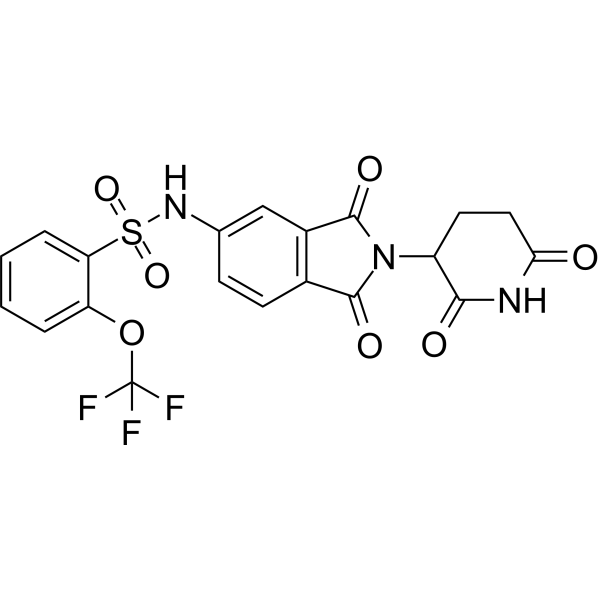
SJ6986 is an orally active GSPT1/2 molecular glue degrader, with a DC50 of 9.7 nM at 4 h and 2.1 nM at 24 h for GSPT1 degradation in MV4-11 cells. SJ6986 recruits GSPT1/2 to the CRBN E3 ligase complex, inducing ubiquitination and proteasomal degradation of GSPT1/2. SJ6986 triggers activation of the integrated stress response pathway and apoptosis downstream of GSPT1 degradation. SJ6986 serves as a chemical probe for investigating the functions of GSPT1/GSPT2 in vitro and in vivo. SJ6986 can be used for research on acute leukemia and medulloblastoma .
loading...
    loading...
Cat. No.: HY-151902
CAS No.: 2595365-41-4
Purity:  98.05%
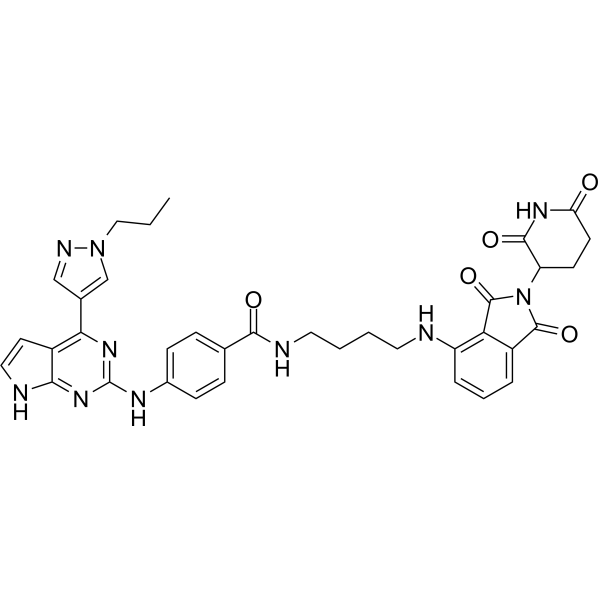
SJ988497 is a PROTAC degrader targeting JAK2. SJ988497 induces the proteasomal degradation of CRBN-mediated JAK2, JAK1, JAK3, GSPT1, and IKZF1, and functions as a CRBN neosubstrate for GSPT1. SJ988497 retains binding affinity for the kinase domain of JAK2. SJ988497 can be used in studies related to cancers such as crlf2-rearranged acute lymphoblastic leukemia .
loading...
    loading...
Cat. No.: HY-153598
CAS No.: 2782022-40-4
Research Areas:  

Inflammation/Immunology Cancer

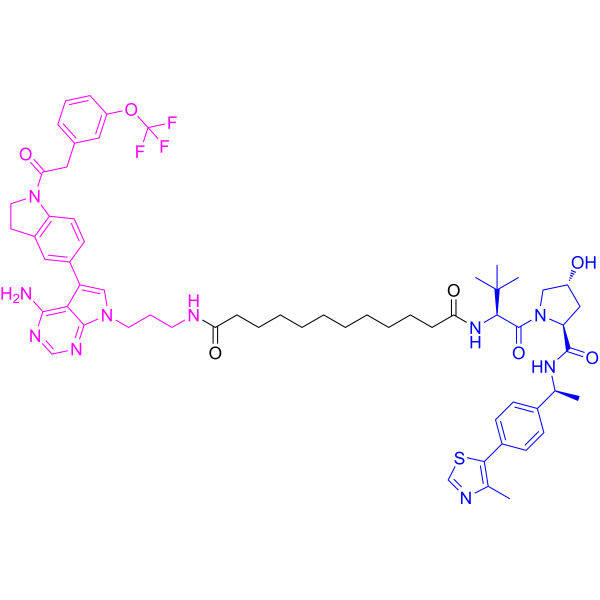
LD4172 is a selective RIPK1 PROTAC degrader with a Ki of 4.8 nM. LD4172 induces RIPK1 protein degradation via ternary complex formation with RIPK1 and VHL E3 ligase, driving ubiquitination and proteasomal breakdown. LD4172 abrogates TNF-induced classical NF-κB signaling in TRAF2-deficient cells, impairing IκBα phosphorylation and degradation, and reducing IL-8 production. LD4172 induces apoptosis and immunogenic cell death in tumor cells, enhances tumor-infiltrating lymphocyte responses, and sensitizes tumors to anti-PD1 therapy. LD4172 acts as a chemical probe for investigating RIPK1 scaffolding functions. LD4172 can be used for the research of melanoma, colon cancer .
loading...
    loading...
Cat. No.: HY-168967
Target:  

MetAP

Research Areas:  

Cancer

BAY-277 is a selective METAP2 degrader and inhibitor. BAY-277 induces ubiquitination and proteasomal degradation of METAP2, triggers G1-phase cell cycle arrest, and inhibits angiogenesis and endothelial cell proliferation. BAY-277 serves as a chemical probe for investigating the biological functions of METAP2. BAY-277 is applicable to cancer-related research.
loading...
    loading...
Cat. No.: HY-174877
CAS No.: 3068162-16-0
Target:  

PROTACs HDAC

Research Areas:  

Cancer

PROTAC HDAC6 degrader 6 is a HDAC6 PROTAC degrader that recruits CRBN, and also a photoactivatable photochemical targeting chimeric (PHOTAC). PROTAC HDAC6 degrader 6 switches between cis and trans conformations upon illumination, in which the cis conformation binds HDAC6 and CRBN to form a ternary complex, and induces HDAC6 degradation via ubiquitin-like modification, polyubiquitination and proteasomal pathways. PROTAC HDAC6 degrader 6 can be used in the research of multiple myeloma .
loading...
    loading...
Cat. No.: HY-161796
CAS No.: 2929304-05-0
Research Areas:  

Cancer

UNC8732 is an NSD2 degrader with a Kd value of 76 nM for NSD2, and achieves highly selective degradation of NSD2 across the detectable proteome. UNC8732 acts as a prodrug; its primary amine is metabolized to an aldehyde, which forms a reversible covalent interaction with Cys326 in the FIST_C domain of FBXO22, recruiting the SCFFBXO22 ubiquitin ligase complex to mediate polyubiquitination and proteasomal degradation of NSD2. UNC8732 serves as a chemical probe to investigate NSD2-associated disease phenotypes and study the functions of NSD2 in nuclear signaling and epigenetics. UNC8732 can be used in studies of acute lymphoblastic leukemia .
loading...
    loading...
Cat. No.: HY-177785
iDeg-6 is a molecular glue degrader that selectively targets IDO1, with a DC50 of 6.5 nM, an IC50 of 16 nM, and a Kd of 1.46 μM. iDeg-6 competes to bind the heme-binding site of apoprotein IDO1, promoting CRL2 KLHDC3-mediated polyubiquitination of IDO1 and neddylation-modification-dependent proteasomal degradation. iDeg-6 reduces kynurenine production, abrogates the non-enzymatic pro-tumor migration function of IDO1, and inhibits tumor growth in immunodeficient mice. iDeg-6 can be used in studies of cancer, infection, and neurological diseases (such as melanoma) .
loading...
    loading...
Cat. No.: HY-185697
CAS No.: 3136609-62-3
Target:  

PROTACs IFNAR c-Myc

Research Areas:  

Cancer

dIRF4-2 is a selective IRF4 PROTAC degrader with a DC50 value of 2.2 μM. dIRF4-2 forms a ternary complex between IRF4 and CRBN, inducing ubiquitination and proteasomal degradation of IRF4. dIRF4-2 downregulates MYC. dIRF4-2 exhibits anticancer activity against myeloma. dIRF4-2 acts as a chemical probe for investigating IRF4 function, mimicking the IRF4 gene knockout phenotype. dIRF4-2 can be used in the research of multiple myeloma .
loading...
    loading...
Cat. No.: HY-187387
CAS No.: 3092711-76-4
Research Areas:  

Cancer

PROTAC HDAC6/ERα degrader 1 is a dual-target PROTAC that targets HDAC6/ERα, with DC50 values of 1.21 μM (HDAC6), 0.28 μM (ERα) in MCF-7 cells and 0.67 μM (HDAC6), 0.14 μM (ERα) in LCC2 cells, respectively. PROTAC HDAC6/ERα degrader 1 selectively degrades ERα and HDAC6 via the proteasomal pathway, inhibits the transcriptional activation of ERα and blocks the estrogen signaling pathway. PROTAC HDAC6/ERα degrader 1 inhibits the function of HDAC6, attenuates hormone responses, and disrupts autophagy-lysosome function. PROTAC HDAC6/ERα degrader 1 induces cell cycle arrest, apoptosis and ferroptosis, and exhibits antiproliferative activity in breast cancer cells. PROTAC HDAC6/ERα degrader 1 can be used for breast cancer research .
loading...
    loading...
Cat. No.: HY-L918
317 compounds

Targeted Protein Degradation (TPD) is a novel and promising approach to drug development. It shows great potential for targeting proteins traditionally considered "undruggable" due to the lack of enzymatic function and absence of binding sites by tagging them for degradation or recruiting natural degradation mechanisms.

Molecular glues are a type of small-molecule degraders that primarily induce novel interactions between E3 ubiquitin ligases and target proteins, forming ternary complexes that lead to protein ubiquitination and subsequent proteasomal degradation. Compared with PROTACs, molecular glues generally have lower molecular weights, higher cell permeability, and better drug-like properties. Additionally, the design of molecular glues is relatively simple, without the requirements for complex linkers and ligand optimization. As a result, molecular glues have gradually emerged as a promising therapeutic approach for various diseases.

Multiple types of molecular glues have been reported previously. Analysis of co-crystal complex structures reveals that CRBN-related molecular glues are more versatile. Therefore, MCE researchers select active molecules related to these targets as probes for artificial intelligence (AI) screening.Subsequently, molecular docking technology was used to verify whether the screened molecules retained the key pharmacophore features. Ultimately, we obtained 317 molecular glue analogs, and these compounds serve as powerful tools for the research of molecular glues.

