

1. Search Result
Search Result
Results for "

receptor binding

" in MedChemExpress (MCE) Product Catalog:

1393

Inhibitors & Agonists

16

Screening Libraries

16

Fluorescent Dye

39

Biochemical Assay Reagents

174

Peptides

1

MCE Kits

114

Inhibitory Antibodies

104

Natural
Products

46

Recombinant Proteins

92

Isotope-Labeled Compounds

36

Antibodies

2

Click Chemistry

20

Oligonucleotides

Cat. No. Product Name Target Research Areas Chemical Structure
  • HY-17512
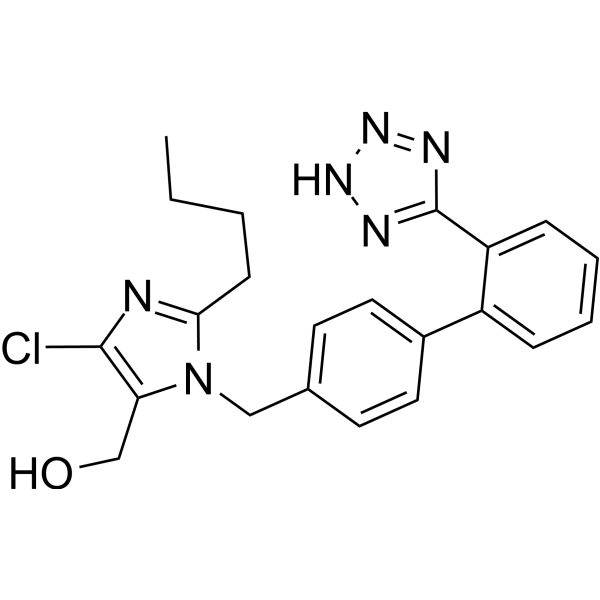
    Losartan
    50+ Cited Publications

    DuP-753

    Angiotensin Receptor Cardiovascular Disease Endocrinology Cancer
    Losartan is an angiotensin II receptor antagonist, competing with the binding of angiotensin II to AT1 receptors with IC50 of 20 nM.
    Losartan
  • HY-N0067
    γ-Aminobutyric acid
    5 Publications Verification

    4-Aminobutyric acid

    Environmental Pollutants Endogenous Metabolite GABA Receptor Neurological Disease Metabolic Disease
    γ-Aminobutyric acid (4-Aminobutyric acid) is a major inhibitory neurotransmitter in the adult mammalian brain, binding to the ionotropic GABA receptors (GABAA receptors) and metabotropic receptors (GABAB receptors. γ-Aminobutyric acid shows calming effect by blocking specific signals of central nervous system .
    γ-Aminobutyric acid
  • HY-16060
    Apalutamide
    10+ Cited Publications

    ARN-509

    Androgen Receptor Cancer
    Apalutamide (ARN-509) is a potent and competitive androgen receptor (AR) antagonist, binding AR with an IC50 of 16 nM .
    Apalutamide
  • HY-13955
    Telmisartan
    15+ Cited Publications

    BIBR 277

    Angiotensin Receptor Autophagy Cardiovascular Disease Endocrinology Cancer
    Telmisartan is a potent, long lasting antagonist of angiotensin II type 1 receptor (AT1), selectively inhibiting the binding of 125I-AngII to AT1 receptors with IC50 of 9.2 nM.
    Telmisartan
  • HY-P1464

    Amylin (rat)

    Amylin Receptor Metabolic Disease
    Amylin, amide, rat is a potent and high affinity ligand of Amylin receptor AMY1 and AMY3 receptors and variably of AMY2 receptors; binding studies are generally used for the latter receptor.
    Amylin, amide, rat
  • HY-15894A
    BQ-788
    10+ Cited Publications

    Endothelin Receptor Cardiovascular Disease Endocrinology Cancer
    BQ-788 is a potent, selective ETB receptor antagonist with IC50 of 1.2 nM for inhibition of ET-1 binding to human Girardi heart cells, poorly inhibiting the binding to ETA receptors in human neuroblastoma cell line SK-N-MC cells with IC50 of 1300 nM .
    BQ-788
  • HY-13274
    JTC-801
    5+ Cited Publications

    Opioid Receptor Neurological Disease
    JTC-801 is a selective opioid receptor-like1 (ORL1) receptor antagonist, binding to ORL1 receptor with a Ki value of 8.2 nM.
    JTC-801
  • HY-15085

    iGluR Neurological Disease
    MDL 105519 is a potent and selective antagonist of glycine binding to the NMDA receptor.
    MDL 105519
  • HY-15894
    BQ-788 sodium salt
    10+ Cited Publications

    Endothelin Receptor Cardiovascular Disease Endocrinology Cancer
    BQ-788 sodium salt is a potent and selective ETB receptor antagonist, inhibiting ET-1 binding to ETB receptors with an IC50 of 1.2 nM in human Girrardi heart cells .
    BQ-788 sodium salt
  • HY-105042

    Selanc; TP-7

    GABA Receptor Neurological Disease
    Selank (Selanc; TP-7) is a GABAA receptor modulator with anxiolytic activity. Selank allosterically modulates the specific binding of GABA to GABAA receptors and alters the affinity of endogenous ligands for these receptors. Selank reduces elevated anxiety levels, attenuates stress-induced exacerbation of anxiety, and produces a synergistic anxiolytic effect with diazepam. Selank can be used in the research of anxiety disorders .
    Selank
  • HY-P99171
    Gevokizumab
    2 Publications Verification

    Interleukin Related Inflammation/Immunology Cancer
    Gevokizumab is a potent anti-IL-1β antibody, negatively modulates IL-1β signaling through an allosteric mechanism. Gevokizumab selectively decreases the binding affinity of IL-1β for the IL-1 receptor type I (IL-1RI) signaling receptor instead of IL-1 counter-regulatory decoy receptor (IL-1 receptor type II) .
    Gevokizumab
  • HY-N8376

    (±)-Fustin; 3,7,3',4'-Tetrahydroxyflavanone

    Amyloid-β mAChR Cholinesterase (ChE) Neurological Disease
    Fustinis ((±)-Fustin; 3,7,3',4'-Tetrahydroxyflavanone) is a potent amyloid β (Aβ) inhibitor. Fustinis ((±)-Fustin; 3,7,3',4'-Tetrahydroxyflavanone) increases the expression of acetylcholine (ACh) levels, choline acetyltransferase (ChAT) activity, and ChAT gene induced by Aβ (1-42). Fustinis ((±)-Fustin; 3,7,3',4'-Tetrahydroxyflavanone) decreases in acetyl cholinesterase (AChE) activity and AChE gene expression induced by Aβ (1-42). Fustinis ((±)-Fustin; 3,7,3',4'-Tetrahydroxyflavanone) increases muscarinic M1 receptor gene expression and muscarinic M1 receptor binding activity. Fustinis ((±)-Fustin; 3,7,3',4'-Tetrahydroxyflavanone) can be used for Alzheimer's disease research .
    Fustin
  • HY-P2297

    Transferrin Receptor Metabolic Disease
    TfR-T12 is a BBB-penetrated transferrin receptor (TfR) binding peptide, displaying a binding affinity in the nM range .
    TfR-T12
  • HY-111454
    SR17018
    1 Publications Verification

    Opioid Receptor Neurological Disease
    SR17018 is an mu-opioid-receptor (MOR) agonist, binding with GTPγS, with an EC50 of 97 nM.
    SR17018
  • HY-P99556

    AZD8895; COV2-2196

    SARS-CoV Infection
    Tixagevimab (AZD8895) is a human monoclonal antibody that targets the SARS-CoV-2 receptor binding domain (RBD). It exhibits neutralizing activity against SARS-CoV-2 by binding to the RBD and the S-glycoprotein ectodomain and blocking S-glycoprotein-mediated binding to the receptor .
    Tixagevimab
  • HY-15653
    Filorexant
    2 Publications Verification

    MK-6096

    Orexin Receptor (OX Receptor) Neurological Disease Endocrinology
    Filorexant (MK-6096) is an orally bioavailable potent and selective reversible antagonist of OX1 and OX2 receptor(<3 nM in binding).
    Filorexant
  • HY-10013
    Taranabant
    2 Publications Verification

    MK-0364

    Cannabinoid Receptor Metabolic Disease
    Taranabant is a highly potent and selective cannabinoid 1 (CB1) receptor inverse agonist that inhibits the binding and functional activity of various agonists, with a binding Ki of 0.13 nM for the human CB1R in vitro.
    Taranabant
  • HY-18102
    GLPG0492
    5+ Cited Publications

    Androgen Receptor Neurological Disease
    GLPG0492 is an orally active, non-steroidal selective androgen receptor modulator. GLPG0492 exerts functional transactivation by binding to the ligand-binding domain of the receptor, exhibiting preferential partial agonist activity in muscle and bone tissues with low activity in reproductive tissues. GLPG0492 effectively counteracts muscle atrophy-related pathways, significantly enhances muscle strength, maintains motor ability, reduces fibrosis and improves electrophysiological parameters. GLPG0492 prevents immobilization-induced muscle atrophy and regulates muscle mass homeostasis, serving as a valuable tool compound for studies on Duchenne muscular dystrophy, muscle loss and various types of disuse musculoskeletal atrophy .
    GLPG0492
  • HY-W587839

    Pregnane X Receptor (PXR) Endocrinology
    4,8-Dioxa-3H-perfluorononanoic acid is an ether-substituted polyfluoroalkyl compound and also a ligand of human pregnane X receptor (hPXR), which binds to the ligand-binding domain of hPXR. 4,8-Dioxa-3H-perfluorononanoic acid targets Arg-410, Lys-210, Lys-226, Met-323 and His-327 residues. Its binding process relies on long-range electrostatic interactions, and no significant hydrogen bonds form with hPXR residues. 4,8-Dioxa-3H-perfluorononanoic acid is used as a substitute for PFOA in Germany. 4,8-Dioxa-3H-perfluorononanoic acid is detectable in environmental matrices such as river water near fluoride production plants, accumulates in organisms including grass, deer liver and locusts, and is present in plasma samples of populations in southern Germany .
    4,8-Dioxa-3H-perfluorononanoic acid
  • HY-19381

    VNA-932; WAY-VNA 932

    Vasopressin Receptor Metabolic Disease Endocrinology
    WAY-151932 is a vasopressin V2-receptor agonist with IC50 of 80.3 nM and 778 nM in human-V2 binding and V1a binding assay.
    WAY-151932
  • HY-P1741
    Fibrinogen-Binding Peptide
    1 Publications Verification

    Thrombin Cardiovascular Disease
    Fibrinogen-Binding Peptide (designed by anticomplementarity hypothesis) is a presumptive peptide mimic of the vitronectin binding site on the fibrinogen receptor. Fibrinogen-Binding Peptide binds fibrinogen and inhibits both the adhesion of platelets to fibrinogen and platelet aggregation, and also inhibits the adhesion of platelets to vitronectin .
    Fibrinogen-Binding Peptide
  • HY-101178

    iGluR Neurological Disease
    L-689560 is a potent N-methyl-D-aspartate (NMDA) receptor antagonist at the GluN1 glycine binding site. L-689560 is widely used as a radiolabeled ligand in binding studies and used for study the roles of NMDA receptors in normal neurological processes as well as in diseases .
    L-689560
  • HY-P6022

    Integrin Others
    G4RGDSP, Integrin-binding peptide is a cell integrin-binding peptide that targets integrin receptors. G4RGDSP, integrin-binding peptide is coupled to alginate to increase the viability of cells in the scaffold. G4RGDSP, integrin-binding peptide can be used as an extrudable carrier for chondrocyte delivery for the study of 3D printing technology
    G4RGDSP, integrin-binding peptide
  • HY-112737

    CGS23131; SKF107324

    Leukotriene Receptor Inflammation/Immunology
    LY223982 is a potent and specific inhibitor of leukotriene B4 receptor, with an IC50 of 13.2 nM against [ 3H]LTB4 binding to LTB4 receptor.
    LY223982
  • HY-P0272

    HIV Infection
    Peptide T is an octapeptide from the V2 region of HIV-1 gp120. Peptide T is a ligand for the CD4 receptor and prevents binding of HIV to the CD4 receptor.
    Peptide T
  • HY-P4190

    GnRH Receptor Endocrinology
    FSH receptor-binding inhibitor fragment(bi-10) is a potent FSH antagonist. FSH receptor-binding inhibitor fragment(bi-10) blocks the binding of FSH to FSHR, and alteres FSH action at the receptor level. FSH receptor-binding inhibitor fragment(bi-10) results in the suppression of ovulation and causes follicular atresia of mice. FSH receptor-binding inhibitor fragment(bi-10) has the potential for utilizing to restrain the carcinogenesis of ovarian cancer by down-regulating overexpression of FSHR and ERβ in the ovaries .
    Fsh receptor-binding inhibitor fragment(bi-10)
  • HY-D0871

    N-Cyclohexyltaurine

    Biochemical Assay Reagents Influenza Virus Infection
    CHES (N-Cyclohexyltaurine) is a biological buffer reagent that binds to influenza virus hemagglutinin (HA). CHES mimics the binding mode of sialic acid to the HA receptor-binding site .
    CHES
  • HY-115450

    LPL Receptor Endocrinology Cancer
    ONO-0300302 is an orally active and potent LPA1 (lysophosphatidic acid receptor 1) antagonist, with an IC50 of 0.086 μM. ONO-0300302 is a slow tight binding inhibitor, and its binding affinity increases with time, with Kd of 0.34 nM (37 °C, 2 h). ONO-0300302 can be used for benign prostatic hyperplasia (BPH) research .
    ONO-0300302
  • HY-P3343A
    hFSH-β-(33-53) TFA
    1 Publications Verification

    Estrogen Receptor/ERR Cancer
    hFSH-β-(33-53) TFA, a thiol-containing peptide which corresponds to a second FSH receptor-binding domain, is a FSHR (follicle-stimulating hormone receptor) antagonist. hFSH-β-(33-53) TFA inhibits binding of FSH to receptor and is a partial agonist of estradiol synthesis in Sertoli cells .
    hFSH-β-(33-53) TFA
  • HY-17512S

    DuP-753 d4

    Angiotensin Receptor Cardiovascular Disease Endocrinology
    Losartan-d4 is the deuterium labeled Losartan. Losartan is an angiotensin II receptor antagonist, competing with the binding of angiotensin II to AT1 receptors with IC50 of 20 nM.
    Losartan-d4
  • HY-P0079
    Neuromedin N
    2 Publications Verification

    Neuromedin N (rat, mouse, porcine, canine)

    Dopamine Receptor Neurological Disease
    Neuromedin N is a potent modulator of dopamine D2 receptor agonist binding in rat neostriatal membranes.
    Neuromedin N
  • HY-P10579
    123B9
    1 Publications Verification

    Ephrin Receptor Cancer
    123B9, a tumor-homing agent, is a potent and selective EphA2 agonist with a Kd value of 4.0 μM. 123B9 selectively targets the EphA2 tyrosine kinase receptor ligand-binding domain. 123B9 does not appreciably inhibit the ligand binding domains of the most closely related EphA3 and EphA4 receptors .
    123B9
  • HY-138067

    SARS-CoV Inflammation/Immunology
    SSAA09E2 is an inhibitor of SARS-CoV (Severe acute respiratory syndrome-Coronavirus) replication, acting by blocking early interactions of SARS-S with the receptor for SARS-CoV, Angiotensin Converting Enzyme-2 (ACE2) .
    SSAA09E2
  • HY-N5140

    Bacopaside VII

    Dopamine Receptor Others
    Bacopaside X is found in Bacopa monnieri, and shows a binding affinity toward the D1 receptor .
    Bacopaside X
  • HY-148758

    PCSK9 Cardiovascular Disease Metabolic Disease
    PCSK9-IN-13(compound 3f) is a potent PCSK9 inhibitor, which can antagonize low-density lipoprotein (LDL) receptor binding by binding to PCSK9, with an IC50 of 537 nM .
    PCSK9-IN-13
  • HY-N0067S1

    4-Aminobutyric acid-d2

    Isotope-Labeled Compounds GABA Receptor Endogenous Metabolite Neurological Disease
    γ-Aminobutyric acid-d2 is the deuterium labeled γ-Aminobutyric acid. γ-Aminobutyric acid (4-Aminobutyric acid) is a major inhibitory neurotransmitter in the adult mammalian brain[1][2], binding to the ionotropic GABA receptors (GABAA receptors) and metabotropic receptors (GABAB receptors)[2].
    γ-Aminobutyric acid-d2
  • HY-103304

    Others Neurological Disease
    CGRP antagonist 4 is an antagonist of calcitonin gene-related peptide (CGRP) receptor. CGRP antagonist 4 shows the highest affinity for CGRP receptors in the human brain. CGRP antagonist 4 can be used to study the binding properties of non-peptide calcitonin gene-related peptide (CGRP) receptor antagonist (gepants) in rat, pig and human menes .
    SB 268262
  • HY-P99435

    BRII-196

    SARS-CoV Infection
    Amubarvimab (BRII-196) is a human IgG1 mAb that bind to non-competing epitopes on the receptor binding domain (RBD) of spike protein, with a KD of 5.88 nM. Amubarvimab can effectively neutralize SARS-CoV-2 variants .
    Amubarvimab
  • HY-N7491

    Calcium Channel Inflammation/Immunology
    Verticilide is a ryanodine-binding inhibitor and inhibits ryanodine binding to ryanodine receptors in the cockroach at an IC50 value of 4.2 μM (whereas inhibition against mouse ryanodine receptors was weak (IC50=53.9 μM)) .
    Verticilide
  • HY-103141

    5-HT Receptor Neurological Disease
    SB-258585 is a high affinity ligand for the 5-HT6 receptor. SB-258585 binds highly to a single receptor population in a human cell line that recombines 5-HT6 receptors. SB-258585 can be used to label recombinant and natural 5-HT6 receptor .
    SB-258585 hydrochloride
  • HY-P10529

    Trk Receptor Infection
    Ganglioside GM1-binding peptide p3 is a synthetic peptide that can specifically bind to the pentasaccharide part of GM1 ganglioside. The dynamic transformation of Ganglioside GM1-binding peptide p3 may play an important role in the function of GM1 as a multiple receptor, such as in the classical pathway of cholera toxin infection. Ganglioside GM1-binding peptide p3 can be used to study the interaction between GM1 and its ligands .
    Ganglioside GM1-binding peptide p3
  • HY-P3584

    (Pro3) Gastric Inhibitory Peptide, human

    Insulin Receptor Metabolic Disease
    (Pro3) GIP, human ((Pro3) Gastric Inhibitory Peptide, human) is an efficacious, stable and specific human GIP receptor (hGIPR) full agonist. (Pro3) GIP, human has high binding affinity for human GIPR with Ki/ Kd values of 0.90 nM. (Pro3) GIP, human can be used for the research of obesity-related diabetes .
    (Pro3) GIP, human
  • HY-P2297A

    Transferrin Receptor Metabolic Disease
    TfR-T12 TFA is a BBB-penetrated transferrin receptor (TfR) binding peptide, displaying a binding affinity in the nM range .
    TfR-T12 TFA
  • HY-12738

    Mineralocorticoid Receptor Progesterone Receptor Cardiovascular Disease Metabolic Disease
    PF-3882845 is a remarkably high affinity selective and orally efficacious mineralocorticoid receptor (MR binding IC50=2.7 nM) antagonist for hypertension and nephropathy. PF-3882845 also binds to progesterone receptor (PR) with the binding IC50 of 310 nM .
    PF-3882845
  • HY-128838

    PROTACs Estrogen Receptor/ERR Cancer
    PROTAC ERRα Degrader-1 comprises a MDM2 ligand binding group, a linker and an estrogen-related receptor alpha (ERRa) binding group. PROTAC ERRα Degrader-1 is an PROTAC estrogen-related receptor alpha (ERRa) degrader .
    PROTAC ERRα Degrader-1
  • HY-P1741A
    Fibrinogen-Binding Peptide TFA
    1 Publications Verification

    Integrin Cardiovascular Disease
    Fibrinogen-Binding Peptide TFA (designed by anticomplementarity hypothesis) is a presumptive peptide mimic of the vitronectin binding site on the fibrinogen receptor. Fibrinogen-Binding Peptide TFA binds fibrinogen and inhibits both the adhesion of platelets to fibrinogen and platelet aggregation, and also inhibits the adhesion of platelets to vitronectin .
    Fibrinogen-Binding Peptide TFA
  • HY-17512S3

    DuP-753-d2

    Angiotensin Receptor Others
    Losartan-d2 is the deuterium labeled Losartan . Losartan is an angiotensin II receptor antagonist, competing with the binding of angiotensin II to AT1 receptors with IC50 of 20 nM.
    Losartan-d2
  • HY-P3874

    Opioid Receptor Neurological Disease
    Peptide E is a potent kappa opiate receptor agonist. Peptide E has opiate receptor binding activity with IC50 value of 0.39 μM. Peptide E can be used for the research of central nervous system .
    Peptide E
  • HY-125627

    Glucocorticoid Receptor Androgen Receptor Neurological Disease Metabolic Disease
    CP-394531 is an efficient and highly selective non-steroidal glucocorticoid receptor (GR) antagonist, with a Ki value of 0.1 nM. CP-394531 has a weak binding to androgen receptor (AR) (Ki = 130 nM), and has almost no effect on progesterone receptor (PR) and estrogen receptors (ERα, ERβ). CP-394531 completely blocks the half-maximal agonistic effect induced by Dexamethasone (HY-14648G), with a Kif of 4.1 nM. CP-394531 can be used to study various diseases such as diabetes, obesity, depression, neurodegenerative diseases, glaucoma and Cushing's disease .
    CP-394531
  • HY-123163

    RWJ-66826; RTI-6617-003

    Progesterone Receptor Glucocorticoid Receptor Androgen Receptor Estrogen Receptor/ERR Endocrinology Cancer
    JNJ-1250132 (RWJ-66826) is an orally active and potent steroidal progesterone receptor (PR) antagonist, with an IC50 of 1.3 nM. JNJ-1250132 inhibits binding of the receptor to DNA in vitro. JNJ-1250132 is a potent competitive inhibitor of binding to the human glucocorticoid receptor (GR) (IC50=0.50 nM) and the rat androgen receptor (AR) (IC50=5.6 nM), and was a weak inhibitor of binding to human Estrogen receptor (ER) (IC50 >3000 nM) .
    JNJ-1250132

Inquiry Online

Your information is safe with us. * Required Fields.

Salutation


Country or Region *

Applicant Name *


Organization Name *

Department *


Email Address *


Product Name *

Cat. No.


Requested quantity *

Phone Number *


Remarks

Inquiry Online

Inquiry Information

Product Name:
Cat. No.:
Quantity:
MCE Japan Authorized Agent:

