1. Search Result
Search Result
Results for "

reduced porphyrin

" in MedChemExpress (MCE) Product Catalog:
Art. -Nr. Produktname Target Forschungsgebiete Chemical Structure
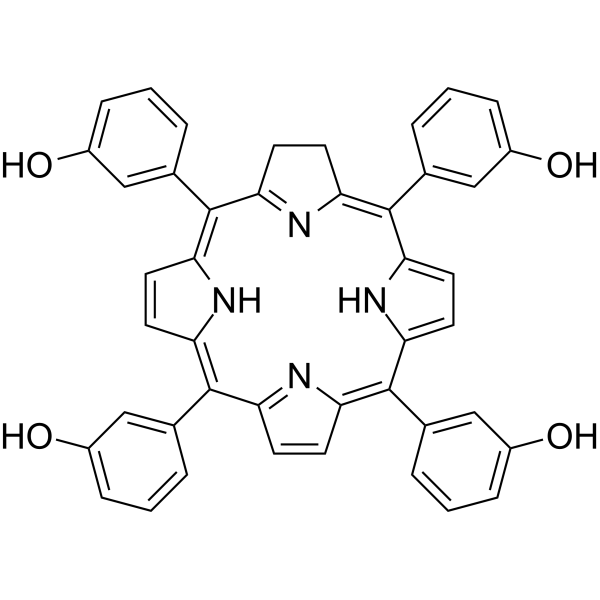
  • HY-16488
    Temoporfin
    Maximum Cited Publications
    12 Publications Verification

    m-THPC; KW2345

    Reactive Oxygen Species (ROS) Cancer
    Temoporfin (m-THPC), a reduced porphyrin, is a potent second-generation photosensitizer. Temoporfin can be used in the research of photodynamic therapy (PDT) for head and neck cancers .
    Temoporfin
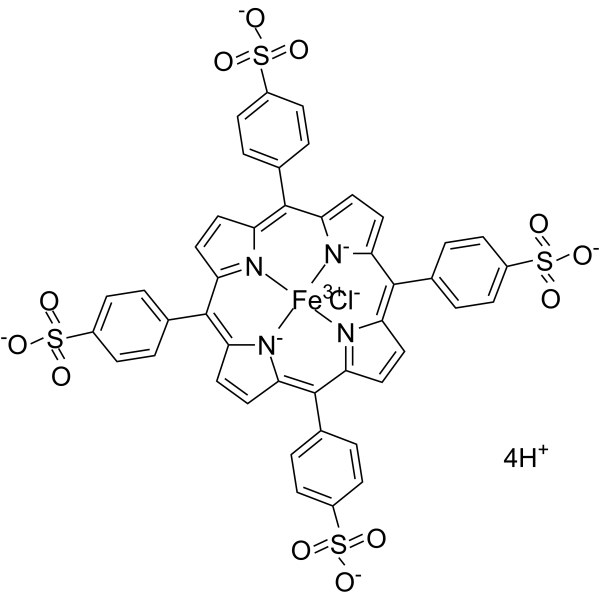
  • HY-131697
    FeTPPS
    1 Publications Verification

    MOFs NO Synthase Apoptosis Inflammation/Immunology
    FeTPPS, a 5,10,15,20-tetrakis (4-sulfonatophenyl) porphyrin iron III chloride peroxynitrite decomposition catalyst, possesses evident neuroprotective effects in a experimental model of spinal cord damage . FeTPPS acts as a peroxynitrite scavenger and anti-nitrating agent in vivo. FeTPPS reduces nitric oxide (NO) production and apoptosis process .
    FeTPPS
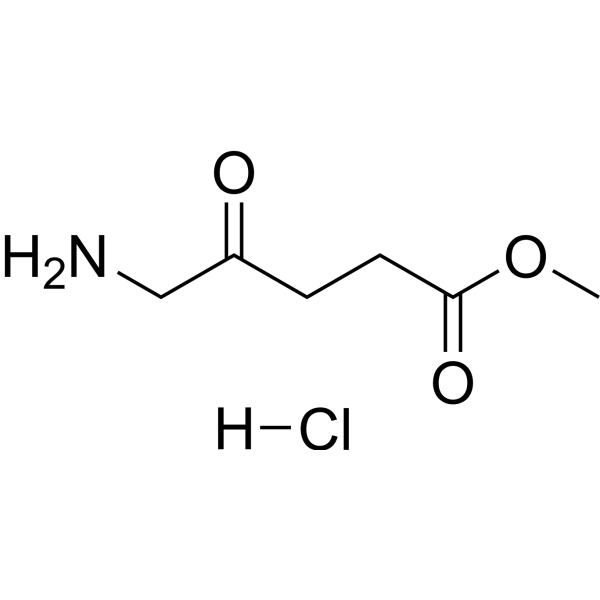
  • HY-A0169A
    Methyl aminolevulinate hydrochloride
    1 Publications Verification

    Reactive Oxygen Species (ROS) Photosensitizer Cancer
    Methyl aminolevulinate hydrochloride is a sensitizer used in photodynamic therapy (PDT). Methyl aminolevulinate hydrochloride penetrates the skin and induces the production of photoactive porphyrins including protoporphyrin IX in cells; upon exposure to appropriate light, it generates ROS, which triggers cellular oxidation and cell death. Methyl aminolevulinate hydrochloride acts as a photo-damage reversing agent through epidermal reconstruction, cytokine-mediated activation of dermal fibroblasts, elastin breakdown, new collagen formation, and compression of dilated capillaries. Methyl aminolevulinate hydrochloride reduces the expression of the proliferation marker Ki-67 and the early skin carcinogenesis marker TP53. Methyl aminolevulinate hydrochloride delays the onset of ultraviolet-induced skin tumors and reduces tumor burden in hairless mice. Methyl aminolevulinate hydrochloride is applicable to research related to actinic keratosis and basal cell carcinoma .
    Methyl aminolevulinate hydrochloride
  • HY-16488R

    m-THPC (Standard); KW2345 (Standard)

    Reactive Oxygen Species (ROS) Reference Standards Cancer
    Temoporfin (Standard) is the analytical standard of Temoporfin. This product is intended for research and analytical applications. Temoporfin (m-THPC), a reduced porphyrin, is a potent second-generation photosensitizer. Temoporfin can be used in the research of photodynamic therapy (PDT) for head and neck cancers .
    Temoporfin (Standard)
  • HY-W112090

    PdTFPP; 5,10,15,20-Tetrakis(pentafluorophenyl)-21H,23H-porphine palladium(II)

    Fluorescent Dye Others
    Palladium meso-tetra(pentafluorophenyl)porphyrin (PdTFPP) derives from palladium(II), acting as a fluorescence-quenched optical probe and high-performance oxygen concentration sensor with outstanding photostability and antioxidant capacity. Palladium meso-tetra(pentafluorophenyl)porphyrin exhibits reduced luminescence intensity as dissolved oxygen concentration rises. Palladium meso-tetra(pentafluorophenyl)porphyrin can be applied for real-time monitoring of live-cell respiration, hypoxic tissue imaging, and nanofibrous organic semiconductors in photodetectors for ambient oxygen detection .
    Palladium meso-tetra(pentafluorophenyl)porphyrin
  • HY-P2888B

    BOD, Magnaporthe oryzae

    Endogenous Metabolite Metabolic Disease
    Bilirubin oxidase (BOD), Magnaporthe oryza is a multi-copper oxidase that catalyzes the oxidation of bilirubin to biliverdin and reduces molecular oxygen to water. Bilirubin oxidase, Magnaporthe oryzae can participate in the metabolism of porphyrin and chlorophyll, and is widely used in biochemical research as a catalyst for oxygen reduction .
    Bilirubin oxidase, Magnaporthe oryzae
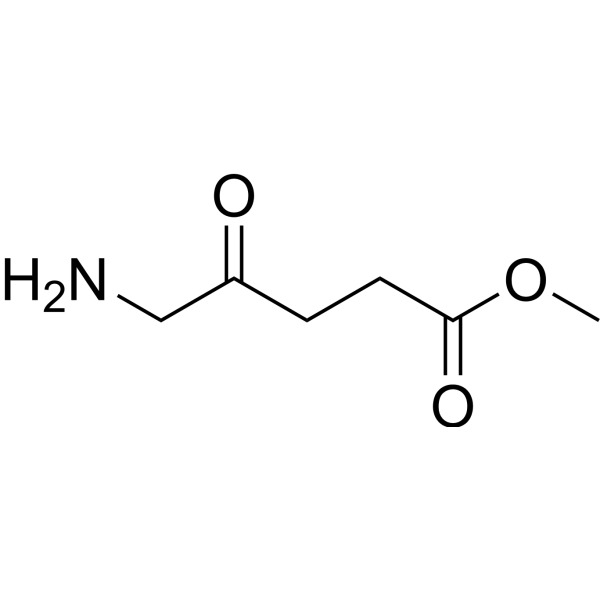
  • HY-A0169

    Reactive Oxygen Species (ROS) Photosensitizer Cancer
    Methyl aminolevulinate is a sensitizer used in photodynamic therapy (PDT). Methyl aminolevulinate penetrates the skin and induces the production of photoactive porphyrins including protoporphyrin IX in cells; upon exposure to appropriate light, it generates ROS, which triggers cellular oxidation and cell death. Methyl aminolevulinate acts as a photo-damage reversing agent through epidermal reconstruction, cytokine-mediated activation of dermal fibroblasts, elastin breakdown, new collagen formation, and compression of dilated capillaries. Methyl aminolevulinate reduces the expression of the proliferation marker Ki-67 and the early skin carcinogenesis marker TP53. Methyl aminolevulinate delays the onset of ultraviolet-induced skin tumors and reduces tumor burden in hairless mice. Methyl aminolevulinate is applicable to research related to actinic keratosis and basal cell carcinoma .
    Methyl aminolevulinate
  • HY-A0169AR

    Reactive Oxygen Species (ROS) Reference Standards Photosensitizer Inflammation/Immunology Cancer
    Methyl aminolevulinate hydrochloride (Standard) is the analytical standard of Methyl aminolevulinate hydrochloride. This product is intended for research and analytical applications. Methyl aminolevulinate hydrochloride is a sensitizer used in photodynamic therapy (PDT). Methyl aminolevulinate hydrochloride penetrates the skin and induces the production of photoactive porphyrins including protoporphyrin IX in cells; upon exposure to appropriate light, it generates ROS, which triggers cellular oxidation and cell death. Methyl aminolevulinate hydrochloride acts as a photo-damage reversing agent through epidermal reconstruction, cytokine-mediated activation of dermal fibroblasts, elastin breakdown, new collagen formation, and compression of dilated capillaries. Methyl aminolevulinate hydrochloride reduces the expression of the proliferation marker Ki-67 and the early skin carcinogenesis marker TP53. Methyl aminolevulinate hydrochloride delays the onset of ultraviolet-induced skin tumors and reduces tumor burden in hairless mice. Methyl aminolevulinate hydrochloride is applicable to research related to actinic keratosis and basal cell carcinoma .
    Methyl aminolevulinate hydrochloride (Standard)

Online-Anfrage

Your information is safe with us. * Required Fields.

Anrede


Country or Region *

Name des Antragstellers *


Name der Organisation *

Department *


E-Mail-Addresse *


Produktname *

Art. -Nr.


Requested quantity *

Telefonnummer *


Bemerkungen

Online-Anfrage

Inquiry Information

Produktname:
Art. -Nr.:
Menge:
MCE Japan Authorized Agent:

