
1. Search Result
Search Result
Results for "

sphingolipid

" in MedChemExpress (MCE) Product Catalog:

121

Inhibitors & Agonists

2

Screening Libraries

2

Fluorescent Dye

4

Biochemical Assay Reagents

1

Peptides

33

Natural
Products

2

Recombinant Proteins

8

Isotope-Labeled Compounds

1

Click Chemistry

2

Oligonucleotides

Cat. No. Product Name Target Research Areas Chemical Structure
  • HY-N6798
    Myriocin
    10+ Cited Publications

    Thermozymocidin; ISP-I

    HCV Antibiotic Infection
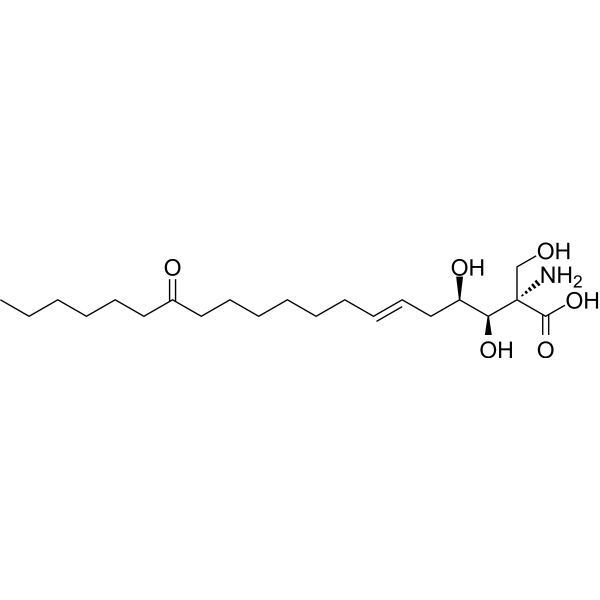
    Myriocin (Thermozymocidin), a fungal metabolite could be isolated from Myriococcum albomyces, Isaria sinclairi and Mycelia sterilia, is a potent inhibitor of serine-palmitoyl-transferase (SPT) and a key enzyme in de novo synthesis of sphingolipids. Myriocin suppresses replication of both the subgenomic HCV-1b replicon and the JFH-1 strain of genotype 2a infectious HCV, with an IC50 of 3.5 μg/mL for inhibiting HCV infection .
    Myriocin
  • HY-113498
    Sphingomyelin
    1 Publications Verification

    Endogenous Metabolite Neurological Disease Metabolic Disease Inflammation/Immunology
    Sphingomyelin is a eukaryotic sphingolipid and one of the major constituents of cell membranes and particularly abundant in the myelin sheath that surrounds neuronal axons. Sphingomyelin plays an important role in cell processes, the regulation of inflammatory responses, and signal transduction. Sphingomyelin metabolism is associated with various central nervous system diseases and Niemann–Pick disease .
    Sphingomyelin
  • HY-N6719
    Fumonisin B1
    5+ Cited Publications

    Acyltransferase Infection
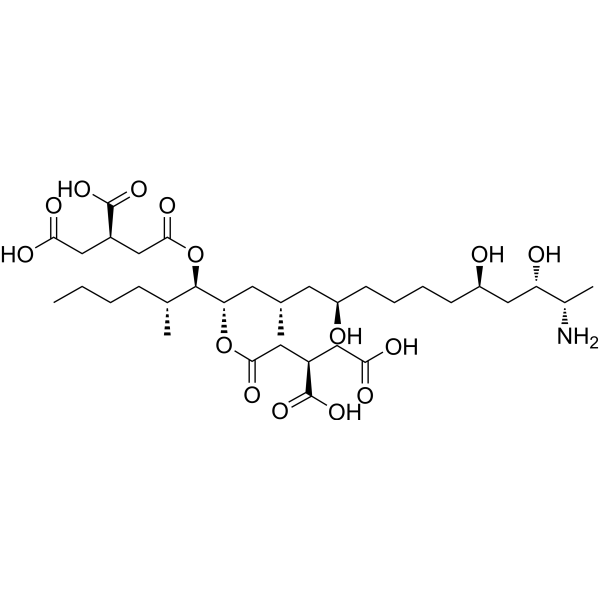
    Fumonisin B1 is a mycotoxin produced from Fusarium moniliforme. Fumonisin B1 is a potent inhibitor of sphingosine N-acyltransferase (ceramide synthase) and disrupts de novo sphingolipid biosynthesis. Fumonisin B1 is the most abundant and toxic fumonisin .
    Fumonisin B1
  • HY-124758

    Mitochondrial Metabolism Metabolic Disease Cancer
    SH-BC-893 is an orally active anti-neoplastic sphingolipid analog. SH-BC-893 also protects from ceramide-induced mitochondrial dysfunction and corrects diet-induced obesity. SH-BC-893 can be used for the research of cancer and obesity .
    SH-BC-893
  • HY-154831

    N-Behenoyl-D-erythro-sphingosine; C22-Ceramide; Cer d18:1/22:0

    Liposome Metabolic Disease
    C22-Ceramide (d18:1/22:0) (Cer d18:1/22:0) is an endogenous bioactive sphingolipid. C22-Ceramide (d18:1/22:0) reduces the propensity of C16-ceramide channel formation in isolated rat liver mitochondria and in liposomes .
    C22-Ceramide (d18:1/22:0)
  • HY-W356116

    Nbd-ceramide

    Fluorescent Dye Others
    C6 NBD Ceramide is a Golgi apparatus fluorescent probe with cell membrane permeability. C6 NBD Ceramide can be used for fast and convenient green fluorescent labeling of Golgi in living and fixed cells, and can be used to observe changes in Golgi morphology in living cells (Ex=466 nm, Em=536 nm). C6-NBD-ceramide is metabolized to fluorescent sphingomyelin and glucosylceramide, can be used for the study of sphingolipid transport and metabolic mechanism .
    C6 NBD Ceramide
  • HY-116073

    Acyltransferase Infection Cancer
    L-Penicillamine is an orally active serine palmitoyltransferase (SPT) inhibitor. L-Penicillamine inactivates the PLP cofactor by forming adducts, thereby inhibiting SPT activity and reducing sphingolipid biosynthesis. L-Penicillamine not only blocks tumor access to vitamin B6, but also stabilizes the human papillomavirus 16 E6 oncoprotein monomer and inhibits its polymerization, exhibiting a unique anticancer mechanism. L-Penicillamine effectively delays the growth of Sarcoma-180, induces tumor necrosis and prolongs survival (though long-term use may lead to Pyridoxine (HY-B1328) deficiency and weight loss) .
    L-Penicillamine
  • HY-113116
    Sphinganine 1-phosphate
    1 Publications Verification

    D-erythro-Dihydrosphingosine 1-phosphate

    Endogenous Metabolite Inflammation/Immunology Cancer
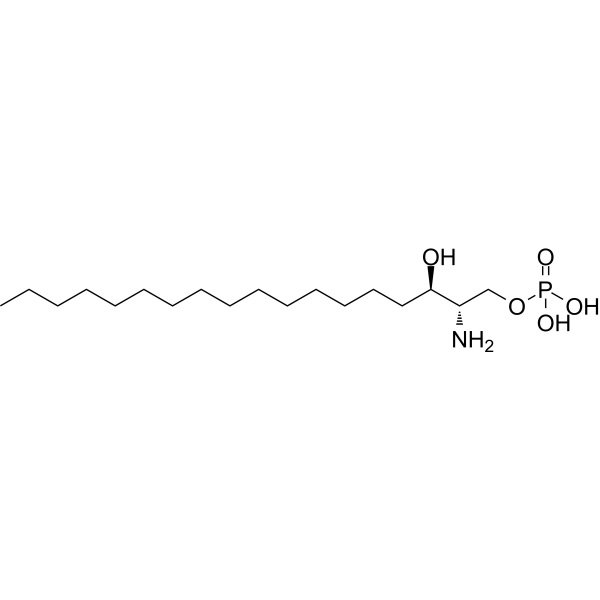
    Sphinganine 1-phosphate (D-erythro-Dihydrosphingosine 1-phosphate) is a polar sphingolipid metabolite that regulates cell migration, differentiation, survival and complex physiological processes .
    Sphinganine 1-phosphate
  • HY-164236

    Endogenous Metabolite Metabolic Disease
    C22 Glucosylceramide (d18:1/22:0) is a bioactive sphingolipid composed of a d18:1 sphingoid base and a 22:0 fatty acid chain. C22 Glucosylceramide (d18:1/22:0) specifically exists in Doxorubicin (HY-15142A)-sensitive cancer cells, and its circulating concentration is positively correlated with the incidence of cardiovascular events. C22 Glucosylceramide (d18:1/22:0) has been widely used in research related to cardiovascular diseases, hypercholesterolemia, metabolic syndrome, breast adenocarcinoma and other fields .
    C22 Glucosylceramide (d18:1/22:0)
  • HY-N7814
    2-Hydroxypalmitic acid
    1 Publications Verification

    Endogenous Metabolite Drug Intermediate Infection
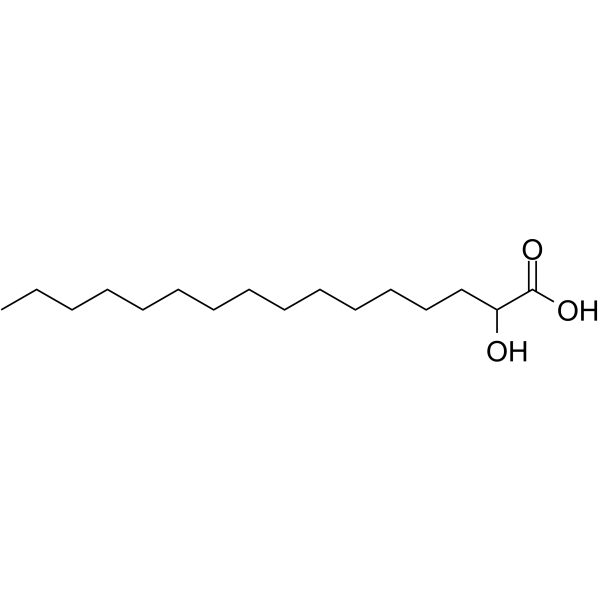
    2-Hydroxypalmitic acid is an intermediate in the phytosphingosine metabolic pathway. 2-Hydroxypalmitic acid is exclusively incorporated into sphingolipids and not used for other lipids. 2-Hydroxypalmitic acid promotes the production of odd-carbon phosphatidylcholine species. 2-Hydroxypalmitic acid is applicable to studies of Saccharomyces cerevisiae infection .
    2-Hydroxypalmitic acid
  • HY-134508A

    Biochemical Assay Reagents Others
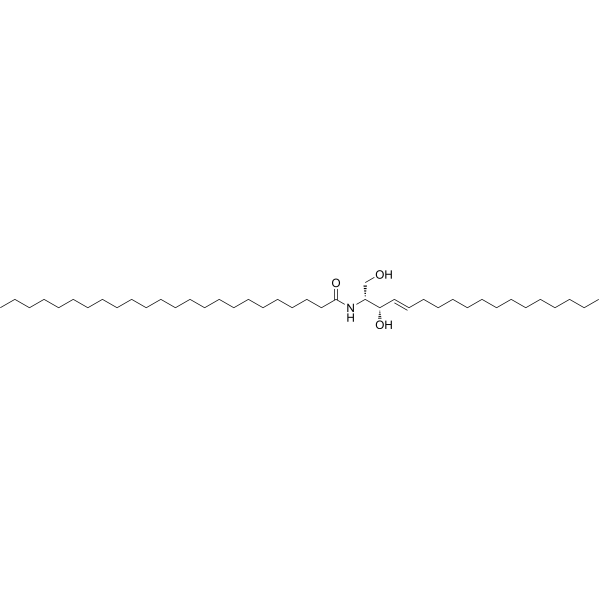
    C24-Ceramide (d18:1/24:0) is a sphingolipid that can be used for the lipid membranes composed. C24-Ceramide (d18:1/24:0) induces time-dependent changes in membrane properties. C24-Ceramide (d18:1/24:0) induces membrane reorganization .
    C24-Ceramide (d18:1/24:0)
  • HY-153830

    C16 Lactosylceramide (d18:1/16:0)

    Endogenous Metabolite Neurological Disease Metabolic Disease
    LacCer (d18:1/16:0) (C16 Lactosylceramide (d18:1/16:0)) is an endogenous bioactive sphingolipid that can form membrane microdomains with Lyn kinase and the αi subunits of inhibitory G protein-coupled receptors (GPCRs). The levels of LacCer (d18:1/16:0) are elevated in the plasma of insulin-resistant cattle. In a mouse model of Niemann-Pick type C1 disease (a neurodegenerative cholesterol-sphingolipid lysosomal storage disorder), the expression of LacCer (d18:1/16:0) is also upregulated. LacCer (d18:1/16:0) can be used in research on metabolic diseases and neurodegenerative diseases .
    LacCer (d18:1/16:0)
  • HY-141866
    Acid Ceramidase-IN-1
    1 Publications Verification

    Ceramidase Neurological Disease
    Acid Ceramidase-IN-1 is orally active and blood-brain barrier penetrant acid ceramidase (AC, ASAH-1) inhibitor (hAC IC50=0.166 μM). Acid Ceramidase-IN-1 reduces AC activity, accumulates ceramide species (Cer (d18:0/16:0), Cer (d18:1/16:0)), and decreases sphingosine levels. Acid Ceramidase-IN-1 can be used for the study of severe neurological lysosomal storage diseases (LSDs) such as Gaucher’s disease (GD) and Krabbe’s disease (KD) .
    Acid Ceramidase-IN-1
  • HY-W923642

    Endogenous Metabolite Cardiovascular Disease Metabolic Disease
    Sphingomyelin (d18:1/12:0) is a metabolomic biomarker. Sphingomyelin (d18:1/12:0) exhibits favorable diagnostic properties and may facilitate the early detection and targeted prevention of dyslipidemia-related adverse cardiovascular events .
    Sphingomyelin (d18:1/12:0)
  • HY-141632

    Heptadecasphinganine

    Bacterial Infection Neurological Disease
    Sphinganine-C17 (Heptadecasphinganine) is a synthetic bioactive sphingolipid and an isomer of sphinganine. Sphinganine-C17 inhibits the growth of Candida glabrata and Candida albicans with a minimum bactericidal concentration (MBC) of 0.5 μg/mL for both. Sphinganine-C17 can be used as an internal standard for the chromatographic analysis of sphingosine compounds .
    Sphinganine-C17
  • HY-168763

    Liposome Metabolic Disease
    C23 Phytoceramide is a long-chain sphingolipid, which is found in C. sinensis .
    C23 Phytoceramide
  • HY-P2982

    Liposome Metabolic Disease
    Ceramide 1-phosphate is a bioactive lipid and one of the key components of sphingolipids. Ceramide 1-phosphate playing diverse roles in cellular behaviors such as cell differentiation, migration, proliferation and death .
    Ceramide 1-phosphate
  • HY-154921

    LacCer (bovine buttermilk)

    Reactive Oxygen Species (ROS) Inflammation/Immunology
    Lactosylceramide (bovine buttermilk) (LacCer (bovine buttermilk)) is a sphingolipid that highly expressed on the plasma membranes of human phagocytes. Lactosylceramide mediates phagocytosis, chemotaxis, and superoxide generation .
    Lactosylceramide (bovine buttermilk)
  • HY-165136

    SMs (buttermilk)

    Endogenous Metabolite Others
    Sphingomyelins, milk (SMs (buttermilk)) are compounds studied in sphingolipids, which play important roles in various biological processes.
    Sphingomyelins, milk
  • HY-138875

    p38 MAPK Apoptosis Cardiovascular Disease Cancer
    Tetraacetylphytosphingosine is a sphingolipid metabolite produced by phytosphingosine acetylation. Tetraacetylphytosphingosine exerts its inhibitory action on angiogenesis through the inhibition of MAPK activation and intracellular calcium increase . Tetraacetylphytosphingosine induces apoptosis in HaCaT cells .
    Tetraacetylphytosphingosine
  • HY-N10706A

    Endogenous Metabolite Cardiovascular Disease
    3-Keto sphinganine (d18:0) hydrochloride serves as the substrate for 3-keto-dihydrosphingosine reductase in the de novo sphingolipid synthesis pathway, and is a key intermediate in the de novo synthesis of sphingoid long-chain bases. 3-Keto sphinganine (d18:0) hydrochloride can be used in studies related to thrombocytopenia, anemia .
    3-Keto sphinganine (d18:0) hydrochloride
  • HY-165035

    Glucocerebrosides; Gaucher cerebroside; GluCers (gaucher's spleen)

    Endogenous Metabolite Neurological Disease Metabolic Disease
    Glucosylceramides are sphingolipid molecules found in both neuronal and non-neuronal mammalian tissues, as well as in low quantities across various plant species. Elevated levels of glucosylceramides provide cellular protection and prepare certain cells for proliferation; however, they have also been linked to obesity-induced insulin resistance in mice and to neuronal deficits observed in neuronopathic Gaucher disease .
    Glucosylceramide (gaucher's spleen)
  • HY-165677

    Endogenous Metabolite Neurological Disease
    C22 Galactosylceramide is a sphingolipid present in the central nervous system, exhibiting elevated levels in the spinal cord of mice on a methionine-restricted diet, while not affecting the brain or liver; furthermore, it has been identified in the postmortem hippocampus of Alzheimer's disease patients.
    C22 Galactosylceramide
  • HY-N3570

    Fungal Infection
    Cerebroside B, a sphingolipid compound, is a non-racespecific elicitor, which elicits defense responses in rice .
    Cerebroside B
  • HY-118442

    Tetradecasphing-4-enine

    PKC Cancer
    Sphingosine (d14:1) (Tetradecasphing-4-enine), a sphingolipid, is a potent Protein kinase C (PKC) inhibitor. Sphingosine (d14:1) prevents its interaction with sn-1,2-diacylglycerol (DAG)/Phorbol esters .
    Sphingosine (d14:1)
  • HY-116017

    Endogenous Metabolite Metabolic Disease
    C10 ceramide is an endogenous, bioactive sphingolipid,
    C10 Ceramide
  • HY-N15930

    Biochemical Assay Reagents Others
    16:0 propargyl SM (d18:1-16:0) is a clickable sphingolipid.
    16:0 Propargyl SM (d18:1-16:0)
  • HY-139261

    1-Deoxyso; 14Z-1-Deoxysphingosine (d18:1)

    Biochemical Assay Reagents Metabolic Disease
    1-Deoxysphingosine (m18:1(14Z)) (1-Deoxyso; 14Z-1-Deoxysphingosine (d18:1)) is an ester product.
    1-Deoxysphingosine (m18:1(14Z))
  • HY-165062

    Stearoyl sphingomyelin; Sphingomyelin (d18:1/18:0); N-Octadecanoyl sphingosylphosphorylcholine

    Others Metabolic Disease
    C18 Sphingomyelin (d18:1/18:0) is a form of sphingomyelin and can be used for study of sphingolipid metabolites .
    C18 Sphingomyelin (d18:1/18:0)
  • HY-148388

    N-Stearoyl-D-sphingomyelin

    Phospholipase Cancer
    N-Stearoylsphingomyelin (N-Stearoyl-D-sphingomyelin) is a sphingolipid, which can inhibit Phospholipase Cδ1 (PLCδ1) .
    N-Stearoylsphingomyelin
  • HY-115708

    Cer(t18:0/22:0); Ceramide (t18:0/22:0); C22 Phytosphingosine (t18:0/22:0)

    Endogenous Metabolite Metabolic Disease
    C22 Phytoceramide is a sphingolipid that has been found in Moro blood orange (C. sinensis) peels. It has also been found in primary human astrocytes.
    C22 Phytoceramide (t18:0/22:0)
  • HY-139286

    Pacsph; Pacsphingosine (d18:1)

    Biochemical Assay Reagents Others
    Photoclick sphingosine (Pacsph) is a photosensitizing and clickable sphingosine analog. Photoclick sphingosine is metabolized in cells into endogenous lipid metabolic pathways and can be visualized by its clickable alkyne group. Photoclick sphingosine can be used to study intracellular sphingolipid metabolism and subcellular localization .
    Photoclick sphingosine
  • HY-N6723S

    Isotope-Labeled Compounds Infection
    Fumonisin B2- 13C34 is the 13C labeled Fumonisin B2 (HY-N6723) . Fumonisin B2, a mycotoxin produced by Fusarium moniliforme in various grains, is a potent inhibitor of sphingosine N-acyltransferase (ceramide synthase) and disrupts de novo sphingolipid biosynthesis .
    Fumonisin B2-13C34
  • HY-N6719S

    Isotope-Labeled Compounds Infection
    Fumonisin B1- 13C34 is the 13C labeled Fumonisin B1 (HY-N6719) . Fumonisin B1 is a mycotoxin produced from Fusarium moniliforme. Fumonisin B1 is a potent inhibitor of sphingosine N-acyltransferase (ceramide synthase) and disrupts de novo sphingolipid biosynthesis. Fumonisin B1 is the most abundant and toxic fumonisin .
    Fumonisin B1-13C34
  • HY-166257

    Psychosine 3′-O-sulfate; Psychosine 3′-sulfate

    Biochemical Assay Reagents Factor Xa Metabolic Disease
    Lyso-sulfatide (bovine) is a phospholipid component derived from sphingolipid catabolism and a potent factor Xa inhibitor and anticoagulant. Lyso-sulfatide (bovine) binds directly to factor Xa and inhibits prothrombin activation mediated by the prothrombinase complex, thereby prolonging factor Xa-induced plasma clotting time and suppressing thrombin generation. Lyso-sulfatide (bovine) serves as a reliable lipid membrane mimic for studying cell membrane structure, function, and molecular interactions .
    Lyso-sulfatide (bovine)
  • HY-N15594

    SLE

    Ceramidase Others
    Sphingolipid E is a synthetic pseudoceramide sphingolipid similar to type 2 ceramide with a metastable lamellar structure. Sphingolipid E ??can be used as a potential drug carrier to control the penetration of molecules as a lipid component of the intercellular space of the stratum corneum .
    Sphingolipid E
  • HY-165034

    ((±)-2'-Hydroxy) cer(d18:1/18:0); 18:0 (2R/S-OH)-Ceramide; ((±)-2'-Hydroxy) ceramide (d18:1/18:0)

    Endogenous Metabolite Others
    C18 ((±)-2'-Hydroxy) ceramide ((±)-2'-Hydroxy) cer) (d18:1/18:0) is a bioactive sphingolipid found in the stratum corneum layer of mammalian epidermis. Ceramides maintains the normal hydration levels required for the normal physiological .
    C18 ((±)-2'-Hydroxy) ceramide (d18:1/18:0)
  • HY-156207

    AdaGb3; Adamantyl Gb3; C2 Adamantanyl Ceramide Trihexoside (d18:1/2:0)

    P-glycoprotein Cancer
    C2 Adamantanyl globotriaosylceramide (d18:1/2:0) (AdaGb3), a water-soluble globotriaosylceramide analog, is a bioactive sphingolipid. C2 Adamantanyl globotriaosylceramide (d18:1/2:0) reverses MDR1-MDCK cell drug resistance. C2 Adamantanyl globotriaosylceramide (d18:1/2:0) has high affinity for verotoxin (VT) .
    C2 Adamantanyl globotriaosylceramide (d18:1/2:0)
  • HY-113934

    L-threo-Sphingosylphosphorylcholine

    LPL Receptor Cancer
    L-threo Lysosphingomyelin (d18:1) (L-threo-Sphingosylphosphorylcholine) is an endogenous bioactive sphingolipid. L-threo Lysosphingomyelin (d18:1) is a potent S1P receptor agonist with EC50s of 19.3, 131.8, and 313.3 nM for hS1P1, hS1P3, and hS1P2, respectively .
    L-threo Lysosphingomyelin (d18:1)
  • HY-176500

    LPL Receptor Inflammation/Immunology
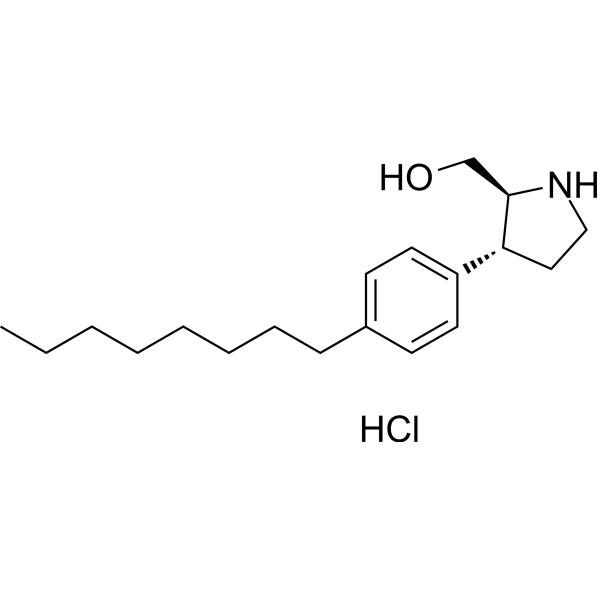
    Sphingolipid E is a synthetic pseudoceramide sphingolipid similar to type 2 ceramide with a metastable lamellar structure. Sphingolipid E ??can be used as a potential drug carrier to control the penetration of molecules as a lipid component of the intercellular space of the stratum corneum .
    Spns2-IN-3
  • HY-178174

    DNA/RNA Synthesis Topoisomerase Cancer
    MGB4 is a DNA minor groove binder. MGB4 binds to ARE-containing DNA and inhibition of topoisomerase I activity. MGB4 can impacts key cellular pathways, including inhibition oftranslation and alterations in sphingolipid and amino acid metabolism. MGB4 also reduces spermine and spermidine metabolism companied with Doxorubicin (HY-15142A). MGB4 can be used for the research of cancer, such as Prostate cancer .
    MGB4
  • HY-N15950

    Biochemical Assay Reagents Others
    Azido sphingosine (d18:1) is a clickable sphingolipid.
    Azido sphingosine (d18:1)
  • HY-N15932

    Biochemical Assay Reagents Others
    C6(6-Azido) LacCer is a clickable sphingolipid.
    C6(6-Azido) LacCer
  • HY-112384

    L-threo-dihydrosphingosine

    PKC Cancer
    Safingol is a lyso-sphingolipid PKC (protein kinase C ) inhibitor .
    Safingol
  • HY-148978A

    Exosomes Liposome Endogenous Metabolite Metabolic Disease
    18:0,18:1 PS is the dominant phosphatidylserine subtype in cells, exosomes and HIV particles. It is abundant in the brain and is essential for maintaining membrane structure, lipid raft organization and intracellular trafficking. 18:0,18:1 PS mediates interleaflet membrane coupling through cholesterol-dependent interactions with very long-chain sphingolipids, and can induce the clustering of glycosylphosphatidylinositol-anchored proteins. In addition, clusters formed by the binding of 18:0,18:1 PS to cholesterol not only facilitate the proper distribution of cholesterol in lipid bilayers, but also effectively protect cholesterol from oxidative damage .
    18:0,18:1 PS
  • HY-N15967

    Biochemical Assay Reagents Others
    Azido sphingosine (d14:1) is a clickable sphingolipid that can be used in click chemistry reactions.
    Azido sphingosine (d14:1)
  • HY-N15822

    Biochemical Assay Reagents Others
    C18:0 GM3(Neu5Gc) Ceramide (d18:1/18:0) is a sphingolipid.
    C18:0 GM3(Neu5Gc) Ceramide (d18:1/18:0)
  • HY-145549

    N-eicosanoyl-D-erythro-Sphingosylphosphorylcholine; SM(d18:1/20:0)

    Endogenous Metabolite Endocrinology
    C20 Sphingomyelin (d18:1/20:0) (N-eicosanoyl-D-erythro-Sphingosylphosphorylcholine; SM(d18:1/20:0)) is a naturally occurring sphingolipid. C20 Sphingomyelin (d18:1/20:0) levels are upregulated in the hippocampus of streptozotocin (HY-13753)-induced diabetic rats and in human plasma, positively correlating with insulin resistance in obese humans. C20 Sphingomyelin (d18:1/20:0) is also upregulated in the liver of a mouse model of Niemann-Pick C1 disease, a neurodegenerative cholesterol sphingolipid lysosomal storage disorder.
    C20 Sphingomyelin (d18:1/20:0)
  • HY-165550

    C22-D-erythro-Sphingosine

    Apoptosis Caspase Mitochondrial Metabolism Bcl-2 Family Metabolic Disease
    Sphingosine (C22-D-erythro-Sphingosine) is a metabolite of sphingolipid and a pro-Apoptotic signaling messenger. Sphingosine induces apoptosis via Caspase-dependent, mitochondria-dependent and lysosomal affinity detergent pathways, downregulates Bcl-2 and Bcl-xL, and truncates Bid and Bax. Sphingosine is used for cancer research .
    Sphingosine
  • HY-115708S

    Isotope-Labeled Compounds Endogenous Metabolite Metabolic Disease
    C22 Phytoceramide-d3 (t18:0/22:0) is a deuterated labeled C22 Phytoceramide (t18:0/22:0) . C22 Phytoceramide is a sphingolipid that has been found in Moro blood orange (C. sinensis) peels. It has also been found in primary human astrocytes.
    C22 Phytoceramide-d3 (t18:0/22:0)

Inquiry Online

Your information is safe with us. * Required Fields.

Salutation


Country or Region *

Applicant Name *


Organization Name *

Department *


Email Address *


Product Name *

Cat. No.


Requested quantity *

Phone Number *


Remarks

Inquiry Online

Inquiry Information

Product Name:
Cat. No.:
Quantity:
MCE Japan Authorized Agent:

