

1. Search Result
Search Result
Results for "

tau pathology

" in MedChemExpress (MCE) Product Catalog:

20

Inhibitors & Agonists

1

Screening Libraries

2

Biochemical Assay Reagents

1

Peptides

2

Inhibitory Antibodies

Targets Recommended:
Cat. No. Product Name Target Research Areas Chemical Structure
  • HY-103157
    PD146176
    5+ Cited Publications

    NSC168807

    Autophagy Ferroptosis Cardiovascular Disease
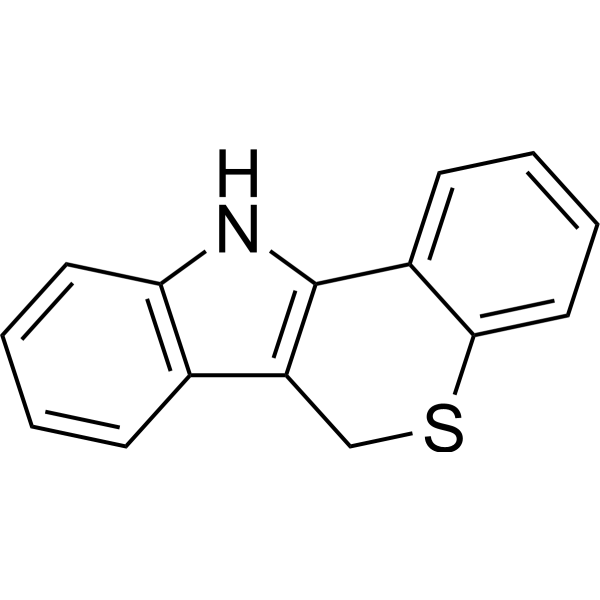
    PD146176 (NSC168807), a 15-Lipoxygenase (15-LO) inhibitor, inhibits rabbit reticulocyte 15-LO (Ki=197 nM, IC50=0.54 μM). PD146176 reverses cognitive impairment, brain amyloidosis, and tau pathology by stimulating autophagy in aged triple transgenic mice .
    PD146176
  • HY-P99471

    UCB 0107

    Tau Protein Neurological Disease
    Bepranemab is a humanized IgG4 monoclonal antibody that binds to the central region of tau protein. Bepranemab inhibits the seeding, aggregation of pathological tau protein and the spread of tau pathology to distal brain regions. Bepranemab is applicable to research related to Alzheimer's disease .
    Bepranemab
  • HY-P99555

    OPN-305

    Toll-like Receptor (TLR) MyD88 NOD-like Receptor (NLR) Tau Protein Interleukin Related Cardiovascular Disease Neurological Disease Inflammation/Immunology Cancer
    Tomaralimab (OPN-305) is a humanized anti-TLR2 IgG4 monoclonal antibody. Tomaralimab inhibits TLR2, MyD88, NLRP3, and reduces pro-inflammatory cytokine (IL-1β, IL-6, IL-8) production. Tomaralimab reduces tau pathology. Tomaralimab improves cognition, atopic dermatitis. Tomaralimab has anticancer effects on pancreatic ductal adenocarcinoma. Tomaralimab is being studied in myelodysplastic syndrome (MDS), atopic dermatitis, pancreatic ductal adenocarcinoma, Alzheimer's disease, and myocardial ischemia/reperfusion injury .
    Tomaralimab
  • HY-B1239
    Drofenine hydrochloride
    1 Publications Verification

    Hexahydroadiphenine hydrochloride

    Cholinesterase (ChE) Potassium Channel Amyloid-β TRP Channel Tau Protein NOD-like Receptor (NLR) JNK NF-κB IKK Neurological Disease Metabolic Disease Inflammation/Immunology
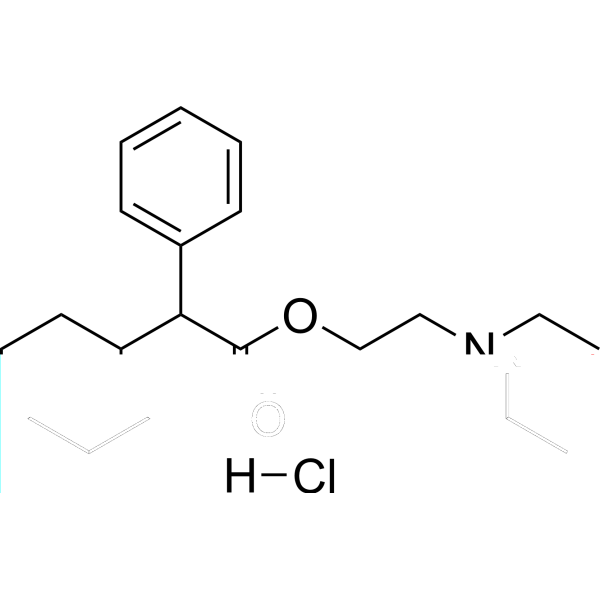
    Drofenine (Cycloadiphene; Hexahydroadiphenine) hydrochloride is an brain-penetrant antispasmodic agent. Drofenine hydrochloride is a Kv2.1 channel inhibitor with human IC50 of 9.53 μM. Drofenine hydrochloride is a butyrylcholinesterase (BChE) inhibitor with Ki of 0.003 mM, and is a TRPV3 activator. Drofenine hydrochloride blocks Kv2.1-dependent potassium efflux, inhibits Kv2.1/JNK/NF-κB and IkBa/NF-kB signaling, suppresses Kv2.1 mRNA/protein expression. Drofenine suppresses oligomeric -induced microglial NLRP3 inflammasome activation and neuronal Tau hyperphosphorylation, improves cognitive impairment, promotes neurite outgrowth. Drofenine hydrochloride induces calcium influx in keratinocytes and exert cytotoxicity against keratinocytes. Drofenine hydrochloride ameliorates diabetic peripheral neuropathy -like pathology. Drofenine hydrochloride can be used for the researches of Alzheimer's disease, diabetic peripheral neuropathy and smooth muscle spasm .
    Drofenine hydrochloride
  • HY-162566

    Calcium Channel Amyloid-β Neurological Disease
    REM127 is a small molecule compound capable of modulating calcium homeostasis in cells and possesses neuroprotective effects. REM127 can restore the calcium homeostasis imbalance in cellular models caused by pathological accumulation of tau protein. REM127 can efficiently cross the blood-brain barrier, and it has the potential to rescue synaptic and cognitive deficits in Alzheimer's disease animal models, as well as to slow down the progression of amyloid-beta and tau protein pathologies. REM127 can be used for research in neurodegenerative diseases .
    REM127
  • HY-137557

    APN1607; PM-PBB3

    Tau Protein Neurological Disease
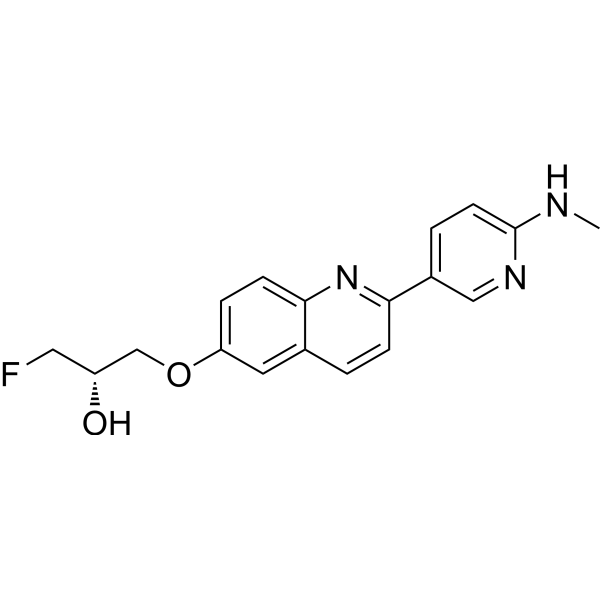
    Florzolotau (APN1607) is a positron emission tomography (PET) ligand that can be used for the detection of Alzheimer's disease (AD) and other tau proteinopathies. Its binding sites are located in the β-sheet of paired helical filaments (PHFs) and straight filaments (SFs) of tau protein, as well as in the C-shaped cavity of SFs. In addition, APN-1607 binds to intraneuronal inclusions in Alzheimer's disease (AD), primary age-related tauopathy (PART) and posterior cortical atrophy (PCA). Florzolotau shows promise for PET imaging studies of neurological disorders, particularly tau proteinopathies .
    Florzolotau
  • HY-101183

    Tau Protein Neurological Disease
    THK5351 can be radiolabeled and used as a radiotracer for in vivo imaging of tau pathology in the brain.
    THK5351
  • HY-179492

    hnRNP Neurological Disease
    ACI-19278 is a TDP-43 PET tracer with an average Kd of 25 nM. ACI-19278 only binds to pathological TDP-43 aggregates and does not cross-react with Aβ, Tau, etc. [ 18F]ACI-19278 successfully visualized the TDP-43 pathology in the human brain through positron emission computed tomography. ACI-19278 can be used for in vivo diagnosis of TDP-43 protein lesions .
    ACI-19278
  • HY-W338446

    Tau Protein Neurological Disease
    BF-170 is a selective tau fibril binding agent with an EC50 of 221 nM. It exhibits good blood-brain barrier permeability, and after intravenous injection in mice, the concentration in brain tissue reaches 9.1% ID/g within 2 minutes (with a brain clearance rate of 0.25% ID/g after 30 minutes). BF-170 can be used as a probe for tau protein pathology imaging in Alzheimer's disease (AD). It plays an important role in early-stage AD research and holds potential for imaging studies of tau-related neurodegenerative diseases .
    BF-170
  • HY-100723

    Amyloid-β Neurological Disease
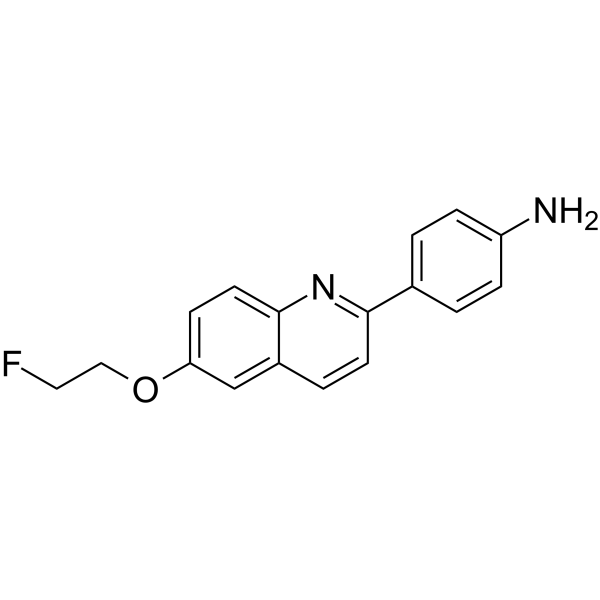
    THK-523 has demonstrated its high affinity and selectivity for tau pathology both in vitro and in vivo. 18F-THK523 is a potent tau imaging radiotracer. 18F-THK523 is a potent in vivo tau imaging ligand for Alzheimer's disease .
    THK-523
  • HY-176130

    ATTECs Tau Protein Autophagy Neurological Disease
    MRL828 combines a Tau pathology-binding ligand and modified guanine moiety based on the ATTEC technology to selectively designate aggregated tau proteins for clearance via the ALP. MRL828 decreases intracellular Tau aggregates and promotes the secretion of Tau .
    MRL828
  • HY-W841438

    Amyloid-β Tau Protein Neurological Disease
    Lithium orotate is an orally active lithium supplement with reduced binding that can bypass amyloid sequestration in AD mice models. Lithium orotate can prevent Aβ plaque deposition and phospho-tau accumulation and reverse AD pathology, neuroinflammatory changes and memory loss in AD mice models and ageing wild-type mice. Lithium orotate can be used for the research of alcoholism and Alzheimer’s disease .
    Lithium orotate
  • HY-172941

    NOD-like Receptor (NLR) Neurological Disease
    VEN-02XX is an orally active and brain-permeable NLRP3 inhibitor. VEN-02XX inhibits the release of IL-1β and IL-18 (IC50 0.3 and 0.28 μM, respectively). VEN-02XX restores memory and cognition, inhibits microgliosis, and reduces neuroinflammation and tau pathology in the 5XFAD/Rubicon KO mouse model. VEN-02XX may be used in the study of Alzheimer's disease (AD) .
    VEN-02XX
  • HY-103157R

    NSC168807 (Standard)

    Reference Standards Autophagy Ferroptosis Cardiovascular Disease
    PD146176 (Standard) is the analytical standard of PD146176. This product is intended for research and analytical applications. PD146176 (NSC168807), a 15-Lipoxygenase (15-LO) inhibitor, inhibits rabbit reticulocyte 15-LO (Ki=197 nM, IC50=0.54 μM). PD146176 reverses cognitive impairment, brain amyloidosis, and tau pathology by stimulating autophagy in aged triple transgenic mice .
    PD146176 (Standard)
  • HY-162020

    Tau Protein Neurological Disease Inflammation/Immunology
    SB1617 is a neuroinflammation-modulating agent, and has neuroprotective effect by reducing pathogenic tau levels through microglia-mediated anti-inflammatory activity .
    SB1617
  • HY-B1239A

    Cycloadiphene; Hexahydroadiphenine

    Potassium Channel Cholinesterase (ChE) TRP Channel NOD-like Receptor (NLR) Amyloid-β Tau Protein JNK NF-κB IKK Neurological Disease Metabolic Disease Inflammation/Immunology
    Drofenine (Cycloadiphene; Hexahydroadiphenine) is an brain-penetrant antispasmodic agent. Drofenine is a Kv2.1 channel inhibitor with human IC50 of 9.53 μM. Drofenine is a butyrylcholinesterase (BChE) inhibitor with Ki of 0.003 mM, and is a TRPV3 activator. Drofenine blocks Kv2.1-dependent potassium efflux, inhibits Kv2.1/JNK/NF-κB and IkBa/NF-kB signaling, suppresses Kv2.1 mRNA/protein expression. Drofenine suppresses oligomeric -induced microglial NLRP3 inflammasome activation and neuronal Tau hyperphosphorylation, improves cognitive impairment, promotes neurite outgrowth. Drofenine induces calcium influx in keratinocytes and exert cytotoxicity against keratinocytes. Drofenine ameliorates diabetic peripheral neuropathy -like pathology. Drofenine can be used for the researches of Alzheimer's disease, diabetic peripheral neuropathy and smooth muscle spasm .
    Drofenine
  • HY-101183R

    Tau Protein Reference Standards Neurological Disease
    THK5351 (Standard) is the analytical standard of THK5351 (HY-101183). This product is intended for research and analytical applications. THK5351 can be radiolabeled and used as a radiotracer for in vivo imaging of tau pathology in the brain.
    THK5351 (Standard)
  • HY-B1681

    Salicylic acid lithium; 2-Hydroxybenzoic acid lithium

    Tau Protein Neurological Disease
    Lithium salicylate (Salicylic acid lithium) is an orally active lithium salt. Lithium salicylate (Salicylic acid lithium) attenuates tau phosphorylation, mitigates associated pathologies in Alzheimer’s mice. Lithium salicylate (Salicylic acid lithium) can be used for Alzheimer’s research .
    Lithium salicylate
  • HY-P11581

    NOD-like Receptor (NLR) Interleukin Related Caspase Amyloid-β Tau Protein α-synuclein Pyroptosis Neurological Disease
    MNP2 is a NLRP3-ASC interaction inhibitor. MNP2 selectively binds to the PYD domain of ASC (Ka=149 nM) and blocks ASC-PYM binding (Ka=58 nM), thereby inhibiting the interaction between ASC and NLRP3 and suppressing the formation of the NLRP3 inflammasome. MNP2 inhibits IL-1β release and caspase-1 maturation, and reduces the efflux of potassium and chloride ions. MNP2 prevents mitochondrial damage and reactive oxygen species production, and significantly decreases NLRP3 inflammasome formation in neurodegenerative pathologies induced by β-amyloid, Tau protein and α-synuclein. MNP2 is applicable for the research of neurodegenerative diseases .
    MNP2
  • HY-183588

    EAAT Reactive Oxygen Species (ROS) Neurological Disease
    HCM-01 is an Excitatory amino acid transporter 2 (EAAT2) activator with oral effectiveness and blood-brain barrier penetration.HCM-01 binds to the allosteric site of EAAT2, increases EAAT2 expression in astrocytes, enhances glutamate-handling capacity, and modulates glutamate homeostasis.HCM-01 acts as an antioxidant, improves oxidative/antioxidative balance and increases total antioxidant capacity. HCM-01 can be used for the research of Alzheimer's disease .
    HCM-01

Inquiry Online

Your information is safe with us. * Required Fields.

Salutation


Country or Region *

Applicant Name *


Organization Name *

Department *


Email Address *


Product Name *

Cat. No.


Requested quantity *

Phone Number *


Remarks

Inquiry Online

Inquiry Information

Product Name:
Cat. No.:
Quantity:
MCE Japan Authorized Agent:

