20 Results for "

types of surfactants

" in MedChemExpress (MCE) Product Catalog:
Products (20)

20 Results for "types of surfactants" in MCE Product Catalog:

7
7 Publications Verification
Cat. No.: HY-141415
CAS No.: 9005-64-5
Purity:  ≥98.0%
Synonyms: Polysorbate 20
Tween 20 (Polysorbate 20) is a polyoxyethylene (POE)-type nonionic surfactant .
loading...
    loading...
4
4 Cited Publications
Cat. No.: HY-15435
CAS No.: 75621-03-3
Purity:  99.91%
Research Areas:  

Others

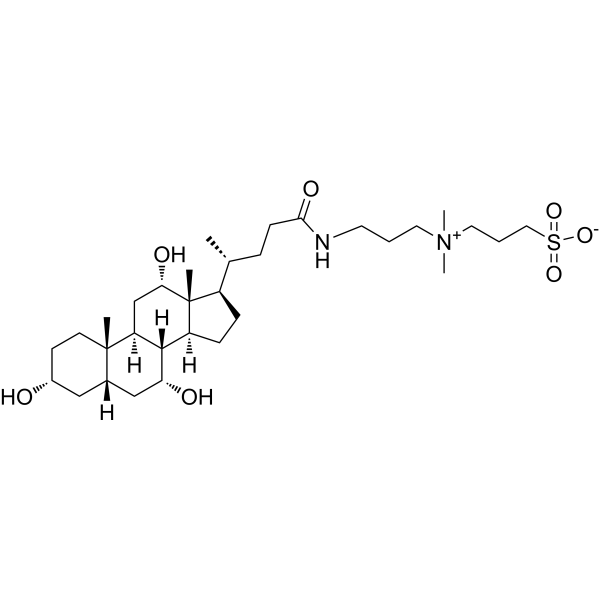
CHAPS is a cholic acid-derived, sulfobetaine-type zwitterionic detergent and micelle-forming agent. CHAPS exhibits properties of weak cationic or nonionic surfactants in different solution systems, undergoes micellization, and forms small, loose hydrophilic aggregates that are temperature-dependent. CHAPS stabilizes mononucleosomes under different ionic strengths, reduces nucleosome sequence specificity, promotes sliding of histone cores along DNA, solubilizes Tamm-Horsfall protein to reduce its interference with urinary exosome isolation, and maintains vesicle structure and the activity of related proteins at the same time. CHAPS is used to recover native folded fusion proteins, enhance the binding capacity of GST fusion proteins, and restore GST enzyme activity. However, CHAPS cannot refold proteins denatured by urea, guanidine hydrochloride or heat, nor can it construct the structure of intrinsically disordered proteins. CHAPS is commonly used in research on the separation and purification of membrane proteins .
loading...
    loading...
4
4 Cited Publications
Cat. No.: HY-15435A
CAS No.: 331717-45-4
Purity:  ≥98.0%
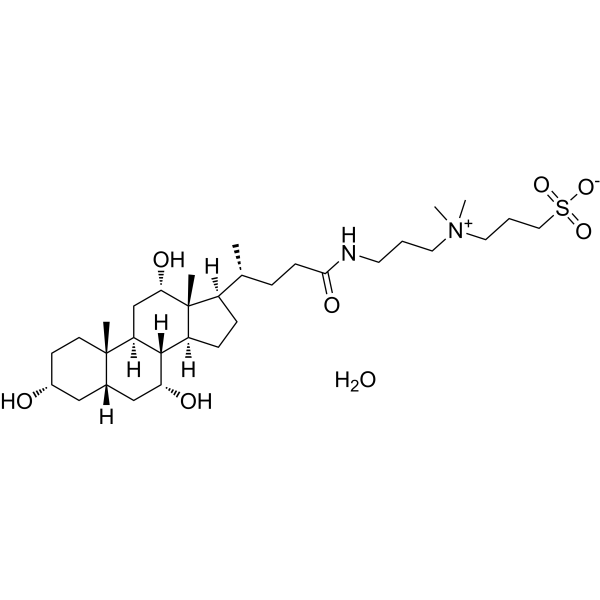
CHAPS hydrate is a cholic acid-derived, sulfobetaine-type zwitterionic detergent and micelle-forming agent. CHAPS hydrate exhibits properties of weak cationic or nonionic surfactants in different solution systems, undergoes micellization, and forms small, loose hydrophilic aggregates that are temperature-dependent. CHAPS hydrate stabilizes mononucleosomes under different ionic strengths, reduces nucleosome sequence specificity, promotes sliding of histone cores along DNA, solubilizes Tamm‑Horsfall protein to reduce its interference with urinary exosome isolation, and maintains vesicle structure and the activity of related proteins at the same time. CHAPS hydrate is used to recover native folded fusion proteins, enhance the binding capacity of GST fusion proteins, and restore GST enzyme activity. However, CHAPS hydrate cannot refold proteins denatured by urea, guanidine hydrochloride or heat, nor can it construct the structure of intrinsically disordered proteins. CHAPS hydrate is commonly used in research on the separation and purification of membrane proteins .
loading...
    loading...
2
2 Cited Publications
Cat. No.: HY-B1268
CAS No.: 577-11-7
Synonyms: Dioctyl sulfosuccinate sodium salt
Research Areas:  

Others

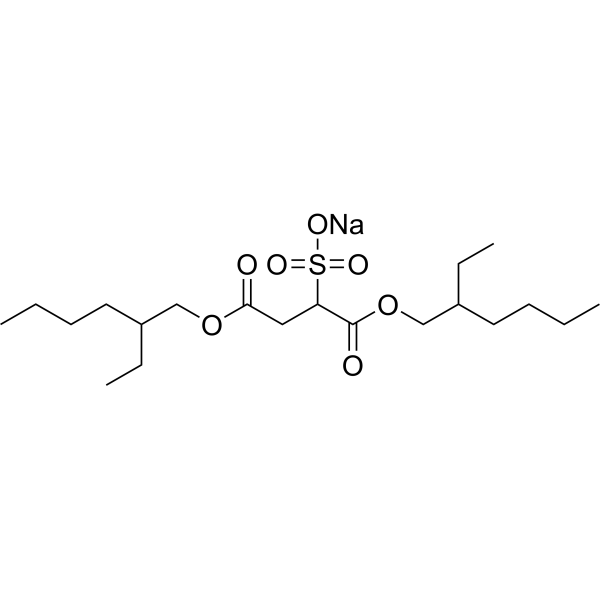
Docusate Sodium (Dioctyl sulfosuccinate sodium salt) is one of the main components in stool softeners. Docusate Sodium is a sulfated surfactant and may inactivate viral pathogens by disrupting viral envelopes and/or denaturing/disassociating proteins. Docusate Sodium is effective in vitro against wild type and drug-resistant strains of HSV type 1 and 2. Docusate Sodium is an obesogen. Docusate Sodium with developmental exposure leads to increased adult adiposity, inflammation, metabolic disorder and dyslipidemia in offspring fed a standard diet in mice .
loading...
    loading...
Cat. No.: HY-W127457
CAS No.: 34506-67-7
Target:  

Liposome

Research Areas:  

Others

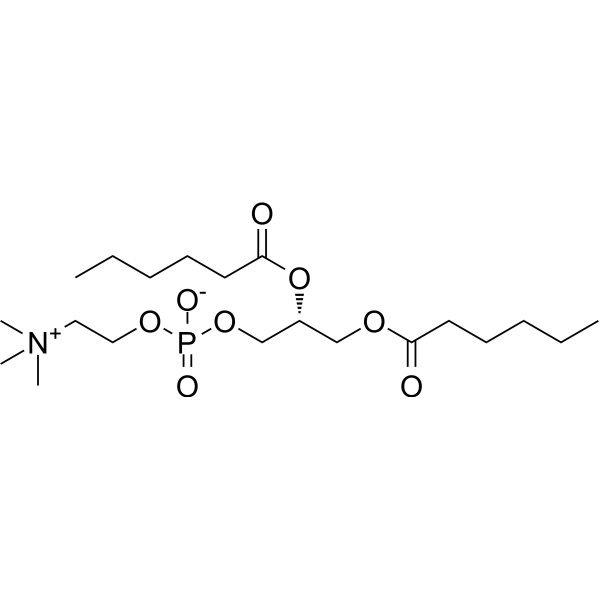
1,2-dihexanoyl-sn-glycero-3-phosphocholine is a phosphatidylcholine. It can play a role as a surfactant and is commonly used in the generation of micelles, liposomes, and other types of artificial membranes.
loading...
    loading...
Cat. No.: HY-128443
CAS No.: 122-19-0
Purity:  ≥98.0%
Synonyms: BDMSAC
Research Areas:  

Others

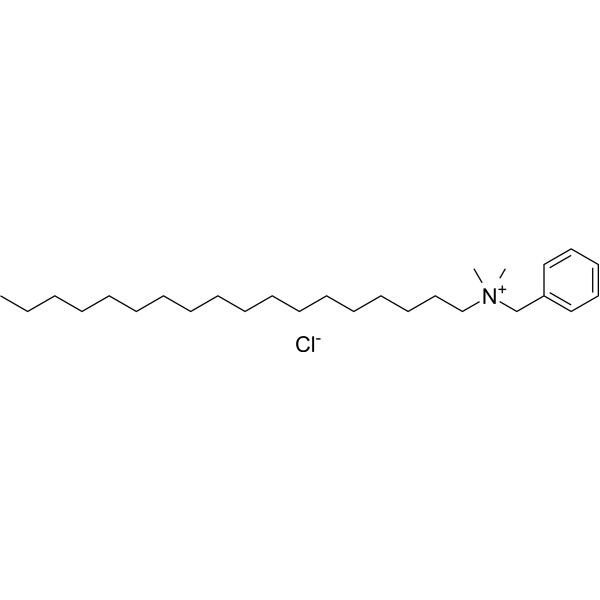
Benzyldimethylstearylammonium chloride (BDMSAC) is a quaternary ammonium cationic surfactant and a mixed-type corrosion inhibitor. Benzyldimethylstearylammonium chloride adsorbs onto the surface of cold-rolled steel through a combined effect of physisorption and chemisorption, forming a hydrophobic protective barrier that blocks active sites and restricts the diffusion of corrosive media, while simultaneously inhibiting the anodic iron dissolution reaction and the cathodic hydrogen evolution reaction, and reducing the corrosion rate in acidic media. Benzyldimethylstearylammonium chloride is used in research related to various fields such as fungicides, wastewater treatment, and detergents .
loading...
    loading...
Cat. No.: HY-Y1890C
CAS No.: 61791-12-6
Cremophor EL-20 is a type of Cremophor EL. Cremophor EL is a nonionic surfactant .
loading...
    loading...
Cat. No.: HY-W250316
CAS No.: 37318-31-3
Synonyms: Sucrose Stearate, Type II, USP
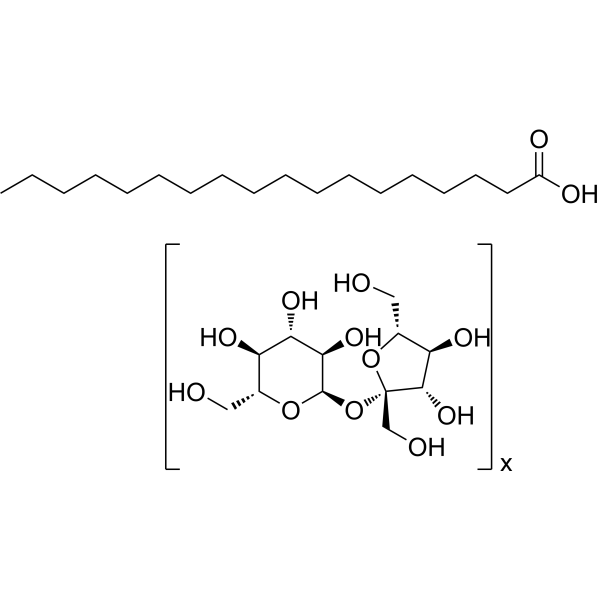
Alpha-d-Glucopyranoside, beta-d-fructofuranosyl, octadecanoate (Sucrose Stearate, Type II, USP) is a non-ionic surfactant. Alpha-d-Glucopyranoside, beta-d-fructofuranosyl, octadecanoate enhances the skin permeability of formulations .
loading...
    loading...
Cat. No.: HY-B1268R
CAS No.: 577-11-7
Synonyms: Dioctyl sulfosuccinate sodium salt (Standard)
Target:  

Reference Standards HSV

Research Areas:  

Others

Docusate (Sodium) (Standard) is the analytical standard of Docusate (Sodium). This product is intended for research and analytical applications. Docusate Sodium (Dioctyl sulfosuccinate sodium salt) is one of the main components in stool softeners. Docusate Sodium is a sulfated surfactant and may inactivate viral pathogens by disrupting viral envelopes and/or denaturing/disassociating proteins. Docusate Sodium is effective in vitro against wild type and drug-resistant strains of HSV type 1 and 2. Docusate Sodium is an obesogen. Docusate Sodium with developmental exposure leads to increased adult adiposity, inflammation, metabolic disorder and dyslipidemia in offspring fed a standard diet in mice .
loading...
    loading...
Cat. No.: HY-Y1361
CAS No.: 13811-71-7
Synonyms: D-(-)-Tartaric acid diethyl ester
Diethyl D-(-)-tartrate (D-(-)-Tartaric acid diethyl ester) is a biochemical reagent that can be used as a biological material or organic compound for life science related research. Diethyl D(-)-tartrate can also react with fatty carbonyl compounds to form bis(sodium carboxylate) types of surfactants, which have good water solubility, strong ability to lower surface tension, and can be easily decomposed under acidic conditions .
loading...
    loading...
Cat. No.: HY-W012412
CAS No.: 5810-42-4
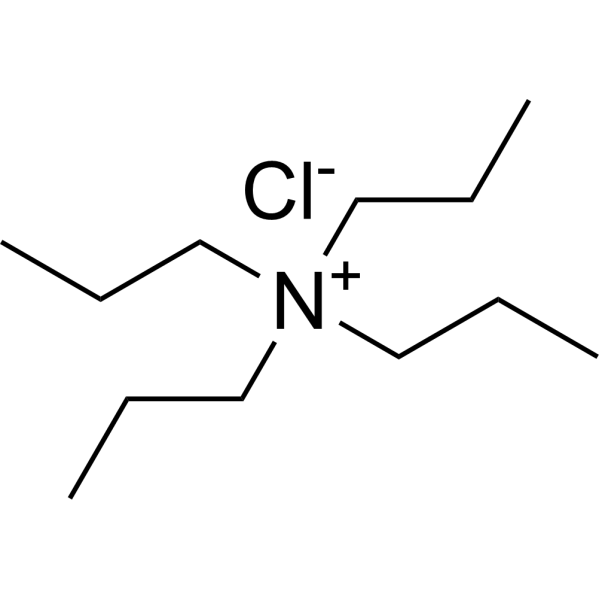
Tetrapropylammonium chloride is a compound belonging to the class of quaternary ammonium compounds. It is a salt with cationic properties and is used in various industrial and biomedical applications. Tetrapropylammonium chloride is commonly used as a phase transfer catalyst to facilitate the movement of reactants between immiscible phases in organic synthesis reactions. It is also used as a surfactant in the formulation of personal care products, detergents, textiles and pharmaceuticals. Additionally, it is used in the production of certain types of polymers and resins.
loading...
    loading...
Cat. No.: HY-113736
CAS No.: 997-62-6
Research Areas:  

Others

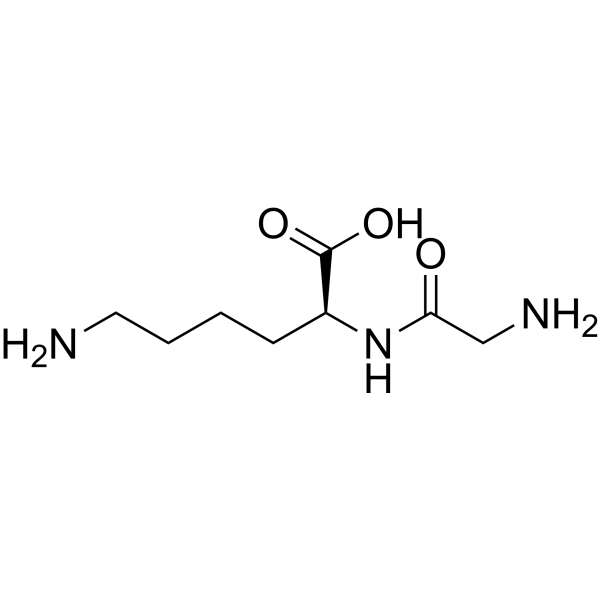
Glycyllysine is a polypeptide that can be used in the synthesis of antibodies and amino acid type gemini surfactants. Glycyllysine has potential applications in modifying plasmid/gemini/lipid (P/G/L) nanoparticles transport carriers .
loading...
    loading...
Cat. No.: HY-W016773
CAS No.: 112-47-0
1,10-Decanediol is a diol compound that can react with α-ketoglutarate (aKG) to generate polymeric microparticles (termed paKG MPs) for the sustained release of aKG, thereby promoting immunosuppressive regulation. Additionally, paKG MPs can bind to dendritic cells (DCs), reducing their glycolysis and mitochondrial respiration in vitro. These metabolic changes lead to the modulation of MHC-II and CD86 expression in DCs and alter the frequency of regulatory T cells (Tregs) as well as T-helper type 1/2/17 cells in vitro. 1,10-Decanediol can be used in research within the field of immunometabolism. can be used as a surfactant/stabilizer in the synthesis of nanomaterials .
loading...
    loading...
Cat. No.: HY-W839203
CAS No.: 37070-48-7
Synonyms: 1,2-Didocosanoyl-sn-glycero-3-phosphocholine; PC(22:0/22:0)
Target:  

Endogenous Metabolite

Research Areas:  

Others

22:0 PC (1,2-Didocosanoyl-sn-glycero-3-phosphocholine), a type of phosphatidylcholine, functions as a lung surfactant and is characterized as an amphipathic molecule predominantly found in the outer leaflets of biological membrane bilayers.
loading...
    loading...
Cat. No.: HY-128443R
CAS No.: 122-19-0
Synonyms: BDMSAC (Standard)
Research Areas:  

Others

Benzyldimethylstearylammonium chloride (Standard) (BDMSAC (Standard)) is the analytical standard of Benzyldimethylstearylammonium chloride (HY-128443). This product is intended for research and analytical applications. Benzyldimethylstearylammonium chloride is a quaternary ammonium cationic surfactant and a mixed-type corrosion inhibitor. Benzyldimethylstearylammonium chloride adsorbs onto the surface of cold-rolled steel through a combined effect of physisorption and chemisorption, forming a hydrophobic protective barrier that blocks active sites and restricts the diffusion of corrosive media, while simultaneously inhibiting the anodic iron dissolution reaction and the cathodic hydrogen evolution reaction, and reducing the corrosion rate in acidic media. Benzyldimethylstearylammonium chloride is used in research related to various fields such as fungicides, wastewater treatment, and detergents .
loading...
    loading...
Cat. No.: HY-W016773S
CAS No.: 347841-78-5
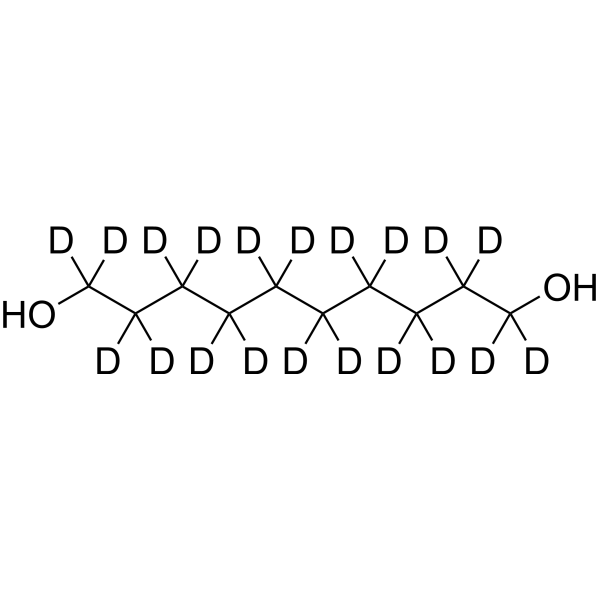
1,10-Decanediol-d20 is the deuterium labeled 1,10-Decanediol . 1,10-Decanediol is a diol compound that can react with α-ketoglutarate (aKG) to generate polymeric microparticles (termed paKG MPs) for the sustained release of aKG, thereby promoting immunosuppressive regulation. Additionally, paKG MPs can bind to dendritic cells (DCs), reducing their glycolysis and mitochondrial respiration in vitro. These metabolic changes lead to the modulation of MHC-II and CD86 expression in DCs and alter the frequency of regulatory T cells (Tregs) as well as T-helper type 1/2/17 cells in vitro. 1,10-Decanediol can be used in research within the field of immunometabolism. can be used as a surfactant/stabilizer in the synthesis of nanomaterials .
loading...
    loading...
Cat. No.: HY-W127457S2
1,2-Dihexanoyl-sn-glycero-3-phosphocholine-d9 is the deuterium labeled 1,2-Dihexanoyl-sn-glycero-3-phosphocholine. 1,2-Dihexanoyl-sn-glycero-3-phosphocholine is a phosphatidylcholine. It can play a role as a surfactant and is commonly used in the generation of micelles, liposomes, and other types of artificial membranes.
loading...
    loading...
Cat. No.: HY-W127457S3
1,2-Dihexanoyl-sn-glycero-3-phosphocholine-d31 is the deuterium labeled 1,2-Dihexanoyl-sn-glycero-3-phosphocholine. 1,2-Dihexanoyl-sn-glycero-3-phosphocholine is a phosphatidylcholine. It can play a role as a surfactant and is commonly used in the generation of micelles, liposomes, and other types of artificial membranes.
loading...
    loading...
Cat. No.: HY-W654567
CAS No.: 41591-87-1
Research Areas:  

Infection

N,N-Dimethyl-N-(3-(trimethoxysilyl)propyl)tetradecan-1-aminium chloride is a cationic surfactant of the silylated quaternary ammonium salt type, possessing dual functions of antibacterial activity and silane coupling. N,N-Dimethyl-N-(3-(trimethoxysilyl)propyl)tetradecan-1-aminium chloride can be used as a cationic silane coupling agent, antibacterial surface treatment agent, and disinfectant.
loading...
    loading...
Cat. No.: HY-W724293
Tetrapropylammonium-d28 chloride is the deuterium labeled Tetrapropylammonium chloride (HY-W012412). Tetrapropylammonium chloride is a compound belonging to the class of quaternary ammonium compounds. It is a salt with cationic properties and is used in various industrial and biomedical applications. Tetrapropylammonium chloride is commonly used as a phase transfer catalyst to facilitate the movement of reactants between immiscible phases in organic synthesis reactions. It is also used as a surfactant in the formulation of personal care products, detergents, textiles and pharmaceuticals. Additionally, it is used in the production of certain types of polymers and resins.
loading...
    loading...
  • 1

