19 Results for "

uncoupled mitochondrial respiration

" in MedChemExpress (MCE) Product Catalog:
Products (19)

19 Results for "uncoupled mitochondrial respiration" in MCE Product Catalog:

13
13 Cited Publications
Cat. No.: HY-109804
CAS No.: 1001015-18-4
Purity:  98.27%
Research Areas:  

Inflammation/Immunology

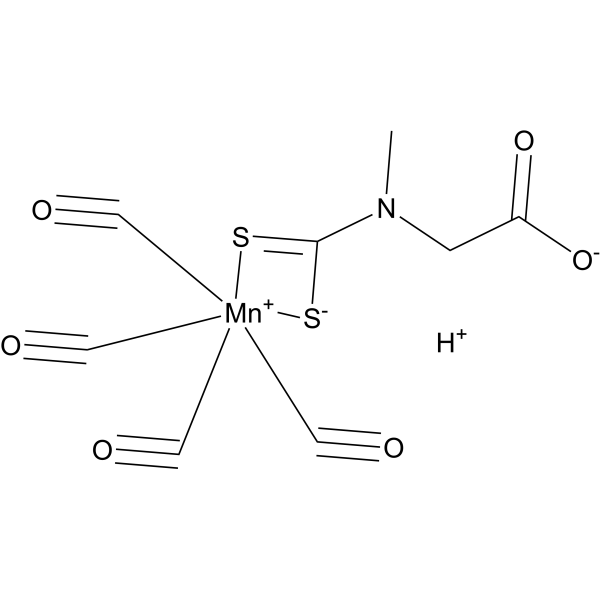
CORM-401 is an oxidant-sensitive CO-releasing molecule. CORM-401 induces NO increase in the regulation of endothelial calcium signalling. CORM-401 reduces TNF-α/CHX and H2O2-induced ROS production. CORM-401 uncouples mitochondrial respiration and inhibits glycolysis .
loading...
    loading...
Cat. No.: HY-W032022
CAS No.: 111-27-3
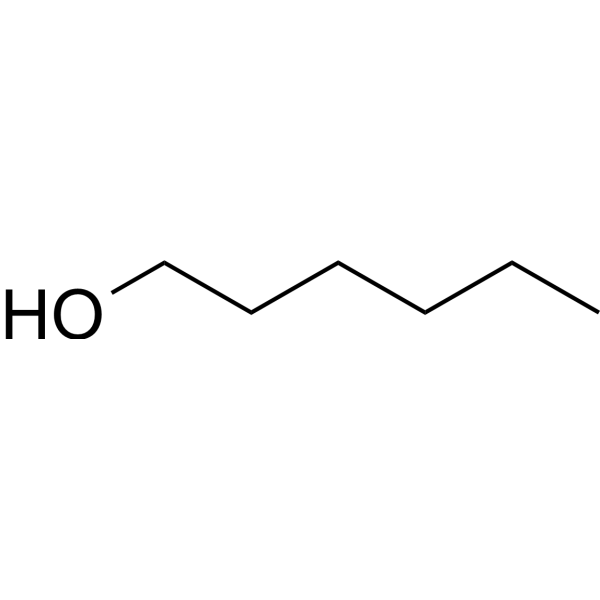
1-Hexanol, a primary alcohol, is a surfactant that can be employed in industrial processes to enhance interfacial properties . 1-Hexanol uncouples mitochondrial respiration by a non-protonophoric mechanism .
loading...
    loading...
Cat. No.: HY-138207
CAS No.: 136560-78-6
Purity:  ≥99.0%
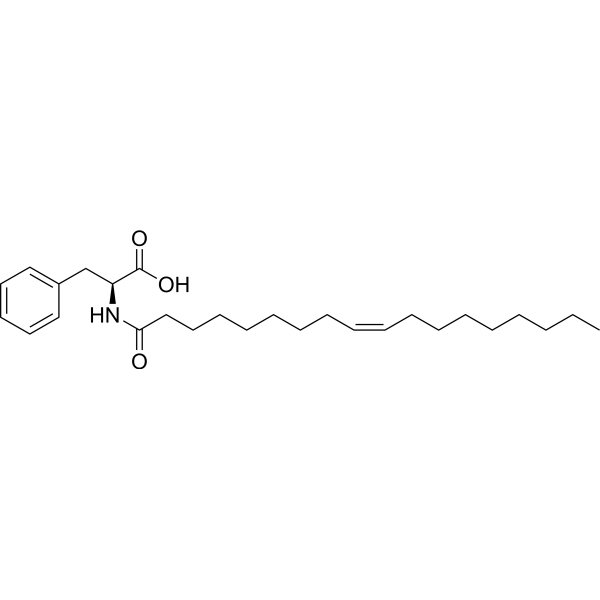
N-Oleoyl-L-phenylalanine is a long-chain N-acyl-L-phenylalanine and also a mitochondrial uncoupler. N-Oleoyl-L-phenylalanine uncouples UCP1-independent respiration in mitochondria, thereby helping to regulate glucose homeostasis. As an endogenous metabolite, the level of N-Oleoyl-L-phenylalanine increases in patients with ulcerative colitis after a high-fat diet. N-Oleoyl-L-phenylalanine can be used in studies related to ulcerative colitis .
loading...
    loading...
Cat. No.: HY-153813
CAS No.: 852222-94-7
Purity:  98.13%
Research Areas:  

Others

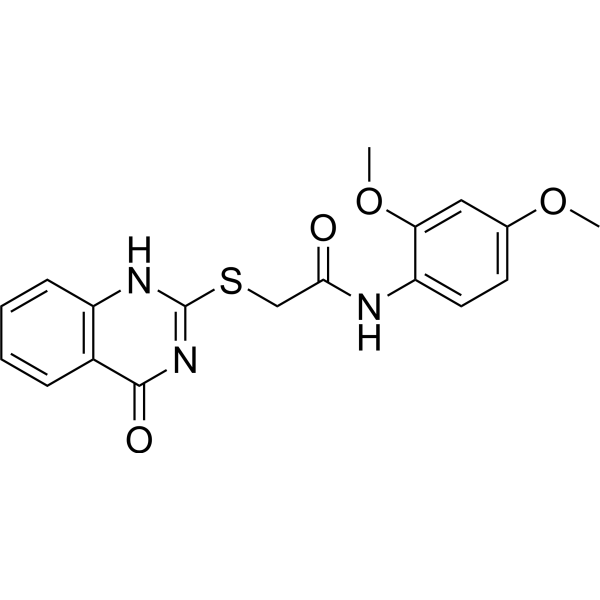
Z16078526 induces endogenous Ucp1 expression, promotes p38 MAPK phosphorylation and lipolysis in primary mouse brown adipocytes. Z16078526 activates thermogenic gene expression and mitochondrial activity (uncoupled respiration) in mouse brown adipocytes. Z16078526 also stimulates thermogenesis in the mouse .
loading...
    loading...
Cat. No.: HY-W032022S1
CAS No.: 2159-18-4
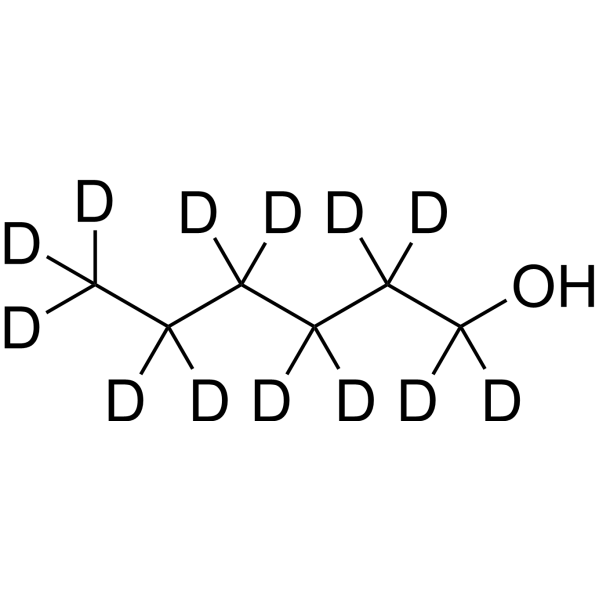
1-Hexanol-d11 is the deuterium labeled 1-Hexanol . 1-Hexanol, a primary alcohol, is a surfactant that can be employed in industrial processes to enhance interfacial properties . 1-Hexanol uncouples mitochondrial respiration by a non-protonophoric mechanism .
loading...
    loading...
Cat. No.: HY-W032022S
CAS No.: 204244-84-8
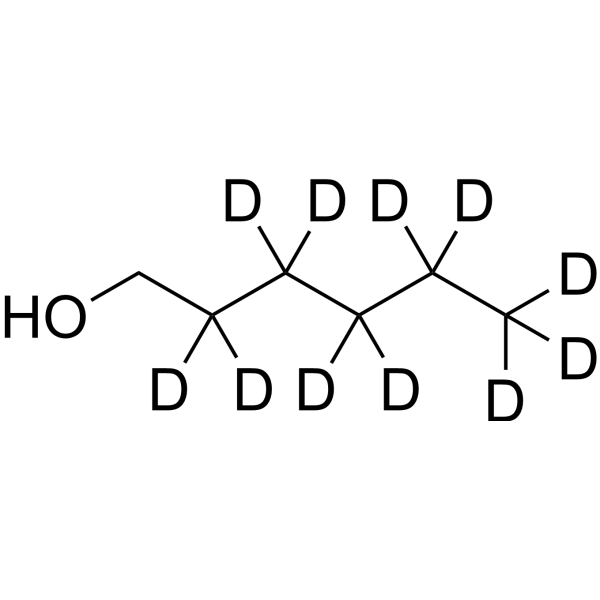
1-Hexanol-d13 is the deuterium labeled 1-Hexanol . 1-Hexanol, a primary alcohol, is a surfactant that can be employed in industrial processes to enhance interfacial properties . 1-Hexanol uncouples mitochondrial respiration by a non-protonophoric mechanism .
loading...
    loading...
Cat. No.: HY-170369
CAS No.: 3066237-61-1
Research Areas:  

Metabolic Disease

SHO1122147 (Compound 7m) affects the mitochondrial electron transport chain, exhibits mitochondrial uncoupling activity (EC50=3.6 μM), and increases the oxygen consumption rate (OCR=69%) and promotes cellular respiration. SHO1122147 is orally active, and can be used in reaearch of obesity and metabolic dysfunction-associated steatohepatitis (MASH) .
loading...
    loading...
Cat. No.: HY-W032022R
CAS No.: 111-27-3
1-Hexanol (Standard) is the analytical standard of 1-Hexanol. This product is intended for research and analytical applications. 1-Hexanol, a primary alcohol, is a surfactant that can be employed in industrial processes to enhance interfacial properties . 1-Hexanol uncouples mitochondrial respiration by a non-protonophoric mechanism .
loading...
    loading...
Cat. No.: HY-158801
CAS No.: 2133455-98-6
Synonyms: C20:4 Carnitine chloride; L-Arachidonoylcarnitine chloride; L-Carnitine arachidonoyl ester chloride
Target:  

Endogenous Metabolite

Research Areas:  

Metabolic Disease

Arachidonoyl-L-carnitine (C20:4 Carnitine) chloride is an arachidonic acid-L-carnitine complex and also a substrate for β-oxidation. Arachidonoyl-L-carnitine chloride undergoes mitochondrial β-oxidation, a process that requires energy-dependent function provided by NADP + transhydrogenase supplying NADPH for 2,4-enoyl-CoA reductase activity. Arachidonoyl-L-carnitine chloride shows reduced respiration under uncoupling conditions, and ATP partially restores its oxidation .
loading...
    loading...
Cat. No.: HY-106472
CAS No.: 40198-53-6
Synonyms: EMD 26644
Target:  

Bacterial

Research Areas:  

Infection

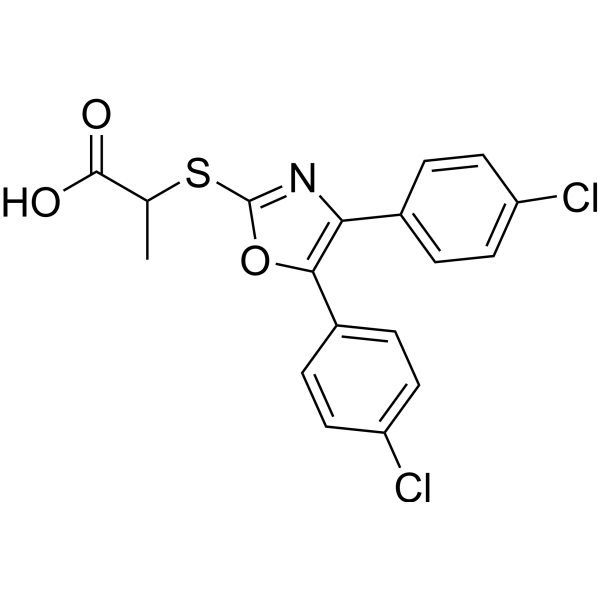
Tioxaprofen is a new anti-mycotic drug against Trichophyton mentagrophytes and T. rubrum, and is a potent uncoupling agent of mitochondrial respiration .
loading...
    loading...
Cat. No.: HY-W032022S2
CAS No.: 52598-04-6
1-Hexanol-d3 is the deuterium labeled 1-Hexanol . 1-Hexanol, a primary alcohol, is a surfactant that can be employed in industrial processes to enhance interfacial properties . 1-Hexanol uncouples mitochondrial respiration by a non-protonophoric mechanism .
loading...
    loading...
Cat. No.: HY-W032022S3
CAS No.: 64118-18-9
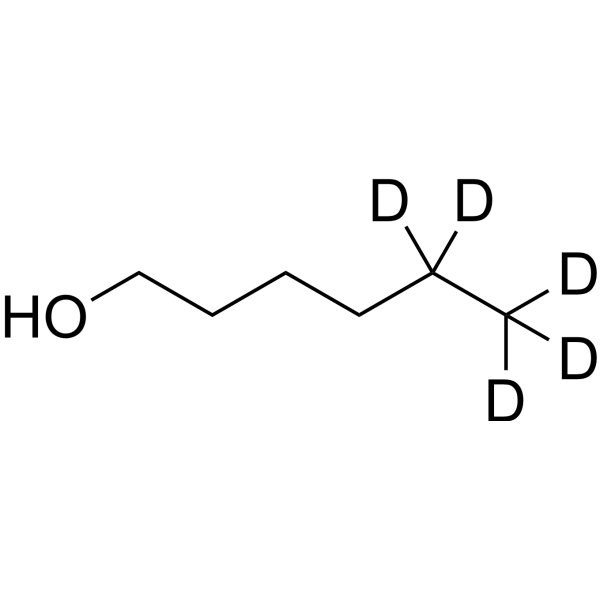
1-Hexanol-d5 is the deuterium labeled 1-Hexanol . 1-Hexanol, a primary alcohol, is a surfactant that can be employed in industrial processes to enhance interfacial properties . 1-Hexanol uncouples mitochondrial respiration by a non-protonophoric mechanism .
loading...
    loading...
Cat. No.: HY-17684
CAS No.: 3107758-65-3
Target:  

Drug Derivative Akt

Research Areas:  

Others

MARY15 is a pyridinylpiperazine-based derivative of MARY1. MARY15 activates uncoupled mitochondrial respiration and upregulates p-AKT (S473) phosphorylation in renal proximal tubule cells .
loading...
    loading...
Cat. No.: HY-W032022S4
CAS No.: 1335436-46-8
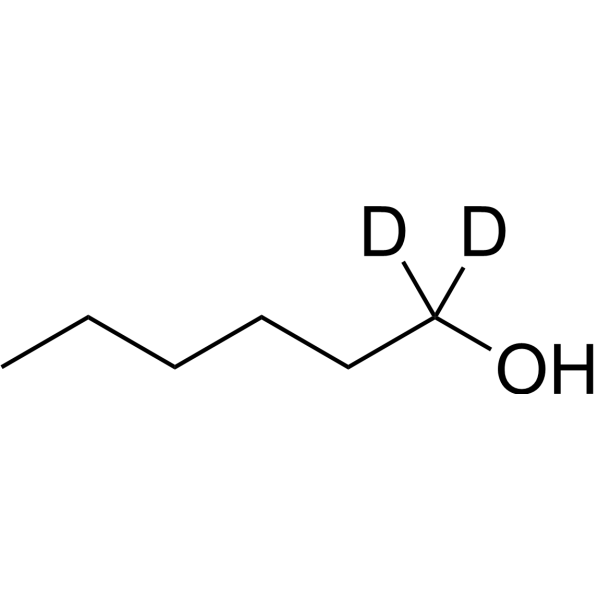
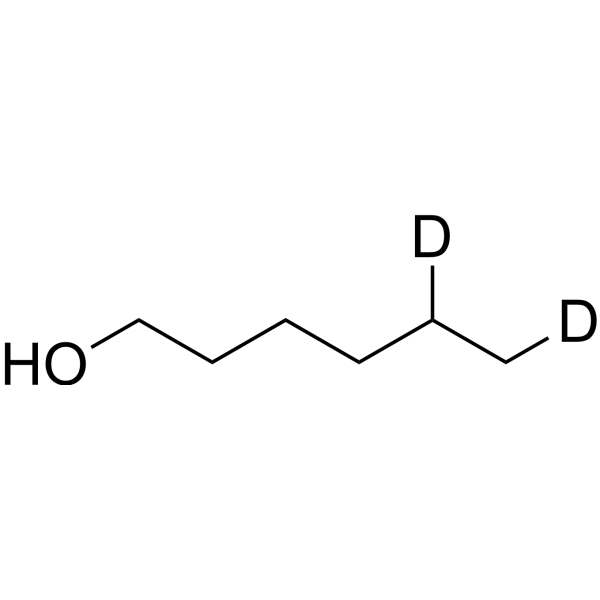
1-Hexanol-d2 is deuterated labeled 1-Hexanol (HY-W032022). 1-Hexanol, a primary alcohol, is a surfactant that can be employed in industrial processes to enhance interfacial properties . 1-Hexanol uncouples mitochondrial respiration by a non-protonophoric mechanism .
loading...
    loading...
Cat. No.: HY-183094
CAS No.: 931619-99-7
Target:  

PGC-1α

Research Areas:  

Metabolic Disease

AM73 is a PGC-1α1 stabilizer. AM73 increases the expression levels of Ucp1 and Cidea in brown adipocytes, and enhances basal mitochondrial respiration and uncoupled respiration. AM73 regulates hypoxia, brown adipocyte differentiation, carbohydrate metabolism and insulin signaling pathways in brown adipocytes. AM73 alters the thermogenic process of white adipocytes. AM73 is applicable to the research of obesity and related metabolic disorders .
loading...
    loading...
Cat. No.: HY-183096
Target:  

PGC-1α

Research Areas:  

Metabolic Disease

AM31 is a PGC-1α1 stabilizer. AM31 enhances the protein stability of PGC-1α1, promotes protein accumulation and target gene activation. AM31 induces the expression of Ucp1 and Cidea in brown adipocytes. AM31 increases the levels of basal mitochondrial respiration and uncoupled respiration in brown adipocytes. AM31 can be used for the research of obesity and related metabolic disorders .
loading...
    loading...
Cat. No.: HY-183095
CAS No.: 949229-08-7
Research Areas:  

Metabolic Disease

AM79 is a PGC-1α1 stabilizer. AM79 promotes the accumulation of endogenous PGC-1α1 protein, thereby activating its target genes. AM79 increases uncoupled mitochondrial respiration in brown adipocytes. AM79 induces the expression of Ucp1 and Cidea in brown adipocytes. AM79 can be used for the research of obesity and related metabolic disorders .
loading...
    loading...
Cat. No.: HY-109804R
CAS No.: 1001015-18-4
CORM-401 (Standard) is the analytical standard of CORM-401 (HY-109804). This product is intended for research and analytical applications. CORM-401 is an oxidant-sensitive CO-releasing molecule. CORM-401 induces NO increase in the regulation of endothelial calcium signalling. CORM-401 reduces TNF-α/CHX and H2O2-induced ROS production. CORM-401 uncouples mitochondrial respiration and inhibits glycolysis .
loading...
    loading...
Cat. No.: HY-171722
CAS No.: 1355681-08-1
Synonyms: Asc-C9
Target:  

Insecticide PGC-1α

Research Areas:  

Infection Cancer

Ascr#10 (Asc-C9) is an orally active thermogenesis inducer and insecticide that can be obtained from Monochamus alternatus. Ascr#10 binds to the insect adipokinetic hormone (AKH) receptor (Ka=272 µM) and stimulates mitochondrial biogenesis via the PGC1α-UCP4 axis. Consequently, Ascr#10 induces UCP4-mediated uncoupled respiration, reduces the ATP/ADP ratio and accelerates lipid mobilization, thereby driving the thermogenesis process. Ascr#10 delays pupation and exerts specific chemotaxis toward dispersive fourth-stage pinewood nematode LIV larvae. Ascr#10 promotes cold acclimation of Monochamus alternatus larvae through metabolic inhibition and cryoprotectant accumulation, enhancing their survival rate under cold stress. Ascr#10 also induces browning of white adipose tissue and activates brown adipose tissue in mice, thereby helping the body resist cold and tumor growth. Ascr#10 can be widely applied to research related to pine wilt disease, lung tumors and cold stress .
loading...
    loading...
  • 1

