


1. Search Result
Search Result
Pathways Recommended: Stem Cell/Wnt Cell Cycle/DNA Damage
Results for "

vascular wall cells

" in MedChemExpress (MCE) Product Catalog:

12

阻害剤およびアゴニスト

2

生化学アッセイ試薬

4

ペプチド

1

阻害性抗体

1

天然物

製品番号 製品名 Target 研究分野 構造式
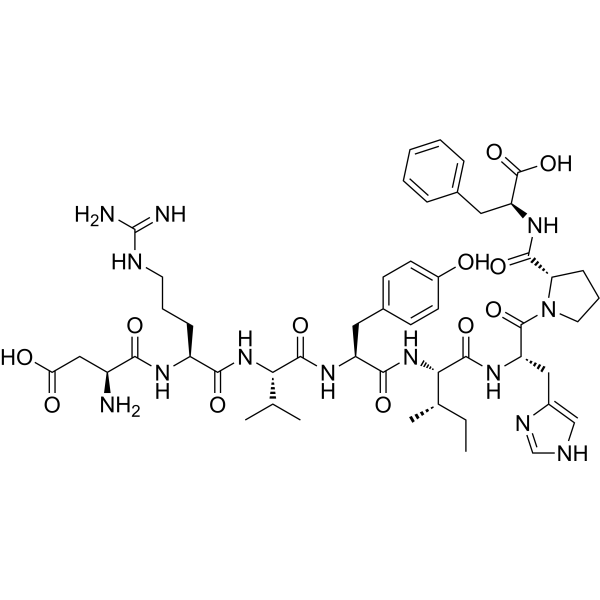
  • HY-13948
    Angiotensin II human
    Maximum Cited Publications
    222 Publications Verification

    Angiotensin II; Ang II; DRVYIHPF

    Angiotensin Receptor Apoptosis Cardiovascular Disease Infection Metabolic Disease Inflammation/Immunology Cancer
    Angiotensin II (Angiotensin II) is a vasoconstrictor and a major bioactive peptide of the renin/angiotensin system. Angiotensin II human plays a central role in regulating human blood pressure, which is mainly mediated by interactions between Angiotensin II and the G-protein-coupled receptors (GPCRs) Angiotensin II type 1 receptor (AT1R) and Angiotensin II type 2 receptor (AT2R). Angiotensin II human stimulates sympathetic nervous stimulation, increases aldosterone biosynthesis and renal actions. Angiotensin II human induces growth of vascular smooth muscle cells, increases collagen type I and III synthesis in fibroblasts, leading to thickening of the vascular wall and myocardium, and fibrosis. Angiotensin II human also induces apoptosis. Angiotensin II induces capillary formation from endothelial cells via the LOX-1 dependent redox-sensitive pathway .
    Angiotensin II human
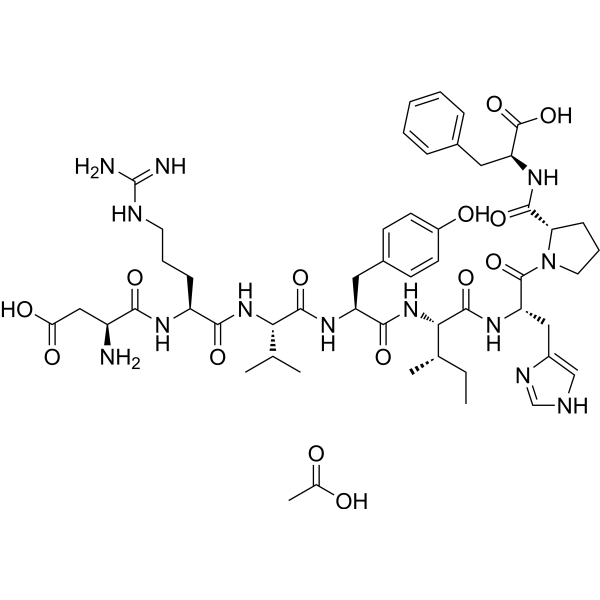
  • HY-13948A
    Angiotensin II human acetate
    Maximum Cited Publications
    222 Publications Verification

    Angiotensin II acetate; Ang II acetate; DRVYIHPF acetate

    Angiotensin Receptor Apoptosis Cardiovascular Disease Infection Metabolic Disease Inflammation/Immunology Cancer
    Angiotensin II human (Angiotensin II) acetate is a vasoconstrictor and a major bioactive peptide of the renin/angiotensin system. Angiotensin II human acetate plays a central role in regulating human blood pressure, which is mainly mediated by interactions between Angiotensin II and the G-protein-coupled receptors (GPCRs) Angiotensin II type 1 receptor (AT1R) and Angiotensin II type 2 receptor (AT2R). Angiotensin II human acetate stimulates sympathetic nervous stimulation, increases aldosterone biosynthesis and renal actions. Angiotensin II human acetate induces growth of vascular smooth muscle cells, increases collagen type I and III synthesis in fibroblasts, leading to thickening of the vascular wall and myocardium, and fibrosis. Angiotensin II human acetate also induces apoptosis. Angiotensin II human acetate induces capillary formation from endothelial cells via the LOX-1 dependent redox-sensitive pathway .
    Angiotensin II human acetate
  • HY-P1956
    Human serum albumin
    4 Publications Verification

    HSA

    NF-κB NO Synthase Cardiovascular Disease Inflammation/Immunology Cancer
    Human serum albumin (HSA) is the most abundant protein in plasma and is a major determinant of plasma oncotic pressure. Human serum albumin exhibits antioxidant, anticoagulant, anti-inflammatory, anti-platelet aggregation activities as well as colloid osmotic action. Human serum albumin can block the inhibitory effect of GML on human T cells, providing protective function for T cells. Human serum albumin is also associated with cardiovascular diseases and can partially prevent the LPS (HY-D1056) induced oxidative stress, as well as the upregulation of NF-κB, NF-κB, and peroxynitrite (ONOO ) in the vascular wall, contributing to the reduction of blood pressure .
    This product is recombinant Human Serum Albumin expressed in a microbial expression system.
    Human serum albumin
  • HY-P1956A

    HSA (Cell culture grade, Endotoxin<0.125 EU/mg)

    NF-κB NO Synthase Cardiovascular Disease Inflammation/Immunology
    Human serum albumin (Cell culture grade, Endotoxin<0.125 EU/mg) (HSA) is the most abundant protein in plasma and is a major determinant of plasma oncotic pressure. Human serum albumin (Cell culture grade, Endotoxin<0.125 EU/mg) exhibits antioxidant, anticoagulant, anti-inflammatory, anti-platelet aggregation activities as well as colloid osmotic action. Human serum albumin (Cell culture grade, Endotoxin<0.125 EU/mg) can block the inhibitory effect of GML on human T cells, providing protective function for T cells. Human serum albumin (Cell culture grade, Endotoxin<0.125 EU/mg) is also associated with cardiovascular diseases and can partially prevent the LPS (HY-D1056) induced oxidative stress, as well as the upregulation of NF-κB, iNOS, and peroxynitrite (ONOO ) in the vascular wall, contributing to the reduction of blood pressure. Human serum albumin (Cell culture grade, Endotoxin<0.125 EU/mg) can be used for in vitro cell culture .
    This product is human serum albumin recombinantly expressed in an Escherichia coli expression system.
    Human serum albumin (Cell culture grade, Endotoxin<0.125 EU/mg)
  • HY-P99646
    Golocdacimab
    2 Publications Verification

    MEDI6570

    LOX-1 Metabolic Disease Inflammation/Immunology
    Gocdacimab (MEDI6570) is a fully human IgG1 monoclonal antibody inhibitor targeting the lectin-like oxidized low-density lipoprotein receptor LOX-1. By binding to LOX-1 and blocking its function, gocdacimab effectively reduces the level of free soluble LOX-1, thereby inhibiting key pathological processes such as lipid accumulation, foam cell formation, and vascular wall inflammation. Gocdacimab can interfere with atherosclerosis-related mechanisms, and it is used for research on atherosclerosis, and type 2 diabetes mellitus .
    Golocdacimab
  • HY-113341
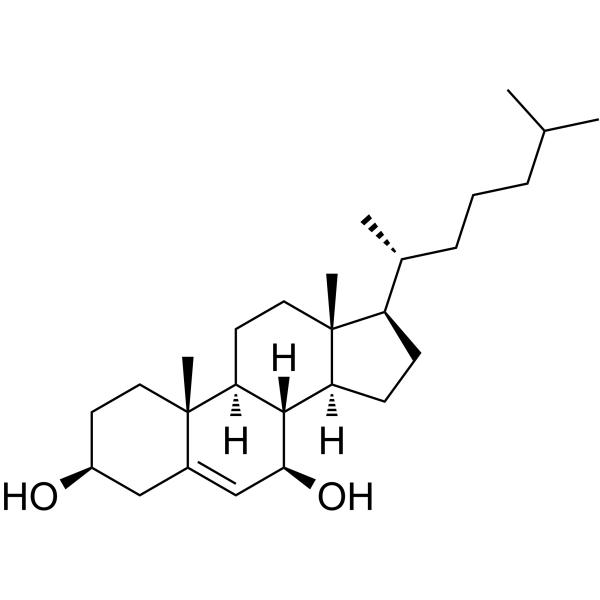
    7β-Hydroxycholesterol
    2 Publications Verification

    Reactive Oxygen Species (ROS) Apoptosis Interleukin Related Cardiovascular Disease Neurological Disease Inflammation/Immunology Cancer
    7β-Hydroxycholesterol is an oxysterol that derived by the oxidation of cholesterol. 7β-hydroxycholesterol can induce cellular oxidative stress, apoptosis, and necrosis, resulting in cytotoxicity. 7β-hydroxycholesterol has antitumor activity .
    7β-Hydroxycholesterol
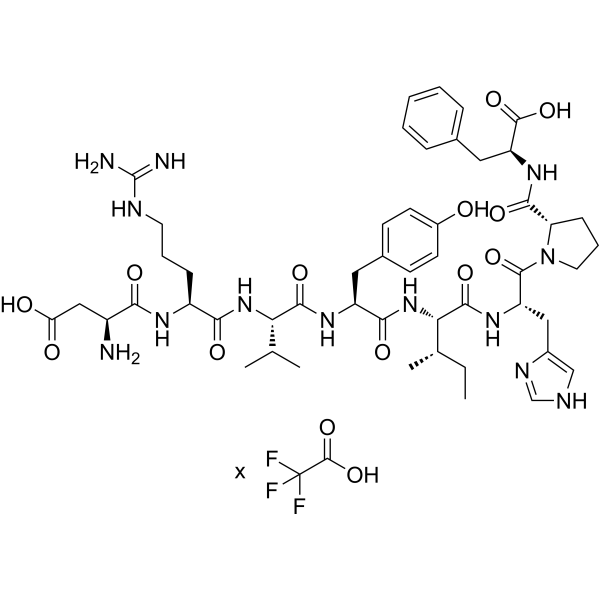
  • HY-13948B
    Angiotensin II human TFA
    Maximum Cited Publications
    222 Publications Verification

    Angiotensin II TFA; Ang II TFA; DRVYIHPF TFA

    Angiotensin Receptor Apoptosis Cardiovascular Disease Metabolic Disease Cancer
    Angiotensin II human (Angiotensin II) TFA is a vasoconstrictor and a major bioactive peptide of the renin/angiotensin system. Angiotensin II human TFA plays a central role in regulating human blood pressure, which is mainly mediated by interactions between Angiotensin II and the G-protein-coupled receptors (GPCRs) Angiotensin II type 1 receptor (AT1R) and Angiotensin II type 2 receptor (AT2R). Angiotensin II human TFA stimulates sympathetic nervous stimulation, increases aldosterone biosynthesis and renal actions. Angiotensin II human TFA induces growth of vascular smooth muscle cells, increases collagen type I and III synthesis in fibroblasts, leading to thickening of the vascular wall and myocardium, and fibrosis. Angiotensin II human TFA also induces apoptosis. Angiotensin II human TFA induces capillary formation from endothelial cells via the LOX-1 dependent redox-sensitive pathway .
    Angiotensin II human TFA
  • HY-141867

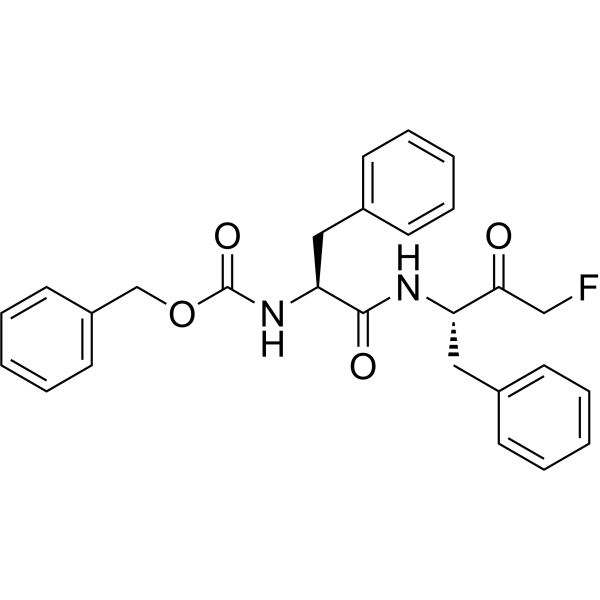
    Z-Phe-Phe-FMK

    Cathepsin MEK Caspase DNA/RNA Synthesis Apoptosis Cardiovascular Disease Neurological Disease
    Z-FF-FMK (Z-Phe-Phe-FMK) is a cell-permeable, irreversible, and cysteine protease inhibitor targeting cathepsin-L. Z-FF-FMK inhibits angiotensin II-induced MEK activation in vascular walls, aortic medial remodeling, blood pressure elevation, and upregulation of cystatin C in aortic walls. Z-FF-FMK prevents β-amyloid-mediated caspase-3 activation, poly (ADP-ribose) polymerase cleavage, DNA fragmentation, and apoptosis of cortical neurons (apoptosis). Z-FF-FMK can be used in research related to hypertension and Alzheimer's disease .
    Z-FF-FMK
  • HY-E70425

    Glycosyltransferase Metabolic Disease
    Sucrose synthase belongs to glycosyltransferases and is a reversible catalyst present in plants, which catalyzes the conversion of sucrose into fructose and UDP-G or ADP-G. Sucrose synthase localizes to the cytoplasm, plasma membrane, cell wall, vacuole and mitochondria of plants. Sucrose synthase regulates sugar metabolism, supports the development of taproots, fruits, seeds and vascular tissues, drives the synthesis of starch, cellulose and callose, and enhances nitrogen fixation capacity. Sucrose synthase mediates signal transduction in plant meristems. Sucrose synthase is associated with plant growth, anaerobic stress tolerance, as well as shoot apical meristem and leaf morphology; overexpression of this enzyme promotes plant growth, increases xylem size, and elevates cellulose and starch contents .
    Sucrose synthase
  • HY-E70125

    Carboxycyclohexadienyl dehydratase

    Biochemical Assay Reagents Others
    Arogenate dehydratase (Carboxycyclohexadienyl dehydratase) is the key enzymes that catalyze the conversion of arogenate into Phe in the stroma of chloroplasts and plastids in vascular plants. Arogenate dehydratase plays an important role in cell wall lignin biosynthesis, photosynthesis, and can be used for plant improvement .
    Arogenate dehydratase
  • HY-113341R

    Reactive Oxygen Species (ROS) Apoptosis Interleukin Related Reference Standards Cardiovascular Disease Neurological Disease Inflammation/Immunology Cancer
    7β-Hydroxycholesterol (Standard) is the analytical standard of 7β-Hydroxycholesterol. This product is intended for research and analytical applications. 7β-Hydroxycholesterol is an oxysterol that derived by the oxidation of cholesterol. 7β-hydroxycholesterol can induce cellular oxidative stress, apoptosis, and necrosis, resulting in cytotoxicity. 7β-hydroxycholesterol has antitumor activity .
    7β-Hydroxycholesterol (Standard)
  • HY-123970

    Macrophage migration inhibitory factor (MIF) Neurological Disease Inflammation/Immunology
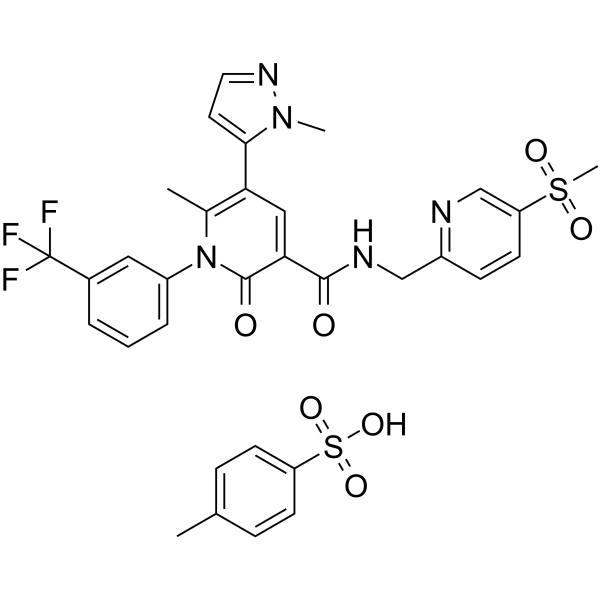
    ISO-92 in an inhibitor of MIF. ISO-92 selectively inhibits MIF inflammatory activity with an IC50 of 550 nM. ISO-92 inhibits hypoxia-induced proliferation of CCL-210 cell line dose-dependently. ISO-92 significantly reduces the thickness of pulmonary vascular wall in mouse hypoxia models. ISO-92 can be studied in inflammatory and neurological research .
    ISO-92

オンラインお問い合わせ

入力情報は安全に管理されます. 必須入力項目.

タイトル


国或いは地域 *

お名前 *


組纖名 *

デパートメント *


メールアドレス *


製品名 *

製品番号


カスタマ需要量 *

電話番号 *


必ず会社名を記載ください。個人への返信は行いません。

備考

バルクお問い合わせ

Inquiry Information

製品名:
製品番号:
数量:
MCE 日本正規代理店:

