7 Results for "

visceral muscle

" in MedChemExpress (MCE) Product Catalog:
Products (7)

7 Results for "visceral muscle" in MCE Product Catalog:

1
1 Cited Publications
Cat. No.: HY-N0468
CAS No.: 63279-13-0
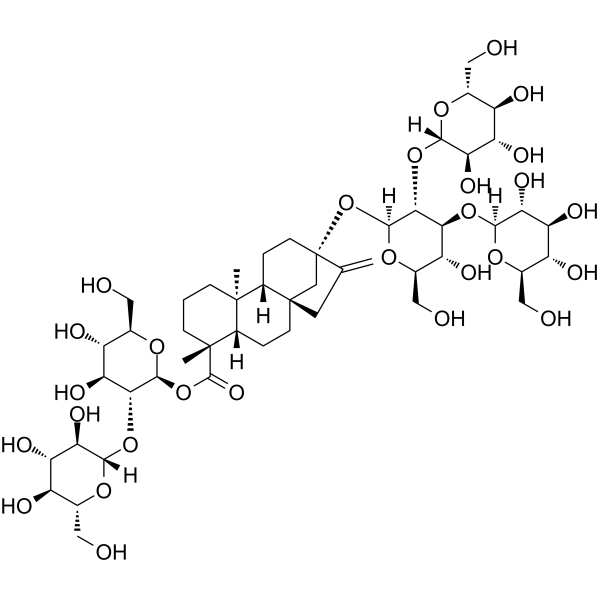
Rebaudioside D is an orally active sweetener that targets and activates FXR, modulates Acetyl-CoA Carboxylase, and inhibits 3-hydroxy-3-methylglutaryl-CoA reductase. Rebaudioside D regulates bile acid homeostasis and lipid metabolism, reduces the synthesis rates of fatty acids and cholesterol, and exerts multiple effects including anti-adipogenesis, hepatoprotection, anti-steatosis, gut microbiota modulation, enhancement of secondary bile acid metabolism, anti-endotoxin activity, regulation of bile acid transport, and inhibition of bile acid efflux. Rebaudioside D also reduces body weight gain, visceral fat accumulation, hepatic triglyceride and cholesterol accumulation, hepatic lipid peroxidation, and decreases the circulating level of lipopolysaccharide-binding protein. Rebaudioside D additionally enhances the secondary bile acid metabolic pathway of intestinal bacteria, upregulates the gene expression of ileal organic solute transporter α, and downregulates the gene expression of hepatic bile salt export pump. Rebaudioside D does not affect glucose homeostasis, alter total caloric intake or fecal energy excretion, induce weight gain, exacerbate obesity, promote hepatic steatosis, impair brown adipose tissue function, nor change skeletal muscle metabolism-related proteins. Rebaudioside D can be used in diet-induced obesity and obesity-related research .
loading...
    loading...
Cat. No.: HY-P991736
Anti-IL11 Antibody (X203, Mouse IgG) is an antibody targeting IL-11. Anti-IL11 Antibody (X203, Mouse IgG) inhibits IL-11-mediated activation of the ERK-mTORC1 axis, inactivation of LKB1-AMPK, and pro-senescence pathways. Anti-IL11 Antibody (X203, Mouse IgG) alleviates age-related metabolic decline, improves muscle function, reduces tissue fibrosis, decreases the expression of senescence markers, and maintains telomere length and mtDNA copy number. Anti-IL11 Antibody (X203, Mouse IgG) restores browning of white adipose tissue, upregulates thermogenic and mitochondrial biogenesis gene programs, reduces lipid droplet size, and decreases immune cell infiltration in visceral white adipose tissue. Anti-IL11 Antibody (X203, Mouse IgG) extends the median lifespan of mice and reduces the incidence of age-related tumors. Anti-IL11 Antibody (X203, Mouse IgG) can be used in the research of age-related metabolic decline, sarcopenia and age-related cancers .
loading...
    loading...
Cat. No.: HY-P1904
CAS No.: 98495-35-3
Target:  

Others

Phe-Met-Arg-Phe Like Peptide, Snail Helix aspersa is a FMRF-like peptide from visceral and somatic muscles of the snail Helix aspersa. FMRF (Phe-Met-Arg-Phe) is a neuropeptide peptide consisting of 4 amino acid residues .
loading...
    loading...
Cat. No.: HY-P2786A
CAS No.: 741738-57-8
Target:  

Potassium Channel

Research Areas:  

Neurological Disease

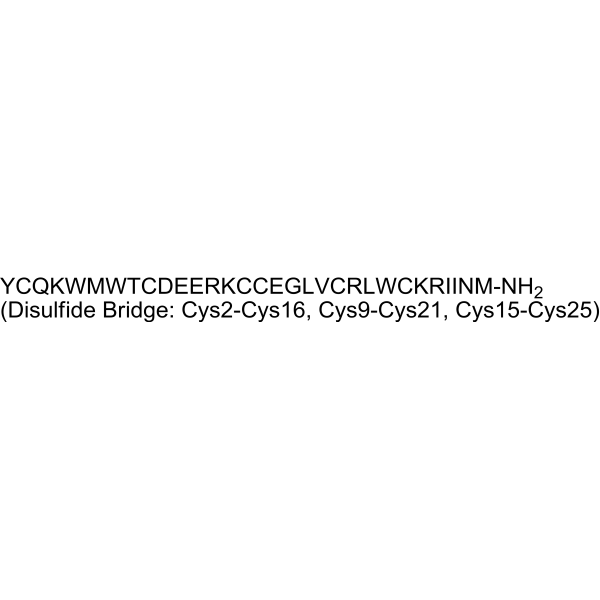
Phrixotoxin 2 is a Kv4 family potassium channel inhibitor, with Ki values in rats of 120 nM for Kv4.2, 110 nM for Kv4.3, and 230 nM for Kv4.1. Phrixotoxin 2 mediates voltage-dependent inhibition of Kv4.2 and Kv4.3 currents, and voltage-independent inhibition of Kv4.1 currents. Phrixotoxin 2 fails to inhibit A-type K + currents in visceral dorsal root ganglion neurons. Phrixotoxin 2 induces contraction of non-pregnant uterine smooth muscle and triggers orofacial cold hyperalgesia in rats. Phrixotoxin 2 can distinguish the contribution of Kv4 subunits to A-type K + currents in different subsets of sensory neurons. Phrixotoxin 2 can be used in research related to chronic pain and trigeminal neuropathic pain .
loading...
    loading...
Cat. No.: HY-N0468R
CAS No.: 63279-13-0
Rebaudioside D (Standard) is the analytical standard of Rebaudioside D. This product is intended for research and analytical applications. Rebaudioside D is an orally active sweetener that targets and activates FXR, modulates Acetyl-CoA Carboxylase, and inhibits 3-hydroxy-3-methylglutaryl-CoA reductase. Rebaudioside D regulates bile acid homeostasis and lipid metabolism, reduces the synthesis rates of fatty acids and cholesterol, and exerts multiple effects including anti-adipogenesis, hepatoprotection, anti-steatosis, gut microbiota modulation, enhancement of secondary bile acid metabolism, anti-endotoxin activity, regulation of bile acid transport, and inhibition of bile acid efflux. Rebaudioside D also reduces body weight gain, visceral fat accumulation, hepatic triglyceride and cholesterol accumulation, hepatic lipid peroxidation, and decreases the circulating level of lipopolysaccharide-binding protein. Rebaudioside D additionally enhances the secondary bile acid metabolic pathway of intestinal bacteria, upregulates the gene expression of ileal organic solute transporter α, and downregulates the gene expression of hepatic bile salt export pump. Rebaudioside D does not affect glucose homeostasis, alter total caloric intake or fecal energy excretion, induce weight gain, exacerbate obesity, promote hepatic steatosis, impair brown adipose tissue function, nor change skeletal muscle metabolism-related proteins. Rebaudioside D can be used in diet-induced obesity and obesity-related research .
loading...
    loading...
Cat. No.: HY-P4182
CAS No.: 121801-61-4
Target:  

Inhibitory Antibodies

Research Areas:  

Neurological Disease

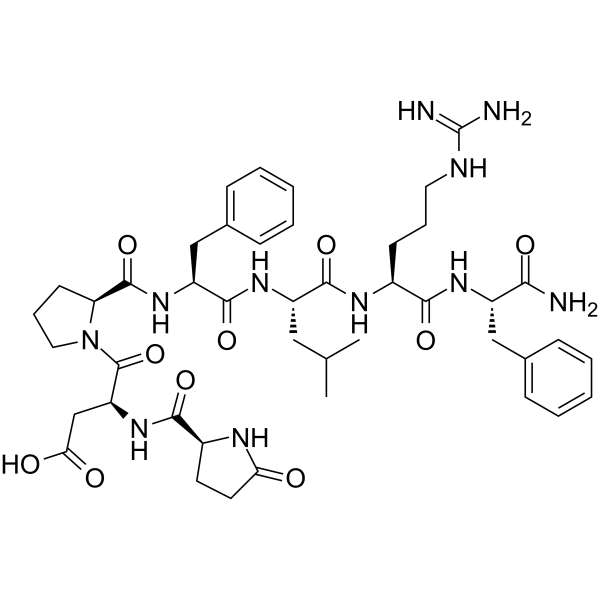
Schistoflrfamide, a FMRFamide-related peptide, is an inhibitory neuropeptide. Schistoflrfamide decreases the amplitude and frequency of myogenic contractions and reduce basal tension visceral muscle .
loading...
    loading...
Cat. No.: HY-P1724
CAS No.: 143458-86-0
Synonyms: Dromyosuppressin; Neb-MS; DMS
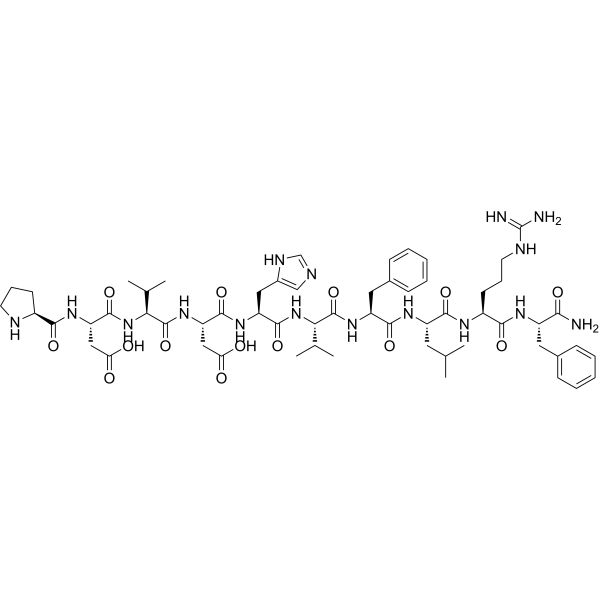
Neomyosuppressin (Dromyosuppressin) is a myosuppressive peptide. Neomyosuppressin is isolable from head extracts of Neobellieria bullata, as well as the brains and intestines of Drosophila melanogaster. Neomyosuppressin inhibits spontaneous visceral muscle movements of isolated insect hindguts and oviducts, as well as contractions of various insect visceral muscles. Neomyosuppressin slows the heart rate of adult and pupal Drosophila without altering rhythmicity .
loading...
    loading...

