
1. Search Result
Search Result
Results for "

wastewater

" in MedChemExpress (MCE) Product Catalog:

32

Inhibitors & Agonists

3

Fluorescent Dyes

5

Biochemical Assay Reagents

1

Peptides

3

Natural
Products

3

Isotope-Labeled Compounds

Cat. No. Product Name Target Research Areas Chemical Structure
  • HY-B1335
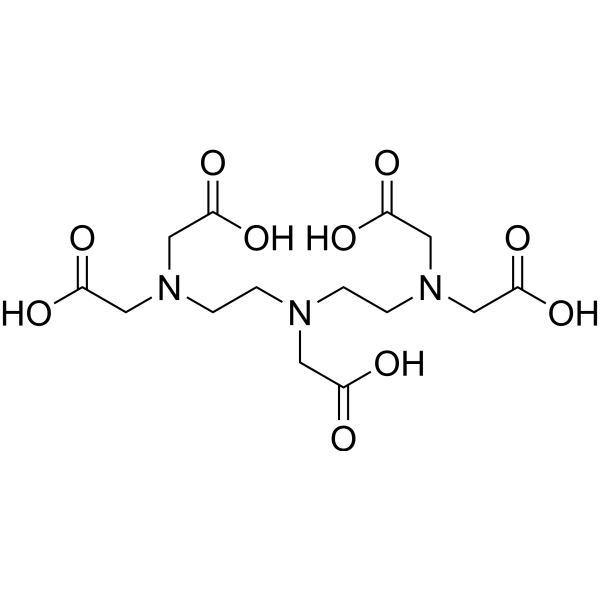
    Pentetic acid
    3 Publications Verification

    Diethylenetriaminepentaacetic acid; DTPA

    Environmental Pollutants Biochemical Assay Reagents Others
    Pentetic acid (Diethylenetriaminepentaacetic acid) is an orally active compound with biodegradability used to construct magnetic adsorbent, which can simultaneously remove heavy metal and dye from complex wastewater. Pentetic acid can form strong metal complexes, which prevents metal ions from catalysing the decomposition of peroxygen chemicals, especially hydrogen peroxide .
    Pentetic acid
  • HY-D0256
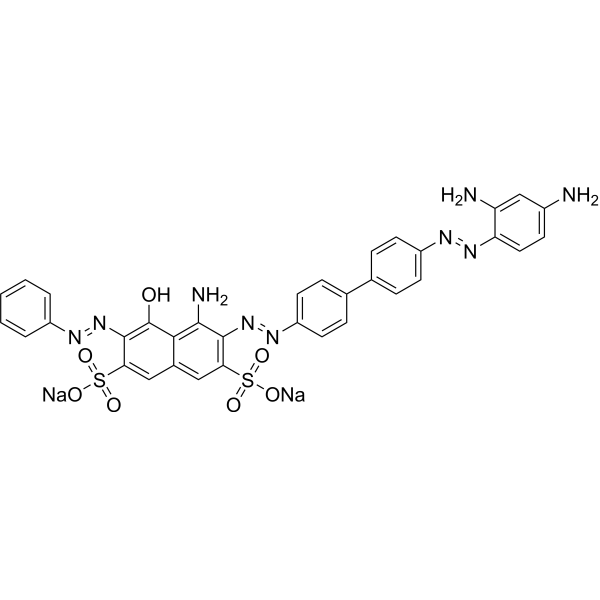
    Direct Black 38
    2 Publications Verification

    Chlorazol Black E; Ferristatin II disodium; C.I. 30235

    Biochemical Assay Reagents Others
    Direct Black 38 (Chlorazol Black E) is a benzidine-based azo dye, a substrate of Enterococcus gallinarum, and is mainly used for textile dyeing. Direct Black 38 is biodegradable after being reduced by microbial enzymes (such as Enterococcus gallinarum azoreductase), breaking the azo bonds and releasing benzidine and 4-aminobiphenyl. Direct Black 38 can be used in environmental toxicology, wastewater treatment and carcinogenicity studies, but its metabolite benzidine is listed as a human carcinogen .
    Direct Black 38
  • HY-Y0801

    Drug Metabolite Others
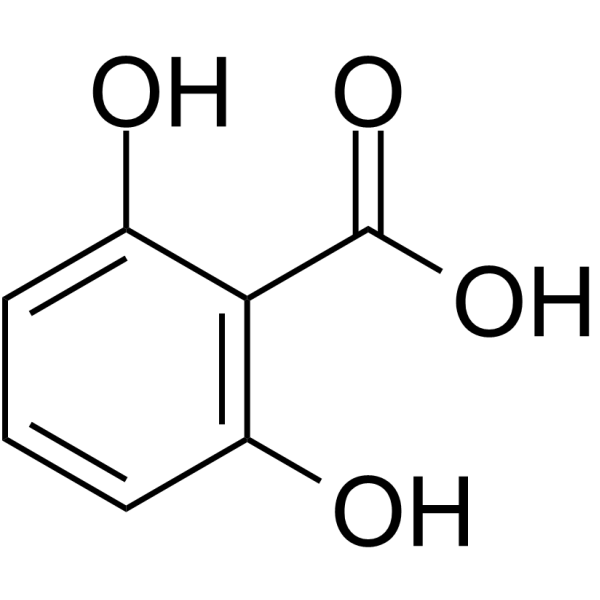
    2,6-Dihydroxybenzoic acid is an aromatic compound containing phenolic hydroxyl groups and carboxyl groups, and it is a secondary metabolite of Salicylic acid (HY-B0167). 2,6-Dihydroxybenzoic acid is also present in olive oil wastewater .
    2,6-Dihydroxybenzoic acid
  • HY-135712

    Acid Orange GG

    Environmental Pollutants Biochemical Assay Reagents Others
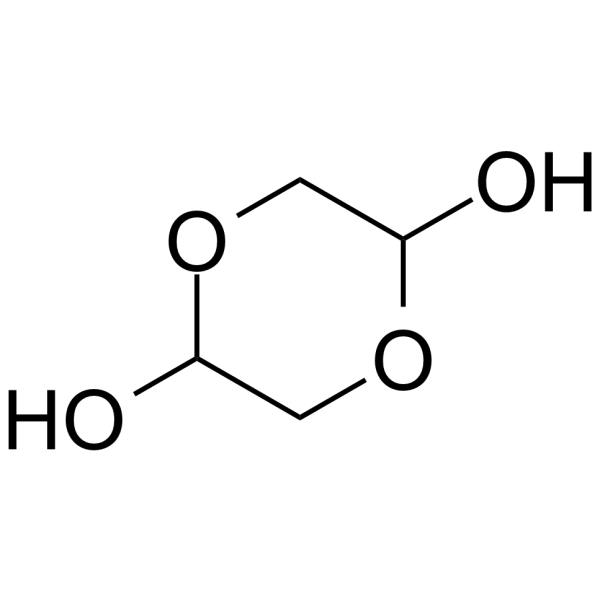
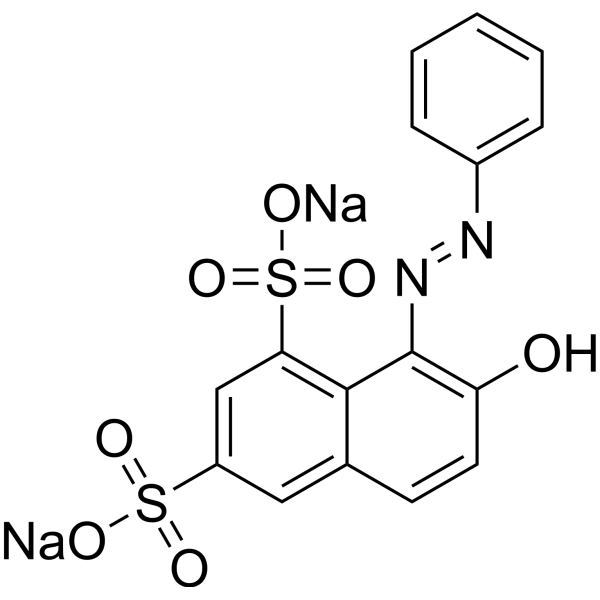
    Orange G is an azo dye commonly found in textile wastewater and is mainly used for textile dyeing. Orange G has a coloring function and can give textiles a specific color. The stability and potential hazards of Orange G in the environment are often used to study the removal effects of various wastewater treatment technologies on difficult-to-degrade organic pollutants, especially the degradation of azo dyes. Related research focuses on how to destroy the azo bond of Orange G through chemical, physical or biological methods to achieve harmless treatment to solve the problem of textile wastewater pollution .
    Orange G
  • HY-E70385

    Endogenous Metabolite Others
    Oxalate Oxidase, or oxalate oxidase, catalyzes the oxidation of oxalic acid to hydrogen peroxide and carbon dioxide in the presence of oxygen. Oxalate Oxidase can be found in a variety of plants (such as barley) and microorganisms and can be used to treat wastewater and filtrates containing oxalic acid .
    Oxalate Oxidase
  • HY-132188

    Endogenous Metabolite Others
    Manganese peroxidase is a heme protein that oxidizes Mn2+ to Mn3+. Manganese peroxidase catalyzes plant lignin de-polymerization. Manganese peroxidase can be used for the biodegradation of hazardous environmental contaminants, and especially for dye wastewater decolorization .
    Manganese peroxidase
  • HY-W042214

    Ritalinate

    Drug Metabolite Environmental Pollutants Neurological Disease
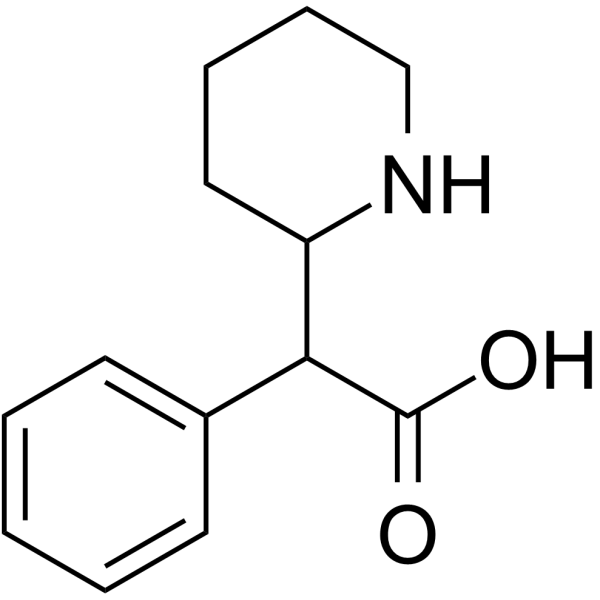
    Ritalinic acid (Ritalinate) is a metabolite of Methylphenidate. Ritalinic acid has no biological activity or only extremely low biological activity. The concentration of Ritalinic acid detected in university campus sewage shows a gradual upward trend in the first semester, while no obvious periodic variation pattern related to academic stress is observed in the second semester. Ritalinic acid can be used in studies related to attention deficit disorder, narcolepsy, depression and attention deficit hyperactivity disorder .
    Ritalinic acid
  • HY-W010795

    Biochemical Assay Reagents Others
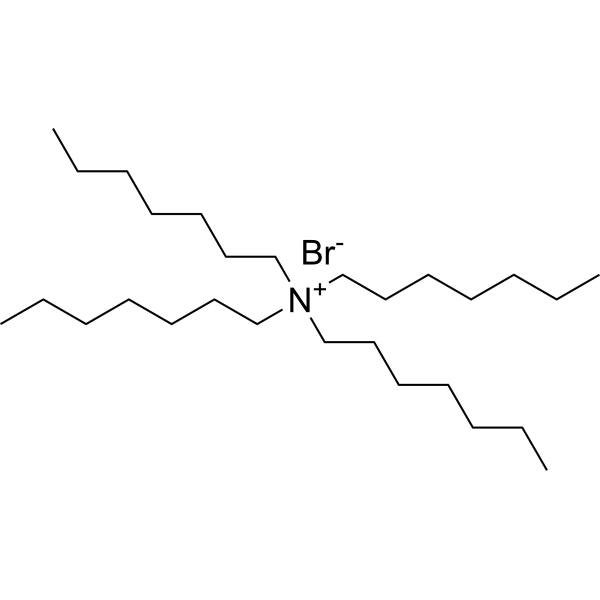
    Tetraheptylammonium bromide (>98%,BC) (THAB) is a quaternary ammonium compound commonly used as a phase transfer catalyst in organic synthesis reactions, especially those involving charged species or polar reagents. It can facilitate the transfer of reactants between two immiscible phases, such as water and organic solvents, by forming stable ion pairs. In addition, THAB is used as a surfactant, and as an additive in various products such as cosmetics, pharmaceuticals, and detergents. Due to THAB's ability to form complexes with these ions, its potential use in the removal of heavy metal ions from wastewater was also investigated.
    Tetraheptylammonium bromide (>98%,BC)
  • HY-116772

    Irganox 1790

    Biochemical Assay Reagents Others
    Cyanox CY 1790 (Irganox 1790) is a synthetic phenolic antioxidant. Cyanox CY 1790 is mainly used to protect polyolefin materials such as polypropylene and polyethylene from thermo-oxidative degradation during processing (high temperature) and service .
    Cyanox CY 1790
  • HY-W035361

    Environmental Pollutants Biochemical Assay Reagents Others
    (Aminomethyl)phosphonic acid is used as a phosphonate agent in wastewater treatment .
    (Aminomethyl)phosphonic acid
  • HY-125947

    Drug Metabolite Others
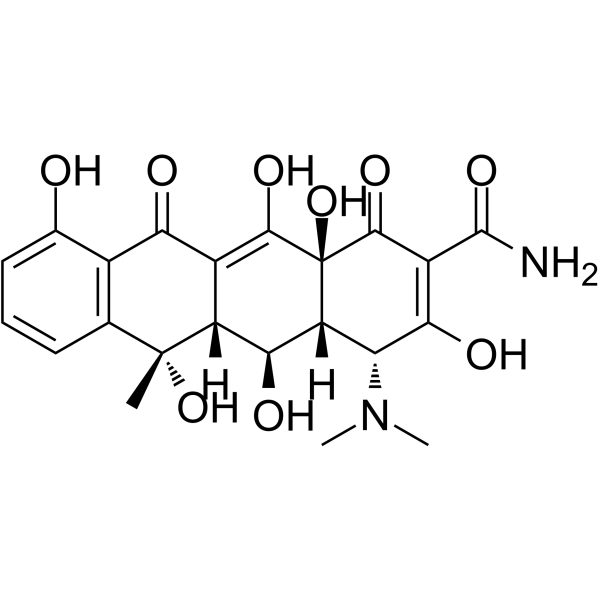
    4-Epioxytetracycline, the degradation product of Oxytetracycline (OTC), can be found in swine manure compost and wastewater .
    4-Epioxytetracycline
  • HY-W674169

    FBSA

    Biochemical Assay Reagents Others
    Perfluorobutanesulfonamide (FBSA) is a per- and polyfluoroalkyl substance, which can be found as contaminant in wastewater .
    Perfluorobutanesulfonamide
  • HY-W582564

    Ethylenediaminetetraacetic acid copper disodium tetrahydrate

    Biochemical Assay Reagents Others
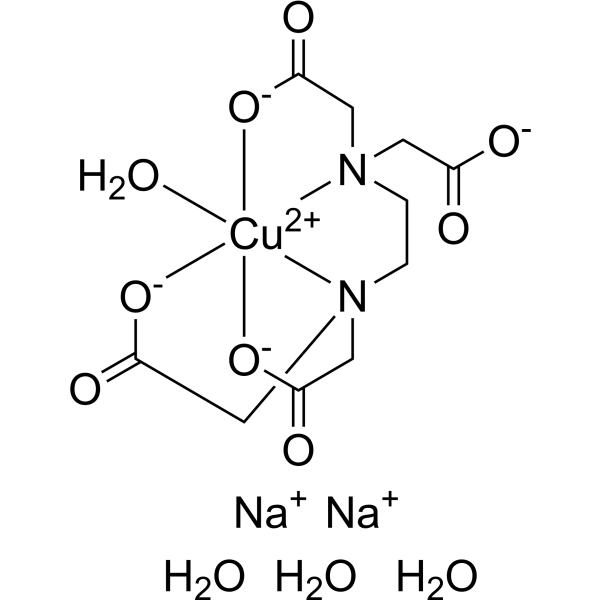
    Cu(Ⅱ)-EDTA disodium tetrahydrate, a typical contaminant in industrial wastewater, is an EDTA-complexed heavy metal. Cu(Ⅱ)-EDTA disodium tetrahydrate can be used in research on the recovery of heavy metal resources from mixed wastewater .
    Cu(Ⅱ)-EDTA disodium tetrahydrate
  • HY-W176199

    Biochemical Assay Reagents Drug Derivative Environmental Pollutants Metabolic Disease
    DPPD-Q is a quinone derivative of p-phenylenediamine antioxidants and an analog of DTPD-Q (HY-163650). DPPD-Q is identified as a major sewage treatment plant effluent .
    DPPD-Q
  • HY-131314

    Drug Metabolite Others
    Ibuprofen carboxylic acid is the metabolite of Ibuprofen (HY-78131), that has high concentrations in wastewater and water environments, and disappears fast during biodegradation, compared to the other ibuprofen metabolite .
    Ibuprofen carboxylic acid
  • HY-W040184

    TMAHS

    Biochemical Assay Reagents Others
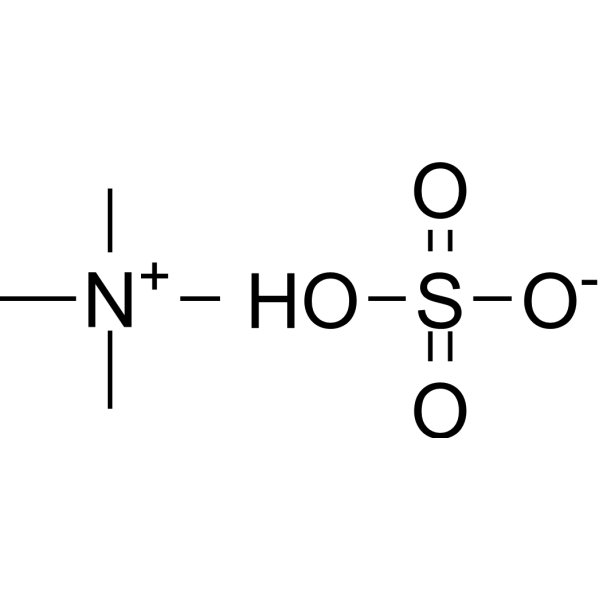
    Tetramethylammonium hydrogensulfate, sometimes abbreviated as TMAHS, is a quaternary ammonium salt commonly used as a catalyst and phase transfer agent in chemical reactions, especially in organic synthesis. In addition, it is used as an electrolyte additive in electrochemical and rechargeable batteries. TMAHSs have also been investigated for their potential use in various applications such as wastewater treatment, gas separation, and fuel cells.
    Tetramethylammonium hydrogensulfate
  • HY-W075176

    Insecticide Infection
    Transfluthrin is an insecticide with extremely low acute toxicity to vertebrates. Transfluthrin acts as a mosquito repellent, exerts mosquito control effects via electric heating fumigators, and is widely used in studies related to malaria, bancroftian filariasis and mosquito-borne infectious diseases. Transfluthrin may also induce adverse reactions such as pulmonary sensory irritation, sensitization, genotoxicity and respiratory depression, and can increase the concentrations and activities of CYP2E1 and CYP3A2 in rat brains. Transfluthrin can be removed from wastewater through biodegradation and activated sludge adsorption, and can be degraded by microorganisms such as Azovibrio and Tauera .
    Transfluthrin
  • HY-125947R

    Reference Standards Drug Metabolite Others
    4-Epioxytetracycline (Standard) is the analytical standard of 4-Epioxytetracycline. This product is intended for research and analytical applications. 4-Epioxytetracycline, the degradation product of Oxytetracycline (OTC), can be found in swine manure compost and wastewater .
    4-Epioxytetracycline (Standard)
  • HY-W110896

    Phthalein Purple

    Biochemical Assay Reagents Others
    Phthalate complexing agent [Chelation indicator] is a class of organic compounds belonging to the category of chelation indicators. It is commonly used in analytical chemistry to detect and quantify metal ions in aqueous solutions, especially in complexometric titration. Phthalate complexing agent [Chelation indicator] works by forming stable complexes with metal ions, which can then be measured using various spectroscopic or electrochemical techniques. In addition, it also has potential applications in wastewater treatment and environmental monitoring.
    Phthalate complexing agent [Chelation indicator]
  • HY-D0256A

    Chlorazol Black E free acid; Ferristatin II; C.I. 30235 free acid

    Biochemical Assay Reagents Others
    Direct Black 38 (Chlorazol Black E; Ferristatin II disodium) free acid is a benzidine-based azo dye, a substrate of Enterococcus gallinarum, and is mainly used for textile dyeing. Direct Black 38 free acid is biodegradable after being reduced by microbial enzymes (such as Enterococcus gallinarum azoreductase), breaking the azo bonds and releasing benzidine and 4-aminobiphenyl. Direct Black 38 free acid can be used in environmental toxicology, wastewater treatment and carcinogenicity studies, but its metabolite benzidine is listed as a human carcinogen .
    Direct Black 38 free acid
  • HY-W075176R

    Insecticide Reference Standards Others
    Transfluthrin (Standard) is the analytical standard of Transfluthrin (HY-W075176). This product is intended for research and analytical applications. Transfluthrin is an insecticide with extremely low acute toxicity to vertebrates. Transfluthrin acts as a mosquito repellent, exerts mosquito control effects via electric heating fumigators, and is widely used in studies related to malaria, bancroftian filariasis and mosquito-borne infectious diseases. Transfluthrin may also induce adverse reactions such as pulmonary sensory irritation, sensitization, genotoxicity and respiratory depression, and can increase the concentrations and activities of CYP2E1 and CYP3A2 in rat brains. Transfluthrin can be removed from wastewater through biodegradation and activated sludge adsorption, and can be degraded by microorganisms such as Azovibrio and Tauera .
    Transfluthrin (Standard)
  • HY-W543676

    Biochemical Assay Reagents Others
    N,N'-Di-o-tolyl-p-phenylenediamine is a diphenylamine antioxidant that could be found in wastewater. N,N'-Di-o-tolyl-p-phenylenediamine accumulates in aquatic organisms, exhibits bioaccumulating potential, may have long-term effects on aquatic ecosystems .
    N,N'-Di-o-tolyl-p-phenylenediamine
  • HY-B1335R

    Diethylenetriaminepentaacetic acid (Standard); DTPA (Standard)

    Biochemical Assay Reagents Reference Standards Others
    Pentetic acid (Standard) is the analytical standard of Pentetic acid. This product is intended for research and analytical applications. Pentetic acid is a compound used to construct magnetic adsorbent, which can simultaneously remove heavy metal and dye from complex wastewater .
    Pentetic acid (Standard)
  • HY-W338581

    Estrogen Receptor/ERR Others
    4-tert-Octylphenol monoethoxylate is an alkylphenolethoxylate (APE) and a degradation product of non-ionic surfactants (such as 4-tert-octylphenol polyethoxylate). 4-tert-Octylphenol monoethoxylate also possesses non-steroidal estrogenic activity. Additionally, 4-tert-Octylphenol monoethoxylate has been found in wastewater effluent .
    4-tert-Octylphenol monoethoxylate
  • HY-Y0801R

    Reference Standards Drug Metabolite Others
    2,6-Dihydroxybenzoic acid (Standard) is the analytical standard of 2,6-Dihydroxybenzoic acid (HY-Y0801). This product is used for research and analytical applications. 2,6-Dihydroxybenzoic acid is an aromatic compound containing phenolic hydroxyl groups and carboxyl groups, and it is a secondary metabolite of Salicylic acid (HY-B0167). 2,6-Dihydroxybenzoic acid is also present in olive oil wastewater .
    2,6-Dihydroxybenzoic acid (Standard)
  • HY-W130303

    N-Acetylacetamide; Diacetylamine; Diacetimide

    Biochemical Assay Reagents Others
    Diacetamide is shown to form a variety of new compounds with a general formula [M(C4H7O2N) 3](ClO4)2, where M = Mn(II), Fe(II), Co(II), Ni(II), or Zn(II). Diacetamide ligands can be used in uranium extraction from wastewater. Diacetamide can be used for amidase synthesis .
    Diacetamide
  • HY-W749825

    Diethylenetriaminepentaacetic acid-13C5; DTPA-13C5

    Isotope-Labeled Compounds Fluorescent Dye Others
    Pentetic acid- 13C5 (Diethylenetriaminepentaacetic acid- 13C5) is the 13C-labeled Pentetic acid (HY-B1335). Pentetic acid (Diethylenetriaminepentaacetic acid) is an orally active compound with biodegradability used to construct magnetic adsorbent, which can simultaneously remove heavy metal and dye from complex wastewater. Pentetic acid can form strong metal complexes, which prevents metal ions from catalysing the decomposition of peroxygen chemicals, especially hydrogen peroxide .
    Pentetic acid-13C5
  • HY-W777582

    Isotope-Labeled Compounds Others
    4-tert-Octylphenol monoethoxylate- 13C6 is the 13C labeled isotope of 4-tert-Octylphenol monoethoxylate (HY-W777582) . 4-tert-Octylphenol monoethoxylate is an alkylphenolethoxylate (APE) and a degradation product of non-ionic surfactants (such as 4-tert-octylphenol polyethoxylate). 4-tert-Octylphenol monoethoxylate also possesses non-steroidal estrogenic activity. Additionally, 4-tert-Octylphenol monoethoxylate has been found in wastewater effluent .
    4-tert-Octylphenol monoethoxylate-13C6
  • HY-150162

    T4-Glc

    Drug Metabolite Others
    Thyroxine 4'-O-β-D-glucuronide (T4-Glc) is a conjugate of Thyroxine (T4) and Glucuronic acid. Thyroxine 4'-O-β-D-glucuronide is a major metabolite of Thyroxine (HY-18341) .
    Thyroxine 4'-O-β-D-glucuronide
  • HY-W035361S1

    Isotope-Labeled Compounds Biochemical Assay Reagents Others
    (Aminomethyl)phosphonic acid- 13C, 15N,d2 is the 13C-, 15N- and deuterium labeled (Aminomethyl)phosphonic acid (HY-W035361). (Aminomethyl)phosphonic acid is used as a phosphonate agent in wastewater treatment .
    (Aminomethyl)phosphonic acid-13C,15N,d2
  • HY-W714180

    Drug Metabolite Drug Intermediate Others
    Desmethyl-formamido-pirimicarb is an intermediate metabolite of Pirimicarb (HY-119419). Desmethyl-formamido-pirimicarb is detected in both Pirimicarb-exposed soil environments and advanced oxidation water treatment processes .
    Desmethyl-formamido-pirimicarb
  • HY-116945

    Endogenous Metabolite Others
    Diphenamid is a chemical compound that exhibits herbicide activity. Diphenamid acts by inhibiting the enzyme acetyl-CoA carboxylase. Diphenamid has shown resistance as a model for mimicking organic pollutants in wastewater treatment processes, especially in the presence of multiple anions. The degradation of diphenamid is significantly affected by certain inorganic ions, such as chromium (VI) and nitrogen oxides. Diphenamid shows changes in toxicity with longer treatment times, and the results of toxicity tests on selected algae indicate higher toxicity at 240 minutes of treatment .
    Diphenamid

Inquiry Online

Your information is safe with us. * Required Fields.

Salutation


Country or Region *

Applicant Name *


Organization Name *

Department *


Email Address *


Product Name *

Cat. No.


Requested quantity *

Phone Number *


Remarks

Inquiry Online

Inquiry Information

Product Name:
Cat. No.:
Quantity:
MCE Japan Authorized Agent:

