



CB30865

Based on 1 Customer Validation
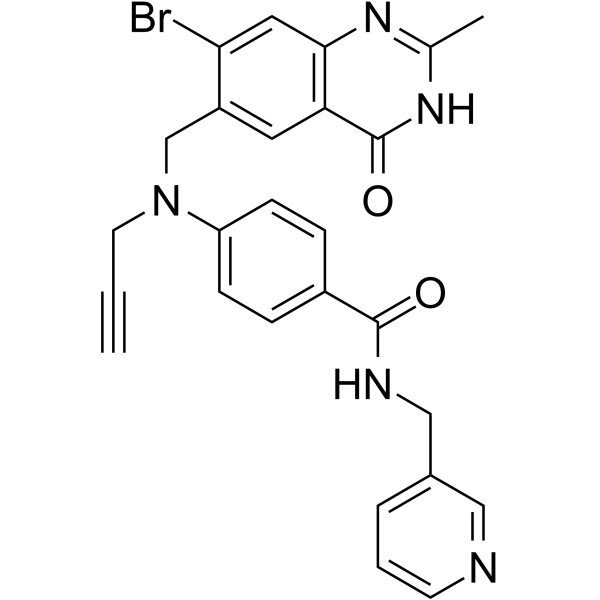
CB30865 (ZM 242421) is a nicotinamide phosphoribosyltransferase (Nampt) inhibitor, with potent cytotoxicity. CB30865 is highly potent against a variety of human tumour cell lines (IC50 values in the 1-10 nM range). CB30865 is a click chemistry reagent, it contains an Alkyne group and can undergo copper-catalyzed azide-alkyne cycloaddition (CuAAc) with molecules containing Azide groups.
For research use only. We do not sell to patients.
- Purity : 98.02%
- CAS No.: 206275-15-2
- Formula: C26H22BrN5O2
- Molecular Weight:516.39
-
Storage:Powder -20°C, 3 years , 4°C, 2 years ; In solvent -80°C, 2 years , -20°C, 1 year

To place orders, for customer services and technical support, please contact: MedChemExpress USA
Tel: 609-228-6898 E-mail: [email protected] [email protected]


-
 Biological Activity
-
Chemical Information
-
Solvent & Solubility
- Protocols
- Purity & Documentation
- References
-
 Help & FAQs


-
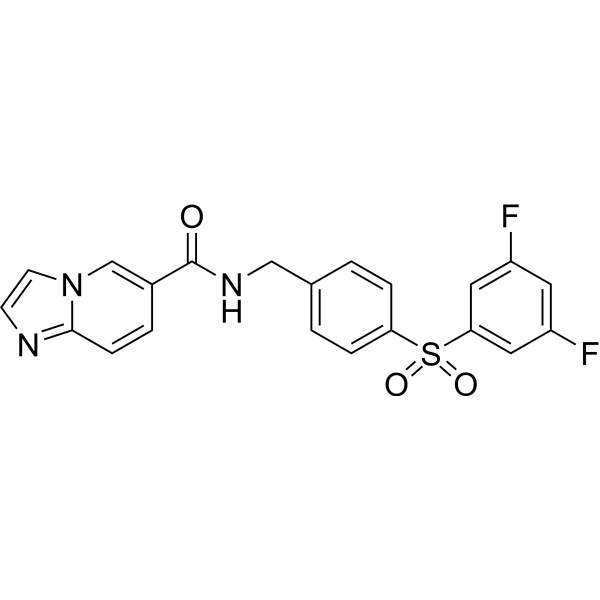
HY-15766
GNE-617NAMPT Inhibitor -
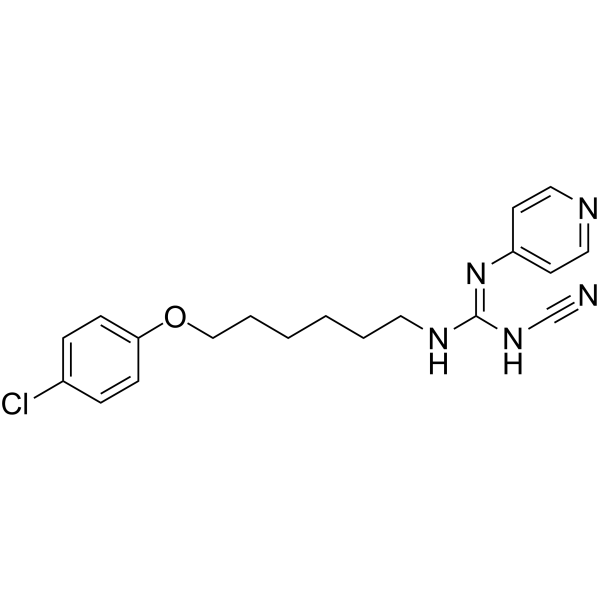
HY-10079
CHS-828NAMPT Inhibitor -
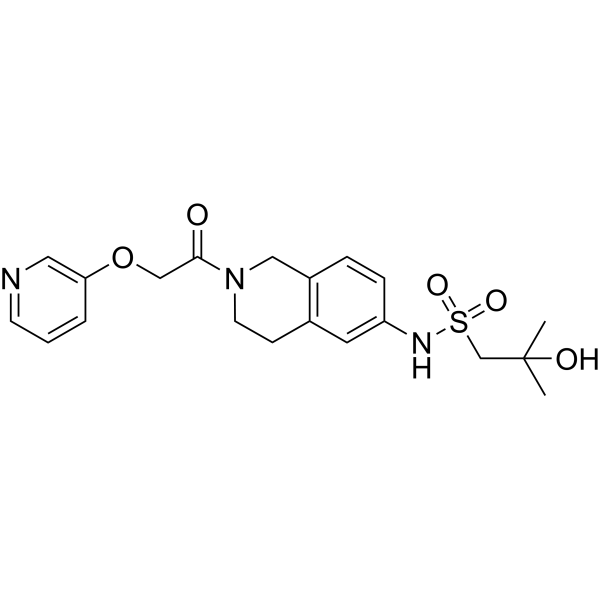
HY-12971
Nampt-IN-1NAMPT Inhibitor -
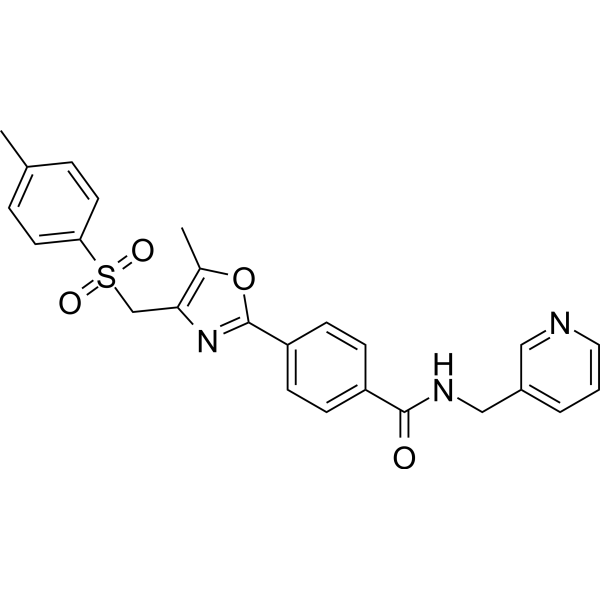
HY-12808
STF-118804Apoptosis Inducer -
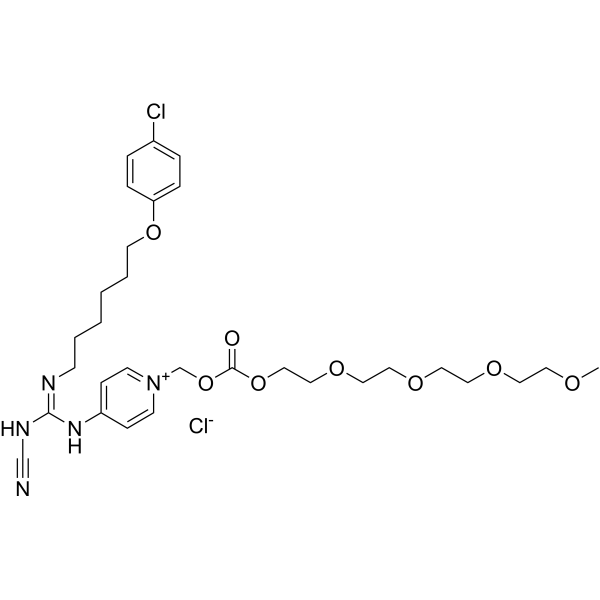
HY-10080
Teglarinad chlorideNAMPT Inhibitor -
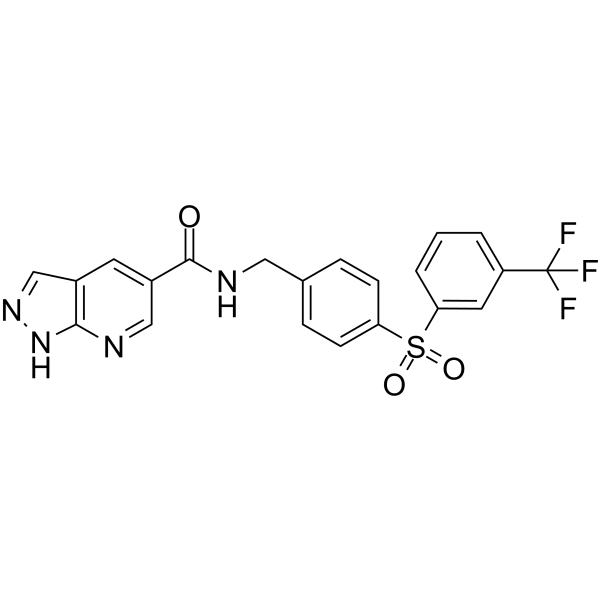
HY-12628
GNE-618NAMPT Inhibitor -
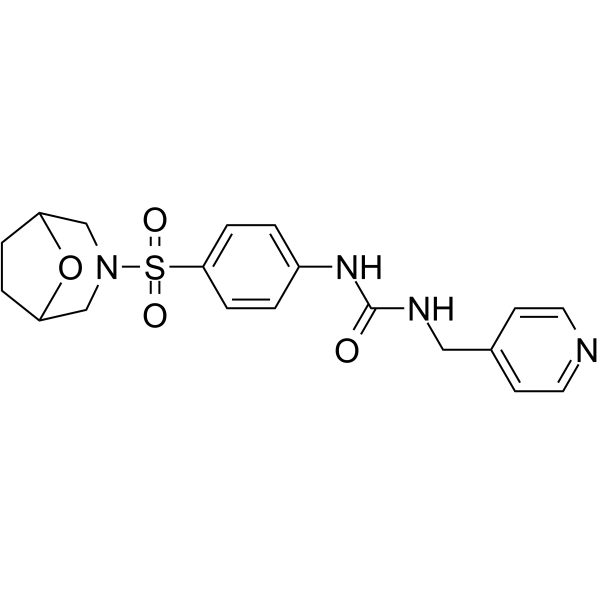
HY-126255
SBI-797812NAMPT Activator -
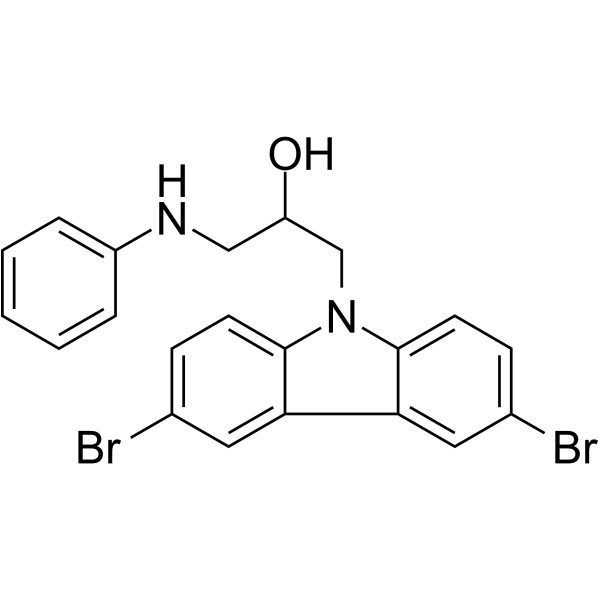
HY-15976
P7C3Neuroprotective Compound -
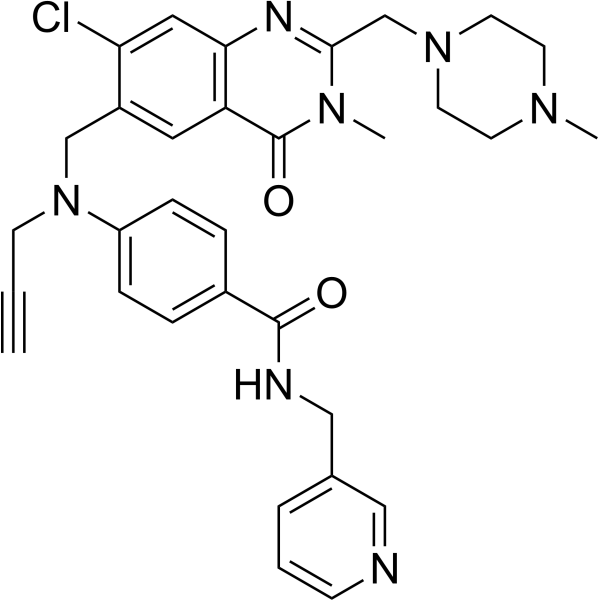
HY-14375
CB 300919NAMPT Inhibitor -

HY-15766R
GNE-617 (Standard)NAMPT Inhibitor -
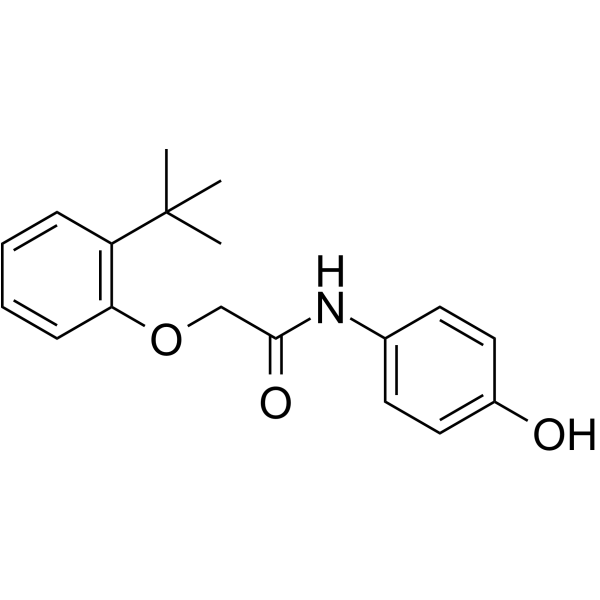
HY-144776
NATNAMPT Activator -
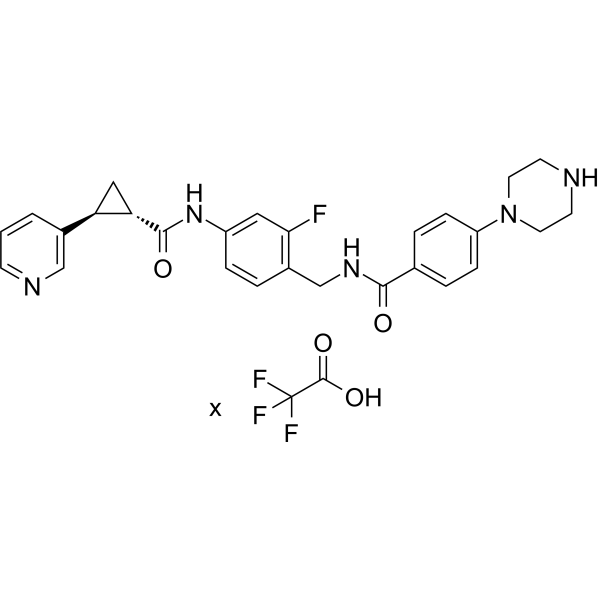
HY-147193
Nampt-IN-10 TFANAMPT Inhibitor


Biological Activity
Description
Cellular Effect
|
Cell Line

|
Type | Value | Description | References |
|---|---|---|---|---|
| WIL2 | EC50 |
2.8 nM
Compound: 1, CB-30865
|
Cytotoxicity against human W1L2 cells
Cytotoxicity against human W1L2 cells
|
[PMID: 21080724] |
| WIL2 | EC50 |
2.8 nM
Compound: 20, CB-30865
|
Cytotoxicity against human W1L2 cells
Cytotoxicity against human W1L2 cells
|
[PMID: 23679915] |
| WIL2 | IC50 |
2.2 nM
Compound: CB-30685
|
Growth inhibitory activity against human lymphoblastoid W1L2 cell line in presence of 10 uM thymidine/50 uM hypoxanthine
Growth inhibitory activity against human lymphoblastoid W1L2 cell line in presence of 10 uM thymidine/50 uM hypoxanthine
|
[PMID: 12166942] |
| WIL2 | IC50 |
2.8 nM
Compound: CB30865
|
Cytotoxicity against human W1L2 cells assessed as growth inhibition after 72 hrs by trypan blue assay
Cytotoxicity against human W1L2 cells assessed as growth inhibition after 72 hrs by trypan blue assay
|
[PMID: 24164086] |
| WIL2 | IC50 |
2.8 nM
Compound: CB-30685
|
Growth inhibitory activity against human lymphoblastoid W1L2 cell line
Growth inhibitory activity against human lymphoblastoid W1L2 cell line
|
[PMID: 12166942] |
In Vitro


Chemical Information
-
CAS No. 206275-15-2
-
Appearance Solid
-
Molecular Weight 516.39
-
Formula C26H22BrN5O2
-
Color White to off-white
-
SMILES
O=C(NCC1=CC=CN=C1)C2=CC=C(N(CC3=CC4=C(N=C(C)NC4=O)C=C3Br)CC#C)C=C2
-
Synonyms
ZM 242421
-
Shipping
Room temperature in continental US; may vary elsewhere.
-
Storage
Powder -20°C 3 years 4°C 2 years In solvent -80°C 2 years -20°C 1 year


Solvent & Solubility
In Vitro:
DMSO : 33.33 mg/mL (64.54 mM; Need ultrasonic; Hygroscopic DMSO has a significant impact on the solubility of product, please use newly opened DMSO)
Please refer to the solubility information to select the appropriate solvent. Once prepared, please aliquot and store the solution to prevent product inactivation from repeated freeze-thaw cycles.
Storage method and period of stock solution: -80°C, 2 years; -20°C, 1 year. When stored at -80°C, please use it within 2 years. When stored at -20°C, please use it within 1 year.
Please refer to the solubility information to select the appropriate solvent. Once prepared, please aliquot and store the solution to prevent product inactivation from repeated freeze-thaw cycles.
Storage method and period of stock solution: -80°C, 2 years; -20°C, 1 year. When stored at -80°C, please use it within 2 years. When stored at -20°C, please use it within 1 year.
Concentration (start) × Volume (start) = Concentration (final) × Volume (final)


Purity & Documentation
-
Data Sheet (275 KB)
-
SDS (252 KB)
- English - EN (252 KB)
- Français - FR (252 KB)
- Deutsch - DE (252 KB)
- Norwegian - NO (252 KB)
- Español - ES (252 KB)
- Swedish - SV (252 KB)
- Italian - IT (252 KB)
- Korean - KR (252 KB)
- Portuguese - PT (252 KB)
-
Handling Instructions (2659 KB)
References
[1]. Fleischer TC, et al. Chemical proteomics identifies Nampt as the target of CB30865, an orphan cytotoxic compound. Chem Biol. 2010 Jun 25;17(6):659-664. [Content Brief]
[2]. Skelton LA, et al. Cell cycle effects of CB30865, a lipophilic quinazoline-based analogue of the antifolate thymidylate synthase inhibitor ICI 198583 with an undefined mechanism of action. Cytometry. 1998 Sep 1;33(1):56-66. [Content Brief]


Complete Stock Solution Preparation Table
Please refer to the solubility information to select the appropriate solvent. Once prepared, please aliquot and store the solution to prevent product inactivation from repeated freeze-thaw cycles.
Storage method and period of stock solution: -80°C, 2 years; -20°C, 1 year. When stored at -80°C, please use it within 2 years. When stored at -20°C, please use it within 1 year.
| Optional Solvent | Concentration Solvent Mass | 1 mg | 5 mg | 10 mg | 25 mg |
|---|---|---|---|---|---|
| DMSO | 1 mM | 1.9365 mL | 9.6826 mL | 19.3652 mL | 48.4130 mL |
| 5 mM | 0.3873 mL | 1.9365 mL | 3.8730 mL | 9.6826 mL | |
| 10 mM | 0.1937 mL | 0.9683 mL | 1.9365 mL | 4.8413 mL | |
| 15 mM | 0.1291 mL | 0.6455 mL | 1.2910 mL | 3.2275 mL | |
| 20 mM | 0.0968 mL | 0.4841 mL | 0.9683 mL | 2.4207 mL | |
| 25 mM | 0.0775 mL | 0.3873 mL | 0.7746 mL | 1.9365 mL | |
| 30 mM | 0.0646 mL | 0.3228 mL | 0.6455 mL | 1.6138 mL | |
| 40 mM | 0.0484 mL | 0.2421 mL | 0.4841 mL | 1.2103 mL | |
| 50 mM | 0.0387 mL | 0.1937 mL | 0.3873 mL | 0.9683 mL | |
| 60 mM | 0.0323 mL | 0.1614 mL | 0.3228 mL | 0.8069 mL |


CB30865 Related Classifications
HY-14373 Related Classifications
 Powered by Bioz