



Bamlanivimab

Based on 1 Customer Validation
Bamlanivimab (Anti-Human SARS-CoV-2; LY-CoV555) is an antiviral agent targeting the SARS-CoV-2 spike protein receptor-binding domain (RBD) with a mean Kd of 5.3 nM. Bamlanivimab binds epitopes overlapping the ACE2 binding site on both active and resting RBD conformations, blocks ACE2 attachment, mediates antibody-dependent cell-mediated cytotoxicity, and reduces viral replication and respiratory tract viral load. Bamlanivimab can be used for the research of COVID-19.
For research use only. We do not sell to patients.
- Purity : 99.97%
- CAS No.: 2423943-37-5
- Molecular Weight:144.5 kDa
-
Storage:
Please store the product under the recommended conditions in the Certificate of Analysis.


To place orders, for customer services and technical support, please contact: MedChemExpress USA
Tel: 609-228-6898 E-mail: [email protected] [email protected]


-
 Biological Activity
-
Chemical Information
- Protocols
- Purity & Documentation
- References
-
 Help & FAQs










Biological Activity
Description
Isotype
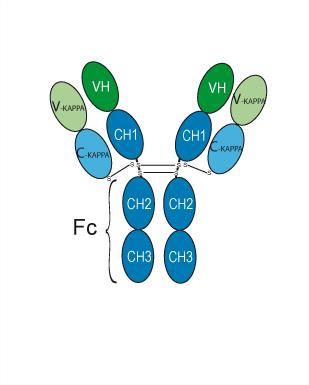
Human IgG1(K214R) kappa
Recommend Isotype Controls
Species Reactivity
Virus
IC50 & Target
SARS-CoV-2
In Vitro
Bamlanivimab (300 nM; 5 min association, 15 min dissociation) exhibits high-affinity binding to the soluble trimeric SARS-CoV-2 spike protein, with an apparent Kd within a 100-fold range of other RBD-binding antibodies tested[1].
Bamlanivimab (20 nM SARS-CoV-2 spike protein, 200 nM ACE2; 12 h pre-incubation, 5 min association, 1 min dissociation) competes with human ACE2 for binding to the SARS-CoV-2 spike protein[1].
Bamlanivimab (0.01-10 μg/mL; 45 min pre-incubation with virus, 72 h incubation with cells) potently neutralizes SARS-CoV-2 spike pseudotyped lentivirus in ACE2-transfected 293T cells[1].
Bamlanivimab (0.001-1000 μg/mL; 1 h pre-incubation with virus, 48 h incubation with cells) potently neutralizes a replication-competent luciferase reporter SARS-CoV-2 in Vero E6 cells[1].
Bamlanivimab (0.001-100 μg/mL; 1-2 h pre-incubation with virus, 48 h (INMI-1) or 72 h (USA/WA-1) incubation with cells) potently neutralizes two clinical SARS-CoV-2 isolates (INMI-1 and USA/WA-1/2020) in Vero E6 cells via plaque reduction[1].
Bamlanivimab (~12 mg/mL Fab-RBD complex; crystallization occurred within 1-2 days, harvested on day 3) binds to an ACE2-overlapping epitope on the SARS-CoV-2 RBD, with specific atomic interactions that block ACE2 engagement[1].
Bamlanivimab binds to the SARS-CoV-2 spike protein RBD in both the up and down conformations, allowing recognition of the spike in multiple states of viral entry[1].
Bamlanivimab induces antibody-dependent cell-mediated cytotoxicity in vitro using spike protein-expressing target cells and reporter cells, supporting enhanced viral clearance via intrinsic immune activation[2].
MedChemExpress (MCE) has not independently confirmed the accuracy of these methods. They are for reference only. Further protocols information, click here.
Parmacokinetics
| Species | Dose | Route | T1/2 (Elimination) | CL |
|---|---|---|---|---|
| Cynomolgus Monkey[1] | 5 mg/kg | i.v. | 312 h | 0.22 mL/h/kg |
In Vivo
MedChemExpress (MCE) has not independently confirmed the accuracy of these methods. They are for reference only.
-
Animal Model:Indian origin (female, 8 to 12 years of age, challenged with SARS-CoV-2 USA-WA-1/2020)[1]
-
Dosage:1 mg/kg; 2.5 mg/kg; 15 mg/kg; 50 mg/kg
-
Administration:i.v.; single dose
-
Result:Reduced viral replication (sgRNA) in BALF by 102 to 105 copies/mL across days 1, 3, and 6 compared to controls, with significant reductions at 1, 2.5, and 15 mg/kg on day 1, and at all doses on day 3 (q < 0.05).
Made viral replication in BALF undetectable by day 3 at all doses.
Significantly reduced viral load (gRNA) in BALF at the 15 mg/kg dose on day 1, and at all doses on day 3.
Made viral replication in lung tissue undetectable at 2.5, 15, and 50 mg/kg on day 6, with significant reductions compared to controls.
Significantly reduced viral load in lung tissue at 2.5, 15, and 50 mg/kg on day 6.
Significantly reduced viral replication in nasal swabs at 1, 2.5, and 50 mg/kg on day 1, and made it undetectable at 2.5, 15, and 50 mg/kg by day 3.
Significantly reduced viral load in nasal swabs at 2.5, 15, and 50 mg/kg on days 3 and 6.
Significantly reduced viral replication in throat swabs at all doses on day 1.
Significantly reduced viral load in throat swabs at 2.5, 15, and 50 mg/kg on day 1.
Clinical Trial
| NCT Number | Sponsor | Condition | Start Date |
Phase

|
|---|---|---|---|---|
| NCT01329991 | Plexxikon| | 2011-05 | PHASE1 |
Gene ID
Accession
YP_009724390.1
Conjugated
Unconjugated
Reconsititution
The product can be reconstituted/diluted with sterile PBS or saline.
Format
-
Human IgG1 kappa
Application
ELISA, FACS, Functional assay
Verified Bioactivity
-
 Immobilized SARS-CoV-2 S Protein RBD (HEK293, HY-P73396) can bind Bamlanivimab. The EC50 for this effect is 1.353 ng/mL.


Chemical Information
-
CAS No. 2423943-37-5
-
Appearance Liquid
-
Molecular Weight 144.5 kDa
-
Color Colorless to light yellow
-
SMILES
[Bamlanivimab]
-
Synonyms
Anti-Human SARS-CoV-2; LY-3819253; LY-CoV555
-
Shipping
Shipping with dry ice.
-
Formulation
Please refer to the lot-specific COA for specific buffer information.
-
Storage
Please store the product under the recommended conditions in the Certificate of Analysis.

Protocols
-
Research Protocol for Infectious Diseases
Infectious-disease experiments test how pathogens interact with host barriers, innate immune receptors, inflammatory signaling, pathogen replication, and tissue injury; pattern-recognition receptors such as TLRs, RIG-I-like receptors, NOD-like receptors, and inflammasomes detect microbial molecules and activate NF-κB, interferon, and cytokine responses. The central hypothesis is that infection severity reflects the balance between pathogen burden and host response: protective inflammation restricts pathogen growth, whereas excessive or mislocalized inflammation contributes to tissue damage and disease phenotype. Unresolved questions include which host pathways are protective versus pathogenic, why some infection models fail to translate to human disease, and which combined readouts best predict clinically relevant infection outcomes.
-
Cell Cytotoxicity Assay
Cytotoxicity assays are usually based on the assessment of cell membrane damage, which can also be indirectly detected by measuring cell viability. Detection methods include MTT assay, CKK-8 assay, LDH assay and ATP assay, etc.
-
Mammalian live/dead viability and cytotoxicity staining
Live/dead viability and cytotoxicity staining assays are based on the simultaneous detection of intracellular esterase activity in metabolically active (viable) cells and membrane integrity loss in non-viable cells. In commonly used dual-staining approaches, membrane-permeant fluorogenic substrates are converted by intracellular esterases into fluorescent products in live cells, while impermeant DNA-binding dyes selectively enter cells with compromised plasma membranes and label nucleic acids in dead or dying cells, enabling discrimination between viable and non-viable populations by fluorescence microscopy or flow cytometry.
-
Cell Viability Determination by MTT Colorimetric Assay
The following protocol uses the MTT colorimetric assay as a classic literature-established method for assessing cell viability/metabolic activity in cultured mammalian cells. MTT[3-(4,5-dimethylthiazol-2-yl)-2,5-diphenyltetrazolium bromide] is reduced by metabolically active cells to a colored formazan product; the amount of formazan is quantified spectrophotometrically and provides an indirect measure of metabolically active viable cells. Importantly, MTT reduction reflects cellular oxidoreductase/metabolic activity rather than an absolute direct count of living cells, so changes in cellular metabolism can alter the signal independently of cell number.


Purity & Documentation
-
Data Sheet (262 KB)
-
SDS (252 KB)
- English - EN (252 KB)
- Français - FR (252 KB)
- Deutsch - DE (252 KB)
- Norwegian - NO (252 KB)
- Español - ES (252 KB)
- Swedish - SV (252 KB)
- Italian - IT (252 KB)
- Korean - KR (252 KB)
- Portuguese - PT (252 KB)
-
Inhibitory Antibodies User Guide (603 KB)
References

Calculators
Concentration (start) × Volume (start) = Concentration (final) × Volume (final)


Bamlanivimab Related Classifications
HY-P99344 Related Classifications
 Powered by Bioz
Keywords
- Bamlanivimab
- 2423943-37-5
- Anti-Human SARS-CoV-2
- LY-3819253
- LY-CoV555
- LY3819253
- LY 3819253
- LY-3819253
- SARS-CoV
- SARS-CoV-2 Omicron variant
- SARS-CoV-2 spike protein receptor-binding domain
- ACE2-transfected 293T cells
- ACE2
- rhesus macaques
- antibody-dependent cell-mediated cytotoxicity
- coronavirus disease 2019
- Vero E6 cells
- cynomolgus monkeys
- COVID-19 convalescent plasma
- Inhibitor
- inhibitor
- inhibit