



ML-T7

Based on 1 Customer Validation
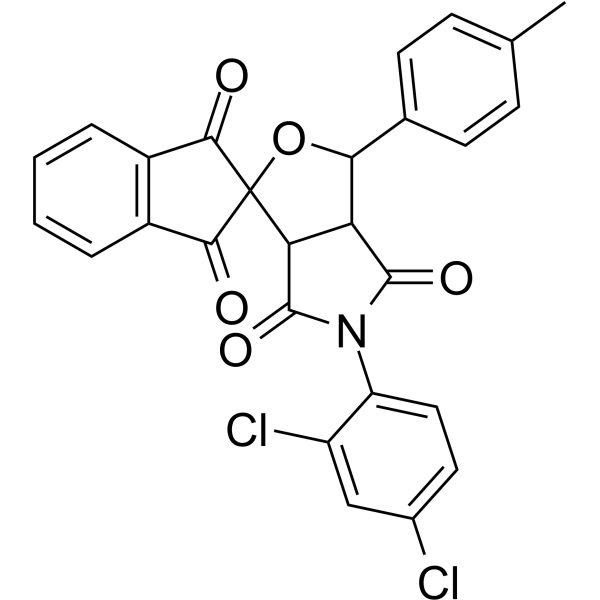
ML-T7 is a potent Tim-3 inhibitor. ML-T7 blocks Tim-3 interactions with PtdSer and CEACAM1. ML-T7 not only enhances the antitumor activity of adoptive transfer therapy with cytotoxic T lymphocytes (CTLs) and CAR T cells but also increases the effector function of T cell. ML-T7 promotes NK cells’ killing activity against tumor cells and DC antigen-presenting capacity. ML-T7 directly exerts antitumor efficacy in preclinical tumor models either alone or in combination with Nivolumab (HY-P9903A). ML-T7 can be used for tumor immunotherapy research.
For research use only. We do not sell to patients.
- Purity : 99.93%
- CAS No.: 459789-75-4
- Formula: C27H17Cl2NO5
- Molecular Weight:506.33
-
Storage:Powder -20°C, 3 years , 4°C, 2 years ; In solvent -80°C, 6 months , -20°C, 1 month

To place orders, for customer services and technical support, please contact: MedChemExpress USA
Tel: 609-228-6898 E-mail: [email protected] [email protected]


-
 Biological Activity
-
Chemical Information
-
Solvent & Solubility
- Protocols
- Purity & Documentation
- References
-
 Help & FAQs


-
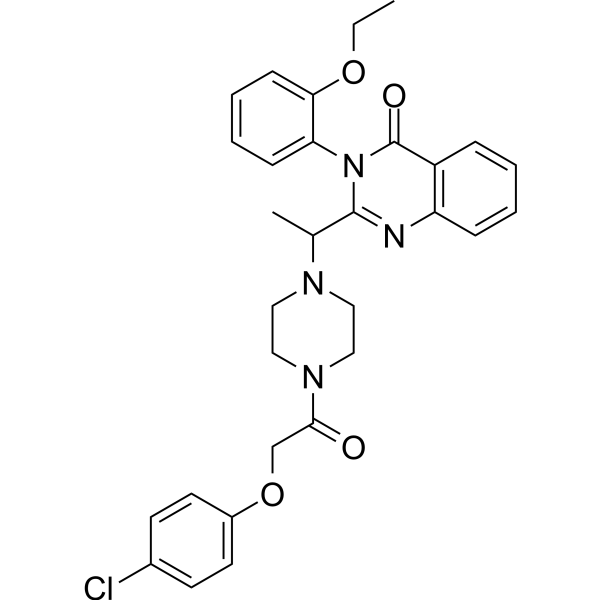
HY-15763
ErastinFerroptosis Inducer -
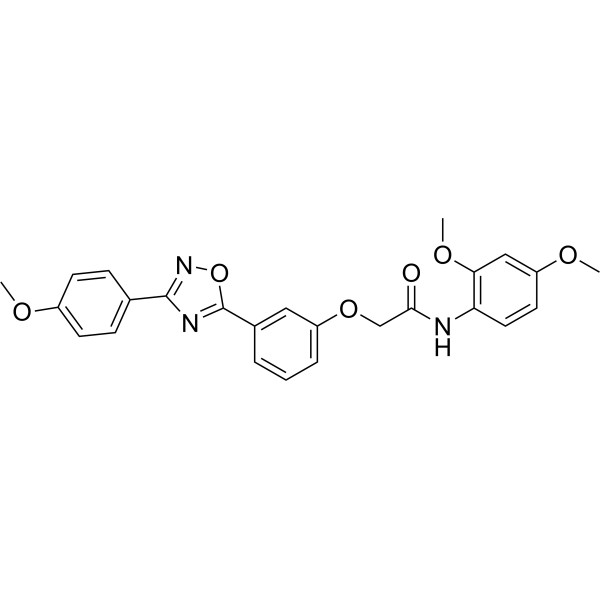
HY-155175
TIM-3-IN-2TIM-3 Inhibitor -
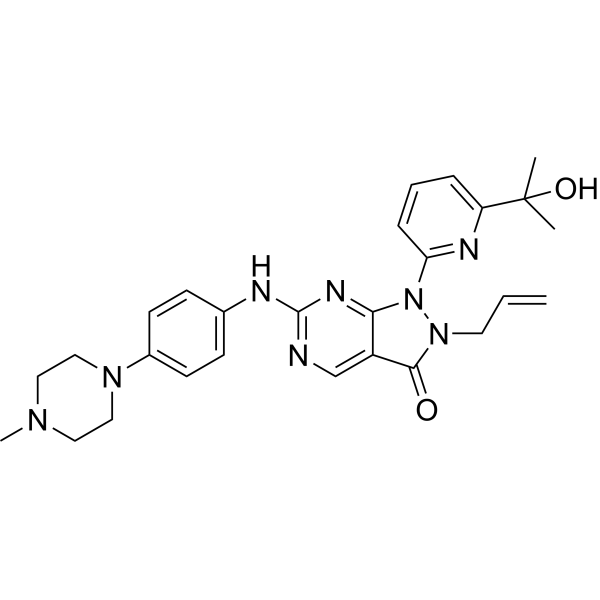
HY-10993
AdavosertibWee1 Inhibitor -
HY-18739
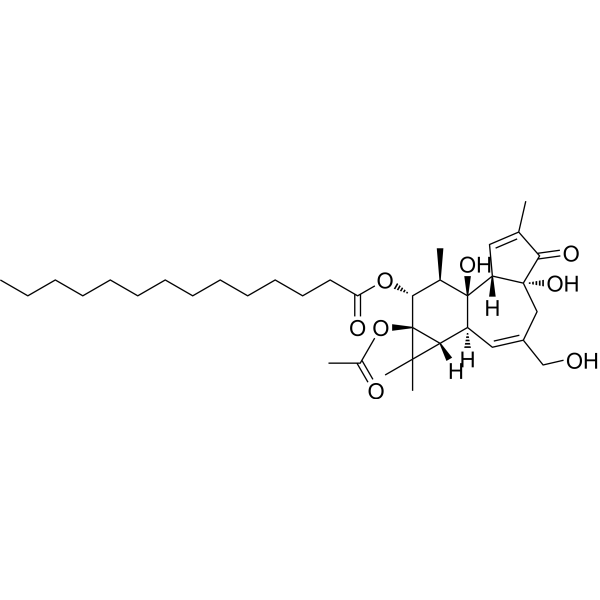
Phorbol 12-myristate 13-acetatePKC Activator -
HY-10583
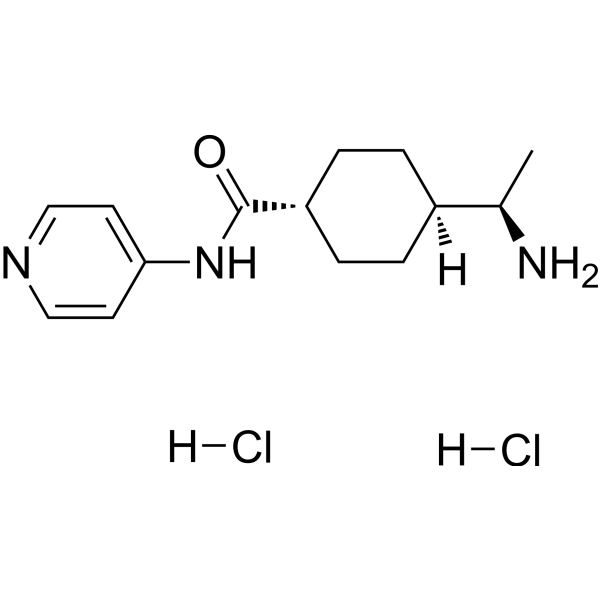
Y-27632 dihydrochlorideROCK Inhibitor -
HY-13740
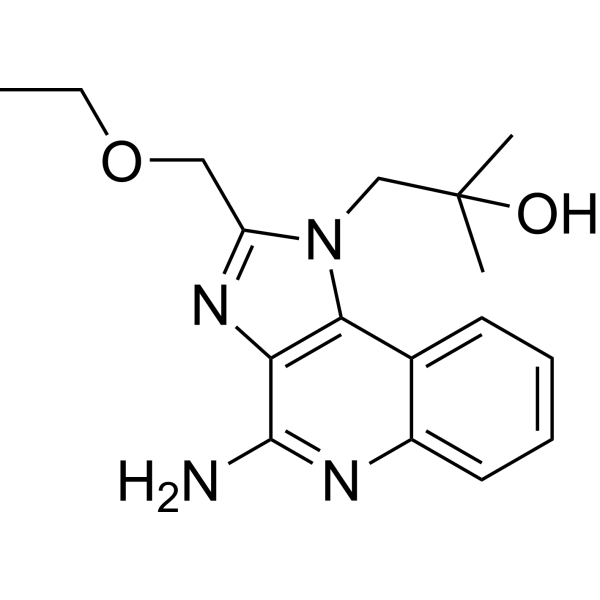
ResiquimodTLR7/8 Agonist -
HY-Y0873
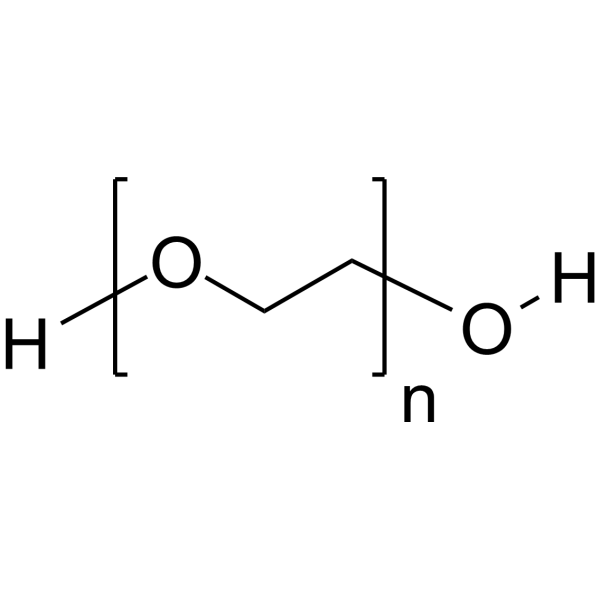
PEG300Neutral Polymer -
HY-K0010
Protease Inhibitor Cocktail (EDTA-Free, 100× in DMSO)


Biological Activity
Description
In Vitro
ML-T7(10 μM, 0-6 days) enhances TCR/STAT5 signaling and promotes CD8+ cell antitumor activity through Tim-3[1].
ML-T7(10 μM, 24 h) promotes DC maturation and function through Tim-3 and Tim-4, enhances DC antigen-presenting ability[1].
ML-T7(10 μM, 24 h) enhances CTL activation and cytokine production, decreases apoptosis of CTLs[1].
ML-T7(10 μM, 48 h) significantly enhances the production of IFN-γ, TNF-α, CD107a, and granzyme B in human NK cell line NK92 cells[1].
MedChemExpress (MCE) has not independently confirmed the accuracy of these methods. They are for reference only.
-
Cell Line:CD8+ cell
-
Concentration:10 μM
-
Incubation Time:0-6 days
-
Result:Increased the phosphorylation of phospholipase C–γ1(PLC-γ1), ZAP70, LCK, ERK1/2, and STAT5 upon anti-CD3/CD28 stimulation.
-
Cell Line:Bone Marrow Cells
-
Concentration:10 μM
-
Incubation Time:24 h
-
Result:Increased the expression of DC maturation markers.
In Vivo
ML-T7 (20 mg/kg; Intraperitoneal injection; every 2 days, 10 times) synergizes with Nivolumab (HY-P9903A) to improve the antitumor efficacy of Nivolumab (HY-P9903A) antibodies, and effectively improves HCC mice survival[1].
ML-T7 (50 mg/kg, Intraperitoneal injection; every 2 days for 3 weeks)shows a good safety profile in mice[1].
MedChemExpress (MCE) has not independently confirmed the accuracy of these methods. They are for reference only.
-
Animal Model:10-week-old mice with spontaneous orthotopic HCC[1]
-
Dosage:10-50 mg/kg
-
Administration:Intraperitoneal injection (i.p.), every 2 days, 10 times
-
Result:Increased CD8+ T cells in both tumor and spleen. Inhibited T cell exhaustion. Promoted the function of CTLs, NK cells, and DCs.
-
Animal Model:10-week-old mice with orthotopic Akt/c-Myc HCC[1]
-
Dosage:20 mg/kg
-
Administration:Intraperitoneal injection (i.p.), every 2 days, 10 times
-
Result:Indicated stronger antituomr activity when treated with ML-T7 and Nivolumab (HY-P9903A). Rejuvenated NK cells by the combination therapy. Inhibited the accumulation of MDSCs and Tregs.


Chemical Information
-
CAS No. 459789-75-4
-
Appearance Solid
-
Molecular Weight 506.33
-
Formula C27H17Cl2NO5
-
Color White to yellow
-
SMILES
O=C1C2=C(C(C13OC(C4C(N(C5=CC=C(C=C5Cl)Cl)C(C43)=O)=O)C6=CC=C(C)C=C6)=O)C=CC=C2
-
Shipping
Room temperature in continental US; may vary elsewhere.
-
Storage
Powder -20°C 3 years 4°C 2 years In solvent -80°C 6 months -20°C 1 month


Solvent & Solubility
In Vitro:
DMSO : 66.67 mg/mL (131.67 mM; Need ultrasonic; Hygroscopic DMSO has a significant impact on the solubility of product, please use newly opened DMSO)
Please refer to the solubility information to select the appropriate solvent. Once prepared, please aliquot and store the solution to prevent product inactivation from repeated freeze-thaw cycles.
Storage method and period of stock solution: -80°C, 6 months; -20°C, 1 month. When stored at -80°C, please use it within 6 months. When stored at -20°C, please use it within 1 month.
Please refer to the solubility information to select the appropriate solvent. Once prepared, please aliquot and store the solution to prevent product inactivation from repeated freeze-thaw cycles.
Storage method and period of stock solution: -80°C, 6 months; -20°C, 1 month. When stored at -80°C, please use it within 6 months. When stored at -20°C, please use it within 1 month.
Concentration (start) × Volume (start) = Concentration (final) × Volume (final)


Purity & Documentation
-
Data Sheet (285 KB)
-
SDS (251 KB)
- English - EN (251 KB)
- Français - FR (251 KB)
- Deutsch - DE (251 KB)
- Norwegian - NO (251 KB)
- Español - ES (251 KB)
- Swedish - SV (251 KB)
- Italian - IT (251 KB)
- Korean - KR (251 KB)
- Portuguese - PT (251 KB)
-
Handling Instructions (2659 KB)
References


Complete Stock Solution Preparation Table
Please refer to the solubility information to select the appropriate solvent. Once prepared, please aliquot and store the solution to prevent product inactivation from repeated freeze-thaw cycles.
Storage method and period of stock solution: -80°C, 6 months; -20°C, 1 month. When stored at -80°C, please use it within 6 months. When stored at -20°C, please use it within 1 month.
| Optional Solvent | Concentration Solvent Mass | 1 mg | 5 mg | 10 mg | 25 mg |
|---|---|---|---|---|---|
| DMSO | 1 mM | 1.9750 mL | 9.8750 mL | 19.7500 mL | 49.3749 mL |
| 5 mM | 0.3950 mL | 1.9750 mL | 3.9500 mL | 9.8750 mL | |
| 10 mM | 0.1975 mL | 0.9875 mL | 1.9750 mL | 4.9375 mL | |
| 15 mM | 0.1317 mL | 0.6583 mL | 1.3167 mL | 3.2917 mL | |
| 20 mM | 0.0987 mL | 0.4937 mL | 0.9875 mL | 2.4687 mL | |
| 25 mM | 0.0790 mL | 0.3950 mL | 0.7900 mL | 1.9750 mL | |
| 30 mM | 0.0658 mL | 0.3292 mL | 0.6583 mL | 1.6458 mL | |
| 40 mM | 0.0494 mL | 0.2469 mL | 0.4937 mL | 1.2344 mL | |
| 50 mM | 0.0395 mL | 0.1975 mL | 0.3950 mL | 0.9875 mL | |
| 60 mM | 0.0329 mL | 0.1646 mL | 0.3292 mL | 0.8229 mL | |
| 80 mM | 0.0247 mL | 0.1234 mL | 0.2469 mL | 0.6172 mL | |
| 100 mM | 0.0197 mL | 0.0987 mL | 0.1975 mL | 0.4937 mL |


ML-T7 Related Classifications
HY-163028 Related Classifications
 Powered by Bioz