



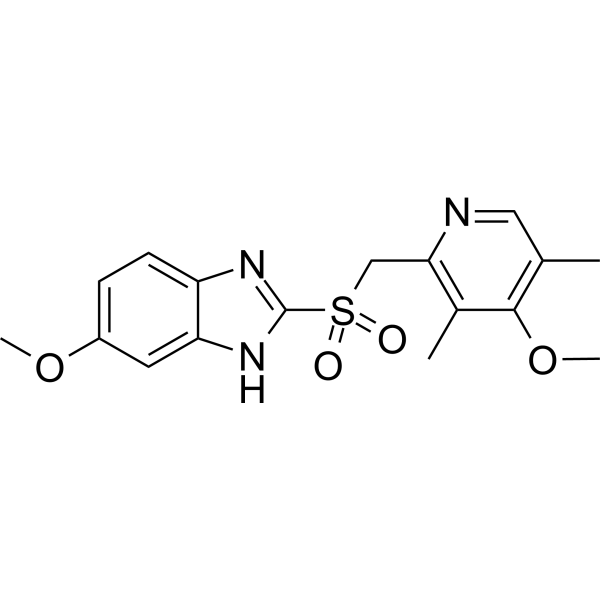
Omeprazole sulfone
Based on 2 publication(s) in Google Scholar
Omeprazole sulfone (Omeprazole sulphone) is one of the major circulating metabolites of Omeprazole (HY-B0113) in vivo, and belongs to class 4 non-mutagenic impurities. Omeprazole sulfone does not bind to the aryl hydrocarbon receptor (AhR), nor does it induce the expression of CYP1A1 or CYP1A2. However, Omeprazole sulfone promotes the migration of gastric epithelial cells under basal conditions and reverses the inhibitory effect of Indomethacin (HY-14397) on cell migration. Omeprazole sulfone does not promote cell proliferation, nor does it upregulate COX-2 expression or activate signaling pathways such as ERK, P38 MAPK and PI3K. Omeprazole sulfone maintains basal ulcer healing under non-acid-dependent conditions and can be used in studies related to gastric ulcer repair.
For research use only. We do not sell to patients.
- Purity: 99.23%
- CAS No.: 88546-55-8
- Formula: C17H19N3O4S
- Molecular Weight:361.42
-
Storage:Powder -20°C, 3 years , 4°C, 2 years ; In solvent -80°C, 6 months , -20°C, 1 month

To place orders, for customer services and technical support, please contact: MedChemExpress USA
Tel: 609-228-6898 E-mail: [email protected] [email protected]


-
 Biological Activity
-
Chemical Information
-
Solvent & Solubility
- Purity & Documentation
- References
-
 Help & FAQs


-
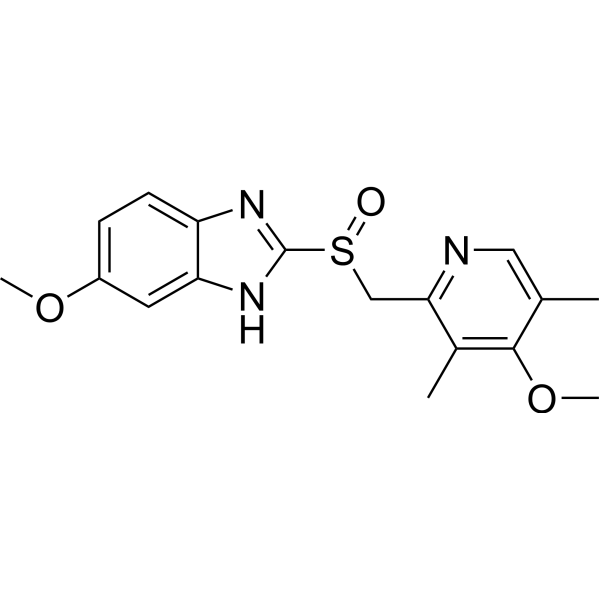
HY-B0113
Omeprazole
-
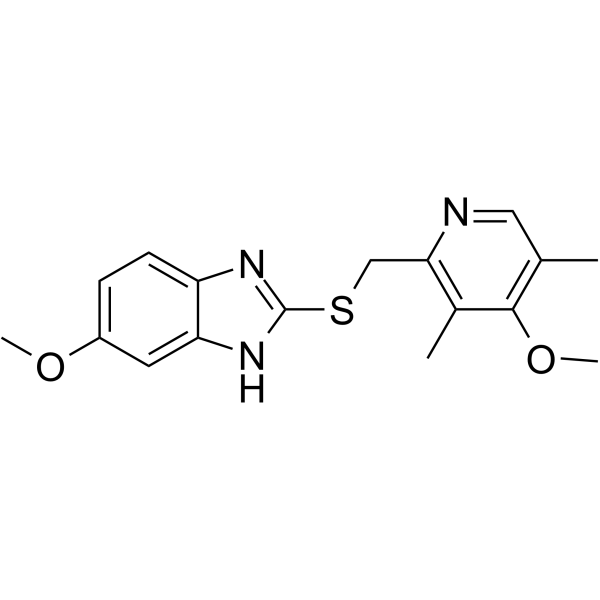
HY-G0006
Omeprazole sulfide
-
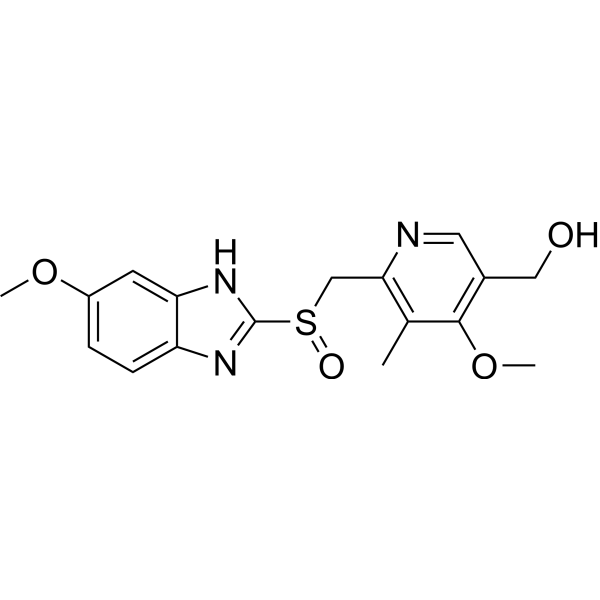
HY-126857
5-Hydroxyomeprazole
-

HY-G0007R
Omeprazole sulfone (Standard)
-
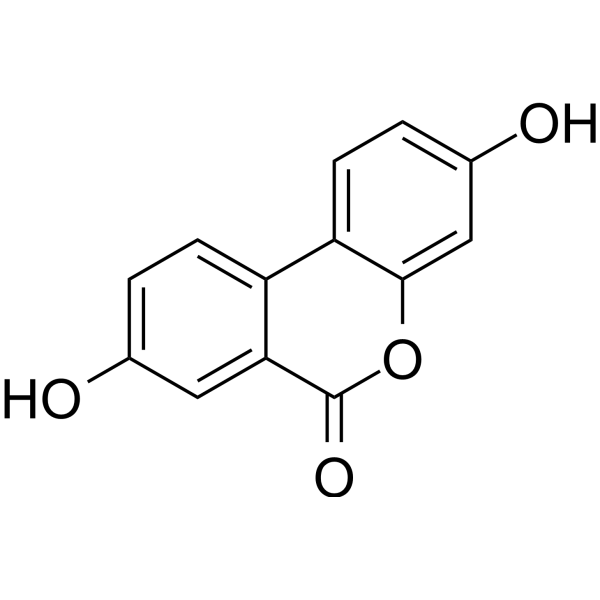
HY-100599
Urolithin A
-
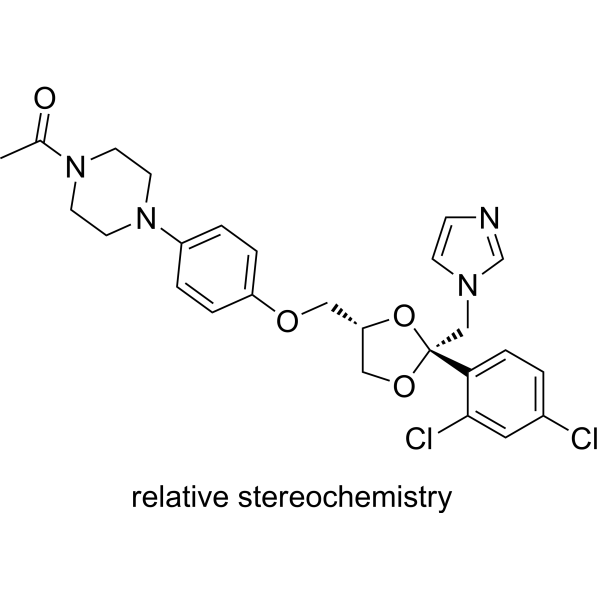
HY-B0105
Ketoconazole
-
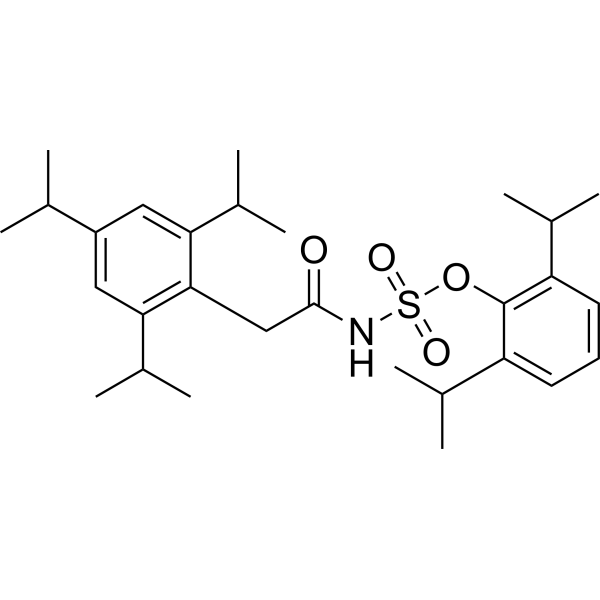
HY-13215
Avasimibe
-
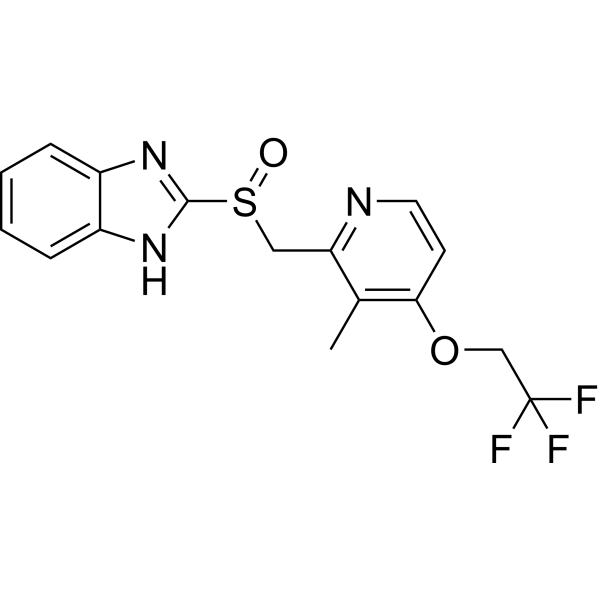
HY-13662
Lansoprazole
-
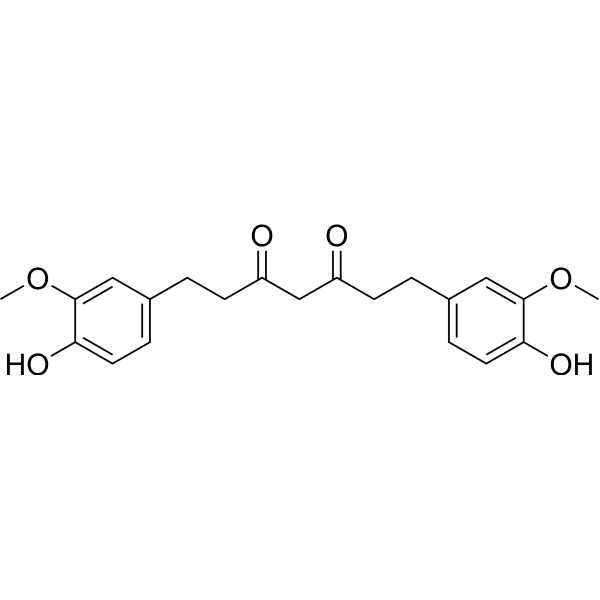
HY-N0893
Tetrahydrocurcumin
-
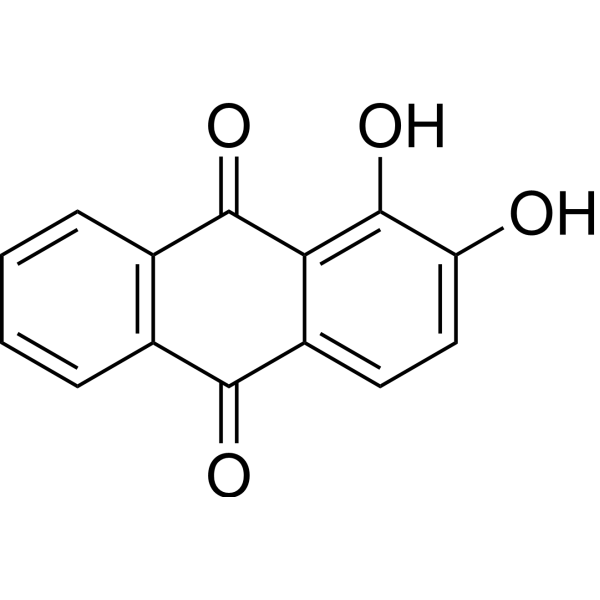
HY-N0563
Alizarin
-
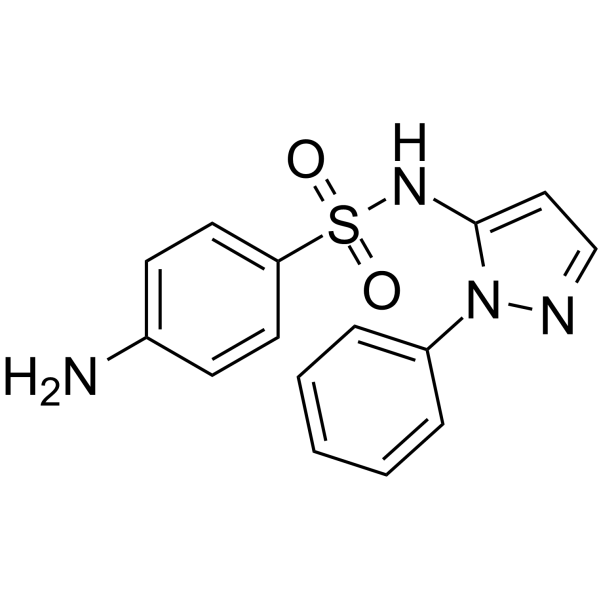
HY-B1218
Sulfaphenazole
-
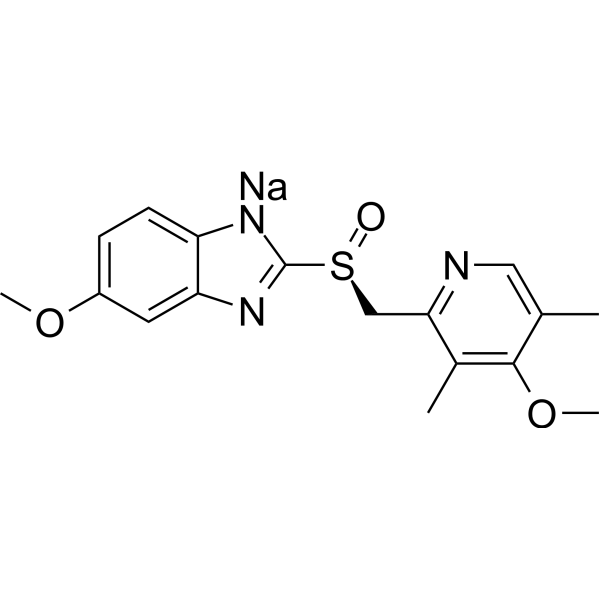
HY-17023
Esomeprazole sodium
Publications Citing Use of MedChemExpress (MCE) Omeprazole sulfone
More

Biological Activity
Omeprazole sulfone (50 μM; 18 h) does not induce CYP1A1 or CYP1A2 mRNA or protein accumulation in primary cultures of human hepatocytes (FT13, FT33)[1].
Omeprazole sulfone (100 μM; 1 h) does not displace [3H]TCDD from the Ah receptor in 9S-enriched cytosol fractions from human liver tissue[1].
MedChemExpress (MCE) has not independently confirmed the accuracy of these methods. They are for reference only.
-
Cell Line:primary cultures of human hepatocytes
-
Concentration:50 μM
-
Incubation Time:48 h
-
Result:Couldn't induce CYP1A1 or CYP1A2 mRNA or protein accumulation.
MedChemExpress (MCE) has not independently confirmed the accuracy of these methods. They are for reference only.
-
Animal Model:Sprague-Dawley (males and females)[3]
-
Dosage:0.041 mg/kg (as a 1% component of the 4.1 mg/kg Omepreful® formulation)
-
Administration:i.v.; daily; 14 days
-
Result:Observed no mortality or treatment-related clinical signs.
Detected no treatment-related effects on body weight, food consumption, hematological parameters (WBC, LYM, RBC, HGB, HCT, MCV, MCH, MCHC), or biochemical parameters (alanine aminotransferase, aspartate aminotransferase, blood urea nitrogen, creatinine).
Caused significantly higher platelet counts, which remained within laboratory historical reference range and were deemed toxicologically insignificant.
Revealed no treatment-related histopathological abnormalities in liver and kidney tissues, with tissue structure and cellular morphology matching control group findings.


Chemical Information
-
CAS No. 88546-55-8
-
Appearance Solid
-
Molecular Weight 361.42
-
Formula C17H19N3O4S
-
Color White to off-white
-
SMILES
CC(C(OC)=C(C)C=N1)=C1CS(C2=NC3=CC=C(OC)C=C3N2)(=O)=O
-
Synonyms
Omeprazole sulphone
-
Shipping
Room temperature in continental US; may vary elsewhere.
-
Storage
Powder -20°C 3 years 4°C 2 years In solvent -80°C 6 months -20°C 1 month


Publications (2)
-
Journal Impact Factor
-
Most Recent
-
ACS Environ Au
Machine Learning-Assisted Recognition of Environmental Sulfur-Containing Chemicals in Nontargeted Mass Spectrometry Analysis of Inadequate Mass Resolution. [Abstract]2025 Aug 5;5(6):573-582. PMID: 41277996 -
Anal Chem
Exposome-Scale Investigation of Cl-/Br-Containing Chemicals Using High-Resolution Mass Spectrometry, Multistage Machine Learning, and Cloud Computing. [Abstract]2025 Jun 3;97(21):11099-11109. PMID: 40401576


Solvent & Solubility
DMSO : 200 mg/mL (553.37 mM; Need ultrasonic; Hygroscopic DMSO has a significant impact on the solubility of product, please use newly opened DMSO)
Please refer to the solubility information to select the appropriate solvent. Once prepared, please aliquot and store the solution to prevent product inactivation from repeated freeze-thaw cycles.
Storage method and period of stock solution: -80°C, 6 months; -20°C, 1 month. When stored at -80°C, please use it within 6 months. When stored at -20°C, please use it within 1 month.
Please refer to the solubility information to select the appropriate solvent. Once prepared, please aliquot and store the solution to prevent product inactivation from repeated freeze-thaw cycles.
Storage method and period of stock solution: -80°C, 6 months; -20°C, 1 month. When stored at -80°C, please use it within 6 months. When stored at -20°C, please use it within 1 month.
Concentration (start) × Volume (start) = Concentration (final) × Volume (final)
Select the appropriate dissolution method based on your experimental animal and administration route.
- For the following dissolution methods, please ensure to first prepare a clear stock solution using an In Vitro approach and then sequentially add co-solvents:
- To ensure reliable experimental results, the clarified stock solution can be appropriately stored based on storage conditions. As for the working solution for In Vivo experiments, it is recommended to prepare freshly and use it on the same day.
- The percentages shown for the solvents indicate their volumetric ratio in the final prepared solution. If precipitation or phase separation occurs during preparation, heat and/or sonication can be used to aid dissolution.
Add each solvent one by one: 10% DMSO 40% PEG300 5% Tween-80 45% Saline
Solubility: ≥ 2.08 mg/mL (5.76 mM); Clear solution
This protocol yields a clear solution of ≥ 2.08 mg/mL (saturation unknown).
Taking 1 mL working solution as an example, add 100 μL DMSO stock solution (20.8 mg/mL) to 400 μL PEG300, and mix evenly; then add 50 μL Tween-80 and mix evenly; then add 450 μL Saline to adjust the volume to 1 mL.
Preparation of Saline: Dissolve 0.9 g sodium chloride in ddH₂O and dilute to 100 mL to obtain a clear Saline solution.
Add each solvent one by one: 10% DMSO 90% (20% SBE-β-CD in Saline)
Solubility: ≥ 2.08 mg/mL (5.76 mM); Clear solution
This protocol yields a clear solution of ≥ 2.08 mg/mL (saturation unknown).
Taking 1 mL working solution as an example, add 100 μL DMSO stock solution (20.8 mg/mL) to 900 μL 20% SBE-β-CD in Saline, and mix evenly.
Preparation of 20% SBE-β-CD in Saline (4°C, storage for one week): 2 g SBE-β-CD powder is dissolved in 10 mL Saline, completely dissolve until clear.
Please enter the basic information of animal experiments:
-
-
-
-
Recommended: Prepare an additional quantity of animals to account for potential losses during experiments.
Please enter your animal formula composition:
-
%DMSO +
Recommended: Keep the proportion of DMSO in working solution below 2% if your animal is weak.
-
%+
-
+%Tween-80 + +
-
%Saline +
The co-solvents required include: DMSO, . All of co-solvents are available by MedChemExpress (MCE). , Tween 80. All of co-solvents are available by MedChemExpress (MCE).
Working solution concentration: 0.22 mg/mL
Method for preparing stock solution: mg drug dissolved in μL DMSO. Stock solution concentration: mg/mL.
1. Take μL DMSO stock solution;
2. Add μL .
μL , mix evenly;
3. Then add μL Tween 80, mix evenly;
4. Then add μL
Please ensure that the stock solution in the first step is dissolved to a clear state, and add co-solvents in sequence. You can use ultrasonic heating (ultrasonic cleaner, recommended frequency 20-40 kHz), vortexing, etc. to assist dissolution.


Purity & Documentation
-
Data Sheet (278 KB)
-
SDS (394 KB)
- English - EN (394 KB)
- Français - FR (394 KB)
- Deutsch - DE (394 KB)
- Norwegian - NO (394 KB)
- Español - ES (394 KB)
- Swedish - SV (394 KB)
- Italian - IT (394 KB)
- Korean - KR (394 KB)
- Portuguese - PT (394 KB)
-
Handling Instructions (2659 KB)
References
[2]. Ng KM, et al. Omeprazole promotes gastric epithelial cell migration. J Pharm Pharmacol. 2008;60(5):655-660. [Content Brief]
[3]. Sumer E, et al. Evaluation of toxicological profile of omeprazole degradation impurities in an intravenous drug product: omeprazole-sulfone and omeprazole-N-oxide. Drug Chem Toxicol. Published online July 28, 2025. [Content Brief]


Complete Stock Solution Preparation Table
Please refer to the solubility information to select the appropriate solvent. Once prepared, please aliquot and store the solution to prevent product inactivation from repeated freeze-thaw cycles.
Storage method and period of stock solution: -80°C, 6 months; -20°C, 1 month. When stored at -80°C, please use it within 6 months. When stored at -20°C, please use it within 1 month.
| Optional Solvent | Concentration Solvent Mass | 1 mg | 5 mg | 10 mg | 25 mg |
|---|---|---|---|---|---|
| DMSO | 1 mM | 2.7669 mL | 13.8343 mL | 27.6686 mL | 69.1716 mL |
| 5 mM | 0.5534 mL | 2.7669 mL | 5.5337 mL | 13.8343 mL | |
| 10 mM | 0.2767 mL | 1.3834 mL | 2.7669 mL | 6.9172 mL | |
| 15 mM | 0.1845 mL | 0.9223 mL | 1.8446 mL | 4.6114 mL | |
| 20 mM | 0.1383 mL | 0.6917 mL | 1.3834 mL | 3.4586 mL | |
| 25 mM | 0.1107 mL | 0.5534 mL | 1.1067 mL | 2.7669 mL | |
| 30 mM | 0.0922 mL | 0.4611 mL | 0.9223 mL | 2.3057 mL | |
| 40 mM | 0.0692 mL | 0.3459 mL | 0.6917 mL | 1.7293 mL | |
| 50 mM | 0.0553 mL | 0.2767 mL | 0.5534 mL | 1.3834 mL | |
| 60 mM | 0.0461 mL | 0.2306 mL | 0.4611 mL | 1.1529 mL | |
| 80 mM | 0.0346 mL | 0.1729 mL | 0.3459 mL | 0.8646 mL | |
| 100 mM | 0.0277 mL | 0.1383 mL | 0.2767 mL | 0.6917 mL |


Omeprazole sulfone Related Classifications
HY-G0007 Related Classifications
 Powered by Bioz