16 Results for "

liposome formulations

" in MedChemExpress (MCE) Product Catalog:
Products (16)

16 Results for "liposome formulations" in MCE Product Catalog:

Cat. No.: HY-W440911
Research Areas:  

Cancer

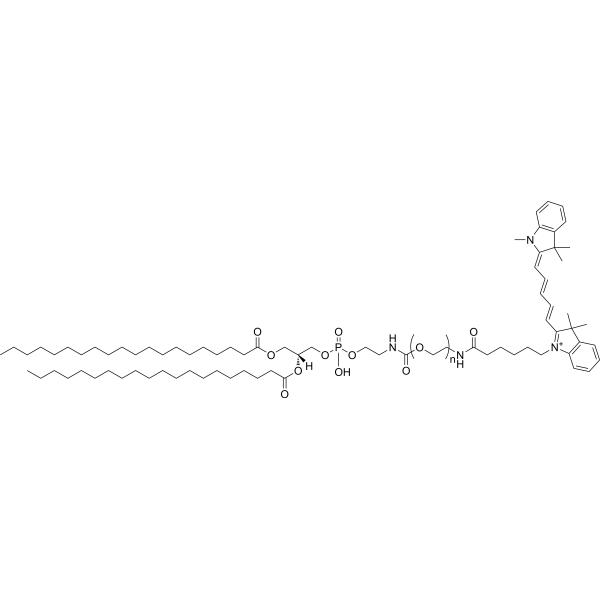
DSPE-PEG2000-Cy5 is a Cy5 (HY-D0821) fluorophore-labeled conjugate of distearoylphosphatidylethanolamine and polyethylene glycol, as well as a liposome component. The Cy5 fluorophore is commonly used for labeling proteins and nucleic acids in imaging, flow cytometry and genomic applications. DSPE-PEG2000-Cy5 supports cell membrane modification, in vivo tumor targeting research and long-term in vivo circulation of its liposomal formulations (Ex/Em=633/670 nm) .
loading...
    loading...
Cat. No.: HY-112766
CAS No.: 201036-16-0
Purity:  ≥98.0%
Target:  

Liposome

Research Areas:  

Others

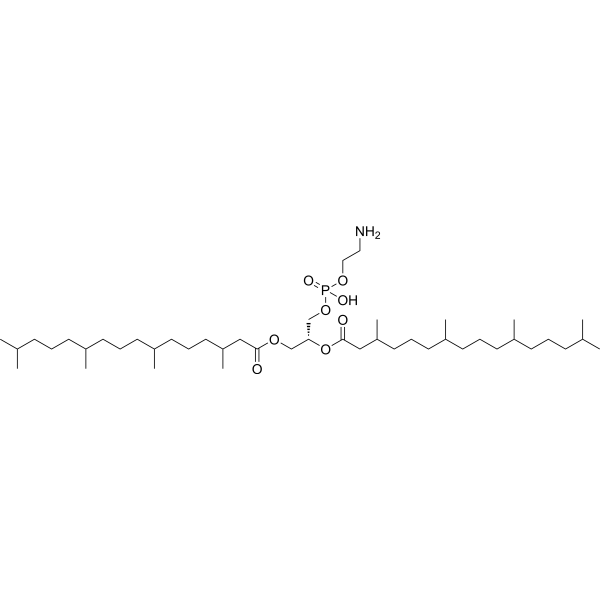
DPyPE is a neutral phosphatidylethanolamine lipid composed of a polyisoprene alkyl chain with two pyridine-containing phosphine ligands. DPyPE is mainly used in liposome formulations and to enhance the efficiency of gene delivery in vitro and in vivo. For example, DPyPE can be mixed with cationic lipids such as VC1052 (HY-156616) (in a 1:1 ratio) to form the vaccine adjuvant Vaxfectin (HY-142998). DPyPE assists VC1052 in binding to negatively charged pDNA to form a uniform liposome complex by regulating the fluidity and stability of the liposome membrane .
loading...
    loading...
Cat. No.: HY-144012
CAS No.: 474922-84-4
Purity:  99.83%
Synonyms: 16:0 PEG2000 PE ammonium; 1,2-Dipalmitoyl-sn-glycero-3-phosphoethanolamine-N-[methoxy(polyethylene glycol)-2000] ammonium
Target:  

Liposome

Research Areas:  

Others

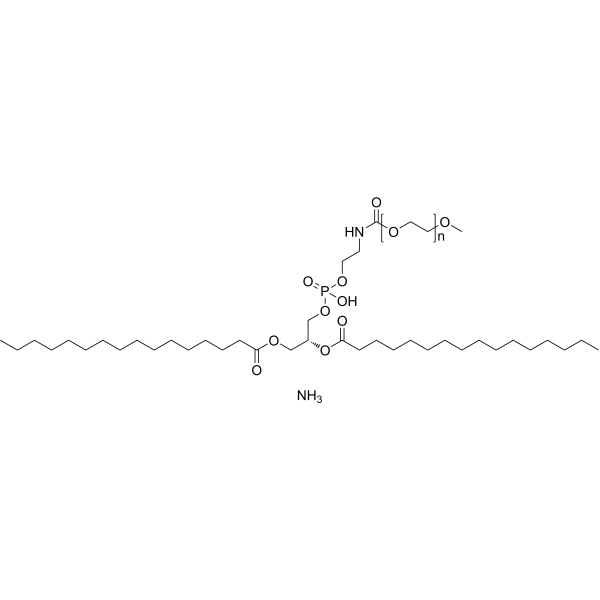
DPPE-PEG2000 ammonium (16:0 PEG5000 PE) is a polymer-lipid conjugate and LipoParticle stabilizer with a PEG chain of 5,000 g/mol molecular weight attached to its polar head, and it can be internalized by biological membranes. DPPE-PEG2000 ammonium enables LipoParticle to maintain colloidal stability after 20-fold dilution in PBS or cell culture medium, and prevents aggregate formation during lyophilization and rehydration. DPPE-PEG2000 ammonium helps enhance the non-cytotoxic property of LipoParticle formulations against human osteoblasts. DPPE-PEG2000 ammonium serves as a PEG lipid functional end group for synthesizing liposomes (LPs), is used in the design of conjugated polymer nanoparticles, and applies to research related to bone and joint infections .
loading...
    loading...
Cat. No.: HY-144012H
CAS No.: 474922-84-4
Synonyms: 16:0 PEG5000 PE; 1,2-Dipalmitoyl-sn-glycero-3-phosphoethanolamine-N-[methoxy(polyethylene glycol)-5000] ammonium
Target:  

Liposome

Research Areas:  

Others

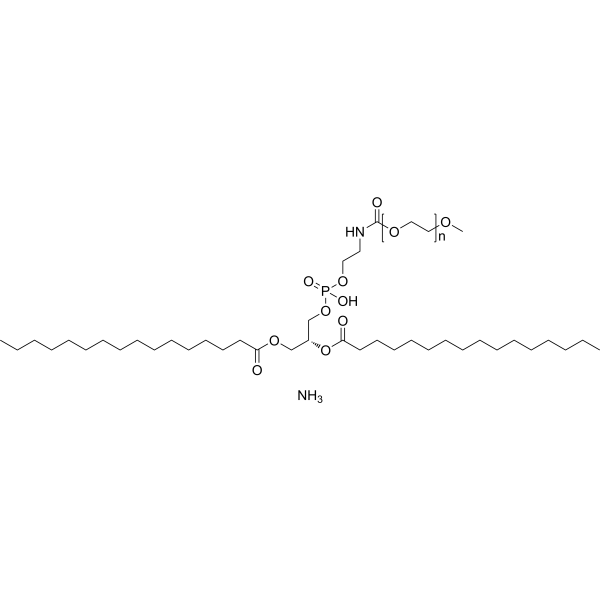
DPPE-PEG5000 (16:0 PEG5000 PE) is a polymer-lipid conjugate and LipoParticle stabilizer with a PEG chain of 5,000 g/mol molecular weight attached to its polar head, and it can be internalized by biological membranes. DPPE-PEG5000 enables LipoParticle to maintain colloidal stability after 20-fold dilution in PBS or cell culture medium, and prevents aggregate formation during lyophilization and rehydration. DPPE-PEG5000 helps enhance the non-cytotoxic property of LipoParticle formulations against human osteoblasts. DPPE-PEG5000 serves as a PEG lipid functional end group for synthesizing liposomes (LPs), is used in the design of conjugated polymer nanoparticles, and applies to research related to bone and joint infections .
loading...
    loading...
Cat. No.: HY-150220
CAS No.: 125401-63-0
Purity:  ≥97.0%
Target:  

Liposome

Research Areas:  

Cancer

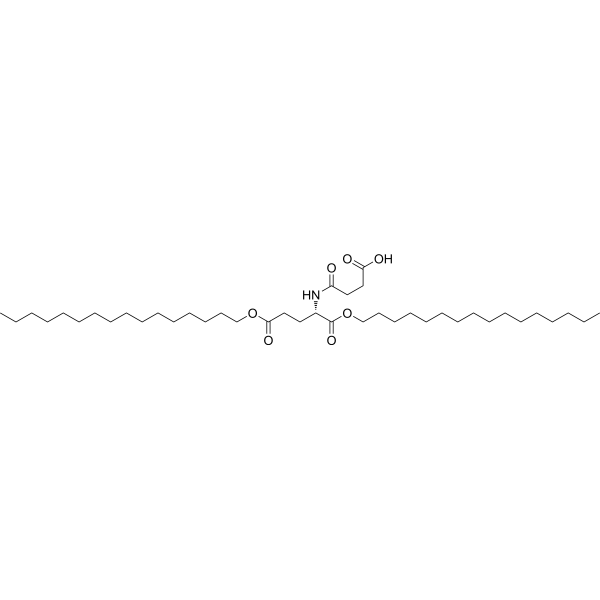
1,5-Dihexadecyl N-(3-carboxy-1-oxopropyl)-L-glutamate is a carboxylic acid lipid targeting agent. 1,5-Dihexadecyl N-(3-carboxy-1-oxopropyl)-L-glutamate serves as a carboxylic acid lipid substitute for phosphatidylserine and is used to control liposome surface modification, and the modified liposomes exhibit in vivo compound release behavior similar to that of unmodified liposomes. Liposomes containing 1,5-Dihexadecyl N-(3-carboxy-1-oxopropyl)-L-glutamate specifically target bone marrow. 1,5-Dihexadecyl N-(3-carboxy-1-oxopropyl)-L-glutamate is used in the study of breast cancer .
loading...
    loading...
Cat. No.: HY-115415
CAS No.: 108321-18-2
Purity:  ≥98.0%
Target:  

Liposome

Research Areas:  

Others

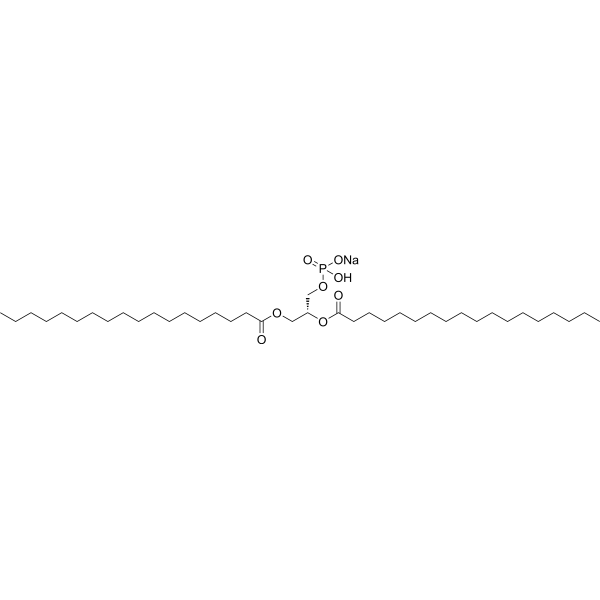
1,2-Distearoyl-sn-glycero-3-phosphate, sodium salt is a phospholipid commonly used as a component of liposome formulations and drug delivery systems. 1,2-Distearoyl-sn-glycero-3-phosphate, sodium salt has unique chemical properties that make it an effective tool for encapsulating drugs and delivering them to specific targets in the body. It acts as a stabilizer and emulsifier, which can improve the solubility and bioavailability of drugs.
loading...
    loading...
Cat. No.: HY-144022
CAS No.: 96326-74-8
Purity:  ≥98.0%
Target:  

Liposome

Research Areas:  

Others

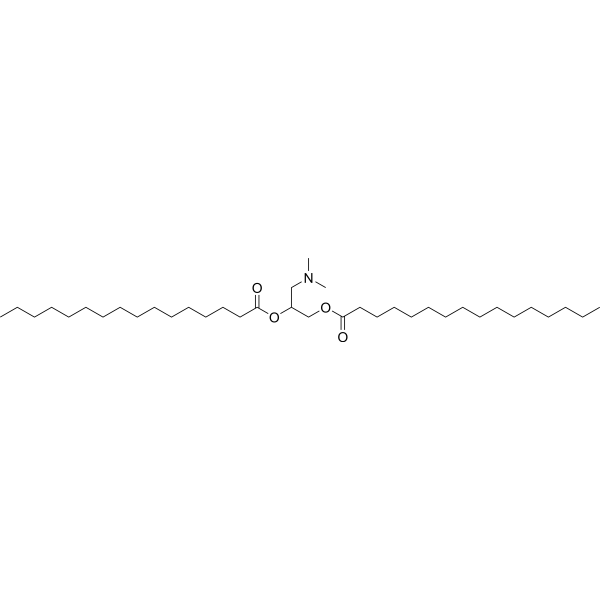
16:0 DAP is an ionizable cationic lipid. 1,2-dipalmitoyl-3-dimethylammonium-propane serves as a barcode lipid, enabling LC-MS quantification in ocular tissues .
loading...
    loading...
Cat. No.: HY-177849
Synonyms: Amphotericin B liposome
Research Areas:  

Infection

Liposomal Amphotericin B (Amphotericin B liposome) is a liposomal formulation of Amphotericin B (HY-B0221) that can cross the blood-brain barrier. Liposomal Amphotericin B binds to fungal cell walls and releases Amphotericin B to bind Ergosterol (HY-N0181), inducing pore formation, ion leakage, and fungal cell death. Liposomal Amphotericin B exhibits fungicidal activity against a broad spectrum of fungal pathogens, also shows activity against Leishmania, and the liposomal formulation has lower acute and chronic toxicity as well as a lower risk of fungal resistance .
loading...
    loading...
Cat. No.: HY-125619
CAS No.: 19191-91-4
Purity:  99.86%
Target:  

Liposome

Research Areas:  

Others

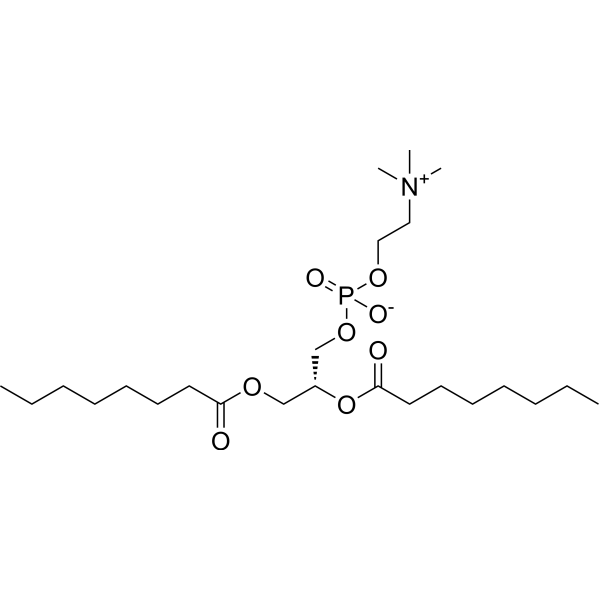
1,2-dioctanoyl-sn-glycero-3-phosphocholine, is a phospholipid commonly used as a component of liposome formulations and drug delivery systems. 1,2-dioctanoyl-sn-glycero-3-phosphocholine has unique chemical properties that allow it to form stable bilayers and vesicles, allowing drug encapsulation and delivery to specific targets in the body. It acts as a stabilizer and emulsifier, which can improve the solubility and bioavailability of drugs.
loading...
    loading...
Cat. No.: HY-185588
Research Areas:  

Others

Anionic Liposomes (DOPG, 10mM) is a Phosphatidylglycerol (PG)-based-100% DOPG formulation. Anionic Liposomes (DOPG, 10mM) can be used for drug delivery and lipid-protein interactions.
loading...
    loading...
Cat. No.: HY-177191
CAS No.: 185463-22-3
Synonyms: L-α-Dimyristoylphosphatidylglycerol; 1,2-Dimyristoyl-sn-glycero-3-phosphoglycerol
Target:  

Liposome

Research Areas:  

Others

DMPG (L-α-Dimyristoylphosphatidylglycerol; 1,2-Dimyristoyl-sn-glycero-3-phosphoglycerol) is a phospholipid that can be used for preparing formulations such as liposomes or gels. DMPG can be used in the research of drug delivery .
loading...
    loading...
Cat. No.: HY-W332450
CAS No.: 126-75-0
Research Areas:  

Infection

Demeton-S is an organophosphate insecticide. Demeton-S inhibits butyrylcholinesterase and acetylcholinesterase activity .
loading...
    loading...
Cat. No.: HY-160713
CAS No.: 27297-42-3
Synonyms: NSSL-BMS
Betamethasone succinate (NSSL-BMS) is a nano-formulation that can cross the blood-brain barrier. Betamethasone succinate is prepared by encapsulating the Betamethasone (HY-13570) semi-succinate in PEG-liposomes. Betamethasone succinate utilizes the enhanced permeation and retention effects of liposomes to target and deliver the potent glucocorticoid to the inflammatory sites. Betamethasone succinate inhibits the secretion of pro-inflammatory cytokines (such as TNF-α and IL-6) while maintaining the level of anti-inflammatory cytokine TGF-β. Betamethasone succinate can be used in the research of arthritis and cerebral malaria .
loading...
    loading...
Cat. No.: HY-185404
Target:  

Liposome

Research Areas:  

Others

DSPE-PEG8-OH is a monodisperse lipid-polyethylene glycol conjugate featuring a hydrophobic 1,2-distearoyl-sn-glycero-3-phosphoethanolamine (DSPE) anchor, an 8-unit discrete (PEG8) spacer, and a terminal hydroxyl (-OH) group. DSPE-PEG8-OH is primarily used in liposome formulation, nanoparticle surface modification, and targeted drug delivery systems.
loading...
    loading...
Cat. No.: HY-15772G
CAS No.: 1421373-65-0
Synonyms: AZD-9291 (GMP); Mereletinib (GMP)
Osimertinib (AZD-9291; Mereletinib) GMP is the GMP level of Osimertinib (HY-15772). GMP small molecules works appropriately as an auxiliary reagent for cell research manufacture. Osimertinib GMP is an inhibitor that selectively targets EGFR T790M and activated EGFR mutants. Osimertinib GMP exerts multiple anti-tumor mechanisms, including radiosensitization, induction of apoptosis and ferroptosis, as well as inhibition of cancer stemness. Osimertinib GMP suppresses EGFR nuclear translocation and downstream survival signaling pathways, significantly reduces cell viability and lipid droplet content, and also exerts synergistic effects with radiotherapy or specific targeted agents to effectively overcome drug resistance and radioresistance. Formulations of Osimertinib GMP modified with liposomes or iRGD enable sustained release, tumor-specific accumulation, and breakthrough of the blood-brain barrier limitation. Osimertinib GMP can be used in research related to radioresistant glioblastoma and non-small cell lung cancer .
loading...
    loading...
Cat. No.: HY-15772GL
CAS No.: 1421373-65-0
Synonyms: AZD-9291 (GMP Like); Mereletinib (GMP Like)
Osimertinib (AZD-9291; Mereletinib) GMP Like is the GMP Like level of Osimertinib (HY-15772). GMP Like small molecules works appropriately as an auxiliary reagent for cell research manufacture. Osimertinib GMP Like is an inhibitor that selectively targets EGFR T790M and activated EGFR mutants. Osimertinib GMP Like exerts multiple anti-tumor mechanisms, including radiosensitization, induction of apoptosis and ferroptosis, as well as inhibition of cancer stemness. Osimertinib GMP Like suppresses EGFR nuclear translocation and downstream survival signaling pathways, significantly reduces cell viability and lipid droplet content, and also exerts synergistic effects with radiotherapy or specific targeted agents to effectively overcome drug resistance and radioresistance. Formulations of Osimertinib GMP Like modified with liposomes or iRGD enable sustained release, tumor-specific accumulation, and breakthrough of the blood-brain barrier limitation. Osimertinib GMP Like can be used in research related to radioresistant glioblastoma and non-small cell lung cancer .
loading...
    loading...
  • 1

