



Ingenol Mebutate
Based on 6 publication(s) in Google Scholar
Ingenol Mebutate is an active ingredient in Euphorbia peplus, acts as a potent PKC modulator, with Kis of 0.3, 0.105, 0.162, 0.376, and 0.171 nM for PKC-α, PKC-β, PKC-γ, PKC-δ, and PKC-ε, respectively, and has antiinflammatory and antitumor activity.
Nur für Forschungszwecke. Wir verkaufen nicht an Patienten.
- Reinheit : 99.55%
- CAS. Nr.: 75567-37-2
- Formel: C25H34O6
- Molecular Weight:430.53
-
Speicherung:Powder -20°C, 3 years , 4°C, 2 years ; In solvent -80°C, 2 years , -20°C, 1 year

To place orders, for customer services and technical support, please contact: MedChemExpress USA
Tel: 609-228-6898 E-mail: [email protected] [email protected]


-
 Biologische Aktivität
-
Chemical Information
-
Lösungsmittel & Löslichkeit
- Protokoll
- Reinheit & Dokumentation
- Verweise
-
 Help & FAQs


-
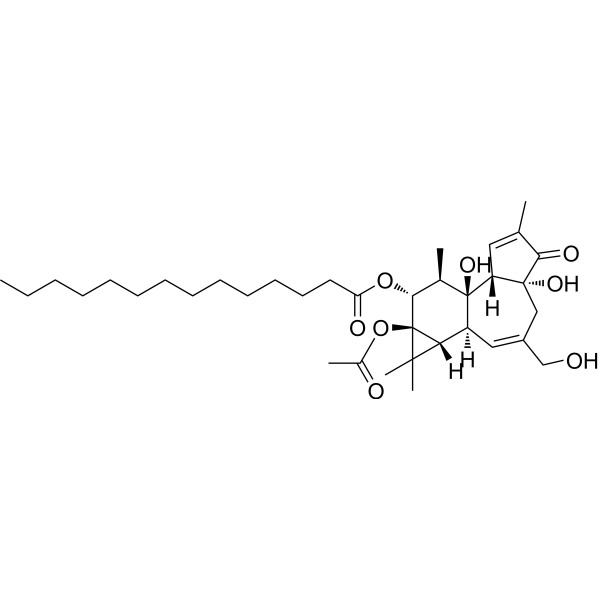
HY-18739
Phorbol 12-myristate 13-acetatePKC Activator -
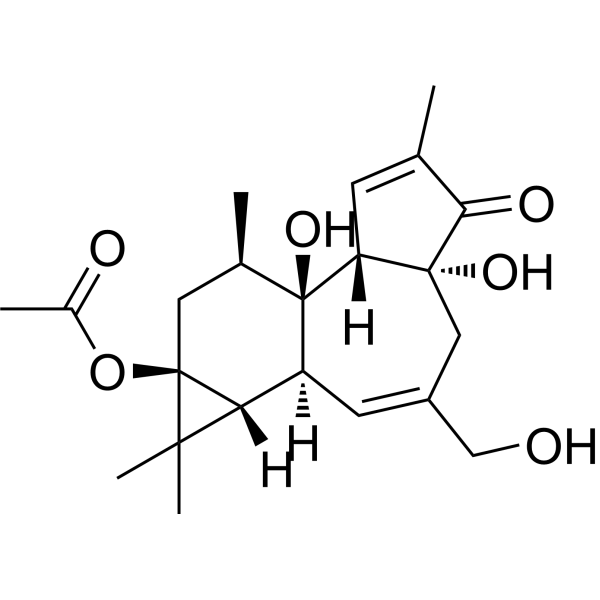
HY-107421
ProstratinPKC Activator -
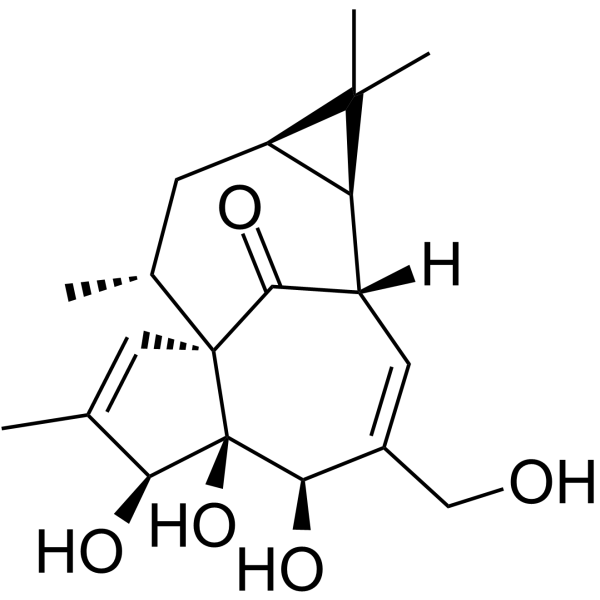
HY-N0865
IngenolPKC Activator -
HY-13689
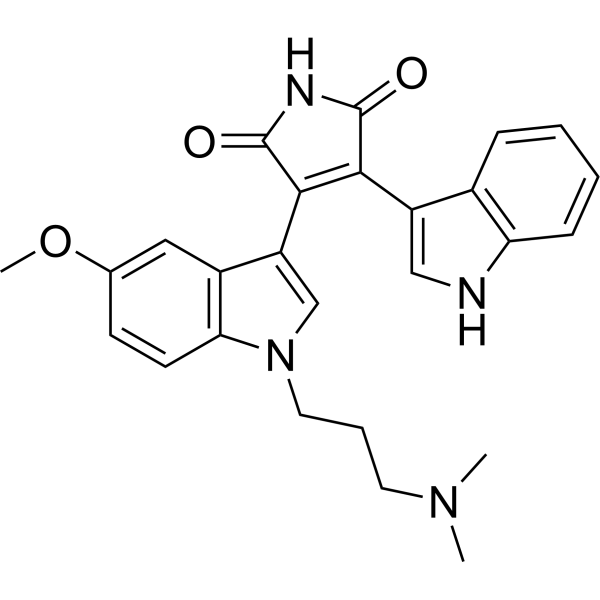
Go 6983PKC Inhibitor -
HY-13867
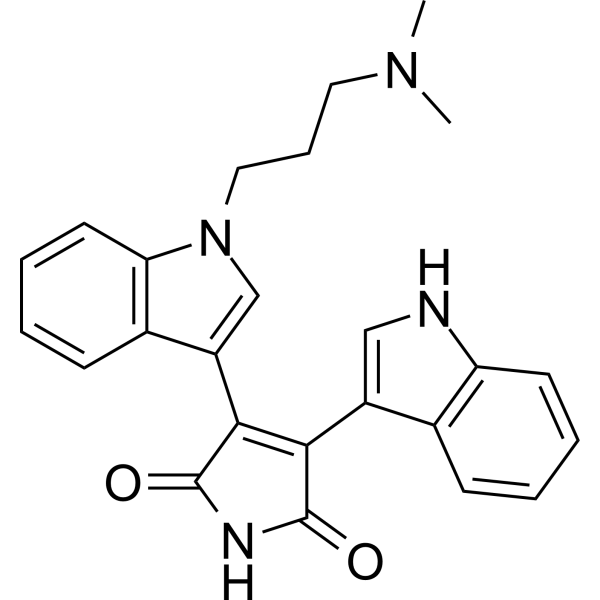
Bisindolylmaleimide IPKC Inhibitor -
HY-10343
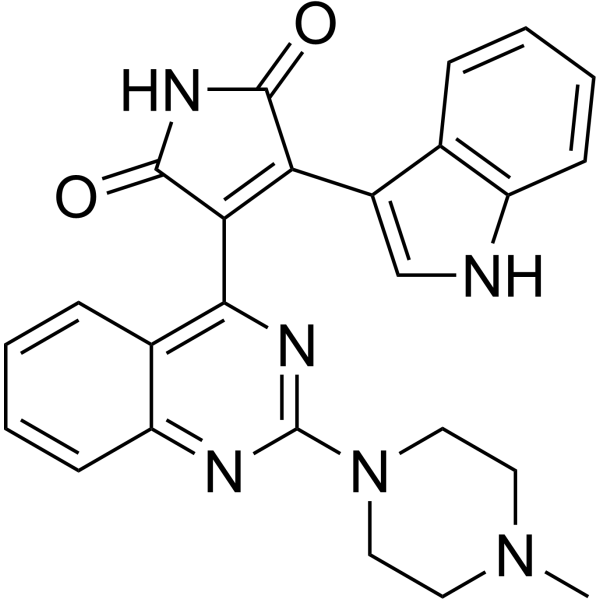
SotrastaurinPan-PKC Inhibitor -
HY-15141
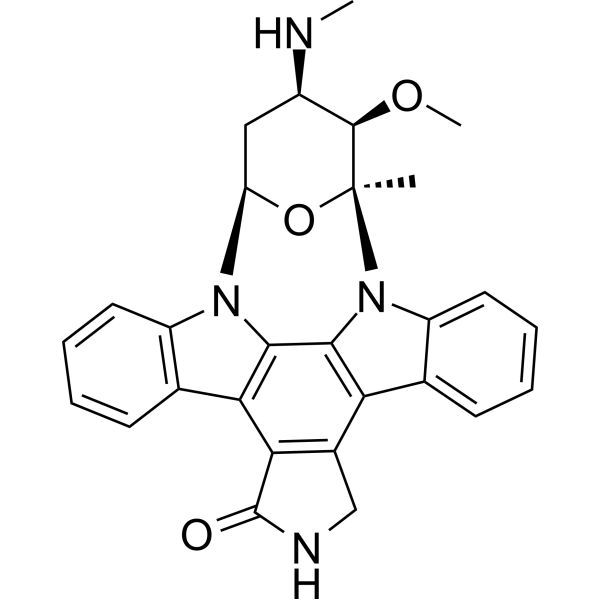
StaurosporinePKC/PKA Inhibitor -
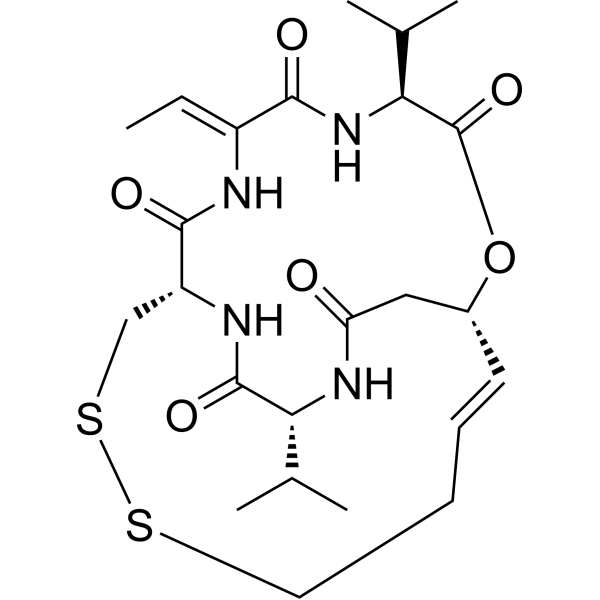
HY-15149
RomidepsinHDAC Inhibitor -
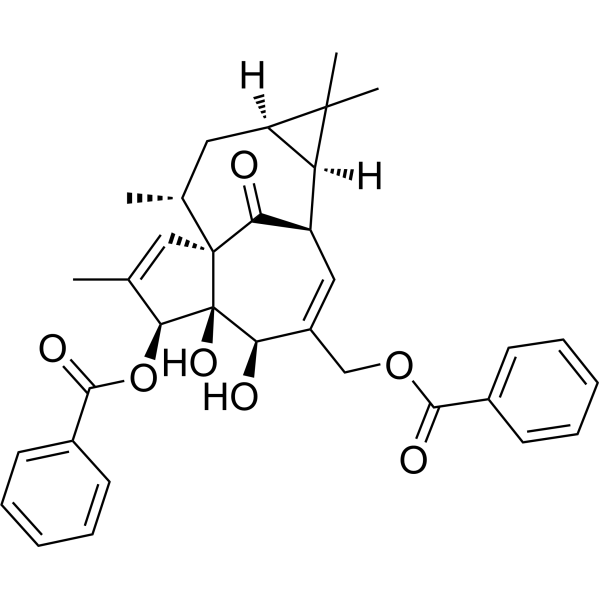
HY-137295
Ingenol 3,20-dibenzoateApoptosis Inducer -
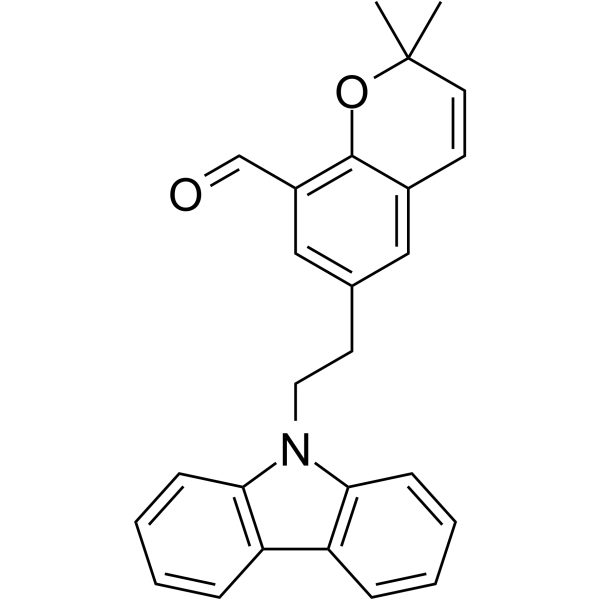
HY-117800
BJE6-106PKCδ Inhibitor -
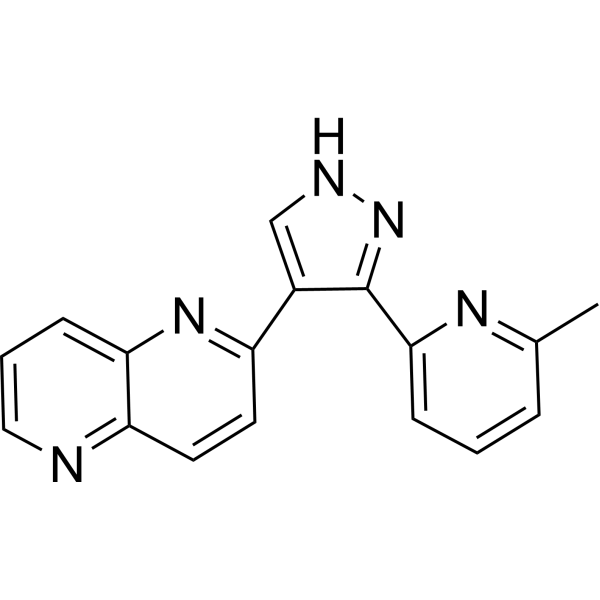
HY-13012
RepSoxTGFβR-1/ALK5 Inhibitor -
HY-15371
ForskolinAdenylate Cyclase Activator
Publications Citing Use of MedChemExpress (MCE) Ingenol Mebutate
More Customer Validation & Images

-
WB
-
In Vivo Efficacy Study
-
In Vivo Efficacy Study
-
IHC
-
In Vivo Efficacy Study


Biologische Aktivität
Beschreibung
IC50 & Target
[1]|
PKC-β 0.105 nM (Ki) |
PKC-γ 0.162 nM (Ki) |
PKC-ε 0.171 nM (Ki) |
PKC-α 0.3 nM (Ki) |
PKC-δ 0.376 nM (Ki) |
Cellular Effect
|
Cell Line

|
Type | Value | Description | References |
|---|---|---|---|---|
| A549 | IC50 |
>50 μM
Compound: Ingenol mebutate
|
Antiproliferative activity against human A549 cells assessed as inhibition of cell growth incubated for 24 to 72 hrs by CCK8 assay
Antiproliferative activity against human A549 cells assessed as inhibition of cell growth incubated for 24 to 72 hrs by CCK8 assay
|
[PMID: 38552425] |
| HepG2 | IC50 |
>50 μM
Compound: Ingenol mebutate
|
Antiproliferative activity against human HepG2 cells assessed as inhibition of cell growth incubated for 24 to 72 hrs by CCK8 assay
Antiproliferative activity against human HepG2 cells assessed as inhibition of cell growth incubated for 24 to 72 hrs by CCK8 assay
|
[PMID: 38552425] |
| Keratinocyte | EC50 |
10.3 nM
Compound: 1, PEP005, Ingenol mebutate
|
Induction of IL-8 release in human primary epidermal keratinocytes after 6 hrs by HTRF assay
Induction of IL-8 release in human primary epidermal keratinocytes after 6 hrs by HTRF assay
|
[PMID: 23993332] |
| Keratinocyte | EC50 |
10.3 nM
Compound: 1, PEP005, Picato, ingenol mebutate
|
Induction of proimflammatory activity in human primary epidermal keratinocytes assessed as IL-8 release after 6 hrs
Induction of proimflammatory activity in human primary epidermal keratinocytes assessed as IL-8 release after 6 hrs
|
[PMID: 24332494] |
| Keratinocyte | EC50 |
11.2 nM
Compound: 1, PEP005, Ingenol mebutate
|
Induction of TNFalpha release in human primary epidermal keratinocytes after 6 hrs
Induction of TNFalpha release in human primary epidermal keratinocytes after 6 hrs
|
[PMID: 23993332] |
| Keratinocyte | EC50 |
11.2 nM
Compound: 1, PEP005, Picato, ingenol mebutate
|
Induction of proimflammatory activity in human primary epidermal keratinocytes assessed as TNFalpha release after 6 hrs
Induction of proimflammatory activity in human primary epidermal keratinocytes assessed as TNFalpha release after 6 hrs
|
[PMID: 24332494] |
| MT4 | CC50 |
>9.3 μM
Compound: 22
|
Cytotoxicity against human MT4 cells after 3 days by CytoTox-Glo assay
Cytotoxicity against human MT4 cells after 3 days by CytoTox-Glo assay
|
[PMID: 30031972] |
| MT4 | EC50 |
17 nM
Compound: 27
|
Antiviral activity against HIV1 3B infected in MT4 cells assessed as cell viability after 5 days by MTT assay
Antiviral activity against HIV1 3B infected in MT4 cells assessed as cell viability after 5 days by MTT assay
|
[PMID: 25970561] |
| MT4 | EC50 |
9 nM
Compound: 27
|
Antiviral activity against HIV2 ROD infected in MT4 cells assessed as cell viability after 5 days by MTT assay
Antiviral activity against HIV2 ROD infected in MT4 cells assessed as cell viability after 5 days by MTT assay
|
[PMID: 25970561] |
| NCI-H460 | IC50 |
>50 μM
Compound: Ingenol mebutate
|
Antiproliferative activity against human NCI-H460 cells assessed as inhibition of cell growth incubated for 24 to 72 hrs by CCK8 assay
Antiproliferative activity against human NCI-H460 cells assessed as inhibition of cell growth incubated for 24 to 72 hrs by CCK8 assay
|
[PMID: 38552425] |
| U-937 | CC50 |
>200 nM
Compound: Ingenol 3A
|
Cytotoxicity against human U937 cells assessed as reduction in cell viability after 48 hrs by CellTiter-Glo luminescent cell viability assay
Cytotoxicity against human U937 cells assessed as reduction in cell viability after 48 hrs by CellTiter-Glo luminescent cell viability assay
|
[PMID: 29541372] |
| Vero | EC50 |
22.9 μM
Compound: 27
|
Antiviral activity against chikungunya virus Indian ocean strain 899 infected in Vero cells assessed as virus-induced cytopathic effect after 6 to 7 days
Antiviral activity against chikungunya virus Indian ocean strain 899 infected in Vero cells assessed as virus-induced cytopathic effect after 6 to 7 days
|
[PMID: 25970561] |
In Vitro
Ingenol Mebutate (Ingenol 3-angelate) is an active ingredient in Euphorbia peplus, acting as a potent PKC activator, with Kis of 0.3, 0.105, 0.162, 0.376, and 0.171 nM for PKC-α, PKC-β, PKC-γ, PKC-δ, and PKC-ε, respectively. Ingenol Mebutate also EC50s of 13 ± 2.4 nM (PKC-α), 4.37 ± 0.4 nM (PKC-βI), 10.5 ± 2.2 nM (PKC-βII), 38.6 ± 2.9 nM (PKC-δ), 1.08 ± 0.01 nM (PKC-ε), 0.9 ± 0.13 nM (PKC-μ) in WEHI-231 cells, 198 ± 12.5 nM (PKC-α), 69.1 ± 8.2 nM (PKC-βI), 4.6 ± 0.4 nM (PKC-ε) and 1 nM (PKC-μ) in HOP-92 cells, 635 ± 245 nM (PKC-α), 146 ± 35 nM (PKC-βI), 4.7 ± 0.7 nM (PKC-δ), 1.1 ± 0.5 nM (PKC-ε), and 30 nM (PKC-μ) in Colo-205 cells. Ingenol Mebutate sensitizes WEHI-231 cells, HOP-92 and Colo-205 cells, with IC50s of 1.41 ± 0.255 nM, 3.24 ± 2.01 nM, and 11.9 ± 1.307 nM, respectively[1]. Ingenol Mebutate (PEP005; 20 nM) actions are PKC-δ dependent, induces apoptosis in primary AML marrow blasts but not in normal myeloblasts[2]. Ingenol Mebutate (PEP005) activates PKCδ and inhibits PKCα. Colo205-R cells (IC50: >10 μM) are >300-fold more resistant to Ingenol Mebutate than parental Colo205-S cells[3].
MedChemExpress (MCE) has not independently confirmed the accuracy of these methods. They are for reference only.
Clinical Trial
| NCT Number | Sponsor | Condition | Start Date |
Phase
|
|---|---|---|---|---|
| NCT01329991 | Plexxikon| | 2011-05 | PHASE1 |


Chemical Information
-
CAS. Nr. 75567-37-2
-
Appearance Solid
-
Molecular Weight 430.53
-
Formel C25H34O6
-
Color White to off-white
-
SMILES
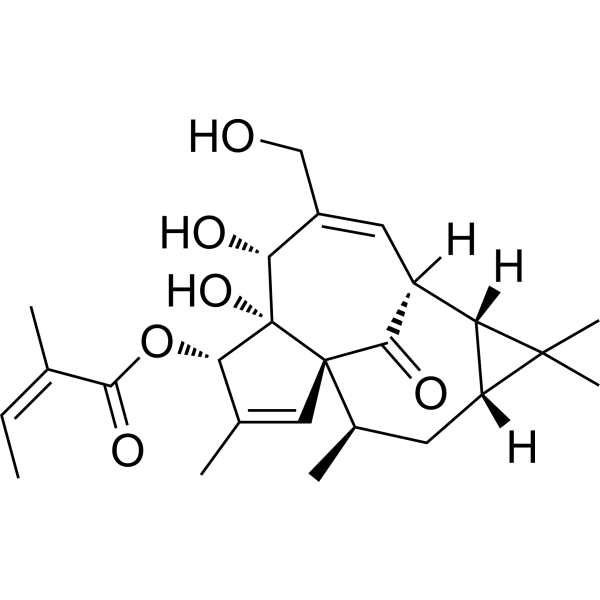
C/C=C(C)\C(O[C@H]1C(C)=C[C@]23[C@]1(O)[C@H](O)C(CO)=C[C@@](C3=O)([H])[C@@]4([H])[C@@](C4(C)C)([H])C[C@H]2C)=O
-
Synonyms
Ingenol 3-angelate; PEP005
-
Structure Classification
-
Initial Source
-
Versand
Room temperature in continental US; may vary elsewhere.
-
Speicherung
Powder -20°C 3 years 4°C 2 years In solvent -80°C 2 years -20°C 1 year


Publications (6)
-
Journal Impact Factor
-
Most Recent
-
Cell Rep Med
DDX5 super-enhancer promotes vasculogenic mimicry formation and metastasis in nasopharyngeal carcinoma by enhancing ADAM10 transcription. [Abstract]2025 Jun 17;6(6):102146. PMID: 40412383
Ingenol Mebutate purchased from MedChemExpress. Usage Cited in: Cell Rep Med. 2025 Jun 17;6(6):102146. [Abstract]
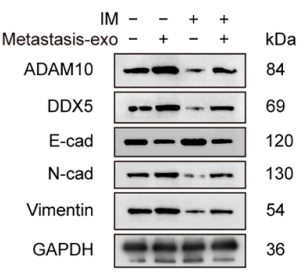
Western blot analysis of DDX5, ADAM10, and EMT-related markers in CNE2 cells treated with metastasis-exo or Ingenol Mebutate (IM) alone, or their combination (3 independent experiments).
Ingenol Mebutate purchased from MedChemExpress. Usage Cited in: Cell Rep Med. 2025 Jun 17;6(6):102146. [Abstract]
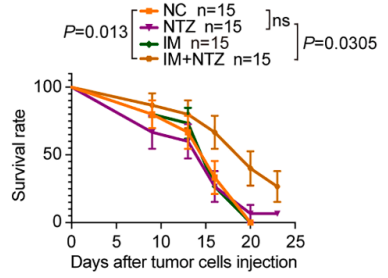
Ingenol Mebutate (IM). Kaplan-Meier analysis of overall survival (log rank test, n = 15 per group).
Ingenol Mebutate purchased from MedChemExpress. Usage Cited in: Cell Rep Med. 2025 Jun 17;6(6):102146. [Abstract]
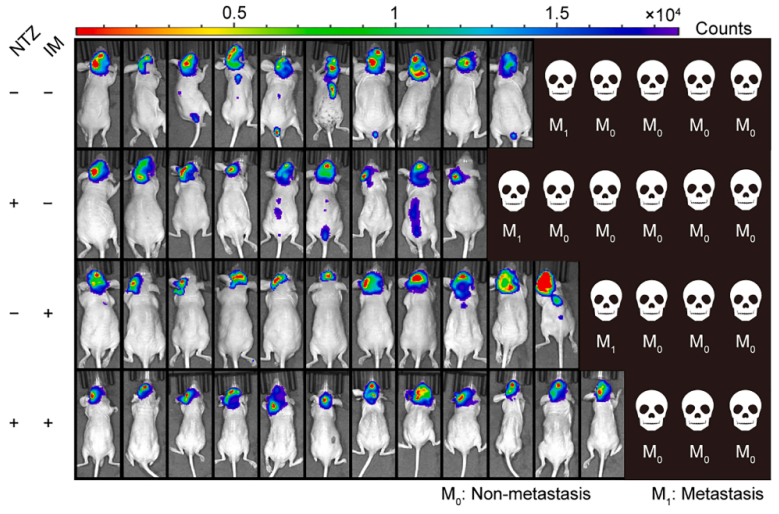
Ingenol Mebutate (IM). Metastasis of nasopharyngeal carcinoma orthotopic xenografts of orthotopic mouse model was visualized using BLI, on day 14 (n = 15 per group).
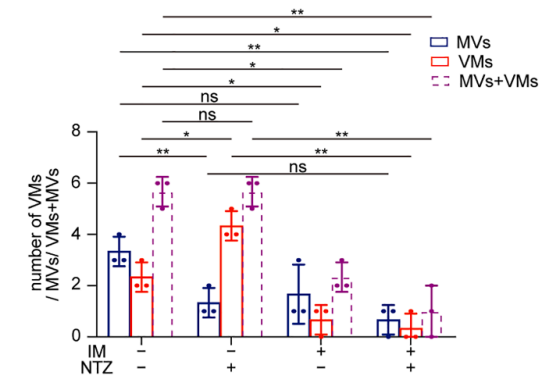
Ingenol Mebutate purchased from MedChemExpress. Usage Cited in: Cell Rep Med. 2025 Jun 17;6(6):102146. [Abstract]
Ingenol Mebutate (IM). Immunohistochemistry analysis of PAS and CD31 double staining of orthotopic xenografts and ADAM10 and EMT-related marker expression in them. Quantification of VM, MV, and VM + MV numbers (H, n = 3 per group).
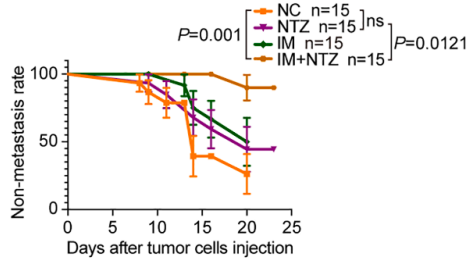
Ingenol Mebutate purchased from MedChemExpress. Usage Cited in: Cell Rep Med. 2025 Jun 17;6(6):102146. [Abstract]
Ingenol Mebutate (IM). Kaplan-Meier analysis of overall metastasis (log rank test, n = 15 per group).
-
EMBO J
2024 Nov;43(21):5057-5084. PMID: 39284914 -
Sci Data
High-throughput drug screening identifies novel therapeutics for Low Grade Serous Ovarian Carcinoma. [Abstract]2024 Sep 19;11(1):1024. PMID: 39300112 -
J Proteome Res
Chemoproteomics Reveals FAM114A2 as a Functional Target of Wikstroelide E for Reversal of HIV-1 Latency. [Abstract]2025 Oct 23. PMID: 41131870 -
-
bioRxiv
piTracer - Automatic reconstruction of molecular cascades for the identification of synergistic drug targets. [Abstract]2023 Apr 9:2023.04.08.535933. PMID: 37066188


Lösungsmittel & Löslichkeit
In Vitro:
DMSO : ≥ 100 mg/mL (232.27 mM; Hygroscopic DMSO has a significant impact on the solubility of product, please use newly opened DMSO)
* "≥" means soluble, but saturation unknown.
Please refer to the solubility information to select the appropriate solvent. Once prepared, please aliquot and store the solution to prevent product inactivation from repeated freeze-thaw cycles.
Storage method and period of stock solution: -80°C, 2 years; -20°C, 1 year. When stored at -80°C, please use it within 2 years. When stored at -20°C, please use it within 1 year.
Please refer to the solubility information to select the appropriate solvent. Once prepared, please aliquot and store the solution to prevent product inactivation from repeated freeze-thaw cycles.
Storage method and period of stock solution: -80°C, 2 years; -20°C, 1 year. When stored at -80°C, please use it within 2 years. When stored at -20°C, please use it within 1 year.
Konzentration (Stammlösung) × Volumen (Stammlösung) = Konzentration (Ziellösung) × Volumen (Ziellösung)
In Vivo:
Select the appropriate dissolution method based on your experimental animal and administration route.
- For the following dissolution methods, please ensure to first prepare a clear stock solution using an In Vitro approach and then sequentially add co-solvents:
- To ensure reliable experimental results, the clarified stock solution can be appropriately stored based on storage conditions. As for the working solution for In Vivo experiments, it is recommended to prepare freshly and use it on the same day.
- The percentages shown for the solvents indicate their volumetric ratio in the final prepared solution. If precipitation or phase separation occurs during preparation, heat and/or sonication can be used to aid dissolution.
Add each solvent one by one: 10% DMSO 40% PEG300 5% Tween-80 45% Saline
Solubility: ≥ 2.5 mg/mL (5.81 mM); Clear solution
This protocol yields a clear solution of ≥ 2.5 mg/mL (saturation unknown).
Taking 1 mL working solution as an example, add 100 μL DMSO stock solution (25.0 mg/mL) to 400 μL PEG300, and mix evenly; then add 50 μL Tween-80 and mix evenly; then add 450 μL Saline to adjust the volume to 1 mL.
Preparation of Saline: Dissolve 0.9 g sodium chloride in ddH₂O and dilute to 100 mL to obtain a clear Saline solution.
Add each solvent one by one: 10% DMSO 90% (20% SBE-β-CD in Saline)
Solubility: ≥ 2.5 mg/mL (5.81 mM); Clear solution
This protocol yields a clear solution of ≥ 2.5 mg/mL (saturation unknown).
Taking 1 mL working solution as an example, add 100 μL DMSO stock solution (25.0 mg/mL) to 900 μL 20% SBE-β-CD in Saline, and mix evenly.
Preparation of 20% SBE-β-CD in Saline (4°C, storage for one week): 2 g SBE-β-CD powder is dissolved in 10 mL Saline, completely dissolve until clear.
In Vivo Dissolution Calculator
Please enter the basic information of animal experiments:
-
-
-
-
Recommended: Prepare an additional quantity of animals to account for potential losses during experiments.
Please enter your animal formula composition:
-
%DMSO +
Recommended: Keep the proportion of DMSO in working solution below 2% if your animal is weak.
-
%+
-
+%Tween-80 + +
-
%Saline +
The co-solvents required include: DMSO, . All of co-solvents are available by MedChemExpress (MCE). , Tween 80. All of co-solvents are available by MedChemExpress (MCE).
Working solution concentration: 0.22 mg/mL
Method for preparing stock solution: mg drug dissolved in μL DMSO. Stock solution concentration: mg/mL.
1. Take μL DMSO stock solution;
2. Add μL .
μL , mix evenly;
3. Then add μL Tween 80, mix evenly;
4. Then add μL
Please ensure that the stock solution in the first step is dissolved to a clear state, and add co-solvents in sequence. You can use ultrasonic heating (ultrasonic cleaner, recommended frequency 20-40 kHz), vortexing, etc. to assist dissolution.


Reinheit & Dokumentation
-
Data Sheet (287 KB)
-
SDS (396 KB)
- English - EN (396 KB)
- Français - FR (396 KB)
- Deutsch - DE (396 KB)
- Norwegian - NO (396 KB)
- Español - ES (396 KB)
- Swedish - SV (396 KB)
- Italian - IT (396 KB)
- Korean - KR (396 KB)
- Portuguese - PT (396 KB)
-
Handling Instructions (2659 KB)
Verweise
[1]. Kedei N, et al. Characterization of the interaction of ingenol 3-angelate with protein kinase C. Cancer Res. 2004 May 1;64(9):3243-55. [Content Brief]
[2]. Hampson P, et al. PEP005, a selective small-molecule activator of protein kinase C, has potent antileukemic activity mediated via the delta isoform of PKC. Blood. 2005 Aug 15;106(4):1362-8. [Content Brief]
[3]. Ghoul A, et al. Epithelial-to-mesenchymal transition and resistance to ingenol 3-angelate, a novel protein kinase C modulator, in colon cancer cells. Cancer Res. 2009 May 15;69(10):4260-9. [Content Brief]


Complete Stock Solution Preparation Table
Please refer to the solubility information to select the appropriate solvent. Once prepared, please aliquot and store the solution to prevent product inactivation from repeated freeze-thaw cycles.
Storage method and period of stock solution: -80°C, 2 years; -20°C, 1 year. When stored at -80°C, please use it within 2 years. When stored at -20°C, please use it within 1 year.
| Optional Solvent | Concentration Solvent Mass | 1 mg | 5 mg | 10 mg | 25 mg |
|---|---|---|---|---|---|
| DMSO | 1 mM | 2.3227 mL | 11.6136 mL | 23.2272 mL | 58.0680 mL |
| 5 mM | 0.4645 mL | 2.3227 mL | 4.6454 mL | 11.6136 mL | |
| 10 mM | 0.2323 mL | 1.1614 mL | 2.3227 mL | 5.8068 mL | |
| 15 mM | 0.1548 mL | 0.7742 mL | 1.5485 mL | 3.8712 mL | |
| 20 mM | 0.1161 mL | 0.5807 mL | 1.1614 mL | 2.9034 mL | |
| 25 mM | 0.0929 mL | 0.4645 mL | 0.9291 mL | 2.3227 mL | |
| 30 mM | 0.0774 mL | 0.3871 mL | 0.7742 mL | 1.9356 mL | |
| 40 mM | 0.0581 mL | 0.2903 mL | 0.5807 mL | 1.4517 mL | |
| 50 mM | 0.0465 mL | 0.2323 mL | 0.4645 mL | 1.1614 mL | |
| 60 mM | 0.0387 mL | 0.1936 mL | 0.3871 mL | 0.9678 mL | |
| 80 mM | 0.0290 mL | 0.1452 mL | 0.2903 mL | 0.7258 mL | |
| 100 mM | 0.0232 mL | 0.1161 mL | 0.2323 mL | 0.5807 mL |


Ingenol Mebutate Related Classifications
HY-B0719 Related Classifications
 Powered by Bioz