



Procarbazine Hydrochloride
Based on 4 publication(s) in Google Scholar
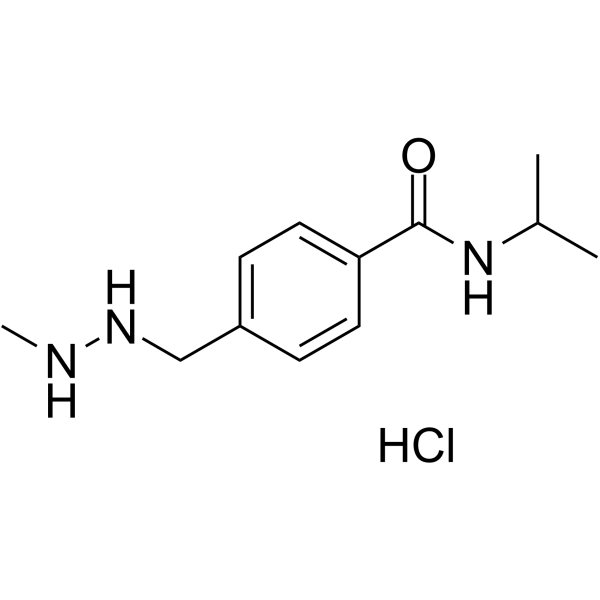
Procarbazine Hydrochloride is an orally active alkylating agent, with anticancer activity. Procarbazine Hydrochloride can be used in Hodgkin's disease research.
For research use only. We do not sell to patients.
- Purity : 99.66%
- CAS No.: 366-70-1
- Formula: C12H20ClN3O
- Molecular Weight:257.76
-
Storage:
4°C, sealed storage, away from moisture
* In solvent : -80°C, 6 months; -20°C, 1 month (sealed storage, away from moisture)

To place orders, for customer services and technical support, please contact: MedChemExpress USA
Tel: 609-228-6898 E-mail: [email protected] [email protected]


-
 Biological Activity
-
Chemical Information
-
Solvent & Solubility
- Purity & Documentation
- References
-
 Help & FAQs


-
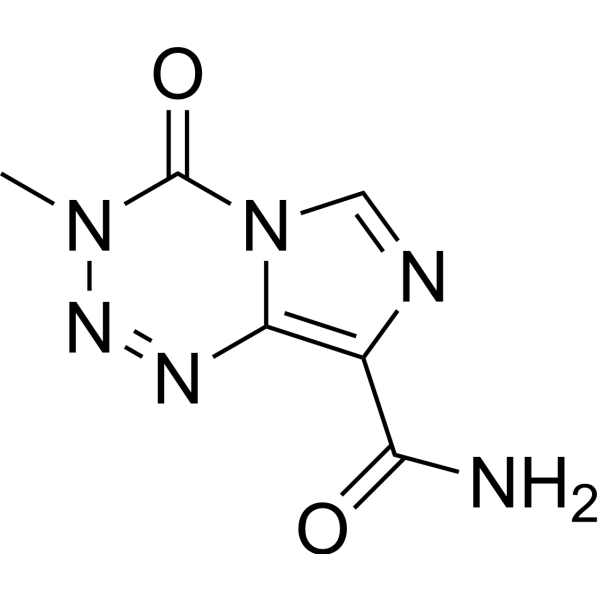
HY-17364
TemozolomideDNA Alkylator -
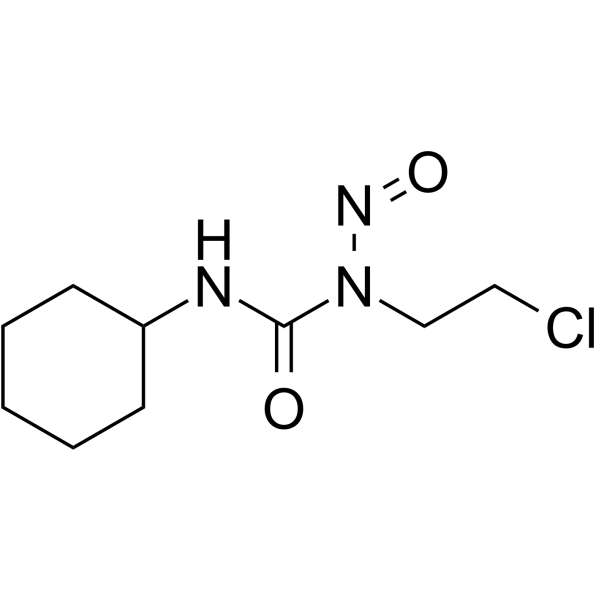
HY-13669
LomustineDNA Alkylator -
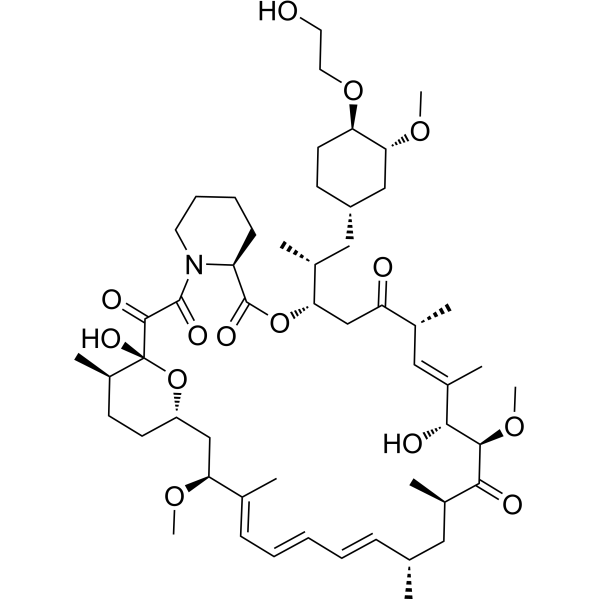
HY-10218
EverolimusmTORC Inhibitor -
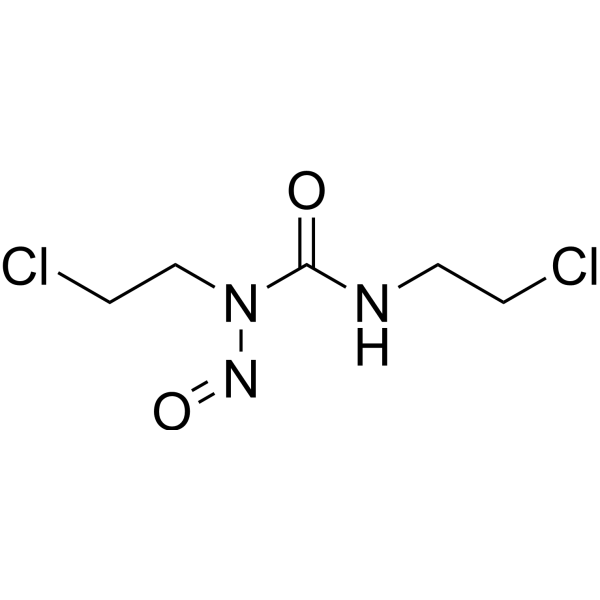
HY-13585
CarmustineDNA/RNA Alkylator -
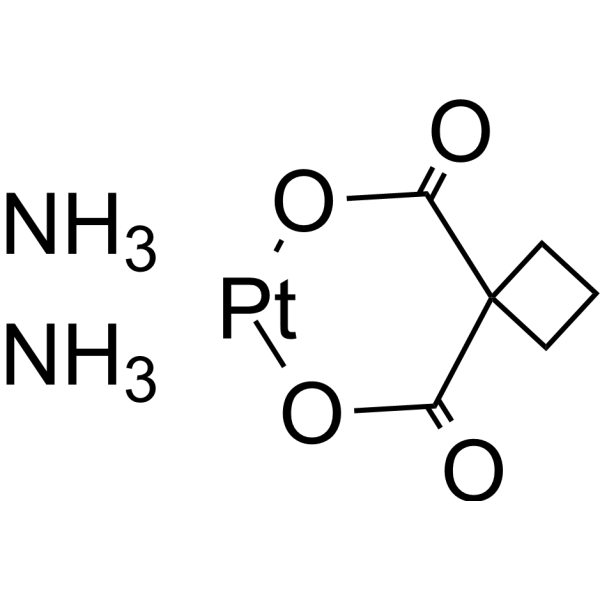
HY-17393
CarboplatinDNA Synthesis Inhibitor -
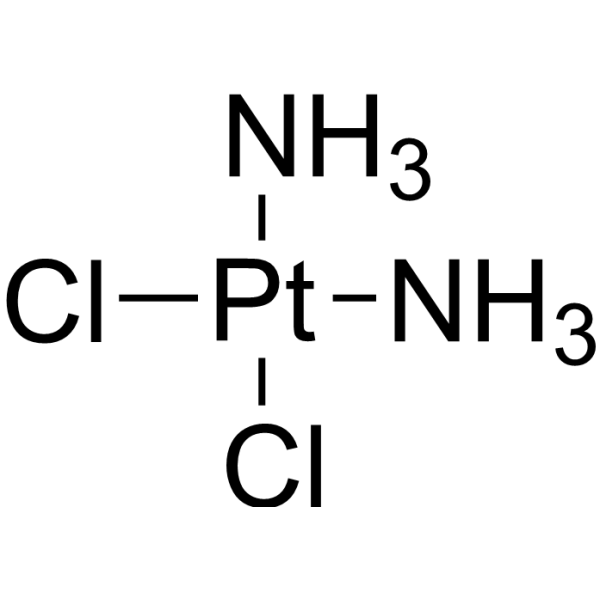
HY-17394
CisplatinDNA Alkylator -
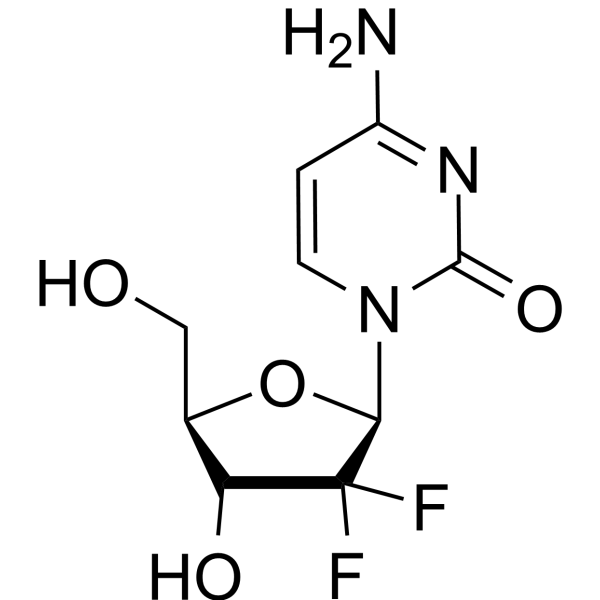
HY-17026
GemcitabineDNA Synthesis Inhibitor -
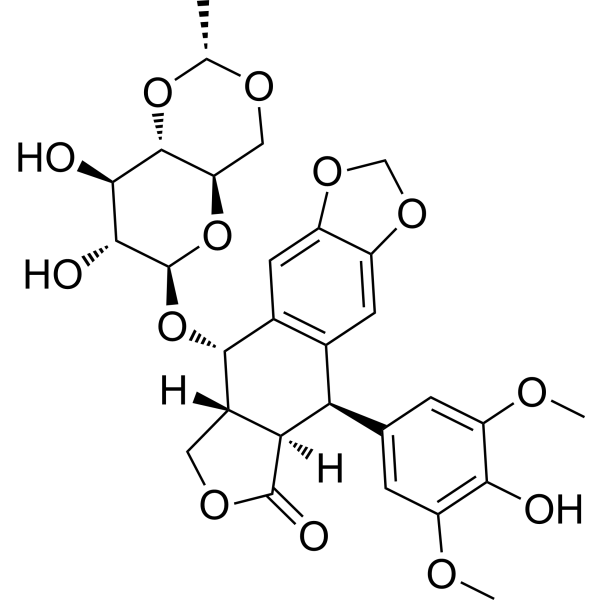
HY-13629
EtoposideTopoisomerase II Inhibitor -
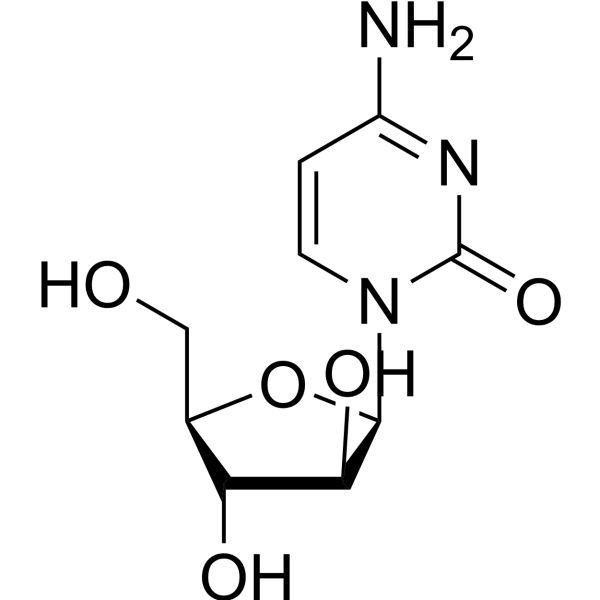
HY-13605
CytarabineDNA Synthesis Inhibitor -
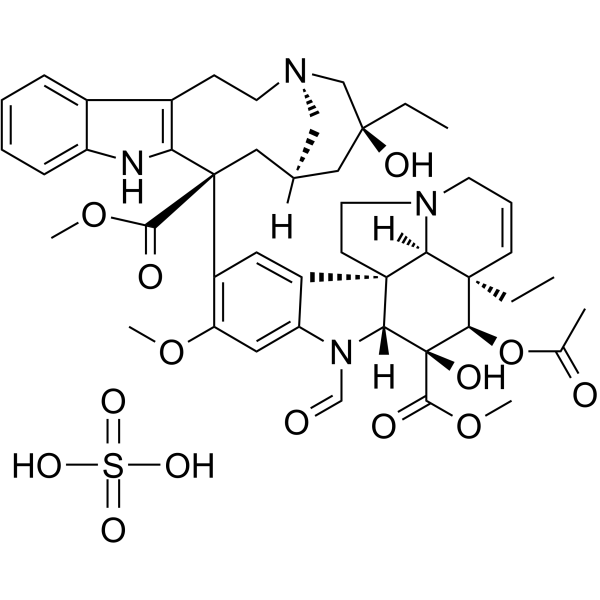
HY-N0488
Vincristine sulfateAntineoplastic Agent -
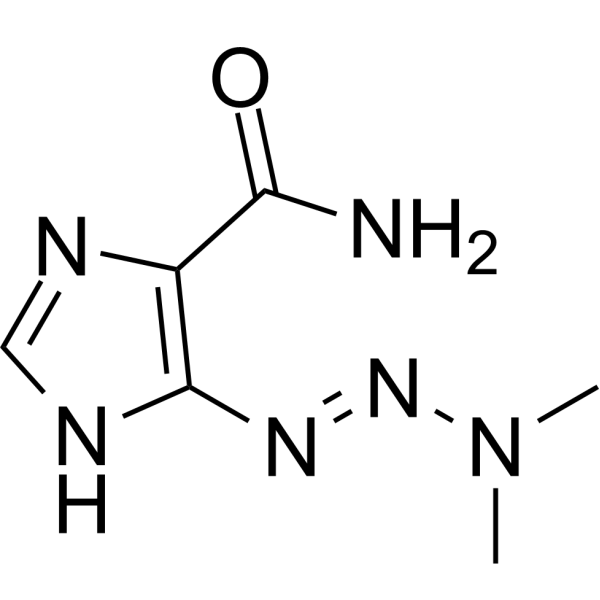
HY-B0078
DacarbazineAnticancer Agent -
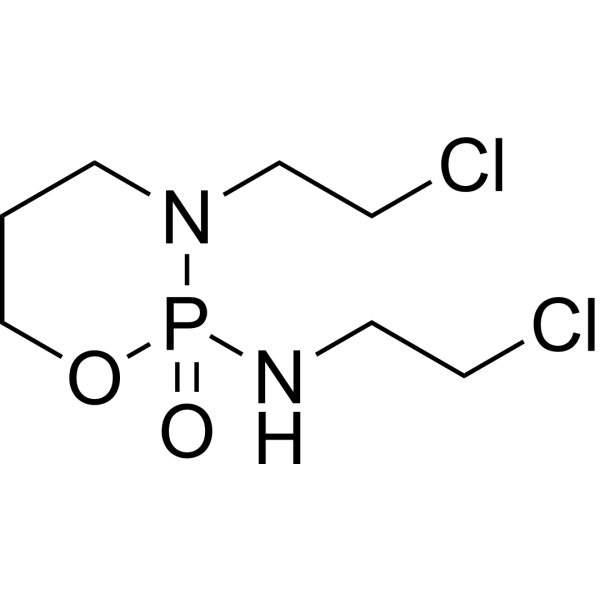
HY-17419
IfosfamideDNA Alkylator/Crosslinker
Publications Citing Use of MedChemExpress (MCE) Procarbazine Hydrochloride
More

Biological Activity
Description
In Vitro
Procarbazine Hydrochloride (5 and 20 nM; 1 h) treatment shows cell survival at various concentrarions[1].
MedChemExpress (MCE) has not independently confirmed the accuracy of these methods. They are for reference only. .
-
Cell Line:L1210 cells
-
Concentration:5 and 20 nM
-
Incubation Time:1 hour
-
Result:Showed 99.3% and 99.9% survival of cells at 5 mM and 20 mM, respectively.
In Vivo
MedChemExpress (MCE) has not independently confirmed the accuracy of these methods. They are for reference only.
-
Animal Model:Male muta mouse (7–8 weeks old)[2]
-
Dosage:50 and 150 mg/kg
-
Administration:Intraperitoneal injection; 50 and 150 mg/kg; once daily; 5 days
-
Result:Increased the MN frequency appreciably, and observed micronucleus induction in the peripheral blood at 50 mg/kg.


Chemical Information
-
CAS No. 366-70-1
-
Appearance Solid
-
Molecular Weight 257.76
-
Formula C12H20ClN3O
-
Color Off-white to light yellow
-
SMILES
O=C(NC(C)C)C1=CC=C(CNNC)C=C1.Cl
-
Shipping
Room temperature in continental US; may vary elsewhere.
-
Storage
4°C, sealed storage, away from moisture
* In solvent : -80°C, 6 months; -20°C, 1 month (sealed storage, away from moisture)


Publications (4)
-
Journal Impact Factor
-
Most Recent
-
Cell Rep Med
CAN-Scan: A multi-omic phenotype-driven precision oncology platform identifies prognostic biomarkers of therapy response for colorectal cancer. [Abstract]2025 Apr 15;6(4):102053. PMID: 40187357 -
Cell Rep Methods
RECOVER identifies synergistic drug combinations in vitro through sequential model optimization. [Abstract]2023 Oct 23;3(10):100599. PMID: 37797618 -
J Mol Med (Berl)
2019 Aug;97(8):1183-1193. PMID: 31201471 -
Mol Imaging Biol
Evaluation of Glycolytic Response to Multiple Classes of Anti-glioblastoma Drugs by Noninvasive Measurement of Pyruvate Kinase M2 Using [18F]DASA-23. [Abstract]2020 Feb;22(1):124-133. PMID: 30989436


Solvent & Solubility
In Vitro:
H2O : 100 mg/mL (387.96 mM; Need ultrasonic)
DMSO : 16.67 mg/mL (64.67 mM; Need ultrasonic; Hygroscopic DMSO has a significant impact on the solubility of product, please use newly opened DMSO)
Please refer to the solubility information to select the appropriate solvent. Once prepared, please aliquot and store the solution to prevent product inactivation from repeated freeze-thaw cycles.
Storage method and period of stock solution: -80°C, 6 months; -20°C, 1 month (sealed storage, away from moisture). When stored at -80°C, please use it within 6 months. When stored at -20°C, please use it within 1 month.
* Note: If you choose water as the stock solution, please dilute it to the working solution, then filter and sterilize it with a 0.22 μm filter before use.
Please refer to the solubility information to select the appropriate solvent. Once prepared, please aliquot and store the solution to prevent product inactivation from repeated freeze-thaw cycles.
Storage method and period of stock solution: -80°C, 6 months; -20°C, 1 month (sealed storage, away from moisture). When stored at -80°C, please use it within 6 months. When stored at -20°C, please use it within 1 month.
* Note: If you choose water as the stock solution, please dilute it to the working solution, then filter and sterilize it with a 0.22 μm filter before use.
Concentration (start) × Volume (start) = Concentration (final) × Volume (final)
In Vivo:
Select the appropriate dissolution method based on your experimental animal and administration route.
- For the following dissolution methods, please ensure to first prepare a clear stock solution using an In Vitro approach and then sequentially add co-solvents:
- To ensure reliable experimental results, the clarified stock solution can be appropriately stored based on storage conditions. As for the working solution for In Vivo experiments, it is recommended to prepare freshly and use it on the same day.
- The percentages shown for the solvents indicate their volumetric ratio in the final prepared solution. If precipitation or phase separation occurs during preparation, heat and/or sonication can be used to aid dissolution.
Add each solvent one by one: 10% DMSO 40% PEG300 5% Tween-80 45% Saline
Solubility: ≥ 2.08 mg/mL (8.07 mM); Clear solution
This protocol yields a clear solution of ≥ 2.08 mg/mL (saturation unknown).
Taking 1 mL working solution as an example, add 100 μL DMSO stock solution (20.8 mg/mL) to 400 μL PEG300, and mix evenly; then add 50 μL Tween-80 and mix evenly; then add 450 μL Saline to adjust the volume to 1 mL.
Preparation of Saline: Dissolve 0.9 g sodium chloride in ddH₂O and dilute to 100 mL to obtain a clear Saline solution.
Add each solvent one by one: 10% DMSO 90% (20% SBE-β-CD in Saline)
Solubility: ≥ 1.67 mg/mL (6.48 mM); Clear solution
This protocol yields a clear solution of ≥ 1.67 mg/mL (saturation unknown).
Taking 1 mL working solution as an example, add 100 μL DMSO stock solution (16.7 mg/mL) to 900 μL 20% SBE-β-CD in Saline, and mix evenly.
Preparation of 20% SBE-β-CD in Saline (4°C, storage for one week): 2 g SBE-β-CD powder is dissolved in 10 mL Saline, completely dissolve until clear.
For the following dissolution methods, please prepare the working solution directly:
It is recommended to prepare fresh solutions and use them promptly within a short period of time.
The percentages shown for the solvents indicate their volumetric ratio in the final prepared solution. If precipitation or phase separation occurs during preparation, heat and/or sonication can be used to aid dissolution.
Add each solvent one by one: PBS
Solubility: 100 mg/mL (387.96 mM); Clear solution; Need ultrasonic
In Vivo Dissolution Calculator
Please enter the basic information of animal experiments:
-
-
-
-
Recommended: Prepare an additional quantity of animals to account for potential losses during experiments.
Working solution concentration: 0.22 mg/mL
This product has good water solubility, please refer to the measured solubility data in water/PBS/Saline for details.


Purity & Documentation
-
Data Sheet (273 KB)
-
SDS (557 KB)
- English - EN (557 KB)
- Français - FR (557 KB)
- Deutsch - DE (557 KB)
- Norwegian - NO (557 KB)
- Español - ES (557 KB)
- Swedish - SV (557 KB)
- Italian - IT (557 KB)
- Korean - KR (557 KB)
- Portuguese - PT (557 KB)
-
Handling Instructions (2659 KB)
References
[1]. J M Erikson, et al. Cytotoxicity and DNA damage caused by the azoxy metabolites of procarbazine in L1210 tumor cells. Cancer Res. 1989 Jan 1;49(1):127-33. [Content Brief]
[2]. T Suzuki, et al. Procarbazine genotoxicity in the MutaMouse; strong clastogenicity and organ-specific induction of lacZ mutations. Mutat Res. 1999 Aug 18;444(2):269-81. [Content Brief]


Complete Stock Solution Preparation Table
Please refer to the solubility information to select the appropriate solvent. Once prepared, please aliquot and store the solution to prevent product inactivation from repeated freeze-thaw cycles.
Storage method and period of stock solution: -80°C, 6 months; -20°C, 1 month (sealed storage, away from moisture). When stored at -80°C, please use it within 6 months. When stored at -20°C, please use it within 1 month.
| Optional Solvent | Concentration Solvent Mass | 1 mg | 5 mg | 10 mg | 25 mg |
|---|---|---|---|---|---|
| DMSO / H2O | 1 mM | 3.8796 mL | 19.3979 mL | 38.7958 mL | 96.9894 mL |
| 5 mM | 0.7759 mL | 3.8796 mL | 7.7592 mL | 19.3979 mL | |
| 10 mM | 0.3880 mL | 1.9398 mL | 3.8796 mL | 9.6989 mL | |
| 15 mM | 0.2586 mL | 1.2932 mL | 2.5864 mL | 6.4660 mL | |
| 20 mM | 0.1940 mL | 0.9699 mL | 1.9398 mL | 4.8495 mL | |
| 25 mM | 0.1552 mL | 0.7759 mL | 1.5518 mL | 3.8796 mL | |
| 30 mM | 0.1293 mL | 0.6466 mL | 1.2932 mL | 3.2330 mL | |
| 40 mM | 0.0970 mL | 0.4849 mL | 0.9699 mL | 2.4247 mL | |
| 50 mM | 0.0776 mL | 0.3880 mL | 0.7759 mL | 1.9398 mL | |
| 60 mM | 0.0647 mL | 0.3233 mL | 0.6466 mL | 1.6165 mL | |
| H2O | 80 mM | 0.0485 mL | 0.2425 mL | 0.4849 mL | 1.2124 mL |
| 100 mM | 0.0388 mL | 0.1940 mL | 0.3880 mL | 0.9699 mL |
* Note: If you choose water as the stock solution, please dilute it to the working solution, then filter and sterilize it with a 0.22 μm filter before use.


Procarbazine Hydrochloride Related Classifications
HY-13733 Related Classifications
 Powered by Bioz