Others
-
Others Related Products (76528)
Related Products (76528)

-
1,8-Octanediol
 0 Images
1,8-Octanediol is an aliphatic diol and also a monomer used in the synthesis of polyesters and polyurethanes. As a monomer, 1,8-Octanediol participates in the lipase-catalyzed bulk polycondensation with adipic acid for the synthesis of aliphatic polyesters. 1,8-Octanediol can be applied in relevant studies in fields such as material synthesis.
-
4-Acetamido-5-chloro-2-methoxybenzoic acid
 0 ImagesSynonyms: Metoclopramide Impurity 12
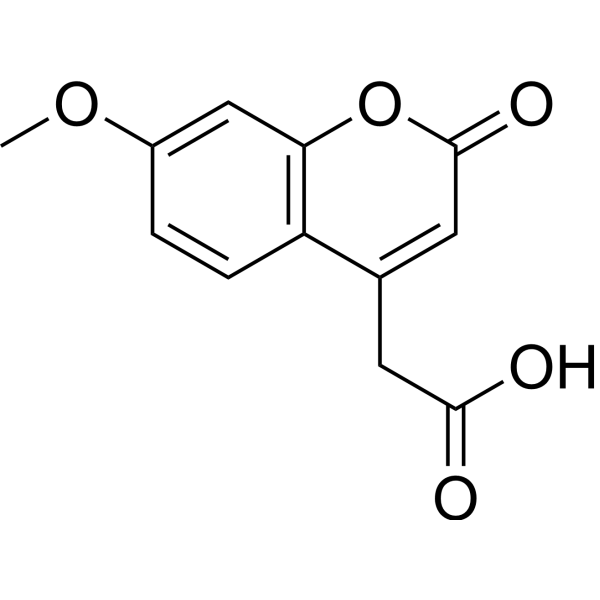
4-Acetamido-5-chloro-2-methoxybenzoic acid (Metoclopramide Impurity 12) is a drug intermediate for synthesis of various active compounds.
-
M2I-1
 0 Images
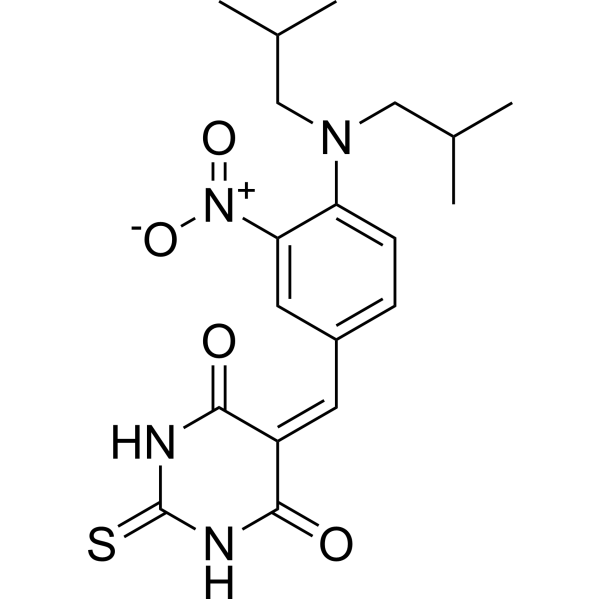
M2I-1 is a Mad2 inhibitor targeting the binding of Mad2 to Cdc20, an essential protein-protein interaction (PPI) within the spindle assembly checkpoint (SAC).
-
Apatinib-d8 hydrochloride
 0 Images
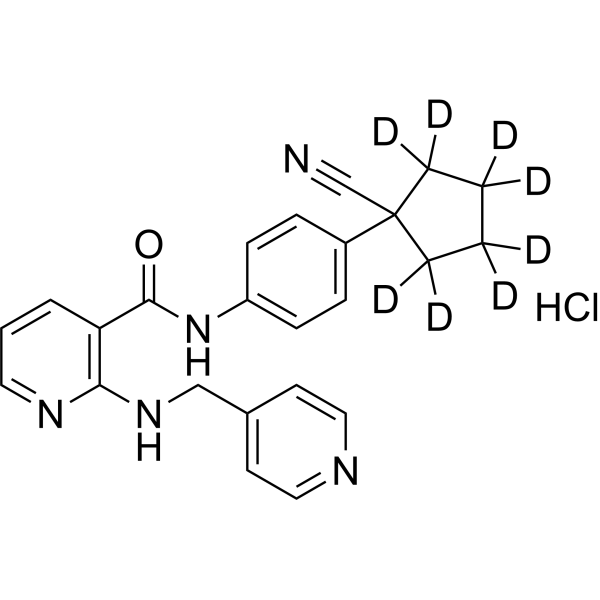
Apatinib-d8 (hydrochloride) is the deuterium labeled Apatinib hydrochloride.
-
Cyclogalegenin
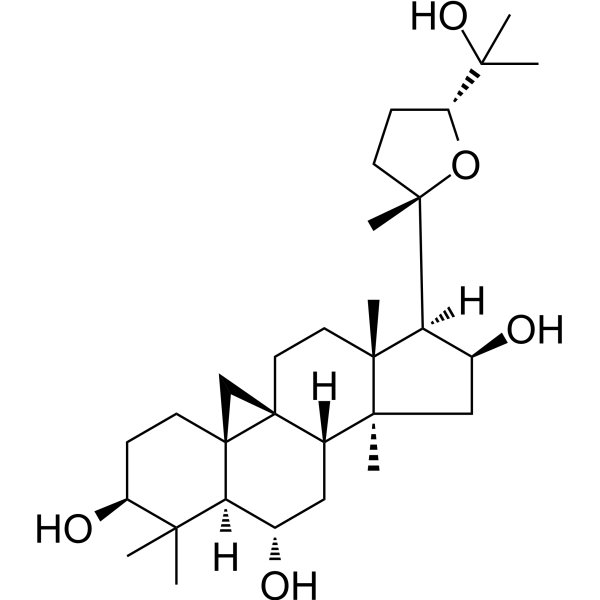 0 ImagesSynonyms: Cyclogalegigenin
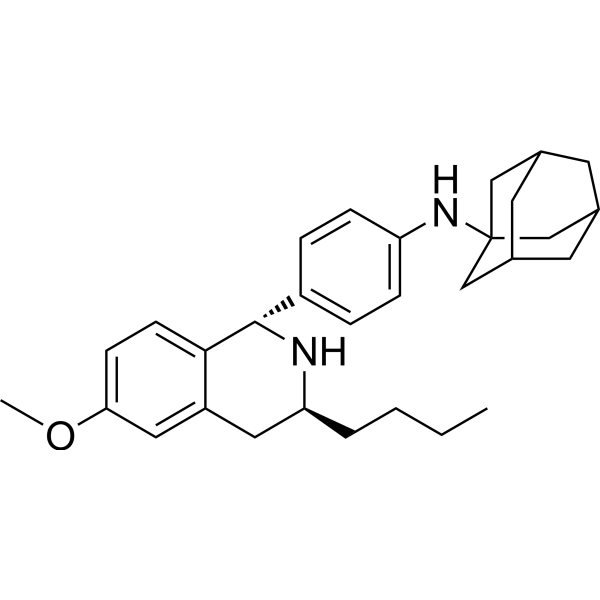
Cyclogalegenin (Cyclogalegigenin) is an isoprenoid. Cyclogalegenin can be isolated from Astragalus galegiformis. Cyclogalegenin is an isomer of cycloastragenol.
-
Zinquin
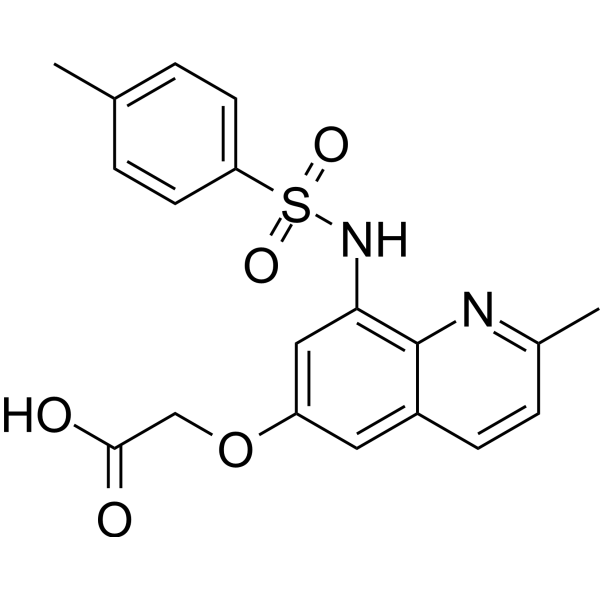 0 Images
Zinquin is a cell-impermeant fluorescent sensor and used to observe reactive Zn2+. λex/λem=368/490 nm.
-
Dabsyl chloride
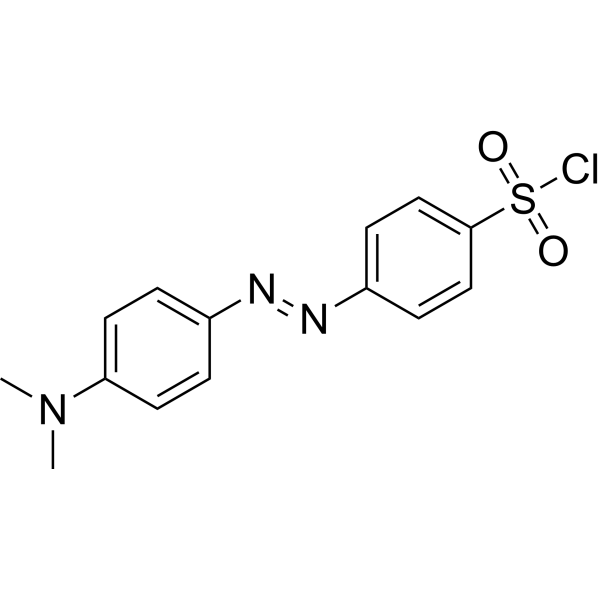 0 ImagesSynonyms: DABS-Cl
Dabsyl chloride is an amine derivatizing agent, able to give rise to stable products that can be easily monitored spectrophotometrically at 460 nm; Dabsyl chloride also used for labeling amino acids.
-
OVA (329-337)
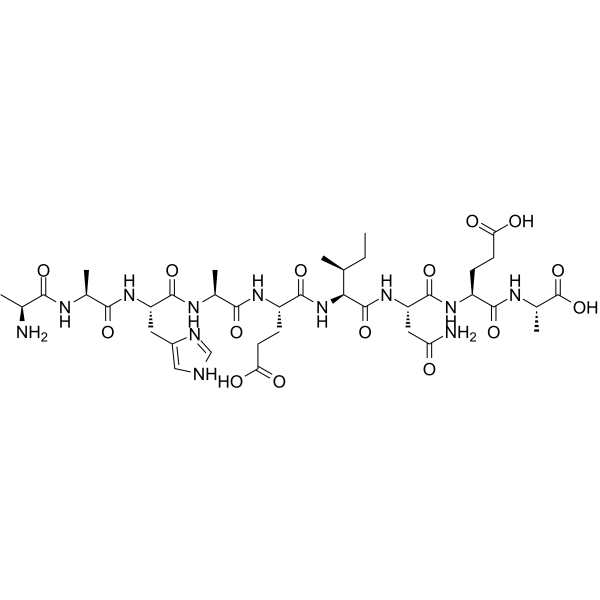 0 Images
OVA (329-337) is a 9-aa core epitope (329–337) located in the C-terminal end of the OVA peptide.
-
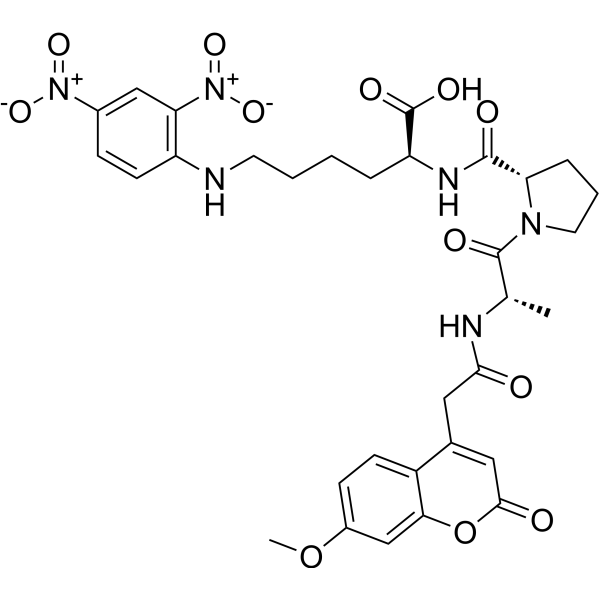
Mca-Ala-Pro-Lys(Dnp)-OH
 0 Images
Mca-Ala-Pro-Lys(Dnp)-OH, a specific ACE2 quenched fluorogenic substrate, can be used to detect ACE2 activity, such as urinary, heart and lung.
-
Avidin, chiken egg white
 0 Images
Avidin, chicken egg white is a protein found in chicken egg white and a reagent for blocking endogenous biotinylated proteins in RNA pull-down assays.


-
MPSD TFA
 0 ImagesCat. No.: HY-P10471APurity: 99.38%Synonyms: MARCKS-ED TFA
MPSD TFA (MARCKS-ED TFA) is the TFA salt form of MPSD (HY-P10471). MPSD TFA is a 25-amino acid peptide based on the effector domain sequence of the intracellular membrane protein myristoylated alanine-rich C-kinase substrate (MARCKS). MPSD TFA can sense membrane curvature and recognize phosphatidylserine. MPSD TFA can be utilized as biological probe to study membrane shape and lipid composition.
-
ALFA-tag
 0 Images
ALFA-tag is a small and stable α-helical structure composed of 15 amino acids. ALFA-tag is highly hydrophilic and can be placed at the N-terminus, C-terminus, or between two independently folded domains of the target protein without affecting the function of the protein. ALFA-tag is widely used as an epitope tag and is used for the detection and manipulation of proteins in living cells.
-
Cysteine peptide
 0 Images
Cysteine peptide is a tyrosinase inhibitor with skin-whitening, antioxidant and multi-regulatory activities. Cysteine peptide inhibits enzyme activity and blocks melanin transport, effectively reducing UV-B-induced skin erythema and pigmentation. Cysteine peptide synergistically maintains skin health by quenching ROS, resisting oxidative stress and promoting pheomelanin production. Cysteine peptide safely prevents daily ultraviolet damage and supports moderate sun exposure for vitamin D synthesis. Cysteine peptide also acts as a plant signaling factor to regulate vegetative growth, development and stress resistance responses.
-
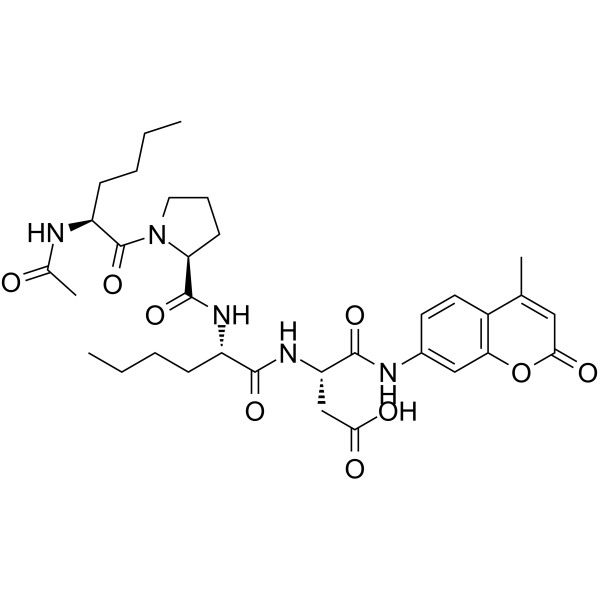
Ac-Nle-Pro-Nle-Asp-AMC
 0 Images
Ac-Nle-Pro-Nle-Asp-AMC is a specific substrate for 26S proteasome. Ac-Nle-Pro-Nle-Asp-AMC can be used for the 26S proteasome caspase-like activity analysis.