



Complement System Inhibitor
-
ANX-M1 (Human IgG1)
 0 ImagesCat. No.: HY-P991886Purity: ≥99.0%
ANX-M1 is a blood-brain barrier-permeable anti-C1q antibody. ANX-M1 can slow down the progression of retinal degeneration following photo-oxidative damage. ANX-M1 has been incorporated into nanocarriers to evaluate its brain delivery efficacy in a mouse model of Alzheimer's disease. ANX-M1 is applicable for research on age-related macular degeneration and Alzheimer's disease [1].
-
Sefaxersen sodium
 0 ImagesSynonyms: IONIS-FB-LRx sodium; RG6299 sodium; ISIS 696844 sodium
Sefaxersen sodium is a specific antisense oligonucleotide (ASO) targeting complement factor B (CFB). Sefaxersen sodium effectively reduces circulating levels of CFB, and can be used for geographic atrophy (GA) research.
-
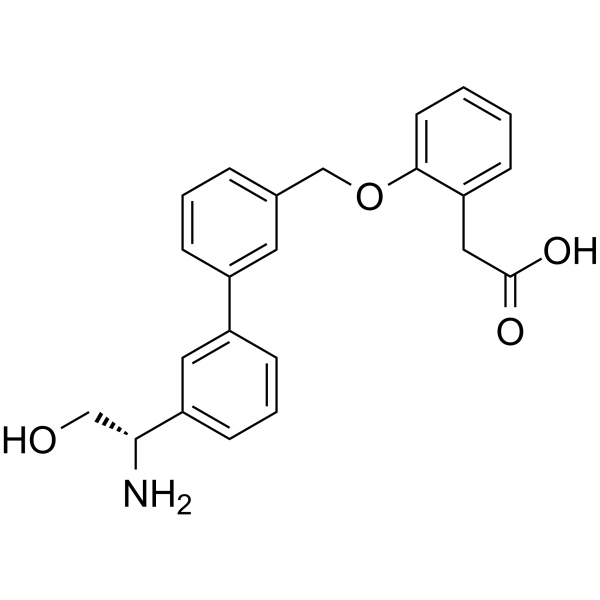
FD-IN-1
 0 Images
FD-IN-1 (Compound 12) is an orally bioavailable and selective factor D (FD) inhibitor with an IC50 of 12 nM. Complement FD, a highly specific S1 serine protease, plays a central role in the alternative complement pathway of the innate immune system. FD-IN-1 also inhibits factor XIa (FXIa) and Tryptase β2 with IC50s of 7.7 and 6.5 µM, respectively.
-
Cemdisiran
 0 ImagesSynonyms: ALN-CC5
Cemdisiran (ALN-CC5) is an N-acetylgalactosamine-conjugated RNAi agent and also a complement component C5 inhibitor. Cemdisiran targets C5 mRNA, cleaves C5 mRNA via the endogenous RNA interference pathway, and inhibits the production of C5 protein in the liver. Cemdisiran exerts a dose-dependent inhibitory effect on total C5 concentrations in cynomolgus monkeys. When used in combination with Pozelimab (HY-P99786) in cynomolgus monkeys, Cemdisiran achieves a more sustained and complete inhibitory effect on complement activity. Cemdisiran can be used in the research of paroxysmal nocturnal hemoglobinuria and other complement-mediated diseases.

-
C1s-IN-1 trihydrochloride
 0 Images
C1s-IN-1 trihydrochloride (Compound A1) is the selective inhibitor for C1s protease with the Ki of 5.8 μM. C1s-IN-1 trihydrochloride inhibits cleavage of C2 by C1s with an IC50 of 85 μM, inhibits the activation of classic pathway with an IC50 of 22 μM. C1s-IN-1 trihydrochloride is the competitive inhibitor for thrombin with the Ki of 51.2 μM.
-
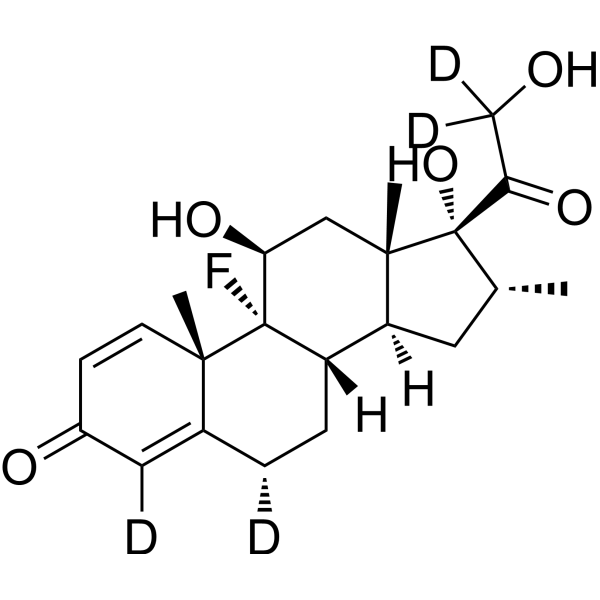
Dexamethasone-4,6α,21,21-d4
 0 Images
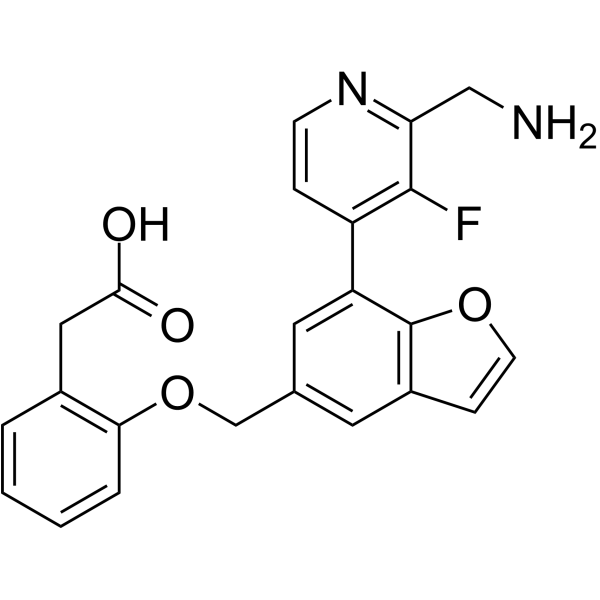
Dexamethasone-4,6α,21,21-d4 is the deuterium labeled Dexamethasone-4,6α,21,21. Dexamethasone (Hexadecadrol) is a glucocorticoid receptor agonist. Dexamethasone also significantly decreases CD11b, CD18, and CD62L expression on neutrophils, and CD11b and CD18 expression on monocytes. Dexamethasone is highly effective in the control of COVID-19 infection. Dexamethasone inhibits production of exosomes containing inflammatory microRNA-155 in lipopolysaccharide-induced macrophage inflammatory responses.
-
Factor D inhibitor 6
 0 Images
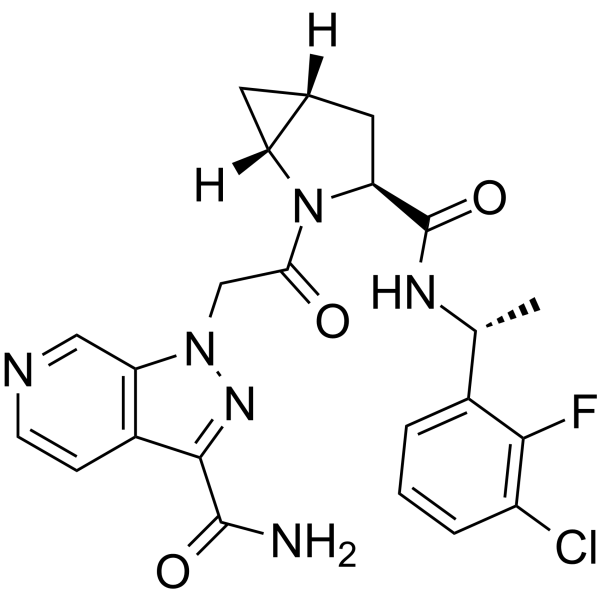
Factor D inhibitor 6 is a potent, highly selective and orally active factor D (FD) inhibitor with an IC50 of 30 nM and a Kd of 6 nM. Factor D inhibitor 6 is inactive against factor B, lassical and lectin complement-pathway activation, and a broad assay panel of receptors, ion channels, kinases and proteases.
-
tLyP-1 peptide
 0 Images
tLyP-1 peptide is an NRP-1 targeting peptide with an IC50 of 4 μM, and its amino acid sequence is CGNKRTR. tLyP-1 peptide specifically binds to NRP-1 to target tumor cells.

-
Aristolone
 0 Images
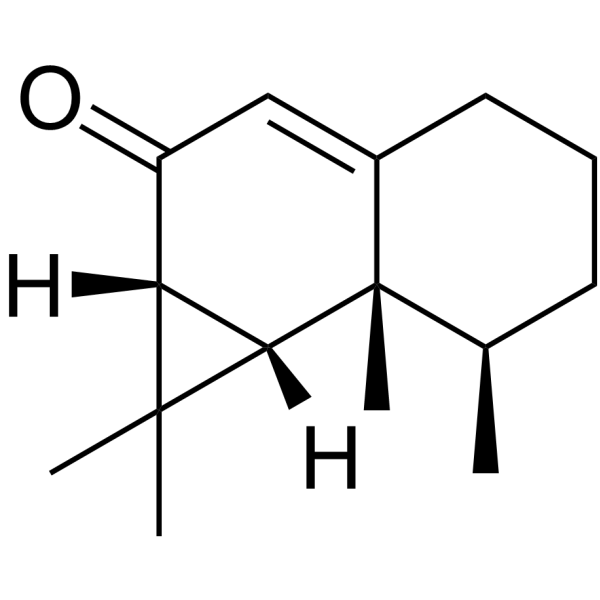
Aristolone is a sesquiterpene that can be isolated from Aristolochia debilis, Rosmarinus officinalis and Ficus Auriculata. Aristolone in Ara Fruit can be used as a prediction of apoptosis in HeLa cells. Aristolone inhibits the C1 complement component. Aristolone produces cytotoxicity effects on cells. Aristolone has anticancer properties and can be studied in research for cervical cancer.
-
Cemdisiran sodium
 0 ImagesCat. No.: HY-145720ASynonyms: ALN-CC5 sodium
Cemdisiran sodium (ALN-CC5 sodium) is an N-acetylgalactosamine-conjugated RNAi agent and also a complement component C5 inhibitor. Cemdisiran sodium targets C5 mRNA, cleaves C5 mRNA via the endogenous RNA interference pathway, and inhibits the production of C5 protein in the liver. Cemdisiran sodium exerts a dose-dependent inhibitory effect on total C5 concentrations in cynomolgus monkeys. When used in combination with Pozelimab (HY-P99786) in cynomolgus monkeys, Cemdisiran sodium achieves a more sustained and complete inhibitory effect on complement activity. Cemdisiran sodium can be used in the research of paroxysmal nocturnal hemoglobinuria and other complement-mediated diseases.
-
3-Phenoxybenzaldehyde
 0 ImagesSynonyms: m-Phenoxybenzaldehyde
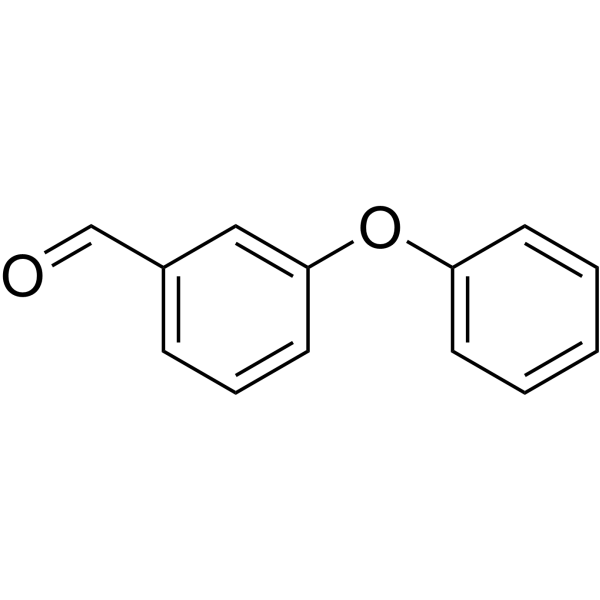
3-Phenoxybenzaldehyde has weak complement classical pathway inhibition and hemolytic activity.
-
PIC1 PA
 0 Images
PIC1 PA, a 15 amino-acid peptide, is a potent PIC1 analog that inhibits classical pathway mediated complement activation. PIC1 PA functionally disrupts the C1s-C1r-C1r-C1s/MASPs interaction with collagen-like region (CLR) of C1q/MBL, respectively. PIC1 PA specifically binds to the CLR of C1q and bounds to purified C1q with a mean equilibrium dissociation constant (KD) of 33.3 nM.
-
Compstatin TFA
 0 ImagesCat. No.: HY-P1036APurity: 99.11%
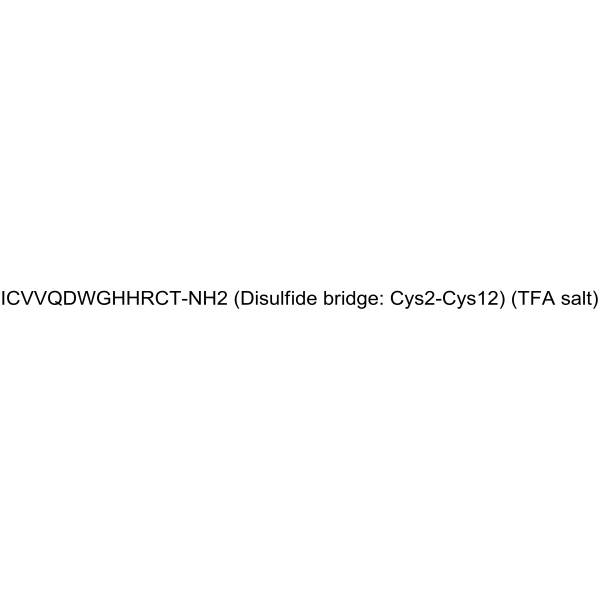
Compstatin TFA, a 13-residue cyclic peptide, is a potent inhibitor of the complement system C3 with species specificity. Compstatin TFA binds to baboon C3 and is resistant to proteolytic cleavage in baboon blood (similar to humans). Compstatin TFA inhibits only the activation of primates’ complement system. Compstatin TFA exhibits IC50 values of 63 μM and 12 μM for classical and alterative complement pathway, respectively.
-
Ruxoprubart
 0 ImagesCat. No.: HY-P991022CAS No.: 2842046-67-5Synonyms: NM8074
Ruxoprubart (NM8074) is an inhibitor of complement factor B (Bb subunit). Ruxoprubart selectively binds to active Bb to inhibit the alternative complement pathway without affecting the classical complement pathway. By blocking the activities of AP C3 and C5 convertases, Ruxoprubart effectively inhibits red blood cell hemolysis and reduces C3b deposition, thereby preventing intravascular and extravascular hemolysis. Ruxoprubart can be used in research related to paroxysmal nocturnal hemoglobinuria, atypical hemolytic uremic syndrome, C3 glomerulopathy, and IgA nephropathy.
-
Complement C1s-IN-1
 0 ImagesCat. No.: HY-149278CAS No.: 3033831-40-9
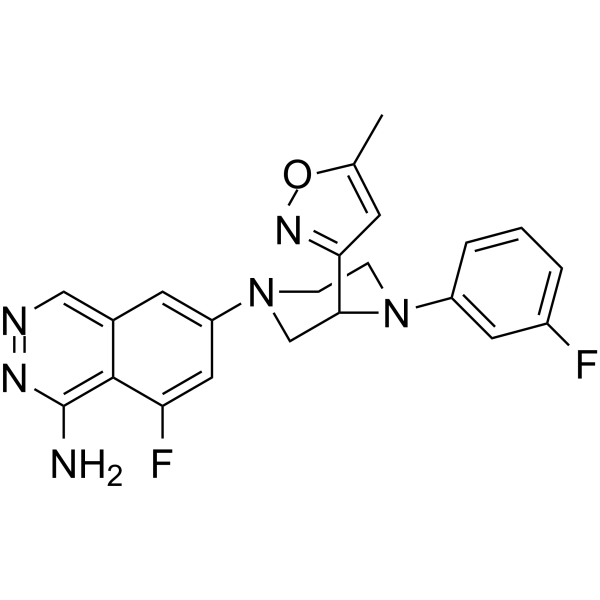
Complement C1s-IN-1 is a potent, selective, orally active and cross the blood-brain barrier C1s inhibitor with an IC50 value of 36 nM.
-
Zaltenibart
 0 ImagesSynonyms: OMS906
Zaltenibart (OMS906) is an IgG4 humanized monoclonal antibody and MASP-3 inhibitor. By inhibiting MASP-3, Zaltenibart achieves upstream inhibition of the alternative complement pathway. MASP-3 is an upstream activator of Factor D (Factor D), a key enzyme in the alternative complement pathway. Zaltenibart prevents both intravascular hemolysis and extravascular hemolysis. Zaltenibart is applicable to research related to paroxysmal nocturnal hemoglobinuria.
-
Avacincaptad pegol
 0 ImagesCat. No.: HY-148457CAS No.: 1613641-69-2Synonyms: Izervay
Avacincaptad pegol (Izervay) is a selective inhibitor targeting complement component C5, and is a pegylated ribonucleic acid aptamer. Avacincaptad pegol inhibits the cleavage of C5 into pro-inflammatory C5a and C5b, which forms the membrane attack complex (C5b-9), thereby reducing inflammatory cell recruitment and retinal cell damage. Avacincaptad pegol can slow the growth of geographic atrophy (GA) lesions and reduce the risk of persistent vision loss. Avacincaptad pegol can be used in research of geographic atrophy associated with age-related macular degeneration (AMD) and has been approved by the FDA.



