



Fluorescent Dye
Fluorescence is a phenomenon of photoluminescence in luminescence. When an atom is irradiated by light, some electrons around the nucleus jump from their original orbitals to higher energy orbitals under the influence of light energy, i.e., from the ground state to the first or second excited single-line state, etc. Due to the instability of the first or second excited singlet state, the electron returns from the excited singlet state to the ground state accompanied by released energy, resulting in fluorescence.
Fluorescent dyes can be covalently bound or physically adsorbed in the structure of the substance. The fluorescence properties allow for the characterization, localization and quantitative analysis of the labeled object. Fluorescent dyes have shown great potential for the detection of proteins, nucleic acids, cells, and immunoassays, attributed to the advantages in non-radioactive contamination, simple experimental operation and easy observation.
Fluorescent dyes have penetrated many fields such as pharmacology, physiology, environmental science, and information science, as well as functional studies of proteins and drug screening.
All Product Categories
-
Fluorescent Dye Related Products (4891)
Related Products (4891)

-
Antibodies (4)
-
Disperse Violet 63
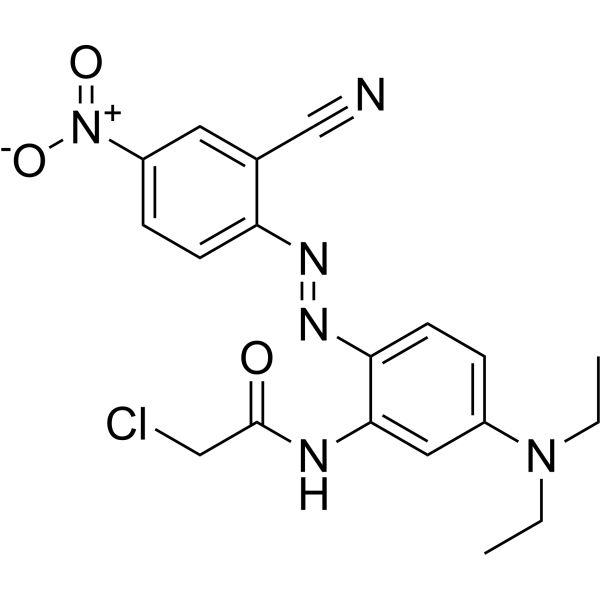 0 ImagesCat. No.: HY-D1202CAS No.: 64294-88-8Disperse Violet 63 is a violet dye commonly used for fiber dyeing.
-
Cyanine7 NHS ester tetrafluoroborate
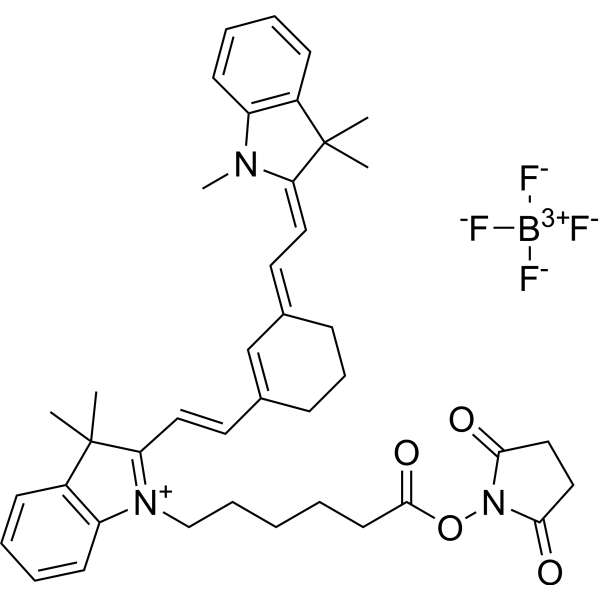 0 ImagesCat. No.: HY-D1315CAS No.: 2408482-09-5Cyanine7 NHS ester tetrafluoroborate is a Cyanine7 dye.

-
Marine blue
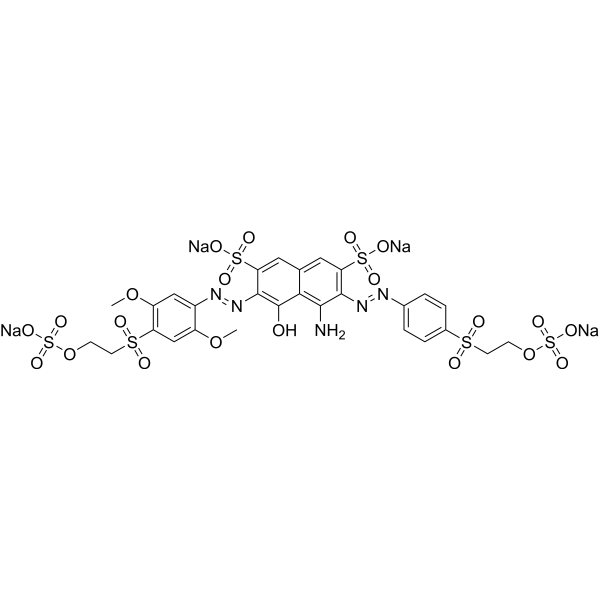 0 ImagesCat. No.: HY-D0754CAS No.: 84229-70-9Marine blue is a multifunctional dye. Dyes are important tools in biological experiments. They can help researchers observe and analyze cell structures, track biomolecules, evaluate cell functions, distinguish cell types, detect biomolecules, study tissue pathology and monitor microorganisms. Their applications range from basic scientific research to clinical A wide range of diagnostics. Dyes are also widely used in traditional fields such as textile dyeing, as well as in emerging fields such as functional textile processing, food pigments and dye-sensitized solar cells.
-
Lignin Staining Solution (Pianeze Method)
 0 ImagesCat. No.: HY-DY2038Lignin Staining Solution (Pianeze Method) is a multichromatic staining solution for plant histology composed of malachite green, Martius yellow and acid fuchsin. Lignin Staining Solution (Pianeze Method) enables lignified secondary walls to appear bright green, non-lignified secondary walls to appear red, and tracheid pit membranes to appear pale red after long-time immersion. Lignin Staining Solution (Pianeze Method) can be used to distinguish lignified cell walls from non-lignified structures and observe the morphology of pit membranes in plant tissue sections such as fern rhizomes. Lignin Staining Solution (Pianeze Method) can be applied to relevant studies on flax wilt and root rot.
-
5-Carboxyrhodamine 6G succinimidyl ester
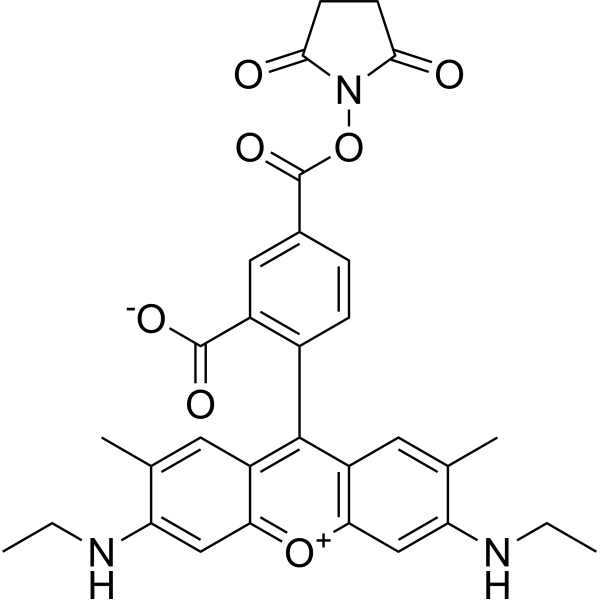 0 ImagesCat. No.: HY-D1469CAS No.: 209112-21-0Synonyms: R6G-SE5-Carboxyrhodamine 6G succinimidyl ester (R6G-SE) is an amine reactive fluorescent dye.
-
TNO211
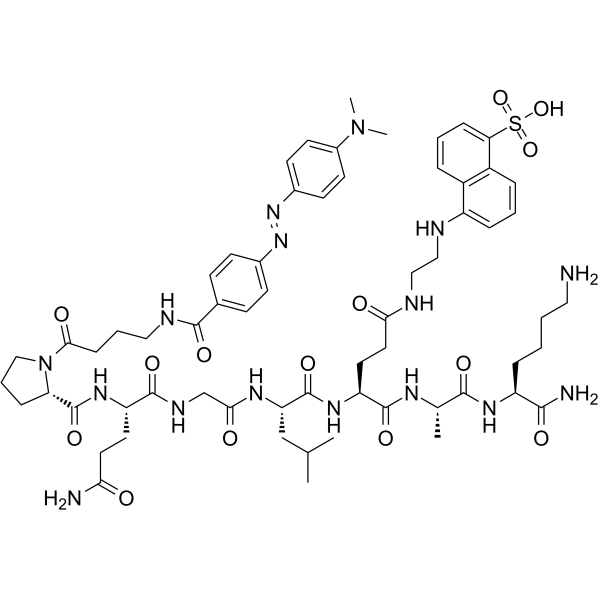 0 ImagesSynonyms: Dabcyl-GABA-Pro-Gln-Gly-Leu-Glu(EDANS)-Ala-Lys-NH2TNO211 (Dabcyl-GABA-Pro-Gln-Gly-Leu-Glu(EDANS)-Ala-Lys-NH2) is a fluorogenic substrate, containing the MMP cleavable Gly-Leu bond and EDANS/Dabcyl as fluorophore/quencer combination. TNO211 can specifically detect MMP activity (Ex/Em = 340/485 nm).
-
Photoacoustic contrast agent-1 perchlorate
 0 ImagesCat. No.: HY-D1291ACAS No.: 2255329-07-6Photoacoustic contrast agent-1 perchlorate (Compound F-1) is a photo/sono-sensitizer that can produce a significant cell killing effect under illuminated conditions. Photoacoustic contrast agent-1 perchlorate can be used in the research of tumor diagnosis and treatment. Photoacoustic contrast agent-1 perchlorate is a multifunctional dye. Dyes are important tools in biological experiments. They can help researchers observe and analyze cell structures, track biomolecules, evaluate cell functions, distinguish cell types, detect biomolecules, study tissue pathology and monitor microorganisms. Their applications range from basic scientific research to clinical A wide range of diagnostics. Dyes are also widely used in traditional fields such as textile dyeing, as well as in emerging fields such as functional textile processing, food pigments and dye-sensitized solar cells.
-
ATTO 465 amine
 0 ImagesCat. No.: HY-D1939ATTO 465 amine is a new fluorescent marker based on the Rhodamine structure. It has strong absorption, high fluorescence quantum yield, high thermal stability and photochemical stability, and is suitable for single molecule detection and high-resolution microscopy. ATTO 465 amine is an amine derivative of ATTO 465 and can be used to label proteins or antibodies.
-
Cy3 labled Ozisiran sodium
 0 ImagesCat. No.: HY-177654DCy3 labled Ozisiran sodium is a Cy3 labled Ozisiran sodium.
-
ATTO 465 maleimid
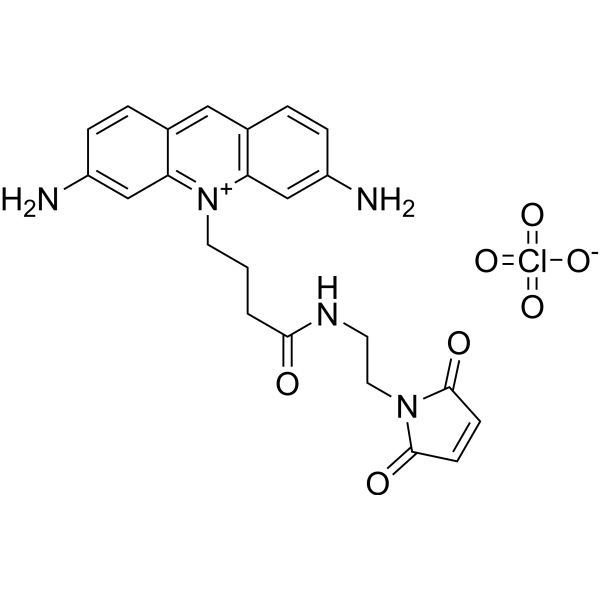 0 ImagesCat. No.: HY-D1936CAS No.: 1173022-13-3ATTO 465 Maleimid is a maleimide ester derivative of ATTO 465, which can be used to label proteins or antibodies. The maximum excitation/emission wavelength: 453/506 nm.

-
Tetramethylrhodamine-5-isothiocyanate
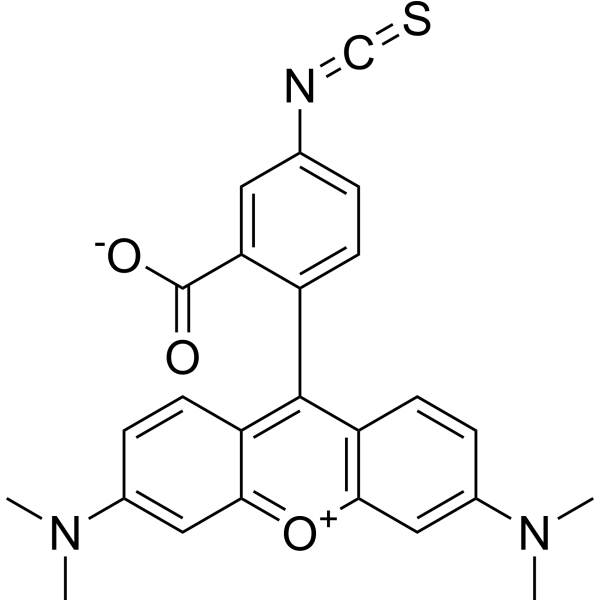 0 ImagesCat. No.: HY-D0153CAS No.: 80724-19-2Tetramethylrhodamine-5-isothiocyanate is a potent fluorescent dye. Tetramethylrhodamine-5-isothiocyanate can be used for label PG-M3 antibody for rapid diagnosis of acute promyelocytic leukemia (APL). Tetramethylrhodamine-5-isothiocyanate can be used as probe to quantify in vivo the biodistribution of PLGA (poly(lactic-co-glycolic) acid) and PLGA/chitosan nanoparticles.
-
Lycopersicon esculentum (Tomato) Lectin-Cy7
 0 ImagesCat. No.: HY-NP071LSynonyms: LEL-Cy7Lycopersicon esculentum (Tomato) Lectin-Cy7 (LEL-Cy7) is Lycopersicon esculentum lectin (LEL) labeled with the Cy7 fluorescent dye. Lycopersicon esculentum (Tomato) lectin specifically recognizes and binds to glycan structures, primarily targeting N-acetyl-β-D-glucosamine residues. Lycopersicon esculentum (Tomato) Lectin-Cy7 can be used to study glycosylation and localize glycan structures on cell surfaces and in tissue sections (Ex/Em = 554/568 nm).
-
Ac-MtFluNox
 0 ImagesCat. No.: HY-D3123Ac-MtFluNox is a mitochondria-targeted Fluorescent probe that can be used for the selective detection of labile Fe (II). Ac-MtFluNox can enter living cells, where intracellular esterases cleave its acetyl protecting group to generate activated MtFluNox. Ac-MtFluNox functions through an Fe (II)-mediated deoxygenation mechanism of its amine N-oxide group, which eliminates the fluorescence quenching effect and oxidizes Fe (II) to Fe (III) to deplete the catalytically active Fe (II) pool. A FITC filter set (excitation 465-500 nm, emission 516-556 nm) is used for live-cell imaging. Ac-MtFluNox can be applied to studies related to myocardial ferroptosis.
-
Cy3 phosphoramidite
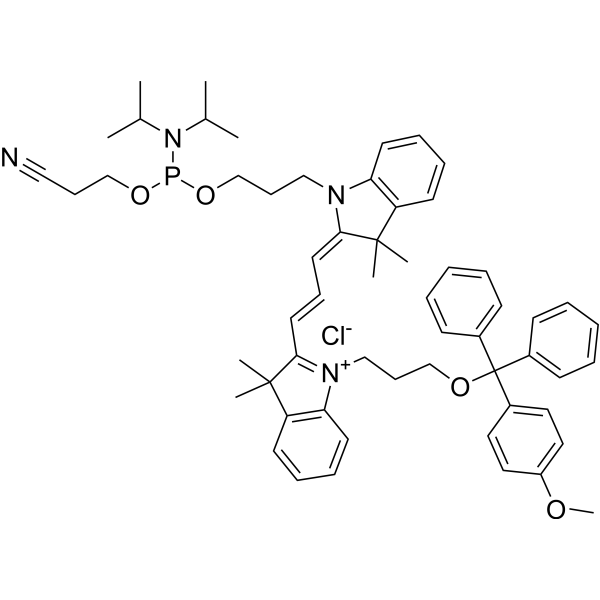 0 ImagesCat. No.: HY-D2244CAS No.: 182873-76-3Cy3 phosphoramidite?is a fluorescent dye for oligonucleotide labeling.
-
ATTO 665
 0 ImagesCat. No.: HY-D1997CAS No.: 1210944-09-4ATTO 665 is a new type of fluorescent dye with high fluorescence yield, which can be used for most labeling applications, maximum excitation/emission wavelength: 663/680 nm.
-
RB-PEG1000-Biotin
 0 ImagesCat. No.: HY-D2889BSynonyms: Rhodamine B-PEG1000-BiotinRB-PEG1000-Biotin (Rhodamine B-PEG1000-Biotin) is a fluorescent dye composed of Rhodamine B (HY-Y0016), PEG and a Biotin. Biotin can bind with high affinity to streptavidin or avidin. RB-PEG1000-Biotin plays an important role in the specific capture and detection of biomolecules (Ex/Em=546/610 nm).
-
Cy3 labled Archexin sodium
 0 ImagesCat. No.: HY-177616DCy3 labled Archexin sodium is a Cy3 labled Archexin sodium.
-
HMRef-αMan
 0 ImagesCat. No.: HY-D3187CAS No.: 2484831-02-7HMRef-αMan is a substrate-based green fluorescent probe (Ex/Em=465 nm/515 nm) targeting MAN2C1 (α-mannosidase). HMRef-αMan can be specifically cleaved by MAN2C1 to generate a highly fluorescent product, which thus gets activated to produce green fluorescence in malignant breast tissues, benign lesions and living cancer cells. The signal intensity of HMRef-αMan is directly correlated with MAN2C1 activity, and it can effectively detect tiny breast cancer lesions with a diameter of less than 1 mm. When used in combination with the red-emitting γ-glutamyl transpeptidase (GGT) probe gGlu-2OMe SiR600 (HY-D3188), HMRef-αMan enables precise optical differentiation of breast tissue types via a dual-color imaging strategy. HMRef-αMan has been widely used in the research of breast diseases such as breast cancer, fibroadenoma, phyllodes tumor and various types of papilloma.




