



OX1 Receptor Agonist
- 1
-
Orexin A (human, rat, mouse)
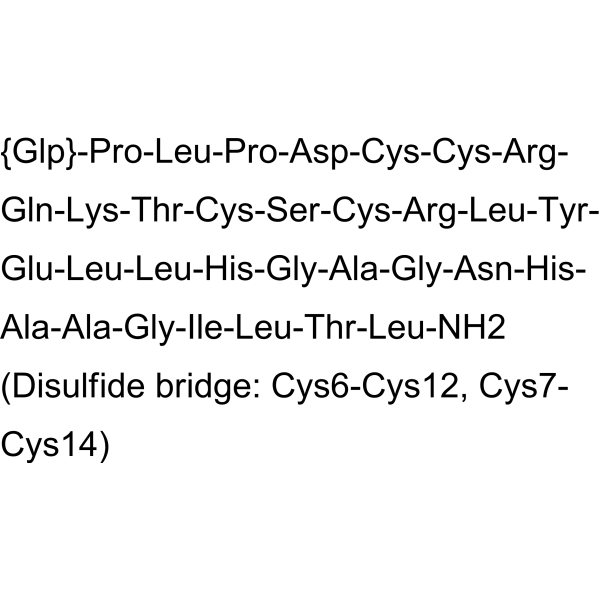 0 ImagesSynonyms: Hypocretin-1 (human, rat, mouse)
Orexin A (human, rat, mouse) (Hypocretin-1 (human, rat, mouse)), a 33 amino acid excitatory neuropeptide, orchestrates diverse central and peripheral processes. Orexin A (human, rat, mouse) binds and activates two types of G protein-coupled receptors, the orexin-1 receptor (OX1R) and the orexin-2 receptor (OX2R). Orexin A (human, rat, mouse) has a role in the regulation of feeding behavior. Orexin A (human, rat, mouse) is an effective anti-nociceptive and anti-hyperalgesic agent in mice and rats.
-
Orexin A (human, rat, mouse) acetate
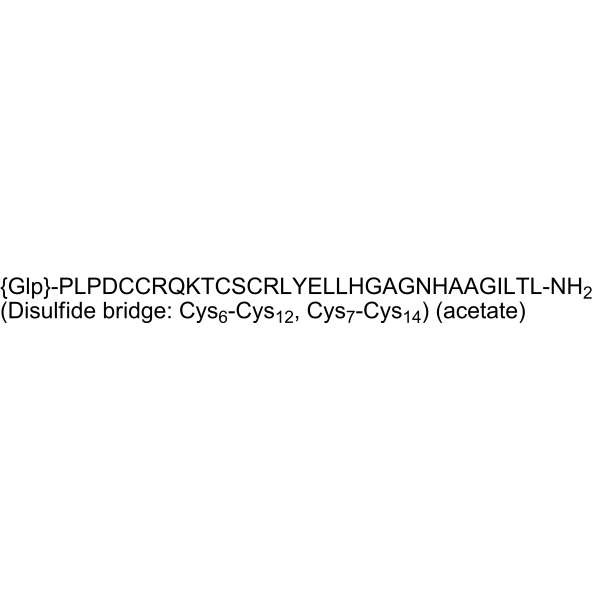 0 ImagesCat. No.: HY-106224BPurity: 99.53%Synonyms: Hypocretin-1 (human, rat, mouse) acetate
Orexin A (Hypocretin-1) (human, rat, mouse) acetate is a hypothalamic neuropeptide with analgesic properties (crosses the blood-brain barrier). Orexin A (human, rat, mouse) acetate binds and activates two types of G protein-coupled receptors, the orexin-1 receptor (OX1R) and the orexin-2 receptor (OX2R). Orexin A (human, rat, mouse) acetate can be used in studies of appetite regulation, neurodegenerative diseases and modulation of injurious messaging.
-
Oveporexton
 0 ImagesSynonyms: TAK-861
Oveporexton (TAK-861) is an orally active and selective orexin receptor 2 (OX2R) agonist with an EC50 of 2.5 nM. Oveporexton exhibits 3000-fold selectivity for OX2R over OX1R. Oveporexton can be used for the study of hypersomnia disorders including narcolepsy.
-
Orexin A (human, rat, mouse) TFA
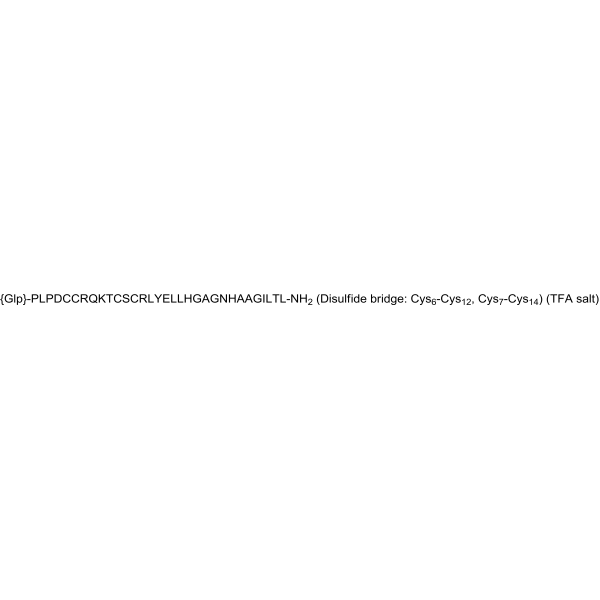 0 ImagesCat. No.: HY-106224APurity: 98.13%Synonyms: Hypocretin-1 (human, rat, mouse) TFA
Orexin A (human, rat, mouse) (Hypocretin-1 (human, rat, mouse)) TFA, a 33 amino acid excitatory neuropeptide, orchestrates diverse central and peripheral processes. Orexin A (human, rat, mouse) TFA binds and activates two types of G protein-coupled receptors, the orexin-1 receptor (OX1R) and the orexin-2 receptor (OX2R). Orexin A (human, rat, mouse) TFA has a role in the regulation of feeding behavior. Orexin A (human, rat, mouse) TFA is an effective anti-nociceptive and anti-hyperalgesic agent in mice and rats.
-
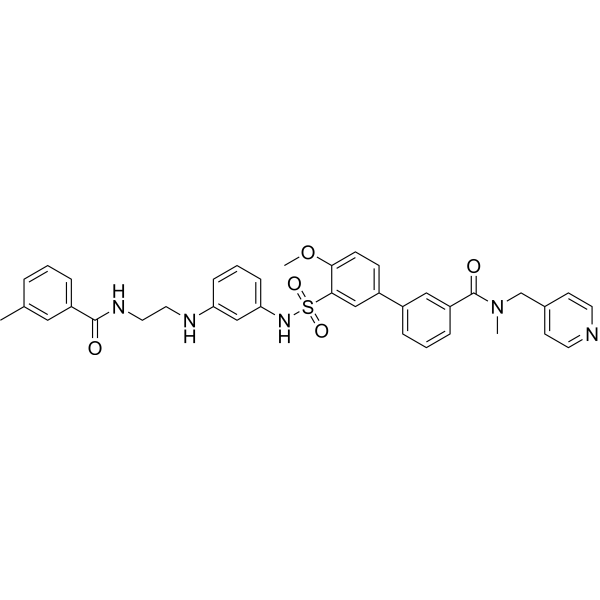
RTIOXA-43
 0 Images
RTIOXA-43 is a orexin receptor agonist with EC50s of 24 nM and 24 nM for OX2 and OX1 receptors, respectively.
-
OXA(17-33)
 0 ImagesCat. No.: HY-P1341CAS No.: 343268-91-7Synonyms: Orexin A (17-33) (human, mouse, rat, bovine)
OXA (17-33) (Orexin A (17-33) (human, mouse, rat, bovine)) is the shortest active orexin peptide that selectively targets OX1 (EC50=8.29 nM), with 23-fold selectivity for the OX1 receptor over the OX2 receptor. The activity of OXA (17-33) depends on the Tyr17, Leu20, Asn25, His26 residues and the spatial conformation of the α-helix. OXA (17-33) activates signaling pathways involving inositol-1,4,5-trisphosphate receptor (IP3R), phospholipase D (PL-D) and choline-Sigma-1R, thereby increasing the cytoplasmic Ca2+ level in nucleus accumbens neurons, an effect that is blocked by Sigma-1R antagonists. OXA (17-33) serves as an important biological probe for investigating the function of the OX1 receptor. OXA (17-33) can be modified via incorporation of mixed disulfide bonds of homocysteine and cysteamine, and is widely used in studies related to insomnia and narcolepsy.
-
(R)-YNT-3708
 0 Images
(R)-YNT-3708 is a selective orexin 1 (OX1R) agonist, with an EC50 of 7.48 nM. (R)-YNT-3708 has antinociceptive effects.
-
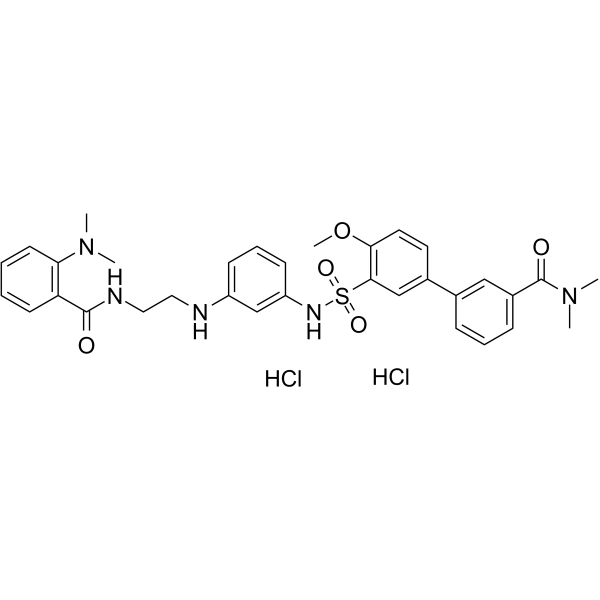
YNT-185 dihydrochloride
 0 Images
YNT-185 dihydrochloride is a nonpeptide, selective orexin type-2 receptor (OX2R) agonist, with EC50s of 0.028 and 2.75 μM for OX2R and OX1R, respectively. YNT-185 dihydrochloride ameliorates narcolepsy-cataplexy symptoms in mouse models.
-
[Ala11,D-Leu15]-Orexin B(human)
![[Ala11,D-Leu15]-Orexin B(human)](https://file.medchemexpress.com/product_pic/hy-p1340.gif "Click to View [Ala11,D-Leu15]-Orexin B(human) Product Detail") 0 Images
0 Images[Ala11,D-Leu15]-Orexin B(human) is a potent and selective orexin-2 receptor (OX2) agonist. [Ala11,D-Leu15]-Orexin B(human) shows a 400-fold selectivity for the OX2 (EC50=0.13 nM) over OX1 (52 nM).
-
OX-201
 0 ImagesCat. No.: HY-162712CAS No.: 2460722-03-4
OX-201 is an orally active, blood-brain barrier-permeable OX2R agonist with an EC50 of 8.0 nM. OX-201 activates OX2R to induce wakefulness and neuronal activation. OX-201 promotes the release of neuron activity-dependent tau protein from neurons into the interstitial fluid of hippocampal tissues. OX-201 is applicable to research related to Alzheimer's disease and tauopathies.
![[Ala11,D-Leu15]-Orexin B(human) TFA](https://file.medchemexpress.com/product_pic/hy-p1340a.gif "Click to View [Ala11,D-Leu15]-Orexin B(human) TFA Product Detail")
-
Ledasorexton
 0 ImagesCat. No.: HY-177096CAS No.: 2758363-88-9
Ledasorexton is an orally active OX2R agonist (EC50: 0.99 nM). Ledasorexton has awakening effect in mice. Ledasorexton can be used for research of neurological disease.
-
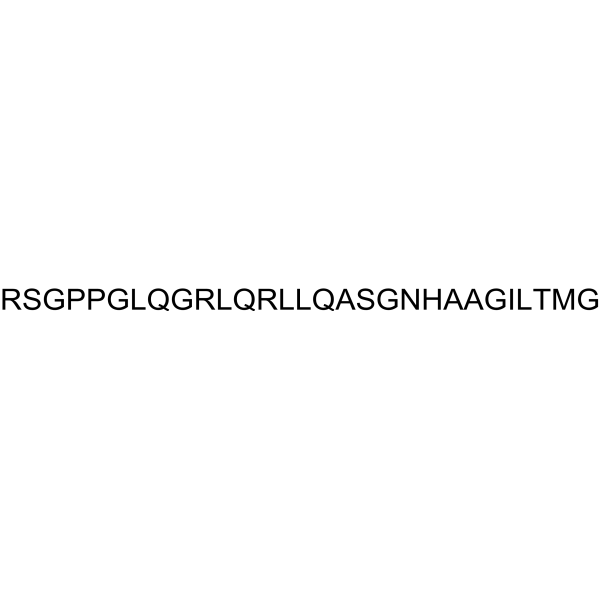
Hypocretin (70-98), human
 0 ImagesCat. No.: HY-P3867CAS No.: 1129545-33-0
Hypocretin (70-98), human is a polypeptide that is capable of binding to an orexin receptor OX1R and promotes apoptosis.

- 1



