



PPAR
Peroxisome proliferator-activated receptors
PPARs (Peroxisome proliferator-activated receptors) are ligand-activated transcription factors of nuclear hormone receptor superfamily comprising of the following three subtypes: PPARα, PPARγ, and PPARβ/δ. PPARs play essential roles in the regulation of cellular differentiation, development, and metabolism (carbohydrate, lipid, protein), and tumorigenesis of higher organisms. All PPARs heterodimerize with the retinoid X receptor (RXR) and bind to specific regions on the DNA of target genes. Activation of PPAR-α reduces triglyceride level and is involved in regulation of energy homeostasis. Activation of PPAR-γ enhances glucose metabolism, whereas activation of PPAR-β/δ enhances fatty acids metabolism.
PPAR Isoform Specific Products
All Product Categories
-
PPAR Inhibitors
(105)
View all products
-
PPAR Agonists
(336)
View all products
-
PPAR Antagonists
(30)
View all products
-
PPAR Activators
(168)
View all products
-
PPAR Modulators
(41)
View all products
-
PPAR Inducers
(6)
View all products
-
PPAR Controls
(3)
View all products
-
PPAR Ligands
(4)
View all products
-
Peroxisome Proliferator-activated Receptor Proteins
(11)
View all products
-
PPAR alpha Proteins
(2)
View all products
-
PPAR gamma Proteins
(7)
View all products
-
PPAR-delta Proteins
(2)
View all products
-
PPAR Related Products (737)
Related Products (737)

-
Recombinant Proteins (11)
-
Antibodies (4)
-
PPAR Isoform Comparison
-
D-Arabinopyranose-13C5
 0 ImagesCat. No.: HY-N7082SPurity: 99.9%D-Arabinopyranos-13C5 is 13C labeled D-Arabinopyranos (HY-N7082). D-Arabinopyranose is a rare aldehyde pentose, and its ring-opened form is D-arabinose (HY-N0059). D-arabinose is is an orally active antidepressant and a growth inhibitor of C. elegans (IC50 is 7.5 mM). D-arabinose can penetrate the blood-brain barrier, selectively interfere with the metabolism of D-ribose and D-fructose, and inhibit the growth of nematodes. D-arabinose can also inhibit the synthesis of cell biofilm and exert antibacterial activity. D-arabinose activates the ACSS2-PPARγ/TFEB-CRTC1 axis through the lysosomal AXIN-LKB1-AMPK pathway, inducing CRTC1 transcription, exerts antidepressant-like activity. D-arabinose is the ring-opened form of the aldopentose D-?Arabinose (HY-N7082).
-
Sodelglitazar
 0 ImagesCat. No.: HY-14935CAS No.: 447406-78-2Synonyms: GW 677954Sodelglitazar (GW 677954) is a pan-PPAR agonist with potential applications in the treatment of hyperlipidemia and type 2 diabetes.

-
Sipoglitazar
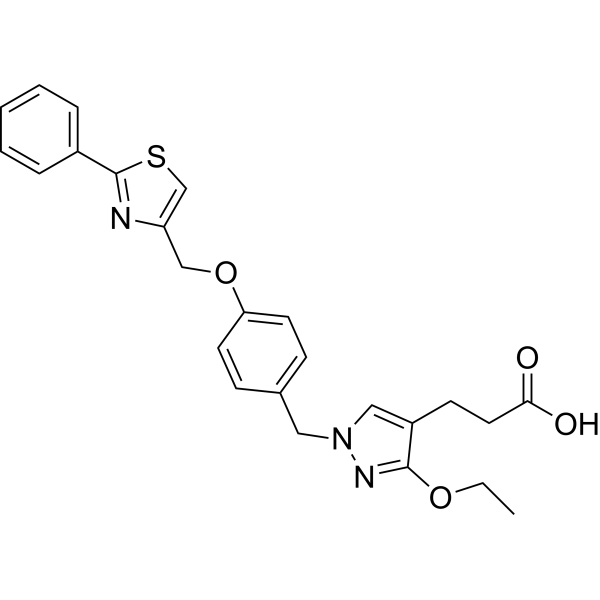 0 ImagesCat. No.: HY-103034CAS No.: 342026-92-0Sipoglitazar is an orally active agonist of PPAR. Sipoglitazar can be used to study diabetes.
-
Isobutylparaben-d4
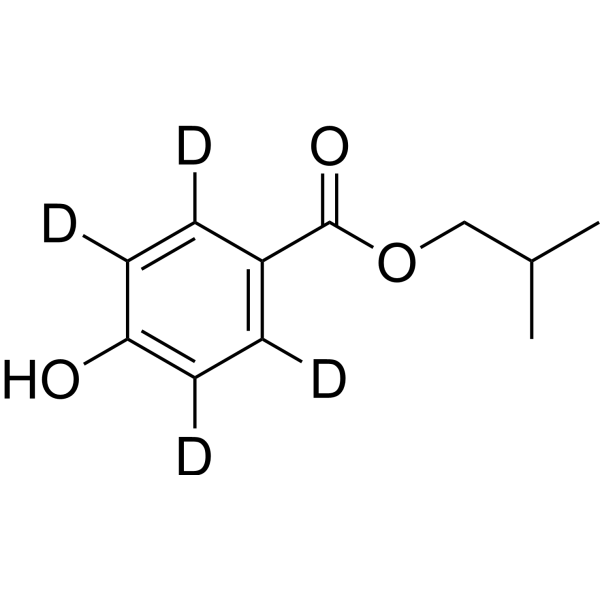 0 ImagesSynonyms: Isobutyl 4-hydroxybenzoate-d4Isobutylparaben-d4 is the deuterium labeled Isobutylparaben. Isobutylparaben (Isobutyl 4-hydroxybenzoate) is the agonist for PXR, CAR and PPAR. Isobutylparaben has a broad-spectrum antimicrobial activity and widely used in personal care products and cosmetics.
-
(±)8(9)-EET
 0 ImagesCat. No.: HY-179488CAS No.: 184488-44-6(±)8(9)-EET is one of the main metabolites produced by the metabolism of arachidonic acid (HY-109590) through the cytochrome P450 epoxide pathway. (±)8(9)-EET is an effective substrate for COX-1 and COX-2. (±)8(9)-EET activates PPARα in HEK293 cells and inhibits the activity of NF-κB induced by IL-1β in a PPARα-dependent and -independent manner. The (8S,9R)-isomer of (±)8(9)-EET ([(8S,9R)-EET]) causes vasoconstriction, thereby reducing renal plasma flow and glomerular filtration rate.
-
5-Aminosalicylic acid-13C6
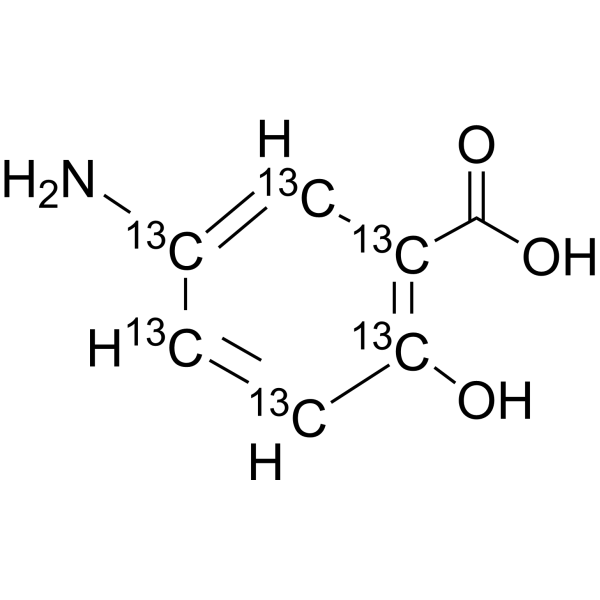 0 ImagesCat. No.: HY-15027S2CAS No.: 1189709-96-3Synonyms: Mesalamine-13C6; 5-ASA-13C6; Mesalazine-13C65-Aminosalicylic acid-13C6 is the 13C labeled 5-Aminosalicylic Acid. 5-Aminosalicylic acid (Mesalamine) acts as a specific PPARγ agonist and also inhibits p21-activated kinase 1 (PAK1) and NF-κB.
-
Neoambrosin
 0 ImagesCat. No.: HY-127003CAS No.: 18446-70-3Neoambrosin is a sesquiterpene lactone. Neoambrosin acts as a partial agonist of PPARγ and TRPA1 receptors, with no carbonic anhydrase inhibitory activity. Neoambrosin can be used in research on hypoglycemia, analgesia, anti-inflammation and anticancer effects.
-
20-HEPE
 0 ImagesCat. No.: HY-121888CAS No.: 116477-57-720-HEPE is a metabolite of eicosapentaenoic acid formed by ω-oxidation of EPA by cytochrome P450 (CYP) ω-oxidases, including human CYP4F3B. At 10 μM, it activates peroxisome proliferator-activated receptor α (PPARα) in COS-7 cells expressing a luciferase reporter gene. 20-HEPE also activates mouse transient receptor potential vanilloid receptor 1 (mTRPV1) in vitro but lacks analgesic activity in rats.
-
Darglitazone Sodium
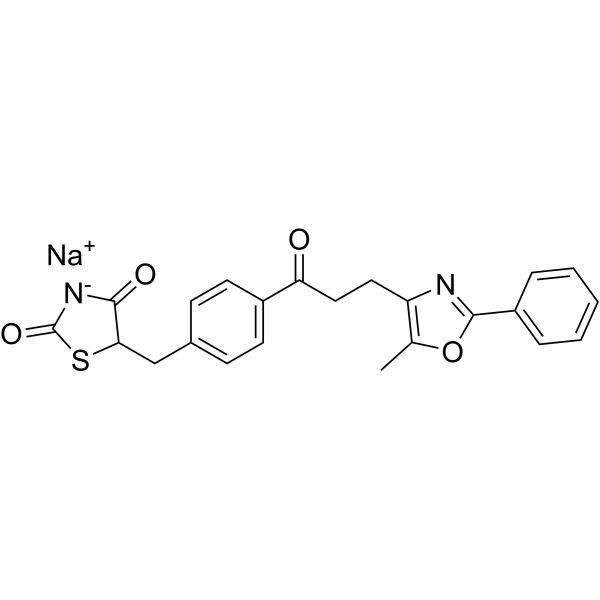 0 ImagesCat. No.: HY-120160ACAS No.: 149904-87-0Synonyms: CP 86325 SodiumDarglitazone Sodium, a thiazolidinedione, is an orally active, potent, and selective PPAR-γ (peroxisome proliferator-activated receptor) agonist. Darglitazone Sodium is effective in controlling blood glucose and lipid metabolism, and can be used for type II diabetes research.
-
Ronifibrate
 0 ImagesCat. No.: HY-123705CAS No.: 42597-57-9Ronifibrate is a fibrate and a PPARα activator. Ronifibrate can be studied in research on hyperlipidemia.
-
PPARγ agonist 3
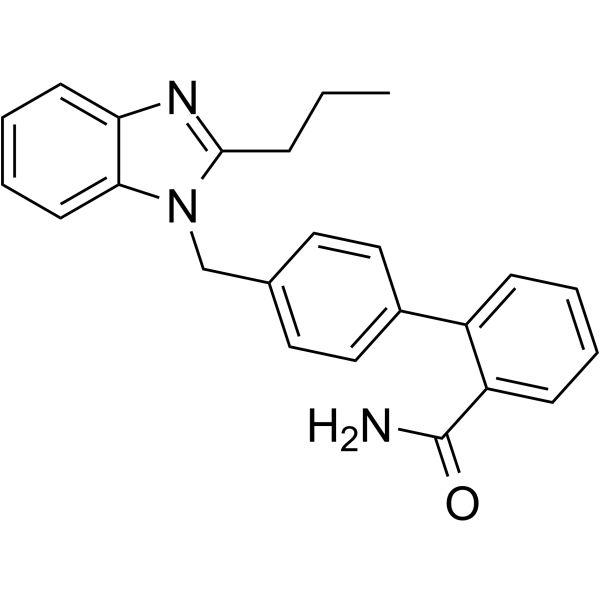 0 ImagesCat. No.: HY-146438CAS No.: 2011801-48-0PPARγ agonist 3 (Compound 18a) is a potent and selective agonist of PPARγ. PPARγ agonist 3 is not cytotoxic neither on non-resistant nor on resistant cells. PPARγ agonist 3 exerts antitumor potency only in combination with Imatinib.
-
PPARα agonist 4
 0 ImagesCat. No.: HY-159146PPARα agonist 4 (compound BH400) is a PPARα agonist (EC50= 1.2 μM). PPARα agonist 4 also inhibits STING (IC50: 8.1 μM). PPARα agonist 4 reduces the CoCl2-induced production of ROS and LPS-induced secretion of IL-6. The PPARα agonist 4 restores the decreased expression of PCG1α induced by LPS.
-
Rac-Pemafibrate
 0 ImagesCat. No.: HY-17618ACAS No.: 848258-31-1Synonyms: Rac-K13675Pemafibrate racemate (K13675 racemate) is the racemate of pemafibrate, and activates PPARα activity, with EC50s of 1 nM, >10 μM and 1.7 μM for h-PPARα, h-PPARγ and h-PPARδ, respectively.
-
PPARγ/δ modulator 1
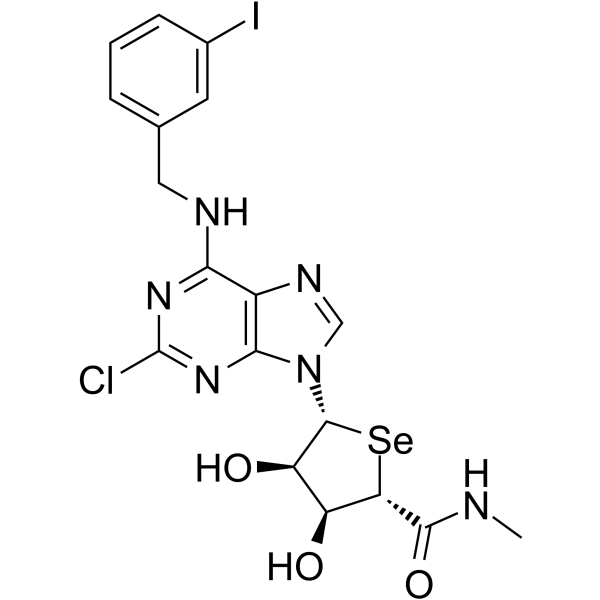 0 ImagesCat. No.: HY-147757CAS No.: 2089159-00-0PPARγ/δ modulator 1 (compound 3e) is a potent PPAR modulator. PPARγ/δ modulator 1 is a PPARδ antagonist and a PPARγ partial agonist , with Ki values of 14.4 nM and 5.31 μM, respectively. PPARγ/δ modulator 1 has the EC50 of 7.3 and 12.6 μM for PPARδ corepression and adiponectin production, respectively.
-
ESP-31015
 0 ImagesCat. No.: HY-107054CAS No.: 413624-55-2Synonyms: ETC-1001ESP-31015 (ETC-1001) is an orally active and non-fibrate based PPARα agonists. ESP-31015 demonstrates significant lipid-regulating effects in the obese Zucker rat model. ESP-31015 can be used in cardiovascular disease research.
-
3-Thiatetradecanoic acid
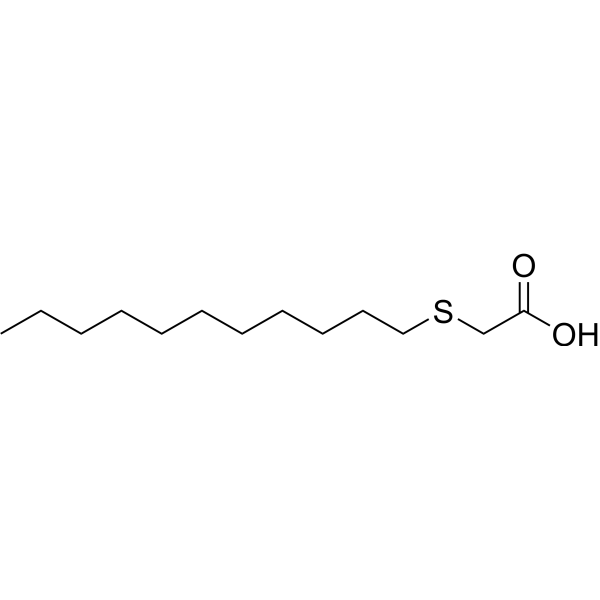 0 ImagesCat. No.: HY-132211CAS No.: 116296-31-23-Thiatetradecanoic acid is a substrate of N-myristoyltransferase (NMT), which is involved in the metabolism of thiofatty acids.
-
Imiglitazar
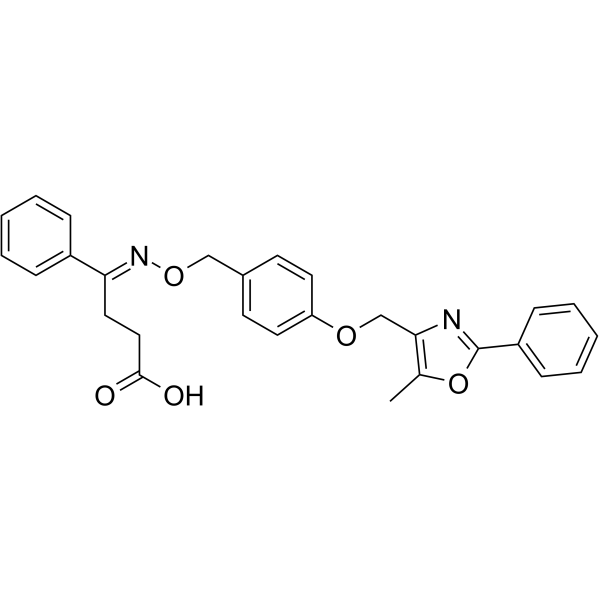 0 ImagesCat. No.: HY-101649CAS No.: 250601-04-8Synonyms: TAK-559Imiglitazar (TAK559) is a potent and dual human PPARα and PPARγ1 agonist with EC50 values of 67 and 31 nM.
-
S26948
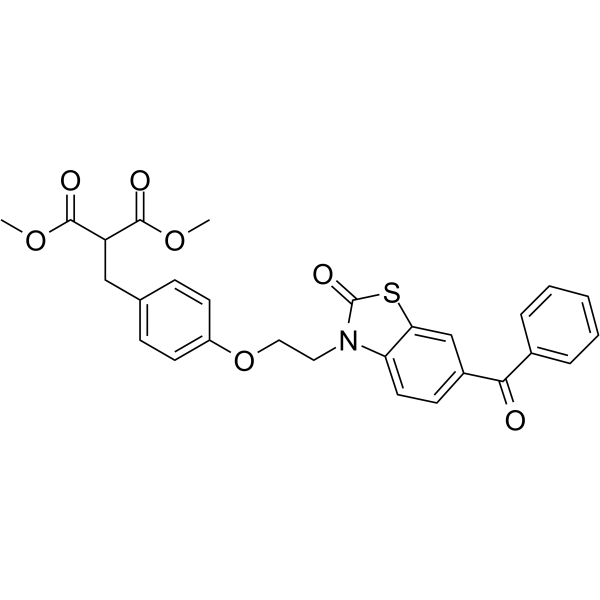 0 ImagesCat. No.: HY-108572CAS No.: 353280-43-0S26948 is a specific peroxisome proliferator-activated receptor γ (PPARγ) modulator (EC50=8.83 nM) with potent antidiabetes and antiatherogenic effects. S26948 is a specific high-affinity agonist for PPARγ.
-
GW1929 hydrochloride
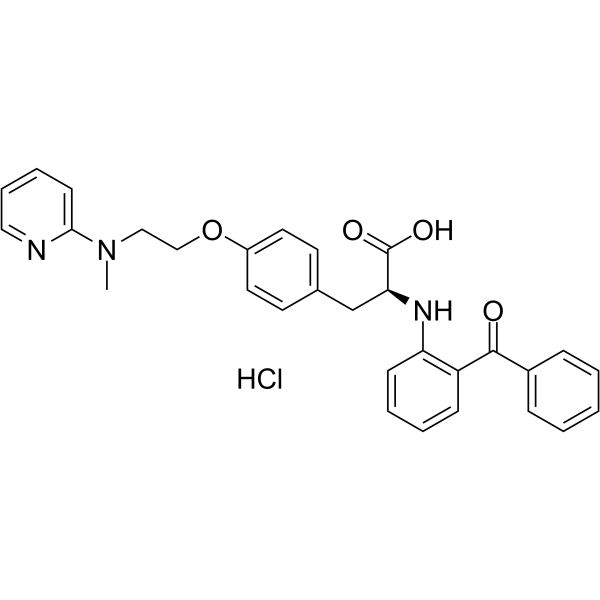 0 ImagesCat. No.: HY-110022CAS No.: 1217466-21-1GW1929 hydrochloride is an orally active peroxisome proliferator-activated receptor-γ (PPARγ) agonist with a pKi of 8.84 for human PPAR-γ, and pEC50s of 8.56 and 8.27 for human PPAR-γ and murine PPAR-γ, respectively. GW1929 hydrochloride has antidiabetic efficacy and neuroprotective potential. GW1929 hydrochloride suppresses neuronal apoptosis and shows anti-inflammatory potential.




