



Isotope-Labeled Compounds
Isotope-labeled compounds are chemical substances in which some atoms in their molecules are replaced by isotope atoms. The range of stable isotope products can cover from gases to complex molecules. Isotope-labeled compounds could provide a site-specific investigation of structures, making molecules easily detectable by mass spectrometry and NMR, and maintaining the physico-chemical properties of the target molecule at the same time.
MCE isotope-labeled compounds are all stable isotope-labeled compounds and are non-radioactive labeled substances. MCE isotope-labeled compounds are unique tools for identifying and understanding biological and chemical processes. Stable isotope-labeled products are now getting more and more popular among scientists. The scope of application is gradually penetrating into various scientific fields, such as life sciences, food and medicine, agriculture, environment, geology, etc. Stable isotope-labeled compounds have a wide range of applications in the Life Science areas, such as Metabolomics, Proteomics, Clinical studies, Deuterium drugs, etc.
All Product Categories
-
Isotope-Labeled Compounds Related Products (11097)
Related Products (11097)

-
2-Hydroxyestradiol-d5
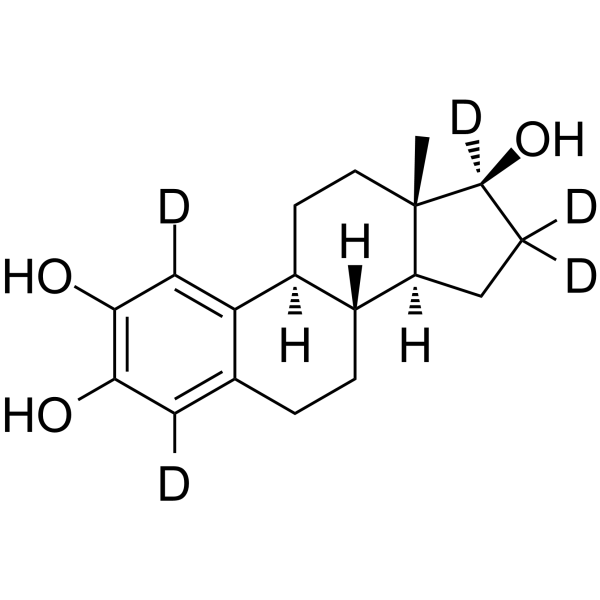 0 ImagesCat. No.: HY-124489S1CAS No.: 221093-33-02-Hydroxyestradiol-d5 is the deuterium labeled 2-Hydroxyestradiol. 2-Hydroxyestradiol, a metabolite of 17β-estradiol with minimal estrogenic activity, possesses antioxidant effects and reacts with DNA to form stable adducts and exerts genotoxicity[.
-
6-Heptyltetrahydro-2H-pyran-2-one-d7
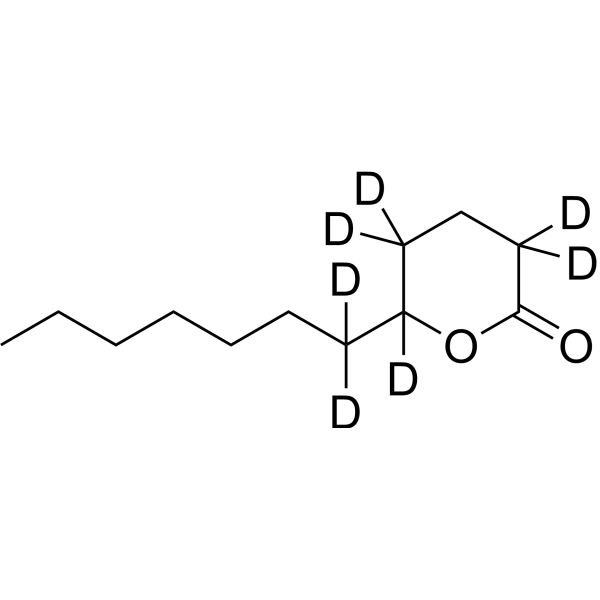 0 ImagesCat. No.: HY-W009815S2CAS No.: 3028868-79-0Synonyms: δ-Laurolactone-d76-Heptyltetrahydro-2H-pyran-2-one-d7 is deuterated labeled 6-Heptyltetrahydro-2H-pyran-2-one.
-
Pinaverium bromide-d4-1
 0 ImagesCat. No.: HY-111613S1
-
l-Gatifloxacin-d4
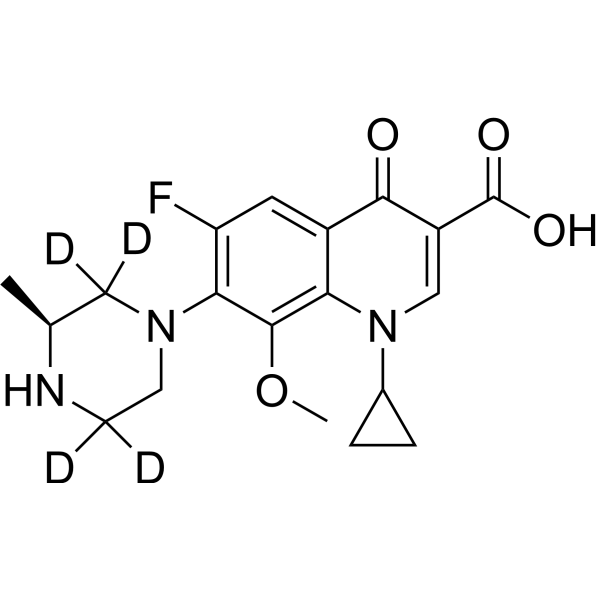 0 ImagesCat. No.: HY-154777Sl-Gatifloxacin-d4 is deuterated labeled l-Gatifloxacin.
-
Chlorothalonil Metabolite R611553-13C2,15N2(sodium salt)
 0 ImagesCat. No.: HY-165691SChlorothalonil Metabolite R611553-13C2,15N2 (sodium salt) is 13C and 15N labeled Chlorothalonil Metabolite R611553 (sodium salt).
-
Fmoc-Ser(tBu)-OH-13C3,15N
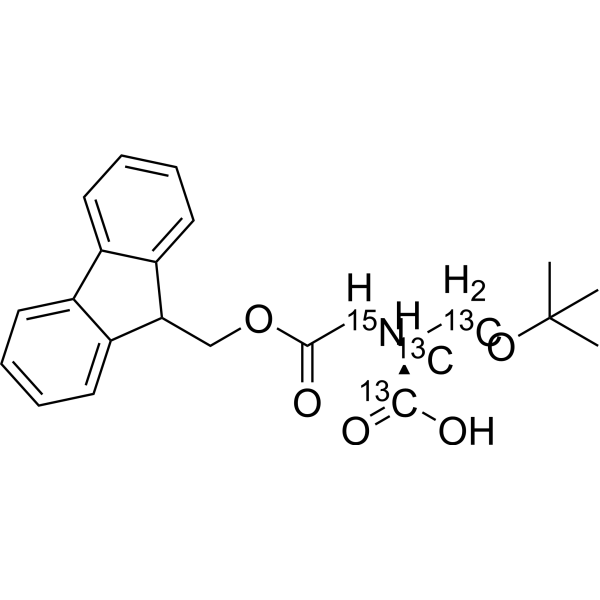 0 ImagesFmoc-Ser(tBu)-OH-13C3,15N is a 15N-labeled and 13C-labled Fmoc-Ser(tBu)-OH (HY-W007941). Fmoc-Ser(tBu)-OH is a serine derivative.
-
Dodecanedioic acid-d4
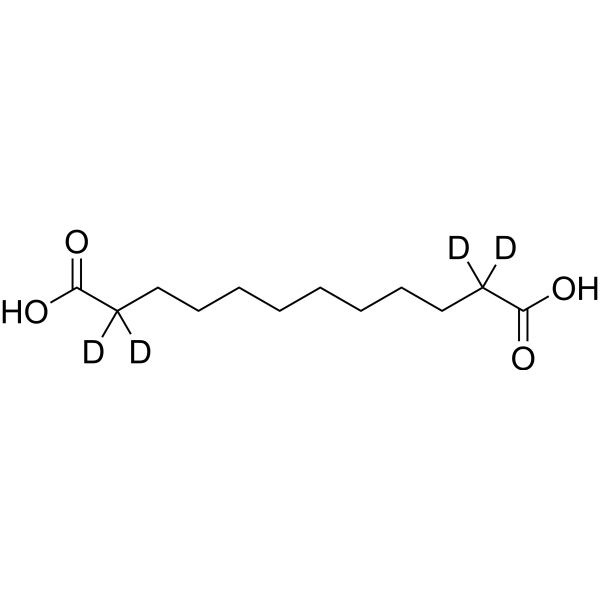 0 ImagesDodecanedioic acid-d4 is the deuterium labeled Dodecanedioic acid (HY-W012241). Dodecanedioic acid is an orally active straight-chain dicarboxylic acid. As an alternative energy substrate between lipids and carbohydrates, Dodecanedioic acid can be rapidly oxidized during exercise, reducing muscle fatigue without stimulating insulin secretion. Dodecanedioic acid also exhibits blood glucose-lowering activity in non-insulin-dependent diabetes mellitus.
-
N,N-Dimethyl-2-sulfamoylnicotinamide-d6
 0 ImagesCat. No.: HY-W071201SSynonyms: 2-Aminosulfonyl-N,N-dimethylnicotinamide-d6N,N-Dimethyl-2-sulfamoylnicotinamide-d6 (2-Aminosulfonyl-N,N-dimethylnicotinamide-d6) is deuterium labeled N,N-Dimethyl-2-sulfamoylnicotinamide.
-
Simvastatin acid-d3 ammonium
 0 ImagesCat. No.: HY-119695AS2Synonyms: Tenivastatin-d3 ammoniumSimvastatin acid-d3 (Tenivastatin-d3) ammonium is deuterium-labeled Simvastatin acid (ammonium) (HY-119695A).
-
Fenspiride-d5 hydrochloride
 0 ImagesCat. No.: HY-A0027SCAS No.: 1246815-28-0Fenspiride-d5 hydrochloride is the deuterium labeled Fenspiride hydrochloride (HY-A0027). Fenspiride hydrochloride is an α adrenergic and H1 histamine receptor antagonist.
-
Difelikefalin-d5
 0 ImagesCat. No.: HY-17609SSynonyms: CR-845-d5; FE-202845-d5Difelikefalin-d5 (CR-845-d5; FE-202845-d5) is the deuterated-labeled Difelikefalin (HY-17609). Difelikefalin (CR-845; FE-202845) is an orally active peripherally acting kappa opioid receptor agonist. Difelikefalin reduces acute kidney injury, decreases oliguria, maintains urine flow, inhibits cytokine expression, and improves survival in endotoxemia after ischemia/reperfusion. Difelikefalin suppresses pruritus signals and exhibits neuromodulatory antipruritic activity. Difelikefalin can be used in research related to acute kidney injury, chronic kidney disease-associated pruritus, and atopic dermatitis.
-
Quinoxyfen-d4
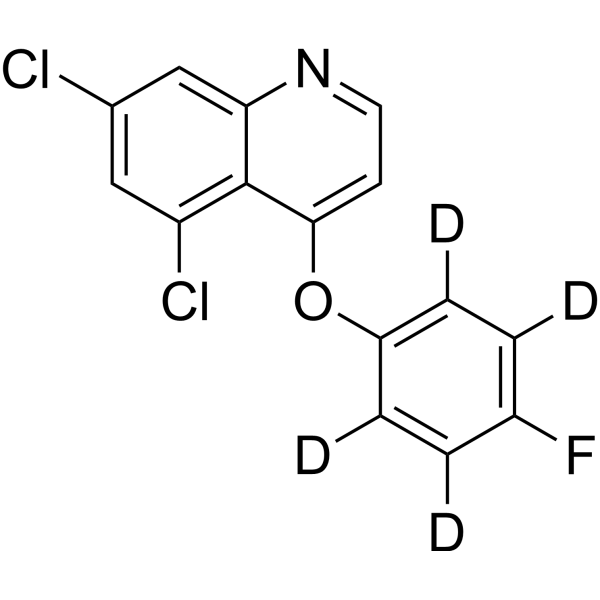 0 ImagesCat. No.: HY-120734SSynonyms: Legend-d4; DE 795-d4Quinoxyfen-d4 is the deuterium labeled Quinoxyfen.
-
4-Hydroxy-17β-estradiol-1,2,16,16,17-d5
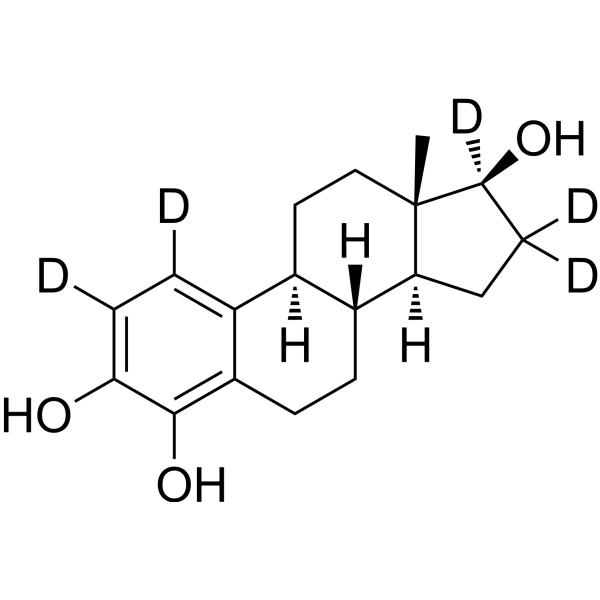 0 ImagesCat. No.: HY-146631SCAS No.: 221093-38-54-Hydroxy-17β-estradiol-1,2,16,16,17-d5 is the deuterium labeled 4-Hydroxy-17β-estradiol-1,2,16,16,17.
-
N-(3-(Dimethylamino)propyl)tetradecanamide-d5
 0 ImagesCat. No.: HY-W099582SN-(3-(Dimethylamino)propyl)tetradecanamide-d5 is deuterium-labeled N-(3-(Dimethylamino)propyl)tetradecanamide (HY-W099582).
-
2,3,3',4',5,5'-Hexachloro-1,1'-biphenyl-13C12
 0 ImagesCat. No.: HY-166896S2,3,3',4',5,5'-Hexachloro-1,1'-biphenyl-13C12 is 13C labeled 2,3,3',4',5,5'-Hexachloro-1,1'-biphenyl.
-
Prosulfuron-d3
 0 ImagesCat. No.: HY-W716030Prosulfuron-d3 is deuterium labeled Prosulfuron.
-
4-Hydroxy Clonidine-d4
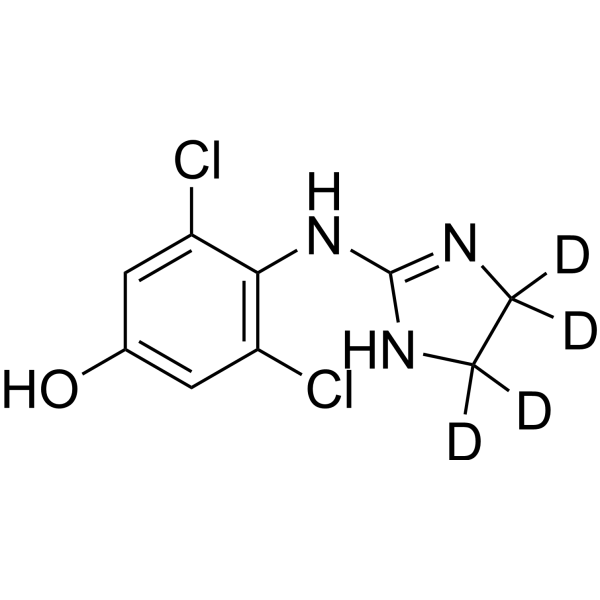 0 ImagesCat. No.: HY-132423SCAS No.: 1189988-05-34-Hydroxy Clonidine-d4 is the deuterium labeled 4-Hydroxy Clonidine.
-
Taurohyodeoxycholic acid-d4 sodium
 0 ImagesCat. No.: HY-114360AS1Taurohyodeoxycholic acid-d4 (sodium) is a deuterated labeled Taurohyodeoxycholic acid (sodium). Taurohyodeoxycholic acid (THDCA) sodium is the taurine-conjugated form of the secondary bile acid hyodeoxycholic acid. Taurohyodeoxycholic acid can also reduce the activity and expression of myeloperoxidase TNF-α and IL-6, as well as colonic damage in TNBS-induced ulcerative colitis mouse model.
-
1,1-Diethoxypentane-d10
 0 ImagesCat. No.: HY-W096091S1,1-Diethoxypentane-d10 is a deuterated labeled 1,1-Diethoxypentane.
-
2-Methoxy-3-methylpyrazine-d3
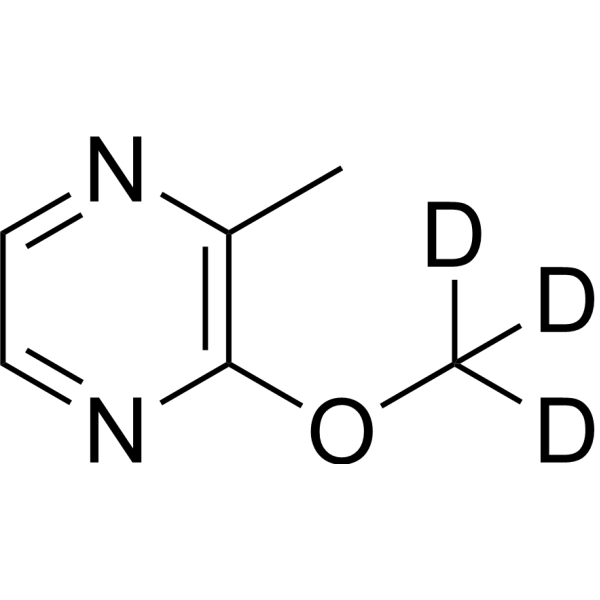 0 ImagesCat. No.: HY-W015855S2-Methoxy-3-methylpyrazine-d3 is deuterated labeled 2-Methoxy-3-methylpyrazine.



