



Liposome
Liposomes (NPs typically 100–500 nm in diameter) are fabricated from the self-assembly of phospholipids, which consist of a polar phosphate head group and hydrophobic lipid tails. In aqueous environments, the hydrophobic tails self-orient, resulting in a spherical structure comprised of an aqueous core surrounded by a lipophilic bilayer membrane. Liposomes are both biocompatible and biodegradable (e.g., at certain pH and temperature), which can be controlled by modifying the lipid composition. Furthermore, liposomes are amenable to various modifications that improve their efficacy as drug delivery carriers.
All Product Categories
-
Liposome Related Products (1266)
Related Products (1266)

-
DSPE-PEG46-N3
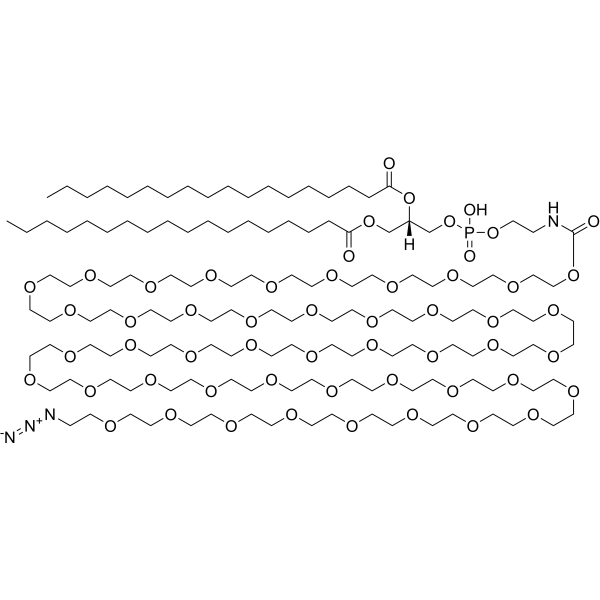 0 ImagesCat. No.: HY-130906DSPE-PEG46-N3 is a PEG-based PROTAC linker that can be used in the synthesis of PROTACs. DSPE-PEG46-N3 is a click chemistry reagent, it contains an Azide group and can undergo copper-catalyzed azide-alkyne cycloaddition reaction (CuAAc) with molecules containing Alkyne groups. It can also undergo strain-promoted alkyne-azide cycloaddition (SPAAC) reactions with molecules containing DBCO or BCN groups.
-
DOPE PEG(2000)-N-Cyanine 5
 0 ImagesCat. No.: HY-N15907CAS No.: 2389048-58-0DOPE PEG(2000)-N-Cyanine 5 is a phospholipid. Phospholipids have good biocompatibility and significant amphiphilic characteristics, making them the main and suitable dosage form or excipient in drug formulations, thereby achieving better therapeutic effects. DOPE PEG(2000)-N-Cyanine 5 can be used in drug delivery research.
-
Cyanine 7-amine chloride hydrochloride
 0 ImagesCat. No.: HY-D2314CAS No.: 1650559-73-1Cyanine 7-amine (chloride hydrochloride) can be used to label cationic nanoparticles (NPs) or to NP conjugates (NPCs). It can track the residence time and clearance of nanoparticles in the body.
-
DMG-PEG10000-Glucose
 0 ImagesCat. No.: HY-183156DDMG-PEG10000-Glucose is a conjugate composed of dimyristic glycerol (DMG), a PEG chain, and terminal glucose. DMG-PEG10000-Glucose combines the membrane compatibility of phospholipids with glucose as an active site for sugar recognition or subsequent coupling reactions, making it suitable for research in biomaterial construction and drug delivery.
-
DMG-PEG1000-COOH
 0 ImagesCat. No.: HY-200288ADMG-PEG1000-COOH is a conjugate composed of DMG, a PEG chain, and a terminal carboxyl group (-COOH). The carboxyl group in DMG-PEG1000-COOH can form an amide bond with a primary amine via EDC/NHS activation, enabling targeted modification of liposomes/nanoparticles.
-
DSPE-PEG3400-KTP
 0 ImagesCat. No.: HY-182094BDSPE-PEG3400-KTP is a PEG compound which composed of DSPE and a Kidney-targeting peptide KTP (HY-P11069). KTP can interact with specific proteins on the surface of renal tubular epithelial cells or exhibit higher affinity in the specific renal microenvironment, tending to aggregate or be internalized within the renal tubular epithelium. DSPE-PEG3400-KTP can actively guide carriers such as nanomedicines, liposomes, and microspheres to the kidney.
-
Zosurabalpin TFA
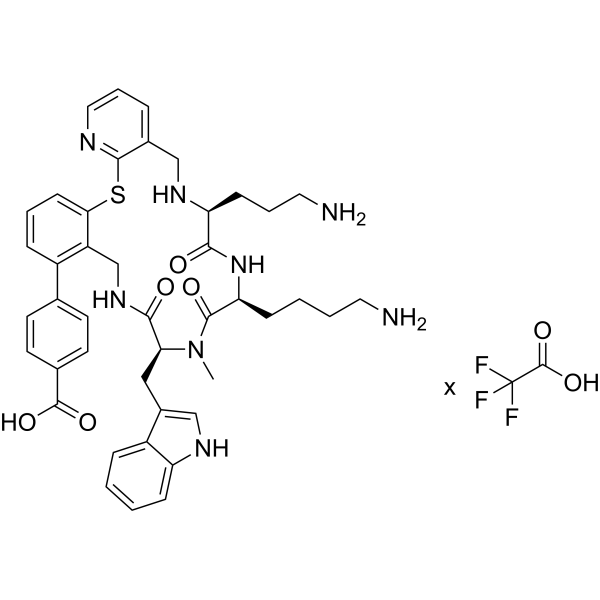 0 ImagesCat. No.: HY-147429ASynonyms: Abx MCP TFA; RG6006 TFAZosurabalpin (Abx MCP; RG6006) TFA is a lipopolysaccharide (LPS) transport inhibitor that targets the LptB2FGC complex. Zosurabalpin TFA blocks the transport of LPS from the inner membrane to the outer membrane, leading to intracellular toxic accumulation of LPS and bacterial death. Zosurabalpin TFA exhibits potent antibacterial activity against carbapenem-resistant Acinetobacter baumannii (CRAB) and shows in vivo efficacy in mouse infection models. Zosurabalpin TFA can be used for research on CRAB infections, including pneumonia and sepsis.
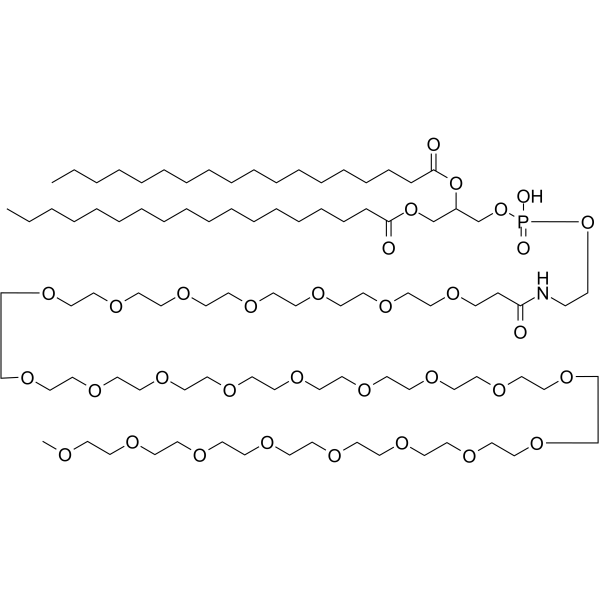
-
DPPE-PEG5000-Mal
 0 ImagesCat. No.: HY-W1052492BDPPE-PEG5000-Mal is a conjugate composed of DPPE, PEG chains, and maleimide (Mal). The maleimide group in DPPE-PEG5000-Mal can undergo a specific Michael addition reaction with thiol-containing (-SH) biomolecules (such as peptides, antibodies, and aptamers), enabling targeted modification of liposomes/nanoparticles.
-
DOPE-mPEG30000
 0 ImagesCat. No.: HY-W440988IDOPE-mPEG30000 is a PEGylated phospholipid containing DOPE. DOPE-mPEG30000 combines the membrane fusion capabilities of DOPE with the stealth properties of PEG, playing a crucial role in mRNA vaccines, long-circulating liposomes, and drug delivery systems.
-
mPEG-Cholesterol (MW 2000)
 0 ImagesCat. No.: HY-W590593mPEG-Cholesterol,MW 2000 is a PEG derivative which self-assembles in water to form micelle-like structure. The cholesterol tail can be used to encapsulate hydrophobic drugs while the PEG chain ehances the water solubility of the micelles.
-
DSPE-PEG2000-NYZL1
 0 ImagesCat. No.: HY-172702DSPE-PEG2000-NYZL1 is a PEG compound which composed of DSPE and a NYZL1 peptide. NYZL1 can specifically bind to bladder cancer tissues and cells. DSPE-PEG2000-NYZL1 can be used for drug delivery.
-
Q1-SM-102 iodide
 0 ImagesCat. No.: HY-172330CAS No.: 3079716-72-3Q1-SM-102 iodide is a quaternary ammonium lipid derivative of SM-102 (HY-13454). Q1-SM-102 iodide can be used to prepare lipid nanoparticles (LNPs) for the delivery of mRNA in vivo. Q1-SM-102 iodide is a carriers for targeting delivery of mRNA to immune organs.
-
Chol-PEG1000-maleimide
 0 ImagesCat. No.: HY-N16237Chol-PEG1000-maleimide is a PEG derivative composed of Cholesterol, PEG units and Maleimide (HY-W007324). Maleimide forms a stable thioether bond with sulfhydryl (-SH) groups.
-
DPPE-PEG2000-COOH
 0 ImagesCat. No.: HY-W1052873CAS No.: 186750-22-1DPPE-PEG2000-COOH is a conjugate composed of DPPE, a PEG chain, and a terminal carboxyl group (-COOH). The carboxyl group in DPPE-PEG2000-COOH can form an amide bond with a primary amine via EDC/NHS activation, enabling targeted modification of liposomes/nanoparticles.
-
DPPE-PEG5000-N3
 0 ImagesCat. No.: HY-W1052051BSynonyms: DPPE-PEG5000-AzideDPPE-PEG5000-N3 (DPPE-PEG5000-Azide) is a conjugate composed of DPPE, PEG chains, and terminal azido groups (-N3). DPPE-PEG5000-Azide is a click chemistry reagent used for the targeted modification of liposomes/nanoparticles.
-
DOPE-mPEG350
 0 ImagesCat. No.: HY-W440988ADOPE-mPEG350 is a PEGylated phospholipid containing DOPE. DOPE-mPEG350 combines the membrane fusion capabilities of DOPE with the stealth properties of PEG, playing a crucial role in mRNA vaccines, long-circulating liposomes, and drug delivery systems.
-
DSPE-PEG3400-Amine
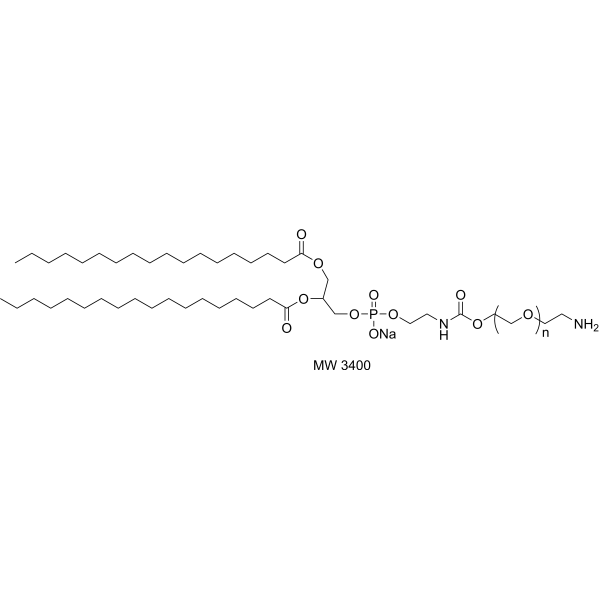 0 ImagesCat. No.: HY-140734DSPE-PEG3400-Amine is a class of functionalized polymers composed of a methoxy-terminated polyethylene glycol backbone and a terminal primary amine group. DSPE-PEG3400-Amine serves as an important intermediate for constructing functionalized nanocarriers, modifying proteins or polypeptides, and developing novel drug delivery systems.
-
DSPE-PEG10000-Glucose
 0 ImagesCat. No.: HY-W1052981BDSPE-PEG10000-Glucose is a conjugate composed of DSPE, a PEG chain, and terminal glucose. DSPE-PEG10000-Glucose combines the membrane compatibility of phospholipids with glucose as an active site for sugar recognition or subsequent coupling reactions, making it suitable for research in biomaterial construction and drug delivery.
-
514O6,10
 0 ImagesCat. No.: HY-171984CAS No.: 2863553-06-2514O6,10 is an ionizable lipidoid containing a branched-tail. 514O6,10 can be used to synthesize lipid nanoparticles (LNPs) for delivering mRNA to natural killer and dendritic cells within the lung. 514O6,10 can be used for the RNA therapies for lung diseases associated with immune cell dysregulation, including cancer, viral infections, and autoimmune disorders research.



