



Anti-Mouse osteopontin/SPP1 Antibody (100D3)

Based on 1 Customer Validation
Anti-Mouse osteopontin/SPP1 Antibody (100D3) is an anti-mouse osteopontin/SPP1 IgG2c monoclonal antibody. Anti-Mouse osteopontin/SPP1 Antibody (100D3) can reverse the inhibition of osteopontin (OPN) on T cells and enhance cytotoxic T lymphocyte (CTL) killing ability. Anti-Mouse osteopontin/SPP1 Antibody (100D3) can improve dentin density. Anti-Mouse osteopontin/SPP1 Antibody (100D3) can be used for researches on cancer and dental related conditions such as colon cancer. The recommend isotype control of Anti-Mouse osteopontin/SPP1 Antibody (100D3): Mouse IgG2c kappa, Isotype Control (HY-P99981).
For research use only. We do not sell to patients.
- Purity : 95%
- Molecular Weight:150 kDa
-
Storage:
Please store the product under the recommended conditions in the Certificate of Analysis.


To place orders, for customer services and technical support, please contact: MedChemExpress USA
Tel: 609-228-6898 E-mail: [email protected] [email protected]


-
 Biological Activity
-
Chemical Information
- Purity & Documentation
- References
-
 Help & FAQs




Biological Activity
Description
Isotype
Mouse IgG2c kappa
Recommend Isotype Controls
Species Reactivity
Mouse
IC50 & Target
osteopontin/SPP1
In Vitro
Anti-Mouse osteopontin/SPP1 Antibody (100D3) (3 days) can reverse the inhibition of osteopontin (OPN) on T cell proliferation[1].
Anti-Mouse osteopontin/SPP1 Antibody (100D3) (24 h) significantly enhances the killing efficiency of cytotoxic T lymphocyte (CTL) against CT26[1].
MedChemExpress (MCE) has not independently confirmed the accuracy of these methods. They are for reference only.
In Vivo
Anti-Mouse osteopontin/SPP1 Antibody (100D3) (200 μg, s.c., twice a week, from day 7 to day 60) effectively improves dentin density in BALB/C mice[2].
MedChemExpress (MCE) has not independently confirmed the accuracy of these methods. They are for reference only.
-
Animal Model:2×10⁵ CT26 cells injected Balb/c mice (2-3 months)[1]
-
Dosage:200 μg
-
Administration:Subcutaneous injection (s.c.), once every 3 days, for 14 days
-
Result:Significantly reduced the number of lung metastatic nodules.
-
Animal Model:BALB/C mice (6 weeks)[2]
-
Dosage:200 μg
-
Administration:Subcutaneous injection (s.c.), twice a week, from day 7 to day 60
-
Result:Significantly increased the dentin density of the second and third molars.
Had no significant improvement in alveolar bone volume, density, and thickness.
Decreased serum FGF23 levels, but blood phosphorus levels did not return to normal.
Gene ID
Accession
Conjugated
Unconjugated
Reconsititution
The product can be reconstituted/diluted with sterile PBS or saline.
Application
in vivo OPN neutralization; in vitro OPN neutralization; ELISA
Verified Bioactivity
-
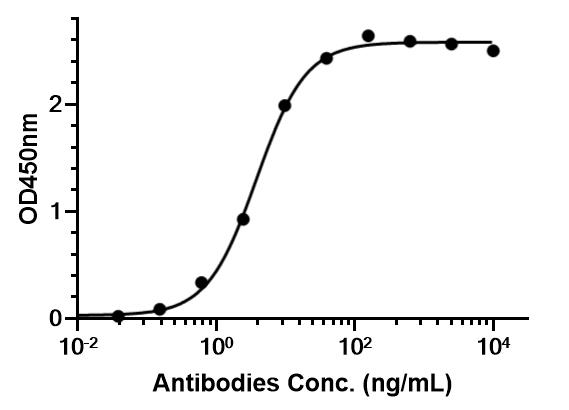 Immobilized Osteopontin/OPN Protein, Mouse (HEK293, His) (HY-P78358) can bind Anti-Mouse osteopontin/SPP1 Antibody (100D3). The EC50 for this effect is 3.8 ng/mL.


Chemical Information
-
Appearance Liquid
-
Molecular Weight 150 kDa
-
Color Colorless to light yellow
-
SMILES
[Anti-Mouse osteopontin/SPP1 Antibody (100D3)]
-
Formulation
Please refer to the lot-specific COA for specific buffer information.
-
Storage
Please store the product under the recommended conditions in the Certificate of Analysis.


Purity & Documentation
-
Data Sheet (261 KB)
-
SDS (251 KB)
- English - EN (251 KB)
- Français - FR (251 KB)
- Deutsch - DE (251 KB)
- Norwegian - NO (251 KB)
- Español - ES (251 KB)
- Swedish - SV (251 KB)
- Italian - IT (251 KB)
- Korean - KR (251 KB)
- Portuguese - PT (251 KB)
-
Inhibitory Antibodies User Guide (603 KB)
References
[1]. Klement JD, et al. Osteopontin Blockade Immunotherapy Increases Cytotoxic T Lymphocyte Lytic Activity and Suppresses Colon Tumor Progression. Cancers (Basel). 2021 Feb 28;13(5):1006. [Content Brief]
[2]. Mohamed FF, et al. Contributions of increased osteopontin and hypophosphatemia to dentoalveolar defects in osteomalacic Hyp mice. Bone. 2023 Nov;176:116886. [Content Brief]

Calculators
Concentration (start) × Volume (start) = Concentration (final) × Volume (final)


Anti-Mouse osteopontin/SPP1 Antibody (100D3) Related Classifications
HY-P990795 Related Classifications
 Powered by Bioz