



Cortactin Antibody (YA495)
(Synonyms: Amplaxin antibody; CTTN antibody; EMS 1 antibody; EMS1 antibody; FLJ34459 antibody; Mammary tumor and squamous cell carcinoma associated antibody; Oncogene EMS1 antibody; p80/85 src substrate antibody; Src substrate cortactin antibody; SRC8_HUMAN antibody)
Based on 1 Customer Validation
Cortactin Antibody (YA495) is a Rabbit-derived and non-conjugated IgG monoclonal antibody, targeting to Cortactin.
-
Host:
Rabbit
-
Isotype:
IgG
-
Application:
WB, ICC/IF, IHC-P, IP, FC
-
Reactivity :
Human, Mouse
-
Formulation:
Supplied in 1*TBS (pH7.4), 0.05% BSA and 40% Glycerol. Preservative: 0.05% Sodium Azide.
-
Conjugation:
Non-conjugated


To place orders, for customer services and technical support, please contact: MedChemExpress USA
Tel: 609-228-6898 E-mail: [email protected] [email protected]





Applications
| Application |
WB

WB: Western Blot
|
ICC/IF
ICC/IF: Immunocytochemistry/
Immunofluorescence |
IHC-P
IHC-P: Immunohistochemistry-Paraffin
|
FC
FC: Flow Cytometry
|
IP
IP: Immunoprecipitation
|
|---|---|---|---|---|---|
| Dilution Ratio | 1:500-1:5000 | 1:100-1:500 | 1:50-1:200 | 1:50-1:100 | Use at an assay dependent concentration. |


Product Details
Cortactin Antibody (YA495) is a Rabbit-derived and non-conjugated IgG monoclonal antibody, targeting to Cortactin.
-
Host Rabbit

-
Clonality Recombinant,Monoclonal

-
Species ReactivityHuman, Mouse
-
Observed Molecular WeightObserved band size: 75 kDa
Note: Due to possible protein modifications or aggregation, the molecular weight should be confirmed by actual measurement, and the predicted value is for reference only.

-
Calculated Molecular Weight Predicted band size: 62 kDa

Entrez Gene: 2017 Human ; 13043 Mouse ; 60465 Rat
SwissProt: Q14247 Human ; Q60598 Mouse ; Q66HL2 Rat
OMIM: 164765 Human
Synthetic peptide corresponding to Human Cortactin.AA range:34-67.
Endogenous
Protein A affinity purified.
Non-conjugated
Unmodified
IgG


Product Properties
-
Appearance
Solution
-
Formulation
Supplied in 1*TBS (pH7.4), 0.05% BSA and 40% Glycerol. Preservative: 0.05% Sodium Azide.
-
Concentration
Batch-dependent, Please check the COA for the concentration of each lot. Check Lot Concentration
-
Storage & Stability
Stored at -20°C for 1 year. Avoid repeated freeze / thaw cycles.
-
Shipping
Shipping with blue ice.


Verification Images
-
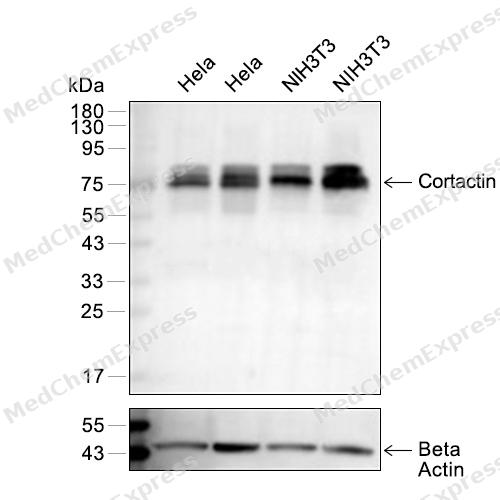 Western blot analysis of extracts from Hela (lane 2(20μg) or (lane 3(40μg)) and NIH3T3 (lane 4(20μg) or (lane 5(40μg)) using Cortactin (HY-P80088) Rabbit mAb. Proteins were transferred to a PVDF membrane and blocked with 5% BSA in TBST for 2 hour at room temperature. The primary antibody (1/1000) and Loading control antibody (Beta Actin, HY-P80438, 1/10000) was used in 5% BSA in TBST at 4°C overnight. Goat Anti-Rabbit IgG-HRP Secondary Antibody (1/10,000) was used for 1 hour at room temperature.
 -
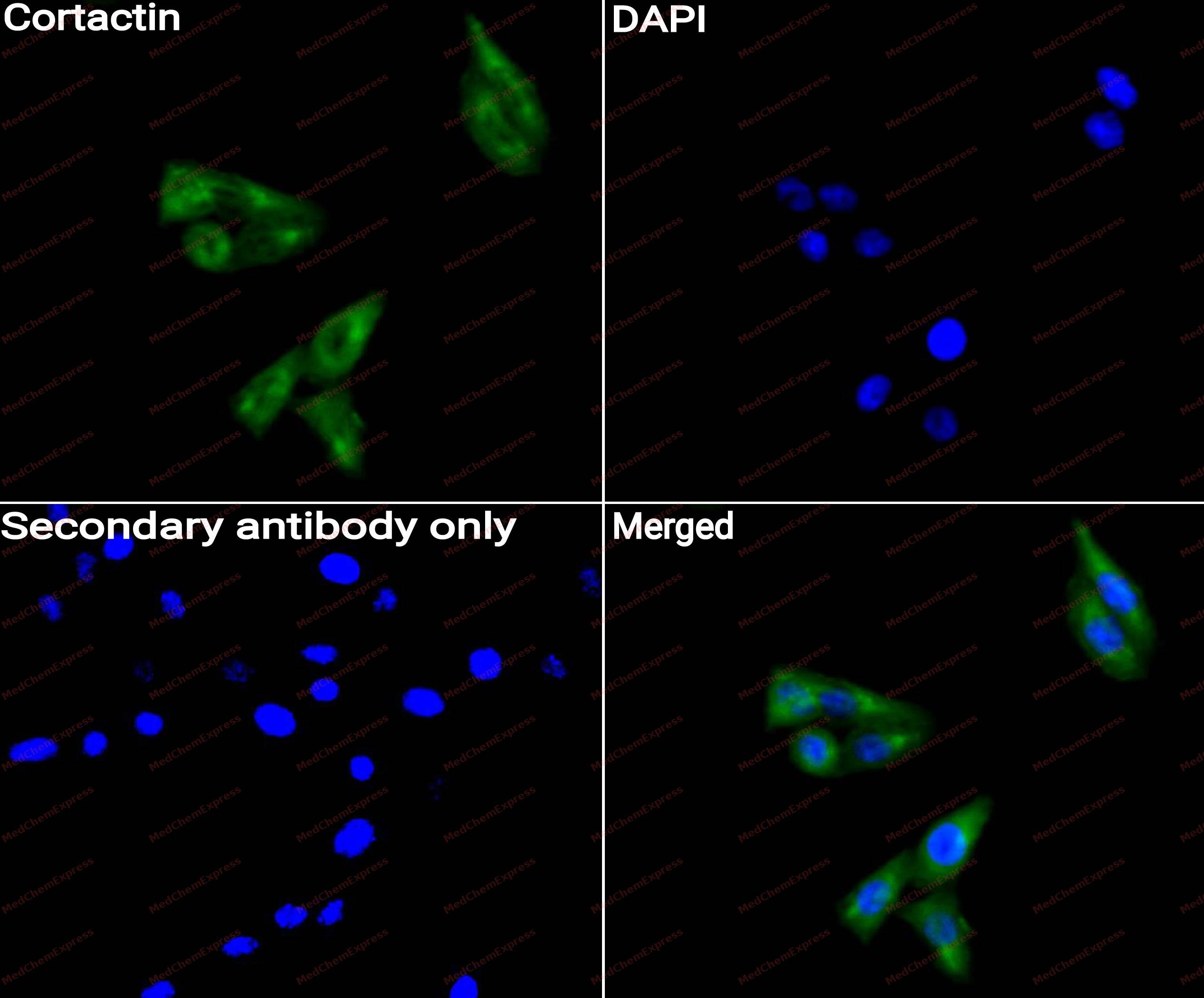 Immunocytochemistry analysis of Hela cells labeling Cortactin with Cortactin antibody (HY-P80088) at 1/100 dilution. Cells were fixed in 4% paraformaldehyde for 15 minutes at room temperature, permeabilized with 0.1% Triton X-100 for 10 minutes at room temperature, then blocked with QuickBlock™ Blocking Buffer for Immunol Staining for 10 min at room temperature. Cells were then incubated with Cortactin antibody (HY-P80088) at 1/100 dilution in QuickBlock™ Blocking Buffer for Immunol Staining at 4 ℃. Alexa Fluor® 488-conjugated AffiniPure Goat Anti-Rabbit IgG H&L(HY-P8002, Green) was used as the secondary antibody at 1/1,000 dilution. PBS instead of the primary antibody was used as the secondary antibody only control. The Nuclear counterstain was DAPI (Blue).
 -
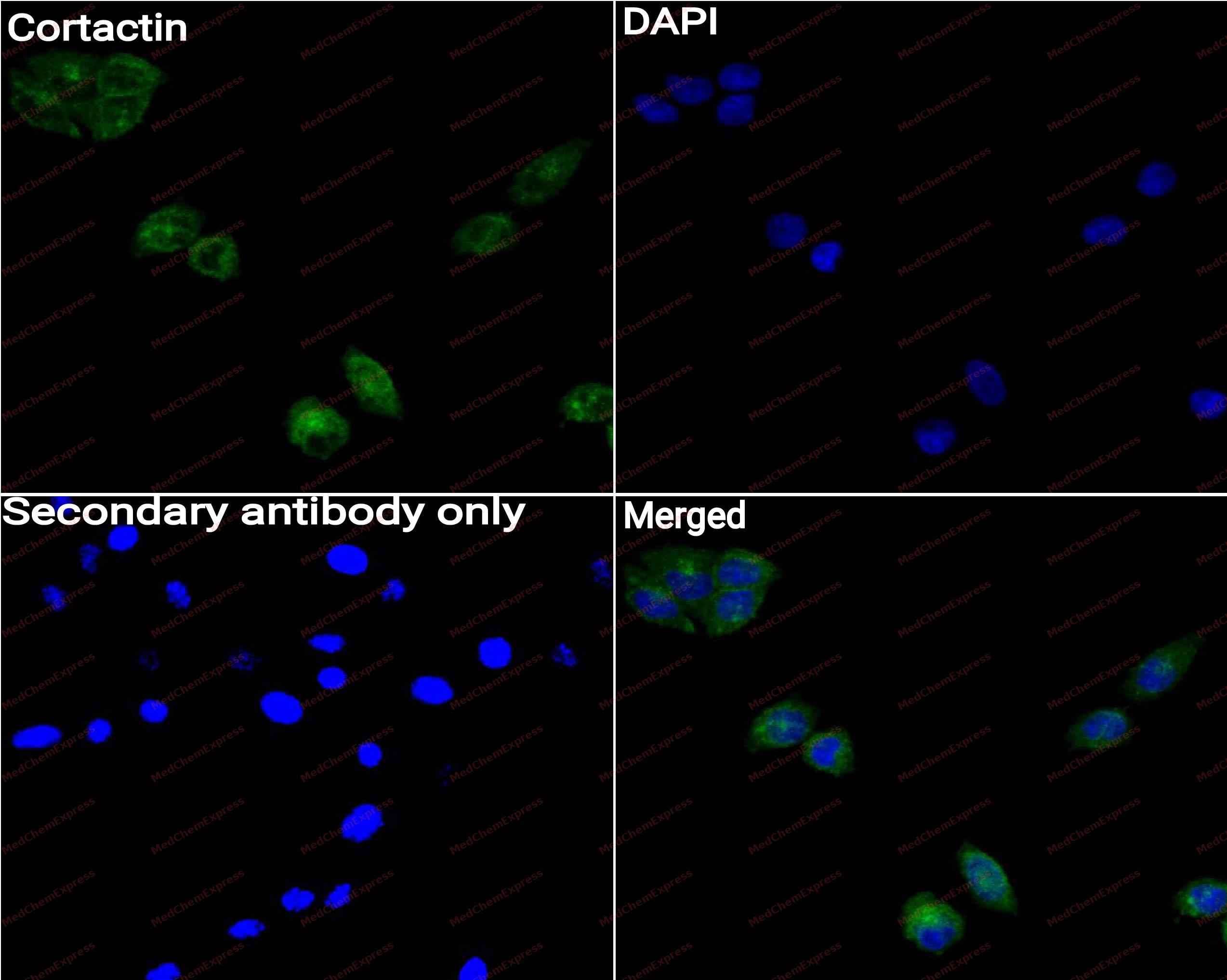 Immunocytochemistry analysis of Hela cells labeling Cortactin with Cortactin antibody (HY-P80088) at 1/250 dilution. Cells were fixed in 4% paraformaldehyde for 15 minutes at room temperature, permeabilized with 0.1% Triton X-100 for 10 minutes at room temperature, then blocked with QuickBlock™ Blocking Buffer for Immunol Staining for 10 min at room temperature. Cells were then incubated with Cortactin antibody (HY-P80088) at 1/250 dilution in QuickBlock™ Blocking Buffer for Immunol Staining at 4 ℃. Alexa Fluor® 488-conjugated AffiniPure Goat Anti-Rabbit IgG H&L(HY-P8002, Green) was used as the secondary antibody at 1/1,000 dilution. PBS instead of the primary antibody was used as the secondary antibody only control. The Nuclear counterstain was DAPI (Blue).
 -
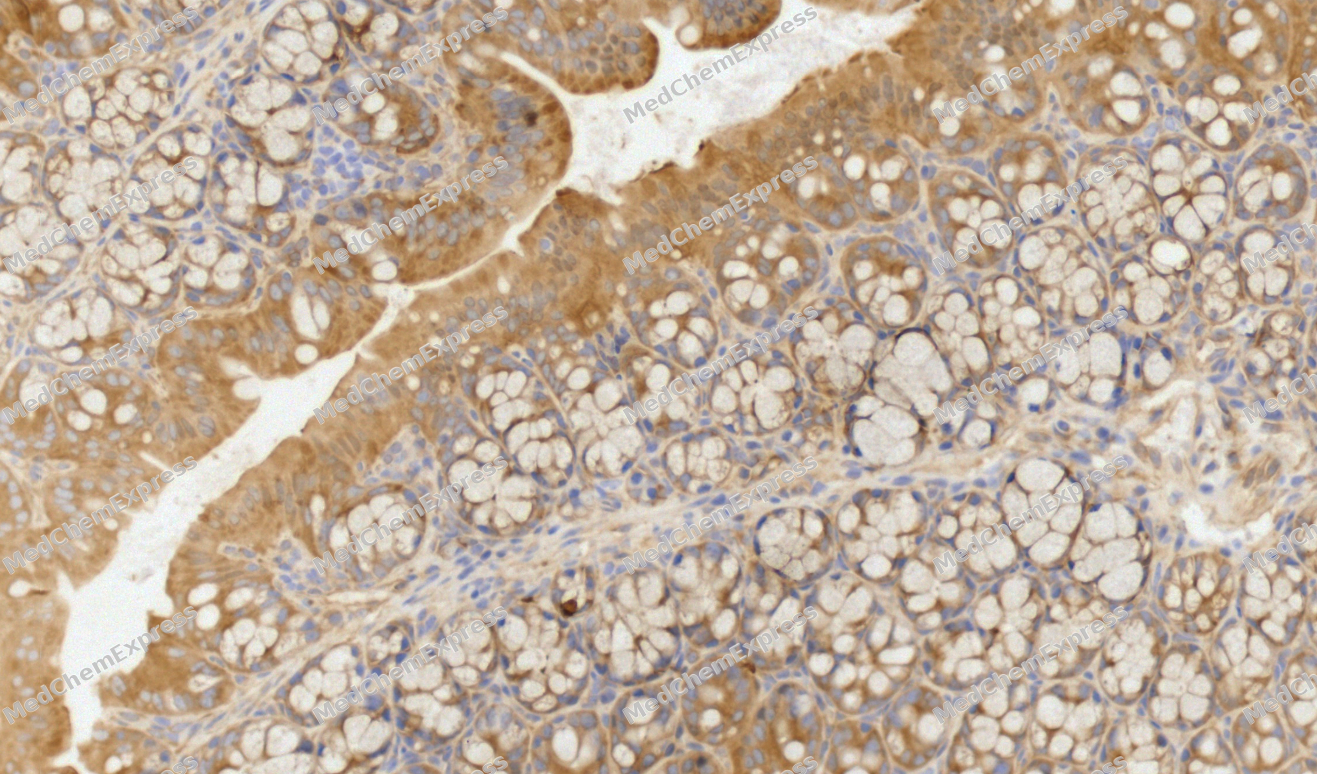 Immunohistochemical analysis of paraffin-embedded Mouse colon tissue using Cortactin Antibody. The section was pre-treated using heat mediated antigen retrieval with sodium citrate buffer (pH 6.0) for 8 minutes. The tissues were blocked in QuickBlock for 20 minutes at room temperature, washed with ddH2O and PBS, and then probed with the primary antibody (HY-P80088, 1/200) in 4℃ overnight. The detection was performed using an HRP conjugated compact polymer system. DAB was used as the chromogen. Tissues were counterstained with hematoxylin and mounted with DPX.
 -
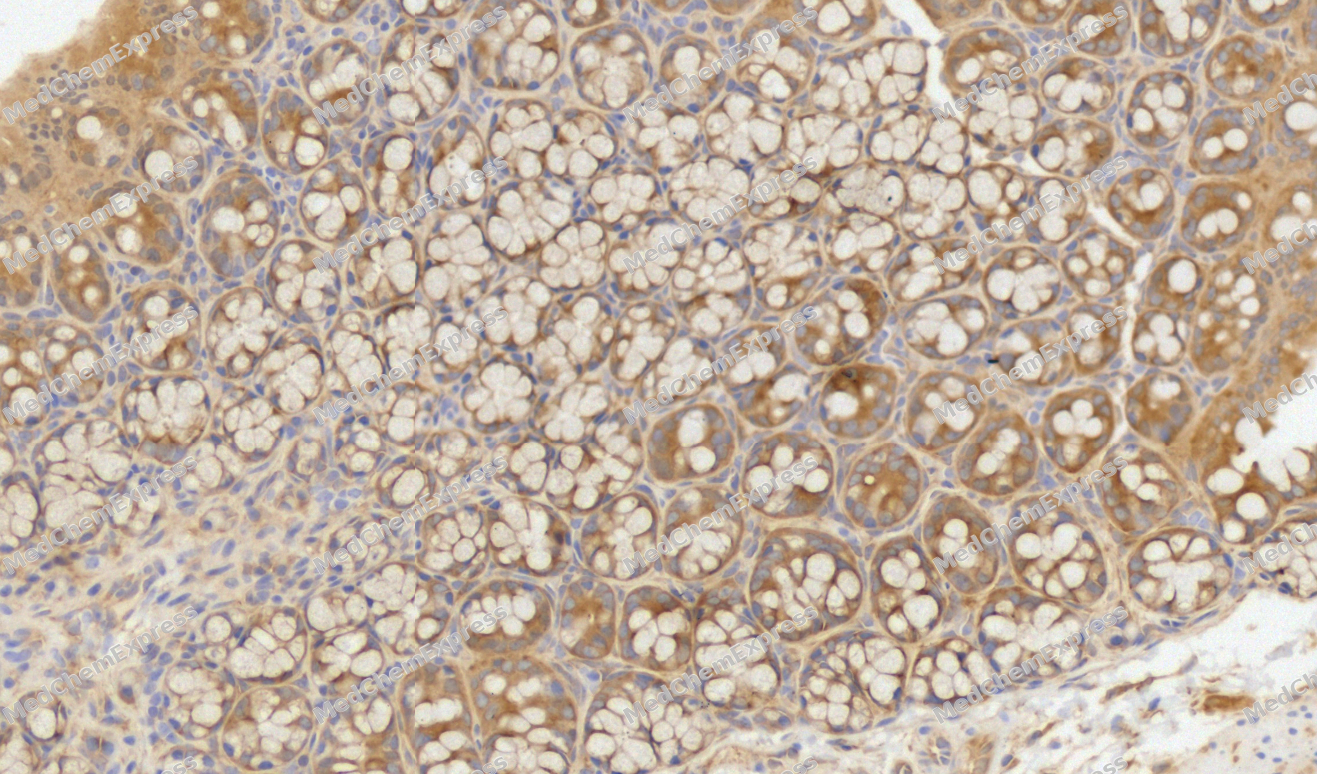 Immunohistochemical analysis of paraffin-embedded Mouse colon tissue using Cortactin Antibody. The section was pre-treated using heat mediated antigen retrieval with sodium citrate buffer (pH 6.0) for 8 minutes. The tissues were blocked in QuickBlock for 20 minutes at room temperature, washed with ddH2O and PBS, and then probed with the primary antibody (HY-P80088, 1/200) in 4℃ overnight. The detection was performed using an HRP conjugated compact polymer system. DAB was used as the chromogen. Tissues were counterstained with hematoxylin and mounted with DPX.
 -
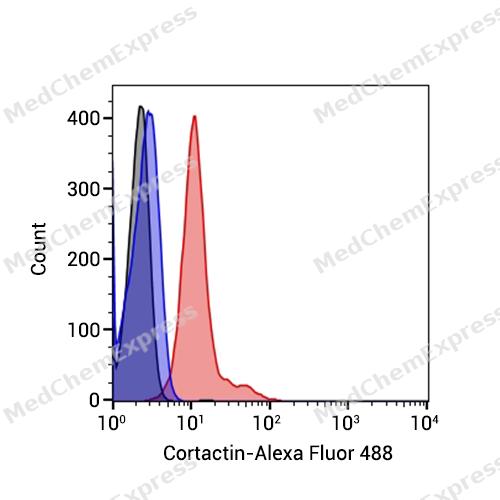 Flow cytometric analysis of 1X10^6 Hela cells labeling Cortactin Antibody (HY-P80088, red). Cells were fixed with 4% paraformaldehyde and permeabilised with 90% methanol. Then stained with the primary antibody at 1μg/mL dilution for an hour at 4℃. Alexa Fluor® 488-conjugated AffiniPure Goat Anti-Rabbit IgG H&L (HY-P8002) was used as the secondary antibody at 1/1,000 dilution for 30 minutes at 4℃. Rabbit IgG Isotype Control (HY-P80879, blue) was used as the isotype control, cells without incubation with primary antibody were used as the unlabeled control (black).


Background
-
Function
Cortactin contributes to the organization of the actin cytoskeleton and cell shape. Plays a role in the formation of lamellipodia and in cell migration. Plays a role in the regulation of neuron morphology, axon growth and formation of neuronal growth cones. Through its interaction with CTTNBP2, involved in the regulation of neuronal spine density. Plays a role in focal adhesion assembly and turnover. In complex with ABL1 and MYLK regulates cortical actin-based cytoskeletal rearrangement critical to sphingosine 1-phosphate (S1P)-mediated endothelial cell (EC) barrier enhancement. Plays a role in intracellular protein transport and endocytosis, and in modulating the levels of potassium channels present at the cell membrane. Plays a role in receptor-mediated endocytosis via clathrin-coated pits. Required for stabilization of KCNH1 channels at the cell membrane. Plays a role in the invasiveness of cancer cells, and the formation of metastases[1][2][3][4][5].
-
Subcellular Localization
Cytoplasm, cytoskeleton; Cell projection, lamellipodium; Cell projection, ruffle; Cell projection, dendrite; Cell projection; Cell membrane; Peripheral membrane protein; Cytoplasmic side; Cell projection, podosome; Cell junction; Cell junction, focal adhesion; Membrane, clathrin-coated pit; Cell projection, dendritic spine; Cytoplasm, cell cortex; Endoplasmic reticulum
-
Subunit
Part of a complex composed of NEDD9, AURKA and CTTN; within the complex NEDD9 acts as a scaffold protein and is required for complex formation (PubMed:24574519). Interacts (via N-terminus) with NEDD9 (PubMed:24574519). Identified in a complex containing FGFR4, NCAM1, CDH2, PLCG1, FRS2, SRC, SHC1, GAP43 and CTTN. Forms a complex made of ABL1 and MYLK (PubMed:20861316). Interacts with SHANK2 and SHANK3 (via its SH3 domain). Interacts with FGD1. Interacts with ABL2 (By similarity). Interacts with KCNA2 (via non-phosphorylated C-terminus) (PubMed:12151401). Interacts with PLXDC2 and SRCIN1. Interacts with SAMSN1 (via SH3 domain). Interacts (via SH3 domain) with ASAP1 (via Pro-rich region). Interacts (via SH3 domain) with DNM2 (By similarity). Interacts with ACTN1 (By similarity). Interacts with FER (PubMed:9722593). Interacts with CTTNBP2NL; this interaction may target CTTN to stress fibers. Interacts with CTTNBP2; this interaction may target CTTN at the cell cortex or dendritic spines. Interacts with KCNH1 (PubMed:23144454). Interacts (via SH3 domain) with DIP2A (via N-terminus); the interaction enhances CTTN acetylation and is required for proper synaptic transmission (By similarity). Interacts with XIRP1 (via N-terminus); the interaction promotes CTTN localization to intercalated disks in cardiomyocytes (By similarity)
-
SwissProt ID
-
Synonyms
Amplaxin antibody; CTTN antibody; EMS 1 antibody; EMS1 antibody; FLJ34459 antibody; Mammary tumor and squamous cell carcinoma associated antibody; Oncogene EMS1 antibody; p80/85 src substrate antibody; Src substrate cortactin antibody; SRC8_HUMAN antibody
-
Research Field
Signal Transduction


Documentation
-
Data Sheet (262 KB)
-
SDS (252 KB)
- English - EN (252 KB)
- Français - FR (252 KB)
- Deutsch - DE (252 KB)
- Norwegian - NO (252 KB)
- Español - ES (252 KB)
- Swedish - SV (252 KB)
- Italian - IT (252 KB)
- Korean - KR (252 KB)
- Portuguese - PT (252 KB)
-
User Guide for Antibodies (1077 KB)
References
[1]. von Holleben M, et al. Immunoinhibitory adapter protein Src homology domain 3 lymphocyte protein 2 (SLy2) regulates actin dynamics and B cell spreading. J Biol Chem. 2011 Apr 15;286(15):13489-501. [Content Brief]
[2]. Dudek SM, et al. Abl tyrosine kinase phosphorylates nonmuscle Myosin light chain kinase to regulate endothelial barrier function. Mol Biol Cell. 2010 Nov 15;21(22):4042-56. [Content Brief]
[3]. Williams MR, et al. An essential role for cortactin in the modulation of the potassium channel Kv1.2. Proc Natl Acad Sci U S A. 2007 Oct 30;104(44):17412-7. [Content Brief]
[4]. Herrmann S, et al. Cortactin controls surface expression of the voltage-gated potassium channel K(V)10.1. J Biol Chem. 2012 Dec 28;287(53):44151-63. [Content Brief]
[5]. Hashimoto S, et al. Targeting AMAP1 and cortactin binding bearing an atypical src homology 3/proline interface for prevention of breast cancer invasion and metastasis. Proc Natl Acad Sci U S A. 2006 May 2;103(18):7036-41. [Content Brief]

 Powered by Bioz
