



Aceclofenac
Based on 2 publication(s) in Google Scholar
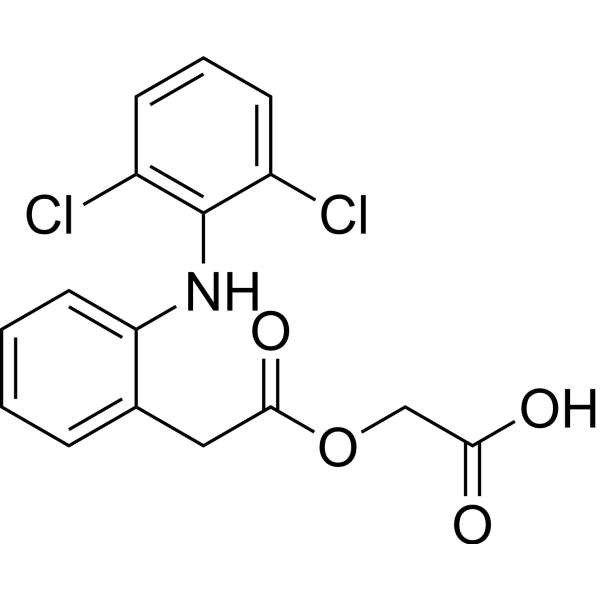
Aceclofenac is an orally active nonsteroidal anti-inflammatory agent (NSAID), with analgesic and anti-inflammatory properties. Aceclofenac is used for the research of osteoarthritis, ankylosing spondylitis, rheumatoid arthritis.
Nur für Forschungszwecke. Wir verkaufen nicht an Patienten.
- Reinheit : 99.83%
- CAS. Nr.: 89796-99-6
- Formel: C16H13Cl2NO4
- Molecular Weight:354.18
-
Speicherung:Powder -20°C, 3 years , 4°C, 2 years ; In solvent -80°C, 2 years , -20°C, 1 year

To place orders, for customer services and technical support, please contact: MedChemExpress USA
Tel: 609-228-6898 E-mail: [email protected] [email protected]


-
 Biologische Aktivität
-
Chemical Information
-
Lösungsmittel & Löslichkeit
- Protokoll
- Reinheit & Dokumentation
- Verweise
-
 Help & FAQs


-
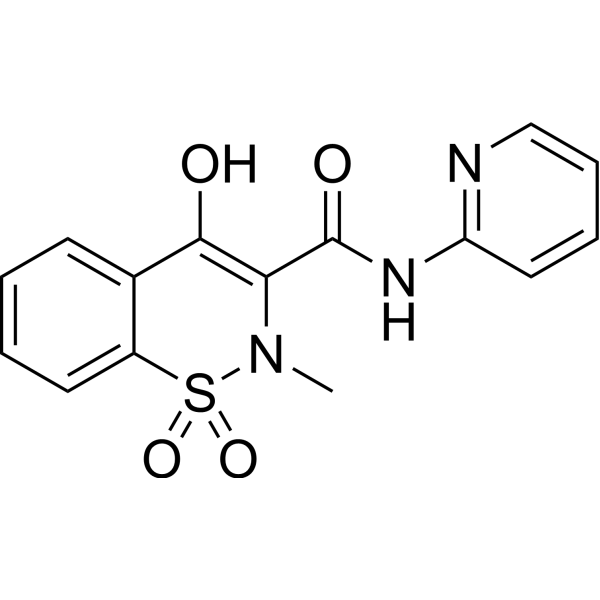
HY-B0253
PiroxicamCOX Inhibitor -
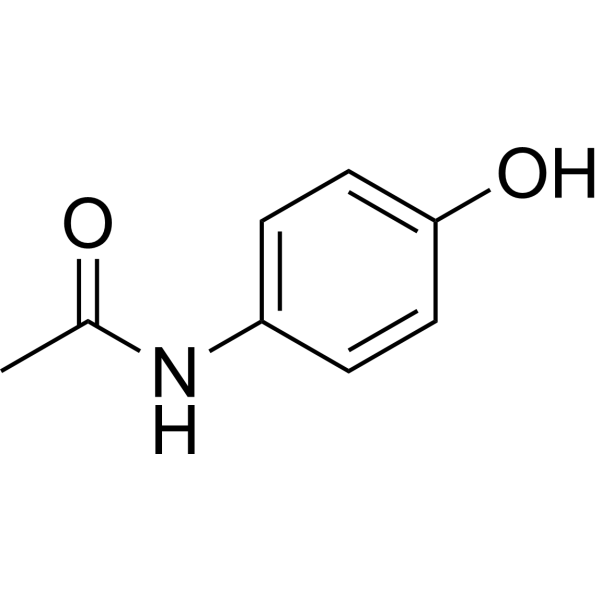
HY-66005
AcetaminophenCOX-2 Inhibitor -
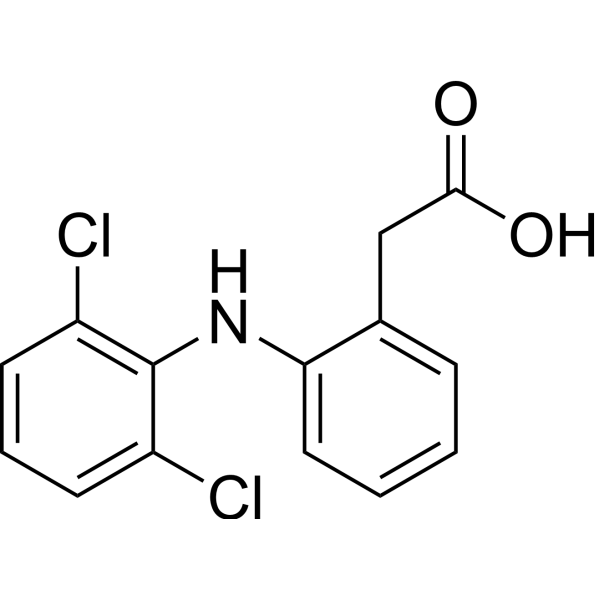
HY-15036
DiclofenacCOX Inhibitor -
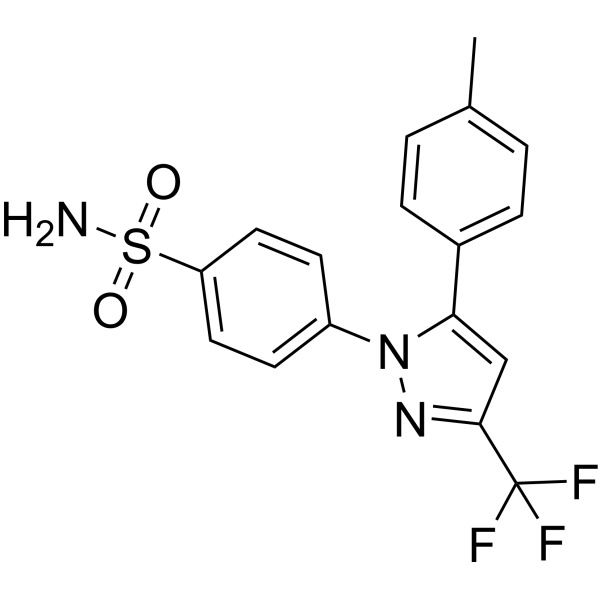
HY-14398
CelecoxibCOX-2inhibitor -
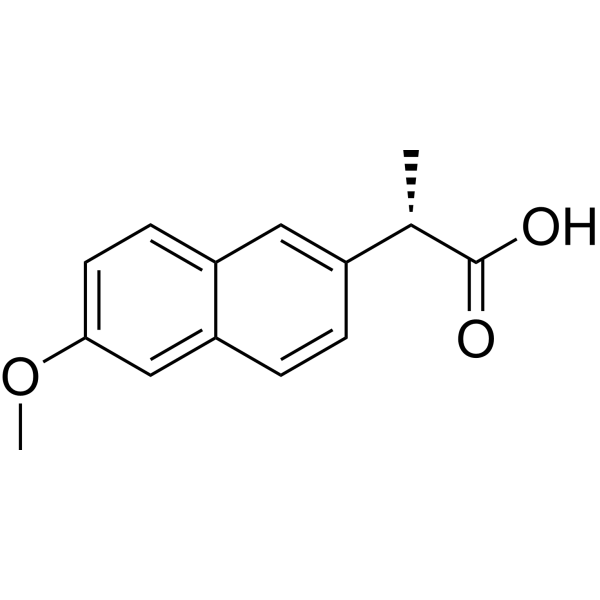
HY-15030
NaproxenCOX Inhibitor -
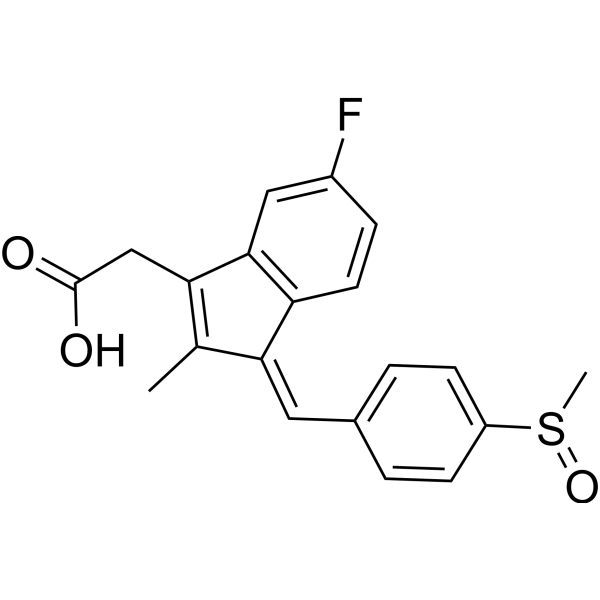
HY-B0008
SulindacAnti-inflammatory Agent -
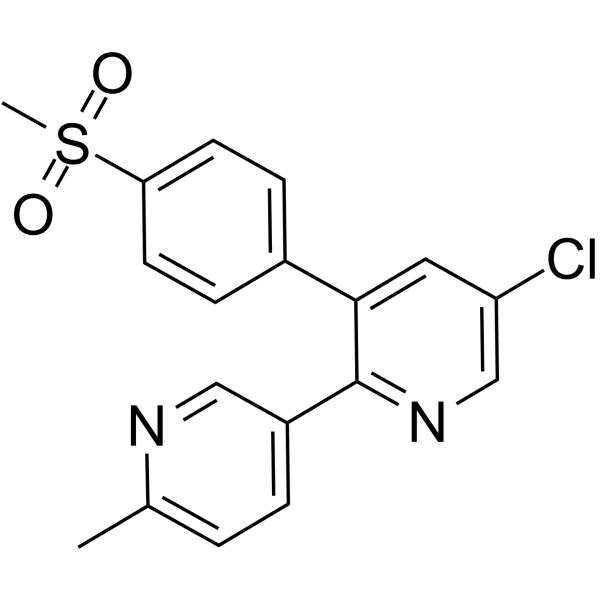
HY-15321
EtoricoxibCOX-2 Inhibitor -
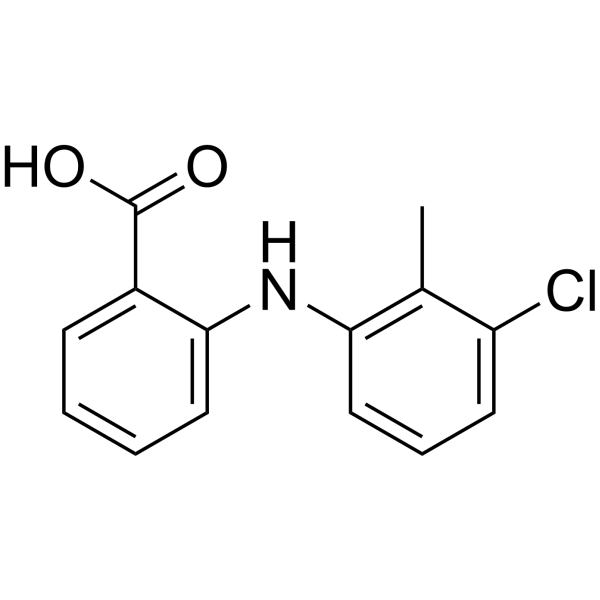
HY-B0335
Tolfenamic AcidCOX-2 Inhibitor -
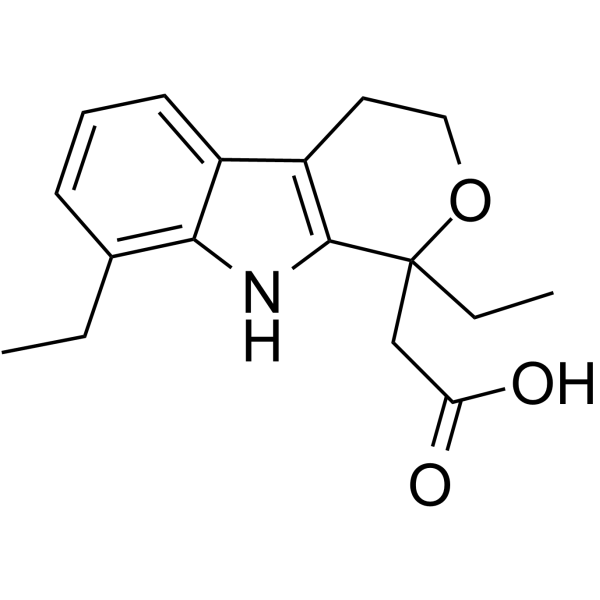
HY-76251
EtodolacCOX Inhibitor -
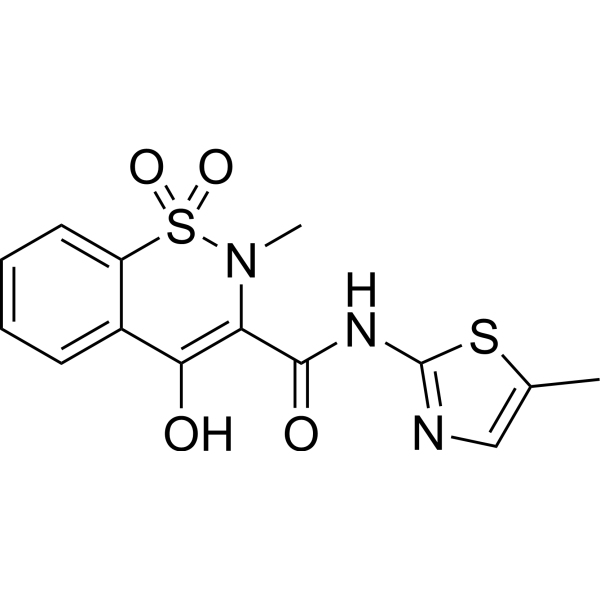
HY-B0261
MeloxicamCOX Inhibitor -
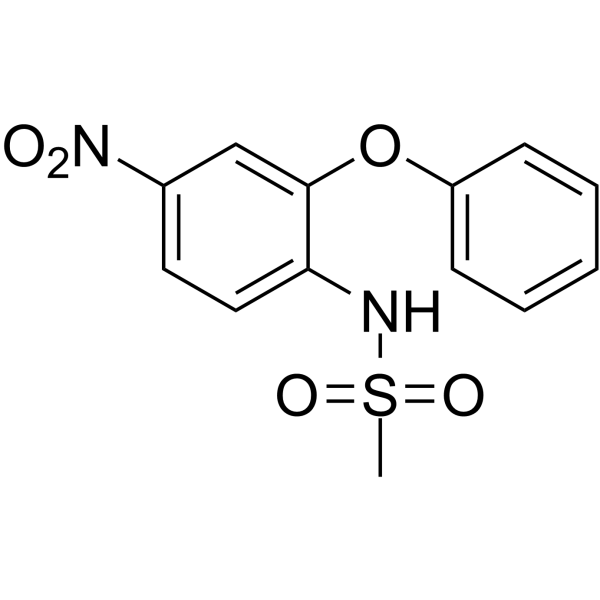
HY-B0363
NimesulideCOX Inhibitor -
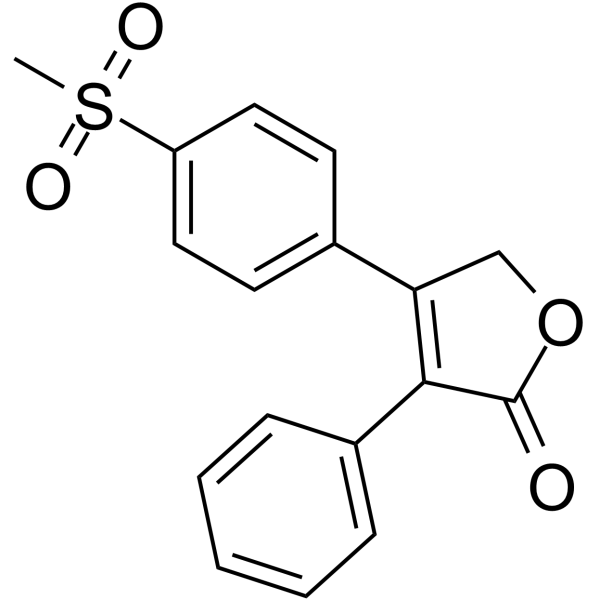
HY-17372
Rofecoxib
Publications Citing Use of MedChemExpress (MCE) Aceclofenac
More

Biologische Aktivität
Beschreibung
IC50 & Target
[1]|
COX-2 3 μM (IC50) |
COX-1 7.3 μM (IC50) |
In Vitro
Aceclofenac (1-30 μM; 72 hours) significantly decreases interleukin-6 production and fully blocks prostaglandin E2 synthesis by IL-1β- or LPS-stimulated human chondrocytes[1].
Aceclofenac inhibits COX-1 with IC50 values superior to 100 μM, but decreases by 50% COX-2 activity at the concentration of 0.77 μM in the whole blood test[1].
Aceclofenac increases the synthesis of interleukin 1 receptor antagonist and decreases the production of nitric oxide in human articular chondrocytes[2].
MedChemExpress (MCE) has not independently confirmed the accuracy of these methods. They are for reference only.
In Vivo
Aceclofenac exhibits terminal elimination half-life (rat 3.24 h) due to high plasma clearance (rat 1.10 L/h/kg) following intravenous injection (rat 10 mg/kg)[3].
MedChemExpress (MCE) has not independently confirmed the accuracy of these methods. They are for reference only.
-
Animal Model:Male Sprague-Dawley rats weighing 32-340 g[3]
-
Dosage:10 mg/kg for i.v., 20 mg/kg for p.o. (Pharmacokinetic Analysis)
-
Administration:Oral administration and intravenous injection
-
Result:T1/2 (3.24 h), Cmax (4.59 μg/mL for p.o.).
Clinical Trial
| NCT Number | Sponsor | Condition | Start Date |
Phase

|
|---|---|---|---|---|
| NCT01329991 | Plexxikon| | 2011-05 | PHASE1 |


Chemical Information
-
CAS. Nr. 89796-99-6
-
Appearance Solid
-
Molecular Weight 354.18
-
Formel C16H13Cl2NO4
-
Color White to off-white
-
SMILES
O=C(OCC(O)=O)CC1=CC=CC=C1NC2=C(Cl)C=CC=C2Cl
-
Versand
Room temperature in continental US; may vary elsewhere.
-
Speicherung
Powder -20°C 3 years 4°C 2 years In solvent -80°C 2 years -20°C 1 year


Publications (2)
-
Journal Impact Factor
-
Most Recent
-
Int J Biol Macromol
Reticuline isomerase AKR1B1 with aldo-keto reductase activity and detoxification function from the insect Blaps rhynchopetera. [Abstract]2026 Mar:352:151224. PMID: 41791543 -
bioRxiv
A drug repurposing screen reveals dopamine signaling as a candidate therapeutic pathway for PIGA-CDG. [Abstract]2026 Apr 18:2026.04.17.719256. PMID: 42039650


Lösungsmittel & Löslichkeit
In Vitro:
DMSO : 100 mg/mL (282.34 mM; Need ultrasonic; Hygroscopic DMSO has a significant impact on the solubility of product, please use newly opened DMSO)
H2O : < 0.1 mg/mL (insoluble)
Please refer to the solubility information to select the appropriate solvent. Once prepared, please aliquot and store the solution to prevent product inactivation from repeated freeze-thaw cycles.
Storage method and period of stock solution: -80°C, 2 years; -20°C, 1 year. When stored at -80°C, please use it within 2 years. When stored at -20°C, please use it within 1 year.
Please refer to the solubility information to select the appropriate solvent. Once prepared, please aliquot and store the solution to prevent product inactivation from repeated freeze-thaw cycles.
Storage method and period of stock solution: -80°C, 2 years; -20°C, 1 year. When stored at -80°C, please use it within 2 years. When stored at -20°C, please use it within 1 year.
Konzentration (Stammlösung) × Volumen (Stammlösung) = Konzentration (Ziellösung) × Volumen (Ziellösung)
In Vivo:
Select the appropriate dissolution method based on your experimental animal and administration route.
- For the following dissolution methods, please ensure to first prepare a clear stock solution using an In Vitro approach and then sequentially add co-solvents:
- To ensure reliable experimental results, the clarified stock solution can be appropriately stored based on storage conditions. As for the working solution for In Vivo experiments, it is recommended to prepare freshly and use it on the same day.
- The percentages shown for the solvents indicate their volumetric ratio in the final prepared solution. If precipitation or phase separation occurs during preparation, heat and/or sonication can be used to aid dissolution.
Add each solvent one by one: 10% DMSO 40% PEG300 5% Tween-80 45% Saline
Solubility: ≥ 2.5 mg/mL (7.06 mM); Clear solution
This protocol yields a clear solution of ≥ 2.5 mg/mL (saturation unknown).
Taking 1 mL working solution as an example, add 100 μL DMSO stock solution (25.0 mg/mL) to 400 μL PEG300, and mix evenly; then add 50 μL Tween-80 and mix evenly; then add 450 μL Saline to adjust the volume to 1 mL.
Preparation of Saline: Dissolve 0.9 g sodium chloride in ddH₂O and dilute to 100 mL to obtain a clear Saline solution.
Add each solvent one by one: 10% DMSO 90% (20% SBE-β-CD in Saline)
Solubility: ≥ 2.5 mg/mL (7.06 mM); Clear solution
This protocol yields a clear solution of ≥ 2.5 mg/mL (saturation unknown).
Taking 1 mL working solution as an example, add 100 μL DMSO stock solution (25.0 mg/mL) to 900 μL 20% SBE-β-CD in Saline, and mix evenly.
Preparation of 20% SBE-β-CD in Saline (4°C, storage for one week): 2 g SBE-β-CD powder is dissolved in 10 mL Saline, completely dissolve until clear.
In Vivo Dissolution Calculator
Please enter the basic information of animal experiments:
-
-
-
-
Recommended: Prepare an additional quantity of animals to account for potential losses during experiments.
Please enter your animal formula composition:
-
%DMSO +
Recommended: Keep the proportion of DMSO in working solution below 2% if your animal is weak.
-
%+
-
+%Tween-80 + +
-
%Saline +
The co-solvents required include: DMSO, . All of co-solvents are available by MedChemExpress (MCE). , Tween 80. All of co-solvents are available by MedChemExpress (MCE).
Working solution concentration: 0.22 mg/mL
Method for preparing stock solution: mg drug dissolved in μL DMSO. Stock solution concentration: mg/mL.
1. Take μL DMSO stock solution;
2. Add μL .
μL , mix evenly;
3. Then add μL Tween 80, mix evenly;
4. Then add μL
Please ensure that the stock solution in the first step is dissolved to a clear state, and add co-solvents in sequence. You can use ultrasonic heating (ultrasonic cleaner, recommended frequency 20-40 kHz), vortexing, etc. to assist dissolution.


Reinheit & Dokumentation
-
Data Sheet (278 KB)
-
SDS (393 KB)
- English - EN (393 KB)
- Français - FR (393 KB)
- Deutsch - DE (393 KB)
- Norwegian - NO (393 KB)
- Español - ES (393 KB)
- Swedish - SV (393 KB)
- Italian - IT (393 KB)
- Korean - KR (393 KB)
- Portuguese - PT (393 KB)
-
Handling Instructions (2659 KB)
Verweise
[1]. Y Henrotin, et al. In vitro effects of aceclofenac and its metabolites on the production by chondrocytes of inflammatory mediators. Inflamm Res. 2001 Aug;50(8):391-9. [Content Brief]
[2]. E Maneiro, et al. Aceclofenac increases the synthesis of interleukin 1 receptor antagonist and decreases the production of nitric oxide in human articular chondrocytes. J Rheumatol. 2001 Dec;28(12):2692-9. [Content Brief]
[3]. E Maneiro, et al. Keumhan Noh, et al. Absolute bioavailability and metabolism of aceclofenac in rats. Arch Pharm Res. 2015 Jan;38(1):68-72. [Content Brief]


Complete Stock Solution Preparation Table
Please refer to the solubility information to select the appropriate solvent. Once prepared, please aliquot and store the solution to prevent product inactivation from repeated freeze-thaw cycles.
Storage method and period of stock solution: -80°C, 2 years; -20°C, 1 year. When stored at -80°C, please use it within 2 years. When stored at -20°C, please use it within 1 year.
| Optional Solvent | Concentration Solvent Mass | 1 mg | 5 mg | 10 mg | 25 mg |
|---|---|---|---|---|---|
| DMSO | 1 mM | 2.8234 mL | 14.1171 mL | 28.2342 mL | 70.5856 mL |
| 5 mM | 0.5647 mL | 2.8234 mL | 5.6468 mL | 14.1171 mL | |
| 10 mM | 0.2823 mL | 1.4117 mL | 2.8234 mL | 7.0586 mL | |
| 15 mM | 0.1882 mL | 0.9411 mL | 1.8823 mL | 4.7057 mL | |
| 20 mM | 0.1412 mL | 0.7059 mL | 1.4117 mL | 3.5293 mL | |
| 25 mM | 0.1129 mL | 0.5647 mL | 1.1294 mL | 2.8234 mL | |
| 30 mM | 0.0941 mL | 0.4706 mL | 0.9411 mL | 2.3529 mL | |
| 40 mM | 0.0706 mL | 0.3529 mL | 0.7059 mL | 1.7646 mL | |
| 50 mM | 0.0565 mL | 0.2823 mL | 0.5647 mL | 1.4117 mL | |
| 60 mM | 0.0471 mL | 0.2353 mL | 0.4706 mL | 1.1764 mL | |
| 80 mM | 0.0353 mL | 0.1765 mL | 0.3529 mL | 0.8823 mL | |
| 100 mM | 0.0282 mL | 0.1412 mL | 0.2823 mL | 0.7059 mL |


Aceclofenac Related Classifications
HY-B0634 Related Classifications
 Powered by Bioz