



Xanthohumol
Based on 16 publication(s) in Google Scholar
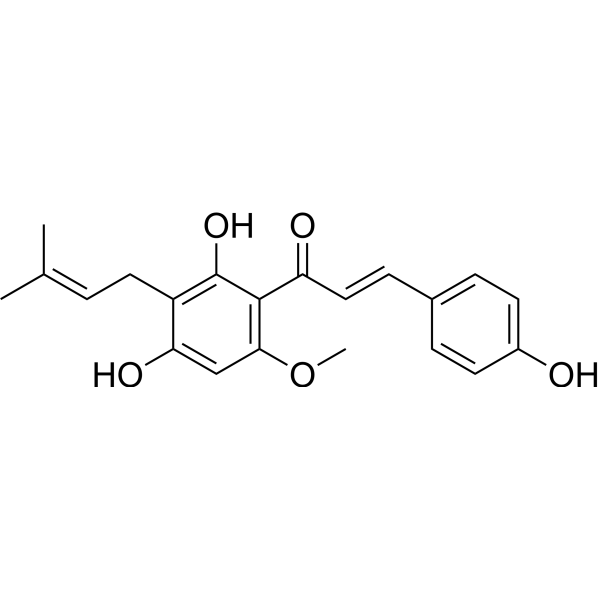
Xanthohumol is one of the principal flavonoids isolated from hops, the inhibitor of diacylglycerol acetyltransferase (DGAT), COX-1 and COX-2, and shows anti-cancer and anti-angiogenic activities. Xanthohumol also has antiviral activity against bovine viral diarrhea virus (BVDV), rhinovirus, HSV-1, HSV-2 and cytomegalovirus (CMV).
Nur für Forschungszwecke. Wir verkaufen nicht an Patienten.
- Reinheit : 99.94%
- CAS. Nr.: 6754-58-1
- Formel: C21H22O5
- Molecular Weight:354.40
-
Speicherung:Powder -20°C, 3 years , 4°C, 2 years ; In solvent -80°C, 2 years , -20°C, 1 year

To place orders, for customer services and technical support, please contact: MedChemExpress USA
Tel: 609-228-6898 E-mail: [email protected] [email protected]


-
 Biologische Aktivität
-
Chemical Information
-
Lösungsmittel & Löslichkeit
- Protokoll
- Reinheit & Dokumentation
- Verweise
-
 Help & FAQs


-
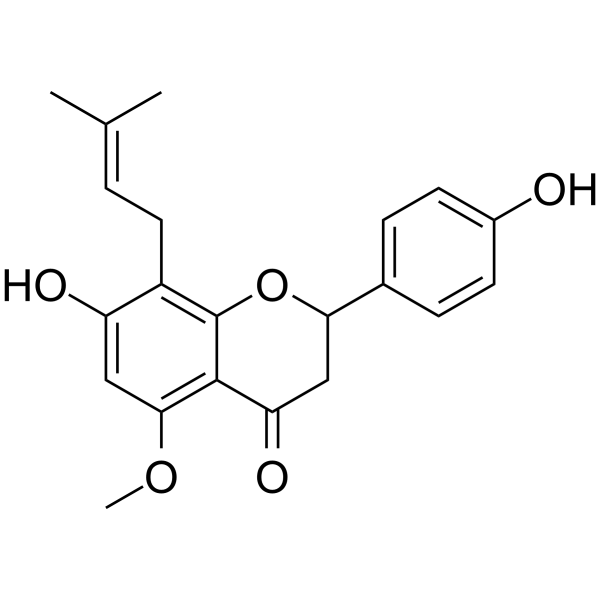
HY-N2584A
IsoxanthohumolFlavonoid compound -
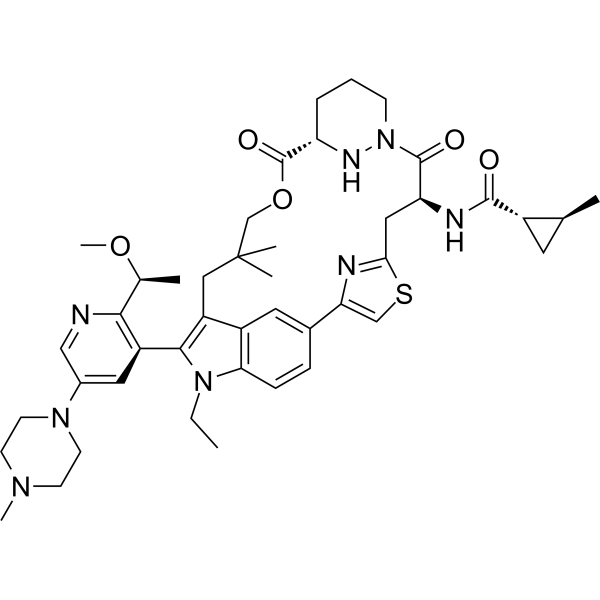
HY-148439
DaraxonrasibRAS(ON) Inhibitor -
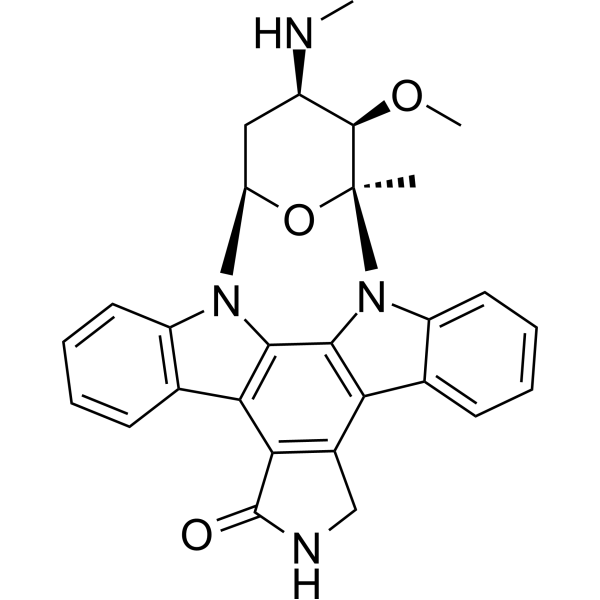
HY-15141
StaurosporinePKC/PKA Inhibitor -
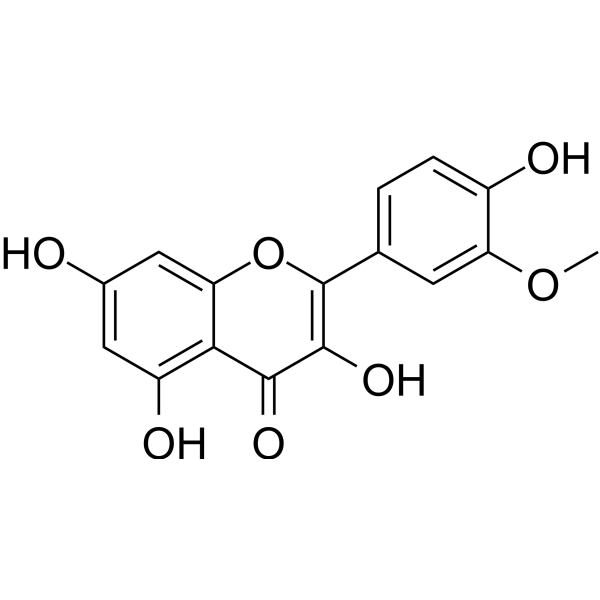
HY-N0776
IsorhamnetinEndogenous Metabolite -
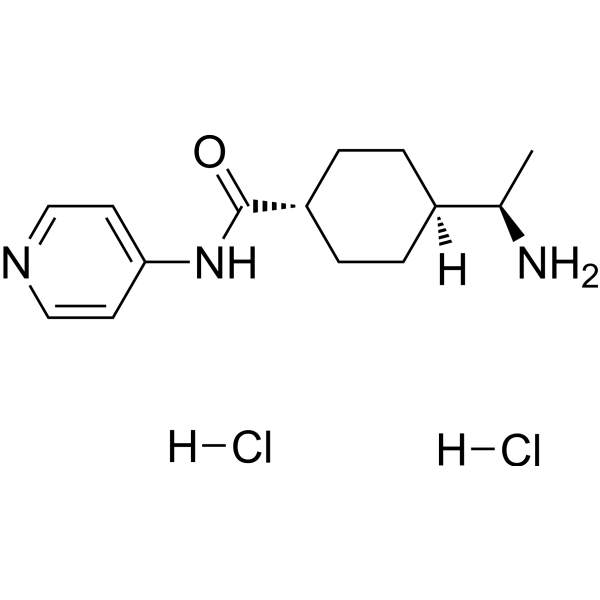
HY-10583
Y-27632 dihydrochlorideROCK Inhibitor -
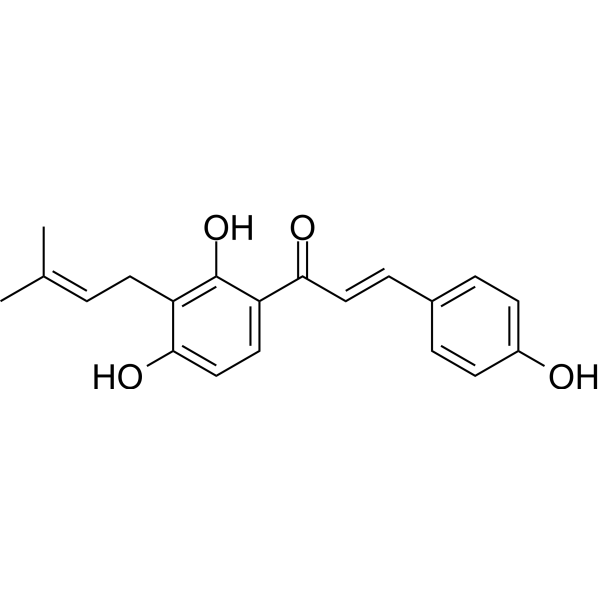
HY-13065
IsobavachalconeAkt Inhibitor -
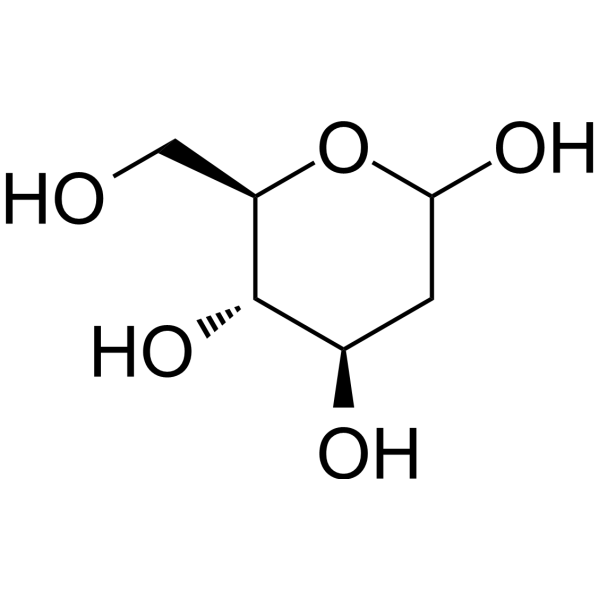
HY-13966
2-Deoxy-D-glucoseGlycolysis Inhibitor -

HY-10219
RapamycinmTOR Inhibitor -
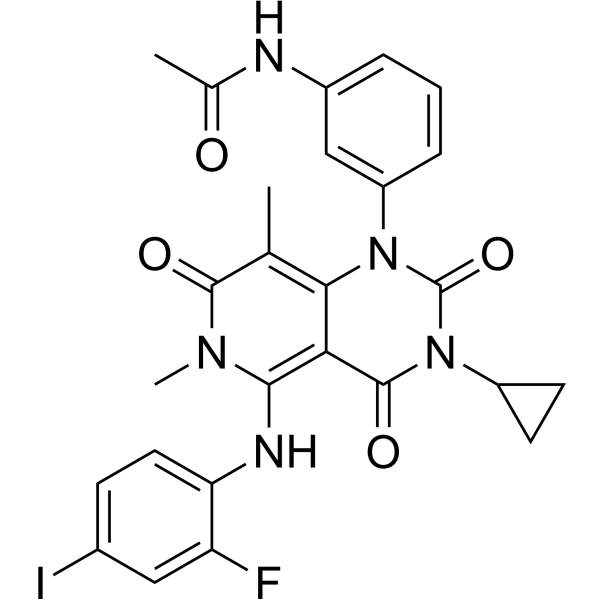
HY-10999
TrametinibMEK Inhibitor -
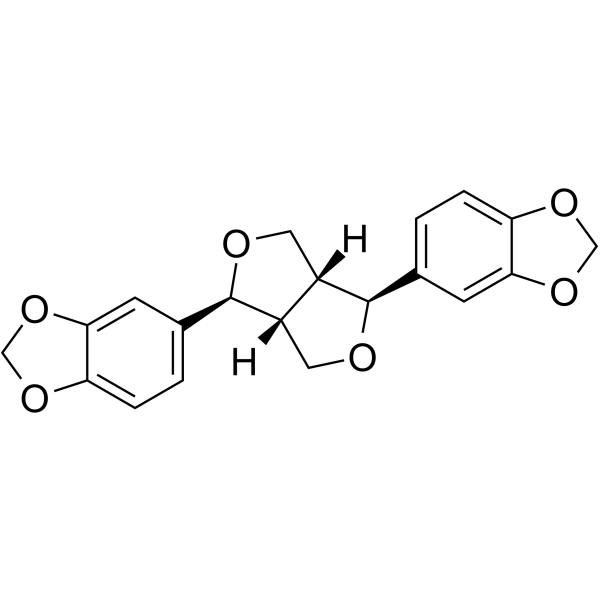
HY-N0121
SesaminDelta 5 Desaturase Inhibitor -

HY-N1067R
Xanthohumol (Standard)COX Inhibitor -
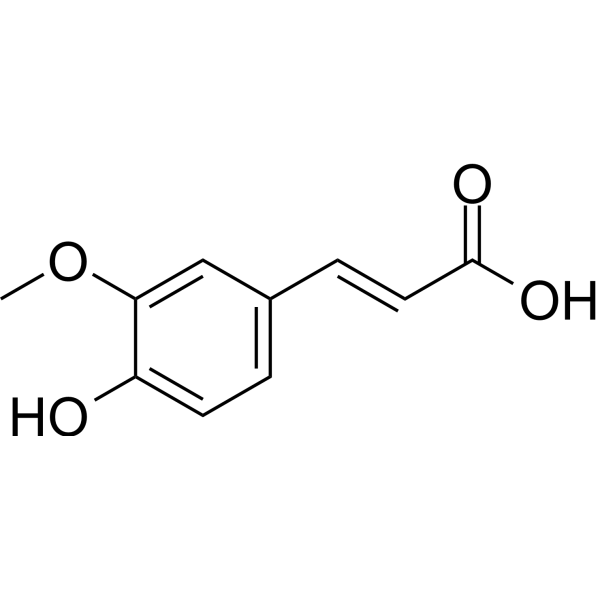
HY-N0060
Ferulic acidFGFR1 Inhibitor
Publications Citing Use of MedChemExpress (MCE) Xanthohumol
More- J Nanobiotechnology. 2026 Mar 22;24(1):405. [Abstract]
- Acta Pharm Sin B. 2021 Jan;11(1):143-155. [Abstract]
- Food Chem. 2025 Dec 30:497:146992. [Abstract]
- Food Chem. 2025 Oct 15:489:144992. [Abstract]
- Regen Biomater. 2024 Mar 1:11:rbae020. [Abstract]
- Phytother Res. 2025 May;39(5):2393-2406. [Abstract]
- Phytother Res. 2023 Jul;37(7):3057-3068. [Abstract]
- J Ethnopharmacol. 2026 Mar 25:359:121103. [Abstract]
- Food Funct. 2019 Dec 11;10(12):7865-7874. [Abstract]
- Eur J Pharmacol. 2024 Jan 15:963:176227. [Abstract]
- Virol Sin. 2025 Dec 27:S1995-820X(25)00177-4. [Abstract]
- Vet Microbiol. 2026 May:316:110992. [Abstract]
- J Nat Med. 2025 Mar;79(2):314-327. [Abstract]
- Kidney Blood Press Res. 2023;48(1):92-101. [Abstract]
- Neuroreport. 2021 May 19;32(8):651-658. [Abstract]
- Biomed Pharmacother. 2020 Sep:129:110369. [Abstract]
 Customer Validation & Images

-
IF
-
Cell Proliferation/Viability Assay
-
WB


Biologische Aktivität
Beschreibung
|
COX-1 |
COX-2 |
HSV-1 |
HSV-2 |
DGAT1 40 μM (IC50) |
DGAT2 40 μM (IC50) |
CMV |
Cellular Effect
|
Cell Line

|
Type | Value | Description | References |
|---|---|---|---|---|
| A549 | IC50 |
11.9 μM
Compound: Xn
|
Antiproliferative activity against human A549 cells after 72 hrs by MTT assay
Antiproliferative activity against human A549 cells after 72 hrs by MTT assay
|
[PMID: 30196062] |
| A549 | IC50 |
30.5 μM
Compound: 8a, Xn
|
Cytotoxicity against human A549 cells assessed as inhibition of cell proliferation after 72 hrs by MTT assay
Cytotoxicity against human A549 cells assessed as inhibition of cell proliferation after 72 hrs by MTT assay
|
[PMID: 25629304] |
| BGC-823 | IC50 |
7.8 μM
Compound: Xanthohumol
|
Cytotoxicity against human BGC823 cells assessed as cell growth inhibition after 72 hrs by MTT assay
Cytotoxicity against human BGC823 cells assessed as cell growth inhibition after 72 hrs by MTT assay
|
[PMID: 29288946] |
| BV-2 | IC50 |
7.92 μM
Compound: 14
|
Antineuroinflammatory activity in mouse BV2 cells assessed as inhibition of LPS-induced nitric oxide production after 24 hrs by griess assay
Antineuroinflammatory activity in mouse BV2 cells assessed as inhibition of LPS-induced nitric oxide production after 24 hrs by griess assay
|
[PMID: 29154541] |
| HEK293 | IC50 |
35 μM
Compound: 1
|
Inhibition of TNF-alpha-induced NF-kappaB activation expressed in human HEK293 cells preincubated for 2 hrs before TNFalpha challenge by leuciferase reporter gene assay
Inhibition of TNF-alpha-induced NF-kappaB activation expressed in human HEK293 cells preincubated for 2 hrs before TNFalpha challenge by leuciferase reporter gene assay
|
[PMID: 19757857] |
| HeLa | IC50 |
>40 μM
Compound: 8a, Xn
|
Inhibition of TrxR in human HeLa cells assessed as depletion of cellular thiol after 48 hrs
Inhibition of TrxR in human HeLa cells assessed as depletion of cellular thiol after 48 hrs
|
[PMID: 25629304] |
| HeLa | IC50 |
40.4 μM
Compound: 8a, Xn
|
Cytotoxicity against human HeLa cells assessed as inhibition of cell proliferation after 72 hrs by MTT assay
Cytotoxicity against human HeLa cells assessed as inhibition of cell proliferation after 72 hrs by MTT assay
|
[PMID: 25629304] |
| HeLa | IC50 |
9.4 μM
Compound: 1
|
Cytotoxicity against human HeLa cells by MTT assay after 72 hrs
Cytotoxicity against human HeLa cells by MTT assay after 72 hrs
|
[PMID: 18611049] |
| HeLa | IC50 |
9.4 μM
Compound: 1, xanthohumol
|
Cytotoxicity against human HeLa cells by MTT assay
Cytotoxicity against human HeLa cells by MTT assay
|
[PMID: 18343123] |
| HeLa | IC50 |
9.4 μM
Compound: 7
|
Cytotoxicity against human HeLa cells after 72 hrs by MTT assay
Cytotoxicity against human HeLa cells after 72 hrs by MTT assay
|
[PMID: 20153559] |
| HepG2 | IC50 |
35 μM
Compound: 8a, Xn
|
Cytotoxicity against human HepG2 cells assessed as inhibition of cell proliferation after 72 hrs by MTT assay
Cytotoxicity against human HepG2 cells assessed as inhibition of cell proliferation after 72 hrs by MTT assay
|
[PMID: 25629304] |
| HMEC-1 | IC50 |
11.4 μM
Compound: Xanthohumol
|
Antiangiogenic activity in SV-40T transfected human HMEC1 cells assessed as inhibition of cell proliferation after 72 hrs by crystal violet staining
Antiangiogenic activity in SV-40T transfected human HMEC1 cells assessed as inhibition of cell proliferation after 72 hrs by crystal violet staining
|
[PMID: 23030826] |
| HMEC-1 | IC50 |
11.4 μM
Compound: Xanthohumol
|
Antiproliferative activity against human HMEC1 cells after 72 hrs
Antiproliferative activity against human HMEC1 cells after 72 hrs
|
[PMID: 25128665] |
| HT-29 | IC50 |
91.31 μM
Compound: 1
|
Cytotoxicity against human HT-29 cells after 72 hrs by SRB assay
Cytotoxicity against human HT-29 cells after 72 hrs by SRB assay
|
[PMID: 23434138] |
| HT-29 | IC50 |
91.31 μM
Compound: 1, Xanthohumol
|
Antiproliferative activity against human HT-29 cells after 72 hrs by SRB assay
Antiproliferative activity against human HT-29 cells after 72 hrs by SRB assay
|
[PMID: 23466227] |
| Ishikawa | IC50 |
4.2 μM
Compound: XH
|
Cytotoxicity against human Ishikawa cells after 96 hrs by SRB assay
Cytotoxicity against human Ishikawa cells after 96 hrs by SRB assay
|
[PMID: 28812892] |
| MCF7 | IC50 |
10.95 μM
Compound: 1
|
Cytotoxicity against human MCF7 cells after 72 hrs by SRB assay
Cytotoxicity against human MCF7 cells after 72 hrs by SRB assay
|
[PMID: 23434138] |
| MCF7 | IC50 |
10.95 μM
Compound: 1, Xanthohumol
|
Antiproliferative activity against human MCF7 cells after 72 hrs by SRB assay
Antiproliferative activity against human MCF7 cells after 72 hrs by SRB assay
|
[PMID: 23466227] |
| MCF7 | IC50 |
13.3 μM
Compound: Xanthohumol
|
Antiproliferative activity against human MCF7 cells assessed as inhibition of cell growth incubated for 2 days by SRB assay
Antiproliferative activity against human MCF7 cells assessed as inhibition of cell growth incubated for 2 days by SRB assay
|
[PMID: 33257172] |
| MCF7 | IC50 |
3.47 μM
Compound: Xanthohumol
|
Antiproliferative activity against human MCF7 cells assessed as inhibition of cell growth incubated for 4 days by SRB assay
Antiproliferative activity against human MCF7 cells assessed as inhibition of cell growth incubated for 4 days by SRB assay
|
[PMID: 33257172] |
| NCI-H1975 | IC50 |
13 μM
Compound: Xn
|
Antiproliferative activity against human NCI-H1975 cells after 72 hrs by MTT assay
Antiproliferative activity against human NCI-H1975 cells after 72 hrs by MTT assay
|
[PMID: 30196062] |
| NCI-H460 | IC50 |
6.9 μM
Compound: Xanthohumol
|
Cytotoxicity against human NCI-H460 cells assessed as cell growth inhibition after 72 hrs by MTT assay
Cytotoxicity against human NCI-H460 cells assessed as cell growth inhibition after 72 hrs by MTT assay
|
[PMID: 29288946] |
| NCI-H460 | IC50 |
7.5 μM
Compound: Xn
|
Antiproliferative activity against human NCI-H460 cells after 72 hrs by MTT assay
Antiproliferative activity against human NCI-H460 cells after 72 hrs by MTT assay
|
[PMID: 30196062] |
| PC-3 | IC50 |
10.67 μM
Compound: 1
|
Cytotoxicity against human PC3 cells after 72 hrs by SRB assay
Cytotoxicity against human PC3 cells after 72 hrs by SRB assay
|
[PMID: 23434138] |
| PC-3 | IC50 |
10.67 μM
Compound: 1, Xanthohumol
|
Antiproliferative activity against human PC3 cells after 72 hrs by SRB assay
Antiproliferative activity against human PC3 cells after 72 hrs by SRB assay
|
[PMID: 23466227] |
| RAW264.7 | IC50 |
8.3 μM
Compound: 1
|
Inhibition of LPS/IFN-gamma-induced NO production in mouse RAW264.7 cells after 16 hrs
Inhibition of LPS/IFN-gamma-induced NO production in mouse RAW264.7 cells after 16 hrs
|
[PMID: 15679315] |
| SGC-7901 | IC50 |
10 μM
Compound: Xanthohumol
|
Cytotoxicity against human SGC7901 cells assessed as cell growth inhibition after 72 hrs by MTT assay
Cytotoxicity against human SGC7901 cells assessed as cell growth inhibition after 72 hrs by MTT assay
|
[PMID: 29288946] |
| VSMC | IC50 |
3.49 μM
Compound: 1
|
Inhibition of PDGF-BB-induced rat VSMC proliferation preincubated for 30 mins followed by PDGF-BB addition measured after 48 hrs by resazurin assay
Inhibition of PDGF-BB-induced rat VSMC proliferation preincubated for 30 mins followed by PDGF-BB addition measured after 48 hrs by resazurin assay
|
[PMID: 28627872] |
In Vitro
Xanthohumol significantly attenuates ADP-induced blood platelet aggregation, and significantly reduces the expression of fibrinogen receptor (activated form of GPIIbIIIa) on platelets' surface[1].
Xanthohumol (5-50 nM) reduces the frequency of spontaneously occurring Ca2+ sparks and Ca2+ waves in control myocytes and in cells subjected to Ca2+ overload caused by: (1) exposure to low K+ solutions, (2) periods of high frequency electrical stimulation, (3) exposures to isoproterenol or (4) caffeine. Xanthohumol (50-100 nM) reduces the rate of relaxation of electrically- or caffeine-triggered Ca2+ transients, without suppressing ICa, but this effect is small and reversed by isoproterenol at physiological temperatures. Xanthohumol also suppresses the Ca2+ content of the SR, and its rate of recirculation[2].
Treatment of endothelial cells with Xanthohumol leads to increased AMPK phosphorylation and activity. Functional studies using biochemical approaches confirm that AMPK mediates Xanthohumol anti-angiogenic activity. AMPK activation by Xanthohumol is mediated by CAMMKβ, but not LKB1. Analysis of the downstream mechanisms shows that Xanthohumol-induced AMPK activation reduces nitric oxide (NO) levels in endothelial cells by decreasing eNOS phosphorylation. Finally, AKT pathway is inactivated by Xanthohumol as part of its anti-angiogenic activity, but independently from AMPK, suggesting that these two signaling pathways proceed autonomously[3].
Xanthohumol significantly reduces cell viability and induces apoptosis via pro-caspase-3/8 cleavage and poly(ADP ribose) polymerase (PARP) degradation. Pro-caspase-9 cleavage, Bcl2 family expression changes, mitochondrial dysfunction, and intracellular ROS generation also participate in Xanthohumol-induced glioma cell death. Xanthohumol's inhibition of the IGFBP2/AKT/Bcl2 pathway via miR-204-3p targeting plays a critical role in mediating glioma cell death[4].
MedChemExpress (MCE) has not independently confirmed the accuracy of these methods. They are for reference only.
Clinical Trial
| NCT Number | Sponsor | Condition | Start Date |
Phase
|
|---|---|---|---|---|
| NCT01329991 | Plexxikon| | 2011-05 | PHASE1 |


Chemical Information
-
CAS. Nr. 6754-58-1
-
Appearance Solid
-
Molecular Weight 354.40
-
Formel C21H22O5
-
Color Yellow to orange
-
SMILES
O=C(C1=C(OC)C=C(O)C(C/C=C(C)\C)=C1O)/C=C/C2=CC=C(O)C=C2
-
Structure Classification
-
Initial Source
-
Versand
Room temperature in continental US; may vary elsewhere.
-
Speicherung
Powder -20°C 3 years 4°C 2 years In solvent -80°C 2 years -20°C 1 year


Publications (16)
-
Journal Impact Factor
-
Most Recent
-
J Nanobiotechnology
An oral nanocombinatorial agent exhibits pleiotropic improvement in diabetic nephropathy via modulation of the SCAP/SREBPs pathway. [Abstract]2026 Mar 22;24(1):405. PMID: 41866523 -
Acta Pharm Sin B
Chrysin serves as a novel inhibitor of DGK α/FAK interaction to suppress the malignancy of esophageal squamous cell carcinoma (ESCC). [Abstract]2021 Jan;11(1):143-155. PMID: 33532186 -
Food Chem
Effects of sun drying combined with baking processes on the flavor quality of Chongqing Tuocha raw tea. [Abstract]2025 Dec 30:497:146992. PMID: 41285060 -
Food Chem
Flavonoid-mediated metabolic underpinning quality variation in red bud-sport pear mutants. [Abstract]2025 Oct 15:489:144992. PMID: 40466530 -
Regen Biomater
Fabrication of a 3D bioprinting model for posterior capsule opacification using GelMA and PLMA hydrogel-coated resin. [Abstract]2024 Mar 1:11:rbae020. PMID: 38529352 -
Phytother Res
Xanthohumol Regulates Mitophagy in Osteosarcoma Cells via AMPK-ULK1-FUNDC1 Signaling Pathway. [Abstract]2025 May;39(5):2393-2406. PMID: 40190139 -
Phytother Res
Xanthohumol inhibits non-small cell lung cancer via directly targeting T-lymphokine-activated killer cell-originated protein kinase. [Abstract]2023 Jul;37(7):3057-3068. PMID: 36882184
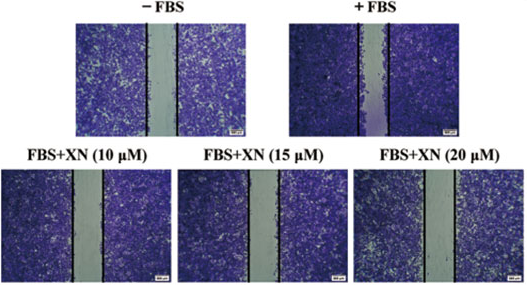
Xanthohumol purchased from MedChemExpress. Usage Cited in: Phytother Res. 2023 Jul;37(7):3057-3068. [Abstract]
Xanthohumol (XN; 10, 15, 20 μM; 36 h) suppresses the serum-induced migratory ability of A549 cells.
Xanthohumol purchased from MedChemExpress. Usage Cited in: Phytother Res. 2023 Jul;37(7):3057-3068. [Abstract]
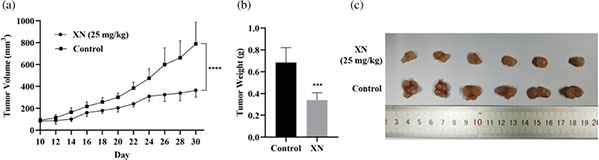
Xanthohumol (XN; 25 mg/kg; i.p.; single daily for 30 days) significantly suppresses the tumor growth and reduces the final tumor weight by 50.4% (Fig a-c).
Xanthohumol purchased from MedChemExpress. Usage Cited in: Phytother Res. 2023 Jul;37(7):3057-3068. [Abstract]
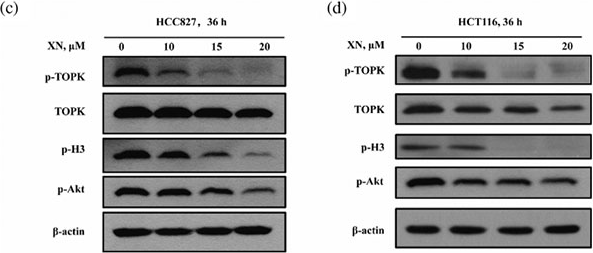
Xanthohumol (XN; 10, 15, 20 μM; 36 h) results in a dose-dependent inhibition of TOPK phosphorylation (Thr9), and inhibits the phosphorylation of histone H3 and Akt, in both HCC827 cells (fig c) and HCT116 cells (Fig d).
-
J Ethnopharmacol
Xanthohumol ameliorates OVA-induced allergic asthma by inhibiting AIM2 inflammasome activation. [Abstract]2026 Mar 25:359:121103. PMID: 41453548 -
Food Funct
2019 Dec 11;10(12):7865-7874. PMID: 31793596 -
Eur J Pharmacol
Xanthohumol attenuates collagen synthesis in scleroderma skin fibroblasts by ROS/Nrf2/TGFβ1/Smad3 pathway. [Abstract]2024 Jan 15:963:176227. PMID: 38072040 -
Virol Sin
Development of the reverse genetics system for viral hemorrhagic septicemia virus genotype IVa and its application in antiviral compound screening. [Abstract]2025 Dec 27:S1995-820X(25)00177-4. PMID: 41461367 -
Vet Microbiol
The Chinese medicine monomer Schisandrin C inhibits PRRSV infection by regulating the OGT-PI3K/AKT/mTOR signaling pathway. [Abstract]2026 May:316:110992. PMID: 41865607 -
J Nat Med
Xanthohumol attenuates TXNIP-mediated renal tubular injury in vitro and in vivo diabetic models. [Abstract]2025 Mar;79(2):314-327. PMID: 39752106 -
Kidney Blood Press Res
2023;48(1):92-101. PMID: 36592619 -
Neuroreport
Xanthohumol protect cognitive performance in diabetic model rats by inhibiting protein kinase B/nuclear factor kappa-B pathway. [Abstract]2021 May 19;32(8):651-658. PMID: 33913932 -
Biomed Pharmacother
Developing neobavaisoflavone nanoemulsion suppresses lung cancer progression by regulating tumor microenvironment. [Abstract]2020 Sep:129:110369. PMID: 32563983


Lösungsmittel & Löslichkeit
In Vitro:
DMSO : 83.33 mg/mL (235.13 mM; Need ultrasonic; Hygroscopic DMSO has a significant impact on the solubility of product, please use newly opened DMSO)
Please refer to the solubility information to select the appropriate solvent. Once prepared, please aliquot and store the solution to prevent product inactivation from repeated freeze-thaw cycles.
Storage method and period of stock solution: -80°C, 2 years; -20°C, 1 year. When stored at -80°C, please use it within 2 years. When stored at -20°C, please use it within 1 year.
Please refer to the solubility information to select the appropriate solvent. Once prepared, please aliquot and store the solution to prevent product inactivation from repeated freeze-thaw cycles.
Storage method and period of stock solution: -80°C, 2 years; -20°C, 1 year. When stored at -80°C, please use it within 2 years. When stored at -20°C, please use it within 1 year.
Konzentration (Stammlösung) × Volumen (Stammlösung) = Konzentration (Ziellösung) × Volumen (Ziellösung)
In Vivo:
Select the appropriate dissolution method based on your experimental animal and administration route.
- For the following dissolution methods, please ensure to first prepare a clear stock solution using an In Vitro approach and then sequentially add co-solvents:
- To ensure reliable experimental results, the clarified stock solution can be appropriately stored based on storage conditions. As for the working solution for In Vivo experiments, it is recommended to prepare freshly and use it on the same day.
- The percentages shown for the solvents indicate their volumetric ratio in the final prepared solution. If precipitation or phase separation occurs during preparation, heat and/or sonication can be used to aid dissolution.
Add each solvent one by one: 10% DMSO 40% PEG300 5% Tween-80 45% Saline
Solubility: ≥ 2.08 mg/mL (5.87 mM); Clear solution
This protocol yields a clear solution of ≥ 2.08 mg/mL (saturation unknown).
Taking 1 mL working solution as an example, add 100 μL DMSO stock solution (20.8 mg/mL) to 400 μL PEG300, and mix evenly; then add 50 μL Tween-80 and mix evenly; then add 450 μL Saline to adjust the volume to 1 mL.
Preparation of Saline: Dissolve 0.9 g sodium chloride in ddH₂O and dilute to 100 mL to obtain a clear Saline solution.
Add each solvent one by one: 10% DMSO 90% (20% SBE-β-CD in Saline)
Solubility: ≥ 2.08 mg/mL (5.87 mM); Clear solution
This protocol yields a clear solution of ≥ 2.08 mg/mL (saturation unknown).
Taking 1 mL working solution as an example, add 100 μL DMSO stock solution (20.8 mg/mL) to 900 μL 20% SBE-β-CD in Saline, and mix evenly.
Preparation of 20% SBE-β-CD in Saline (4°C, storage for one week): 2 g SBE-β-CD powder is dissolved in 10 mL Saline, completely dissolve until clear.
In Vivo Dissolution Calculator
Please enter the basic information of animal experiments:
-
-
-
-
Recommended: Prepare an additional quantity of animals to account for potential losses during experiments.
Please enter your animal formula composition:
-
%DMSO +
Recommended: Keep the proportion of DMSO in working solution below 2% if your animal is weak.
-
%+
-
+%Tween-80 + +
-
%Saline +
The co-solvents required include: DMSO, . All of co-solvents are available by MedChemExpress (MCE). , Tween 80. All of co-solvents are available by MedChemExpress (MCE).
Working solution concentration: 0.22 mg/mL
Method for preparing stock solution: mg drug dissolved in μL DMSO. Stock solution concentration: mg/mL.
1. Take μL DMSO stock solution;
2. Add μL .
μL , mix evenly;
3. Then add μL Tween 80, mix evenly;
4. Then add μL
Please ensure that the stock solution in the first step is dissolved to a clear state, and add co-solvents in sequence. You can use ultrasonic heating (ultrasonic cleaner, recommended frequency 20-40 kHz), vortexing, etc. to assist dissolution.


Reinheit & Dokumentation
-
Data Sheet (285 KB)
-
SDS (396 KB)
- English - EN (396 KB)
- Français - FR (396 KB)
- Deutsch - DE (396 KB)
- Norwegian - NO (396 KB)
- Español - ES (396 KB)
- Swedish - SV (396 KB)
- Italian - IT (396 KB)
- Korean - KR (396 KB)
- Portuguese - PT (396 KB)
-
Handling Instructions (2659 KB)
Verweise
[1]. Luzak B, et al. Xanthohumol from hop cones (Humulus lupulus L.) prevents ADP-induced platelet reactivity. Arch Physiol Biochem. 2016 Nov 18:1-7 [Content Brief]
[2]. Arnaiz-Cot JJ, et al. Xanthohumol modulates calcium signaling in rat ventricular myocytes: Possible Antiarrhythmic properties. J Pharmacol Exp Ther. 2016 Nov 4. pii: jpet.116.236588 [Content Brief]
[3]. Gallo C, et al. Hop derived flavonoid xanthohumol inhibits endothelial cell functions via AMPK activation. Oncotarget. 2016 Aug 1 [Content Brief]
[4]. Chen PH, et al. The miR-204-3p-targeted IGFBP2 pathway is involved in xanthohumol-induced glioma cell apoptotic death. Neuropharmacology. 2016 Nov;110(Pt A):362-75. [Content Brief]
[5]. Inokoshi J, et al. Expression of two human acyl-CoA:diacylglycerol acyltransferase isozymes in yeast and selectivity of microbial inhibitors toward the isozymes. J Antibiot (Tokyo). 2009;62(1):51-54. [Content Brief]
[6]. Buckwold VE, et al. Antiviral activity of hop constituents against a series of DNA and RNA viruses. Antiviral Res. 2004 Jan;61(1):57-62. [Content Brief]


Complete Stock Solution Preparation Table
Please refer to the solubility information to select the appropriate solvent. Once prepared, please aliquot and store the solution to prevent product inactivation from repeated freeze-thaw cycles.
Storage method and period of stock solution: -80°C, 2 years; -20°C, 1 year. When stored at -80°C, please use it within 2 years. When stored at -20°C, please use it within 1 year.
| Optional Solvent | Concentration Solvent Mass | 1 mg | 5 mg | 10 mg | 25 mg |
|---|---|---|---|---|---|
| DMSO | 1 mM | 2.8217 mL | 14.1084 mL | 28.2167 mL | 70.5418 mL |
| 5 mM | 0.5643 mL | 2.8217 mL | 5.6433 mL | 14.1084 mL | |
| 10 mM | 0.2822 mL | 1.4108 mL | 2.8217 mL | 7.0542 mL | |
| 15 mM | 0.1881 mL | 0.9406 mL | 1.8811 mL | 4.7028 mL | |
| 20 mM | 0.1411 mL | 0.7054 mL | 1.4108 mL | 3.5271 mL | |
| 25 mM | 0.1129 mL | 0.5643 mL | 1.1287 mL | 2.8217 mL | |
| 30 mM | 0.0941 mL | 0.4703 mL | 0.9406 mL | 2.3514 mL | |
| 40 mM | 0.0705 mL | 0.3527 mL | 0.7054 mL | 1.7635 mL | |
| 50 mM | 0.0564 mL | 0.2822 mL | 0.5643 mL | 1.4108 mL | |
| 60 mM | 0.0470 mL | 0.2351 mL | 0.4703 mL | 1.1757 mL | |
| 80 mM | 0.0353 mL | 0.1764 mL | 0.3527 mL | 0.8818 mL | |
| 100 mM | 0.0282 mL | 0.1411 mL | 0.2822 mL | 0.7054 mL |


Xanthohumol Related Classifications
HY-N1067 Related Classifications
 Powered by Bioz