



ADI-14448
ADI-14448 is a RSV prefusion fusion glycoprotein inhibitor and HMPV fusion glycoprotein inhibitor, with a Kd of 3.8 × 10⁻¹⁰ M for RSV preF. ADI-14448 binds to epitope III of RSV preF, thereby blocking viral infection. ADI-14448 neutralizes RSV subtype A and HMPV subtype A1. ADI-14448 can be used in studies related to respiratory syncytial virus infection and metapneumovirus infection.
Nos produits utilisent uniquement pour la recherche. Nous ne vendons pas aux patients.
-
Stockage:
Please store the product under the recommended conditions in the Certificate of Analysis.


To place orders, for customer services and technical support, please contact: MedChemExpress USA
Tel: 609-228-6898 E-mail: [email protected] [email protected]


-
 Activité biologique
-
Chemical Information
- Protocole
- Pureté et documentation
- Références
-
 Help & FAQs




Activité biologique
Description
Isotype
Human IgG1 kappa
Recommend Isotype Controls
Species Reactivity
Virus
In Vitro
ADI-14448 binds specifically to pre-fusion RSV F (DS-Cav1) with high affinity, with an apparent Kd of 3.8 × 10⁻¹⁰ M, and does not bind to post-fusion RSV F (F DFP)[1].
ADI-14448 (subjected to serial four-fold dilutions from 1:10 to 1:163,840; pre-incubated with virus for 1 h prior to incubation with HEp-2 cells for 22-24 h) potently neutralizes RSV subtype A (strain A2) in HEp-2 cells, with an IC50 of 0.04 μg/mL[1].
ADI-14448 (serial dilutions; 36 h) potently neutralizes the HMPV A1 sublineage (NL/1/00) in Vero-118 cells, with an IC50 of 0.05 μg/mL[1].
MedChemExpress (MCE) has not independently confirmed the accuracy of these methods. They are for reference only. Further protocols information, click here.
Gene ID
/ [NCBI]
Accession
P03420
Target
HRSV F0/F Protein
Conjugated
Unconjugated
Reconsititution
The product can be reconstituted/diluted with sterile PBS or saline.
Format
-
Product Image
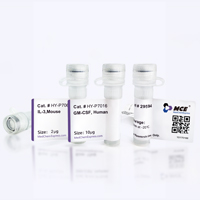
Application
ELISA, FACS, Functional assay


Chemical Information
-
Formulation
Please refer to the lot-specific COA for specific buffer information.
-
Stockage
Please store the product under the recommended conditions in the Certificate of Analysis.

Protocole
-
Research Protocol for Infectious Diseases
Infectious-disease experiments test how pathogens interact with host barriers, innate immune receptors, inflammatory signaling, pathogen replication, and tissue injury; pattern-recognition receptors such as TLRs, RIG-I-like receptors, NOD-like receptors, and inflammasomes detect microbial molecules and activate NF-κB, interferon, and cytokine responses. The central hypothesis is that infection severity reflects the balance between pathogen burden and host response: protective inflammation restricts pathogen growth, whereas excessive or mislocalized inflammation contributes to tissue damage and disease phenotype. Unresolved questions include which host pathways are protective versus pathogenic, why some infection models fail to translate to human disease, and which combined readouts best predict clinically relevant infection outcomes.


Pureté et documentation
Références

Calculators
Concentration (start) × Volume (start) = Concentration (final) × Volume (final)


ADI-14448 Related Classifications
HY-P992175 Related Classifications
 Powered by Bioz