



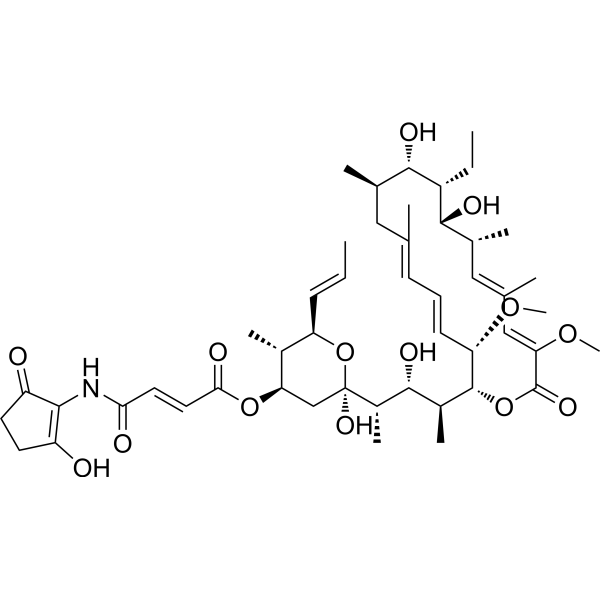
IKD-8344
IKD-8344 is a macrocyclic dilactone originally isolated from an actinomycete species and has diverse biological activities, including anticancer, antimicrobial, and anthelmintic properties. It is cytotoxic to L5178Y murine leukemia cells (IC50=0.54 ng/ml).1 IKD-8344 inhibits growth of the mycelial form of C. albicans (MIC=6.25 μg/mL) and potentiates the activity of polymyxin B against the multidrug-resistant pathogenic bacterium B. cenocepacia.
Nos produits utilisent uniquement pour la recherche. Nous ne vendons pas aux patients.
- CAS No.: 129046-69-1
- Formule: C48H76O12
- Masse moléculaire:845.11
-
Stockage:
Please store the product under the recommended conditions in the Certificate of Analysis.


To place orders, for customer services and technical support, please contact: MedChemExpress USA
Tel: 609-228-6898 E-mail: [email protected] [email protected]


-
 Activité biologique
-
Chemical Information
- Protocole
- Pureté et documentation
- Références
-
 Help & FAQs


-
HY-N0215S4
DL-Phenylalanine-d5Stable Isotope -
HY-W196368
ThymohydroquinoneCOX-2 Inhibitor -
HY-157729
1-UndecanoylglycerolMonoacylglycerol -
HY-P2124
Cyclo(L-Trp-L-Trp)Antibiotic -
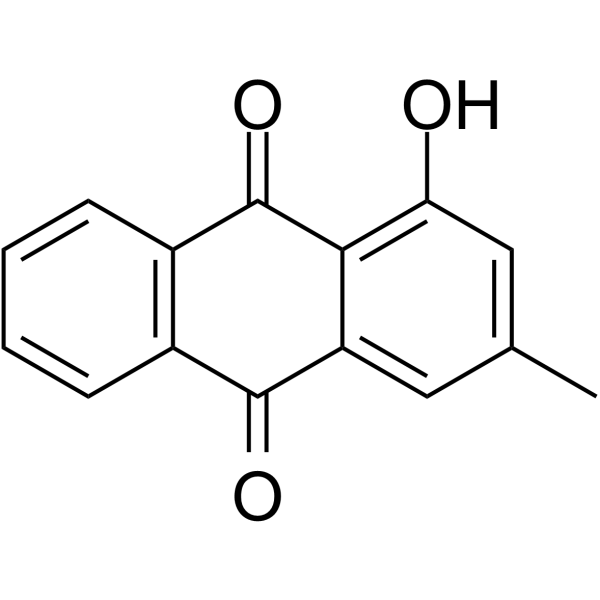
HY-N7307
PachybasinAnti-bacterial Agent -
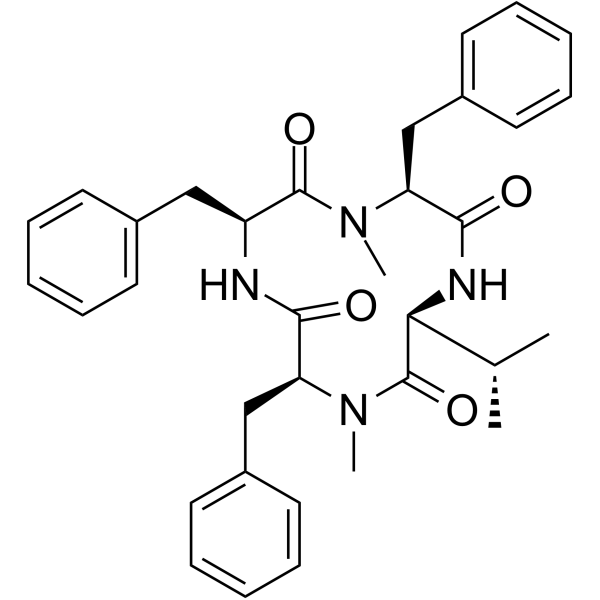
HY-129642
HirsutideCyclic Tetrapeptide -

HY-130743
Dieugenol -
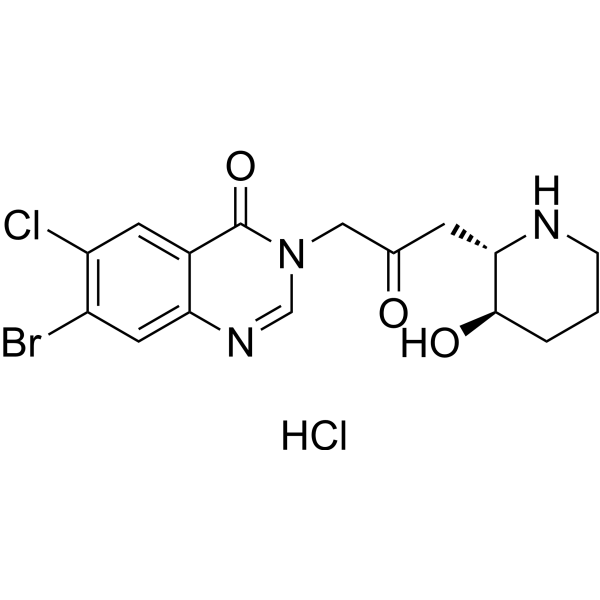
HY-N1584B
Halofuginone hydrochlorideNatural Product -

HY-12784AS1
Cycloguanil-d6 hydrochlorideStable Isotope -

HY-N12178
16-DeethylindanomycinAntibacterial Agent -
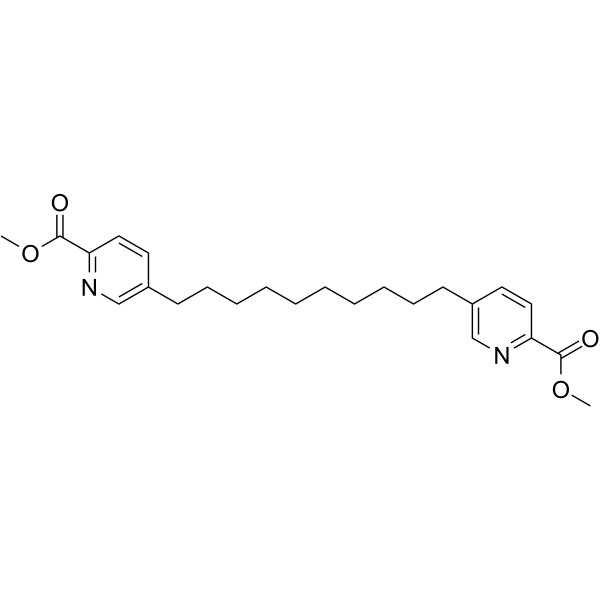
HY-124301
Penicolinate APicolinic Acid Derivative -
HY-126571
Virustomycin AAntitrypanosomal Agent


Activité biologique
Description


Chemical Information
-
CAS No. 129046-69-1
-
Masse moléculaire 845.11
-
Formule C48H76O12
-
SMILES
C[C@@H]([C@@](CC1)([H])O[C@@H]1C)[C@@](OC([C@H]([C@@]2([H])O[C@@H](CC([C@@H]([C@](CC3)([H])O[C@]3([H])C4)C)=O)CC2)C)=O)([H])C[C@@]5([H])O[C@]([C@H](C(C[C@@H]6O[C@@]([C@@H](C(O[C@@]4([H])[C@H]([C@@](CC7)([H])O[C@@H]7C)C)=O)C)([H])CC6)=O)C)([H])CC5
-
Livraison
Room temperature in continental US; may vary elsewhere.
-
Stockage
Please store the product under the recommended conditions in the Certificate of Analysis.

Protocole
-
Research Protocol for Infectious Diseases
Infectious-disease experiments test how pathogens interact with host barriers, innate immune receptors, inflammatory signaling, pathogen replication, and tissue injury; pattern-recognition receptors such as TLRs, RIG-I-like receptors, NOD-like receptors, and inflammasomes detect microbial molecules and activate NF-κB, interferon, and cytokine responses. The central hypothesis is that infection severity reflects the balance between pathogen burden and host response: protective inflammation restricts pathogen growth, whereas excessive or mislocalized inflammation contributes to tissue damage and disease phenotype. Unresolved questions include which host pathways are protective versus pathogenic, why some infection models fail to translate to human disease, and which combined readouts best predict clinically relevant infection outcomes.
-
Cell Cytotoxicity Assay
Cytotoxicity assays are usually based on the assessment of cell membrane damage, which can also be indirectly detected by measuring cell viability. Detection methods include MTT assay, CKK-8 assay, LDH assay and ATP assay, etc.
-
Cell Viability Determination by MTT Colorimetric Assay
The following protocol uses the MTT colorimetric assay as a classic literature-established method for assessing cell viability/metabolic activity in cultured mammalian cells. MTT[3-(4,5-dimethylthiazol-2-yl)-2,5-diphenyltetrazolium bromide] is reduced by metabolically active cells to a colored formazan product; the amount of formazan is quantified spectrophotometrically and provides an indirect measure of metabolically active viable cells. Importantly, MTT reduction reflects cellular oxidoreductase/metabolic activity rather than an absolute direct count of living cells, so changes in cellular metabolism can alter the signal independently of cell number.


Pureté et documentation
Références

Calculators
Concentration (start) × Volume (start) = Concentration (final) × Volume (final)


IKD-8344 Related Classifications
HY-N8280 Related Classifications
 Powered by Bioz